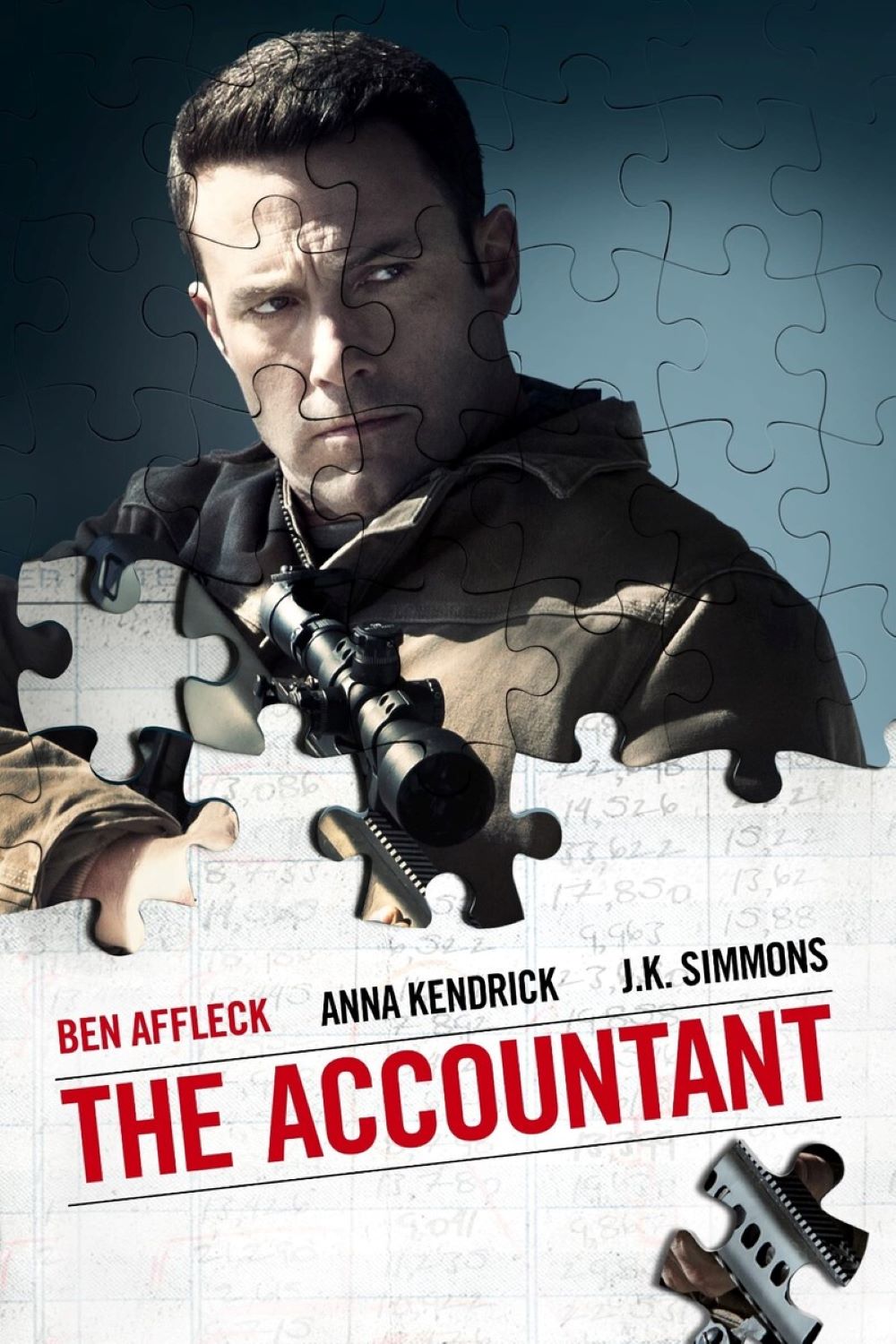
Review: The Accountant (dir. by Gavin O’Connor)


“What I do is not against the law. What I don’t do… is.” — Christian Wolff

The Accountant is a 2016 action thriller that mixes elements of character drama, crime mystery, and family dynamics into a unique storyline. The movie follows Christian Wolff, a man with autism and exceptional math and accounting skills, who works as a freelance accountant for criminal organizations. Raised by a strict military father who pushed him to develop precision and discipline, Christian has a rigid moral code that guides his actions. As Christian unravels financial fraud within a robotics company, he finds himself hunted by a Treasury agent. The film blends intellectual mystery with high-stakes action, presenting a different take on the typical thriller formula.

Ben Affleck leads as Christian Wolff, bringing a quiet intensity that captures the character’s inner complexities and unique worldview. Anna Kendrick plays Dana Cummings, the robotics company accountant whose discovery of financial irregularities kicks off the central conflict, offering a relatable and warm counterpoint. J.K. Simmons portrays Raymond King, the sharp Treasury agent on Christian’s trail, adding layers of tension and moral ambiguity. Jon Bernthal embodies Braxton Wolff, Christian’s estranged brother and a rugged former military operative, whose presence heightens the family drama. The brothers’ strict and demanding father is portrayed by Rob Treveiler, who appears mainly in flashbacks that showcase the rigorous military-style training and discipline shaping Christian’s development. These performances ground the film’s ambitious mix of genres, making the characters feel lived-in and believable.

Christian Wolff stands out as a well-rounded character whose autism shapes his personality without becoming a mere plot device. The film shows his struggles alongside his strengths, like sensory sensitivities, social awkwardness, and laser focus on details. He relies on strict routines and coping tools to handle his surroundings, mirroring real experiences on the autism spectrum. Affleck’s portrayal draws from this backstory—those intense father-son training montages with Treveiler—to explain Christian’s discipline and guarded emotions, giving audiences a clear window into what drives him.

At the movie’s core sits Christian’s personal moral compass. He might balance the books for shady clients, but he draws a hard line at true ethical breaches, stepping in with his own form of justice. This anti-hero vibe keeps things gray and intriguing. His bond with Dana, played by Kendrick, offers rare moments of connection amid the chaos, though it stays somewhat surface-level and misses chances for deeper emotional pull.

The plot tracks Christian’s dive into massive fraud at the robotics firm, all while dodging Simmons’ relentless agent. The accounting scenes impress with their detail—Christian pores over ledgers, spotting irregularities that expose embezzlement on a grand scale. This cerebral side contrasts sharply with the brutal action, like the raw fights between Affleck’s Christian and Bernthal’s Braxton, which mix physical showdowns with buried family pain. Those brotherly clashes tie back to their shared traumatic past, ramping up the stakes beyond just numbers and guns.

The Accountant handles autism with real care, steering clear of clichés. It spotlights Christian’s sensitivities, routine needs, and social hurdles while celebrating his smarts and toughness. Affleck makes these traits feel authentic, turning what could be quirky into profoundly human. This approach avoids stereotypes, letting viewers connect with Christian on a deeper level and appreciate how his mind works in high-pressure situations.

The film has room for refinement in a few spots. It crams in crime plots, sibling secrets, and shadowy ops, which can jumble the pace as it bounces from fights to feels to financial deep dives. Relationships like Christian and Dana’s, or the Wolff brothers’, might hit harder with extra screen time to build that emotional core and make the risks feel more intimate.

Tonally, The Accountant strikes a balance—serious stakes lightened by Christian’s offbeat interactions and fresh outlook. Autism never turns into a joke; instead, it builds empathy. The ethical murk in his world—cooking books for crooks one day, punishing them the next—flips hero tropes on their head, keeping you guessing.

Overall, The Accountant shines by fusing brainpower and brawn in its lead and narrative, transcending standard shoot-’em-ups as a thoughtful character piece that honors its hero’s nuances. It probes unconventional strengths and ethics in a murky reality while illustrating thriving with distinct abilities and hurdles in a harsh landscape, all while clinging to personal principles—delivering thrills with substance on neurodiversity and payback. Fans of smart action will dig this blend of suspense, puzzles, and character depth, even if the threads tangle at times, making it a solid pick for thriller seekers wanting more than explosions.

#MondayMuggers presents THE ACCOUNTANT (2016) starring Ben Affleck!


Every Monday night at 9:00 Central Time, my wife Sierra and I host a “Live Movie Tweet” event on X using the hashtag #MondayMuggers. We rotate movie picks each week, and our tastes are quite different. Tonight, Monday April 21st, we celebrate the end of my tax season by watching THE ACCOUNTANT (2016) starring Ben Affleck, Anna Kendrick, J.K. Simmons, Jon Bernthal, Jeffrey Tambor, Cynthia Addai-Robinson, John Lithgow, and Jean Smart. 

Contrary to popular belief, THE ACCOUNTANT is not based on the life of Little Rock-based CPA Bradley Crain, although there are many obvious similarities. Rather, it’s the story of Christian Wolff, a math savant who often plies his trade for some of the world’s most dangerous criminal organizations. When he takes on a legitimate client and discovers discrepancies in the company’s books involving millions of dollars, a group of hitmen try to kill him and the company’s accountant Dana Cummings (Anna Kendrick). Will they live long enough to discover the person behind the embezzlement, or will they just become another set of death statistics? I don’t want to give too much away, but I will go ahead and address the elephant in the room… THE ACCOUNTANT 2 opens on Friday night, April 25th.

So, join us tonight for #MondayMuggers and watch THE ACCOUNTANT! It’s on Amazon Prime. The trailer for THE ACCOUNTANT is included below:

Here Are The 2025 SAG Nominations


Due to the catastrophic wildfires currently burning in California, Tte Screen Actors Guild dispensed with their usual big nominations announcement and instead sent out a simple press release their morning.

Here are the SAG’s film nominations.  The SAG is a usually pretty good precursor so the folks who were celebrating the victory of the Brutalist on Sunday night have a bit less to celebrate today.  That said, the 2,0000-person nominating committee appear to have really liked The Last Showgirl.  Let’s keep Pamela Anderson’s Oscar hopes alive!

Outstanding Performance by a Male Actor in a Leading Role
ADRIEN BRODY / László Tóth – “THE BRUTALIST”
TIMOTHÉE CHALAMET / Bob Dylan – “A COMPLETE UNKNOWN”
DANIEL CRAIG / William Lee – “QUEER”
COLMAN DOMINGO / Divine G – “SING SING”
RALPH FIENNES / Lawrence – “CONCLAVE”

Outstanding Performance by a Female Actor in a Leading Role
PAMELA ANDERSON / Shelly – “THE LAST SHOWGIRL”
CYNTHIA ERIVO / Elphaba – “WICKED”
KARLA SOFÍA GASCÓN / Emilia/Manitas – “EMILIA PÉREZ”
MIKEY MADISON / Ani – “ANORA”
DEMI MOORE / Elisabeth – “THE SUBSTANCE”

Outstanding Performance by a Male Actor in a Supporting Role
JONATHAN BAILEY / Fiyero – “WICKED”
YURA BORISOV / Igor – “ANORA”
KIERAN CULKIN / Benji Kaplan – “A REAL PAIN”
EDWARD NORTON / Pete Seeger – “A COMPLETE UNKNOWN”
JEREMY STRONG / Roy Cohn – “THE APPRENTICE”

Outstanding Performance by a Female Actor in a Supporting Role
MONICA BARBARO / Joan Baez – “A COMPLETE UNKNOWN”
JAMIE LEE CURTIS / Annette – “THE LAST SHOWGIRL”
DANIELLE DEADWYLER / Berniece – “THE PIANO LESSON”
ARIANA GRANDE / Galinda/Glinda – “WICKED”
ZOE SALDAÑA / Rita – “EMILIA PÉREZ”

Outstanding Performance by a Cast in a Motion Picture
A COMPLETE UNKNOWN
MONICA BARBARO / Joan Baez
NORBERT LEO BUTZ / Alan Lomax
TIMOTHÉE CHALAMET / Bob Dylan
ELLE FANNING / Sylvie Russo
DAN FOGLER / Albert Grossman
WILL HARRISON / Bobby Neuwirth
ERIKO HATSUNE / Toshi Seeger
BOYD HOLBROOK / Johnny Cash
SCOOT MCNAIRY / Woody Guthrie
BIG BILL MORGANFIELD / Jesse Moffette
EDWARD NORTON / Pete Seeger

ANORA
YURA BORISOV / Igor
MARK EYDELSHTEYN / Ivan
KARREN KARAGULIAN / Toros
MIKEY MADISON / Ani
ALEKSEY SEREBRYAKOV / Nikolai Zakharov
VACHE TOVMASYAN / Garnick

CONCLAVE
SERGIO CASTELLITTO / Tedesco
RALPH FIENNES / Lawrence
JOHN LITHGOW / Tremblay
LUCIAN MSAMATI / Adeyemi
ISABELLA ROSSELLINI / Sister Agnes
STANLEY TUCCI / Bellini

EMILIA PÉREZ
KARLA SOFÍA GASCÓN / Emilia/Manitas
SELENA GOMEZ / Jessi
ADRIANA PAZ / Epifania
ZOE SALDAÑA / Rita

WICKED
JONATHAN BAILEY / Fiyero
MARISSA BODE / Nessarose
PETER DINKLAGE / Dr. Dillamond
CYNTHIA ERIVO / Elphaba
JEFF GOLDBLUM / The Wonderful Wizard of Oz
ARIANA GRANDE / Galinda/Glinda
ETHAN SLATER / Boq
BOWEN YANG / Pfannee
MICHELLE YEOH / Madame Morrible

Outstanding Action Performance by a Stunt Ensemble in a Motion Picture
DEADPOOL & WOLVERINE
DUNE: PART TWO
THE FALL GUY
GLADIATOR II
WICKED

Horror on TV: Tales From The Crypt 6.15 “You, Murderer” (dir by Robert Zemeckis)


To be honest, tonight’s episode of HBO’s Tales From The Crypt isn’t really a traditional horror story.  Instead, it’s a somewhat satiric homage to film noir.  But I’m going to share it anyway. Halloween is about more than just ghouls and ghosts and goblins, right?

You, Murderer is an experiment that doesn’t quite work but is interesting all the same.  This episode is basically one long POV shot.  Whenever our protagonist sees his reflection, we see Humphrey Bogart staring back at us.  Actual footage of Bogart was used in the show.  Sometimes it work, sometimes it just looks strange.  But it’s always interesting!

This episode originally aired on January 25th, 1995.  Enjoy!

https://youtu.be/4b45ytx3Ft4

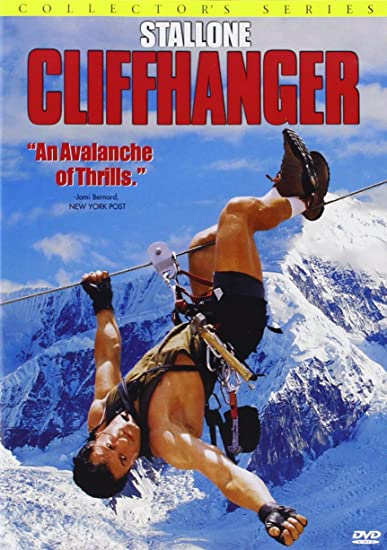
Cliffhanger (1993, directed by Renny Harlin)


Sylvester Stallone is Gabe, a mountain climber who also works as a rescue ranger.  Michael Rooker is Hal, Gabe’s colleague and former best friend.  Hal blames Gabe for the death of his girlfriend, Sarah.  Gabe also blames himself and is planning on getting out of the rescue game.  But before Gabe can quit, he’s got one last mission to perform.  Qualen (John Lithgow) is a psychotic former spy who has masterminded a multi-million dollar robbery.  A plane crash leads to the loot getting scattered in the mountains.  Qualen takes Hal and Gabe prisoner and tries to force them to help him track down the money.

Cliffhanger was made during one of the slower periods of Stallone’s career.  He had temporarily retired the roles of both Rocky Balboa and John Rambo and, as an action star, he was being overshadowed by Arnold Schwarzenegger.  Stallone had tried to reinvent himself as a comedic actor, with the result being Stop!  Or My Mom Will Shoot!  The former Oscar nominee was now only winning Razzies and he was running the risk of becoming better known for his messy divorce from Brigitte Nielsen than for his recent films.  Things weren’t looking good for Stallone but, fortunately, the box office success of Cliffhanger revived his career.

Seen today, Cliffhanger holds up well as an undemanding but enjoyable action film.  It’s a very much a film of its time, complete with John Lithgow hamming it up as a British villain and Northern Exposure’s Janine Turner playing Stallone’s loyal, helicopter-owning girlfriend.  Stallone’s best films are the ones where he is willing to surrender his ego and he does that in Cliffhanger.  It may be a Stallone film but the best lines go to Michael Rooker and the true stars of the film are the mountains and the scenes of Stallone and Rooker trying to climb them.  With Cliffhanger, Stallone was smart enough to stay out of the way and just trust that the image of him dangling above the Rockies would bring in the audience.  It was a smart decision.  Though Cliffhanger is often overshadowed by Stallone’s other 1993 hit, Demolition Man, it’s still an entertaining film in its own right.

Cliffhanger was directed by Renny Harlin, the Finnish action specialist whose promising career would subsequently take a hit and never really recover from directing Cutthroat Island.  Mountain climbing and Renny Harlin just seem to go together and Cliffhanger is one of his better films.  Here’s hope that, just as Stallone has done many times in the past, Renny Harlin will eventually his comeback as a director.

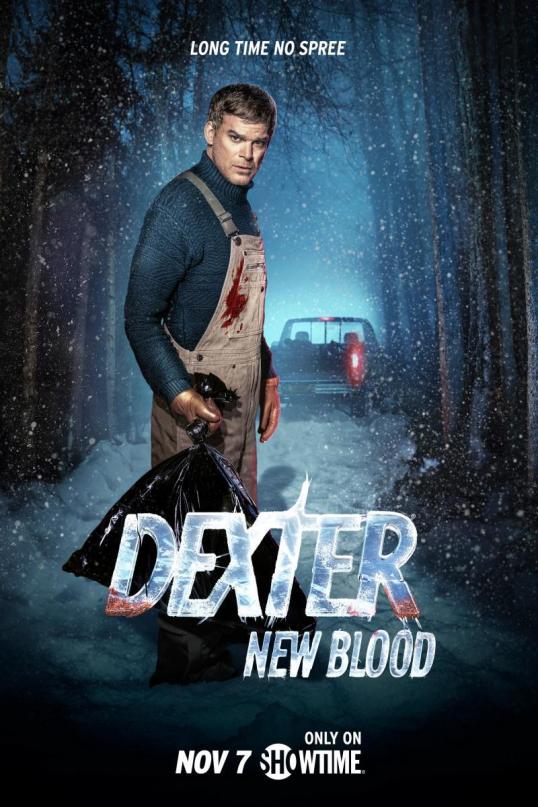
TV Review: Dexter: New Blood 1.7 “Skin of Her Teeth” (dir by Sanford Bookslaver)


Occasionally, while watching an episode of the original run of Dexter, I would sometimes wonder, “What if Dexter didn’t kill this latest serial killer?  What if he actually did step back and just let the police do their job?”

Well, the latest episode of Dexter: New Blood answered my question for me.  Even after he had all of the evidence that he needed to believe that Kurt was not only the sniper but that he was also responsible for the decades-old murder of Iris, Dexter still tried to play by the rules.  He extracted a tooth from Iris’s mouth and, seeing that she had bitten her attacker, he gave it to Angela so that she could run a DNA test.  He also told Angela about the murder cabin to which Kurt had previously tried to lure Molly.  For once, Dexter stepped to the side and tried to let the system do its job.

Why did Dexter do this, despite Ghost Deb literally ordering him to kill Kurt?  Dexter’s pursuit of Kurt has been complicated by Kurt’s pursuit of Harrison.  With Harrison obviously growing more and more unstable, Dexter didn’t want to have to keep another secret from his son.  He didn’t want Harrison to make a martyr out of Kurt.  Dexter wanted to make sure that his son would eventually look up to the right serial killer.  Good for Dexter!

Unfortunately, it turns out that the system doesn’t work.  It didn’t work in Miami and apparently, it doesn’t work in upstate New York either.  Yes, Kurt is arrested and he’s taken off to jail.  But, after he concocts a story framing his abusive father and after the DNA on Iris’s tooth turns out to be just a 67% match, Kurt is set free.  However, while he is in jail, he’s visited by Dexter.  The two of them, obviously no longer pretending to be friends, find themselves discussing whether or not titanium can melt.  Earlier in the episode, a slovenly truck driver gave Harrison an envelope for Dexter.  Inside the envelope was a titanium screw, one that Dexter soon learns came from Matt’s body.  In short, Dexter knows that Kurt is a murderer and Kurt knows the same about Dexter.  However, others may soon be finding out as well.  With Kurt out of jail, Molly and Angela talked and realized that there were holes not only in Kurt’s story but Dexter’s as well.

Meanwhile, Harrison finally revealed the truth to Dexter.  As Harrison explained it, he has always had nightmares but now he realizes that the nightmares were actually memories of Rita’s murder.  (John Lithgow makes a cameo appearance as the Trinity Killer and is quite chilling, despite only being onscreen for a minute or two.)  Harrison announced that he was leaving town.  Just as Dexter tried to follow his son, he was attacked by the same trucker who gave Harrison the screw.  And then …. the episode ended!

This was a seriously good episode, probably the best of the season so far.  The episode opened on a properly macabre touch (with Dexter and Angela investigating Iris’s mummified corpse) and it ended on a moment of genuine suspense.  In between, Michael C. Hall and Clancy Brown both did compelling work as two guys who have a secret that only they can truly understand.  The scene were Dexter and Kurt faced off in the jail was wonderfully acted and directed.  As played by Clancy Brown, Kurt is the first Dexter villain to truly feel like a worthy adversary since the Trinity Killer.  Indeed, it seems somewhat appropriate that the same episode that featured a flashback to Kurt’s first kill also featured a flashback to Trinity’s final murder.

So, what can we expect to happen next week?  Dexter getting attacked by that truck driver would seem to suggest that Kurt has more allies that Dexter imagined.  What if Kurt is not working alone?  What if his truck stop is actually some sort of serial killer hang-out?  It’s possible and it would certainly explain why Kurt was so eager to have Harrison working there.  It would seem that Kurt might want to hunt Dexter next.

But here’s the thing — there are three episodes left.  Seeing as how Kurt and Dexter know the truth about each other, you have to wonder what they’re going to be spend the next three hours doing until their final confrontation.  Next week’s episode is called Unfair Game.  Could that be a reference to The Most Dangerous Game, the short story that Kurt seems to be trying to recreate with each of his murders?  The final two episodes are entitled: “Family Business” and “Sins of the Father,” which would seem to indicate that Harrison is going to play a key role in whatever happens.  Personally, I’m still expecting Edward Olsen to be revealed as Kurt’s partner.  Olsen hasn’t been in the last few episodes but he was prominently featured at the start of the season so it just seems like there has to be more to him beyond just being a wealthy land developer.

We’ll see what happens!

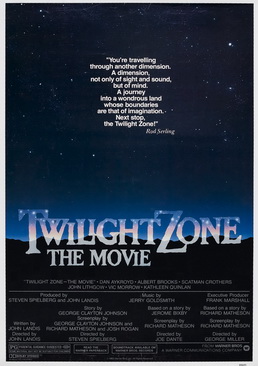
Horror Film Review: Twilight Zone: The Movie (dir by John Landis, Steven Spielberg, Joe Dante, and George Miller)


1983’s Twilight Zone: The Movie is meant to be a tribute to the classic original anthology series.  It features four “episodes” and two wrap-around segments, with Burgess Meredith providing opening and closing narration.  Each segment is directed by a different director, which probably seemed like a good idea at the time.

Unfortunately, Twilight Zone: The Movie is a bit of a mess.  One of the episodes is brilliant.  Another one is good up until the final few minutes.  Another one is forgettable.  And then finally, one of them is next too impossible to objectively watch because of a real-life tragedy.

With a film that varies as wildly in tone and quality as Twilight Zone: The Movie, the only way to really review it is to take a segment at a time:

Something Scary (dir by John Landis)

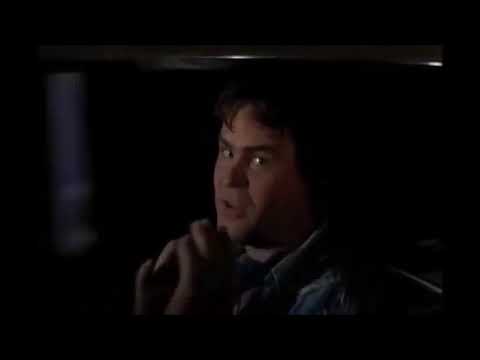
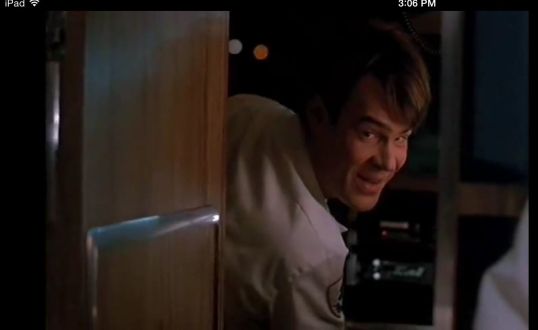
Albert Brooks and Dan Aykroyd drive through the desert and discuss the old Twilight Zone TV series.  Brooks claims that the show was scary.  Aykoyd asks if Brooks wants to see something really scary.  This is short but fun.  It’s tone doesn’t really go along with the rest of the movie but …. oh well.  It made me jump.

Time Out (dir by John Landis)

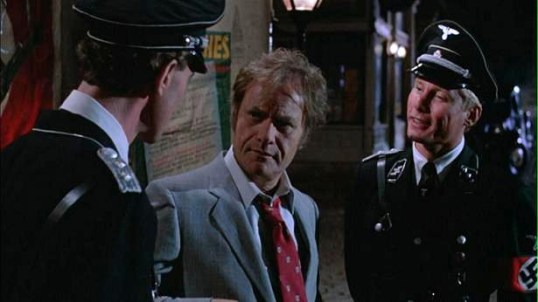
Vic Morrow plays a racist named Bill Connor who, upon leaving his local bar, finds himself transported to Nazi-occupied France, the deep South, and eventually Vietnam.

How you react to this story will probably depend on how much you know about its backstory.  If you don’t know anything about the filming of this sequence, you’ll probably just think it’s a bit heavy-handed and, at times, unintentionally offensive.  Twilight Zone often explored themes of prejudice but Time Out just seems to be using racism as a gimmick.

If you do know the story of what happened while this segment was being filmed, it’s difficult to watch.  Actor Vic Morrow was killed during filming.  His death was the result of a preventable accident that occurred during a scene that was to involve Morrow saving two Vietnamese children from a helicopter attack.  The helicopter crashed, killing not only Morrow but the children as well.  It was later determined that not only were safety protocols ignored but that Landis had hired the children illegally and was paying them under the table so that he could get around the regulations governing how many hours child actors could work.  It’s a tragic story and one that will not leave you as a fan of John Landis’s, regardless of how much you like An American Werewolf in London and Animal House.

Nothing about the segment feels as if it was worth anyone dying for and, to be honest, I’m kind of amazed that it was even included in the finished film.

Kick The Can (dir by Steven Spielberg)

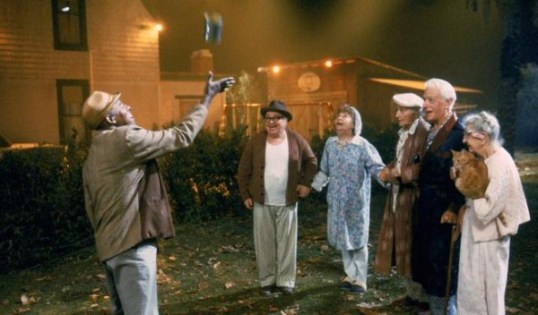
An old man named Mr. Bloom (Scatman Crothers) shows up at Sunnyvale Retirement Home and encourages the residents to play a game of kick the can.  Everyone except for Mr. Conroy (Bill Quinn) eventually agrees to take part and, just as in the episode of the Twilight Zone that this segment is based on, everyone becomes young.

However, while the television show ended with the newly young residents all running off and leaving behind the one person who refused to play the game, the movie ends with everyone, with the exception of one man who apparently became a teenager istead of a kid, deciding that they would rather be old and just think young.  That really doesn’t make any damn sense but okay.

This segment is unabashedly sentimental and clearly calculated to brings tears to the eyes to the viewers.  The problem is that it’s so calculated that you end up resenting both Mr. Bloom and all the old people.  One gets the feeling that this segment is more about how we wish old people than how they actually are.  It’s very earnest and very Spielbergian but it doesn’t feel much like an episode of The Twilight Zone.

It’s A Good Life (dir by Joe Dante)

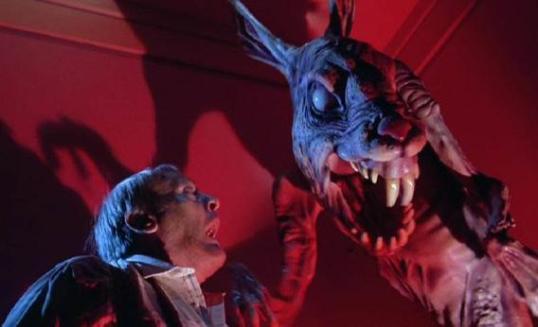
A teacher (Kathleen Quinlan) meets a young boy (Jeremy Licht) who has tremendous and frightening powers.

This is a remake of the classic Twilight Zone episode, It’s A Good Life, with the difference being that young Anthony is not holding an entire town hostage but instead just his family.  This segment was directed by Joe Dante, who turns the segment into a cartoon, both figuratively and, at one point, literally.  That’s not necessarily a complaint.  It’s certainly improvement over Spielberg’s sentimental approach to the material.  Dante also finds roles for genre vets like Kevin McCarthy, William Schallert, and Dick Miller and he provides some memorably over-the-top visuals.

The main problem with this segment is the ending, in which Anthony suddenly reveals that he’s not really that bad and just wants to be treated normally, which doesn’t make much sense.  I mean, if you want to be treated normally, maybe don’t zap your sister in a cartoon.  The teacher agrees to teach Anthony how to be a normal boy and again, what the Hell?  The original It’s A Good Life worked because, like any child, Anthony had no conception of how adults felt about him.  In the movie version, he’s suddenly wracked with guilt and it’s far less effective.  It feels like a cop out.

Still, up until that ending, It’s A Good Life worked well as a satire of the perfect American family.

Nightmare at 20,000 Feet (dir by George Miller)

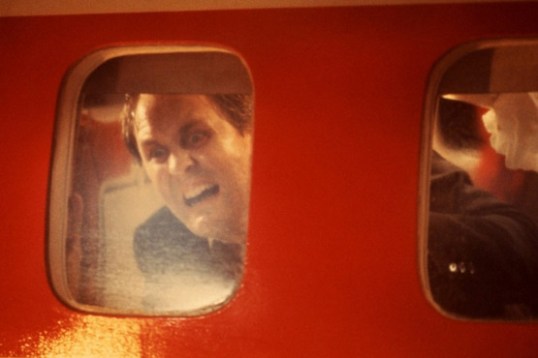
In this remake of Nightmare at 20,000 Feet, John Lithgow steps into the role that was originally played by William Shatner.  He plays a man who, while attempting to conquer his fear of flying, sees a gremlin on the wing of his airplane.  Unfortunately, he can’t get anyone else on the plane to believe him.

Nightmare at 20,000 Feet is the best of the four main segments.  It’s also the one that sticks closest to its source material.  Director George Miller (yes, of Mad Max fame) doesn’t try to improve on the material because he seems to understand that it works perfectly the way it is.  John Lithgow is also perfectly cast in the lead role, perfectly capturing his increasing desperation.  The one change that Miller does make is that, as opposed in the TV show, the gremlin actually seems to be taunting John Lithgow at time and it works wonderfully.  Not only is Lithgow trying to save the plane, he’s also trying to defeat a bully.

Something Scarier (dir by John Landis)

Dan Aykroyd’s back as an ambulance driver, still asking his passenger if he wants to see something really scary.  It’s an okay ending but it does kind of lessen the impact of Nightmare at 20,000 Feet.


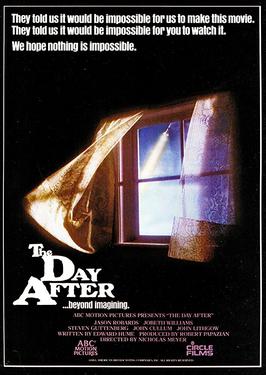
Film Review: The Day After (dir by Nicholas Meyer)


“This is Lawrence. This is Lawrence, Kansas. Is anybody there? Anybody at all?”

The words of Joe Huxley (John Lithgow) hang over the ending of The Day After, a 1983 film that imagines what the aftermath of a nuclear war would be like not on the East or the West Coasts but instead in the rural heartland of America.  Huxley is a professor at the University of Kansas and, as he explains early on in the film, Kansas would be an automatic target in any nuclear war because it houses a number of missile silos.  When he explains that, it’s in an almost joking tone, largely because the missiles haven’t been launched yet.  Instead, the only thing we’ve heard are a few barely noticed news stories about growing tensions between America and Russia.  About halfway through The Day After, the bombs go off and there are suddenly no more jokes to be made.

When the bombs drop over Kansas, we watch as cities and field and people burst into flames.  In a matter of minutes, several thousands are killed.  I’m almost ashamed to admit that I was probably more upset by the image of a horse being vaporized than I was by the death of poor Bruce Gallatin (Jeff East), the college student who was planning on marrying Denise Dahlberg (Lori Lethin).  I guess it’s because horses — really, all animals — have nothing to do with the conflicts between nations.  Humans are the ones who take the time to build bigger and better weapons and The Day After is one of the few films about war that’s willing to acknowledge that, when humans fight, it’s not just humans that die.

The bombing sequence is lengthy and I have to admit that I was a bit distracted by the fact that I recognized some of the footage from other movies.  A scene of panicked people running through a building was taken from Two-Minute Warning.  A scene of a building exploding and a construction worker being consumed by flames was lifted from Meteor.  As well, there’s some stock footage which should be familiar to anyone who has ever seen a documentary about the early days of the Cold War.  Still, despite that, it’s an effective sequence simply because it’s so relentless.  Some of the film’s most likable characters are vaporized before our eyes.  Steve Guttenberg, of all people, is seen ducking into a store.

Guttenberg plays Stephen Klein, a pre-med student who manages to survive the initial attack and takes shelter with the Dahlberg family at their ranch.  At first, it’s a bit distracting to see Steve Guttenberg in a very serious and very grim film about the nuclear apocalypse but he does a good job.  The sight of him losing both his teeth and his hair carries a punch precisely because he is reliably goofy Steve Guttenberg.

If the film has a star, it’s probably Jason Robards, the doctor who witnesses the initial blast from the safety of his car and then treats the dying in Lawrence, Kansas.  He does so, despite the fact that he doesn’t know if his wife, son, and daughter are even still alive.  He continues to do so until he also falls ill with radiation poisoning.  Knowing that he’s dying, he heads home just to discover that there is no home to return to.

Home is reccuring theme throughout The Day After.  Everyone wants to return to their home but everyone’s home has been wiped out.  “This is my home,” Jim Dahlberg (John Cullum) tries to explain before he’s attacked by a group of feral nomads.  Home no longer exists and trying to pretend like life can go back to the way it once was is an often fatal mistake.

Real happy film, right?  Yeah, this isn’t exactly a film that you watch for fun.  I have to admit that I made a joke about how I wouldn’t want to die while wearing the unfortunate blue jumpsuit that Jason Robards’s daughter chooses to wear on the day of the nuclear attack and I felt guilty immediately.  (Well, not that guilty.  Seriously, it was a terrible fashion choice.)  The Day After is a film that gives audiences zero hope by design.  It was made at a time when it was generally assumed that nuclear was inevitable and it was designed to scare the Hell out of everyone watching.  And while I can’t attest to how audience may have reacted in 1983, I can say that, in 2020, it’s still a powerful and disturbing film.

“Is anybody there? Anybody at all?” Joe Huxley asks and by the end of the film, the answer doesn’t matter.  The damage has already been done.

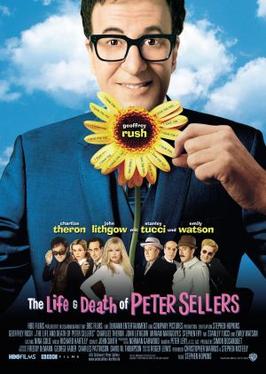
The Life and Death of Peter Sellers (2004, directed by Stephen Hopkins)


Peter Sellers was a brilliant actor and comedian while also being a childish and selfish human being who, because he was always performing, never really developed a personality of his own.

That’s the argument made by The Life and Death of Peter Sellers, which stars Geoffrey Rush as Sellers.  The film follows Sellers from his success with The Goon Show to his subsequent collaborations with Stanley Kubrick (Stanley Tucci) and Blake Edwards (John Lithgow).  Sellers becomes an international star but remains a deeply unhappy person, cheating on his wives, emotionally abusing his son, and being difficult on set.  The film makes the argument that that the only person that Sellers truly loved was his doting mother (played by Miriam Margoyles) and that, having been born into a show business family, performing was the only thing that he was capable of doing.  Even the few times when he’s shown to be a decent father, husband, or friend, it’s suggested that he’s just acting the role.  Rush plays Sellers as being someone who is incapable of understanding how other people think so, whenever he has to interact with them, he simply imitates what he’s seen others do.  Just look at the scene where he attempts to flirt with Sofia Loren by grinning up at her like a character in a romantic comedy.

The problem with a film like this is that, because he’s portrayed as being so selfish and immature, it’s hard to make Peter Sellers into a character that you would want to spend any time with.  The narrative goes from one Sellers tantrum to another.  Stephen Hopkins livens things up by including fantasy sequences where Sellers is taunted by some of his best-known characters, driving home the point that there wasn’t much to Sellers beyond the characters that he played and reminding us of both Sellers’s talent and Geoffrey Rush’s as well.  There are also frequent monologues from Rush, dressed up like the other characters in the movie and discussing their relationship with Peter Sellers.  Sometimes it works and sometimes it doesn’t.  Rush does a good job playing Stanley Tucci playing Stanly Kubrick but when he’s made up to look like Miriam Margoyles, the conceit gets too ridiculous to work.

The main reason to see the film is for the performances, especially Emily Watson as Sellers’s first wife and Stephen Fry as Sellers’s “spiritual advisor.”  Stanley Tucci is an inscrutably brilliant Stanley Kubrick while John Lithgow is a hyperactive and crass Blake Edwards.  Finally, Geoffrey Rush is a marvel as Peter Sellers.  Rush has a difficult job, making an extremely unlikable character compelling but he succeeds despite not always being helped by the film’s script or direction.

Like the man it portrayed, The Life and Death of Peter Sellers is flawed but filled with enough talent to watchable.


Lisa Reviews An Oscar Nominee: All That Jazz (dir by Bob Fosse)


“Bye bye life….

Bye bye happiness….

Hello loneliness….

I think I’m going to die….”

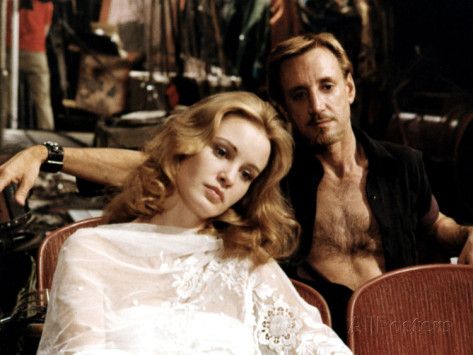
So sings Joe Gideon (Roy Scheider) at the end of the 1979 film, All That Jazz.  And he’s right!  It’s hardly a spoiler to tell you that All That Jazz ends with Joe Gideon in a body bag.  It’s not just that Gideon spends a good deal of the film flirting with the Angel of the Death (Jessica Lange).  It’s also that, by the time the film ends, we’ve spent a little over two hours watching Joe engage in non-stop self-destruction.  Joe is a director and a choreographer who is so in love with both death and show business that his greatest triumph comes from choreographing his own death.

Joe wakes up every morning, pops a handful of pills, stares at himself in the mirror and says, “It’s showtime!”  He spends his day choreographing a Broadway play.  He spends his nights editing his latest film, a biopic about Lenny Bruce called The Stand-Up.  He’s particularly obsessed with a long monologue that Lenny (played by Cliff Gorman) delivers about the inevitability of death.  When he’s not choreographing or editing, he’s smoking, drinking, and cheating on his girlfriend (Ann Reinking).  It’s obvious that he’s still in love with his ex-wife (Leland Palmer) and that she loves him too but she’s also too smart to allow herself to get fully sucked back into his self-destructive orbit.  He loves his daughter (Erzsébet Földi) and yet still ignores her when she begs him not to die.

Joe and the Angel of Death

When Joe has a heart attack and ends up in the hospital, he doesn’t change his behavior.  Instead, he and the Angel of Death take a look back at his youth, which was spent hanging out in strip clubs and desperately trying to become a star.  Joe Gideon, we see, has always know that he’s going to die early so he’s pushed himself to accomplish everything that he can in what little time he has.

As a result of his drive and his refusal to love anyone but himself, Gideon is widely recognized as being an artistic genius.  However, as O’Connor Flood (Ben Vereen, essentially playing Sammy Davis, Jr.) puts it, “This cat allowed himself to be adored, but not loved. And his success in show business was matched by failure in his personal relationship bag, now – that’s where he really bombed. And he came to believe that show business, work, love, his whole life, even himself and all that jazz, was bullshit. He became numero uno game player – uh, to the point where he didn’t know where the games ended, and the reality began. Like, for this cat, the only reality – is death, man. Ladies and gentlemen, let me lay on you a so-so entertainer, not much of a humanitarian, and this cat was never nobody’s friend. In his final appearance on the great stage of life – uh, you can applaud if you want to – Mr. Joe Gideon!”

Now, of course, Connor doesn’t really say all that.  Gideon just imagines Connor saying that before the two of them launch into the film’s final musical number, Bye Bye Life.  It should be a totally depressing moment but actually, it’s exhilarating to watch.  It’s totally over-the-top, self-indulgent, and equally parts sincere and cynical.  It’s a Bob Fosse production all the way and, as a result, All that Jazz is probably about as fun as a movie about the death of a pathological narcissist can be.  This is a film that will not only leave you thinking about mortality but it will also make you dance.

All That Jazz was Bob Fosse’s next-to-last film (he followed it up with the even darker Star 80) and it’s also his most openly autobiography.  Roy Scheider may be playing Joe Gideon but he’s made-up to look exactly like Bob Fosse.  Like Joe Gideon, Bob Fosse had a heart attack while trying to direct a Broadway show and a film at the same time.  Gideon’s girlfriend is played by Fosse’s real-life girlfriend.  The character of Gideon’s ex-wife is clearly meant to be a stand-in for Gwen Verdon, Fosse’s real-life ex-wife.  When the film’s venal Broadway producers make plans to replace the incapacitated Gideon, Fosse is obviously getting back at some of the producers that he had to deal with while putting together Chicago.  It’s a confessional film, one in which Fosse admits to his faults while also reminding you of his talent.  Thank God for that talent, too.  All that Jazz is self-indulgent but you simply can’t look away.

It helps that Gideon is played by Roy Scheider.  Originally, Scheider’s Jaws co-star Richard Dreyfuss was cast in the role but he left during rehearsals.  Dreyfuss, talented actor that he was, would have been all-wrong for the role of Gideon.  One can imagine a hyperactive Dreyfuss playing Gideon but one can’t imagine actually feeling much sympathy for him.  Scheider, on the other hand, brings a world-weary self-awareness to the role.  He plays Gideon as a man who loves his talent but who hates himself.  Scheider’s Joe Gideon is under no illusions about who he is or how people feel about him.  When Fosse’s own instincts threatens to make the film unbearably pretentious, Scheider’s down-to-Earth screen presence keeps things grounded.

I love All That Jazz.  (Admittedly, a good deal of that love is probably connected to my own dance background.  I’ve known my share of aspiring Joe Gideons, even if none of them had his — or Bob Fosse’s — talent or drive.)  It’s not for everyone, of course.  Any musical that features actual footage of open heart surgery is going to have its detractors.  For the record, Stanley Kubrick called All That Jazz “the best film I think I’ve ever seen.”  It won the Palme d’Or at Cannes and it was nominated for Best Picture, though it ultimately lost to the far more conventional Kramer vs. Kramer.

All that Jazz would be the last of Fosse’s film to receive a best picture nomination.  (Fosse directed five features.  3 of them were nominated for Best Picture, with the other two being Cabaret and Lenny.)  8 years after filming his cinematic doppelganger dying during heart surgery, Fosse would die of a heart attack.  Gwen Verdon was at his side.