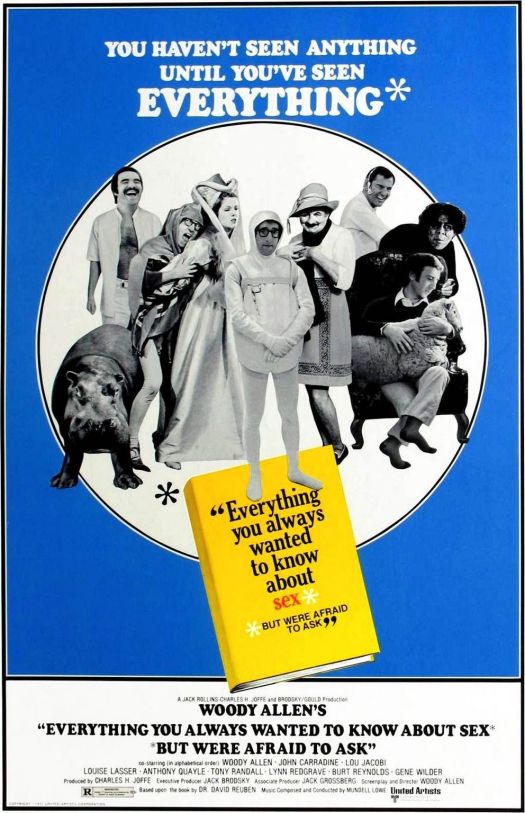
Say what you will about Woody Allen (and I’m sure some of you will), but from 1969 to 1977 he wrote, directed, and starred in some of the laugh-out-loud funniest movies ever made (after that, things got a bit pretentious, and his output has been hit-or-miss far as I’m concerned). Allen’s inventive mind took Dr. David Reuben’s best-selling sex manual EVERYTHING YOU ALWAYS WANTED TO KNOW ABOUT SEX (*but were afraid to ask) and turned it into a hilarious anthology that skewers not only societal mores and morals, but every segment parodies a different film genre.
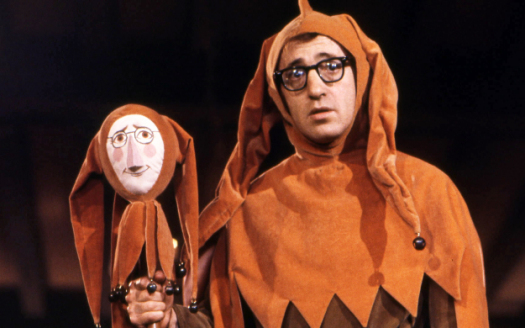
Some are better than others, but each has something funny to offer. The first, “Do Aphrodisiacs Work?”, finds Woody as a medieval court jester whose lousy Bob Hope one-liners bomb with the King (Anthony Quayle). The randy jester is dying to enter the Queen’s (Lynn Redgrave) “royal chambers”, but…
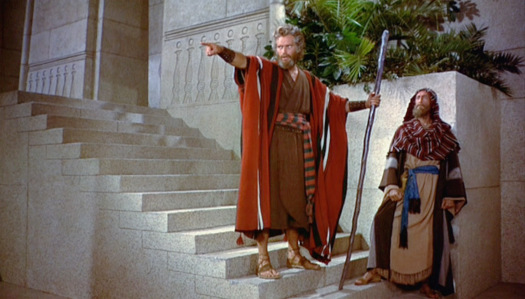
Last night, as I usually do during the Easter/Passover season, I watched Cecil B. DeMille’s Biblical epic THE TEN COMMANDMENTS. It’s a movie buffs delight, an All-Star spectacle featuring three Oscar winners ( Charlton Heston ,Yul Brynner , Anne Baxter ), one who should’ve been (Edward G. Robinson ), and a literal cast of thousands! Something that’s always stood out to me is the number of horror movie stars that appear in various parts, a plethora of Hollywood practitioners from my favorite genre:
John Carradine as Aaron
Carradine’s credentials in horror films are well documented, and he deserves his spot in the pantheon of Monster Movie Greats. As Moses’s brother Aaron, Carradine has his best “straight” role since THE GRAPES OF WRATH.
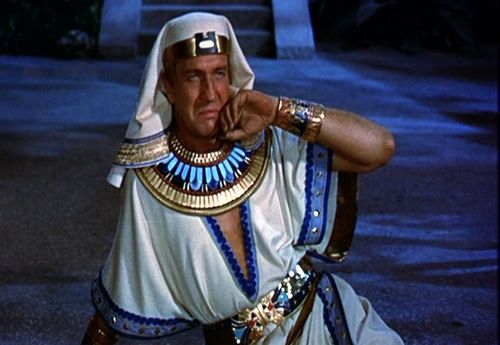
Vincent Price as Baka
Our Man Vinnie plays the evil slave master Baka, who gets his just rewards at the hands of John Derek’s Joshua. Price was…
(With the Oscars scheduled to be awarded on March 4th, I have decided to review at least one Oscar-nominated film a day. These films could be nominees or they could be winners. They could be from this year’s Oscars or they could be a previous year’s nominee! We’ll see how things play out. Today, I take a look at the 1940 best picture nominee, The Grapes of Wrath!)
How dark can one mainstream Hollywood film from 1940 possibly be?
Watch The Grapes of Wrath to find out.
Based on the novel by John Steinbeck and directed by John Ford, The Grapes of Wrath tells the story of the Joad family and their efforts to neither get sent to prison nor starve to death during the Great Depression. When they lose their farm in Oklahoma, they head for California. Pa Joad (Russell Simpson) has a flyer that says someone is looking for men and women to work as pickers out west. The 12 members of the Joad Family load all of their possessions into a dilapidated old truck and they hit the road. It quickly becomes apparent that they’re not the only family basing all of their hopes on the vague promises offered up by that flyer. No matter how much Pa may claim different, it’s obvious that California is not going to be the promised land and that not all the members of the family are going to survive the trip.
Tom Joad (Henry Fonda) is the oldest of the Joad sons. He’s just been released from prison and he’s killed in the past. Having been in prison during the start of the Great Depression, Tom doesn’t realize how bad things truly are until he arrives home and sees someone he grew up with using a tractor to knock down a house. (It’s just business, of course. The owners of the house can’t pay their bills so the house gets destroyed.) The film’s story is largely told through Tom’s eyes and Henry Fonda gives a sympathetic performance, one the gets the audience to empathize with and relate to a character who is a total outsider.
As for the rest of the Joad Family, Ma (Jane Darwell) is the glue who holds them together and who refuses to allow them to surrender to despair. (And yet even Ma is forced to make some tough choices when the starving children of one work camp ask her to share her family’s meal with them.) Rosasharan (Dorris Bowdon) is pregnant while Grandpa (Charley Grapewin) is too sickly for the trip but doesn’t have anywhere else to go. And then there’s Casy (John Carradine), the former preacher turned labor organizer. Casy is not blood-related but he soon becomes a member of the family.
The Joads have a healthy distrust of the police and other authority figures and that turns out to be a good thing because there aren’t many good cops to be found between Oklahoma and California. Instead, the police merely serve to protect the rich from the poor. Whenever the workers talk about forming a union and demanding more than 5 cents per box for their hard work, the police are there to break heads and arrest any troublemakers on trumped up charges. Whenever a town decides that they don’t want any “Okies” entering the town and “stealing” jobs, the police are there to block the roads.
The Grapes of Wrath provides a portrait of the rough edges of America, the places and the people who were being ignored in 1940 and who are still too often ignored today. John Ford may not be the first director that comes to mind when you think of “film noir” but that’s exactly what The Grapes of Wrath feels like. During the night scenes, desperate faces emerge from the darkness while menacing figures lurk in the shadows. When the sun does rise, the black-and-white images are so harsh that you almost wish the moon would return. The same western landscape that Ford celebrated in his westerns emerges as a wasteland in The Grapes of Wrath. The American frontier is full of distrust, anger, greed, and ultimately starvation. (Reportedly, the film was often shown in the Soviet Union as a portrait of the failure of America and capitalism. However, it was discovered that Soviet citizens were amazed that, in America, even a family as poor as the Joads could still afford a car. The Grapes of Wrath was promptly banned after that.) John Ford is often thought of as being a sentimental director but there’s little beauty or hope to be found in the images of The Grapes of Wrath. (Just compare the way The Grapes of Wrath treats poverty to the way Ford portrayed it in How Green Was My Valley.) Instead, the film’s only hint of optimism comes from the unbreakable familial bond that holds the Joads together.
As dark as it may be, the film is nowhere near as pessimistic as the original novel. The novel ends with a stillborn baby and a stranger starving to death in a barn. The film doesn’t go quite that far and, in fact, offers up some deus ex machina in the form of a sympathetic government bureaucrat. (Apparently, authority figures weren’t bad as long as they worked for the federal government.) That the book is darker than the movie is not surprising. John Steinbeck was a socialist while John Ford was a Republican with a weakness for FDR. That said, even though the film does end on a more hopeful note than the novel, you still never quite buy that things are ever going to get better for anyone in the movie. You want things to get better but, deep down, you know it’s not going to happen. Tom says that he’s going to fight for a better world and Fonda’s delivers the line with such passion that you want him to succeed even if you know he probably won’t. Ma Joad says the people will never be defeated and, again, you briefly believe her even if there’s not much evidence to back her up.
Even when viewed today, The Grapes of Wrath is still a powerful film and I can only guess what it must have been like to see the film in 1940, when the Great Depression was still going on and people like the Joads were still making the journey to California. Not surprisingly, it was nominated for best picture of 1940, though it lost to Alfred Hitchcock’s Rebecca.
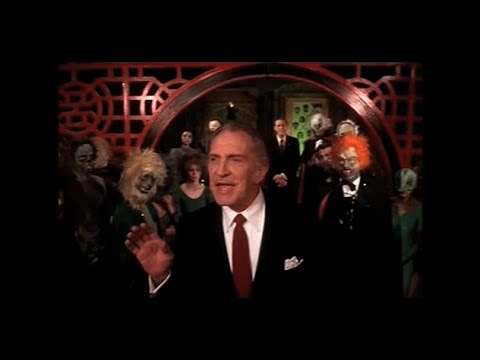
In what’s become an annual tradition here at Cracked Rear Viewer, it’s time for Halloween season’s theme song, “The Monster Mash” ! This time around, Vincent Price and his fiends, including fellow horror icon John Carradine , perform the hit from 1981’s cult movie THE MONSTER CLUB, featuring a scary soliloquy by Vincent on the monsters known as “humes”! Without further ado, here’s this year’s “Monster Mash”! And Happy Halloween, boys and ghouls!:
Here’s the main lesson that I’ve learned from watching the 1977 horror film, The Sentinel:
Even in the 1970s, the life of a model was not an easy one.
Take Alison Parker (Cristina Raines) for instance. She should have everything but instead, she’s a neurotic mess. Haunted by a traumatic childhood, she has attempted to commit suicide twice and everyone is always worried that she’s on the verge of having a breakdown. As a model, she’s forced to deal with a bunch of phonies. One of the phonies is played by Jeff Goldblum. Because he’s Goldblum, you suspect that he has to have something up his sleeve but then it turns out that he doesn’t. I get that Jeff Goldblum probably wasn’t a well-known actor when he appeared in The Sentinel but still, it’s incredibly distracting when he suddenly shows up and then doesn’t really do anything.
Alison has a fiancée. His name is Michael Lerman (Chris Sarandon) and I figured out that he had to be up to no good as soon as he appeared. For one thing, he has a pornstache. For another thing, he’s played by Chris Sarandon, an actor who is best known for playing the vampire in the original Fright Night and Prince Humperdink in The Princess Bride. Not surprisingly, it turns out that Michael’s previous wife died under mysterious circumstances. NYPD Detective Rizzo (Christopher Walken) suspects that Michael may have killed her.
(That’s right. Christopher Walken is in this movie but, much like Jeff Goldblum, he doesn’t get to do anything interesting. How can a movie feature two of the quirkiest actors ever and then refuse to give them a chance to act quirky?)
Maybe Alison’s life will improve now that she has a new apartment. It’s a really nice place and her real estate agent is played by Ava Gardner. Alison wants to live on her own for a while. She loves Michael but she needs to find herself. Plus, it doesn’t help that Michael has a pornstache and may have killed his wife…
Unfortunately, as soon as Alison moves in, she starts having weird dreams and visions and all the usual stuff that always happens in movies like this. She also discovers that she has a lot of eccentric neighbors, all of whom are played by semi-familiar character actors. For instance, eccentric old Charles (Burgess Meredith) is always inviting her to wild parties. Her other two neighbors (played by Sylvia Miles and Beverly D’Angelo) are lesbians, which the film presents as being the height of shocking decadence. At first, Alison likes her neighbors but they make so much noise! Eventually, she complains to Ava Gardner. Ava replies that Alison only has one neighbor and that neighbor is neither Burgess Meredith nor a lesbian.
Instead, he’s a blind priest who spends all day sitting at a window. He’s played by John Carradine, who apparently had a few hours to kill in 1977.
But it doesn’t stop there! This movie is full of actors who will be familiar to anyone who enjoys watching TCM. Along with those already mentioned, we also get cameos from Martin Balsam, Jose Ferrer, Arthur Kennedy, Eli Wallach, Richard Dreyfuss, and Tom Berenger. There are 11 Oscar nominees wasted in this stupid film. (Though, in all fairness, Christopher Walken’s nomination came after The Sentinel.)
Personally, The Sentinel bugged me because it’s yet another horror movie that exploits Catholic iconography while totally misstating church dogma. However, the main problem with The Sentinel is that it’s just so incredibly boring. I own it on DVD because I went through a period where I basically bought every horror film that could I find. I’ve watched The Sentinel a handful of times and somehow, I always manage to forget just how mind-numbingly dull this movie really is. There’s a few scary images but mostly, it’s just Burgess Meredith acting eccentric and Chris Sarandon looking mildly annoyed. If you’ve ever seen Rosemary’s Baby, The Exorcist, or The Omen, you’ll figure out immediately what’s going on but The Sentinel still insists on dragging it all out. Watching this movie is about as exciting as watching an Amish blacksmith shoe a horse.
There’s a lot of good actors in the film but it’s obvious that most of them just needed to pick up a paycheck. I’ve read a lot of criticism of Cristina Raines’s lead performance but I actually think she does a pretty good job. It’s not her acting that’s at fault. It’s the film’s stupid script and lackluster direction.
Sybil Danning is top-billed in The Tomb but she only appears at the very start of the film. She lands an airplane on a landing strip in the middle of the Egyptian desert and then gets into a gunfight with two archeologists who have robbed a tomb and are now trying to sell off the artifacts. When one of the archeologists aims his handgun at the plane and pulls the trigger, the plane explodes. Though Sybil survives the gun fight, that’s it for her in this movie. Since whatever modern-day audience The Tomb may have is largely going to be made up of nostalgic Sybil Danning fanboys, most people will probably stop watching once it becomes obvious that she is never coming back.
The rest of the movie is about the archeologists selling off the artifacts to greedy collectors like Cameron Mitchell (who spend the entire movie sitting in his office). This ticks off the ancient Egyptian princess, Nefratis (Michelle Bauer), and she sets off to kill all of the collectors, one-by-one.
Like The Awakening and Blood From The Mummy’s Tomb, The Tomb claims to be based on Bram Stoker’s The Jewel of Seven Stars. Actually, The Tomb is just an early Fred Olen Ray film, complete with Ray regulars like John Carradine, who gets even less screen time that Danning and Mitchell. Like most early Ray films, it suffers due to a low budget but Ray’s enthusiastic, never-say-die spirit keeps things moving right along. With most of the top-billed actors only appearing in a scene or two, the movie belongs to Bauer and she does the most that she can with her role, tearing apart hearts and swearing vengeance with real gusto.
One final note: during the opening credits, The Pharohs, a band that performed while wearing headresses and wrapped in banadages, performs Tutti Frutti. That almost makes up for Sybil Danning only appearing in 3 minutes of the movie.
For today’s horror on the lens, we have 1973’s The Night Strangler.
This is the sequel to The Night Stalker and it features journalist Carl Kolchak (Darren McGavin) in Seattle. (After all the stuff that happened during the previous movie, Kolchak was kicked out of Las Vegas.) When Kolchak investigates yet another series of murders, he discovers that paranormal murders don’t just occur in Las Vegas and aren’t just committed by vampires.
I actually prefer this movie to The Night Stalker. The Night Strangler features a truly creepy villain, as well as a trip down to an “underground city.” It’s full of ominous atmosphere and, as always, Darren McGavin is a lot of fun to watch in the role in Kolchak.
Today’s horror scene that I love comes from the 1945 film, House of Dracula!
House of Dracula may not be a classic but John Carradine definitely made for an intriguing Dracula. Far more than Bela Lugosi or even Christopher Lee, Carradine matched the physical description that Bram Stoker offered up of Dracula in his famous novel — tall, aristocratic, sophisticated, and disdainful of the world around him. Of course, Carradine’s American accent is all wrong for the role but no matter. He’s Carradine!
This scene features Carradine as Dracula, casting his hypnotic spell.
Culver City’s MGM “dream factory” and Gower Gulch’s PRC were miles apart both literally and figuratively. Metro-Goldwyn-Mayer boasted “more stars than there are in heaven”, while tiny Producer’s Releasing Corporation films starred faded names like Neil Hamilton, Harry Langdon, Bela Lugosi , and Anna May Wong. MGM films featured lavish, opulent sets; PRC’s cardboard walls looked like they would fall over if an actor sneezed. Poverty Row PRC movies were dark and grainy; MGM created glossy, gorgeous Technicolor productions. MGM specialized in big budget extravaganzas, whereas PRC rarely spent more than $1.98. Miles apart – so why did major studio MGM purchase and release a movie originally made for minor PRC, HITLER’S MADMAN?
For one thing, it’s a damn good film, and an important one as well. Based on the true-life atrocity of the destruction of Lidice, Czechoslovakia on June 10, 1942 after the assassination of Nazi Reichsprotektor Reinhardt Heydrich, known as “The Hangman of Prague”, HITLER’S MADMAN was…
The year is 1874 and James Otis (Charles Bronson) is traveling through the Dakota Territory. Everywhere that James Otis goes, someone tries to shoot him. This is because James Otis is actually the infamous Wild Bill Hickcock and everyone this side of Deadwood has a reason to want him dead. Hickcock has returned to the territory because he is losing his eyesight and he fears that he may be dying. Hickcock has been having nightmares about a giant albino buffalo and believes that it is his destiny to either kill it or be killed himself.
Meanwhile, a young indian chief (Will Sampson) is also seeking the White Buffalo. The buffalo previously attacked his village and killed his son. The chief must now get revenge or lose his power in the tribe. He is now known as Worm. Before the buffalo attack, his name was Crazy Horse.
Crazy Horse eventually teams up with Hickcock and a one-eyed hunter named Charlie Zane (Jack Warden). They work out an uneasy alliance but who, of the three, will finally get the chance to kill the buffalo?
When Dino De Laurentiis produced The White Buffalo, he was hoping to combine the popularity of Jaws with the star power of Charles Bronson. It should have been a hit but instead, The White Buffalo was one of the many flops that temporarily killed the western as a commercial genre. (Before there was Heaven’s Gate, there was The White Buffalo.) The reason why is obvious: while audiences loved to watch Bronson shoot muggers in New York, they were less willing to sit through a pseudo-intellectual western version of Moby Dick that featured more conversation than gunplay. The obviously fake buffalo did not help matters.
I still like The White Buffalo, though. Because of the movie’s cheap sets, fake snow, and some inconsistent rear projection work, The White Buffalo is sometimes so surreal that it could pass for a Spaghetti Western. (When I saw Bronson, Sampson, and Warden huddled in a cardboard cave while it fake snowed outside, I immediately thought of Sergio Corbucci’s The Great Silence.) Charles Bronson, always an underrated actor, gave one of his best performances as the haunted Hickcock. The White Buffalo was, up until his small role in Sean Penn’s The Indian Runner, the last time that Bronson would allow himself to appear as anyone other than Charles Bronson on-screen.
When watching The White Buffalo, keep an eye out for several Hollywood veterans in minor roles. Kim Novak plays a prostitute. Stuart Whitman is a thief. Slim Pickens drives a stagecoach. Clint Walker’s an outlaw and Ed Lauter plays the younger brother of Gen. Custer. The town’s undertaker is John Carradine. The cameos don’t add up too much but it’s still good to see everyone.



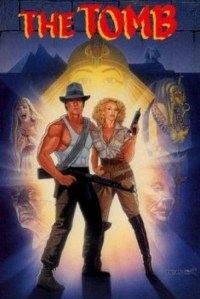 Sybil Danning is top-billed in The Tomb but she only appears at the very start of the film. She lands an airplane on a landing strip in the middle of the Egyptian desert and then gets into a gunfight with two archeologists who have robbed a tomb and are now trying to sell off the artifacts. When one of the archeologists aims his handgun at the plane and pulls the trigger, the plane explodes. Though Sybil survives the gun fight, that’s it for her in this movie. Since whatever modern-day audience The Tomb may have is largely going to be made up of nostalgic Sybil Danning fanboys, most people will probably stop watching once it becomes obvious that she is never coming back.
 The year is 1874 and James Otis (Charles Bronson) is traveling through the Dakota Territory. Everywhere that James Otis goes, someone tries to shoot him. This is because James Otis is actually the infamous Wild Bill Hickcock and everyone this side of Deadwood has a reason to want him dead. Hickcock has returned to the territory because he is losing his eyesight and he fears that he may be dying. Hickcock has been having nightmares about a giant albino buffalo and believes that it is his destiny to either kill it or be killed himself.
 Through the Shattered Lens