Film Review: The Divergent Series: Allegiant (dir by Robert Schwentke)


Oh, Who Gives A Fuck About This Fucking Movie?

Oh, who cares?

I really hate to start my review with such a negative statement but seriously, after watching Allegiant today, I am now convinced that the Divergent movies are perhaps the least interesting film franchise since the Paranormal Activity sequels.  Not only are the films so derivative of The Hunger Games that I’m always surprised that Donald Sutherland isn’t lurking around in the background but they’ve also managed to waste the talents of some of the best actors of my generation.  When you’ve got performers like Shailene Woodley and Miles Teller at your disposal, there’s no excuse not to be interesting.

I watched Allegiant with my BFF Evelyn and I’ll admit right now that we talked throughout the entire movie.  We laughed at the most serious of moments.  When Jeff Daniels showed up, we had a very long discussion about how, when he’s good, Jeff Daniels is really good but when he’s bad, he manages to come across as being the most boring man on the planet.  When Miles Teller betrayed his allies, Evelyn said, “Again!?” and then she had to remind me that Miles Teller always ends up betraying everyone in every Divergent film.

(It makes you wonder why the Tris (played by Shailene Woodley) and Four (Theo James) always bring Miles Teller with them as opposed to just killing him.  I suppose some of it might have to do with the fact that he’s Miles Teller and he’s a badass.  In fact, he probably should be playing Four.  He certainly has more chemistry with Shailene Woodley than Theo James does.  In fact, Theo James always looks like he’d rather be doing anything other than appearing in another goddamn Divergent film.)

And yes, Evelyn and I did get a few dirty looks from some people in the audience but you know what?  I fully understand that it’s rude to talk through a movie but oh my God, we had to do something.  Allegiant is such a boring movie.  The film moves slowly, as if the filmmakers don’t understand that everyone in the audience has seen enough YA adaptations to already know everything that’s going to happen.  If you want to truly understand what film critics mean when they say that a film is “draggy,” try to watch an entire Divergent film without standing up to stretch your legs or get something to drink.  Perhaps the biggest mistake you can make while watching Allegiant is to actually concentrate on what’s slowly playing out on screen.

The Divergent films aren’t terribly complicated and yet, I always find myself struggling to follow them.  They’re so bland and forgettable that I can never remember what happened in the previous film.  As Allegiant started, I was like, “Why is Naomi Watts in charge of Chicago now?  Oh yeah, Kate Winslet did die at the end of the last movie!”  And then I remembered that Evelyn was Four’s mother.

And then my BFF Evelyn (as opposed to the film’s Evelyn) said, “Four is a stupid name,” and I started laughing way too hard.  In fact, we made many jokes about Four’s nickname and then eventually, I remembered that he was called Four because he only has four fears.  But it took me a while to remember and, once I did remember, I couldn’t help but think about how stupid a backstory that was.

Anyway, the plot of the film is that the movie’s Evelyn is now in charge of Chicago but she’s turning out to be just as bad as the system that she’s replacing.  So, Tris, Four, and friends escape from Chicago and explore the barren landscape that surrounds the city.  Eventually, they are found by the Bureau of Genetic Welfare.  The Bureau is headed up by a boring guy named David (Jeff Daniels).  At first, David seems to be a good guy but then it turns out that the Bureau was behind the whole Faction experiment.  And now the Bureau wants to attack Chicago, wipe the slate clean, and start the experiment all over again.

Will Four and Tris go along with David’s plan or will they try to stop him?

At this point, who cares?

The thing that’s annoying about the Divergent films is that the storyline has potential.  At the heart of it all, the battle between the Factions and the Factionless has the potential to be a powerful, if simplistic, metaphor.  But the films are so plodding and take such an obvious approach that most of that potential is wasted.  Add to that, Shailene Woodley is a great actress.  In fact, I think it can be argued that she actually has more range than Jennifer Lawrence.  (Just check out her performance in The Spectacular Now.)  But the franchise has never known what to do with her uniquely off-center style.  Instead, it simply gives her speeches that feel as if they’ve been lifted from every other dystopian YA franchise.  The films insist on trying to make Shailene Woodley predictable and she deserves better on that.

As is typical of big franchise films nowadays, Allegiant is just part one of the Divergent finale and even the “to be continued” ending feels annoying because it’s so obviously lifted from every other franchise finale that’s ever been produced.  As with all the Divergent films, Allegiant never escapes the shadow of The Hunger Games.  The best that can be said about this franchise is that it will be over soon.  Hopefully, Shailene Woodley will be able to move onto a film more worthy of her considerable talents.

A Few Thoughts On The Martian…


The_Martian_film_poster

I’m a few weeks late in reviewing The Martian, largely because I was on vacation when it was first released.  When I finally did see The Martian, it was at the wonderful UEC theater in beautiful Russellville, Arkansas.  As opposed to my experience when I saw The Green Inferno, the theater was packed and, throughout the entire movie, it was obvious that the audience absolutely loved what they were seeing on screen.  They laughed, they applauded, and it was obvious they had a great time with the movie.

And why not?  After the commercial failures of both The Counselor and Exodus, it’s obvious that director Ridley Scott was not going to take any chances with The Martian.  There’s not a single scene that is not specifically calculated to keep the viewer as complacently satisfied as possible.  Telling the story of how botanist Mark Whatney (Matt Damon) gets stranded on Mars and must figure out a way to survive until he can be rescued, The Martian is such a positive film that its total lack of cynicism almost gets overwhelming.  The end result is a film that is a 100 times better than Exodus but never as interesting or challenging as The Counselor.

In fact, as I watched The Martian, I kept thinking about another film about a man stranded out in the middle of nowhere, Into The Wild.  The main character in Into The Wild spent his isolation contemplating the meaning of life and finally reaching some sort of spiritual peace before starving to death.  Mark Whatney, on the other hand, spends his isolation recording a snarky video diary and listening to classic disco songs.

And, before anyone gets offended or accuses me of being a film snob, allow me to say that I enjoyed The Martian.  I thought it was an entertaining movie and I especially loved the soundtrack.  But, at the same time, one can enjoy The Martian and still acknowledge that there’s not much going on underneath the crowd-pleasing surface.

Looking back on the film, I find it remarkable just how little we learn about Mark Whatney.  We hear at one point that he has a family but we really don’t learn anything about his life on Earth.  In a way, he’s a bit like Robert Redford in All Is Lost.  Except, of course, Mark Whatney talks.  He talks a lot.  Fortunately, Mark is played by Matt Damon, who is a great talker.  If I think that The Martian is entertaining but also a bit overrated (and I do), I also think that Matt Damon deserves every bit of praise that he’s received for his performance.

Interestingly enough, The Martian not only features Matt Damon’s best performance but it also features Jessica Chastain’s worst.  Chastain plays Commander Lewis, who is in charge of the Mars expedition and who take it upon herself to bring Mark Whatney home.  And really, this should have been a great role for Jessica Chastain but, for the first time that I can remember, she gives a performance that just isn’t that interesting.

Then again, there’s really only one interesting character in the entire film and that’s Mark Whatney  (though I would have liked to learn more about the astronomer played by Donald Glover, who gives an appealingly eccentric performance).  This is Matt Damon’s film and it’s best moments are the ones where Mark deals with life on Mars.  In fact, there’s a part of me that almost wishes the majority of the NASA scenes had been left on the editing room floor and almost the entire movie had just been Matt Damon on Mars.

In the end, I did enjoy The Martian.  It’s a good film that some people are insisting was great.  (Of course, a lot of that is because it’s trendy to be into science.  Fortunately, Mark Whatney isn’t as much of a pompous blowhard as Neil DeGrasse Tyson, nor is he as creepy as Bill Nye.)  Some people are even suggesting that The Martian is the new Oscar front runner and maybe it is.  (After all, it’s not like there was much going on below the surface of Birdman either.)

But for me, in the years to come, the main thing I’ll remember about The Martian is the totally kickass soundtrack…


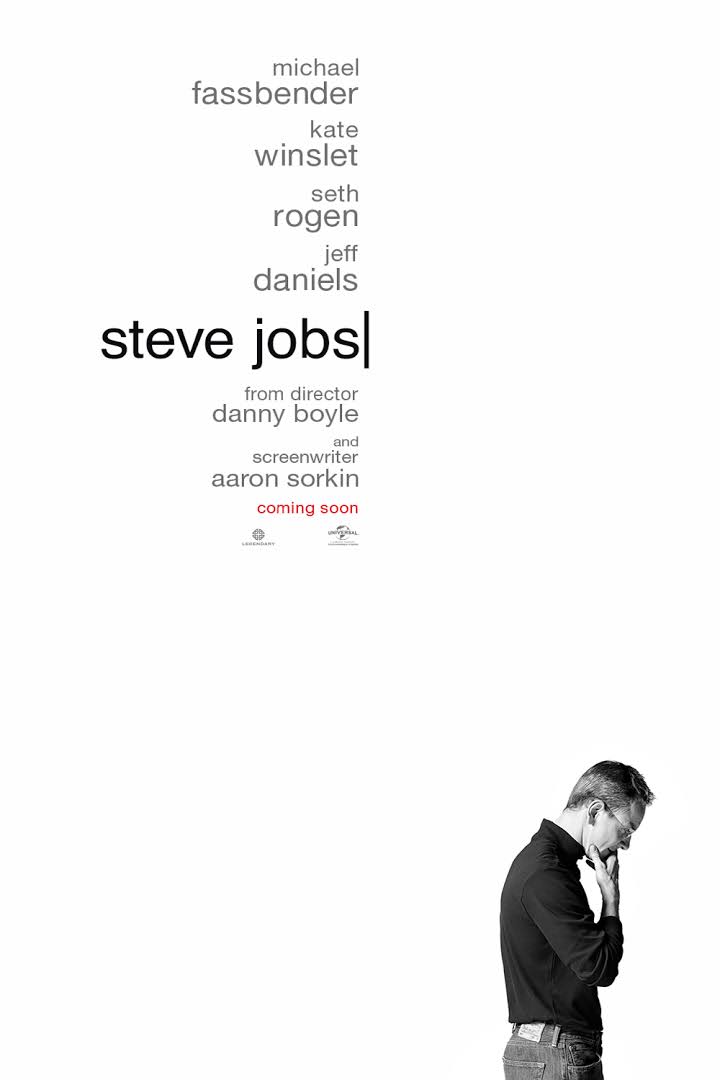
Steve Jobs (Dir. by Danny Boyle)


imagesI don’t have much to say about Steve Jobs, which has been playing here in New York in a limited release. This is how I know I didn’t care for it.

When you look at the list of people who came together to make the new movie about Steve Jobs, it’s almost impossible to think that the end result could be bad. You’ve got Academy Award Winner Danny Boyle, whose work I’ve enjoyed since Trainspotting. With a track record like 28 Days Later, The Beach, Sunshine, and Slumdog Millionaire, he’s having a wonderful run. You also have Academy Award Winner Aaron Sorkin, fresh off both The Social Network, Moneyball and The Newsroom working the screenplay. With actors like Michael Fassbender (12 Years a Slave, Slow West) and Kate Winslet (Divergent, A Little Chaos) on board , it’s almost like having the stars align.

And yet, I almost walked out on Steve Jobs. It just wasn’t for me. Maybe I was just tired.

The film focuses on three places in the Steve’s life:

– The launch of the original Macintosh just after the “1984” Super Bowl commercial.

– The launch of the NeXt system, which Jobs created after being fired by Apple.

– The launch of the first iMac, just after Jobs returned to Apple as the interim CEO.

The entire first part was really good, with arguments going back and forth over the ability to get the on stage Mac to say “Hello”. Steve also argues with Chrisann Brennan over the financial support for her daughter, Lisa Nicole. Steve simply won’t admit she is his. When asked about the name of his first computer, Jobs goes to great lengths to explain that the acronym (Local Integrated System Architecture) is just a coincidence. When Lisa amazes him with her computer usage, he decides to support her mom with a check.

Every segment after that felt like a repeat of the first one to me, almost like Run Lola Run. In the beginning, it feels fresh, witty, nice. By the end, I was fighting to simply stay awake and care. What I hoped to see was more interaction with Steve and Lisa. If they were so distanced then, and grew close later in life, what was the catalyst? Was it the cancer diagnosis Steve had in the early 2000’s? We’ll never know, because the movie stops just before that time period. Did he suddenly realize that his heart wasn’t as small as the Grinch? What about Jonny Ive, who was responsible for much of Apple’s design after Job’s return? Nope, not even so much a mention. And I think this is the overall problem I have with the film. Yes, Steve Jobs by himself was a visionary, and as the story points out, he conducts the Orchestra, but there’s no reverence whatsoever to any of the other people that helped get Apple where it is. It doesn’t make the movie terrible for not covering these angles, but there are a number of missed opportunities as a result of using such a narrow range.

Fassbender was wonderful to watch onscreen, as well as Winslet. One of the odd things is that from a performance standpoint, everyone in Steve Jobs is effective. I wouldn’t be surprised to see Fassbender get some kind of recognition come awards season. Even Seth Rogen did a good job, though his version of Wozniak was limited to constantly arguing for credit like Morrie in Goodfellas looking for his cut of the Luftansa Heist. There are points, however, where the banter just becomes a little too much.

Mind you, I loved The Social Network. I enjoyed The Newsroom.  A Few Good Men is one of my favorite films. I’ve even seen the man in person once. He knows what he’s doing when it comes to having people talk. Here, it just seemed like Sorkin said…”What if I created a play about how Steve Jobs could be.” and rolled with it. Supposedly, he acknowledged that much of the writing here isn’t entirely accurate. I can accept that, but I think the structure of the film damaged it all for me. I would have preferred more of a straight A-B narrative than what I received. Is that too long to put to screen? Perhaps.

Here at the Shattered Lens, Lisa Marie and I have gone head to head regarding Aaron Sorkin, sometimes yelling from our respective offices. She’s not a fan, but I’ve liked his work. The argument is that for all of his abilities when it comes to writing, he doesn’t really handle women well. It’s true. Women haven’t always fared well in Sorkin’s world, and watching Winslet, I was almost sure I could come back here and say in his defense…”Hey, Sorkin wrote a good girl that doesn’t just exist to help the male hero to succeed or as a target for males to pick on. This isn’t Demi Moore in A Few Good Men. Aha!!” I wanted to say that. I really did…but I can’t. As good as Winslet is here, her character is almost Emily Mortimer’s from The Newsroom. She does have some great lines, and her screen time with Fassbender is nice.

I did enjoy Danny Boyle’s direction here. The approach with using the different film styles (old style camera work for the 1984 Macintosh launch, conventional film for the NeXt Launch, and HD optics for the iMac release) was interesting, and I liked how he used the environment to tell the story. I have little to complain about there.

Note that the audience did applaud the film. There were moments where a phrase or two yielded some laughs. In that sense, maybe the film accomplished something. You’ll have to see it and come to your own conclusions on how it works for you.

 It just wasn’t for me, and I was really looking forward to it.

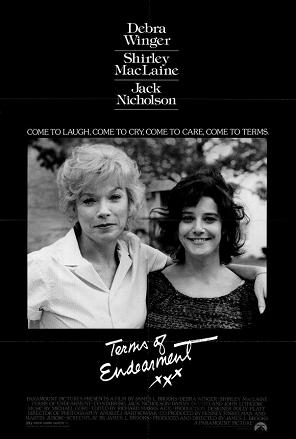
Embracing the Melodrama Part II #72: Terms of Endearment (dir by James L. Brooks)


Terms_of_Endearment,_1983_film

I have to admit that, when I first sat down and watched the 1983 best picture winner Terms of Endearment, I was actually taken by surprise.  Before I actually saw it, I was under the impression that Terms of Endearment was considered to be one of the weaker films to win best picture.  I had read a few reviews online that were rather dismissive of Terms, describing it as being well-made but overrated.

But then, a few weeks ago, I watched Terms of Endearment on Netflix.  The film started with a scene of new mother Aurora Greenwood (Shirley MacClaine) obsessively checking on her daughter, Emma.  Stepping into the bedroom, Aurora is, at first, scared that Emma’s dead.  Without bothering to take off her high heels, Aurora nearly climbs into the crib to check on her.  Fortunately, Emma starts to cry.

And I laughed because I’ve been told about how my mom used to obsessively check in on me when I was a baby.  And, while my mom was never the type to wear high heels around the house, I could still imagine her climbing into a crib to check on me and my sisters.

And then, when Emma (now played by Debra Winger) married Flap Horton (a very young Jeff Daniels) over the objections of her mother, I smiled but I didn’t laugh because, in this case, I was relating to Emma.  Because the fact of the matter is that every girl has known a boy like Flap Horton, the smart and funny guy who is destined to ultimately hurt her.

And when Flap got a job in Des Moines and Emma moved from Houston to Iowa, I knew — as did Aurora — what was going to happen.  I knew that Flap would deal with his insecurity over not being a good provider for his wife and children by cheating on his wife.  And when he did, I wanted to cry with Emma.

But then I wanted to cheer when Emma has an affair of her own.  In the role of Sam, John Lithgow doesn’t have much screen time in Terms of Endearment but he does get the best line.  When a rude cashier claims that she doesn’t feel that she was being rude to Emma, Sam replies, “Then you must be from New York.”

Meanwhile, the widowed Aurora is having an affair of her own.  Jack Nicholson plays Garrett Breedlove, a former astronaut who now has both a drinking problem and a house with a pool.  Garrett gets Aurora to loosen up.  Aurora makes Garrett realize that he actually is capable of being a decent guy.  MacClaine and Nicholson both won Oscars for their performances here and they deserved them.

And then, Emma was diagnosed with cancer.  And I cried and cried because, at this point, I had come to think of Emma and Aurora as being real people.  And when Emma told her friends that she was dying and she spent her final days with her children, I sobbed because it made me think about my mom.  And now I’m sobbing as I write this review.

But it’s a great film, even if it did make me cry.  Because, in the end, you’re glad that you got to know these characters.  And, even through the tears, the film leaves you happy that you got to spend some time with them.

And isn’t that what a great film is supposed to do?

http://www.youtube.com/watch?v=zY0GM9KHU8o

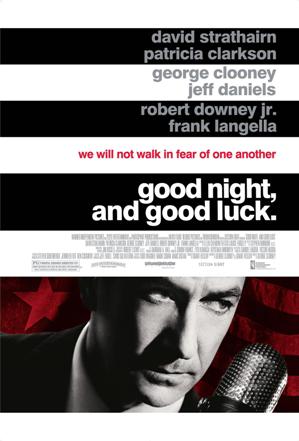
Shattered Politics #76: Good Night, and Good Luck (dir by George Clooney)


Goodnight_posterOne of my favorite episodes of South Park is called Smug Alert!  As you may remember, this is the episode where the citizens of South Park all buy hybrid cars and end up getting so self-satisfied that a dangerous cloud of smug forms over the town.  At the same time, another smug storm is racing across the United States.  This smug storm was created by the speech that George Clooney gave when he won the Oscar for Syriana.  When those two clouds of smug meet, it’s the perfect storm.  It also ends up destroying San Francisco.

The same year that Clooney was named Best Supporting Actor for Syriana, he was also nominated for directing the 2005 best picture nominee, Good Night, and Good Luck.  In his speech, Clooney specifically said that he felt he was winning supporting actor to make up for not winning director and proceeded to give the speech that he would have given if he had won director.

And looking back, I think that we do have to admit that it was a very smug speech.

Fortunately, Good Night, and Good Luck has aged better than Clooney’s speech.

I do have to admit that, when I recently rewatched Good Night and Good Luck, I was a little concerned.  I always manage to forget that the film starts on a really bad note.  The year is 1958 and news anchorman Edward R. Murrow (played by David Strathairn) is receiving an award.  As Murrow stands behind the podium, he proceeds to give a long and self-righteous speech about how television should be used not to entertain but to educate as well.  And, quite frankly, he comes across like such a pompous blowhard that I was dreading the idea of having to spend the next 90 or so minutes with him.

But then, fortunately, the film entered into flashback mode and, until the final few minutes of the film, we didn’t have to listen to anymore of Murrow’s speech.  The majority of Good Night and Good Luck takes place in 1953.  U.S. Sen. Joseph McCarthy (who appears in archival footage throughout the film) has declared that he has the names of communists who hold important positions in both the government and the media.  Murrow and his producer, Fred Friendly (George Clooney) defy the corporate overlords of CBS and bravely investigate and challenge McCarthy’s claims.  McCarthy and his henchmen respond by trying to smear both Murrow and one of his reporters (Robert Downey, Jr.) as a communists.  As always seems to happen in films about McCarthyism, another supporting character reacts to the change of communism by committing suicide.  And, in this particular vision of the fight against Joseph McCarthy, Edward R. Murrow and the media save America.

Of course, if you actually make the effort to learn history, you’ll discover that it wasn’t just Edward R. Murrow who stood up to McCarthy.  In fact, you’ll discover that Murrow stood up to McCarthy after several other prominent people — on both sides of the political divide — had already done so.  If anything, the real-life Murrow seems to have more in common with pompous scold seen at the beginning and end of the film, as opposed to the one that we see standing up to McCarthy.

One can very legitimately debate whether or not Murrow deserves all of the credit that he’s given in this film.  Still, the film does make a larger and very important point.  We, as Americans, have to always be on guard against witch hunts and against demagogues and the forces of fear and paranoia that are always trying to shape our politics.  And, whether or not Murrow was a hero or just a bystander, one cannot deny that the larger message of Goodnight, and Good Luck remains as relevant today as when the film was originally released.

Judging from some of his other films — The Monuments Men and the Ides of March — I don’t particularly feel that George Clooney is that good of a director.  But he does do a good job with Good Night and Good Luck.  (In fact, he does such a good job that you can’t help but feel that it’s the exception to the rule as far as Clooney the director is concerned.)  Filmed in wonderful black-and-white and full of good performances, Good Night, and Good Luck remains surprisingly watchable.

Just avoid any George Clooney Oscar speeches while watching it.  San Francisco has never recovered.

44 Days of Paranoia #17: Cheaters (dir by John Stockwell)


For today’s entry in the 44 Days of Paranoia, I want to take a quick look at a very good movie from the year 2000 that not many seem to know about, Cheaters.

During my senior year of high school, I always wore a short skirt on any day that I had a test in my algebra class.

Why?

Because I was a cheater.

Back when I was still a student, I always struggled when it came to my math classes.  It wasn’t that I couldn’t do the work as much as it was that the work just bored me.  Whenever my teacher was talking about square roots and x+y and all the rest, I was usually busy daydreaming about  anything other than what I was supposed to be learning.

Fortunately, my sister Erin had been one year ahead of me in high school and had saved all of her old tests and quizzes.  Since we both had the same algebra teacher, I started using her old tests as a study guide.  It quickly became obvious that our teacher was simply reusing the same tests from year-to-year.  While the order of the problems might occasionally change, the solutions remained the same.

Every test day, I would wear a skirt and, right before class, I would write the answers on my thigh.  If the teacher walked by my desk while I was taking the test, I would just pull down on my skirt.  Fortunately, the teacher was a male so even if he did suspect that I was cheating, it’s not like he could tell me to lift up my skirt or, for that matter, even get caught trying to look down at my legs.

And that’s how I managed to pass algebra without ever paying attention to anything that was said in class.  I know that I should probably feel guilty about cheating but, to be honest, I don’t.  If I had it to do all over again, I would do the exact same thing.

Perhaps that’s why I related to the character of Jolie Fitch in Cheaters.

Jolie (played by Jena Malone) is a junior at Chicago’s Steinmetz High.  Jolie is one of the only students at Steinmetz to be more interested in academics than athletics.  She also idolizes English teacher Jerry Plecki (Jeff Daniels).  When Steinmetz’s buffoonish principal (Paul Sorvino) forces Jerry to take the unwanted job of coaching the school’s Academic Decathlon team, Jolie volunteers to help Plecki recruit an unlikely team of misfits and outsiders.

At the regional competition, the Steinmetz team just barely qualifies to move onto the state competition.  However, no one on the team feels that they have a shot at beating the team from the far wealthier Whitney Young Magnet High School.  As quickly becomes obvious, Whitney Young specifically goes out of their way to recruit the smartest students they can find and, as a result, they have won the state competition for five years straight.

Angered over the smugly elitist attitude of Whitney Young’s coach, Plecki obsessively pushes his team to study and prepare.  However, with the state competition quickly approaching, the Steinmetz Team comes into possession of a copy of the test for the state finals.  Obsessed with defeating Whitney Young, Plecki suggests that the students cheat.  After being pressured by both Plecki and Jolie, the rest of the team agrees to do so.

When Steinmetz subsequently wins state, the Whitney Young coach immediately demands an investigation into how Steinmetz could have possibly made such a dramatic improvement in just the period of a few months.

However, the rest of Chicago is charmed by the story of how the Steinmetz team came out of nowhere to win and Plecki and his students become celebrities.  However, when one spiteful student threatens to reveal the secret, both Plecki and his team are forced to scramble to cover up their cheating and prevent the truth from being exposed.

Cheaters is based on a true story, though I can’t tell you for sure how closely the filmmakers stuck to the facts of the case.  (If you look at the film’s imdb page, you’ll find a lot of negative comments left by a lot of angry students from Whitney Young).  However, what I can say is that Cheaters felt true.  By that, I mean that Cheaters captured both the importance of competition in high school and the fact that, when you’re a teenager, everything is a drama and, as a result, it’s a lot easier to justify things that, as an adult, you would refuse to ever consider.

When I was high school, I was involved with both the Drama Club and Speech and Debate and watching Cheaters brought back a lot of memories.  Cheaters gets all of the small details right — everything from the combination of exhaustion and exhilaration that comes from competing at an all-day tournament to the awkward attempts of “mature” adults to understand why winning is so important when you’re in high school.

Cheaters is also blessed with some excellent performances.  As Whitney Young’s smug coach, Robert Joy is properly loathsome.  Paul Sorvino brings some much-needed comic relief to the film and the scene where he awkwardly dances to the theme from Rocky is priceless.

The film, however, is truly dominated by Jena Malone and Jeff Daniels.  As the film’s nominal protagonists, Malone and Daniels both give wonderfully nuanced performances.  When the film starts, you find yourself rooting for both of them because not only are they likable performers but their characters seem so sincere in their desire to win.  However, as the film progresses, we start to see the small chinks in their armor.  We see how obsessed Jolie is with protecting Plecki.  Meanwhile, Plecki goes from being an almost idealized teacher to being something of a megalomaniac.  By the end of the film, we realize that we know far less about Jerry Plecki then we thought we did.  Jeff Daniels gives a performance that forces us to draw our own conclusions about Plecki and his motivations.

Some people might question reviewing a film like Cheaters in a series about conspiracy-themed films.  However, though it may not be as obvious as with a film like Three Days Of The Condor or JFK, Cheaters is a conspiracy film.  Beyond the conspiracy to win the Academic Decathlon by cheating, Cheaters is about the much more subtle conspiracy that will always cause students who go to schools like Steinmetz to be viewed as being less important than the students at a school like Whitney Young.  Cheaters is a film about a conspiracy, the conspiracy of cultural and economic elitism.

It’s a conspiracy that, Cheaters suggests, leaves many people with only two options: surrender or cheat.

Other entries in the 44 Days Of Paranoia:

  1. Clonus
  2. Executive Action
  3. Winter Kills
  4. Interview With The Assassin
  5. The Trial of Lee Harvey Oswald
  6. JFK
  7. Beyond The Doors
  8. Three Days of the Condor
  9. They Saved Hitler’s Brain
  10. The Intruder
  11. Police, Adjective
  12. Burn After Reading
  13. Quiz Show
  14. Flying Blind
  15. God Told Me To
  16. Wag the Dog

What Lisa Watched Last Night #56: Dumb and Dumber (dir by Peter and Bobby Farrelly)


Last night, I turned on Comedy Central and I watched the 1994 comedy Dumb and Dumber.

Why Was I Watching It?

Last night was my first time to ever sit down and watch Dumb and Dumber from beginning to end.  I had seen several clips on YouTube and I had been assured by many people that Dumb and Dumber was one of the funniest movies ever made.  Last night, since SyFy was not showing an original movie, I decided to find out for myself.

What Was It About?

Harry (played by Jeff Daniels) is dumb and Lloyd (Jim Carrey) is dumber.  Harry has messy hair and Lloyd has a chipped tooth.  They end up getting kicked out of their depressing apartment and this somehow leads to them going on a road trip from Rhode Island to Colorado.  They’re looking for Lloyd’s dream girl, Mary (Lauren Holly).  Along the way, they’re pursued by a gangsters and engage in a lot of disgusting adventures.  It’s a dumb movie about dumb people doing dumb things.

What Worked?

I laughed once while watching the film.  It was a weary laugh that was largely the result of being slowly worn down by the film’s insistence that what I was watching was actually funny.  It wasn’t a sincere laugh.  It was a laugh of surrender but it was a laugh nonetheless.

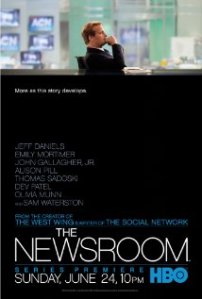
Jeff Daniels is currently best known for playing Will McAvoy, the smug and condescending center of HBO’s The Newsroom.  That show’s pilot famously started off with McAvoy declaring that the millenials are the “WORST.  GENERATION.  EVER.”  As a member of the WORST.  GENERATION.  EVER, I have to say that there was something oddly satisfying about seeing Jeff Daniels getting continually humiliated (and, at one point, set on fire) in Dumb and Dumber.

What Did Not Work?

Just to judge by the reaction on twitter while Dumb and Dumber was playing, a lot of people are going to disagree with me on this but Dumb and Dumber sucks.  Seriously.  The film’s constant gross-out humor felt more lazy than clever and watching it quickly became as tedious as watching a commercial featuring a celebrity talking to their iPhone.  As I watched Dumb and Dumber, I found myself constantly checking the time and wondering, “Is the film ever going to actually get funny?”

One of the keys to succesful film comedy is that you have to believe that the characters have an actual stake in the film’s plot, regardless of how ludicrous or over-the-top the plot may get.  That stake is the difference between silly and funny.  With Jeff Daniels looking extremely uncomfortable and Jim Carrey apparently acting in a separate movie from everyone else, Dumb and Dumber is silly without ever really being funny.

Maybe it was easier to make people laugh in 1994.

“Oh my God!  Just like me!” Moments

For once, I’m glad to say that a movie featured absolutely no “Oh my God!  Just like me!” moments.

Actually, I take that back.  Both me and Lauren Holly have the same hair color.  So, that was just like me.

But that is it!

Lessons Learned

Comedy, like beauty, is in the eye of the beholder.

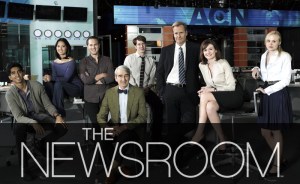
Review: The Newsroom S1:E4 – “I’ll Try to Fix You”


The key to Episode 4 of The Newsroom’s season really comes down to the last 10 to 15 minutes. The episode seems light and even and then by the end everyone is moving in a mad scramble to get the news out. Very nice to see that, honestly.

This episode, entitled “I’ll Try to Fix You” has the News Night 2.0 team closing out 2010 and celebrating the impending New Year. It’s more or less a lighthearted, fun episode. Mac approaches Will in his office, letting him know that her boyfriend Wade wants to speak with him on something. Wade informs Mac that he’s missing a major headline.

Neal appears to have this weird obsession over Bigfoot, which becomes a running theme in this episode. It’s cute in that it comes up a number of times here, very similar to the story about the Chicken in The Social Network. Maggie finds Jim still working to find any major stories they may have missed. After a little light flirting (well, it seemed that way), Don shows up and Maggie has to go. A lightly inebriated Don decides to set up Maggie’s roommate, Lisa, with Jim for New Year’s. In the middle of selling Jim, Lisa’s phone goes off with a Rod Stewart song. After what happened with the email fiasco, I found myself recalling that because sooner or later, that ringtone would need to come back into this episode. Maggie appears to have something of an issue with Lisa and Jim, but again, she’s with Don. I kind of wish she’d make up her mind already.

Wade tells Will that the House cut 80% of the DOJ budget, and the three go over whether this is a story to run with. When Wade leaves, Mac and Will have a slight argument over Wade. Mac’s a line in particular that made me laugh, “How do you introduce the Netflix queue of crazy divorced women with digitally remastered breasts you spend your nights with?”, which works in the argument between the two.

Will heads out to the party, and finds Sloan Sabbith. Eyeing the group, they have a short exchange on whether he should mingle and who he should mingle with. He heads out and speaks to Nina Howard and finds out she’s a Gossip Columnist. Rather than going with the New Year kiss, Will starts to lecture her on what she does, stating she “knows right from wrong” and that it’s “it’s a form of pollution.” The attempt to civilize Nina ends up with a drink in his face. Poor guy has no luck whatsoever.

Charlie and Will reconvene the following morning to find that he’s on Page Six of the New York Post. Will clears the air with Charlie on this and moves on to the morning meeting. Of the topics that weren’t discussed, they decide to run with both the notion that the Republicans believe that Obama is out to take away their guns or gun rights. The broadcast goes on to show that there really hasn’t been any kind of legislation to show that this is the current plan.

Maggie and Lisa have a brief discussion on Jim, and Maggie comes to Jim’s defense when Lisa points out that he’d think she’s dumb. Again, this is going to come to a head later on.

Mac, along with a woman named Carrie (played by Kathryn Hahn, who I haven’t seen since Step Brothers), head to his apartment. When she goes to change her clothes and informs him she has a joint in her purse, he discovers a pistol and they have words. I’m not sure if Hahn’s going to come back, but it would be interesting to have her come back as a foil to Mac.

As Will and Sloan go over the next broadcast, she beams and asks him how the night went. Will informs her that her friend was packing heat. Sloan tells him he has to stick with her because she’s a little obsessive. Olivia Munn has some great moments back and forth between Jeff Daniels in this episode, and so far her character still seems to be the only one without any romantic issues.

With Will’s chances in the dating scene spiraling downward and making headlines, Don proves how much of an ass he is by giving Maggie a news blip that causes her to call Jim. While she has Jim on the phone, Don calls Lisa, who’s phone rings in the background with the Rod Stewart song. I personally can’t wait for Don to get punched outright in the face. That will be the highlight of the season for me.

After being called in on Saturday, Will finds everyone in the office going over the particulars of the Bigfoot story. Will meets with Charlie and Mac over Will being in the newspapers when it comes to light that AWM (their parent company) has been flaming him the entire time. Charlie admits about the meeting with Leona and Mac blows up because the only way that the 3 Year no work clause could have taken effect would have been if it were changed in the contract. The contact that Will changed to allow him to fire Mac also allows AWM to keep him from working anywhere else.

Just when you think it’s going to keep going on, the story explodes into high gear with the iNews blip on the shooting of Congresswoman Gabrielle Giffords. All hands are on deck as they race to get the story together and everyone prepped. It shines as easily the biggest highlight of the episode and smacked the complaining, “Not This relationship stuff again” sigh I had right off my face. During the broadcast, it comes out that CNN and NPR are going with the story that Giffords died that day. Ironically enough, CNN had the very same problem just a week or two ago, incorrectly reporting that the “Obamacare” Heath Reform vote didn’t pass before Justice Roberts’ vote came through.

When Reese shows up onto the floor and calls Will out to declare Giffords dead just as everyone else does, who shows up to actually save the day but Don of all people. Talk about jaw drop!! He’s the last person I would have expected to have come in to help this group. Will calls in Mac and Charlie to thank them in a cursing tirade, and gives Neal a chance on his Bigfoot story. With all of this done to Coldplay’s “Fix You”, it plays out so damn well that you may almost forget all of the other scenes you were watching beforehand. It’s a fantastic final few minutes that showcases what the Newsroom is about.

My only worry is that they’re moving so fast with these news reports that by the time the season is over, they could conceivably end up in the Present Time. How they’re going to come up with news after doing that is going to require a few rabbits and hats. Overall, a well done episode.

Review: The Newsroom S1:E3 – “The 112th Congress”


Though I’m a registered Democrat (which I did before realizing I could be Independent) and my family’s mostly Republican, Politics tend to make my eyes glaze over and a lot of it goes over my head. My reasoning is that no matter who you have in office, neither side has everything right and you’ll find corruption and/or underhanded deals no matter what side is chosen. It’s because of this that makes The Newsroom a little difficult for me to write about from a political standpoint, but on an entertainment standpoint, I’m having fun. This show is getting a little tighter with every episode.

This episode, titled “The 112th Congress”, opens with a statement taken from the 9/11 Commission back in 2004. Will makes an apology to the American viewing public on the way News Night has been, stating that they failed to give the right news – “A leader in an industry that miscalled election results, miscalled hyped up terror scares, ginned up controversy, and failed to report on tectonic shifts in our country”. Will stresses that they will be concentrating on giving the news, and opinions that also contrast his own. I liked the way this scene moved, jumping back and forth through the events of writing out the speech, getting everyone up for their morning meeting, cleaning it all up and providing it to Charlie before the actual broadcast. This is all while the speech is given. The opening editorial lays down the template to the News Night viewers on where it’s headed.

The following scene is a conference room with Charlie, Reese, another associate and Leona (Jane Fonda) in a debriefing meeting on the News Night changes. This takes place on November 3rd, 2010. The show moves to this location, the Bigwig Conference, a number of times as we go over the months since NN2.0’s inception. I have to admit I really liked the movement of the scenes back and forth here. Don approaches Jim and gives him a little flak on why he wasn’t in the loop on Will’s speech, given that his own show that comes afterward is also trying to be the one to move up to that treasured 8pm slot. Don also has something of an issue with Maggie on this as well, but it only lasts for a moment.

Reese goes on to mention that since the News Night change, Will’s lost about a good 7% of his audience. Though they’re doing what they feel is the right thing, it is costing them from a viewer’s standpoint. I liked how Leona really doesn’t speak up until the middle of the episode, her character just kind of taking in all of the information that’s given.

There’s a very interesting conversation between Will and Charlie, talking about the changes in the Tea Party’s progression. Granted, this all requires first level research for stronger opinions & statements to be formed, but from the way The Newsroom presents it (and my interpretation of it), the Tea Party kind of swooped in and changed the Republican landscape (or was at least trying to at the time) for their own pursuits. That Will, being a Republican himself, decides to make this the top story felt like it added to the “all the facts” angle the NN2.0 was shooting for. For the record, were he a Democrat, I’m pretty sure that they could have done the same thing for that party, using a story on gun control or something like that.

Getting back to the story, it’s revealed in the Bigwig conference that Will is treating his interview subjects like members in a courtroom and that at one point in his life, he was a prosecutor. I liked this, but the information seemed sudden to me, as if Sorkin and crew were in their writing room and the question came of “Well, how is Will so good at this?”, and they came up with the lawyer angle. Then again, to counter that, we learned 4 episodes into Mad Men that Don Draper’s name wasn’t his and his past wasn’t his either. I suppose it makes sense here too.

Mac meets one of Will’s new dates and overreacts a little with the compliments, inquiring on who she is. Turns out that the lady works for the New York Jets as a choreographer. Mac and Will move to Will’s office, where she berates him on his dating choice for the evening. There’s a bit of cute back and forth banter before she nearly storms out and Charlie catches her, telling them both the keep up what they’re doing with the Tea Party pressure. Will asks how the 44th floor (The Bigwig Conference) is handling this, and Charlie lies to him about it. Undoubtedly, this will end up being a problem later on in the season. The relationship angles still appear a little blurry. We learn that Maggie’s issues are attributed to Panic Attacks, which opens a nice scene between she and Jim on the terrace of the building. I already touched on the Sorkin Girls in the last episode. I’ll let it go here, but it does kind of show why she’s been the way she’s been. The problem here is that with the forward momentum the scene made, it takes two steps back in having her with Don still by the end of the episode. I’m not saying they should be in each other arms by now, but I wouldn’t mind seeing thing forward just a little more.

The story moves ahead to June 18, 2010, where Will goes after a senator regarding statements made on AIDS and it’s spread. The Bigwigs are not pleased at all on this. After the broadcast, Mac finds another date waiting for Will, who Will points out is an actual brain surgeon. That was actually worth a chuckle, indeed.

At the Bigwig Conference, Reese points out that there was a party every year he and his mother were invited to at Telluride that they didn’t receive an invite for this time around. Reese points out that Will’s broadcasts has cost them Koch Industries, which happens to be close to the Lansing’s (Reese and Leona).

Near the end of the Bigwig Meeting, Leona finally speaks up, letting Charlie know that Will needs to back off as the parent company, AWM has special interests with of the parties that Will has been attacking. Leona threatens to fire Will, which of course would be a problem due to a special clause in his contact that prevents him from working for 3 years. That was kind of cool, reminding me of what happened with Conan O’Brien when he left NBC. So now, the stakes are raised. Do they continue doing what they’ve planned and face being fired or revert back to the old format?

While I still have the same complaints as before (Sharpen up the girls, etc.), the episode ramped up things with some of the actual broadcasts that were done. The Bigwig Conference scenes were some of the strongest parts there, I felt. We’ll see where this all goes.

Review: The Newsroom S1:E2 – “News Night 2.0”


After seeing the second episode of The Newsroom, which is my first Aaron Sorkin show experience, I’ve learned four things:

1.) In the Sorkin Universe, guys may be asses, but girls seem to make all the huge mistakes.

2.) Everyone is just one moment away from emotionally exploding.

3.) The “Walk and Talk” gets things done.

4.) There are very few moments of silence.

Okay, here we are with the second episode for The Newsroom. This one appears to be tighter compared to the pilot episode and an overall improvement from that, though it still has it’s problems. The episode overall is about the construction of News Night 2.0, the revised version of the broadcast that will concentrate on giving the news and not letting the ratings control the content. It’s a great plan, but issues do arise. Charlie (Sam Waterston) has to warn one of Will’s colleagues, Reese (Chris Messina) about giving Will the numbers on the ratings. As Will is a big fan of the ratings, Charlie fears that this will sway him from following the new broadcast process. Reese explains that he’s not the bad guy, but is only giving Will what he wants. Despite the warning, he still speaks with Will in a later scene.

That I liked, the notion that Will is still laboring under the belief that he should shoot for the news that people want to hear versus the news they should. This episode was partially supposed to show how going against that process didn’t work out for him and should ground him going forward. In some ways, I think it succeeded. The News Night Team is trying something different, but in order for that to work, everyone has to be on board. By the end of the episode, you come to find out who’s with Mac on this, and who’s against it. I’m loving where the show is going on that front.

We now have our antagonists in Reese, who wants Will to keep the old format going and we have Don. Don is staying with the NewsNigh Team to make sure the transition goes well, but at the same time, is rooting for Will to fail because it puts his new show in that prized time slot. I’m under the impression that later on, we’ll see both of these individuals trying to sabotage things.

Here’s what worked for me:

The Introduction of both Reese and Sloan. Both Chris Messina and Olivia Munn had some good scenes in the episode. They both appeared to be even keeled for the most part. Reese’s “walk and talk” with Will was nice, though in doing a bit of research, I’ve discovered it’s bit of a Sorkin staple.  Olivia Munn’s character, Sloan Sabbith is introduced when Mackenzie hires her to perform the Financial News segment to start before Will’s broadcast. I’m hoping her character gets some more time in. Of course, I’ve been a fan of Olivia’s for years, so there’s some bias there, admittedly. It’s cool seeing how far she’s come. Sabbith also happens to be one of the only girls who hasn’t had some kind of serious emotional crash, yet (and that’s still questionable).

More pop and zip. Overall the episode moved very well. I didn’t get the feeling of slowdown from the pilot, with it’s empty areas and all the time spent trying to figure out who was what. It was basically, “What’s our show?”, “Who do we need to get it going?”, “Oh damn, we messed up!”, “The Broadcast”, “The Aftermath”. I wouldn’t mind seeing that template keep going. By the time we reached Will’s actual broadcast, I was all smiles. It’s quick, to the point and there’s just never a quiet moment. Everyone has something to say to fill in the space, all the time. I wish I could write the dialog in my fiction like that.

And then there’s the one glaring problem:

Women are Always the Source of the Issue in a World Where Men Seemingly Do No Wrong. During last year’s Oscars, Lisa Marie and I got into a debate over her hatred of Sorkin and my love for The Social Network. We agreed to disagree that he can do dialog and that he kinda, sorta, maybe has a problem with writing women. I was pretty sure I won that argument when Sorkin accepted his Oscar – I was rooting for him to win. This episode, however had me face palming myself, like a PR agent watching their star client mess up with everyone watching.

Again, where Sorkin excels in dialog and moving that forward, the girls get the short end of the stick. Every mistake and problem that occurs in this episode is the direct result of something a girl should have done or didn’t do or blew out of proportion. The flow moves in this pattern:

1.) Girl makes big mistake. As her Superior Male supervisor is going to blow up because of it, she loses her mind in a theatrical fashion. (Both Maggie and Mac do this to great effect, it’s like they haven’t had tea or something.).

2.) Girl gets verbally chewed out by Superior Male. This also seems to happen publicly where people can see it.

3.) Girl apologizes, kowtows and hopes the Male she works for doesn’t look bad because of her actions.

It may sound a little exaggerated, but it’s there. Now you may say, “Len, that’s not right. The girls are on equal footing with the guys. And you’re a guy, it shouldn’t matter, should it?” Perhaps it shouldn’t, but as someone who prefers seeing women in media that don’t complain about broken fingernails, The Newsroom still needs improvement on this level. I can’t claim to understand women in the slightest, but I’ve seen and have known tons of them that just aren’t this…submissive, for want of a better word. Case in point – It’s stated that Mackenzie McHale was a journalist in war-torn areas for a long time. Yet, in the Newsroom, she comes across as being particularly clumsy and high-strung. I would have expected a calmer person, kind of a like a Kathryn Bigelow. Could you imagine Mac, the way she is in the Newsroom, being as effective in a warlike environment? That bothered me a bit, honestly. If Sorkin could fix that one part, he’d be downright perfect. It has me wondering what the first show he doesn’t write will be like. That this has become the only problem for me says a lot for how much better the show’s done in these two episodes.

So basically, I’m loving where the show is going, but it needs to up the girl factor. I’m hoping Sloan may be that factor. For the next episode, I’ll try not to be issue like a dead horse, but if they keep giving me the ammo, I’m be tempted to fire off a round or two.