4 Or More Shots From 4 Or More Films is just what it says it is, 4 shots from 4 of our favorite films. As opposed to the reviews and recaps that we usually post, 4 Shots From 4 Films lets the visuals do the talking!
Today, we remembers the great James Earl Jones. It’s time for….
4 Shots From 4 James Earl Jones Films
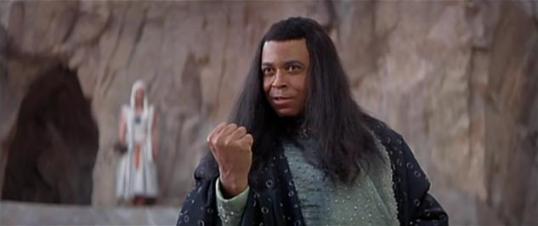
Conan The Barbarian (1982, dir by John Milius, DP: Duke Callaghan)
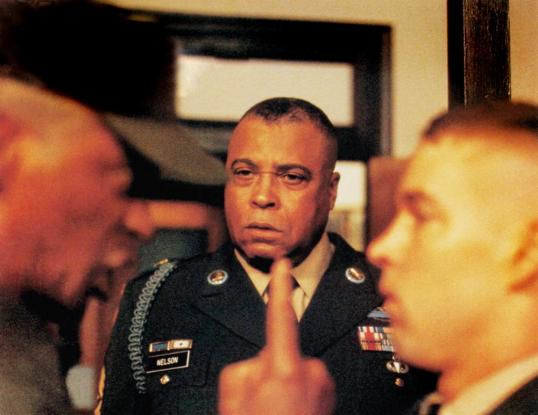
Gardens of Stone (1987, dir by Francis Ford Coppola, DP: Jordan Cronenweth)
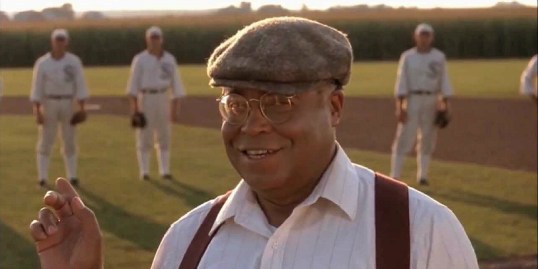
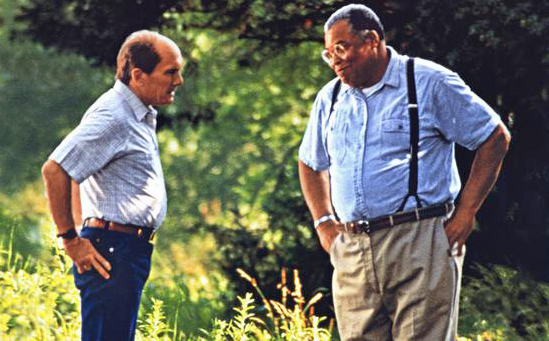
Field of Dreams (1989, dir by Phil Alden Robinson, DP: John Lindley)
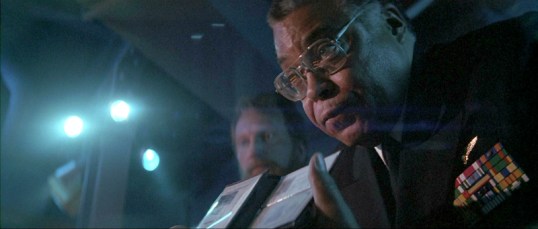
The Hunt for Red October (1990, directed by John McTiernan, DP: Jan de Bont)
Today would have been James Earl Jones’s 95th birthday.
Today’s scene that I love features him reacting to an impromptu visit from Kevin Costner in 1989’s Field of Dreams. With his famous voice, his good humor, and his own inspiring story of overcoming a childhood stutter to become one of our greatest actors, it’s often easy to forget that some of Jones’s best moments came when he played characters who were just fed up with the stupidity of the world.
Mad bomber Rollo Dillon (Fred Ward) has been hired by terrorists to bomb a major American institution. Captain Ed Hocken (George Kennedy) and Detective Nordberg (O.J. Simpson) know that there’s only one man who can handle this job and his name is Frank Drebin (Leslie Nielsen). Frank, however, has retired from Police Squad and promised his wife, Jane (Priscilla Presley), that he is through with police work.
At heart, Frank remains a cop. He even dreams of shoot-outs. When he tries to do police work without Jane noticing, it backfires on him. Even though Frank lies and claims that he’s just having an affair, Jane leaves him. Frank, with nothing better to do, goes into prison undercover to gain Rollo’s confidence. After Rollo and Frank escape, Frank discovers that Rollo and his girlfriend (Anna Nicole Smith) is planning on bombing the Academy Awards!
The Naked Gun 33 1/3 is the weakest of the original Police Squad films, which is to say that it’s still pretty funny, even if some of the jokes no longer feel as fresh as they did in the previous films. It opens with a brilliant send-up of the shoot-out from The Untouchables and it ends with a perfect parody of the Academy Awards. (Pia Zadora singing This Could Be The Start Of Something Big is funny because it’s exactly the sort of thing that used to happen at the Oscars.) It’s in the middle section that the film drags, though there are still things that made me laugh, like a flashback to Frank, Ed, and Nordberg in the 70s. David Zucker did not return to direct this installment and his absence is definitely felt.
Leslie Nielsen is as funny as ever and he’s well-matched with George Kennedy and Priscila Presley. (OJ Simpson’s presence is as awkward as ever.) Fred Ward plays his villainous role straight, a smart move. But then you’ve got Anna Nicole Smith, who was such a terrible actress that her presence in the film doesn’t even work as a joke. Whenever Smith shows up, the film grinds to a halt. It’s the worst type of stunt casting.
This was Leslie Nielsen final performance as Frank Drebin. Even in a lesser film, he was still a comedic treasure.
“You don’t know what it’s like to have your life destroyed by one stupid mistake!” — Sean Miller
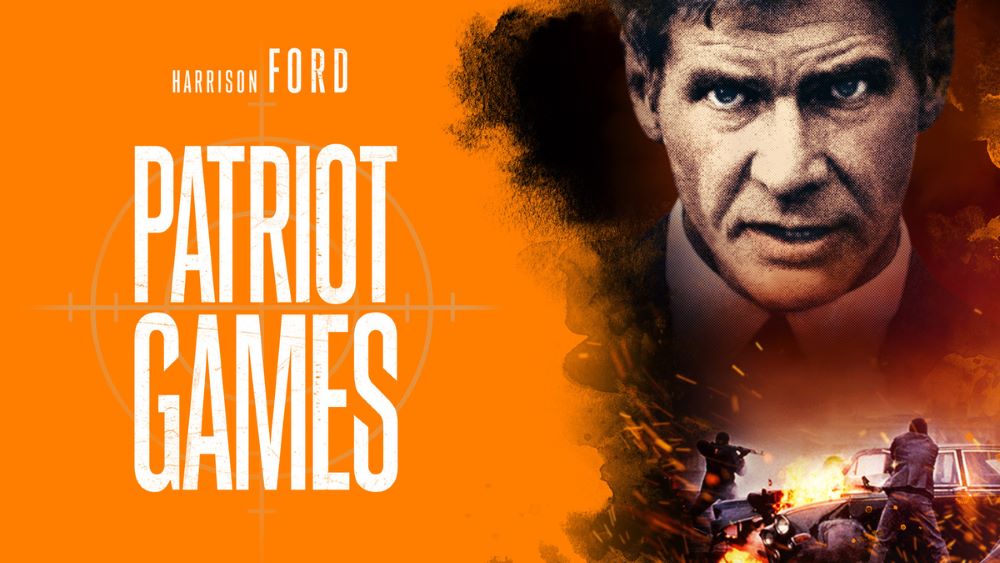
Patriot Games hits the ground running by thrusting Jack Ryan and his family into the heart of a terrorist ambush on a London street, targeting a key British official tied to the royal family. Harrison Ford plays Ryan as a sharp-minded history professor and former CIA analyst on a simple vacation with his wife Cathy and daughter Sally, but his old Marine training surges up—he charges in, kills two attackers including one terrorist’s brother, and gets winged by a bullet himself. Right away, this setup grabs attention by showing how a random act of guts can boomerang into endless trouble, forcing a guy who craves quiet lectures to dodge bullets and betrayal across oceans, and it plants seeds about whether playing hero is worth the fallout on everyone you love.
Back in Maryland at the Naval Academy, Ryan tries piecing together normalcy, grading papers and dodging CIA calls, but Sean Miller—the captured terrorist whose sibling Ryan killed—gets sprung in a brutal prison convoy hit that leaves cops dead in the dirt. Miller, now laser-focused on payback, reroutes his rogue Ulster splinter group’s rage straight at Ryan’s home front, culminating in a savage freeway pileup where goons ram Cathy’s car off the road, injuring her and Sally badly. Ford nails the shift from composed academic to seething protector, his clenched jaw and urgent phone calls conveying a dad pushed to the brink, while these family-targeted strikes crank the paranoia, transforming everyday drives and school runs into potential kill zones that linger long after the crashes fade.
Sean Bean invests Miller with a coiled, wordless intensity—scarred features and piercing glares that scream obsession without needing speeches, flipping Ryan’s principled stand into the villain’s fuel for a mirror-image crusade. This fictional IRA offshoot rolls with pro-level gear for hits from UK alleys to U.S. suburbs, dodging authorities with insider tips, but their flat-out villainy skips any cracks in loyalty or ideology, turning them into efficient machines rather than messy humans with grudges worth unpacking. Anne Archer holds Cathy together through hospital beds and hushed fears, emerging tougher, as James Earl Jones’ Admiral Greer supplies the gruff guidance that tugs Ryan toward Langley, balancing the intimate home front with globe-spanning spycraft that feels like a real squeeze on one man’s bandwidth.
The camera shifts smoothly from rain-slicked London corners to bright Maryland bays, capturing open spaces that make characters look small and exposed against the sprawl. Gunshots snap clean and engines growl low during pursuits, pulling you deeper into the fray without drowning out the quieter beats. Horner’s soundtrack builds with brooding pipes and driving rhythms that hit hard in the final bay showdown, boats tearing through darkness with bursts of flame from hands-on stunts that pack a punch even now. Action ramps up step by step from early scraps to that watery chaos, mixing smarts with muscle, even if plot points line up a bit too neatly at times.
CIA war rooms buzz with satellite feeds sharpening grainy Libyan camp footage into proof of terror training, a tech showcase that echoes Clancy’s gearhead love and ramps brainpower against brute force without flashy overkill. Ryan hashes out returns to duty with British contacts, including a Sinn Féin type disavowing the extremists, sketching post-Cold War shifts where lone wolves replace nation-states in the threat lineup. Book-to-screen changes crank Ryan’s field time over desk strategy, letting Ford flex rugged moves that thrill audiences but sand off novel layers of naval tactics and alliance chess for punchier pacing.
Ford and Archer capture the raw friction in Ryan’s marriage through tense, whispered spats about diving back into danger, their easy chemistry making the pushback feel lived-in and real rather than scripted melodrama. Miller’s storyline hurtles toward a frantic leap onto Ryan’s rocking boat, boiling his grudge down to savage, no-holds-barred combat amid crashing waves. On-screen locations—from echoing Naval Academy corridors to churning bay waters—breathe life into the settings, casting national pride as a bruising, up-close shield instead of hollow cheers. Subtle audio touches, like distant creaks in the dim Ryan house, crank up the exposed feeling, linking slick production values to gut-punch emotions without piling on the noise.
Those procedural deep dives—poring over red-haired accomplice sketches or grilling shaky informants—add authentic wonkery, like Ryan spotting tells in grainy photos that crack the case wide, but they drag amid family rehab montages where Sally’s recovery mirrors the slow-burn hunt. The baddies’ cartoonish zeal glosses Northern Ireland’s brutal splits, opting for clear-cut evil over thorny politics that could’ve mirrored real headlines from the era, a choice that streamlines tension yet dates the take harshly next to modern nuance. Endgame flips the house siege into a decoy boat trap, Ryan baiting Miller solo on fiery Chesapeake swells, evolving his street-brawl start into tactical payback, though the tidy win lacks the submarine slyness of earlier Ryan yarns.
This swap prioritizes visceral family shields over shadowy sub hunts, hooking casual viewers while purists miss the book’s flowchart plotting, yet it spotlights Ford’s prime reluctant-warrior groove amid practical blasts that crush today’s green-screen slop. Pacing ebbs in alliance huddles, but peaks like the SAS desert wipeout—watched live via infrared ghosts—deliver clinical thrills tying brains to bangs seamlessly.
Taken together, the taut opener, vengeful pursuits, tech-savvy thrills, emotional anchors, dated politics, and solid craftsmanship add up to a clear verdict: Patriot Games is a good film, a reliable ’90s thriller that delivers crowd-pleasing tension and strong leads without reinventing the wheel. It holds up for its practical stunts and intimate stakes, earning replays as Ford’s standout Ryan turn, even if flaws like simplification and lulls keep it from greatness. Worth the watch for anyone craving balanced action with heart.
“I’m a politician. Which means that I am a cheat and a liar, and when I’m not kissing babies, I’m stealing their lollipops.” — Dr. Jeffrey Pelt, National Security Advisor
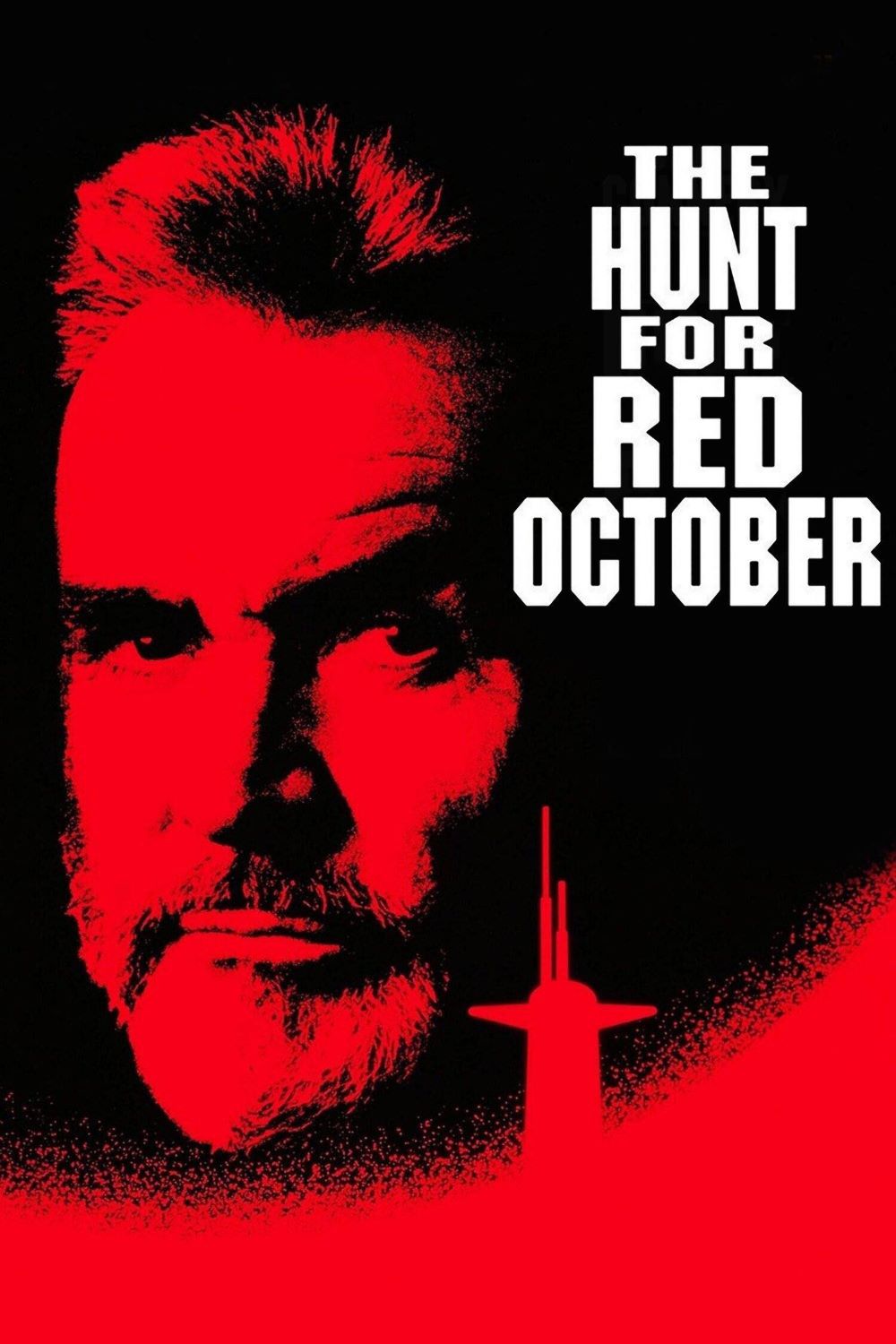
The Hunt for Red October glides into the tail end of Cold War cinema like a stealthy sub cutting through midnight swells, packing a smart mix of spy intrigue and nail-biting underwater showdowns that keep you locked in from the opening credits. Directed by John McTiernan, fresh from helming Die Hard, this 1990 adaptation of Tom Clancy’s doorstopper novel smartly distills pages of naval geekery into a taut, propulsive thriller where Soviet skipper Marko Ramius—Sean Connery in full brooding mode—pilots the formidable Red October, a behemoth sub with a hush-mode propulsion system that ghosts past detection like a shadow in fog.
McTiernan shines in wrangling the script from Clancy’s tech-heavy tome, slicing through the babble to propel the story with crisp momentum and unrelenting suspense, turning potential info-dumps into pulse-quickening beats that hook casual viewers and sub nerds alike. The premise grabs fast: Ramius’s bold maneuvers ignite a transatlantic frenzy, with U.S. and Soviet forces locked in a paranoid standoff over what looks like an imminent crisis. That ’80s-era distrust simmers perfectly here, crammed into a runtime that pulses with fresh urgency decades later, amplified by those dim-lit sub corridors in steely teal tones that squeeze the air right out of the room.
Alec Baldwin embodies Jack Ryan as the reluctant brainiac from CIA desks, sweaty and green around the gills yet armed with instincts that cut through official noise like a periscope through chop. Pulled from family downtime—teddy bear in tow—he injects everyday stakes into the global chessboard, proving heroes don’t need camo or cockiness, just smarts and stubbornness. Connery’s Ramius dominates as a haunted vet with a personal chip on his shoulder, steering a tight-knit officer corps including Sam Neill’s devoted second-in-command, their quiet bonds hinting at deeper loyalties amid the red menace.
Standouts fill the roster seamlessly: James Earl Jones lends gravitas as the steady Admiral Greer backing Ryan’s wild cards; Scott Glenn commands the American hunter sub with laconic steel; Jeffrey Jones brings quirky spark to the sonar savant whose audio tricks flip the script on silence. The dialogue crackles with shorthand lingo and understated jabs, forging a crew dynamic that’s as pressurized as the hull plates, pulling you into hushed command post vibes without a whiff of cheesiness.
McTiernan elevates the genre by leaning on wits over blasts—thrilling pursuits deliver without dominating, letting mind games and split-second calls drive the dread, all while streamlining Clancy’s minutiae into seamless propulsion. Gadgetry gleams without overwhelming: the sub’s whisper-quiet tech sparks clever cat-and-mouse in hazard-filled depths, ramping uncertainty to fever pitch. Pacing builds masterfully from war-room skepticism—Ryan battling brass skepticism—to heart-in-throat ocean dashes, every frame taut as a bowstring. Practical models and effects ground the peril in gritty tangibility, no digital gloss, evoking Ice Station Zebra‘s frosty traps but streamlined into a relentless machine that dodges the older film’s drag. It’s a clinic in balancing spectacle and smarts, where tension coils from isolation’s cruel math: one ping too many, and it’s lights out.
On the eyes and ears front, the movie plunges into submersed nightmare fuel—consoles pulsing crimson in battle stations, scopes piercing mist-shrouded waves, silo bays looming like sleeping leviathans. McTiernan tempers his action flair for thinker-thrills; Basil Poledouris’s great orchestral score surges with iconic power through the chases—those brooding horns, choral swells, and rhythmic pulses echoing engine throbs have etched into legend, pounding your chest like incoming cavitation and elevating every dive. Audio wizardry seals the immersion: hull groans, ping echoes, bubble roars craft a metallic tomb where errors echo eternally. Flaws peek through—early scenes drag with setup chatter, foes skew broad-stroked—but the core hunt erases them, surging to a sharp, satisfying close that nods to Ryan’s budding legend without overplaying the hand.
’90s tentpole lovers and thaw-era history fans find a benchmark here, as the film plays the long con of trust amid torpedoes, fusing bombast with nuance that reboots chase in vain. It bottles superpower jitters spot-on—frantic commands clashing with strike debates—yet softens adversaries via Connery’s world-weary depth and Neill’s subtle conviction. Endless rewatches uncover gems: crew hints dropped early, sonar hacks foreshadowing real tech leaps. Baldwin’s grounded Ryan—chopper-barfing, suit-clashing, chaos-navigating—earns triumphs the hard way, contrasting Das Boot‘s bleak grind with upbeat ingenuity that feels won, not waved. Poledouris’s motifs linger post-credits, a symphonic anchor boosting replay pulls.
Endurance stems from mastering sub-horror’s essence: solitude sharpening choices, where flubs invite apocalypse. Ramius embodies defector realism—war-weary idealist mirroring history’s turncoats—while Clancy’s specs (sub classes, velocities) anchor without anchoring down. McTiernan sidesteps flags; zero flag-waving, pure operator craft in dodges and climactic finesse that blends brains with boom. Quirks delight—the premier’s bluster, aides’ cool calculus—padding a 134-minute gem that exhales you surfacing, amped. Expands on score’s role too: “Hymn to Red October” choral rise mirrors Ramius’s quiet rebellion, threading emotional undercurrents through mechanical mayhem, a Poledouris hallmark outlasting the film.
Bottom line, The Hunt for Red October captivates via cerebral kick—shadow games in fluid physics, intellect over muscle, audacious plays punking empire folly. Sparks post-view chin-strokes on allegiances and risks. Connery’s gravelly “One ping only, Vasily” endures as gold; storm-watch it, trade sofa for sonar station—raw thrill spiked with savvy. Sub saga staple? This silent stalker nails every target.
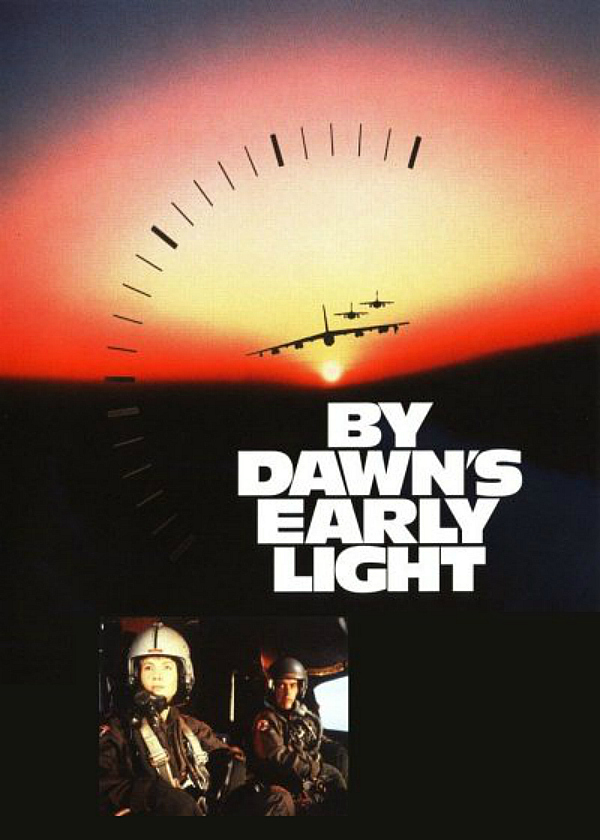
1990’s By Dawn’s Early Light is a film adaptation by HBO of William Prochnau’s novel Trinity’s Child. The film, when it first aired on HBO, seemed dated since the Soviet Union was ultimately going through its death throes as the military build-up initiated during the Reagan Administration crippled the USSR economically (they too tried to match the build-up in conventional and nuclear forces). Yet, despite the ending of the Cold War, recent events domestically and around the world has shown that the world never truly left behind the shadow of nuclear war.
The film is simplicity in the way the plot unfolds. A failed coup by dissident Soviet military commanders fails, but it’s after-effects of creating a “hot war” between the US and the USSR succeeds as both US President and Soviet Premiere make mistakes in their decisions. Decisions heavily influenced by their military commanders who see only black and white in how their respective nations should respond militarily. By Dawn’s Early Light shares some similarities to the classic 60’s Cold War films like Dr. Strangelove and Fail-Safe. Both films deal with the human frailties and flaws helping influence events that could lead to nuclear Armageddon for the whole planet. By Dawn’s Early Light concentrates on several storylines to highlight the stress and difficulties individuals must face to either follow their orders to their inevitable conclusion or allow their conscience to help make the moral decisions in trying to stop the madness spiraling out of control. Though some people’s decisions are left wanting, the film ends with a glimmer of hope that may just bring the world from the brink of annihilation.
The acting by the cast of Rebecca DeMornay, Powers Boothe, James Earl Jones, Darrin McGavin, Martin Landau and Rip Torn are well done. Rebecca DeMornay and Powers Boothe anchor one of the subplots as romantically involved B-52 crew pilots whose conflict comes from their own intimate closeness affecting command decisions and from the stress of families lost by the rest of the bomber crew. Darrin McGavin, Rip Torn and Martin Landau anchor the other subplot of competing Presidents. One a physically incapacitated US leader trying to avert escalating the conflict to the point of no return with another recently sworn in who fears of losing a nuclear war and thus wanting to strike back full and hard. In between these two leaders is the diabolical performance by Rip Torn as a warmongering Army colonel who sees only winning the war as the only objective. At times, the performances do become hampered by the simplicity of the script, but the cast power through to the end.
In the end, the film might look a bit dated in its production design (this was 1990 and many years before HBO became known for premiere television production) but the story itself is very current and relevant. What might have been a nice Cold War relic fairy tale when it first aired in 1990 on HBO has taken on more of a cautionary tale as more nations begin to acquire nuclear weapons with some of these nations not just enemies of the US and the world in general, but also led by men whose hold on sanity seem tenuous at best. By Dawn’s Early Light is a great piece political “what if” that hopefully remains just that and not a prediction of reality to come.
“No!” James Earl Jones says towards the end of 1989’s The Best of the Best, his already deep voice made even more imposing by the use of slow motion.
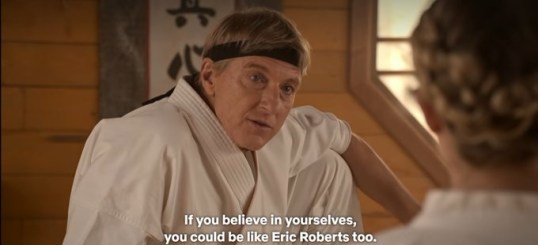
“No, Tommy, no!” Eric Roberts joins in as he watches martial artist Tommy Lee (Phillip Rhee) internally struggle with whether or not to strike a blow that will definitely kill his opponent and, if James Earl Jones is all gravitas and stern wisdom, Eric Roberts is all emotion and desperation.
The Best of the Best is a bit of an oddity, in that the script features just about every martial arts tournament cliche imaginable (right down to the other “bad” team having a history of killing people in the ring) but those cliches are all acted out by a surprisingly distinguished cast. I counted four Oscar nominees (and one winner) in the cast. James Earl Jones (nominated for The Great White Hope) plays Coach Couzo, who gets a team of Americans prepared to fight in an international tournament. Sally Kirkland (nominated for Anna) plays their trainer, who worries not just about the team’s physical health but also their mental burdens. Eric Roberts (nominated for Runaway Train) is Alex Grady, the former martial arts champion-turned-auto worker who makes the team despite having a bad shoulder. Louise Fletcher (who won for One Flew Over The Cuckoo’s Nest) plays Alex’s mother, who looks after his son while Alex is off getting ready to face the Korean team. And then there’s Chris Penn (who seems like, if not for his early death, he would have eventually been nominated for something) as the arrogant Travis, a cowboy who can throw a punch.
(The American team is filled out by John Dye as Virgil, an intellectual Buddhist, David Agresta as Sonny “I’m Italian” Grasso, and Phillip Rhee, who not only plays Tommy but also wrote the film’s script.)
Roberts gets top-billing in this and he does get a lot of important moments, including a scene where he breaks the Coach’s rules so that he can visit his son in the hospital. That said, the story centers around Phillip Rhee’s Tommy. Tommy’s older brother was killed in the ring by the one-eyed Dae Han Park (Simon Rhee) and — wow, what a coincidence! — that just happens to be who Tommy needs to beat for the Americans to win the big tournament. Both of the Rhee brothers actually are martial artists and they are very convincing in the fight scenes, which is good because neither Phillip nor Simon Rhee were particularly strong actors. Eric Roberts is not a particularly convincing martial artist but it doesn’t matter because he acts the Heck out of every scene in which he appears. What happens when you bring method intensity to the type of martial arts film that Jean-Claude Van Damme would later make his specialty? You get scenes of a heavily-bruised Eric Roberts crying but, because Roberts is a good actor, the tears feel earned. Still, whenever I saw Alex’s eyes starting to glisten, I imagined James Earl Jones saying, “Noooooooo!” How can you win the world’s greatest tournament when you’re constantly on the verge of tears? Well, maybe you don’t need to win. Maybe you just need to show that you have more honor than anyone else there.
Best of the Best is a classic of its kind. There’s nothing surprising about it but it’s entertaining in its own dumb way and, in the end, it reminds us that America doesn’t need medals to be the best. It just needs Eric Roberts.
Previous Eric Roberts Films That We Have Reviewed:
Welcome to Late Night Retro Television Reviews, a feature where we review some of our favorite and least favorite shows of the past! On Thursdays, I will be reviewing Highway to Heaven, which aired on NBC from 1984 to 1989. The entire show is currently streaming on Tubi and several other services!
This week, not even the presence of the great James Earl Jones can save Highway to Heaven.
Episode 3.16 “A Song of Songs”
(Dir by Michael Landon, originally aired on January 21st, 1987)
Mark and Jonathan are driving out in the middle of nowhere, waiting for their next assignment. Mark is annoyed. He says he’s been driving for ten hours. Personally, I think Mark has every right to be annoyed. I’ve noticed that Jonathan never drives. Are angels not allowed to drive? Did he never learn how? It seems a bit self-centered to make Mark do all the driving.
Eventually, Jonathan and Mark stop off at a roadhouse. Mark order a huge amount of ribs. Jonathan smiles, even though Mark is going to give himself a heart attack if he’s not careful. By an amazing coincidence, an old friend of Mark’s is also at the roadhouse. Gabe (James Earl Jones) is a blind jazz pianist. He’s also this week’s assignment.
Jonathan and Mark are hired to work at a storefront church that is led by Eleanor (Rosalind Cash). Eleanor is strict and demanding and when her daughter (Akosua Busia) wants to go off on her own and perform her own type of music, Eleanor accuses her of only caring about “the devil’s music.” It turns out that Eleanor is also Gabe’s ex-girlfriend! Eleanor was not always so strict. Can Jonathan and Mark bring these two back together and also repair the relationship between Eleanor and her daughter?
Eh, this episode didn’t do much for me. I hate to say that because James Earl Jones was one of our best actors and he’s definitely the strongest thing about this episode but overall, the plot was a bit too predictable and both Rosalind Cash and Akosua Busia gave such over-the-top performances that it was hard to take their storyline seriously. This was Highway to Heaven at its most predictable and the episode didn’t even benefit from Michael Landon’s trademark earnestness. It just fell flat.
Oh well, there’s always next week. Maybe Mark will finally get a break from always having to do the driving! I wouldn’t count on it, though.
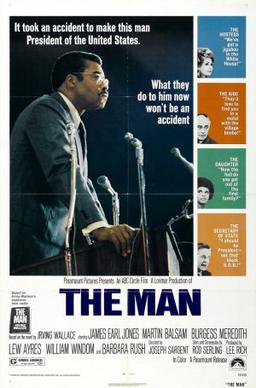
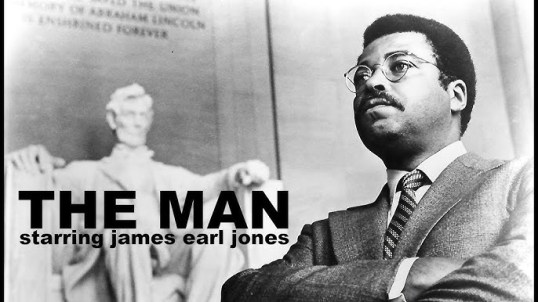
In 1972’s The Man, James Earl Jones stares as Douglass Dilman.
Dilman is a black college professor and a U.S. Senator. To his friends, he’s a symbol of progress. To his enemies, he’s a sell-out who is viewed as being improperly radical. The U.S. Senate, eager to prove that it’s not a racist institution, has elected Dilman as the President Pro Tempore. He is now fourth in line for the presidency but that doesn’t concern racist senators like Senator Watson (Burgess Meredith). A lot would have to happen before Dilman would ever become President.
Needless to say, a lot does happen.
The President and the third-in-line Speaker of the House are attending a conference at a historic building in Frankfort when the roof collapses on them. We don’t actually see this happen. We just hear the people in the White House talk about how it’s happened. We also don’t really learn many details about why the roof collapsed. Someone nonchalantly says, “It’s an old building.” Myself, I spent the entire movie waiting for some sort of big revelation of a conspiracy behind the roof collapse but it didn’t happen. Apparently, in 1972, the Secret Service just let the President go anywhere without checking the place out first. That said, it’s not a good thing when a serious movie opens with a dramatic plot development that, at the very least, draws a chuckle from the audience. Seriously, we lost our President because a roof fell on him? How is America ever going to live that down>
Vice President Noah Calvin (Lew Ayres) is wheeled into the White House cabinet room. This was not the first time that a Ayres played a Vice President called upon to succeed the President. Unlike in Advice and Consent, the Vice President announced that he cannot accept the honor of being sworn in because he’s too sick. (Since when does the Vice President have the option to refuse to do his Constitutional duty?) With Calvin putting the country ahead of his own ambition, Senator Watson announces that Secretary of State Eaton (William Windom) will be the new President. No, Eaton says, Dilman will be the new president. But once Dilman screws up and is either impeached or resigns, fifth-in-line Eaton will be sworn in.
Except …. it wouldn’t work that way. Excuse me while I put my history/political nerd hat on….
First off, Calvin is apparently still Vice President so if Dilman did step down, Calvin would once again be the successor. What if Calvin refused a second time? As soon as the Speaker of the House died, the House of Representatives would elect a new Speaker and that person would be third-in-line. And, as soon as Dilman became President, the Senate would elect a new President Pro Tempore and that person would be fourth-in-line. In other words, Eaton is no closer to being President than he was before.
My reason for going into all of this is to illustrate that The Man is a film about American politics that doesn’t really seem to know much about American politics. That said, it does feature the great James Earl Jones as Douglass Dilman and Jones gives such a good and thoughtful performance that it almost doesn’t matter that no one else in the film seems to be taking it all that seriously. Jones plays Dilman as being a careful and cautious man, one who understands that he occupies a huge place in history (Barack Obama was only 11 years old when this film came out) but whose main concern is just doing a good job as President. Dilman finds himself in the middle. On one side, he has advisors warning him not to scare America by being too radical. On the other side, his activist daughter (Janet MacLachlan) brands Dilman a sell-out. When a black student named Robert Wheeler (Georg Stanford Brown) is arrested for assassinating a South African government official, Dilman’s first instinct is to believe Wheeler’s been framed but, as the film progresses, doubts start to develop and Dilman must decide whether or not to risk an international incident. It’s an interesting story, well-played by James Earl Jones and Georg Stanford Brown.
It was originally mean to be a made-for-TV movie but, in order to capitalize on the excitement on the 1972 presidential election, it was released into theaters. As a result, the film often has the cheap look of a made-for-TV movie and quite a few members of the cast give performances that feel more appropriate for television than the big screen, (Some members of the cast, like Burgess Meredith, just overact with ferocious abandon.) In the end, The Man is mostly of interest from a historical point of view. (In 1972, the idea of a black man being elected President seemed so unrealistic that the movie actually had to drop the roof on 50% of the government just to get Dilman into the Oval Office.) James Earl Jones, who would have turned 94 today, is the main reason to watch.
Just for the hell of it, I went on a little Robert Duvall marathon for his birthday on January 5th. I started the marathon off with his superior western with Kevin Costner, OPEN RANGE (2003). Next up was Duvall’s excellent crime film with Joe Don Baker and Robert Ryan, THE OUTFIT (1973). Duvall was in badass mode in this one. Based on one of Richard Stark’s “Parker” books, this was my first time to watch the film and damn, it was excellent. After that, I watched the bleak THE ROAD (2009), starring Viggo Mortensen, where Duvall just had a small part. It was a downer. I finished off the marathon late in the evening with A FAMILY THING (1996). I remember when this movie came out in the 1990’s because it was co-written by Billy Bob Thornton. Thornton was still a year away from his massive success with the movie SLING BLADE, but I knew him from his writing and co-starring in the superior crime film ONE FALSE MOVE (1991), as well as his small role in TOMBSTONE (1993). As an Arkansan, I knew Thornton was from Arkansas so I had taken a particular interest in him. But I was only 22 years old when A FAMILY THING was released, and a movie about a couple of old guys resolving family issues didn’t seem that appealing to me. As a guy into his 50’s, the entire concept seems more interesting to me now, so I gave it a spin for the first time to close out the marathon.
The story opens up in rural Arkansas with Earl Pilcher Jr. (Robert Duvall) getting the shock of his life when his beloved mother writes a final letter to him and instructs her local pastor to deliver it a few days after her death. The letter tells Earl that his biological mother was a black woman named Willa Mae who died in childbirth. It seems that Earl’s dad had gotten Willa Mae pregnant, and since he came out white, his “mother” was able to raise him as her own without having to tell him the truth. The letter also tells him that he has a half-brother named Ray Murdock (James Earl Jones) living in Chicago. It’s her dying wish that he meet Ray and get to know him as family. Pissed at his dad, and wanting to honor his mom, Earl heads to Chicago to meet Ray. Earl knows that Ray is a cop so he’s able to track him down. They immediately don’t like each other, but through a variety of circumstances, Earl ends up staying at Ray’s house for a couple of days. While there, he meets Ray’s wise, old Aunt T., Willa Mae’s sister (Irma P. Hall) and his sullen son Virgil (Michael Beach). Will the two men continue to push each other away, or will they eventually find the family connection that exists under all that messy past?
I was surprised how deeply I was affected by A FAMILY THING. I’d be lying if I said I didn’t get teary-eyed a couple of times. The movie may use issues of adultery and racism to get the ball rolling, but more than anything else, it seems to understand that life is messy and that people are messy. We’ll disappoint ourselves, we’ll disappoint other people, and other people will disappoint us. There’s a reason that many people find their love in dogs and cats instead of people, because real relationships can be tough. The truth about my own life is that I could not have appreciated this film in 1996 at only 22 years of age. I was too naive. That’s no longer the case in 2025, and I can now truly relate to this story of two men who share a painful history, find common ground, and decide it’s worth moving forward together because family really does matter.
A movie like A FAMILY THING has no chance of working without a great cast, and this movie is a thespian jackpot. Robert Duvall is spot on perfect as the good ole guy from Arkansas, with a little bit of a racism engrained down deep into his soul, who now has to deal with the fact that he is half black. The scene where he confronts his dad about the lies that had been told to him all his life is as good as it gets. James Earl Jones matches Duvall in the even trickier role as the man who has always known about his “white” half brother Earl. This man has buried his hatred away for Earl’s father for decades, who he blames for the death of his own mother, and now has to deal with those feelings being dredged back up to the surface when Earl shows up in Chicago. Jones perfectly balances his character’s desire to keep the past in the past, with his decency as a man who doesn’t want to just throw Earl out on the street. He eventually softens towards him no matter how much bitterness he has for Earl’s dad. And neither Duvall or Jones even give the best performance in the film. That honor goes to Irma P. Hall as the blind, but extremely perceptive Aunt T. She sees through all of their bullshit, as she states to each of them on different occasions, and encourages them to get to know each other because they’re family. As they play games of racism and bitterness, she reminds them they are brothers no matter the color of their skin. It’s the performance of a lifetime and was at least worthy of an Oscar nomination in my opinion.
Overall, A FAMILY THING may compress the amount of time and potential therapy it would take to resolve the type of family history presented here, but it does find a certain truth in the power of relationships. Earl and Ray don’t have to recognize the fact that they are brothers. As a matter of fact their lives are just fine without each other. But it’s their willingness to embrace the messy truth and find a way to connect with each other that makes the movie meaningful to me!


 Through the Shattered Lens