Wolf (1994, directed by Mike Nichols)


Will Randall (Jack Nicholson), the editor-in-chief of a New York Publishing house, doesn’t get much respect, not from his wife (Kate Nelligan), not from his boss (Christopher Plummer), and certainly not from Stuart Swinton (James Spader), the sleazy executive who is plotting to steal his job and destroy his marriage.  But then, one night, Will runs over a black wolf on a country road.  When he tries to helps it, the wolf bites him.  Soon after, Will starts to feel different whenever the moon is full.

I remember that, when Wolf came out in 1994, some people said that casting Jack Nicholson as a werewolf seemed like typecasting.  Nicholson apparently understood this as well so he actually downplays his usual mannerisms for the first part of the movie and gives a convincing performance as a harried executive who is worried he’s about to lose his job.  It’s only after he is bitten that Will Randall starts to come alive.  Not only does he develop the predator instinct necessary to survive in New York City but he also, without fear, pursues his boss’s daughter, Laura (Michelle Pfeiffer, at her most beautiful).  Typecast or not, Jack Nicholson is excellent in Wolf.  Equally good is James Spader as Will’s business rival, who starts to show some predator-like aspects of his own.

Director Mike Nichols was not normally a horror director and, around the midway point, his direction falters and there are times when he just seems to be going through the motions.  He gets good performances from his cast but doesn’t know how to craft a good jump scare.  The best parts of the movie are when Wolf uses lycanthropy as a metaphor for petty office politics, with Will “marking” his territory while talking to Stewart and showing a renewed killer instinct.  Wolf works better as a social satire than as a horror movie.

Fans of Frasier will be happy to see David Hyde Pierce in a small but key role.  He delivers the film’s best line.  Fans of Friends may also notice David Schwimmer in a small role.  He says nothing worth remembering.  Their presence, though, is a reminder of just how much American culture changed in 1994.  By the end of the year, both went from small roles in Wolf to co-starring in the two of the most popular sitcoms in America.

Horror Scenes That I Love: Swimming With The Creature From The Black Lagoon


Today’s horror scene that I love comes from one of my favorite films, 1953’s Creature From The Black Lagoon.  In this scene, Julia Adams goes for a swim.  Little does she realize that, under the water, the Creature is following her every move.  Wonderfully directed by Jack Arnold, this creepy yet oddly lovely scene is one of the best of the 50s.

October True Crime: The Hunt For The BTK Killer (dir by Stephen Kay)


Dennis Rader is pure evil.

I feel confident saying that, though I’ve never met him.  He’s currently eighty years old and in prison, serving several life sentences for a series of murders he committed in the 1970s, the 80s, and the 90s.  Because he committed the murders at a time when Kansas did not have the death penalty, he escaped being executed.  That said, he won’t be eligible for parole until the next century so we can rest assured that Dennis Rader will die in prison.

Dennis Rader was a serial killer who decided to give himself a nickname.  He wrote letter to the local media in Wichita, Kansas and demanded to be known as The BTK Killer — for Bind Them, Torture Them, and Kill Them.  It was a dumbass nickname but it stuck.  Everything about the BTK case is disturbing but one that always gets me is that nearly got away with it.  His last known victim was an elderly woman who he killed in 1991.  By the time the current century rolled around, The BTK Case had gone cold and was being forgotten about.  Rader couldn’t handle that so he started writing the local media and eventually the police again in 2004.  Rader, being a moron, didn’t consider that he was mailing a DNA sample with every letter.  Eventually, he sent the cops as floppy disk of his “writings.”  What he didn’t realize is that the metadata from a deleted Word Document was still stored on the disk.

Dennis Rader was a deacon in his local church.  He was also an dog catcher and compliance officer for Park City, Kansas.  You know the self-important jerks who send you a letter threatening to fine you if you don’t mow your grass?  Dennis Rader was one of those guys.  When Rader was finally arrested, he was described as being a trusted member of his local community but let’s be honest.  Everyone hates their local compliance officers.  Most serial killers are driven by a need to control and dominate.  Perhaps one reason why Rader had stopped killing was because he was able to channel his sadism into his job.

After he was arrested in 2005, he was on television constantly and he was such a continual presence that he even worked his way into a few of my nightmares.  Rader confessed to his crimes in court, giving a monologue in which he dryly discussed each murder.  Later, one of the primetime news shows interviewed Rader in prison and again, Rader discussed each murder in a flat tone and only showed emotion when he talked about the prospect of never leaving prison.  It was disturbing to watch and listen to and sadly, the media made sure that we heard and listened to it a lot.

The Hunt For The BTK Killer was a made-for-television movie about Dennis Rader (played by Gregg Henry) and the detective (Robert Forster) who eventually arrested him.  It aired in 2005, the same year that Rader was captured and eventually sentenced for his crimes.  It’s a movie that was obviously shot very quickly to capitalize on the media attention that the case was receiving.  As is often the case with the movies like this, it was filmed up in Canada.  (Canadian film mainstay Maury Chaykin appears as a true crime writer.)  All that said, it’s still an effective film.  Gregg Henry, under a ton of makeup, plays Dennis Rader as being the type of busybody who gets off on telling people what to do and who believes that being a deacon at his church will absolve him from the murders that he committed.  It’s a good performance and Henry is well-matched with Robert Forster.  Forster’s naturally world-weary vibe made him the ideal choice for playing detectives who have seen the worst that humanity had to offer.  Most importantly, the film shows how fear can change a community.  When BTK is on the loose and sending taunting letters to the newspapers and the local television station, the people of Wichita soon start to suspect their neighbors and what was one a friendly town becomes a place where even Forster is at risk of getting accidentally stabbed by his terrified wife.

Dennis Rader was someone who obviously enjoyed the fear that he generated.  He cried when he went to prison and hopefully, he’s still crying now.
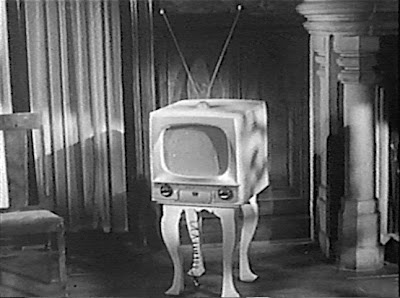
4 Shots From 4 Horror Films: The 1960s Part 3


This October, I’m going to be doing something a little bit different with my contribution to 4 Shots From 4 Films.  I’m going to be taking a little chronological tour of the history of horror cinema, moving from decade to decade.

Today, we finish off the 1960s!

4 Shots From 4 Horror Films

Even The Wind is Scared (1967, dir by Carlos Enrique Taboada)

Even The Wind is Scared (1967, dir by Carlos Enrique Taboada)

The Witchfinder General (1968, dir by Michael Reeves)

Witchfinder General (1968, dir by Michael Reeves)

Rosemary's Baby (1968, dir by Roman Polanski)

Rosemary’s Baby (1968, dir by Roman Polanski)

The Nude Vampire (1969, dir by Jean Rollin)

The Nude Vampire (1969, dir by Jean Rollin)4

Horror On The Lens: Attack of the Giant Leeches (dir by Bernard Kowalski)


I love the 1959 film, Attack of the Giant Leeches.

The set up is a classic one.  In the humid bayous, a sweaty and unappealing store owner (Bruno VeSota) discovers that his much younger wife (the great Yvette Vickers) has been cheating on him.  In one scene, he forces his wife and her lover to enter the swamp.  It’s terrifying because the swamp is full of …. GIANT LEECHES!  I’m a Southern girl.  I’ve spent some time in the bayous.  Let me tell you, swamps are creepy enough without the addition of giant leeches.

Full of sultry melodrama and bayou atmosphere, Attack of the Giant Leeches is one of the best of the giant monster films of the 50s.  It’s amazing was radiation can do!

THE TWILIGHT ZONE (TV Series) – S3, E1: “Two,” starring Charles Bronson and Elizabeth Montgomery!


You know producer Buck Houghton had high hopes for the opening episode of Season 3 of THE TWILIGHT ZONE when it aired on September 15, 1961. It stars up and coming actors of the time, Charles Bronson and Elizabeth Montgomery, who were all over TV screens in the 50’s and early 60’s, with Bronson emerging as a strong character actor in movies as well. The two would be major stars within a few years, but they weren’t quite there yet. 

This episode, titled “Two,” opens with “The Woman” (Elizabeth Montgomery), who is wearing a tattered dark military uniform, wandering into a bombed out, deserted city, and spotting the remains of a restaurant. Tired and hungry, she goes in and digs around until she finds an old can of chicken. As she’s opening the can, “The Man” (Charles Bronson), who’s wearing a tattered, light-colored uniform, walks in on her. Immediately attacking him with a combination of meat cleavers, bottles, pots and pans, The Man tries to hold her off until if becomes clear that he’s going to have to subdue her, which he does with one vicious punch that knocks her out cold. At this point it’s clear that these are the last two remaining survivors of a devastating war, on opposing sides no less, that completely destroyed the world. When The Man wakes The Woman up by dumping a pot of cold water on her face, he gives her back her chicken and tells her that there is no reason to fight anymore, as everyone else is dead. She doesn’t understand what he is saying so he walks off in frustration. The Woman doesn’t trust The Man, but she begrudgingly starts to follow him around to keep an eye on him. Will they kill each other? Will they join forces to survive? Could they even fall in love? Writer-Director Montgomery Pittman answers all of these questions over the course of the episode’s brisk 25 minutes. 

The allegorical “Two” was a bold choice to open the popular TV show’s third season with its minimalist production set in a few sections of a single bombed-out town and featuring only two characters who barely even speak, especially Montgomery, who says two words throughout the entire episode. Not that much really happens either, so it’s the type of episode that lives or dies based on the performances of the lead actors, and Bronson and Montgomery both deliver outstanding work. Bronson, a dependable character actor at this point in his career, is especially good as The Man. His square-jawed stoicism unravels enough to reveal a weary vulnerability and desire for a connection with another person, even when they’re supposed to be mortal enemies. It’s ultimately a romantic part and Bronson kills it. For those who mostly know Bronson from his post DEATH WISH action star roles, parts like this are a revelation. Montgomery, still a few years away from beginning her iconic portrayal of Samantha in BEWITCHED, is quite beautiful even when she’s this grimy. Her performance as The Woman is even more challenging as it’s almost completely a physical performance, and she shines as her character transforms over the course of the episode.

Ultimately, “Two” may resolve its setup a little too quickly to be realistic, but I still enjoyed it immensely. The performances are outstanding and its hopeful denouement left me with a smile on my face. 

Horror On TV: The Cloning of Clifford Swimmer (dir by Lela Swift)


Tonight’s televised horror is The Cloning of Clifford Swimmer.  Peter Haskell stars as Clifford Swimmer, an angry jerk who is unhappy with his marriage.  He’s come up with a plan, though.  He’s going to have himself cloned and then, after leaving his clone with his family, he’ll be free to live his life.  However, Swimmer discovers that things never work that simply when it comes to creating a clone.  This is a clever story with a great twist at the end.

It originally aired on November 1st, 1974 as a part of ABC’s The Wide World of Mystery.  Unfortunately, whoever uploaded this film to YouTube has disabled playback so you’ll have to click on the link to watch it!

On-Stage On The Lens: Hamlet From The Lunt-Fontaine Theater (dir by Bill Colleran and John Gielgud)


That Richard Burton is today best-remembered for his tumultuous marriages to Elizabeth Taylor and for his performances in several less-than-worthy films is unfortunate as Burton was also one of the most highly regarded staged actors of his generation.  In fact, late in his life, Burton often expressed regret that he had ever left the stage for films to begin with.

In 1964, Burton played Hamlet on Broadway, in a production that was directed by John Gielgud.  (Gielgud also provided the voice of the Ghost.)  This is a video-recording of both that production and Burton’s acclaimed performance.  Burton brings an intense and almost divine madness to the role.  Watching, one can see why Burton would have preferred to have been remembered for this instead of for playing Mark Antony.


Killdozer (1974, directed by Jerry London)


Six construction workers (played by Clint Walker, Carl Betz, Neville Brand, James Wainwright, James A. Watson, and Robert Urich) are boated to an isolated island off the coast of Africa.  An oil company has assigned them to build an airstrip on the island.  On the first day of work, they come across a meteorite buried in the ground.  When one of the men tries to pick up the meteorite with the bulldozer, a blue light envelops the bulldozer and, at the same time, fatally injures Robert Urich.  Possessed by the meteorite, the bulldozer starts to track the remaining workers down, killing them one-at-a-time.  It’s a killdozer!

Based on a short story by Theodore Surgeon and made-for-television, Killdozer asks the question, “Have you ever seen a big, bulky bulldozer attempt to sneak up on someone?”  Given that Killdozer is not fast and it’s not very agile, it should be easy to escape it but the construction keep doing dumb things, like getting drunk or trying to hide inside a copper tube instead of just running away.  The surviving men wonder how they are going to make it until help eventually arrives.  Maybe if you hear Killdozer coming, you should could just step to the side or maybe you could even run behind Killdozer.  Instead, the construction workers keep trying to fight it head-on.  Every time Killdozer pauses from noisily rolling across the island and sits still because it senses one of the workers might be nearby, I’m reminded that Killdozer is an absolutely ludicrous film but that it’s also wonderfully strange and that it’s also impossible to enjoy it on some level.

The cast is good and, for the most part, so is the straight-forward, waste-no-time direction.  The Killdozer deserved an Emmy and maybe its own series but instead, it just had to settle for cult stardom.