
by Erin Nicole
You can see them if you look for them.
by Erin Nicole
You can see them if you look for them.
Though he had retired from the band to pursue a solo career, Dee Dee Ramone wrote Poison Heart and gave it to Ramones. The story has always been that Dee Dee gave them the song as a way to thank the band for bailing him out of jail. I don’t know if that story is true or not but it does have a ring of truth to it. Print the legend, to quote The Man Who Shot Liberty Valance.
The song appeared on the soundtrack for Pet Semetary 2 and the video is clearly inspired by that song, with the child being forcefully dragged through the cemetery while the band performs in what appears to be an underground tunnel.
This video was directed by Samuel Bayer, who has done videos for just about everyone.
Enjoy!
In the 2nd episode of Ghost Story, an important lesson is learned. If you’re going to bury a sea captain, do not bury him in concrete because his spirit belongs to the ocean. Upset his spirit and he’ll basically ruin whatever hopes you have of bringing tourists to the seashore!
This episode stars Gena Rowlands and Stuart Whitman and it was directed by none other than Richard Donner. Donner, of course, would go on to direct such films as The Omen, Superman, and Lethal Weapon.
Enjoy!
(Despite the weird thumbnail, this video should work if you click play.)
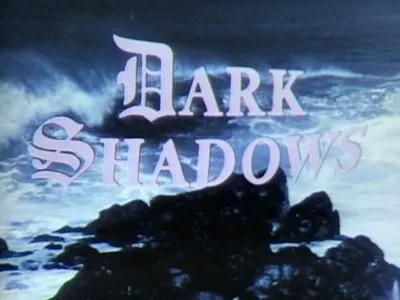
The year was 1967 and, in Collinsport, Maine, a petty criminal named Willie Loomis was about to make television history. Convinced that a fortune in jewelry was hidden in the Collins family’s mausoleum, Willie broke in and opened a coffin that, strangely, was covered in chains. Willie expected to find a fortune. Instead, he found Barnabas Collins, a 200 year-old vampire who transformed Willie into his servant and proceeded to spend the next five years masquerading as a cousin from Britain while searching for both a cure to his condition and for the reincarnation of the love of his life, Josette.
Played by stage actor Jonathan Frid, Barnabas Collins made his first appearance on the April 18th, 1967 episode of Dark Shadows. Though Barnabas was originally only meant to be a temporary addition to the show’s roster of characters, Frid proved to be popular with viewers, like my mother who not only watched the show when it first aired but also when reruns were broadcast in syndication many years later. The show soon came to center on the ruthless vampire.
In fact, Frid and Barnabas became some identified with the show that many are still shocked to learn that Dark Shadows had run for a full year before Barnabas was introduced as a character. When the show airs in syndication, it usually starts with Willie (played by John Karlen) opening Barnabas’s coffin and not with the earlier episodes in which the show’s nominal lead character, Victoria Winters, first arrived at Collinwood and met the members of the family.
Many future horror directors and writers have stated that their interest in the genre began with watching Jonathan Frid on Dark Shadows. And it all began with that one great moment when Willie Loomis opened the coffin and set Barnabas free.
Previous Moments In Television History:
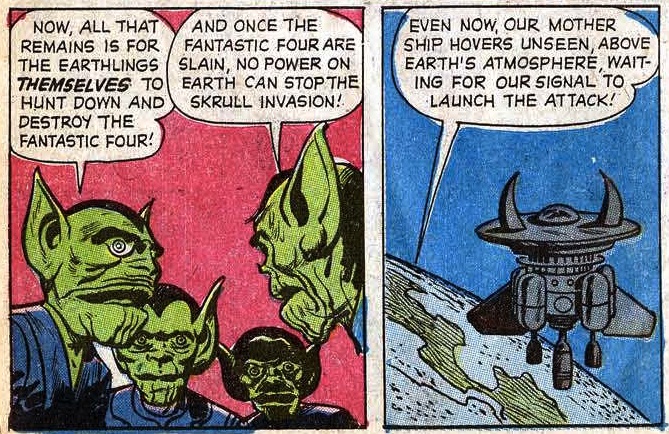
Just a few months after introducing themselves to the world, the Fantastic Four appear to be on a crime rampage! The Thing swims out to an oil rig and knocks it over with one punch. The Human Torch melts a memorial. The Invisible Girl steals jewelry. And when New York suffers a huge blackout, witnesses report seeing an arm stretching it’s way into a powerplant and flipping the off switch!
The Fantastic Four claim that they’re innocent and it turns out that they are. Four shape-shifting aliens, known as the Skrulls, have traveled to Earth and are pretending to be the Fantastic Four so that the government will turn on them and it will be easier for the Skrulls to take over the planet. Fortunately, Mr. Fantastic figures out what’s going on. Not only does he fool the Skrull commanders by showing them back issues of Journey Into Mystery and Strange Tales and saying that they’re actual newspapers about the monsters that exist on earth but he also hypnotizes three of the Skrulls on Earth and convinces them that they are cows.
I’ve always liked the Skrulls and it’s always bothered me that they seemed to lose almost every war that they got involved in. How could the Kree defeat the Skrulls? And was it necessary to add insult to injury by having Galactus eat their homeworld? The Skrulls just could not catch a break and I think that’s one reason why they’ve always been popular. With their ability to change their shape and adopt the powers of the heroes that they’re imitating, the Skrulls should have been unstoppable. They should have conquered this planet a long time ago. But the Skrulls, for all of their powers, could just never seem to get it together. To paraphrase Uncle Ben, with great power comes truly rotten luck.
Fantastic Four #2 was not only the first appearance of the Skrulls but it was also the first instance of a Marvel super hero team thwarting an invasion of Earth. (Eventually, Earth being invaded would become a monthly occurrence in the Marvel Universe.) The issue also introduced a major Marvel theme. The Fantastic Four may have saved the world from Mole Man just a few weeks before the Skrulls arrived but it didn’t take long for the general public to turn on them. It was a lesson that would later also be learned by Spider-Man and the X-Men. The general public is extremely fickle when it comes to its super heroes.
And it all started with four shape-shifters coming to Earth. The Skrulls may never win but Marvel still owes much to them.
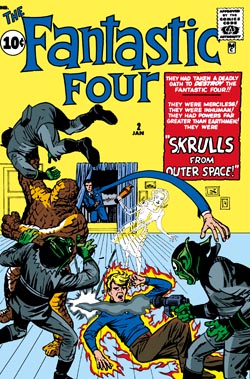
Fantastic Four Vol. 1 No. 2
(September, 1962)
“The Fantastic Four Meets The Skrulls From Outer Space”
Script: Stan Lee
Pencils: Jack Kirby
Inks: George Klein
Letters: John Duffy
Previous Great Moments In Comic Book History:
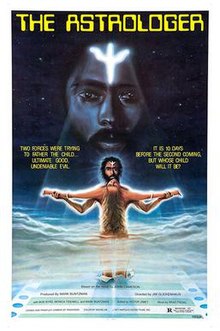
Quite possibly one of the most boring film ever made, 1975’s The Astrologer tells the story of …. well, I’m not really sure what the point of it all is.
Basically, an astrologer named Alexi Abarnel (Bob Byrd) has figured how to combine the zodiac with 70s technology and, as a result, everyone’s potential for good and evil can be determined simply by typing their birthdate into a computer. The U.S. government funds his agency, which is known as Interzod. And let’s be honest, that does sound like the type of dumbass thing that the government would fund, especially when the Democrats are in power.
According to the stars, the second coming of Christ is only a few days away. Alexi is convinced that he has married the woman who is destined to give birth to the Savior. Because of this, he refuses to consummate his marriage because it’s very important that she remain a virgin. However, he hasn’t bothered to inform her of any of this so poor Kate (Monica Tidwell) spends all of her time wondering why her husband hasn’t touched her in five years of marriage and why it’s also so important to him that she never tell anyone the actual date of her birth.
Meanwhile, a group of gypsies are traveling the country and, under the leadership of Kajerste (Mark Buntzman), they are both murdering people and also compelling people to commit suicide. Interzod is concerned about Kajerste because of his “zodiacal” potential but Alexei is also concerned that he doesn’t have Kajerste’s exact birthdate. But the fact that Kajerste is commanding his followers to kill people should be enough to clue Interzod into the fact that Kajerste is bad guy, regardless of whether he’s a Capricorn or an Aquarius. Fortunately, Interzod has come up with a plan on how to kill Kajerste, one that involves implanting thoughts in his head via electrodes and tranquilizer dots. A young congressman (Al Narcisse) wants to help because he’s so interested in Interzod’s work. However, it turns out that the ludicrously complicated plan to take out Kajerste is …. well, ludicrously complicated. If my tax money is going to fund Interzod, I would hope they would make better use of it.
The film’s plot definitely has the potential to be interesting but, unfortunately, The Astrologer is a very, very talky film. It only has a 78-minute running time and the majority of the film is made up people having very long and very dry conversations about how Interzod works and why its work is important. The problem is that there’s not really any need to convince the viewers that Interzod is important or to show us how it works. No watching this film is going to be interested in an in-depth examination of a fictional government agency. Everyone knows that this isn’t 60 Minutes and it’s not like the NSA has hand-picked the correspondent who is going to be reporting on them. This is a film about spies, astrology, and a killer cult. It should be a lot of fun but instead it’s incredibly boring.
That’s not to say that it’s a total waste. This was James Glickenhaus’s first film as a director. Glickenhaus went to direct some well-regarded action films in the 80s and there are a handful of isolated moments in The Astrologer where it is obvious that the film was made by someone who had a good visual eye. A cult ceremony scene that is almost totally made up of freeze frames is nicely done. And, as always, it’s hard not to admire the ambition of someone trying to make a metaphysical thriller and tackle the big questions of existence on a budget.
In the end, though, the most interesting thing about The Astrologer is its insistence on having its characters frequently use the term “zodiacal.” Take a drink every time that you hear someone say, “zodiacal” but don’t drive afterwards.
 When an out-of-control general was on the verge of destroying the world, Col. Jack Slater (Vincent Spano) did what he had to do and he killed him. Now, Slater is in a military prison and separated from his family. However, he’s offered an opportunity to win his freedom. All he has to do is reassemble his old crew of military/scientist specialists and deactivate an underground computer. The problem is that a mad scientist named LaGrange (Zdenek Maryska) is threatening to use the computer to destroy the world and the underground chambers are patrolled by a killer cyborg that has melded with LaGrange’s mind. Meanwhile, above ground, General Devlin (Paul Koslo) is willing to sacrifice Jack and his team if it means covering up what’s happening underground. If the cyborg doesn’t kill them, the super computer will. If the super computer can’t get the job done, the government cover-up will do what has to be done. If the government can’t do it, the earthquake will have to suffice. Either way, it seems unlikely that Jack and his people are going to escape that underground chamber with their lives.
“Game over, man!”
No one shouted that in Downdraft but they could have because the scenes of the team searching the underground chamber will be familiar to anyone who remembers the space marines exploring the destroyed colony in Aliens.
“I’ll be back.”
No one says that in Downdraft but someone could have because the computer turning on the humans that created it will be familiar to anyone who remembers what John Connor told Sarah in The Terminator.
“Thank you and have a nice day.”
Again, no one says it in Downdraft but they could have because the killer cyborg might as well be named Robocop.
Downdraft takes elements from all of those films and then adds in the type of corrupt general who would send John Rambo to Vietnam and then abandon him there once it became obvious that Rambo had found evidence of American POWs. There’s not much about Downdraft that feels original but I will give Downdraft credit for including a little bit of everything. Not only is there a killer robot and a super computer and an untrustworthy general and a government coverup and a team of quirky nerds who know how to fight but there’s also a race against time to defuse a hydrogen bomb and several scenes of people having to climb rickety ladders and cross over chasms on unstable bridges. The action is impossible to follow but when there’s so much of it, it almost doesn’t matter. The main message of the movie is that humanity shouldn’t become reliant on supercomputers to run the world. It’s a good thing we all learned that lesson, right?
Vincent Spano was a good actor, even in this. Whatever happened to him? While he’s saving the world, he also finds time to fall in love with a Russian scientist played by Kate Vernon, who went from playing a key supporting role in Malcom X to starring in this. Everyone has bills to pay. That was as true in 1996 as it is today.
A trip to the market turns into a fight for survival when you are abducted and knocked unconscious. When you awaken, you find yourself in a dark cell. Will you just check out the sealed door, with its keypad? Will you try to figure out how to unlock the trap door or will you search the bookcase? Will you make smart use of the stove or will you make the same mistake that I did? And if you do figure out how to escape the first room, will you be able to find your way out of the abandoned theme park in which you’ve been imprisoned?
Deathtrap is an old school text adventure, one where it’s important to carefully read descriptions, search everything that you can possibly search, and not waste too much time while doing it. It’s also a game that rewards those who are good at solving puzzles. Puzzles, of course, are my main weakness when it comes to Interactive Fiction. I’m terrible at puzzles. I’m the player who dies in a dozen different ways before I finally figure out how to survive and usually, that’s just because I’ve exhausted every other option. Usually, I can only solve puzzles by default.
My fear of puzzles aside, I enjoyed Deathtrap. It’s a well-written game and it’s challenging without being impossible. (I died several times but I imagine people who can actually solve puzzles might not have that problem.) The vivid prose does good job of putting you in the reality of being trapped in a dark and dangerous place and it doesn’t shy away from the consequences of going down the wrong hallway or opening the wrong door. It’s hard not to respect a game that will kill your character just because you randomly opened the wrong door or went the wrong direction or made the wrong decision when it came time to choose whether you wanted to walk or crawl down a hallway. It’s challenging but it’s also very rewarding when you actually do succeed in surviving and escaping. How long will it take you to find your way out?
Welcome to Retro Television Reviews, a feature where we review some of our favorite and least favorite shows of the past! On Sundays, I will be reviewing the made-for-television movies that used to be a primetime mainstay. Today’s film is 1971’s A Little Game. It can be viewed on YouTube!
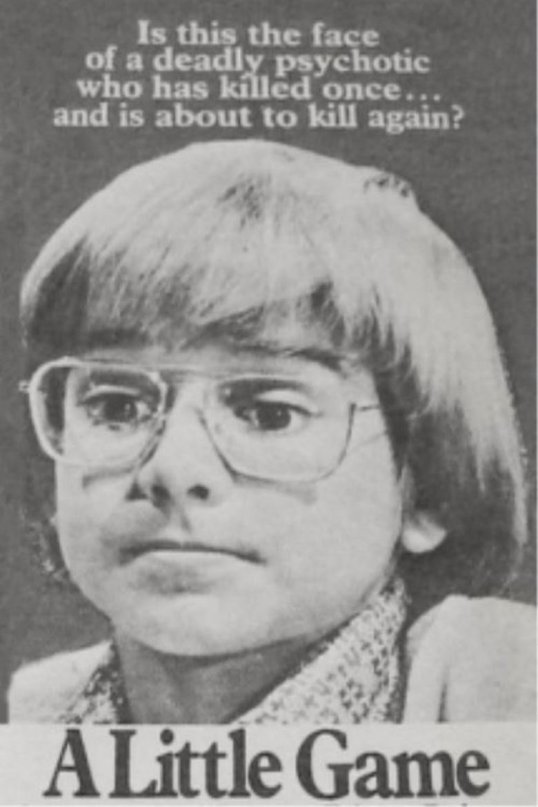
Twelve year-old Robert Mueller (played by 13 year-old Mark Gruner, who would later go on to play one of Chief Brody’s kids in Jaws) just hasn’t been the same since his father died. Robert idolized his father, who was an architect who built bridges and reportedly pushed his workers to take a lot of dangerous risks to get the job done. Perhaps that explains why Robert is not getting along with his new stepfather, Paul Hamilton (Ed Nelson). Robert’s mother, Elaine (Diane Baker), is convinced that Robert will eventually come to accept Paul but Paul isn’t so sure.
Robert is a student at a private military academy. When he comes home for the holidays, he brings his “best friend” with him. Stu Parker (Christopher Shea) is friendly and polite but he’s also easily led and has a difficult time standing up for himself. Paul immediately sees that Robert is bullying Stu. Elaine, however, thinks that Paul is being too critical. That’s just the way boys are!
In his diary, Robert has written that he killed someone and that he’s sure that he got away with it. When Paul comes across the entry, he worries that Robert might be telling the truth. Paul goes as far as to hire a private detective (Howard Duff) to investigate whether there’s been any mysterious deaths at Robert’s school. Stu, meanwhile, explains that he and Robert sometimes play “a little game” where they imagine that best way to murder someone and get away with it. But Stu assures Paul that it’s just a game. They don’t actually kill anyone.
Is Stu telling the truth or is Robert just as dangerous as his deceased father, a man who Paul claims was a psychopath? Or is Paul himself the one who has become delusional with jealousy of his stepson?
The answer to those questions is pretty obvious from the minute that Robert and Stu show up at the house. In fact, it’s so obvious that it kind of leaves the viewer wondering how everyone else in the film could be so clueless. On the one hand, it’s understandable that Elaine would not want to admit that there is something seriously wrong with her son. On the other hand, how many times can anyone close their eyes to a very obvious truth? From the minute that Robert shows up, wearing his uniform and curtly ordering around the family’s maid (played by High Noon‘s Katy Jurado, who deserved a better role), he might as well have psychopath tattooed on his forehead.
That said, evil children movies are always somewhat effective, even the ones that are a bit too obvious in their approach. Psychologically, we’ve been conditioned to always associate children with innocence, optimism, and hope. Children are the future, so the saying goes. As such, it does carry some impact when they’re portrayed as being a force of danger. As I watched this film, I did find myself wondering if there was any hope for Robert. With all that he had done, could someone still reach him and turn him around? Or was he destined to go from being an evil child to an evil adult? It really does get to the question of whether evil is a real, almost supernatural force or if it’s something that’s created by a combination of environment and social taboos. Was Robert born evil or did he become evil? A Little Game doesn’t answer that question but I doubt that anyone could. Some questions are destined to be forever unanswered.
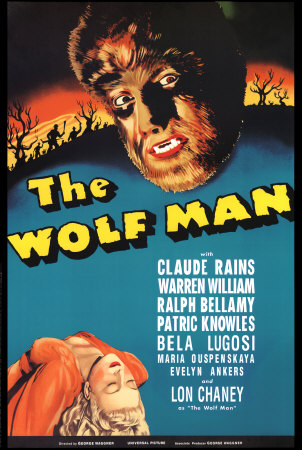
Today’s horror scene that I love comes from 1941’s The Wolf Man. Watch as poor Larry Talbot transforms, for the first time, into The Wolf Man! I’ll be the first to admit that, in the past, I’ve been pretty critical of Larry as a character and Lon Chaney, Jr.’s performance in the role. But, in this scene, Chaney does an excellent job of capturing Larry’s helplessness as the curse takes effect for the first time.
 Through the Shattered Lens