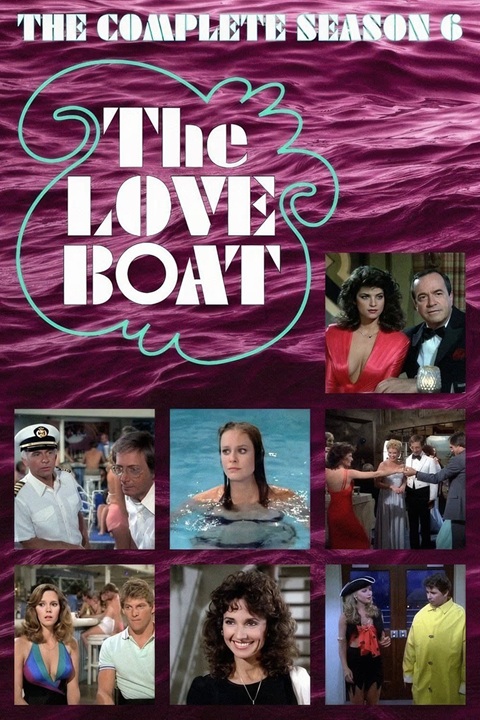
Retro Television Review: The Love Boat 6.16 “Doc’s Big Case/Senior Sinners/A Booming Romance”


Welcome to Retro Television Reviews, a feature where we review some of our favorite and least favorite shows of the past!  On Wednesdays, I will be reviewing the original Love Boat, which aired on ABC from 1977 to 1986!  The series can be streamed on Paramount Plus!

Love won’t hurt anymore….

Episode 6.16 “Doc’s Big Case/Senior Sinners/A Booming Romnace”

(Dir by Bob Sweeney, originally aired on January 22nd, 1983)

As usual, this episode has three stories.  However, this week, only one of the stories really works.

Dr. Elliott Norton (James Noble) attended medical school with Doc.  He is a world-renowned surgeon who has written a best-selling book and, as soon as he boards the boat, ol’ Doc Bricker starts to feel insecure.  It’s easy to see why.  Dr. Norton performs life-saving surgery on a daily basis.  Doc Bricker helps people recover from severe sun tan.  The fact that everyone on board wants Norton’s autograph doesn’t help.  Vicki is supposed to be writing a report on Doc but even Doc is like, “You should probably do it on Elliott.”

However, when a little girl (played by Tori Spelling, in what must have been one of the first roles that Aaron Spelling demanded she be cast in) asks Doc to diagnose what’s wrong with her doll, Bricker quickly figures out that both the doll and the girl are depressed because they’re not spending enough time with their father.  Norton may be getting the groupies but Doc Bricker gets invited to a tea party with the girl, her father, and the doll.

I’m sorry, are you smirking?

Okay, it is pretty silly.  Normally, I would smirk too but you know what?  Bernie Kopell really makes this story work.  In many ways, Doctor Adam Bricker was a bit of silly character, a supposed swinger who always came across as being rather mild-mannered and kind of conservative.  But Bernie Kopell was so likable in the role that it didn’t matter that the character often didn’t make much sense.  In this episode, Kopell does such a good job of playing up the character’s insecurities and regrets that my heart actually broke for the poor guy.  Was the tea party silly?  Yes.  But I still cheered when he was invited.

As for the other two stories, one featured Raymond St. Jacques and Theresa Merritt playing an elderly couple who were living together without being married.  Their children (played Brian Stokes Mitchell and Thelma Hopkins) were scandalized!  It was pretty boring.  The children weren’t particularly likable so I was kind of hoping the parents would just toss them overboard.

The final story …. I don’t even know how to describe it other than to say it was dumb.  Ross (Alan Young) wants to impress Kathy (Holland Taylor) and keep her from running off with Bob (Adam West, who was severely underused).  So, Ross builds a fake bomb, hides it in the engine room, pretends to discover it, and then defuses it while Kathy watches.  I mean, how am I supposed to care about someone who would do something that stupid?  And then, when Ross confesses the truth to her, Kathy laughs it off and forgives him.  I mean, it seems like he’s an obvious sociopath to me.  Run, Kathy, run!

This was an uneven episode but seriously, the story with Doc Bricker got to me.  This show was very lucky to have Bernie Kopell.

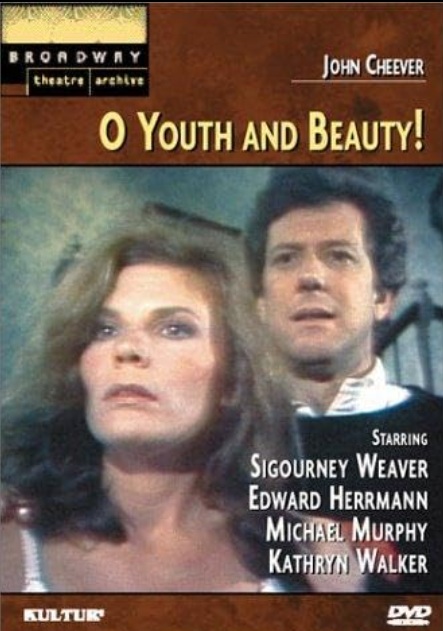
Retro Television Review: 3 By Cheever 1.2 “O Youth And Beauty!” (dir by Jeff Bleckner)


Welcome to Retro Television Reviews, a feature where we review some of our favorite and least favorite shows of the past!  On Saturdays, I will be reviewing 3 By Cheever, which ran on PBS in 1979.  The entire show can be purchased on Prime and found on YouTube.

Episode 1.2 “O Youth and Beauty!”

(Dir by Jeff Bleckner, originally aired on October 31st, 1979)

Back in the day, Cash Bentley (Michael Murphy) was an athletic marvel.  He was a track star who could jump the hurdles with ease and who everyone in high school looked up to.  Now, however, he’s 40 years old and he feels lost.  He’s aging and a new generation of young people have come along.  They certainly have no idea who Cash Bentley used to be.

At drunken neighborhood parties, Cash insists on recreating his youth by having his hosts set up their furniture like an obstacle course.  Giving them a starter’s pistol that he insists be fired to signify the start of the race, Cash will run through the house, jumping over chairs and couches and tables while everyone cheers.  Unfortunately, Cash’s luck runs out and he ends up breaking his leg during one of his demonstrations.

Forced to get around on crutches, Cash feels isolated from the rest of the world.  He doesn’t get a promotion because his bosses say they need someone who can start traveling immediately.  When all of his neighbors get on the train that is heading into the city at the usual morning time, a hobbled Cash arrives late and is forced to wait alone for the next one.  His wife, Louise (Kathryn Walker), gets a job working at a boutique to help pay the bills.  She says that maybe she’ll make enough that they’ll be able to take a vacation.  At the neighborhood parties, no one wants to deal with Cash and his broken leg.  His athleticism was all he had left.  It was what he was known for.  It was the source of all his confidence.  Now that he doesn’t have that, he’s lost.

Eventually, his legs comes out of the cast and he insists that Louise set up all the furniture in the house so that he can run another obstacle race.  He gives Louise the starter’s pistol and insists that she fire it when it’s time for him to start.  The scene cuts to the outside of their suburban home.  The sound of one gunshot upsets the calm.  Later, Louise and her children are seen moving out of the house.  Cash is nowhere to be seen.

The episode ends ambiguously.  Those who are familiar with the original John Cheever short story know that Louise shot Cash and that no one was sure whether she meant to do it or not.  The movie cuts away before the gun is actually fired.  For all we know, Cash did the obstacle course and then just never returned home.

O Youth and Beauty is one of John Cheever’s most acclaimed short stories.  The screen adaptation features an excellent performance from Kathryn Walker but the scenes of Cash running the furniture obstacle course are probably something that worked better on the page and in the reader’s imagination than when actually presented on film.  Michael Murphy is almost too confident and handsome as Cash.  The role calls for a former jock slowly going to seed and desperately trying to hold onto his youth whereas Murphy looks like he’s still in peak athletic form.  Murphy does a good job portraying Cash’s depression and his alienation after he breaks his leg but, physically, he still seems miscast in the role.

Edward Herrmann and Sigourney Weaver, who were the center of last week’s episode, make a brief appearance in this one, hovering in the background of the neighborhood’s endless parties.

Next week, we finish up 3 By Cheever.

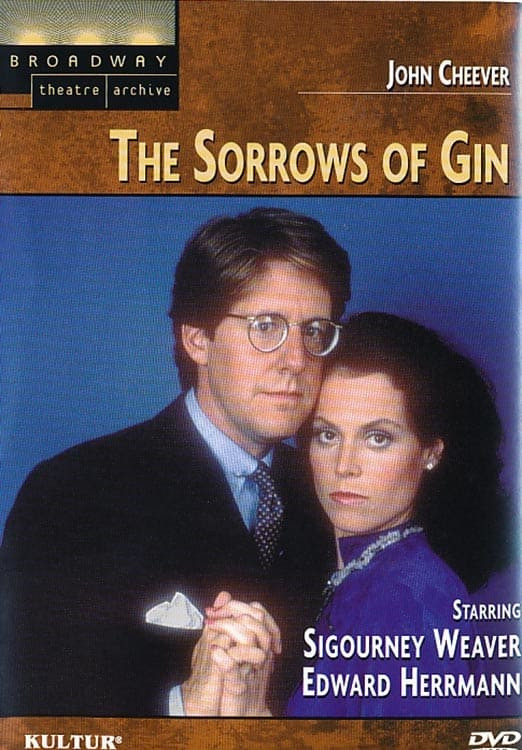
Retro Television Review: 3 By Cheever 1.1 “The Sorrows of Gin” (dir by John Hofsiss)


Welcome to Retro Television Reviews, a feature where we review some of our favorite and least favorite shows of the past!  On Saturdays, I will be reviewing 3 By Cheever, which ran on PBS in 1979.  The entire show can be purchased on Prime and found on YouTube.

In 1979, PBS aired 3 By Cheever, three short films that were all based on stories by the American author, John Cheever.  The stories all took place in the same suburban milieu and featured characters in common.  The first episode was an adaptation of one of Cheever’s earlier stories, The Sorrows of Gin.

Episode 1.1 “The Sorrows of Gin”

(Dir by Jack Hofsiss, originally aired on October 24th, 1979)

Taking place in the New England suburb of Shady Hill, The Sorrows of Gin deals with the Lawton family.  The Lawtons have got a nice house, lovely neighbors, and enough loyal servants that they don’t ever have to really worry about taking care of their eight year-old daughter, Amy (Mara Hobel).  Kip (Edward Herrmann) and Marcia Lawton (Sigourney Weaver) are youngish, successful, athletic (they play tennis, of course), and they’re also alcoholics.  They don’t realize they’re alcoholics and they’re both far more refined than the stereotypical image of the boozy drunk but they’re alcoholics nonetheless.

They’re also hypocrites.  When Amy’s babysitter, Rosemary (Eileen Heckart), comes to work with booze on her breath, Kip fires her.  Amy, realizing that the alcohol is causing her parents to fight, starts to secretly pour out all of the gin, a little at a time.  Kip and Marcia assume that the servants are sneaking drinks and they go on a firing rampage.  Amy finally decides to run away from home, just to be found by Kip who, at the very least, seems like he’s willing to try to be a better father and husband.

Wow, what a depressing story!  Cheever’s original short story, which was one of the first American stories to really explore suburban alcoholism, was written with a good deal of wit and social satire.  The PBS adaptation takes a far more literal approach.  It captures Cheever’s story but not his voice and, as a result, you kind of find yourself why you should care about any of these people.  Even taking alcohol out of the equation, Kip and Marcia are shallow, self-absorbed, and terrible parents.  Maybe Amy should run away.

On the plus side, the film does feature Edward Herrmann and Sigourney Weaver, both giving excellent performances as the Lawtons.  The same year in which this aired, Weaver also starred as Ripley in Alien and it is a bit odd to see Weaver playing someone who would probably never in a thousand years see that film.  That said, Weaver does a good job and is totally believable as the clueless Marcia.  Meanwhile, Edward Herrmann has just the right WASP-y style to play Kip Lawton.  One of the most effective things about this film is how Kip is just a goofy suburban husband until he thinks someone is drinking his gin.  Then, he becomes outraged.  This film ends with a hint of redemption for Kip, a suggestion that Kip has finally realized how much his drinking is upsetting his daughter.  But, honestly, Kip doesn’t really seem like he has it in him to change.  Hopefully, he’ll just stop firing people.

This was an uneven production.  The story wasn’t quite as shocking as perhaps it was when Cheever first wrote about the Lawtons.  But the performances of Herrmann and Weaver kept me watching.


The Eric Roberts Collection: Strange Frequency (dir by Mary Lambert and Bryan Spicer)


2001’s Strange Frequency is an anthology film.  Usually, I hate anthology films because it always seems like the viewer ends up with one good story and three mediocre ones.  As well, the anthology format is one that sometimes seems to be specifically designed to bring out the worst tendencies in otherwise talented directors.  Often times, they seem to treat the anthology format as a lark, an excuse to show off their technical mastery without really paying much attention to anything else.  The results often feel thematically shallow.

Well, guess what?  I liked Strange Frequency.  It was a lot of fun.  Each of the four stories mixed horror with music.  The first story features two heavy metal fans (Erik Palladino and Danny Masterson) who, after a car accident, find themselves in a club where disco is played nonstop.  For them, it’s Hell.  For me, it sounds like a fun afterlife.  (Yes, it’s not easy to watch Danny Masterson nowadays but he does suffer in this story.)  The second story is about a middle-aged serial killer (Eric Roberts) who targets younger hitchhikers, specifically because he dislikes their taste in music.  However, when he picks up a young grunge fan (Christopher Kennedy Masterson), he suddenly finds himself being targeted.  It turns out that this hitchhiker targets old people who won’t shut up about Woodstock.  They then meet an older man who has never forgiven the baby boomers for rejecting big band music.  In the third story, a rock star (John Taylor) who enjoys destroying hotel rooms is confronted by a maid (Holland Taylor) who can literally clean up any mess.  (“I want my headlines!” the rock star shouts as he realizes he’s never going to get credit for destroying his current room.)  Finally, the fourth story stars Judd Nelson as an A&R man who has the ability to find up-and-coming stars but whose discoveries inevitably end up dying.

All three of the stories were well-done and genuinely clever.  My favorite was the second story, which featured Eric Roberts giving an enjoyably unhinged performance as the Woodstock refugee with a hatred for Lollapalooza.  The story was both clever and suspenseful and it actually had something to say about the cultural differences between the generations.  As you get older, you really do come to hate whatever music came after the artists you grew up listening to.  Eventually, all the Swifties will be in their 40s and 50s, wondering why the younger generation doesn’t appreciate good music about feelings.

Strange Frequency was a pilot for a series that aired on VH-1 in 2001.  How come I don’t remember this show?  The pilot was actually really good!  Thank you to Australia’s own Mark V for telling me about this pilot and letting me know that it was on YouTube!  Check it out if you get a chance.

Previous Eric Roberts Films That We Have Reviewed:

  1. Star 80 (1983)
  2. Runaway Train (1985)
  3. Best of the Best (1989)
  4. Blood Red (1989)
  5. The Ambulance (1990)
  6. The Lost Capone (1990)
  7. Best of the Best II (1993)
  8. Love, Cheat, & Steal (1993)
  9. Voyage (1993)
  10. Love Is A Gun (1994)
  11. Sensation (1994)
  12. Dark Angel (1996)
  13. Doctor Who (1996)
  14. Most Wanted (1997)
  15. Mercy Streets (2000)
  16. Raptor (2001)
  17. Rough Air: Danger on Flight 534 (2001)
  18. Wolves of Wall Street (2002)
  19. Border Blues (2004)
  20. Mr. Brightside (2004)
  21. Six: The Mark Unleased (2004)
  22. We Belong Together (2005)
  23. Hey You (2006)
  24. Depth Charge (2008)
  25. Amazing Racer (2009)
  26. In The Blink of an Eye (2009)
  27. Bed & Breakfast (2010)
  28. Enemies Among Us (2010)
  29. The Expendables (2010) 
  30. Sharktopus (2010)
  31. Beyond The Trophy (2012)
  32. The Dead Want Women (2012)
  33. Deadline (2012)
  34. The Mark (2012)
  35. Miss Atomic Bomb (2012)
  36. Assault on Wall Street (2013)
  37. Bonnie And Clyde: Justified (2013)
  38. Lovelace (2013)
  39. The Mark: Redemption (2013)
  40. The Perfect Summer (2013)
  41. Self-Storage (2013)
  42. A Talking Cat!?! (2013)
  43. This Is Our Time (2013)
  44. Inherent Vice (2014)
  45. Road to the Open (2014)
  46. Rumors of War (2014)
  47. Amityville Death House (2015)
  48. Deadly Sanctuary (2015)
  49. A Fatal Obsession (2015)
  50. Las Vegas Story (2015)
  51. Stalked By My Doctor (2015)
  52. Enemy Within (2016)
  53. Joker’s Poltergeist (2016)
  54. Prayer Never Fails (2016)
  55. Stalked By My Doctor: The Return (2016)
  56. The Wrong Roommate (2016)
  57. Dark Image (2017)
  58. Black Wake (2018)
  59. Frank and Ava (2018)
  60. Stalked By My Doctor: Patient’s Revenge (2018)
  61. Clinton Island (2019)
  62. Monster Island (2019)
  63. The Reliant (2019)
  64. The Savant (2019)
  65. Seven Deadly Sins (2019)
  66. Stalked By My Doctor: A Sleepwalker’s Nightmare (2019)
  67. The Wrong Mommy (2019)
  68. Exodus of a Prodigal Son (2020)
  69. Free Lunch Express (2020)
  70. Her Deadly Groom (2020)
  71. Top Gunner (2020)
  72. Deadly Nightshade (2021)
  73. The Elevator (2021)
  74. Just What The Doctor Ordered (2021)
  75. Killer Advice (2021)
  76. Night Night (2021)
  77. The Poltergeist Diaries (2021)
  78. The Rebels of PT-218 (2021)
  79. A Town Called Parable (2021)
  80. Bleach (2022)
  81. My Dinner With Eric (2022)
  82. 69 Parts (2022)
  83. D.C. Down (2023)
  84. Aftermath (2024)
  85. Bad Substitute (2024)
  86. Devil’s Knight (2024)
  87. The Wrong Life Coach (2024)
  88. When It Rains In L.A. (2025

Film Review: To Die For (dir by Gus Van Sant)


The 1995 satire, To Die For, is a very clever film about some seriously stupid people.

Of course, you could debate whether or not Suzanne Stone-Maretto (Nicole Kidman) is actually dumb or not.  Suzanne may not know much about anything that isn’t on TV but she does have a natural understanding for what makes a good story.  She knows exactly the type of story that the public wants to hear and she does a good job of faking all of the right emotions.  As she proves throughout the course of the film, she’s also very good at convincing people to do stuff.  Whether it’s convincing the local television station to put her on the air as a weather person or convincing two teenagers to murder her husband, Suzanne always seems to get what she wants.

Of course, what Suzanne really wants is to be a celebrity.  She wants to be a star.  As she explains it, that’s the greatest thing about America.  Anyone can become a star if they just try hard enough and find the right angle.  If the film were made today, Suzanne would be a social media junkie.  Since the movie was made in 1995, she has to settle for talk shows and murder.

So maybe Suzanne isn’t that dumb but her husband, Larry (Matt Dillon) …. well, if we’re going to be honest, Larry’s more naive than dumb.  He’s the favored son of a big Italian family and it’s obviously never occurred to him that a woman would possibly want something more than just a husband and a lot of children.  He thinks it’s cute that Suzanne’s on TV but he’s also fully convinced that she’s going to eventually settle down and focus on starting a family.  It never occurs to him that his wife would be willing to sacrifice him on her way to stardom.

Of course, if you really want to talk about dumb, just check out the teenagers who Suzanne recruits to kill her husband.  They’ve been appearing in a documentary that Suzanne’s been shooting.  The documentary’s title is “Teens Speak Out,” which is something of an ironic title since none of the teens that Suzanne interviews really has anything to say.  Lydia (Allison Folland) is just happy that the “glamorous” Suzanne is pretending to care about her.  Russell (Casey Affleck) is the type of grinning perv who drops a pen just so he can try to get a peek up Suzanne’s skirt while he’s on the floor retrieving it.  And then there’s Jimmy (Joaquin Phoenix), with his flat voice and his blank stare.  Jimmy is briefly Suzanne’s lover before he ends up in prison for murdering her husband.  It doesn’t take much to convince Jimmy to commit murder, either.  Apparently, all you have to do is dance to Lynard Skynard while it’s raining outside.  Media interviews with Lydia, Jimmy, Suzanne, and Larry’s sister (Ileana Douglas) are sprinkled throughout the film and Jimmy continues to insist that he will always love Suzanne.

As for Suzanne, she’s got stardom to worry about….

Though the subject matter is a bit familiar and the film, made before the age of Twitter and Instagram, is a bit dated, To Die For‘s satire still carries a powerful bite.  One need only watch A&E or the Crime and Investigation network to see that Suzanne was absolutely correct when she decided that killing her husband would make her a star.  If To Die For were made today, you could easily imagine Suzanne leveraging her infamy into an appearance on Dancing With The Stars and maybe Celebrity Big Brother.  At the very least. she could get her own house hunting show on HGTV.  Delivering her often sociopathic dialogue with a perky smile and a positive attitude, Nicole Kidman is absolutely chilling as Suzanne.  Meanwhile, Joaquin Phoenix’s blank stare will continue to haunt you long after the film ends.

And speaking of endings, To Die For has a great one.  You’ll never hear Season of the Witch the same way again!