Lisa Reviews An Oscar Nominee: Arrowsmith (dir by John Ford)


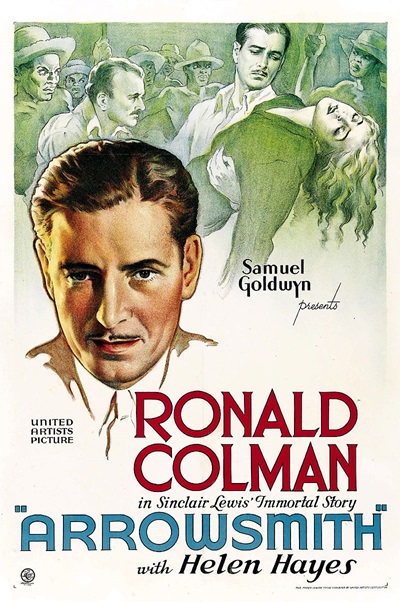
In the 1931 Best Picture nominee Arrowsmith, Ronald Colman stars as Martin Arrowsmith, a doctor who is trying to save lives without compromising his ethics.

Arrowsmith is mentored by the famed bacteriologist, Max Gottlieb (A.E. Anson) and married to a nurse named Leora (Helen Hayes).  At first, Arrowsmith makes his living as the local doctor in Leora’s small hometown in South Dakota.  However, Arrowsmith is ambitious and wants to do more with his life and career than just take care of a small town.  He wants to cure the world of disease.  When he’s offered a position at the prestigious McGurk Institute in New York, he enthusiastically accepts.  Having just suffered a miscarriage, Leora supports Arrowsmith’s decision and travels to New York with him.  No matter what happens, Leora is always there to support her husband, even when he doesn’t seem to appreciate it.

When Arrowsmith thinks that he’s discovered an antibiotic serum that appears to be capable of curing all sorts of diseases, he attempts to stay true to the methods taught to him by Dr. Gottlieb.  He takes his time.  He tests carefully.  He doesn’t rush out and give the serum to everyone.  However, Arrowsmith finds his methods continually sabotaged by his colleagues, who hope to raise money by telling the press about a miracle serum that can “cure all diseases!”  When Arrowsmith later finds himself combatting an outbreak of the Bubonic Plague in the West Indies, he again tries to employ the scientific method but finds himself being pressured by government officials to give his untested serum to every single person on the island.  Eventually, Arrowsmith’s ethics are pushed to their limits when even Leora falls ill.

Arrowsmith was based on a best-selling novel by Sinclair Lewis, though the plot was changed to make the story more palpable for film audiences.  In the novel, Arrowsmith is a bit of cad who regularly cheats on his wife.  In the film, Arrowsmith is passionate and driven but the exact nature of his relationship with wealthy Joyce Lanyon (Myrna Loy) is left so ambiguous that it actually leaves one wondering why the character is in the film at all.  What both the film and the novel have in common is an emphasis on the importance of science and the scientific method.  Arrowsmith’s idealism runs into the harsh reality of life during an epidemic.  Government officials are more concerned with saying that they’ve done something as opposed to considering whether their actions have ultimately done more harm than good.  In its way, Arrowsmith predicted the COVID era.

Arrowsmith was the first John Ford film to be nominated for Best Picture and its financial success allowed Ford the freedom to go on to become one of Hollywood’s most important directors.  Seen today, Arrowsmith feels a bit creaky and self-important, with little of the visual flair that Ford brought to his later films.  Ronald Colman’s performance as Arrowsmith seems a bit stiff, especially when compared to the much more lively (and sympathetic) performance of Helen Hayes.  Arrowsmith is a big and serious film and, if we’re going to be honest, it’s a little bit boring.  Still, it’s interesting to see the issues of today being debated 90 years in the past.

As for the Oscars, Arrowsmith was nominated for Best Picture, Adaptation, Cinematography, and Art Direction.  It lost in all four of the categories in which it was nominated.  That year, Best Picture was won by Grand Hotel, which curiously didn’t receive any other nominations at all.

A Loyalty Day Film Review: My Son John (dir by Leo McCarey)


Oh my God, did you know that it’s Loyalty Day!?

Well, actually, it’s not Loyalty Day for everyone.  In fact, a lot of the world’s citizens are celebrating Communist May Day today.  However, here in the United States, it’s Loyalty Day.  Even if you are an American, it’s possible that you’ve never heard of Loyalty Day.  It was first celebrated in 1921 and it was intended to provide a non-Communist alternative to International Workers Day.  It wasn’t until 1955 that Loyalty Day was officially recognized by Congress.

From Wikipedia:

Loyalty Day is defined as follows in 36 U.S.C. § 115:

  • (a) Designation.— May 1 is Loyalty Day.
  • (b) Purpose.— Loyalty Day is a special day for the reaffirmation of loyalty to the United States and for the recognition of the heritage of American freedom.
  • (c) Proclamation.— The President is requested to issue a proclamation—
    • (1) calling on United States Government officials to display the flag of the United States on all Government buildings on Loyalty Day; and
    • (2) inviting the people of the United States to observe Loyalty Day with appropriate ceremonies in schools and other suitable places.

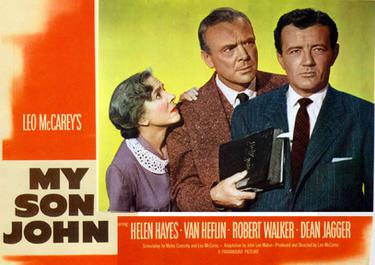
Though released before it officially became a holiday, the 1952 film, My Son John, is perfect for Loyalty Day.

The John of the title is John Jefferson (Robert Walker, in his final role), an employee of the State Department.  While his younger brothers (played by Richard Jaeckel and James Young) are two high school football stars who are looking forward to serving their country in Korea, John is an intellectual who considers concepts like patriotism to be simplistic and naive.  While his father (Dean Jagger) sings patriotic songs at the American Legion hall, John rolls his eyes at such middle class activities.  (“If you don’t like your Uncle Sammy,” move to another country, John’s father sings.)  The only person to whom John is especially close is his nervous mother, Lucille (Helen Hayes).

However, John is keeping a secret from even Lucille.  He’s a double agent, working for the communists!  With FBI agent Stedman (Van Heflin) hot on his trail, will John ever be able to see the light about the communists?  And, how will the communists respond to John having doubts about the cause?

My Son John was a dream project for Hollywood director Leo McCarey.  (It’s not a coincidence that the devoutly Catholic McCarey made a film about a devoutly Catholic family who discovers that one of their own has become a communist.)  McCarey carefully supervised every detail of the film and he was even able to talk stage legend Helen Hayes into starring in the film, her first in 14 years.  My Son John is full of scenes of shadowy communists, smug intellectuals, and all-American FBI agents marveling at the strength of Lucille Jefferson’s faith.  Everything that is today often cited as a negative aspect to living in the suburbs is presented as being a positive in My Son John.  The film’s communists come into a world of happy families, big houses, and well-manicured lawns and they set out to make everyone else as miserable as they are.  There’s nothing subtle about either McCarey’s approach or Helen Hayes’s performance but, as is often the case with propaganda, the film is crudely effective.

My Son John was Robert Walker’s final film.  In fact, he died before completing work on the film, leading the ending being rewritten.  (No longer would John personally deliver a commencement address.  Instead, his words come out of a tape player that has been rolled out on stage.  A holy light shines down on the player while The Battle Hymn of the Republic plays in the background.  It’s bizarre but it’s also probably the most memorable part of the movie.)  Scenes from Strangers On A Train were rather awkwardly spliced into final moments of My Son John, never mind the fact that Robert Walker’s gleefully evil performance as Bruno Antony had little in common with his self-tortured performance as John Jefferson.

Surprisingly, considering that My Son John was released at the height of the anti-Communist era, the film was not a success at the box office.  (Audiences seemed to better appreciate low-budget and pulpier anti-communist films, like I Was A Communist For The FBI.)  Still, thanks to the Internet, My Son John is still available to be viewed on this Loyalty Day.

So, remember — if you don’t like your Uncle Sammy …. well, actually, the cool thing about this country is that you don’t have to like your Uncle Sammy.  You have the right to decide for yourself how you feel about old Uncle Sammy.  That’s an idea that is worth being loyal to.

Retro Television Reviews: The Love Boat 3.28 “No Girls for Doc/Marriage of Convenience/The Caller/The Witness”


Welcome to Retro Television Reviews, a feature where we review some of our favorite and least favorite shows of the past!  On Wednesdays, I will be reviewing the original Love Boat, which aired on ABC from 1977 to 1986!  The series can be streamed on Paramount Plus!

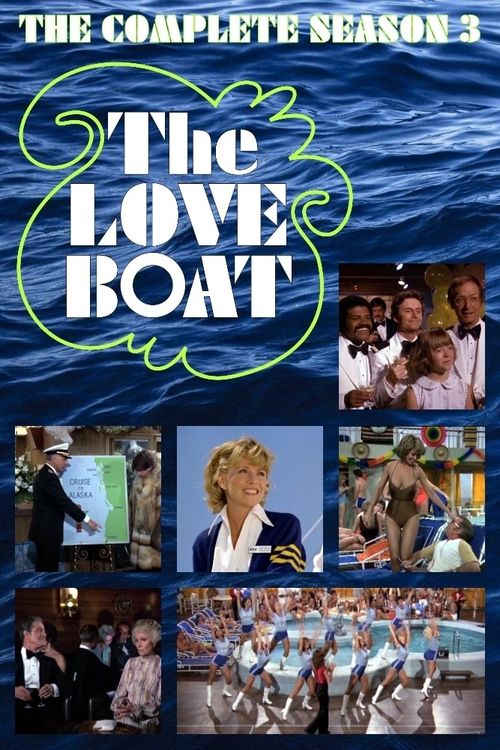
This week, the third season of The Love Boat comes to a conclusion with an extra-long episode!

Episode 3.28 “No Girls for Doc/Marriage of Convenience/The Caller/The Witness”

(Dir by Gordon Farr and Richard Kinon, originally aired on May 3rd, 1980)

The finale of The Love Boat‘s third season features stage legend and two-time Oscar winner, Helen Hayes.  Hayes was considered to be such a big “get” for the show that she receives the zoom lens treatment when she steps onto the ship and all of the action seems to stop for a few minutes, presumably so the audience at home can give her a standing ovation.

Personally, I think Helen Hayes was pretty cool.  Along with being a hell of an actress (one whose career extended for over six decades), she was also the wife of Charles MacArthur, an acquaintance of the Algonquin round table, an outspoken Republican, a strong supporter of many charities, and a major benefactor of the Helen Hayes Hospital, a rehabilitation clinic in New York that has made major strides in treating physical disabilities.  To say that there are people in the world who can walk because of Helen Hayes is not hyperbole.

That said, Helen Hayes’s story is the dullest one on this cruise.  It’s not Hayes’s fault.  She is her usual outspoken and likable self.  It’s just the storyline itself doesn’t offer up much in the way of drama or comedy.  Hayes plays Agatha Winslow, a widow who was married to a friend of Stubing’s.  Stubing asks Julie to set Agatha up with someone but then they see Agatha hugging a younger man and Julie says that it won’t be necessary.

AGCK!  I HOPE NOT!  The younger man is played Helen Hayes’s son, James MacArthur!

No worries.  MacArthur is playing Scott Burgess, who is Agatha’s nephew.  Scott is a member of the protestant clergy who has never married because he feels that he has to take care of Agatha.  Scott and Beatrice Dale (Mildred Natwick) hope that Agatha will fall in love with and marry Beatrice’s brother, a businessman named Hollister (Maurice Evans).  Hollister owns a carpet company and he spends most of the episode look down at and commenting on the quality of the ship’s floor.  Agatha does not marry Hollister but she does realize that it’s time for her to move on and live her own life.  It’s all very pleasant but not very extremely interesting.

Far more interesting is the story of Gail Padgett (Christopher Norris), a woman who is boarding the ship because she needs to get away from her landline phone.  As she explains to Julie, someone has been calling and harassing her for months.  At no point does Julie suggest what I would suggest, which is that Gail should call the cops.  Indeed, when Gail starts to get calls on the boat, Julie never suggests calling the police or going to the captain or anything else.  Instead, Gail tells her stalker that she’ll meet him at the Pirate’s Cove Bar.  She tells Julie that she has a plan to humiliate him.  And again, you would think Julie might say, “How about we just arrest him when he comes in the bar?”  But instead, Julie smiles.  It’s the Love Boat!  No one is murdered on The Love Boat!  (Not yet, anyway.)

Gail’s stalker is a nerdy fellow named Melvin, who is played by a young Martin Short.  Before Melvin can arrive, Gail is approached by Jack Stander (Larry Breeding).  “Hi, I’m Robert Redford,” Jack says before admitting that he’s not Robert Redford and that he spent hours coming up with that opening line.  Thinking that Jack is her stalker, Gail takes Jack to her cabin where she get him to undress and then tosses all of his clothes out the porthole.  So now, Gail has not only flirted with and then stood up her stalker but she’s also committed theft.  WAY TO GO, GAIL!

Anyway, Gail eventually realizes that Jack is not her stalker and they fall in love.  Melvin is eventually revealed to be the caller but everyone laughs it off because he’s so nerdy.  (Because we all know how harmless nerdy stalkers are….)  This was a really weird story but, despite the stupidity of their characters, Christopher Norris and Larry Breeding made for a cute, likably vapid couple.

Maybe Gail should have gone to Wayne Dobson (Larry Wilcox) for help.  Wayne is an uptight assistant D.A. who has spent the last two months in a hotel room with Pat Bigelow (Catherine Bach), a witness to a crime who is in protective custody.  Even when Pat boards the cruise, Wayne has to come with her and stay in an adjoining cabin.  Pat is annoyed but she understand that Wayne is just doing his job. 

However, Wayne has fallen in love with Pat and he is upset to receive a telegram saying that the crooks have decided to plead guilty and that Pat can be released from protective custody.  Isaac, who was perhaps a bit too excited when he earlier thought Wayne was a male gigolo who was being paid to escort Pat, suggests that Wayne just lie and not let Pat know that her life is no longer in danger.  Wayne agrees and Isaac takes Wayne off to give him a makeover that will be so impressive that Pat will fall in love with him and reject notorious Love Boat lothario Mark Bridges (John McCook).

(Of course, any relationship that Wayne and Pat could ever have would be built on lies but whatever….)

Pat does fall for Wayne, though less because of the makeover and more because Wayne finally stops being so uptight.  She’s a bit miffed when she finds out that Wayne has been lying to her but she forgives him easily because this is The Love Boat.

Finally, after a night of skinny dipping leads to him losing his clothes and money, Doc announces that he’s through with women.  (And again, it doesn’t seem to occur to anyone that maybe Doc should call the police.)  That should be a relief to the crew because Doc really is a lawsuit waiting to happen.  Instead, they takes bets on how long it will take Doc to go back on his word.  It doesn’t take long.  Any story that centered around Doc being a Casanova just felt silly.  Bernie Kopell was likable as Doc but he was also a bit too naturally mild-mannered to be believable as a legendary lothario.

And so ends the third season of The Love Boat.  Vicki is now firmly a member of the crew.  Julie has given up on finding love.  Isaac and Gopher are as silly as ever.  And Doc is going to get the cruise line sued.  The 90-minute finale was a bit overextended and had some weak story elements but, overall, the third season was a lot of fun.  

Next week …. SEASON 4!

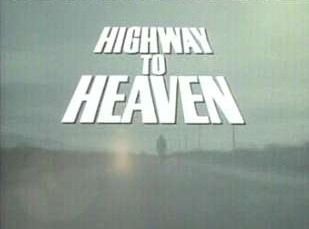
Late Night Retro Television Reviews: Highway to Heaven 1.2 “Pilot: Part Two”


Welcome to Late Night Retro Television Reviews, a feature where we review some of our favorite and least favorite shows of the past!  On Thursdays, I will be reviewing Highway to Heaven, which aired on NBC from 1984 to 1989.  The entire show is currently streaming on Tubi and several other services!


This week, we finish up the pilot for Highway to Heaven, with Jonathan revealing the true nature of his job to Mark and the old people heading to the horse races!

Episode 1.1 “Highway to Heaven: Part Two”

(Dir by Michael Landon, originally aired on September 19th, 1984)

The second half of the pilot for Highway to Heaven opens with things looking up at the retirement community.  Everyone is enjoying the new garden.  There’s a new sense of community amongst the residents.  Even Estelle (Helen Hayes) has finally come out of her room and is now taking care of the dog that Jonathan previously gave her.  Sidney Gould (John Bleifer) is especially happy to see Estelle out and about, especially after Estelle agrees to have dinner with him.

The only person who is not happy with the changes that Jonathan has brought to everyone’s lives is Mark Gordon.  Mark is still suspicious of Jonathan’s motives and he’s not happy that his sister, Leslie (Mary McCusker), is falling for a man who she really knows nothing about.  When Jonathan is having dinner at Leslie’s apartment, Mark breaks into Jonathan’s apartment and discovers that Jonathan owns nothing.  There’s not even a toothbrush in the bathroom.

Jonathan catches Mark in his apartment and, after Mark demands to know just who exactly Jonathan is, Jonathan explains that he works for “the Boss.”  He travels from location to location, helping people who need help.  When Mark demands to know who the Boss is, Jonathan can only look heaven-ward.

Needless to say, Mark is not at all convinced that Jonathan is an angel.  But there’s an even bigger problem to deal with!  Mr. Sinclair (Joe Dorsey), the owner of retirement home, has sold the land to a developer!  Everyone who worked there is now out of a job and everyone who lived there has been given just a few days to move out and find somewhere else to live.

When Jonathan pays Mr. Sinclair a visit, he discovers that Sinclair has spent his life making money in order to get over the shame of being rejected by his high school love.  Unfortunately, she’s now dead and Sinclair no longer cares about anyone.  Still, Jonathan is able to convince Mr. Sinclair to give him a chance to raise enough money to buy the retirement home.

Mark’s suggestion is that they take the money that they already have and bet it at the tracks.  Jonathan is not sure if the Boss would like him gambling but, in the end, he agrees to Mark’s plan.  At the tracks, it first appears that the horse that the old people put their money on has lost.  But then then Sidney discovers that the person at the betting window accidentally gave him the wrong ticket and — it’s a miracle!  They win the money!

The old people are able to buy their retirement home and Mark is now convinced that Jonathan is angel.  In fact, Mark is so convinced that he insists on driving Jonathan around the country and helping him out.

(Don’t worry about Leslie.  Though she’s upset when Jonathan leaves, a handsome and single man immediately moves in next door to her.)

This episode ends with Jonathan getting into Mark’s car and the two of them driving off, down the highway.

Wow, this was an earnest show.  Seriously, there’s not a hint of sarcasm or snarkiness to be found in this episode, which I imagine explains why this show is still airing on the retro stations and streaming on a hundred different sites.  To an extent, it’s easy to be dismissive of a show where a bunch of quirky old people got to the race track to win enough money to be able to stay together in their retirement home.  There’s nothing subtle not particularly surprising about any of it.  I mean, we know there’s no way Helen Hayes and that adorable dog are going to lose their home!  But this episode was so achingly sincere in its approach that it worked.

We’ll see if it continues to work next week!

Late Night Retro Television Reviews: Highway to Heaven 1.1 “Pilot: Part One”


Welcome to Late Night Retro Television Reviews, a feature where we review some of our favorite and least favorite shows of the past!  On Thursdays, I will be reviewing Highway to Heaven, which aired on NBC from 1984 to 1989.  The entire show is currently streaming on Tubi and several other services!

Highway to Heaven is one of those old shows that, decades after its final episode, still always seems to either be airing or streaming somewhere.  The show’s premise was a simple one.  Jonathan Smith (Michael Landon) was an angel who had been sent to Earth to help people.  Working with him was a retired cop named Mark Gordon (Victor French).  Together, they drove across the country and met a different guest star every week.

Though the show aired its final episode over 30 years ago and both of the stars have since passed on, Highway to Heaven remains popular in both syndication and streaming.  From the few episodes that I’ve seen, it appears that the show’s main appeal was just how unabashedly sentimental it was.  For people living in a cynical age, the show is a throwback to a simpler time.  Of course, I imagine that some people also find it to be a fairly campy show.  There’s nothing subtle about the messaging of Highway to Heaven. 

Anyway, it seems like a good show to review for Retro Television Reviews, so here we are.  Let’s head down that highway!

Episode 1.1 “Highway to Heaven: Part One”

(Dir by Michael Landon, originally aired on September 19th, 1984)

In a small town in Arizona, there’s a retirement community that is full of people who are in need.

For instance, Estelle Wicks (Helen Hayes) hasn’t left her room in years.  She’s convinced that her daughter is going to come to get her at any minute, even though everyone else at the community tries to get her to understand that her daughter hasn’t been by to see her in years.  That said, at least Estelle still has some hope.  Everyone else in the community appears to be resigned to spending all of their time indoors, watching television and waiting for the end.

Mr. Haskins (John O’Leary), the owner of the community, is struggling to pay the bills and is thinking of selling the retirement home to a group of land developers.  Mr. Haskins rarely smiles and hardly ever interacts with the people living at the community.  He doesn’t want them going outside or doing any special activities because he’s worried about potential lawsuits.  He’s not willing to spend the money necessary to even make the community look like an inviting place to live.

Mr. Haskins’s assistant, Leslie Gordon (Mary McCusker), is a lonely woman who lives in an apartment with her brother, Mark (Victor French).  Mark is a former cop who refuses to trust anyone and who can’t hold down a job.  He’s developing quite a drinking problem and spends most of his time either watching television and having a beer or going down to the local bar and having even more beer.

No one, and I mean no one, in this town appears to be happy.  But then a mysterious drifter named Jonathan Smith (Michael Landon) hitchhikes into town and applies for a job as a maintenance worker at the retirement community.  As he explains to Mr. Haskins, he doesn’t have any references but he’s willing to work without a salary for a month in order to prove that he can handle the job.  Mr. Haskins hires Jonathan, who immediately plants a flower garden and gets to know the residents at the retirement community.  He even gets Estelle to agree to take care of a puppy.

With Jonathan’s gentle encouragement, even Leslie starts to enjoy life a little bit more.  When Jonathan shows up one morning with a bicycle, Leslie rides it to work.  When Leslie asks Jonathan how he could afford the bike, he says that a friend gave it to him.  When she asks how Jonathan could afford to plant all of the flowers for the retirement home, he says that a friend helped out.  For a drifter who just came to town, Jonathan certainly seems to have a lot of friends!

This raises the concern of Mark, who thinks that Jonathan must be a conman of some sort.  He sets out to investigate just exactly who Jonathan is.  He first stop is the local bicycle shop, where the owner says that he’s never met a Jonathan Smith.  And then — the episode ends!  “TO BE CONTINUED” reads the title card.

It’s a rather abrupt ending, undoubtedly the result of the pilot originally being aired as a two-hour movie.  As often happens, the pilot was split into two parts for syndication.  Of course, the viewer already knows that Jonathan is an angel who has been sent to Earth to help people but the first episode of the series ends with Mark still convinced that Jonathan is just a con man.  I assume he’ll find out the truth next week.

As far as first episodes go, this one is hard to judge because it’s obviously incomplete.  That said, the pilot’s unapologetic earnestness is definitely its strongest trait.  Early on, Jonathan says, “Kindness doesn’t cost a thing,” and Michael Landon delivers the line with such sincerity that he makes it work despite the fact that it’s also a cliché.

Anyway, next week, we’ll finish up the pilot and see if Mr. Haskins will ever learn how to run a retirement community.  Hopefully, Estelle will finally come out of her room as well.  And, most importantly, we’ll see how Mark went from thinking Jonathan was a con artist to traveling around the country with him.

Until then, be kind.

Horror on TV: Ghost Story 1.6 “Alter Ego” (dir by David Lowell Rich)


In tonight’s episode of Ghost Story, a sickly child is upset when he becomes to ill to continue going to school.  Luckily, his doppelganger shows up and starts going to school for him!  Unfortunately, it turns out that the doppelganger isn’t quite as benevolent as one might hope.

This episode co-stars Oscar-winner Helen Hayes and was co-written by Richard Matheson.  It originally aired on October 27th, 1972.

Lisa Reviews An Oscar Nominee: A Farewell to Arms (dir by Frank Borzage)


220px-Poster_-_A_Farewell_to_Arms_(1932)_01

Reportedly, Ernest Hemingway hated the 1932 film adaptation of his great novel, A Farewell To Arms.  The novel, of course, tells the story of ambulance driver Frederic Henry (played in the film by Gary Cooper), his service in World War I, and his doomed love affair with an English nurse named Catherine (played by the very American Helen Hayes).  The novel was acclaimed for being tough and unsentimental.  The film is the exact opposite, revealing itself to be more typical of the work of director Frank Borzage than Ernest Hemingway.

How romantic was Borzage’s adaptation of A Farewell to Arms?  It was so romantic that it even changed the novel’s famous ending.  The novel ended with Catherine dying and Frederic Henry walking away, alone and in the rain.  The film, however, ended with Catherine miraculously recovering.  Never mind, of course, that having Catherine survive pretty much defeated the entire purpose of the story.  What was important was to give American audiences a happy ending!

However, European audiences got a more downbeat ending.  In the European version, Catherine does die.  After she dies, Frederic picks up her body and looks up into heaven, which is certainly far more dramatic (and, in its way, sentimentally spiritual) than anything to be found in Hemingway’s novel.  If, like me, you see A Farewell To Arms on TCM, you’ll see the European ending.

So, yes, I can understand why Hemingway would have hated this film.  But I have to admit that I rather enjoyed it.  The film adaptation makes for terrible Hemingway but it’s great Borzage.  Borzage specialized in making grand, lyrical, and sweeping romantic melodramas and that’s what his version of A Farewell To Arms truly is.  Helen Hayes may not be convincingly English and Gary Cooper may be a bit overly earnest for a Hemingway hero but they both look good together and they have great chemistry.  (Plus, Adolphe Menjou gives a good supporting performance as Frederic’s best friend.)  As a director, Borzage keeps the story moving at a steady pace and plays up the romance in every single scene.  There’s a great sequence that’s filmed entirely from the wounded Frederic’s point-of-view as he’s brought into a hospital and looked over by a series of officious nurses.  We see everything through Frederic’s eyes until Catherine finally enters the room and kisses him.  Only then do we see Frederic and Catherine together, leaving us with no doubt that these two belong together.  A Farewell To Arms may not be a great literary adaptation but it is a great cinematic romance.

A Farewell To Arms was nominated for best picture but it won to a largely forgotten film called Cavalcade.