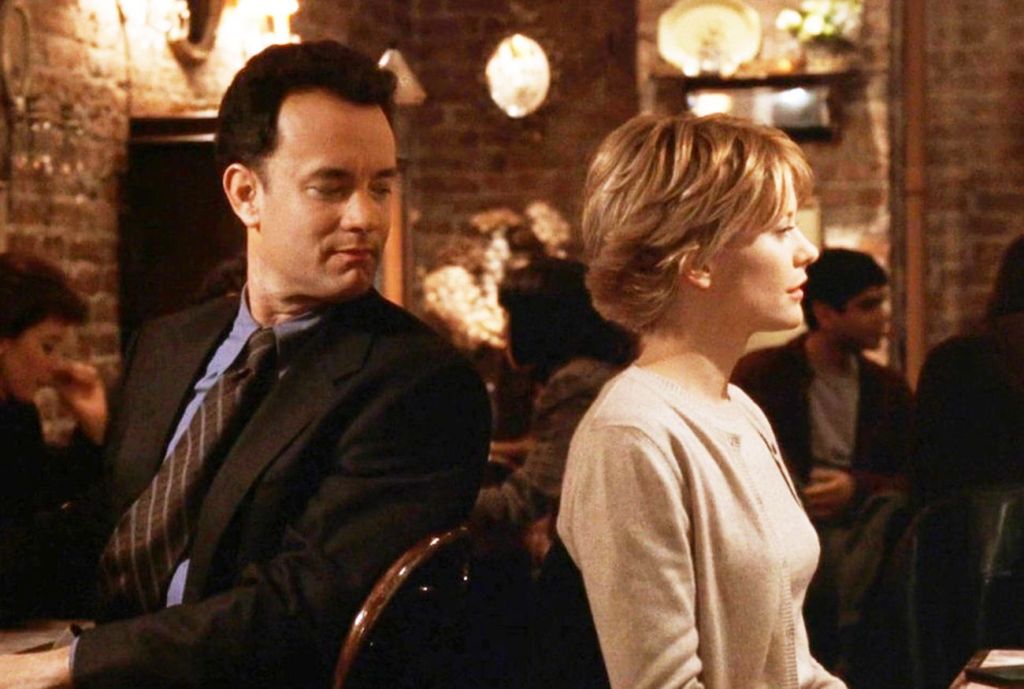
The Unnominated: Auto Focus (dir by Paul Schrader)


Though the Academy of Motion Picture Arts and Sciences claim that the Oscars honor the best of the year, we all know that there are always worthy films and performances that end up getting overlooked.  Sometimes, it’s because the competition too fierce.  Sometimes, it’s because the film itself was too controversial.  Often, it’s just a case of a film’s quality not being fully recognized until years after its initial released.  This series of reviews takes a look at the films and performances that should have been nominated but were,for whatever reason, overlooked.  These are the Unnominated.

The 2002 film Auto Focus start out as almost breezy satire of the perfect all-American life and it ends with an act of shocking violence.  It’s based on a real-life mystery, a murder that revealed a secret life.

When we first see Bob Crane (Greg Kinnear), he’s a disc jockey and a drummer living in the suburbs of Los Angeles in the mid-60s.  He’s got what would appear to be the ideal life.  He’s got a nice house.  He and his wife (Rita Wilson) seem to be devoted to each other.  His children are adorable.  He goes to church.  He tells corny Dad jokes.  He’s got a quick smile and a friendly manner and it’s impossible not to like him.  When he gets offered the lead in a sitcom, his happiness and enthusiasm feels so generous that it’s impossible not to be happy for him.

Of course, the show is a comedy that takes place in World War II POW camp, which doesn’t really sound like a surefire hit or really anything that should be put on the air.  (“Funny Nazis?” Crane says in disbelief when he’s first told about the project.)  Still, with Crane in the lead role, Hogan’s Heroes becomes a hit and, for a while, Bob Crane becomes a star and it seems like it couldn’t have happened to a more deserving guy.

The problem, of course, is that Crane seems like he’s too good to be true and we all know what they say about things like that.  From the start, there are hints that Crane may be hiding another side of his personality.  His wife, for instance, is not happy when she discovers his stash of pornographic magazines in their garage.  (“They’re photography magazines!” Crane protests with a smile that’s a bit too quick.)  Crane obviously enjoys the recognition that comes from being the star of a top-rated show.  He starts hanging out at strip clubs, occasionally playing drums with the club’s band and watching the dancers with a leer that’s really not all that different from the smile that he flashes whenever he asks anyone if they want an autograph.

Crane also meets John Carpenter (Willem DaFoe), an electronics expert who introduces him to the then-expensive and exclusive world of home video.  As opposed to the clean-cut and smoothly-spoken Crane, Carpenter is so awkward that it’s sometimes painful to watch him move or listen to him speak.  He’s the epitome of the Hollywood hanger-on, the type who has deluded himself into thinking that his celebrity clients genuinely like him and enjoy his company.  He and Crane become fast friends, though it’s always obvious that Crane considers himself to be better than Carpenter.  However, Carpenter is the only person with whom Crane can share the details of his secret life.

The film covers several years, from the late 60s to the mid-70s.  Crane goes from being so clean-cut that he neither drinks nor curses to being so addicted to sex that he can stop himself even when it starts to destroy his career and leads to him losing everything that he loves.  Carpenter and Crane’s friendship becomes progressively more and more self-destructive until the film ends in violence and tragedy.

Auto Focus begins on a light and breezy note but, as Crane’s addiction grows, the film grows darker.  By the time the movie enters the 70s, the camerawork becomes more jittery and the once soft-spoken Crane seems to be drowning in his own anxiety.  He becomes the type who causally goes from talking to Carpenter about how he wants to direct the world’s greatest sex film to cheerfully announcing that Disney has decided to cast him in a film called SuperDad.  Auto Focus‘s key scene comes towards the end, when Crane is a guest on a silly cooking show and shocks the audience by harassing a woman sitting in the front row.  When the audience boos, Crane flashes his familiar smile and it becomes obvious just how much of Crane’s life has been spent hiding behind that smile.  By the end of the film, not even Crane himself can keep track of whether or not he’s a wholesome comedy star or a self-destructive sex addict.

Both Greg Kinnear and Willem DaFoe gave Oscar-worthy performance in Auto Focus, performances that hold your interest even after their characters sink to some truly low depths.  The film makes good use of Kinnear’s amiable screen presence and Kinnear convincingly creates a man who wishes that he could be the person that he’s fooled everyone into thinking that he is.  By the time he’s reduced to begging his agent (well-played by Ron Leibman) to find him a game show so that he can finally stop doing dinner theater, it’s hard not to have a little sympathy for him, even if the majority of his problems are self-created.  As Carpenter, DaFoe is convincingly creepy but, at times, he’s also so pathetic that, again, you can’t help but feel a little sorry for him.  At his worst, Carpenter is the 70s equivalent of the twitter user who stans a celebrity by sending them adoring tweets and then picking fights with anyone who disagrees.

Unfortunately, the Academy nominated neither Kinnear for Best Actor nor DaFoe for Best Supporting Actor.  The competition for Best Actor was fierce that year, with Nicolas Cage, Michael Caine, Daniel Day-Lewis, and Jack Nicholson all losing to Adrien Brody in The Pianist.  While Kinnear deserved a nomination, it’s hard to say who I would drop from that line-up to make room for him.  As for DaFoe, I would argue that he was more deserving of a supporting actor nomination than The Hours‘s Ed Harris or The Road To Perdition’s Paul Newman.  Perhaps DaFoe was just too convincing as the type of clingy groupie that most members of the Academy probably dread having to deal with.

Nominated or not, Auto Focus is a disturbing and ultimately sad look at the darkness that often hides behind a perfect facade.


6 More Film Reviews From 2014: At Middleton, Barefoot, Divergent, Gimme Shelter, The Other Woman, and more!


Let’s continue to get caught up with 6 more reviews of 6 more films that I saw in 2014!

At Middleton (dir by Adam Rodgers)

“Charming, but slight.”  I’ve always liked that term and I think it’s the perfect description for At Middleton, a dramedy that came out in January and did not really get that much attention.  Vera Farmiga is a businesswoman who is touring colleges with her daughter (Taissa Farmiga, who is actually Vera’s younger sister).  Andy Garcia is a surgeon who is doing the same thing with his son.  All four of them end up touring Middleton College at the same time.  While their respective children tour the school, Vera and Andy end up walking around the campus and talking.  And that’s pretty much the entire film!

But you know what?  Vera Farmiga and Andy Garcia are both such good performers and have such a strong chemistry that it doesn’t matter that not much happens.  Or, at the very least, it doesn’t matter was much as you might think it would.

Hence, charming but slight.

http://www.youtube.com/watch?v=i-b_mPVuNOI

Barefoot (dir by Andrew Fleming)

Well, fuck it.

Sorry, I know that’s not the best way to start a review but Barefoot really bothered me.  In Barefoot, Scott Speedman plays a guy who invites Evan Rachel Wood to his brother’s wedding.  The twist is that Wood has spent most of her life in a mental institution.  Originally, Speedman only invites her so that he can trick his father (Treat Williams) into believing that Speedman has finally become a responsible adult.  But, of course, he ends up falling in love with her and Wood’s simple, mentally unbalanced charm brings delight to everyone who meets her.  I wanted to like this film because I love both Scott Speedman and Evan Rachel Wood but, ultimately, it’s all rather condescending and insulting.  Yes, the film may be saying, mental illness is difficult but at least it helped Scott Speedman find love…

On the plus side, the always great J.K. Simmons shows up, playing a psychiatrist.  At no point does he say, “Not my tempo” but he was probably thinking it.

Divergent (dir by Neil Burger)

There’s a lot of good things that can be said about Divergent.  Shailene Woodley is a likable heroine.  The film’s depiction of a dystopian future is well-done. Kate Winslet has fun playing a villain.  Miles Teller and Ansel Elgort are well-cast.  But, ultimately, Divergent suffers from the same problem as The Maze Runner and countless other YA adaptations.  The film never escapes from the shadow of the far superior Hunger Games franchise.  Perhaps, if Divergent had been released first, we’d be referring to the Hunger Games as being a Divergent rip-off.

However, I kind of doubt it.  The Hunger Games works on so many levels.  Divergent is an entertaining adventure film that features a good performance from Shailene Woodley but it’s never anything more than that.  Considering that director Neil Burger previously gave us Interview with the Assassin and Limitless, it’s hard not to be disappointed that there’s not more to Divergent.

Gimme Shelter (dir by Ron Krauss)

Gimme Shelter, which is apparently based on a true story, is about a teenage girl named Apple (Vanessa Hudgens) who flees her abusive, drug addicted mother (Rosario Dawson).  She eventually tracks down her wealthy father (Brendan Fraser), who at first takes Apple in.  However, when he discovers that she’s pregnant, he demands that she get an abortion.  When Apple refuses, he kicks her out of the house.  Apple eventually meets a kindly priest (James Earl Jones) and moves into a shelter that’s run by the tough Kathy (Ann Dowd).

Gimme Shelter came out in January and it was briefly controversial because a lot of critics felt that, by celebrating Apple’s decision not to abort her baby, the movie was pushing an overly pro-life message.  Interestingly enough, a lot of those outraged critics were men and, as I read their angry reviews, it was hard not to feel that they were more concerned with showing off their political bona fides than with reviewing the actual film.  Yes, the film does celebrate Apple’s decision to keep her baby but the film also emphasizes that it was Apple’s decision to make, just as surely as it would have been her decision to make if she had chosen to have an abortion.

To be honest, the worst thing about Gimme Shelter is that it doesn’t take advantage of the fact that it shares its name with a great song by the Rolling Stones.  Otherwise, it’s a well-done (if rather uneven) look at life on the margins.  Yes, the script and the direction are heavy-handed but the film is redeemed by a strong performance from Vanessa Hudgens, who deserves to be known for more than just being “that girl from High School Musical.”

Heaven is For Real (dir by Randall Wallace)

You can tell that Heaven is For Real is supposed to be based on a true story by the fact that the main character is named Todd Burpo.  Todd Burpo is one of those names that’s just so ripe for ridicule that you know he has to be a real person.

Anyway, Heaven Is For Real is based on a book of the same name.  Todd Burpo (Greg Kinnear) is the pastor of a small church in Nebraska.  After Todd’s son, Colton, has a near death experience, he claims to have visited Heaven where he not only met a sister who died before he was born but also had a conversation with Jesus.  As Colton’s story starts to get national attention, Todd struggles to determine whether Colton actually went to Heaven or if he was just having a hallucination.

You can probably guess which side the movie comes down on.

Usually, as a self-described heathen, I watch about zero faith-based movies a year.  For some reason, I ended up watching three over the course of 2014: Left Behind, Rumors of War, and this one.  Heaven is For Real is not as preachy (or terrible) as Left Behind but it’s also not as much fun as Rumors of War.  (Rumors of War, after all, featured Eric Roberts.)  Instead, Heaven Is For Real is probably as close to mainstream as a faith-based movie can get.  I doubt that the film changed anyone’s opinion regarding whether or not heaven is for real but it’s still well-done in a made-for-TV sort of way.

http://www.youtube.com/watch?v=oDcaZ3StTfI

The Other Woman (dir by Nick Cassavetes)

According to my BFF Evelyn, we really liked The Other Woman when we saw it earlier this year.  And, despite how bored I was with the film when I recently tired to rewatch it, we probably did enjoy it that first time.  It’s a girlfriend film, the type of movie that’s enjoyable as long as you’re seeing it for the first time and you’re seeing it with your best girlfriends.  It’s a lot of fun the first time you see it but since the entire film is on the surface, there’s nothing left to discover on repeat viewings.  Instead, you just find yourself very aware of the fact that the film often substitutes easy shock for genuine comedy. (To be honest, I think that — even with the recent missteps of Labor Day and Men, Women, and Children — Jason Reitman could have done wonders with this material.  Nick Cassavetes however…)   Leslie Mann gives a good performance and the scenes where she bonds with Cameron Diaz are a lot of fun but otherwise, it’s the type of film that you enjoy when you see it and then you forget about it.

Is It Too Late To Hate On Movie 43?


Originally,  I wasn’t planning on ever seeing Movie 43.

Remember Movie 43?  That’s the comedy with the huge ensemble cast that came out in January and stayed in theaters for about a week.  The trailers looked terrible, the commercials looked terrible, and finally, the reviews were terrible.  In fact, the reviews were so terrible (Richard Roeper called it the Citizen Kane of bad movies) that, at first, I was perfectly content never to see it.

However, as time passed, I continually heard Movie 43 referred to as being one of the worst films ever made.  Every 12 months, I post my picks for the 26 worst films of the year and I knew that Movie 43 was one of those films that would either appear on that list or, if it didn’t, I would have to be willing to defend the title’s absence.

I realized that before I could either defend or condemn, I would have to sit through the movie.  After all, I figured, it’s only 90 minutes of my life.

90 minutes that I’ll never get back, I might add.

Movie 43 is an anthology film in which 13 separate comedic sketches are loosely linked together by one overarching story.  For the most part, this is a film that was presumably made both for adolescent boys and for men who still think like adolescent boys.  Most of the humor is derived from bodily functions and there’s a real strain of misogyny running through the entire film.  However, the film’s problem is not that it’s crude and misogynistic but that it manages to be so dull about being crude and misogynistic.  If you think its hilarious when Meg is insulted on Family Guy or when Seth McFarlane smirks after making an anti-Semitic comment, you might enjoy Movie 43 but the rest of us are going to find far less to enjoy.

Oddly enough, there are actually two different versions of Movie 43 in circulation.  In the version that was released in U.S. theaters, the various vignettes are tied together by a story in which an insane director (Dennis Quaid) pitches scene after scene to a callous movie executive (Greg Kinnear).  In the version that was released in the UK, they’re linked together by a story about 3 teenagers searching for the most offensive film ever made.  To be honest, both versions are pretty stupid but I prefer the one about the 3 teenagers, if just because that way I can pretend that neither Dennis Quaid nor Greg Kinnear had anything to do with this movie.

As for the sketches themselves, there’s 13 of them and they are a mixed bag as far as both humor and quality are concerned:

1)      The Catch (dir by Peter Farrelly)

Kate Winslet and Hugh Jackman go on a blind date.  Jackman has testicles hanging from his neck and only Winslet thinks this is an odd thing.  This skit goes on forever.

2)      Homeschooled (dir by Will Graham)

Liev Schreiber and Naomi Watts explain how they’re making sure that their teenage son is getting the full high school experience despite the fact that he’s being homeschooled.  They do this through a combination of hazing and incest.  This skit worked pretty well, mostly because of the dedication that Schreiber and Watts brought to their absurd roles.

3)      The Proposition (dir by Steve Carr)

Uhmm…yeah.  So, this is the skit that opens with Anna Faris asking Chris Pratt to defecate on her.  I skipped over it because, quite frankly, life is too short.

4)      Veronica (dir by Griffin Dunne)

Neil (Kieran Culkin) is working the night shift at a depressing grocery store when his ex-girlfriend Veronica (Emma Stone) comes in.  They argue about who infected who with an STD.  Little do they realize that Neil has accidentally turned on the intercom and everyone in the store can hear them.  I actually kind of liked this short skit.  Culkin and Stone had a lot of chemistry and it was well-directed by Griffin Dunne.  Plus, it only lasted 2 minutes and, therefore, ended before the joke got old.

5)      iBabe (dir by Stephen Brill)

The iBabe is an MP3 player that happens to look like a life-size nude woman.  Unfortunately, a fan was built into the iBabe’s vagina and now, teenage boys are being dismembered while fingering and fucking iBabe.  Richard Gere plays the President of the company that makes iBabe.  I’ve never thought of Richard Gere as being a comedic actor and his performance here does nothing to change that.

6)      Superhero Speed Dating (directed by James Duffy)

Robin (Justin Long) goes speed dating and Batman (Jason Sudekis) tries to mess things up for him.  This skit – which also features (and wastes) Uma Thurman, Kristen Bell, and Bobby Cannavale – is so incredibly bad that I don’t even know where to begin.  Between this film and his appearance in last year’s The Conspirator, I’m having to rethink my slight crush on Justin Long.

7)      Machine Kids (directed by Jonathan Von Tulleken)

This commercial parody asks us to consider the children who work inside copiers and vending machines and how they are effected when we criticize those machines for not accepting our dollar.  This was actually so weird that I couldn’t help but love it.

8)      Middleschool Date (dir by Elizabeth Banks)

7th grader Amanda (Chloe Moretz) is having her first “middle school” date with Nathan (Jimmy Bennett) when she starts her first period.  In response, Nathan and his older brother (Christopher Mintz-Plasse) panic.  Believe it or not, this was actually one of the better parts of Movie 43, if just because the scene’s humor comes not from Amanda getting her period but instead from how every male around her descends into histrionics as a result.   It helps that this was the only part of Movie 43 that was both written and directed by women.  It also helps that director Elizabeth Banks is so clearly on Amanda’s side.  The end result is one of the few moments in Movie 43 that doesn’t feel misogynistic. 

9)      Tampax (dir by Patrik Forsberg)

This is another fake commercial.  Two girls are at the beach.  One uses tampax tampons and the other doesn’t.  Guess which one gets eaten by a shark?  As opposed to the previous skit, this bit of menstrual humor was obviously written and directed by a man (and the message, not surprisingly, is “Ewww!  Girls are scary and dangerous!”) but I’m going to have to admit that this one made me laugh if just because, like Middleschool Date, it reminded me of some of the period horror stories that I used to hear (and believe) back when I was younger.  (Though I was raised to be more concerned about bears than sharks…)

10)  Happy Birthday (dir by that noted comedian, Brett Ratner)

Pete (Johnny Knoxville) kidnaps an angry leprechaun (Gerard Butler) and gives it to Brian (Seann William Scott).  The leprechaun’s equally angry brother (also played by Gerard Butler) shows up and violence ensues.  Watching this skit was like being told a joke by someone who has no sense of humor.

11)  Truth or Dare (dir by Peter Farelly and Patrik Forsberg)

Halle Berry and Stephen Merchant are on a first date and Merchant has testicles on his neck…oh wait.  Sorry, that was Hugh Jackman and Kate Winslet’s skit.  In this skit, Berry challenges Merchant to game of truth or dare.  It escalates as the dares get continually more and more outrageous.  Whoops?  Did I say outrageous?  I meant to say stupid and oddly dull.  Watching this skit was like listening to a someone who has no sense of humor continue to tell a joke even though everyone else has already guessed the punchline.

12)  Victory’s Glory (dir by Rusty Cundieff)

In this parody of “inspirational” sports movies, Coach Jackson (Terrence Howard) speaks to his basketball team before they play their first game against an all-white team.  The gist of the speech is that Jackson’s team is going to win because they’re black and the other team is white.  This skit started out strong but, like a lot of Movie 43, it ran on for a bit too long.

13)  Beezel (dir by James Gunn)

This was actually my favorite part of Movie 43.  Unfortunately, since Beezel shows up in the middle of the end credits, I get the feeling that a lot of disappointed audience members had probably already walked out of the theater before it even began.  Beezel is a cartoon cat who has an unhealthy obsession with his owner (Josh Duhamel).  When Duhamel’s girlfriend (played by Elizabeth Banks) catches Beezel masturbating to pictures of Duhamel in a swimsuit, Beezel responds by plotting her demise.  Beezel was actually the only part of Movie 43 that truly felt edgy and unpredictable.  This is largely because this segment was directed by James Gunn, one of the few truly transgressive artists currently working in mainstream film.

So, here’s the question: is Movie 43 the worst film of 2013 as so many critics have claimed?  A few isolated moments aside, Movie 43 is pretty bad.  Even the parts of the film that do work can’t hope to compete with the pure horrifying incompetence of that parts that don’t.  However, thanks largely to James Gunn and Elizabeth Banks, it’s still a smidgen or so better than Tyler Perry’s Temptation.  (For all of its failings, Movie 43 never suggests that AIDS is God’s way of punishing wives who stray.  Nope, for that message, you have to go to Tyler Perry.)

Movie 43 is not the worst film of 2013.

It just seems like it.
Trailer: The Darkest Hour (Official)


Timur Bekmambetov is not the director of this upcoming alien invasion film The Darkest Hour. The director is actually one Chris Gorak, but the trailer is definitely pushing Bekmambetov’s name as if he is the director. Then again I think the film does seem to have Bekmambetov’s stylistic flourishes written all over it.

The Darkest Hour looks to be set in Russia from beginning to end as we follow a group of young Americans on vacation and hitting up all the party night spots in Moscow. This makes for an interesting premise in that we see an alien invasion from a wholly different perspective. It’s an alien invasion seen through the Russian perspective even if half the cast are American tourists.

I hadn’t heard much about this film until now, but after seeing the trailer I’m definitely going to run out and see it when it comes out.

The Darkest Hour is set for a December 23, 2011 release date.