HostageForADay is the only film that the much-missed John Candy ever directed. (It premiered on Canadian television, a few months after his death.) It’s also one of the only films to feature George Wendt in a leading role, as opposed to being a supporting player. The film is full of funny people like Don Lake and Robin Duke. John Vernon plays Candy’s father-in-law. A lot of talent went into this movie. It’s too bad that it’s not very good.
Wendt does give a good performance in the lead role. He plays Warren Kooey, who is depressed on his 41st birthday. His wife (Robin Duke) has drained their bank account to remodel their house and apparently shag their interior decorator, Hondo (Currie Graham). No one respects him at work. Warren’s reflection in the mirror tells Warren that he needs to do something with his life. Warren decides to fake a hostage situation so that he can collect the ransom. The problem is that the SWAT team has recently had their budget cut and can’t afford to pay the amount that Warren comes up with. Then some real kidnappers (led by John Candy, making a very brief appearance) hold him hostage for real. While this goes on, Wendt continues to talk to his reflection in the mirror and there are a few sweet but out-of-place scenes featuring him reuniting with his childhood sweetheart, Diane St. Clair (Christopher Templeton).
As a director, Candy never seems to be sure what type of film he’s trying to make. The comedy is broad but Candy also tries to sneak in some sentimental moments and the end results just doesn’t mix well. He gets some good performances for his cast but the film itself never really comes together. This was George Wendt’s only starring role and he does a good enough job that I regret he didn’t get bigger roles once Cheers went off the air because, judging by this film, he could have handled them I just wish this movie was better.
George Wendt passed away in his sleep earlier today. He was 76 years old.
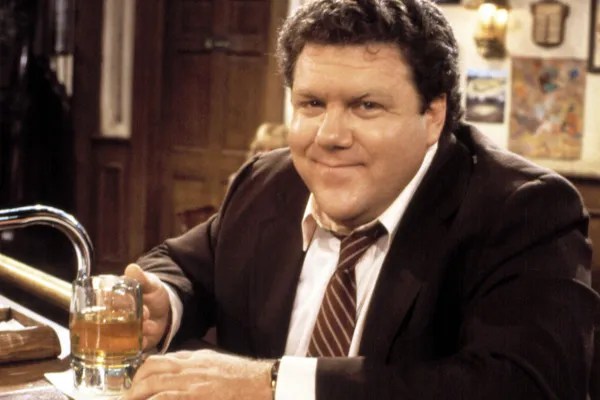
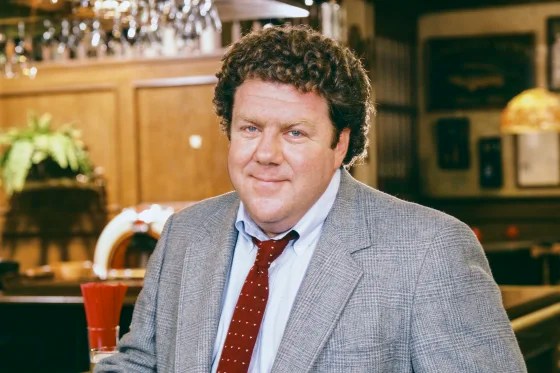
If you’re old enough to have watched Cheers when it originally aired or to have caught it in reruns, George Wendt will always be Norm Peterson, the beer-drinking accountant who spent all of his time at the show’s titular bar. One of the show’s trademarks was that, whenever he entered the bar, everyone greeted him by shouting, “Norm!” “How’s the world treating you?” a bartender would ask. “It’s a dog eat world and I’m wearing milkbone underwear,” Norm once replied.
(One of my favorite joke from the series was when Norm went into a steakhouse and everyone inside was heard to yell, “Norm!” as the door closed behind him.)
If we’re going to be really honest, Norm was probably a high-functioning alcoholic and terrible husband. (Wife Vera was often-mentioned but never seen.) Wendt was so likable in the role and was so good at delivering those one-liners that it didn’t matter. Watching the show, you never wondered why Norm was in the bar. You were just glad he was.
George Wendt was also an accomplished stage actor. (I saw him on stage when he was co-starring with Richard Thomas in 12AngryMen.) He appeared in several movies, usually playing the comedic sidekick or the hero’s best friend. His film roles often didn’t ask him to do much other than be likable but one exception was his performance in 1991’s GuiltyBySuspicion.
GuiltyBySuspicion is a film about the McCarthy era, starring Robert De Niro as film director David Merrill, who is threatened with being blacklisted unless he names four of his colleagues as being communists. George Wendt plays screenwriter Bunny Baxter, a childhood friend of David’s who attended a few communist rallies when he was younger, failed to mention it to the FBI, and who is now being investigated as a subversive. The studio argues that David should name Baxter because his name is already out there. When David refuses, he finds himself blacklisted and unable to make a living. Bunny Baxter, meanwhile, is offered a similar deal. Baxter can save his own career but only if he names David as a communist. Unlike David, Baxter considers betraying his friend because it’s the only way that he can ever hope to work again. “Your dead anyway,” Baxter says to David.
GuiltyBySuspicion suffers from Irwin Winkler’s plodding direction but De Niro gives a good performance, as does Martin Scorsese who is cast as a director based on Joseph Losey. The film is full of actors who would later become better-known, like Chris Cooper, Tom Sizemore, and Annette Bening. Wendt, however, gives the film’s best performance as the screenwriter who is torn between protecting his career and maintaining his integrity. The scene where he asks permission to name Merrill as a communist is powerful and it shows how good an actor George Wendt could be. Bunny Baxter is asking his best friend to allow himself to be stabbed in the back. Baxter is that desperate. That he’s played by George Wendt, an actor who was everyone’s favorite likable barfly in the 80s, makes the scene all the more powerful.
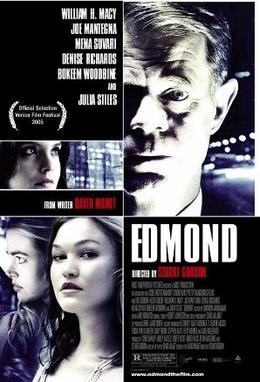
Based on a one-act play by David Mamet, 2005’s Edmond tells the story of Edmond Burke (William H. Macy).
Edmond shares his name (if not the actual spelling) with the philosopher Edmund Burke. Edmund Burke was a strong believer that society had to put value in good manners to survive and that religious and moral institutions played an important role in promoting the idea of people treating each other with respect and decency. Edmund Burke knew what he believes and his writings continue to influence thinks to this day. Edmond Burke, on the other hand, doesn’t know what he believes. He doesn’t know who he wants to be. All he knows is that he doesn’t feel like he’s accomplished anything with his life. “I don’t feel like a man,” he says at one point to a racist bar patron (played by Joe Mantegna) who replies that Edmond needs to get laid.
On a whim, Edmond steps into the shop of a fortune teller (Frances Bay), who flips a few Tarot cards and then tells Edmond that “You’re not where you’re supposed to be.” Edmond takes her words to heart. He starts the night by telling his wife (played by Mamet’s wife, Rebecca Pidgeon) that he’s leaving their apartment and he won’t be coming back. He goes to the bar, where he discusses his marriage with Mantegna. He goes to a strip club where he’s kicked out after he refuses to pay $100 for a drink. He goes to a peep show where he’s frustrated by the glass between him and the stripper and the stripper’s constant demand that he expose himself. He gets beaten in an alley by three men who were running a three-card monte scam. Edmond’s problem is that he left home without much cash and each encounter leads to him having less and less money. If he can’t pay, no one wants to help him, regardless of how much Edmond argues for a little kindness. He pawns his wedding ring for $120 but apparently, he just turns around and uses that money to buy a knife. An alley-way fight with a pimp leads to Edmond committing his first murder. A one-night stand with a waitress (a heart-breaking Julia Stiles) leads to a second murder after a conversation about whether or not the waitress is actually an actress leads to a sudden burst of violence. Edmond ends up eventually in prison, getting raped by his cellmate (Bookem Woodbine) and being told, “It happens.” Unable to accept that his actions have, in one night, led him from being a businessman to a prisoner, Edmond says, “I’m ready to go home now.” By the end of the film, Edmond realizes that perhaps he is now where he was meant to be.
It’s a disturbing film, all the more so because Edmond is played by the likable William H. Macy and watching Macy go from being a somewhat frustrated but mild-mannered businessman to becoming a blood-drenched, racial slur-shouting murderer is not a pleasant experience. Both the play and the film have generated a lot of controversy due to just how far Edmond goes. I don’t see either production as being an endorsement of Edmond or his actions. Instead, I see Edmond as a portrait of someone who, after a lifetime of being willfully blind to the world around him, ends up embracing all of the ugliness that he suddenly discovers around him. He’s driven mad by discovering, over the course of one night, that the world that is not as kind and well-mannered as he assumed that it was and it all hits him so suddenly that he can’t handle it. He discovers that he’s not special and that the world is largely indifferent to his feelings. He gets overwhelmed and, until he gets his hands on that knife, he feels powerless and emasculated. (The knife is an obvious phallic symbol.) It’s not until the film’s final scene that Edmond truly understands what he’s done and who he has become.
Edmond is not always an easy film to watch. The second murder scene is truly nightmarish, all the more so because the camera remains on Edmond as he’s drenched in blood. This is one of William H. Macy’s best performances and also one of his most disturbing characters. That said, it’s a play and a film that continues to be relevant today. There’s undoubtedly a lot of Edmonds out there.
The Reluctant Vampire was the 7th episode of the 3rd season of HBO’s Tales From The Crypt! It stars Malcolm McDowell as a vampire who is a little bit too nice for his own good. Seriously, you can’t go wrong with Malcolm McDowell as a vampire.
The Reluctant Vampire originally aired on July 10th, 1991.
Yesterday, I didn’t get to watch or review any horror films because the air conditioner at the house stopped working. While I know that a lot of people up north think that AC is a luxury that’s going to destroy the world, I live in Texas and an air conditioner is a necessity down here. So, if that leads to glaciers melting and me getting a lecture from some obnoxious little brat …. well, fine.
Anyway, we were able to get the air conditioner fixed. It took a while but it’s now working again. Once the AC was again blowing cool air into the house, I started to think about how it could be worse. I mean, the house could be haunted. We always tend to assume that ghosts are going to be nice but really, there are some nasty ghosts out there.
Take the 1986 film, House, for instance. House stars William Katt as Roger Cobb, a horror author who needs a best seller. Cobb is dealing with a lot. He’s wife (Kay Lenz) has left him. His son has vanished. His aunt has recently committed suicide, leaving behind her house. On top of all that, Cobb is still haunted by his experiences during the Vietnam War, when he was forced to leave behind a gravely wounded soldier named Big Ben (Richard Moll). Cobb wants to write about his Vietnam experiences but his agent is aghast. No one wants to talk about the war!
So, Roger moves into his aunt’s old house. He was originally planning on selling it but, for whatever reason, he thinks living in an abandoned house that drove its last owner to suicide will be a good idea. Roger thinks that living in the house will help him finish his book. The House has different ideas.
Soon, Roger finds himself dealing with a series of incidents that feel as if they were lifted from other, more cohesive horror movies. In a scene that feels like it was inspired by the Evil Dead, his wife turns into an otherworldly creature and tries to attack him. Weird gremlin creatures, which could have come from Troll or Ghoulies, keep showing up and trying to kidnap an obnoxious neighbor child. Roger’s neighbor (George Wendt) thinks that it’s possible that Roger is a murderer and that he’s buying his victims out in the backyard. Even worse, a decaying and pissed off Big Ben starts to show up.
House is an occasionally likable attempt to mix horror and comedy. Most of the comedy comes from Roger’s attempts to keep anyone else from noticing just how crazy things have gotten in the house. (Disposing of a demon’s body turns out to be not as easy as one might imagine.) William Katt does a good job with selling the comedy, though he never quite convinces you that he’s a best-selling horror author. That said, the horror aspect is far more interesting, if just as a metaphor for Roger’s PTSD. At its best, the film suggests that the house is feeding off of the lingering trauma of Roger’s war experiences. It’s an interesting idea but not one that’s really explored as much as you might like. Unfortunately, the film struggles to balance the horror and the comedy. Just when it really starts to scare you, it remembers that it’s supposed to be a comedy. Sam Raimi would have been the ideal director for House.
That said, House is entertaining, if a little bland. If nothing else, watching it made me feel better about my own house. My air conditioner may have gone down for a few hours yesterday but at least it didn’t open a portal to Hell.
I wish the literal video for this was still up. Oh, well.
All these years later, I still don’t have any idea why she goes into that house. I guess we are supposed to believe she lives there with these two kids that miss their cue?
These other kids nail it.
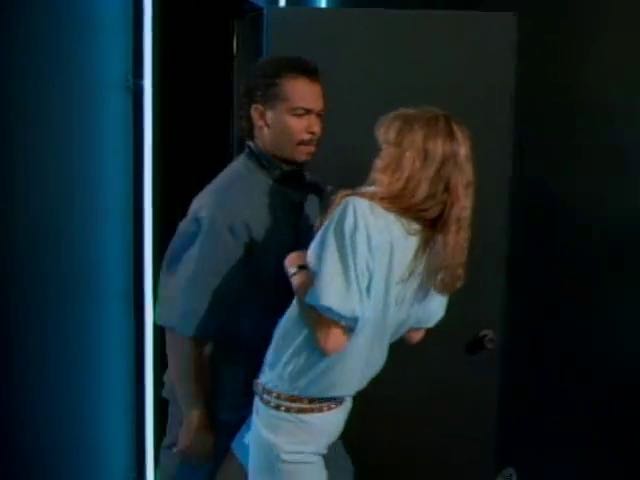
Despite finding lists of all the celebrities in this video, I have no idea who this guy is that Ray Parker Jr. becomes for this bit.
I also wonder why she didn’t see him while turning away from the moving table to go to the window.
In the window is footage of the movie that has aged horribly. Parker Jr. is blue screened in there for this famous shot.
He ain’t afraid of no ghost. A lawsuit on the other the hand, that’s a different matter. I hope this music video doesn’t remind me of a Huey Lewis & The News video as well.
Now Ray Parker Jr. stands creepily outside of her window.
This is looking familiar.
Chevy Chase can call Ghostbusters if he has a ghost problem…
but what about if he gets stuck in Benji again?
Who can he call then?
I knew this looked familiar.
Do You Believe In Love by Huey Lewis & The News (1982)
Do You Believe In Love by Huey Lewis & The News (1982)
I’m sure it’s a coincidence. I just find it humorous to see that considering the lawsuit saying that this song ripped off, to one extent or another, the Huey Lewis & The News song I Want A New Drug. The scene above is from the video that helped kick off their career on MTV and set the tone for their future videos since it was such a success despite being ridiculous. Is the riff in You Crack Me Up…
sound like the same riff from Johnny And Mary by Robert Palmer?
Or is it just me?
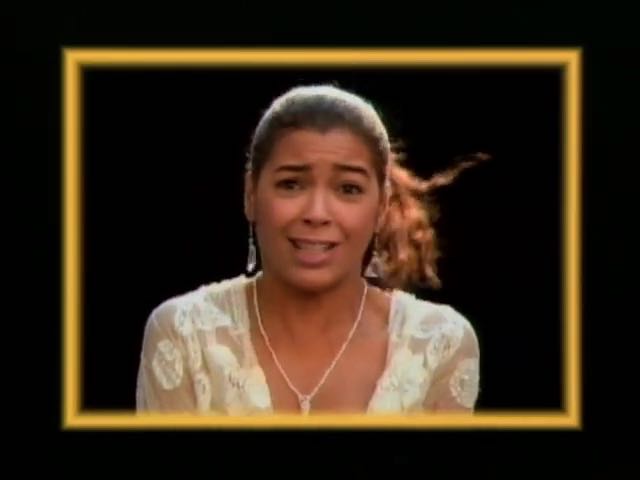
What a feeling. Thanks for making that one easy, Irene Cara.
Something tells me that Cindy Harrell was hired by someone who saw the movie Model Behavior (1982), which she was in.
Model Behavior (1982, dir. Bud Gardner)
Model Behavior (1982, dir. Bud Gardner)
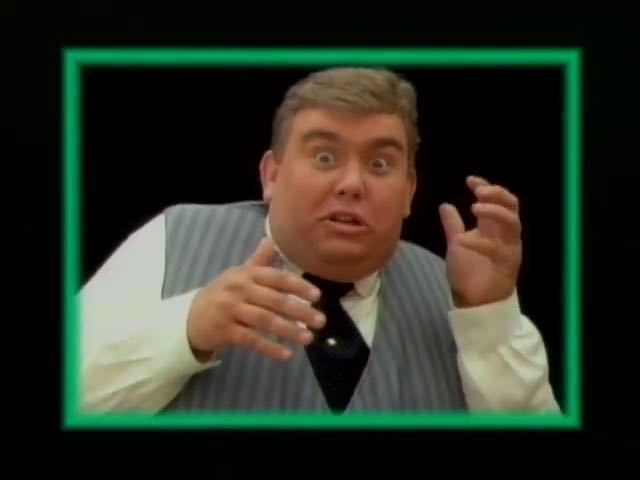
From what I’ve read, they just showed up on the set of a movie Candy was shooting to try and get him to make this cameo appearance.
Ray Parker Jr. rising from the top of the stairs like he’s Michael Myers come to kill her. Why?
Or at least scare her. It’s probably a reference to Gozer.
Melissa Gilbert. I have no idea what she’s doing here. I’ve only seen an episode or two of Little House On The Prairie, so I guess there could have been some episodes with ghosts. Some of these cameos feel like they happened because the celebrities were involved with NBC.
Speaking of cameos I can’t explain, it’s former baseball player Ollie Brown.
Boundaries!
I do like that for the majority of the shot it looks like she should be falling over but isn’t.
More people that Parker can summon for some reason.
Don’t worry about them.
Pose for the featured image of this post.
Thank you.
Jeffrey Tambor.
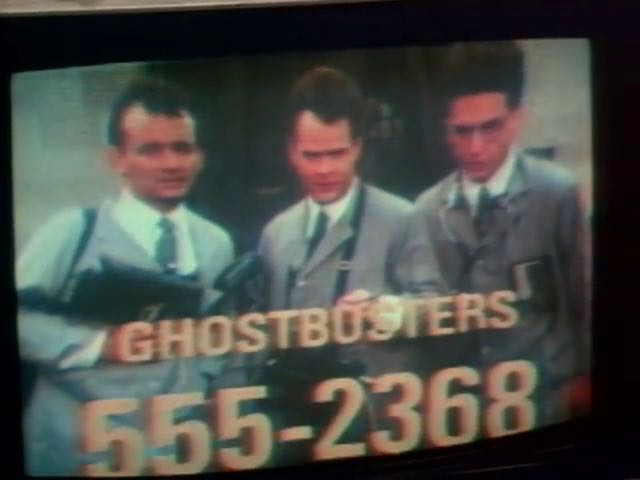
Is it 555-5555…
or 555-2368 as you showed earlier?
George Wendt apparently got in trouble with the Screen Actors Guild for his appearance in this video. I’ll link to the article with that information at the end.
Senator Al Franken.
Now we get a series of confusing cameos.
Danny DeVito. I think this is only the second music video he has ever been in. The other one was for the song Billy Ocean did for The Jewel Of The Nile (1985).
Carly Simon for some reason. She would go on to do the theme song to Working Girl (1988) with Sigourney Weaver. Maybe they were friends. I don’t know.
Umm…one more thing. Have you tried calling the Ghostbusters? No clue as to why Peter Falk is here.
The breakdancing was improvised. So was Parker Jr. pushing Bill Murray around.
I think Teri Garr has one of the best cameos.
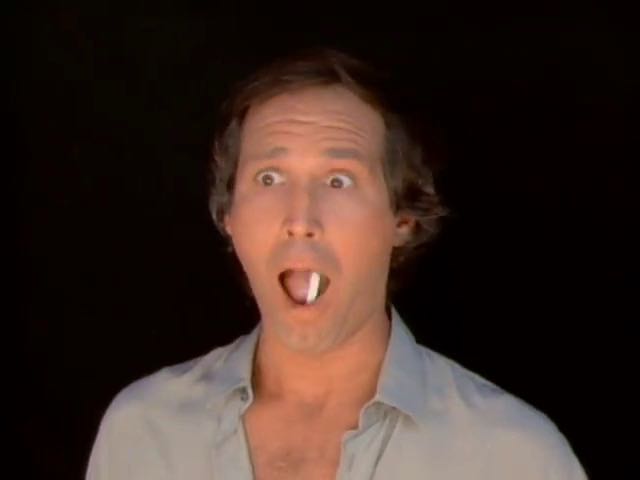
Don’t swallow that cigarette, Chevy.
Fun fact: In European and other non-US markets, the “no” sign was flipped.
If you want to read some more information about the video, then follow this link over to ScreenCrush where they have a write-up on the video with information from people who worked on the video.
According to mvdbase, Ivan Reitman directed, Keith Williams wrote the script, Jeff Abelson produced it, Daniel Pearl shot it, and Peter Lippman was the production manager.
If you ever get a chance to watch the literal music video for this, then do so. I doubt it will surface again though seeing as this music video almost didn’t get an official release because of the issues surrounding all the cameos.
If there’s an Eye Rolling Hall of Fame, the recent Lifetime film Mommy, I Didn’t Do It definitely has earned inclusion.
Seriously, this film was full of some championship-level eye rolling. It’s a courtroom drama and a murder mystery. Ellen Plainview (Danica McKellar) is an attorney whose teenager daughter, Julie (Paige Searcy) is on trail for murdering one of her former teachers. When Julie is first arrested, Ellen rolls her eyes. When Ellen visits Julie in jail and explains that they don’t have the money to bail her out, Julie rolls her eyes and sighs. You can just tell she’s thinking, “My God, mom, you’re so lame!” When Detective Hamer (Jaleel White) explains why all the evidence points to Julie, Ellen again rolls her eyes and Detective Hamer counters her by rolling his own eyes. When Ellen approaches the dead man’s wife (Jamie-Lynn Sigler), the wife not only rolls her eyes but narrows them as well.
It gets even better once the trial begins. The prosecutor, Kimberly Bains (Jen Lilley), rolls her eyes whenever Ellen makes an objection. Whenever a witness testifies that Julie was obsessed with the victim, Ellen rolls her eyes and then Julie rolls her eyes at her mother rolling her eyes and then Kimberly rolls her eyes at both of them. When the weird boy who is obsessed with her tries to save Julie by confessing to the murder, the amount of eye rolling probably sets a world record. In the real world, of course, this type of courtroom behavior gets people cited for contempt but, in the world of Lifetime, it’s just the way that people communicate.
Don’t get me wrong. The film itself did not make me roll my eyes. Yes, it was totally implausible and it was full of silly scenes but it’s a Lifetime film. That’s what we expect Lifetime. Even more importantly, that’s what we want from Lifetime. When it comes to a quality Lifetime film, there’s really only two rules: 1) the more ludicrous, the better and 2) the more melodramatic, the more entertaining.
While the film’s story might be ludicrous, the mother-daughter relationship between Ellen and Julie felt very real and both Danica McKellar and Paige Searcy gave sincere and believable performances as mother and daughter, which went a long way towards explaining all the eye rolling. Seriously, when I was Julie Plainview’s age, I rolled my eyes for 24 hours a day and I wasn’t even accused of murder.
Mommy, I Didn’t Do It is actually a sequel to a previous Lifetime movie, The Wrong Woman. In that one, Ellen was wrongly accused of murder and was arrested by the same idiot detective who arrests her daughter in Mommy, I Didn’t Do It. (If nothing else, these two films show how vindictive authority figures can be.) As long as this is going to be a franchise, I’d like to suggest that the next installment could feature Eric Roberts, recreating his role from Stalked By My Doctor and its sequel. Maybe he could treat Julie while Ellen defend him in court.
Since I’ve been reviewing so many Dracula films as of late, it seems only appropriate that tonight’s excursion into televised horror should be about a vampire as well!
The Reluctant Vampire was the 7th episode of the 3rd season of HBO’s Tales From The Crypt! It stars Malcolm McDowell as a vampire who is a little bit too nice for his own good. Seriously, you can’t go wrong with Malcolm McDowell as a vampire.
The Reluctant Vampire originally aired on July 10th, 1991.
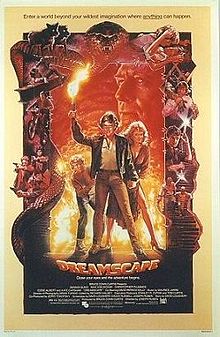
Dreamscape opens with the image of a woman running down a street while a red mushroom sprouts above the city behind her. Just as a radioactive cloud envelopes the woman, the scene cuts to a man named John (Eddie Albert) waking up with a scream. John is the President of the United States and he has been having reoccurring nightmares about nuclear war. The dreams have shaken him to the extent that he plans of signing a disarmament treaty with the Soviet Union.
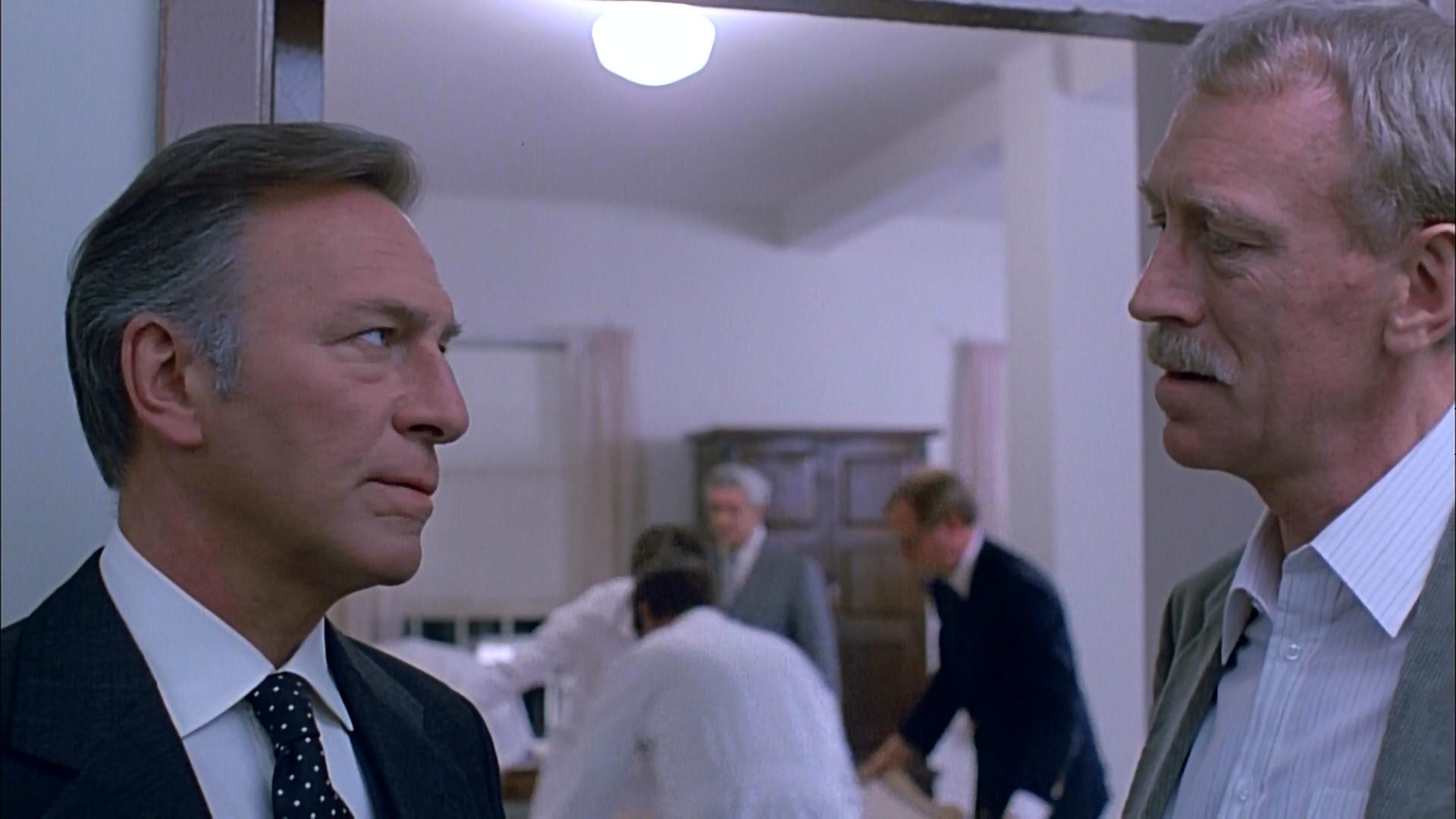
Bob Blair (Christopher Plummer, playing one of the slick villain roles that dominated his career until he finally won an Oscar for Beginners) is a political reactionary who works for a shadowy agency that is even feared by the CIA. Determined to stop the President from signing that treaty, Blair recruits psychotic martial arts enthusiast Tommy Ray Glatman (David Patrick Kelly, of “Warriors, come out to play…” fame) to assassinate the President. Tommy is a psychic who can enter people’s dreams and when you die in a dream, you die in real life.
Tommy is a part of a government-funded research project that is headed by Dr. Peter Novotny (Max Von Sydow) and Beth DeVries (Kate Capshaw). Tommy was the program’s superstar until the arrival of Alex Gardner (Dennis Quaid). Until he was recruited by Dr. Novotny, Alex was using his psychic abilities for gambling and womanizing. Now, Alex has to use his abilities to save the President’s life.
Dreamscape came out the same year as Wes Craven’s Nightmare on Elm Street and they do share a few things in common. During one scene set in the President’s nightmare, Tommy even has razor-sharp claws. But ultimately, Nightmare and Dreamscape are two very different films. Whereas Nightmare was a horror film, Dreamscape is an adventure film with horror elements. In fact, Dreamscape feels like four different films all mashed together. It’s a political conspiracy story, with Christopher Plummer plotting to kill the President. It’s an adventure story, with Dennis Quaid as an appealing rogue. It’s a love story, as Alex and Beth fall in love while researching dreams. At times, it is also a very dark comedy, like when Alex enters the dream of a man who is terrified that his wife is cheating on him with everyone that they know.
Fans of cult cinema will appreciate that Dreamscape features one of David Patrick Kelly’s best villainous performances. In the role of Tommy, he not only gets to do his usual bravura work as a weasley psychopath but he also gets to bust out an impressive impersonation of Bruce Lee as well.
Along with David Patrick Kelly at his demented best, Dreamscape also features the Snakeman, a claymation monster who may look cheesy today but probably gave many youngsters nightmares back in 1984. Like the Snakeman, all of the film’s special effects have aged but it does not detract from the film. Since the special effects were used to create the film’s dreams, it doesn’t matter that they no longer look 100% realistic. Dreams are supposed to be strange so the cheesiness of some of the special effects actually works to Dreamscape‘s advantage.
Dreamscape may not be as well-known as Inception or Nightmare on Elm Street but it is still a fun and entertaining excursion into the dream world.
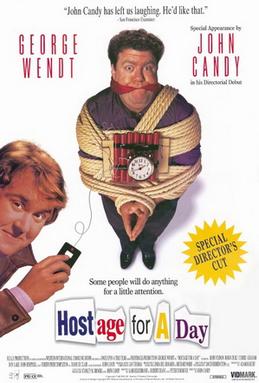 Hostage For A Day is the only film that the much-missed John Candy ever directed. (It premiered on Canadian television, a few months after his death.) It’s also one of the only films to feature George Wendt in a leading role, as opposed to being a supporting player. The film is full of funny people like Don Lake and Robin Duke. John Vernon plays Candy’s father-in-law. A lot of talent went into this movie. It’s too bad that it’s not very good.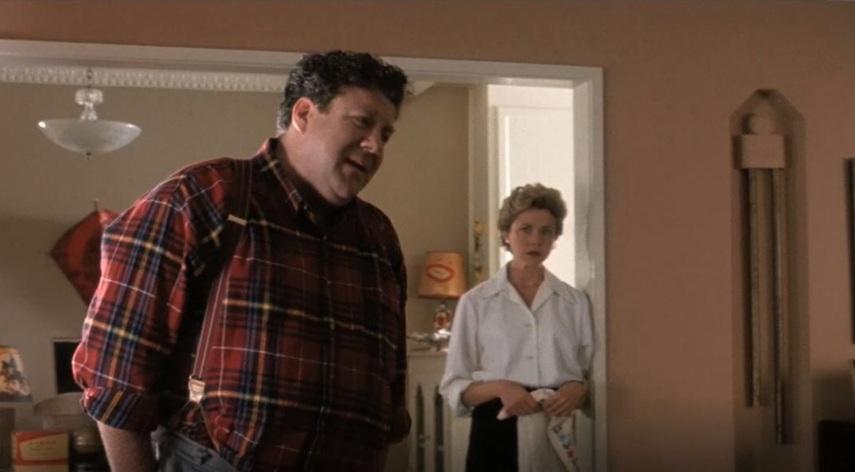

















 Through the Shattered Lens