Film Review: The Boston Strangler (dir by Richard Fleischer)


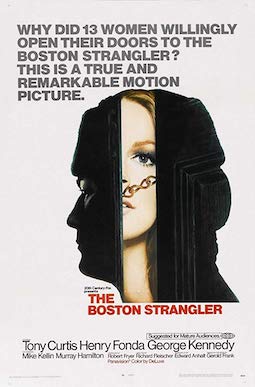
Between June 14, 1962 and January 4, 1964, 13 women between the ages of 19 and 85 were murdered in the Boston area.  It was felt that they had all been killed by the same man, a monster known as The Boston Strangler.  Though the police investigated many suspects, they never made an arrest.  (One should remember that this was before the time of DNA testing or criminal profiling.  The term “serial killer” had not even been coined.  Today, sad to say, we take the existence of serial killers for granted.  In the 60s, it was still an exotic concept.)

In October of 1964, a man named Albert DeSalvo was arrested and charged with being “the Green Man,” a serial rapist who pretended to be a maintenance man in order to gain access to single women’s apartments.  After he was charged with rape, detectives were surprised when DeSalvo confessed to being the Boston Strangler.  When confessing to the murders, DeSalvo got a few minor details wrong but he also consistently included other details that the police hadn’t released to the general public.  Even when put under hypnosis, DeSalvo’s recalled those previously unreleased details.  Because DeSalvo was already going to get a life sentence on the rape charges and because there wasn’t any physical evidence that, in those pre-DNA, could have conclusively linked DeSalvo to the crimes, he was never actually charged with any of the murders.  Still, with his confessions, the cases were considered to be closed.

In 1966, before DeSalvo was even sentenced for the Green Man rapes, Gerold Frank wrote The Boston Strangler, a book about the murders, the investigations, and DeSalvo’s confessions.  It was one of the first true crime books and, in 1968, it was adapted into one of the first true crime films.

Directed by Richard Fleischer (whose filmography somehow includes not only this film but also Dr. Dolittle, Fantastic Voyage, 20,000 Leagues Under the Sea, Conan The Destroyer, and Red Sonja), The Boston Strangler is really two films in one.  The first half deals with the crimes and the police (represented by Henry Fonda, George Kennedy, Murray Hamilton, and James Brolin) investigation.  This half of the film is pulpy and crudely effective, full of scenes of the cops rounding up every sex offender who they can find.  There’s a scene where Henry Fonda talks to a prominent man in a gay bar that’s handled with about as much sensitivity as you could expect from a 1960s studio film.  (On the one hand, the man is portrayed with respect and dignity and he’s even allowed to call out the patron saint of 1960s mainstream liberal piety, Henry Fonda, for being close-minded.  On the other hand, everyone else in the bar is a stereotype and we’re meant to laugh at the idea that anyone could think that Henry Fonda could be gay.)  Director Richard Fleischer makes good use of split screens, creating an effective atmosphere of paranoia.  The scene where a woman tries to keep an obscene caller on the phone long enough for the police to trace his location made my skin crawl and served as a reminder that perverts predate social media.  Another scene where a flamboyant psychic tries to help the police goes on for a bit too long but, at the same time, you’re happy for a little relief from crime scenes and terrified, elderly women discovering that their neighbors have been murdered.

The second half of the film features Tony Curtis as Albert DeSalvo.  Curtis is effective as DeSalvo, playing him as being a self-loathing brute who is incapable of controlling his impulses.  (Before committing one of his crimes, DeSalvo watches the funeral of John Kennedy, his face wracked with pain.  Is the film suggesting that DeSalvo murdered to deal with the stress of life in America or is it suggesting that the hate that killed Kennedy was a symptom of the same sickness that drove DeSalvo?  Or is the film just tossing in a then-recent event to get an easy emotional reaction from the audience?)  As one might expect from a mainstream film made in 1968, The Boston Strangler takes something of a wishy washy approach to the question of whether DeSalvo’s crimes were due to sickness or evil.  Yes, the film says, DeSalvo was bad but it’s still society’s fault for not realizing that he was bad.  It’s the type of approach designed to keep both the law-and-order types and the criminal justice reformers happy but it ultimately feels a bit like a cop out.  Still, the shots of DeSalvo isolated in his padding cell have an undeniable power and Curtis is both pathetic and frightening in the role.  In its more effective moments, the second half of the film works as a profile of a man imprisoned both physically and mentally.

Watching the film today, it’s hard not to consider how different The Boston Strangler is from the serial killer films that would follow it.  DeSalvo is not portrayed as being some sort of charming or interesting Hannibal Lecter or Dexter-type of killer.  Instead, he’s a loser, a barely literate idiot who struggled to articulate even the simplest of thoughts.  The cops aren’t rule-breakers or renegades.  Instead, they’re doing their jobs the best that they can.  Though the film ends with a title card saying that it’s important for society to make more of an effort to spot people like DeSalvo before they kill, The Boston Strangler has a surprising amount of faith in both the police and the law and it assumes that you feel the same way.  It’s a film that takes it for granted the audience respects and trusts authority.  It’s portrayal of the police is quite a contrast to the rebel cops who dominate pop culture today.

After the film came out, DeSalvo recanted his confessions and said that he had never killed anyone.  He was subsequently murdered in prison in 1971, not due to his crimes but instead because he was independently selling drugs for prices cheaper than what had been agreed upon by the prison’s syndicate.  After his death, many books were written proclaiming that DeSalvo was innocent and that the real Boston Strangler was still on the streets.  Others theorized that the actual Strangler was DeSalvo’s cellmate and DeSalvo, knowing he was going to prison for life regardless, confessed in return for money being sent to his family.  That said, in 2013, DNA evidence did appear to conclusively link DeSalvo to the murder of 19 year-old Mary Sullivan.  Of course, that doesn’t mean that DeSalvo necessarily committed the other 12 murders.  In fact, from what we’ve since learned about the pathology of serial killers, it would actually make more sense for the murders to have been committed by multiple killers as opposed to just one man.

Regardless of whether DeSalvo was guilty or not, The Boston Strangler is an uneven but ultimately effective journey into the heart of darkness.

TV Review: Night Gallery 1.2 “Room With A View/The Little Black Bag/The Nature of the Enemy”


The second episode of Night Gallery originally aired on December 23rd, 1970 and it featured three stories, two of which were written by Rod Serling.  Serling, himself, introduced all three of the stories by inviting us to look at the paintings that may or may not have been inspired from them.

Room With A View (dir by Jerrold Freedman, written by Hal Dresner)

When a cranky, bed-bound man (Joseph Wiseman) discovers this his wife (Angel Tompkins) is cheating on him, he comes up with an elaborate scheme to get revenge.  It all hinges on his somewhat nervous nurse (Diane Keaton), who has no idea that she’s being manipulated.

This short segment is well-done but it doesn’t really feel like it belongs on an episode of Night Gallery.  There’s no elements of horror or science fiction to be found in this story.  Instead, it’s just about a manipulative man seeking revenge on his wife.  It’s actually easy to imagine this segment as being a flashback on a Monk-style detective show.  You just need a detective saying, “I finally figured out how you did it!”

For most viewers, probably the most interesting thing about this segment will be the presence of a young Diane Keaton, playing the nurse and laughing nervously at her patient’s rather intrusive questions.

The Little Black Bag (dir by Jeannot Szwarc, written by Rod Serling)

In the 30th Century, a careless accident at a time travel station sends a black medical bag into the past.  It arrives in 1971, where it’s discovered by two homeless gentlemen.  One of the men is a disgraced former doctor named William Fall (Burgess Meredith).  The other, Hepplewhite (Chill Wills), has no medical experience but he does have a greedy spirit.  Fall wants to use the bag to do good,  Hepplewhite wants to use the bag to make money.  Meanwhile, in the future, poor put-upon Gillings (George Furth) is just trying to figure out what to do about the missing bag.

The Little Black Bag is this episode’s high point, featuring good performances from Meredith, Wills, and Furth and also ending with properly macabre twist.  This is another Rod Serling story about how terrible, at heart, most people are but Jeannot Szwarc’s direction is fast-paced and he never allows things to get too heavy-handed.

The Nature of the Enemy (dir by Allen Reisner, written by Rod Serling)

NASA’s latest expedition to the Moon has run into trouble.  The astronauts have discovered that there is something living on the lunar surface.  On Earth, the director of NASA (Joseph Campanella) tries to keep everyone calm while also figuring out the nature of the enemy.

This segment has an intriguing premise but it’s let down by a so-so execution.  Like a lot of less-than-effective Night Gallery segments, this one features a story that doesn’t so much conclude as it just stops after a somewhat weak punchline.

So, the second episode of Night Gallery was not an improvement on the first and it was nowhere close to matching the pilot.  Watching this episode, it was hard not to feel that the show had a few growing pains.  Did it want to be a horror anthology or a collection of short skits?  The 2nd episode reveals a show that was still trying to find it’s voice.

Previous Night Gallery Reviews:

  1. The Pilot
  2. The Dead Man/The Housekeeper


Film Review: The Cool Ones (dir by Gene Nelson)


The year is 1967 and who are The Cool Ones?

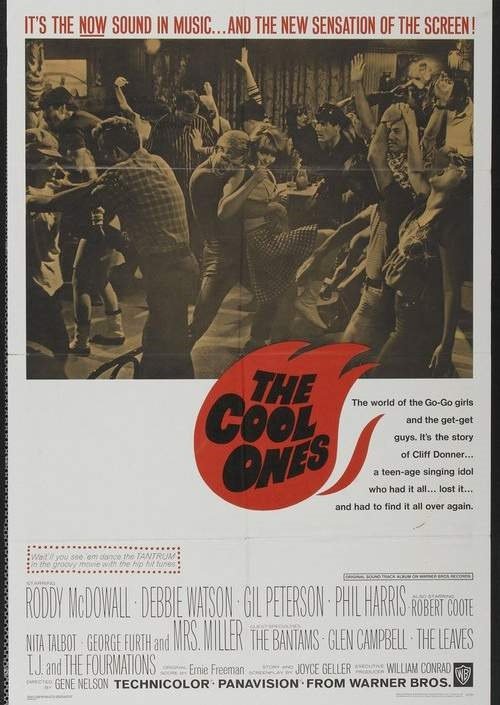
They’re the kids, of course!  They’re the wild and crazy kids who go to Palm Beach and who listen to rock music and who wear open vests and short skirts and who are all doing the latest dance!  You may see that this movie was made in 1967 and you might assume that this is going to be a film about hippies, like Psych-Out.  But no, these kids aren’t hippies.  Instead, they’re the 1967 equivalent of the clean-cut teens who used to appear in beach party movies and 1950s rock and roll films.

The kids are all dancing the Tantrum!  What’s the Tantrum?  It’s a dance that was created by accident.  Hallie Rogers (Debbie Watson) was a dancer on an American Bandstand-style show but, when she realized that the show’s producers lied to her about eventually allowing her to sing on the show, she threw a fit.  She grabbed the microphone of special musical guest Glen Campbell and attempted to turn his performance into a duet.  When security showed up to drag her off the set, she struggled with them.  Those watching the show assumed that Hallie had just created a new dance called The Tantrum.

After getting fired from the show, Hallie goes to a club, where she witnesses a performance by a former teen idol named Cliff Donner (Gil Peterson).  After Hallie fights off an obnoxious wannabe beatnik who refuses to accept that she doesn’t want to dance with him (Go, Hallie!), Cliff immediately recognizes her as the creator of the Tantrum.  Hallie wants to be a star.  Cliff once was a star.  Maybe they can work together!

Fortunately, the owner of club, Herbert Krum (Robert Coote), just happens to be the older brother of Tony Krum (Roddy McDowall), a notoriously egocentric rock promoter.  How egocentric is Tony?  Well, he’s played by Roddy McDowall and, even by the standards of a typical Roddy McDowall character, Tony is eccentric.  Tony demands that Herbert prove that they’re actually brothers.  He cries when he discovers that his psychiatrist is pregnant.  He’s given too sudden moods swing and sudden bursts of inspiration, the majority of which involve Tony holding up his finger and shouting, “Ah ha!”  Tony has a plan.  He can make Cliff and Hallie into superstars by convincing the world that they’re in love with each other!  He can even get them their own TV show!

However …. what if Cliff and Hallie actually are in love?  Unfortunately, Cliff has some paranoia issues of his own and he’s convinced that Hallie is only pretending to love him so that she can become a star.  Will Cliff and Hallie finally end up together and free from the manipulative hand of Tony Krum?

As you may be able to guess just from reading the plot description, The Cool Ones is an extremely silly film.  The plot makes little sense and Tony Krum is such an over-the-top character that it becomes impossible to take anything involving him seriously.  That said, The Cool Ones is also an incredibly fun movie and it’s obvious that Roddy McDowall had so much fun playing Tony that it’s impossible not to enjoy watching him dig into the role.  The Cool Ones is a big, flamboyant, and colorful film, the type of movie that represents less what the 60s were and more what we wish they were.  Admittedly, Gil Peterson is a bit of stiff in the role of the self-righteous Cliff but Roddy McDowall and Debbie Watson bring so much energy to the film that it doesn’t matter that Cliff doesn’t seem like he would be a cool one is real life.  The music is airy and fun, the dance scenes are entertaining and energetic, and the whole film is just like a pop art time capsule.  The Cool Ones is a cool way to spend 90 minutes.

A Movie A Day #6: The Cannonball Run (1981, directed by Hal Needham)


cannonball_runA legendary Hollywood stuntman, Hal Needham moved into directing in the 1970s and proved that all he required to make a successful film were willing stuntmen, fast cars, Coors beer, and Burt Reynolds.  Following that logic, The Cannonball Run may very well be the ultimate Hal Needham movie.

The Cannonball Run follows several teams of racers as they compete to see who can be the first to reach California from Connecticut.  Trying to stop them is Arthur J.  Foyt (George Furth), who represents the Safety Enforcement Unit and who believes that cars are a menace.  However, Foyt is no match for these racers, who include:

  • J.J. (Burt Reynolds), who is racing in memory of his father, and his mechanic Victor (Dom DeLuise), who turns into Captain Choas whenever he is feeling threatened.  J.J. and Victor are driving an ambulance and are accompanied by crazy Dr. Van Helsing (Jack Elam) and a fake “patient” (Farrah Fawcett),
  • Bradford Compton (Bert Convy) who is riding a motorcycle and who, because of the weight of his mechanic, has to pop a wheelie for the entire race,
  • An Arab oil sheik (Jamie Farr) who is racing for “the glory of Islam” and who would probably not be in the movie if it were made today,
  • Sidney Goldfarb (Roger Moore), the heir to a mattress fortune who has had extensive plastic surgery to make himself look like Roger Moore,
  • Jackie Chan and Michael Hui, called “The Japanese team” even though they both speak Cantonese throughout the entire movie,
  • Terry Bradsahw and Mel Tillis because why the Hell not?,
  • Marcie (Adrienne Barbeau) and Jill (Tara Buckman), using their cleavage to get out of speeding tickets, or at least they do until they’re pulled over by Valerie Perrine,
  • And Dean Martin and Sammy Davis, Jr., pretending to be priests and apparently drunk throughout filming.

Based on a real life (and very illegal) cross-country race that was held four times in the 1970s, The Cannonball Run is profoundly stupid movie that, if you’re in the right mood for it, is also profoundly fun.  It’s a movie that really has no plot but it does have a lot of cars, a lot of stunts, a lot of cleavage, and a lot of politically incorrect humor, some of which has not aged well.  Despite being hated by the critics, The Cannonball Run was a huge box office hit and it still remains a nostalgic guilty pleasure for a lot of people, myself included.  One person who did not like The Cannonball Run was Burt Reynolds who, in an interview with the New York Times, once said, “”I did that film for all the wrong reasons.  I never liked it. I did it to help out a friend of mine, Hal Needham. And I also felt it was immoral to turn down that kind of money. I suppose I sold out so I couldn’t really object to what people wrote about me.”

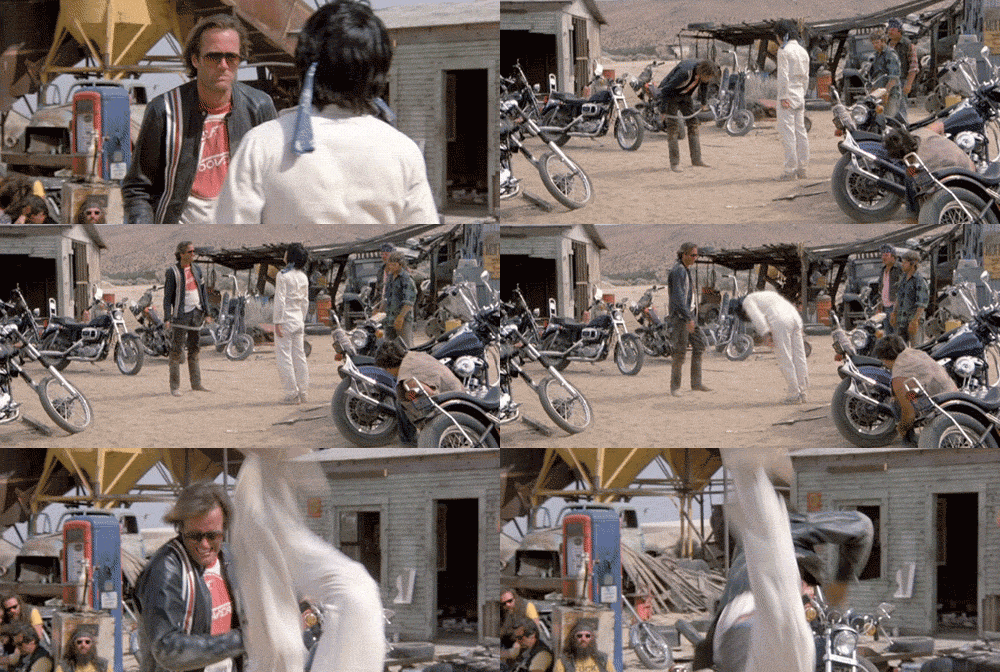
Burt has a point but, in defense of The Cannonball Run, what other movie actually features Jackie Chan beating up Peter Fonda?

chan-fonda-cannoball-run

Or Roger Moore playing someone who thinks that he’s Roger Moore?

roger-moore

Or Jack Elam playing a mad scientist?

jack-elam

Or Sammy and Dino, phoning it in one last time?

sammy-and-dean

Or Captain Chaos?

captain-chaos

Like most of Hal Needham’s films, The Cannonball Run ends with outtakes of Burt Reynolds blowing his lines and hitting people.

Tomorrow’s movie a day will be a film that Burt Reynolds is presumably much more proud of, Sharky’s Machine.

Film Review: Prime Time (1977, directed by Bradley R. Swirnoff)


Prime TimeThe great character actor Warren Oates appeared in a lot of fairly obscure movies but none are as obscure as Prime Time.

With a running time of barely 70 minutes, Prime Time is a comedic sketch film that was meant to capitalize on the then-recent success of The Groove Tube, Tunnelvision, The Kentucky Friend Movie, and the first season of Saturday Night Live.  According to the Unknown Movies Page, Prime Time was financed independently and was picked up for distribution by Warner Bros.  After the Warner execs saw the finished film, they decided it was unreleasable so the film’s production team sold the film to Cannon Pictures, who were famous for being willing to release anything.  The movie played in a few cities under the terrible title American Raspberry and then went straight to VHS obscurity.

Sketch comedies are usually hit-and-miss and Prime Time is definitely more miss than hit.  The majority of the film is made up of commercial parodies but, since most of the commercials being parodied are no longer on the air, the humor has aged terribly.  There is also a wrap-around story.  The President (George Furth) and a general (Dick O’Neill) try to figure out where the commercial parodies are coming from and stop them before the broadcast leads to a riot.   There are a few funny bits (including Harry Shearer as a stranded trucker looking for a ride and Kinky Friedman singing a song about “Ol’ Ben Lucas who has a lot of mucus”) but, for the most part, the film is epitomized by a skit where people literally get shit dumped on their head.  The film’s opens with an incredibly racist commercial for Trans Puerto Rican Airlines and it’s all downhill from there.

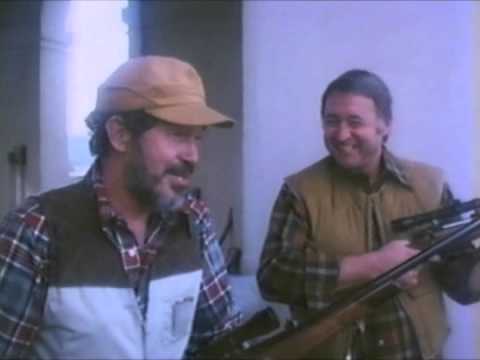
As for Warren Oates, he appears in an early skit.  He and Robert Ridgely (best known for playing Col. James in Boogie Nights) play hunters who take part in the Charles Whitman Celebrity Invitational, climbing to the top of the Tower on the University of Texas campus and shooting at the people below.  It’s even less funny now than it probably was in 1977.

How did Warren Oates end up in a movie like Prime Time?  Even great actors have bills to pay.  As for Prime Time, it is the one Warren Oates film that even the most dedicated Warren Oates fan won’t regret missing.

Warren Oates and Robert Ridgely in Prime Time

Warren Oates and Robert Ridgely in Prime Time

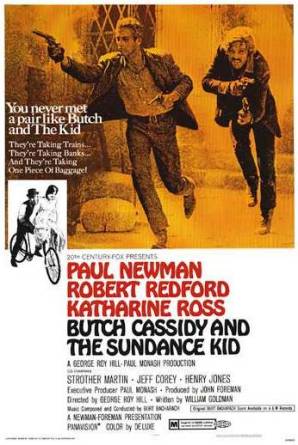
Lisa Watches An Oscar Nominee: Butch Cassidy and the Sundance Kid (dir by George Roy Hill)


Butch_sundance_poster

Should I start this post by ticking everyone off or should I start out by reviewing the 1969 best picture nominee Butch Cassidy and The Sundance Kid?

Let’s do the review first.  I recently watched Butch Cassidy and the Sundance Kid when it aired as a part of TCM’s 31 Days of Oscar.  This was actually my third time to see the film on TCM.  And, as I watched Butch Cassidy and the Sundance Kid for the third time, I was shocked to discover how much I had forgotten about the film.

Don’t get me wrong.  I remembered that it was a western and that it starred Paul Newman and Robert Redford as real-life outlaws Butch Cassidy and the Sundance Kid.  I remembered that it opened and ended with sepia-toned sequences that suggested that Butch and Sundance represented the last gasp of the old west.  I remembered that Butch won a fight by kicking a man in the balls.  I also remembered that they robbed the same train twice and, the second time, they accidentally used too much dynamite.  I remembered that, for some reason, Butch spent a lot of time riding around on a bicycle.  I remembered that Butch and Sundance ended up getting chased by a mysterious posse.  I remembered that Sundance could not swim.  And I remembered that the film eventually ended on a tragic note in South America…

And I know what you’re saying.  You’re saying, “It sounds like you remembered the whole movie, Lisa!”

No, actually I did not.  The thing with Butch Cassidy and the Sundance Kid is that the scenes that work are so memorable that it’s easy to forget that there’s also a lot of scenes that aren’t as memorable.  These are the scenes where the film drags and you’re thankful that Paul Newman and Robert Redford were cast as Butch and Sundance, because their charisma helps you overlook a lot of scenes that are either too heavy-handed or which drag on for too long.  You’re especially thankful for Newman, who plays every scene with a twinkle in his wonderful blue eyes and who is such a lively presence that it makes up for the fact that Redford’s performance occasionally crosses over from being stoic to wooden.  It can be argued that there’s no logical reason for a western to feature an outlaw riding around on a bicycle while Raindrops Keep Fallin’ On My Head plays on the soundtrack but Paul Newman’s so much fun to watch that you can forgive the film.

Newman and Redford both have so much chemistry that they’re always a joy to watch.  And really, that’s the whole appeal of Butch Cassidy and the Sundance Kid, the chance to watch two iconic actors have fun playing opposite each other.  Even though Katharine Ross appears as their shared romantic interest, the film’s love story is ultimately between Butch and Sundance (and, by extension, Newman and Redford).  You can find countless reviews that will give all the credit for the film’s appeal to William Goldman’s screenplay.  (You can also find countless self-satisfied essays by William Goldman where he does the exact same thing.)  But, honestly, the film’s screenplay is nothing special.  This film works because of good, old-fashioned star power.

Now, for the part that’ll probably tick everyone off (heh heh), I think that Butch Cassidy and the Sundance Kid is actually a pretty good pick for a future remake.  All you have to do is pick the right actors for Butch and Sundance.  I’m thinking Chris Pratt as Butch and Chris Evans as Sundance…

Oh, c’mon!  It’ll be great!