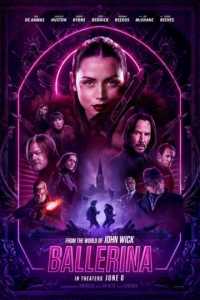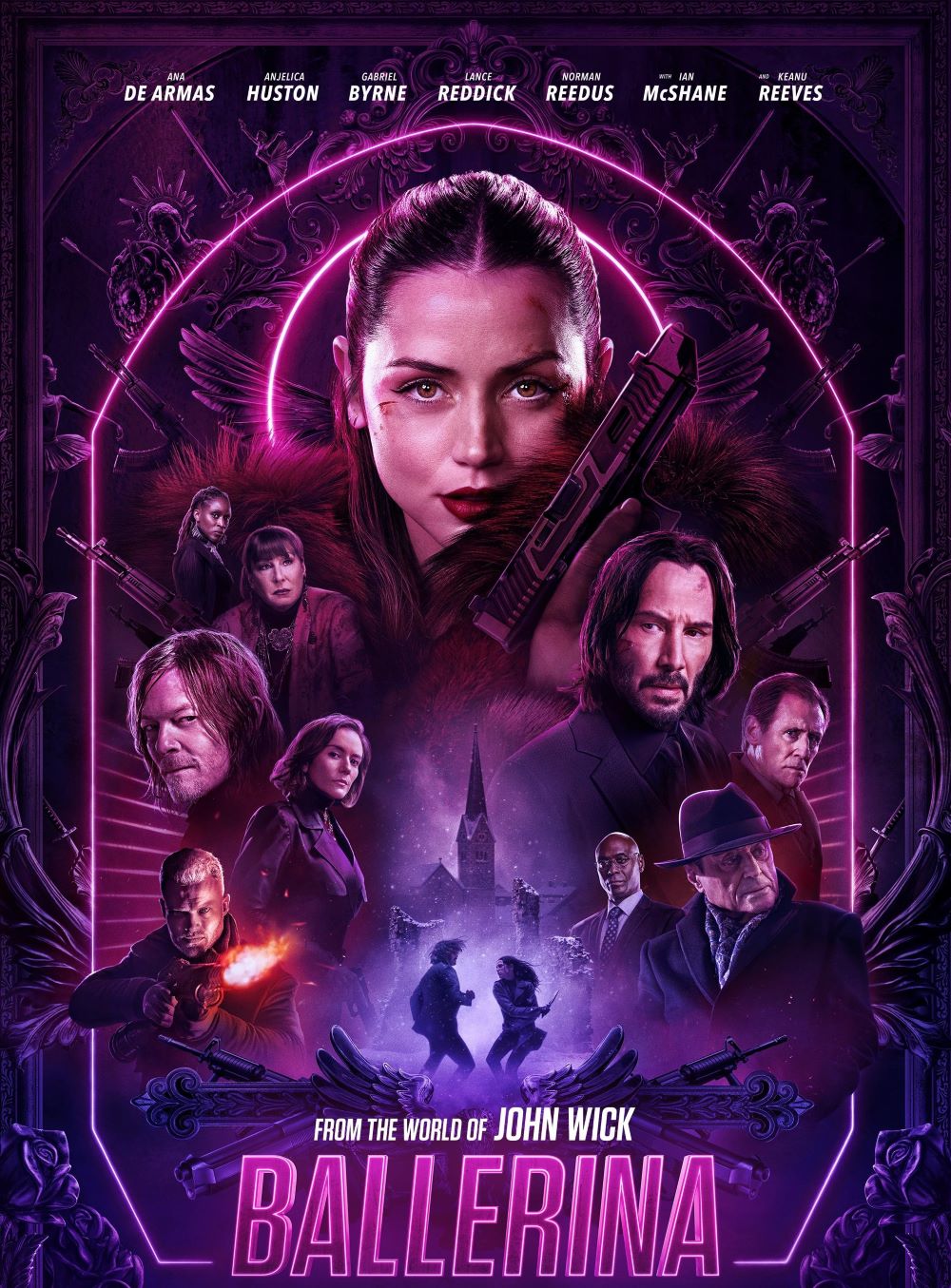
Film Review: From the World of John Wick: Ballerina (dir. by Len Wiseman)


It seems almost inevitable that Ana de Armas would make it into the John Wick franchise. Having worked with Keanu Reeves in multiple films since 2015’s Knock Knock, she has great chemistry with him on camera. De Armas has also proven she can handle action both with 2021’s No Time to Die and 2023’s Ghosted, with the latter also boasting a bit of comedy. From the World of John Wick: Ballerina (or just Ballerina for the sake of this writing) puts Ana in the mix of all the madness as Eve Maccaro. While it doesn’t have the tightest story in the world when compared to the rest of the John Wick saga, Ballerina does hold its own at least as a showcase for the stunt work. If you enjoyed Atomic Blonde or any of the Underworld films, you really won’t have any problems here.

The story for Ballerina takes place during the events of John Wick 3 – Parabellum. As a child, when Eve loses her father to a crew of armed men sporting a brand on their wrists, she is taken in by The Continental’s Winston (Ian McShane). Winston introduces her to the tribe of killers known as the Ruska Roma, lead by The Director (Anjelica Houston), who train her to become like them. Those familiar with the John Wick franchise will recall that the Ruska Roma was John’s tribe before some action caused a split between him and them.

In addition to her pointe practices (which look painful), she’s trained with knives, guns and other tactics. Unlike the assassins that normally frequent The Continental, the Ruska Roma aren’t fully ruthless and can be a force of good. After handling various tests, she discovers a clue leading to the people who killed her father and the man who leads them (ironically played by Point of No Return’s’ Gabriel Byrne, given the film moves in similar circles). Can Eve get her vengeance in the shadow of the legendary Baba Yaga?

While Eve’s story is a still a tale of vengeance as much as Wick’s, there are two distinct differences. As taught by her trainer Nogi (Sharon Duncan Brewster, Dune: Part One), being a girl has some merits and flaws. She might not have the strength to go toe to toe with some of her male opponents (and try telling Ana this, she throws herself deep into the stuntwork), she can move for weakpoints and cheat her way though to victory. “Fight like a girl” becomes the motto. The other difference is that Eve has to work within both the rules of the Ballerinas as well as those the High Table puts on their Hotels. I thought that was an interesting touch to things.

With those stunts, I really would like to know if Ana or any of the stunt team were hurt in any way making this film. Eve goes through a lot and doesn’t have that protective Armani suit of Wick’s. Into walls, over dressers, through glass and even fire, but she keeps getting up and giving that damage right back to her targets. I hope this becomes a contender for the Academy’s new award for stunts. It’s an easy lock for a Nomination.

Casting-wise, you’ll see some familiar faces. Winston and Charon (the late Lance Reddick) are both on hand, as well as stuntman/actor Daniel Bernhardt (The Matrix Reloaded, Nobody, that awesome “ronny/lily’ episode of HBO’s Barry). Some new faces include Norman Reedus (The Walking Dead) and Anne Parillaud (Innocent Blood, La Femme Nikita).

Len Wiseman hasn’t directed a feature film since 2012’s Total Recall, but watching Ballerina you really couldn’t tell. Some of the locales do look like they were borrowed from Wiseman’s Underworld films, but that actually works in Ballerina‘s favor. The film flows well from scene to scene and the action is visible enough that there’s little to miss. There are very few lulls in the action. Though the film was written by both Derek Kolstad and Shay Hatten, who both previously worked on pretty much the entire Wick Franchise along with Nobody, it’s a different flavor to things. You won’t any any major info on the High Table and how all that works, though. This more of a contained story that flutters through the rest of the universe.

I only had one major problem with Ballerina, which was the way in which they chose to cameo Keanu Reeves as John Wick. Unless I’m wrong, I think the story makes a mistake in the John Wick timeline at some point by bringing Wick and Eve face to face (and the trailers already alluded to this). Their meeting appears to occur after Wick’s branding and ex-communication from the Ruska Roma (“You can never come back.”, she told him in John Wick 3), so the events leading up to the meeting didn’t entirely make sense to me (though it was wonderful to watch). It doesn’t mar the film, it’s still enjoyable. It’s just that tiny question that digs in the back of your skull like “If Old Biff gave young Biff the Almanac, and Young Biff changed the future, how did Old Biff exist long enough to return the DeLorean back to a 2015 timeline that shouldn’t exist anymore?” – a question I still ask every now and then.

Overall, Ballerina is a pretty good addition to the John Wick franchise. Ana de Armas gives it her all and deserves all the kudos for that work she puts in. Here’s hoping that we get a bit more of her action (and of that universe) down the road.

Excalibur (1981, directed by John Boorman)


During the Dark Ages, Britain is at war.  King Uther Pendragon (Gabriel Byrne) leads his men against The Duke of Cornwall (Corin Redgrave).  Uther and his men swear their allegiance to God and St. George but they trust in the magic of the mysterious Merlin (Nicol Williamson).

Merlin negotiates peace between Uther and Cornwall but Uther throws that peace away when he becomes obsessed with Cornwall’s beautiful wife, Igrayne (Katrine Boorman).  Merlin uses his magic to disguise Uther as Cornwall so that Uther can spend one night with Igrayne.  When Cornwall is killed in battle, Uther marries Igrayne and realizes it was never necesarry to use Merlin’s magic and that Merlin, who has the power to see the future, knew that.  Merlin takes Uther and Igrayne’s infant son from them and then disappears.  Later, Uther is killed by by three of Cornwall’s men.  Before dying, Uther drives his magic sword, Excalibur, into a stone.  On the true king of England will be able to remove it.

Uther’s son, Arthur (Nigel Terry), grows up with no knowledge about his parentage.  When he accidentally draws Excalibur out of the rock, Merlin returns to counsel the new king.  And the new king has much to learn, as not all of the nobleman are willing to accept him as their ruler.  Arthur proves himself worthy to be king while his half-sister, Morgan (Helen Mirren), waits for her chance to get revenge.

Excalibur is one of the most ambitious films made about King Arthur.  John Boorman fits the entire legend of Arthur, Lancelot (Nicholas Clay), Percevel (Paul Geoffrey), Guinevere (Cherie Lunghi), and the search for the Holy Grail into one movie and, as a result, there’s not a dull moment.  Boorman presents the reign of King Arthur as a conflict between England’s pagan past and the new era of man.  Merlin and Morgan’s magic is powerful but, in the end, power is determined by bloody battles fought by men encased in clunky armor.  Arthur, Lancelot, and the other knights claim to live by the honorable, chivalric code but only one of them is able to live up to the ideal.  The others become consumed by lust, jealousy, and a thirst for power.

In my opinion, Excalibur is the best movie made about King Arthur, mostly because John Boorman takes the story seriously and makes us feel like we are watching people who truly are living in different world and a different time.  The chivalric code is necessary to keep the peace in a time when there are multiple pretenders-to-throne.  Mordred (Robert Addie) is not just a villain because he seeks to overthrow his father but also because he is the one person to have no respect for the code or the mystic power of the Holy Grail.

Excalibur has a large cast with many familiar faces.  Keep an eye out for Patrick Stewart as one of Arthur’s earliest supporters and also Liam Neeson as a surly Sir Gawain.  Of all the Lancelots who have appeared in the movies, Nicolas Clay is the best and Helen Mirren is the perfect Morgan.  Nicol Williamson steals the movie as the mysterious Merlin.  And while Nigel Terry was too old for the scenes where Arthur is supposed to be a callow teenager, he grows into the role just as Arthur grew into being king of the Britons.

Monty Python and The Holy Grail will always make me laugh but John Boorman’s big, beautiful, and bloody Excalibur is the best film about Camelot.

18 Days of Paranoia #16: Lost Girls (dir by Liz Garbus)


Lost Girls tells the true and infuriating story of Mari Gilbert and her search for her oldest daughter, Shannan.

Mari Gilbert is a single mother who is works as a waitress and struggles to give her children the best life that she can.  She’s still haunted by a decision that she made years ago to temporarily put her three daughters into foster care.  Though she eventually reclaimed two of her daughters, her eldest — Shannan — has basically been on her own since she was sixteen.  Shannan, who is now 24, visits her mother and her sisters on a semi-regular basis.  Despite the fact that Shannan claims that she’s just a waitress (like her mother), Shannan always seems to have a lot of money on her.  Mari has her suspicions about what Shannan’s doing to make that money but she keeps them to herself.

Then, one day in May, Shannan disappears.  Mari can’t get the police to take her seriously when she says her oldest daughter has vanished.  They say that Shannan left on her own and will probably return at some point.  They dismiss Mari’s concerns, telling her that her daughter was a prostitute and therefore, by their logic, unreliable.  Even when Mari gets strange phone calls from a doctor who lives in a gated community in Long Island, the police refuse to take her seriously.

However, Mari then discovers that Shannan called 911 the night that she disappeared.  Despite the fact that Shannan sounded panicked, the police waited an hour before responding to her call and, by the time they arrived, Shannan had disappeared.  It’s only when Mari goes to the media that the police actually start to search the area of Long Island where Shannan disappeared.  The police discover the bodies of several sex workers, all murdered by the same unknown killer.

However, they still don’t find Shannan’s body.  Though Mari and her daughter, Sherre (Thomasin McKenzie), are convinced that Shannan is one of the killer’s victims, the police continue to insist that Shannan probably just ran off on her own.  In fact, the local police commissioner (Gabriel Byrne) finds himself being pressured to do something about Mari because her now constant presence on TV is making the entire community look bad.

Meanwhile, Mari finds herself caught up in a personal feud between two men who live in the gated community, an amateur investigator (Kevin Corrigan) and a shady doctor (Reed Birney) who has a history of making inappropriate phone calls….

Lost Girls is an interesting but frustrating film.  Some of that is because the story on which the film is based did not have a happy ending.  The Long Island serial killer has never been identified or captured.  The most obvious suspect was never charged with anything and subsequently moved down to Florida.  Mari never got justice for Shannan and, sadly, was eventually murdered by her youngest daughter.  (The murder is acknowledged via a title card but it is not actually depicted in the film.)  As a result, the film itself doesn’t really offer up any of the payoff that you would normally expect to get after devoting 90 minutes of your life to it.  It’s frustrating but, at the same time, its understandable.

Amy Ryan gives a great performance as Mari.  That shouldn’t shock anyone.  She makes you feel Mari’s pain, fury, and guilt.  To its credit, the film does shy away from the fact that Mari often looked the other way when it came to how exactly Shannan was making the money that she regularly sent back to her family and Amy Ryan perfectly captures Mari’s struggle to not only get justice for her daughter but also to forgive herself.  Unfortunately, the film is a bit less convincing when it deals with the police and the suspects.  The film, for instance, can’t seem to decide whether or not Gabriel Byrne’s character is indifferent, incompetent, or just overwhelmed by a bad situation.  By that same token, the doctor and his neighbor both seem oddly underwritten and underplayed.  Obviously, the film can’t just come out and accuse a real, living person of murder (especially when that person hasn’t been charged with anything) but it still makes for a frustrating viewing experience.

Where Lost Girls succeeds is at creating a properly ominous atmosphere.  Every scene seems to be filled with dread and, from the minute that Mari starts her investigation, you feel nervous for her.  She’s taking a true journey into the heart of darkness.  The film leaves you angry that the police refused to search for Shannan.  Sex workers are regularly preyed upon and, because of what they do for a living, society often looks the other way.  That’s how you end up with killers like The Green River Killer and the Long Island serial killer.  They don’t get away with their crimes because they’re clever.  They get away with it because, far too often, society refuses to care about their victims.  Lost Girls is an imperfect film but its heart is in the right place and its message is an important one.

Other Entries In The 18 Days Of Paranoia:

  1. The Flight That Disappeared
  2. The Humanity Bureau
  3. The Private Files of J. Edgar Hoover
  4. The Falcon and the Snowman
  5. New World Order
  6. Scandal Sheet
  7. Cuban Rebel Girls
  8. The French Connection II
  9. Blunt: The Fourth Man 
  10. The Quiller Memorandum
  11. Betrayed
  12. Best Seller
  13. They Call Me Mister Tibbs
  14. The Organization
  15. Marie: A True Story

Horror Film Review: Ghost Ship (dir by Steve Beck)


Way back when we first started this year’s horrorthon, Arleigh shared a horror scene that he loved.  That scene was the opening few minutes of the 2002 horror-at-sea film, Ghost Ship.

That scene featured a few dozen wealthy cruise ship passengers all getting bisected by a thin wire cord.  While a young girl named Kate (Emily Browning) watches, everyone on the ship’s dance floor literally falls to pieces.  Torsos slip off of legs.  Bodies split in half.  The captain’s head literally splits in two.  While gallons of blood gush everywhere, people vainly try to reattach their limbs.  Actually, some of them can’t even figure out which limb belongs to them.  By the time everyone’s collapsed, there’s a lot of arms and legs to sort through.

In short, it’s an absolute mess.  I wouldn’t want to be the person assigned to clean up after all that.

It’s also a rather brilliant opening, one that only takes a minute to go from romance and sophistication to bloody dismemberment.  It’s definitely the one moment that everyone remembers about Ghost Ship, which is a bit of a problem because, once that scene is done, there’s still 85 minutes of film to sit through.  Ghost Ship‘s opening is so shocking and visceral that there’s no way that the rest of the film can live up to it.

As for the rest of the film, it deals with a boat salvage crew.  Gabriel Byrne is Murphy, the captain.  Julianne Margulies is Maureen Epps, whose name might as well be Ellen Ripley.  Ron Eldard is Dodge, who is in love with Epps.  And then there’s Karl Urban, Isiah Washington, and Alex Dimitriades, who are all playing characters who you know are going to be doomed as soon as you see them.  When they’re told by a pilot named Jack Ferriman (Desmond Harrington) that he’s spotted a ghost ship in international waters, they set out to claim it for themselves.

Of course, what Jack has spotted is the same cruise ship where, forty years before, everyone was chopped in half.  After Murphy, Epps, and the crew board the ship, they discover a large amount of gold.  They also end up seeing a lot of ghosts, including the young girl from the start of the movie.  To their credit, the crew decides to leave the ship as quickly as they can.  Unfortunately, after their tugboat explodes, escape appears to be impossible and it becomes obvious that they have been lured to the cruise ship for a very specific purpose.

The film encourages us to wonder what the ship wants from the salvage crew but the answer to that question is never really in doubt.  For that matter, it’s not really a shock when it turns out that one member of the boarding party isn’t what he claims to be.  Despite being a bit predictable, Ghost Ship isn’t a bad film.  It has a reputation for being disappointing but actually it’s an atmospheric and competently directed horror film.  Though the characters are all thinly drawn, the talented cast does their best to try to bring them to life.  If the film ultimately doesn’t seem to work as well as it should, it’s largely because nothing that follows can match the power of that opening.  You watching the film waiting for a scene that’ll match that opening scene and when it never comes, it’s hard not to be disappointed.


Horror Scenes I Love: Ghost Ship


Ghost Shp

Ghost Ship came out in 2002 and it was part of that very brief wave of Dark Castle Entertainment which began in 1999 with their remake of House On Haunted Hill and then petered out with 2005’s Gothika.

While not one of the better horror films to come out during the first decade of the new millennium, Ghost Ship was still entertaining enough to become a sort of guilty pleasure for horror aficionados.

Part of why some horror fans seem to enjoy this film, mediocre as it is through much of it’s running time, is the opening scene which takes on a grand guignol meets the Road Runner brilliance in its execution.

Just take a gander for yourself and try not to either vomit in disgust or smile gleefully at such a ludicrous gory sequence.

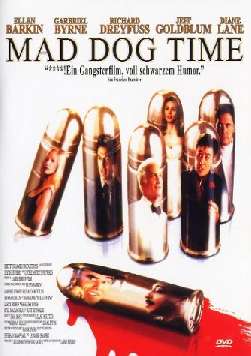
Worst of the Worst: Mad Dog Time (1996, directed by Larry Bishop)


Mad_dog_time_4841Remember how, in the 1990s, every aspiring indie director tried to rip off Quentin Tarantino by making a gangster film that mixed graphic violence with quirky dialogue, dark comedy, and obscure pop cultural references?  That led to a lot of terrible movies but not a single one (not even Amongst Friends) was as terrible as Mad Dog Time.
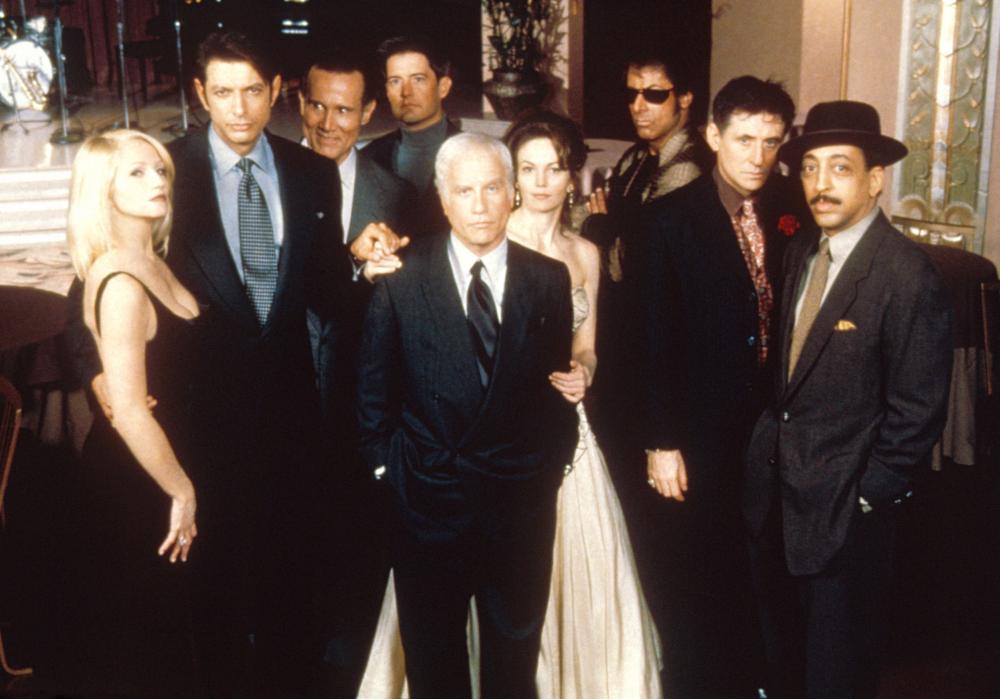
That Mad Dog Time was terrible should come as no surprise.  Most directorial debuts are.  What made Mad Dog Time unique was the sheer amount of talent that was assembled and wasted in the effort to bring this sorry movie to life.  As the son of Joey Bishop, director Larry Bishop was Hollywood royalty and was able to convince several ridiculously overqualified actors to play the thinly drawn gangsters and rouges who populated Mad Dog Time.  Much like the Rat Pack movies that his father once starred in, Larry Bishop’s debut film was full of familiar faces.  Some of them only appeared for a few seconds while others had larger roles but they were all wasted in the end.  Hopefully, everyone was served a good lunch in between filming their scenes because it is hard to see what else anyone could have gotten out of appearing in Mad Dog Time.

Mob boss Vic (Richard Dreyfuss) has just been released from a mental hospital.  With the help of his main enforcer, Mick (Jeff Goldblum), and a legendary hitman named Nick (Larry Bishop, giving not only the worst performance in the film but also the worst performance of the 1990s), Vic is going to reassert his control over the rackets.  Vic also wants to find his former mistress, Grace Everly (Diane Lane) but he doesn’t know that Grace is now with Mick and that Mick is also having an affair with Grace’s sister, Rita (Ellen Barkin).

(Grace and Rita are the Everly Sisters!  Ha ha, between that and all the rhyming names, are you laughing yet?)

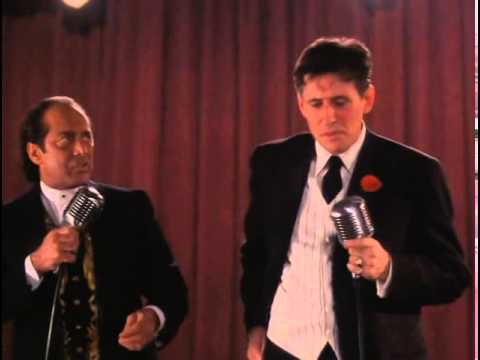
Anka and Byrne

Ben London (Gabriel Byrne) has taken over Vic’s nightclub and, while singing My Way with Paul Anka, tells Vic that he should take an early retirement because he’s a paranoid schizophrenic.  Before he can deal with Ben, Vic has to kill all of his other rivals, all of whom are played by actors like Michael J. Pollard, Billy Idol, Kyle MacLachlan, Gregory Hines, and Burt Reynolds.  The bodies start to pile up but Jimmy the Undertaker (Richard Pryor, looking extremely frail in one of his final roles) is always around to make sure that everyone gets a proper burial.

And there are other cameos as well.  Joey Bishop is the owner of a mortuary.  Henry Silva is wasted as one the few gangsters to stay loyal to Vic.  Christopher Jones, who previously co-starred with Larry Bishop and Richard Pryor in Wild In The Streets before dropping out of a society, plays a hitman who pretends to be Nick Falco.  Even Rob Reiner shows up a limo driver who talks too much.

Almost every poorly paced scene in Mad Dog Time plays out the same way.  Three or more men confront each other in a room.  Hard-boiled dialogue is exchanged for an interminable length of time until someone finally gets shot.  You would think, at the very least, it would be watchable because of all the different people in the cast but none of the actors really seem to be into it.  Richard Dreyfuss and Jeff Goldblum resort to smirking through their scenes while Gabriel Byrne often appears to be drunk.  Whenever he’s in a scene, Burt Reynolds seems to be trying to hide his face and it is hard to blame him.  There were many terrible movies released in the 90s but none were as bad as Mad Dog Time.