October True Crime: Into Thin Air (dir by Roger Young)


Originally broadcast in 1985, Into Thin Air is a made-for-TV movie that is based on a true story.  It’s film that brings to life the horror of every family’s nightmare.  Brian Walker (Tate Donavon) is an intelligent, soft-spoken, and somewhat naive college student in Ottawa.  He’s been accepted into a summer writing program in Colorado.  As he gets in the van that he will be driving to Colorado, he promises his mother, Joan (Ellen Burstyn), that he’ll call her when he reaches Nebraska and again when he reaches Colorado.

Brian drives away and that’s the last time that Joan ever sees her son.  Brian calls from Nebraska and talks to his brother, Stephen (Sam Robards).  Joan arrives home just as Stephen is saying goodbye.  Brian never calls from Colorado.  He has vanished, seemingly into thin air.

Joan, Stephen, and Joan’s ex-husband, Larry (played the great character actor Nicholas Pryor) travel to America to search for him.  At one point, Stephen thinks that he’s spotted Brian’s van on the road and chase after it, just to discover that it’s a different van.  Joan talks to cops in Nebraska and Colorado and discovers that different jurisdictions don’t work together or share information.  As the days pass, Joan keeps hoping that Brian is somehow still alive….

I was about ten minutes into this film when I started sobbing.  I pretty much cried through the entire film.  Some of that was because I knew that they were never going to see Brian again.  Some of that was because of the powerful, heartfelt performances of Ellen Burstyn, Nicholas Pryor, and Sam Robards.  Most of it was because this film did such a good job of capturing the feeling of hopelessness and the dread that comes with not knowing what has happened to someone who you love.  I found myself crying for Brian’s lost potential.  He was a writer and he was engaging in a time-honored writing tradition.  He was taking a road trip and he was discovering the world.  He deserved better than whatever happened to him.  He deserved see his novel sitting in a bookstore.  Instead, he ran into the wrong people.

It’s the little details that really got to me.  Stephen flies into a rage when he sees his younger brother wearing one of Brain’s sweaters.  Joan momentarily gets her hopes up when she discovers that Brian reported some lost traveler’s checks, just to have that hope shot down when she’s told that the bank can’t reveal where Brian called them from unless Brian himself gives permission.  When the van eventually turn up in Maine, it’s been totally trashed by whoever took it from Brian.

Eventually, Joan hires a private detective and Robert Prosky is well-cast as Jim Conway, a seemingly cynical ex-cop who dedicates himself to trying to provide closure for the Walkers.  The scene where he finally discovers what happened to Brian is one of the strongest in the film and one of the most upsetting.  So many people could have saved Brian if they only had the courage to speak up.

Into Thin Air is a powerful film.  No one should ever be forgotten.
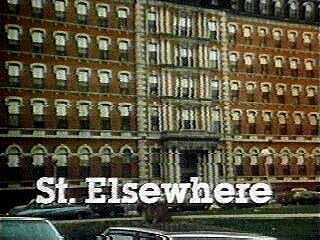
Retro Television Review: St. Elsewhere 1.22 “Addiction”


Welcome to Retro Television Reviews, a feature where we review some of our favorite and least favorite shows of the past! On Fridays, I will be reviewing St. Elsewhere, a medical show which ran on NBC from 1982 to 1988.  The show can be found on Hulu and, for purchase, on Prime!

This week, the first season comes to a close.

Episode 1.22 “Addiction”

(Dir by Mark Tinker, originally aired on May 3rd, 1983)

“To life,” Dr. Auschlander toasts towards the end of the finale of St. Elsewhere’s first season and the sentiment could not be more called for.

While Auschlander has spent the episode hanging out with a friend of his and getting into fights with disrespectful street punks, Dr. Morrison’s wife has been giving birth to their son.  While someone breaks into the supply room and takes off with a huge supply of drugs, Dr. White is sobbing and telling his estranged wife that he knows he has to get help for his addictions.  While one drug addict (Ralph Seymour) commits suicide by injecting an air bubble into his veins, Dr. Craig’s cocky son, Stephen (Scott Paulin), visits from medical school and turns out to be quite a weed-smoking, pill-popping drug user himself.  Ehrlich, assigned to show Stephen around the hospital and teach him what it’s like being a resident, considers telling Dr. Craig that his son has a drug problem but apparently decides not to.  Dr. Craig is very proud that his son is going to follow the family tradition of becoming a surgeon.  Meanwhile, Dr. Fiscus cheats on Shirley Daniels with Kathy Martin.  Fiscus, you idiot.

Life goes on at St. Eligius.  That’s was the theme of the finale and it’s also been the theme of the first season.  For all the bad things that happen, there are also good things.  Some patients die.  Some doctors are incompetent.  But babies are born and doctors like Morrison and Ehrlich and Chandler haven’t given up and are still trying to make the world a better place.  Dr. Auschlander may be terminally ill with cancer but he embraces life and we should all do the same.

It’s a good ending for an overall good first season.  There were a few weak episodes.  Dr. Samuels was a pretty annoying character and I’m a bit relieved to see that David Birney left the show after this season.  Ed Flanders can be a bit overly somber as Dr. Westphall and Howie Mandel is still one of the least convincing doctors that I’ve ever seen.  That said, Morrison, Ehrlich, Chandler, Nurse Daniels, and even Dr. White are interesting characters and I look forward to seeing what happens with them during season 2.  The season’s stand-out was definitely William Daniels as the pompous yet still likable Dr. Craig.  Other than the terrible storyline where he cheated on his wife (and I still claim that was a dream episode, like almost all of the stuff with Dr. Samuels), Dr. Craig was this season’s standout character.

Next week, we start season 2!

Retro Television Review: St. Elsewhere 1.20 “Craig In Love”


Welcome to Retro Television Reviews, a feature where we review some of our favorite and least favorite shows of the past! On Fridays, I will be reviewing St. Elsewhere, a medical show which ran on NBC from 1982 to 1988.  The show can be found on Hulu and, for purchase, on Prime!

This week, Dr. Craig does the unthinkable …. maybe.

Episode 1.20 “Craig In Love”

(Dir by Victor Lobl, originally aired April 12, 1983)

Dr. Craig is indeed in love in this episode.  He’s totally smitten with the Hungarian Dr. Vera Anya and, when his wife Ellen (played by Bonnie Bartlett, real-life wife of William Daniels) goes out of town to visit her mother, Craig makes plans to show Dr. Anya around the town and maybe more….

Ugh.  Seriously, I don’t like the idea of Dr. Craig cheating on his wife and, though this episode leaves it ambiguous as to what actually happened, it totally appears that’s what Craig did over the weekend.  Dr. Craig is pompous and full-of-himself and rude to almost everyone he talks to but it’s always appeared that he totally loved his wife.  The whole idea of him thinking about cheating — much less actually doing it — just doesn’t seem right for his character.  And, quite frankly, Dr. Anya wasn’t really that intriguing of a character so if Craig did share more than just that passionate goodbye kiss with her …. well, I prefer to pretend this entire storyline didn’t happen.

Far more interesting was the malpractice suit brought against Dr. Chandler and Nurse Daniels.  As the hospital’s lawyer explains it, there really isn’t much of a case to be made for malpractice.  Instead, the dead man’s family is just hoping to get a quick settlement out of it.  Most doctors aren’t willing to pay the legal fees and don’t have the time to go to court.  Chandler, however, is personally offended by the suit and pledges to do whatever he has to do fight it.  Yay, Chandler!  Seriously, I hate people who try to bully people into settlements.  After my Dad died, there was this crazy woman who thought she could bully his estate into giving her half a million dollars.  Instead, she received nothing and that’s exactly what she deserved.  Both Denzel Washington and Ellen Bry gave good performances this week.  Ellen  Bry’s Nurse Daniels is quickly becoming one of my favorite characters.  She doesn’t let anyone push her around.

Speaking of pushing people around, Dr. Morrison finally got sick of Dr. White’s drug addiction and the two of them ended up having a fist fight in the men’s room.  Still, when White later crashed his girlfriend’s car and needed to be bailed out of jail, Morrison was the first person that he called.  Morrison, being a saint, got White out of jail.  White, being a jerk, barely even said thank you.  Morrison went to Westphall with his concerns about Dr. White.  Westphall responded that it wasn’t his place to give a fatherly lecture.  That’s cold, Westphall.  What about when he kills a patient because he’s high?  Will you care then?  No wonder St. Eligius is getting sued for malpractice!

Finally, Dr. Samuels had a cold so he spent the entire episode whining about it.  Seriously, Dr. Samuels is one of my least favorite characters of all time.

This episode was uneven for me.  I’m not happy about Dr. Craig being a cheater but I am happy that Dr. Chandler is standing up for himself.  Dr. White appears to be heading to a very dark place.

There’s only two episodes left in the first season so I’m assuming we’re going to get some sort of closure to at least some of these storylines.  We’ll see what happens next week!


Retro Television Review: St. Elsehwere 1.18 “Dog Day Hospital”


Welcome to Retro Television Reviews, a feature where we review some of our favorite and least favorite shows of the past! On Fridays, I will be reviewing St. Elsewhere, a medical show which ran on NBC from 1982 to 1988.  The show can be found on Hulu and, for purchase, on Prime!

This week, Judith Light has got a gun!

Episode 1.18 “Dog Day Hospital”

(Dir by Victor Lobl, originally aired on March 22nd, 1983)

Finally, Dr. Ehrlich is performing his first solo operation.  Dr. Craig is assisting but Ehrlich is in charge.  He gets to play his music in the OR.  He gets to decide what type of retractor to use.  It’s a simple hernia operation.  The patient (Sam Anderson) is awake and babbling through the whole operation.

Unfortunately, there’s also an angry woman in the OR and she has a gun.  Barbara Lonnicker (Judith Light) is eight months pregnant, despite her husband claiming that he got a vasectomy at St. Eligius.  As she already has several children to deal with, she wants to see the doctor who screwed up the vasectomy but she’s just as willing to shoot any other doctor to get her revenge.  The operation continues while Dr. Craig and Dr. Westphall negotiate with her.

I have to admit that I did find a lot of this episode to be amusing.  Ehrlich’s excitement over getting to do his first operation, Dr. Craig’s stuffy annoyance with being interrupted by a woman with a gun, and the patient’s nonstop rambling all made me smile more than once.  And Judith Light, not surprisingly, was great as the woman with the gun.  I loved the her husband was played by Tom Atkins.  You never know who you might see at St. Eligius!  That said, after the episode ended, I couldn’t help but think about how dumb the whole thing actually was.  How are people always managing to get guns into St. Eligius?  How did Barbara manage to get into an operating room without being stopped beforehand?  (Luther does tell her that she can’t be back there but he’s the only one who seems to notice her before she bursts into the OR.)  How come no one in the hospital seems to be more upset about the fact that there’s a woman waving a gun around an operating room?  At one point, Barbara shoots Ehrlich’s radio and hardly anyone seems to react.  The plot is played for laughs and that’s fine.  But, in this case, the story was a bit too implausible for its own good.

Meanwhile, Nurse Rosenthal returned to work after her mastectomy and struggled to get back into her routine.  Carolyn Pickles did a great job portraying Rosenthal in this episode.  And Fiscus and Shirley Daniels visited an old woman in a nursing home.  The subplots were handled well but, for the most part, this episode still felt as if it was trying a bit too hard.

Retro Television Review: St. Elsewhere 1.14 “Remission”


Welcome to Retro Television Reviews, a feature where we review some of our favorite and least favorite shows of the past! On Fridays, I will be reviewing St. Elsewhere, a medical show which ran on NBC from 1982 to 1988.  The show can be found on Hulu and, for purchase, on Prime!

It’s another day at the hospital.

Episode 1.14 “Remission”

(Dir by Mark Tinker, originally aired on February 22nd, 1983)

A young Michael Madsen pops up in this episode, playing a hoodlum named Mike O’Connor who brings his severely beaten friend to the hospital.  This was Madsen’s first role on television and, in his very first scene and while delivering his very first televised monologue, he drops the N-word as he accuses a group of black men of beating up his friend.  Dr. Morrison is worried about whether or not Madsen’s friend is going to lose a kidney.  Meanwhile, race relations in Boston are not doing well.  What else is new?

(I remember, after the shooting of Michael Brown in Ferguson, there was a commentator who thought he was being clever when he said, “I don’t understand why blacks stay in the South when they could just move to Boston.”  The response to his comments served as a reminder that Boston’s history of racism makes some Southern cities seem almost progressive by comparison.)

It’s interesting that Michael Madsen is the second well-known actor to appear on St. Elsewhere as a gang member.  Just a few episodes ago, Howie Mandel was chasing Ray Liotta out of the hospital.  This particular episode ended with a fight breaking out in the ER between a white gang and a black gang.  I assume this will be continued next week so I guess we still have time to see Howie Mandel pull a gun on Michael Madsen.  Seriously, it better happen.  I’m plotting the upcoming week around it.

Speaking of Dr. Fiscus, he got evicted from his apartment.  He was shocked, even though he hadn’t paid his rent in forever.  No one wants Fiscus to stay with them but, after Fiscus saved Dr. Ehrlich from getting beaten up in the ER (and no, this was not a part of the gang fight, instead it was a different fight — goldang, Boston’s dangerous!  And yes, I gave up cursing for Lent), Ehrlich agrees to let Fiscus stay with him until he gets a new place.  I imagine Ehrlich will come to regret that, especially after Fiscus showed up with Dr. Kochar and a homeless guy who had earlier helped them steer a truck out of a traffic jam.  What?  Don’t ask, it didn’t make much sense on the show either.

Dr. Cavenero has been nominated for a prestigious fellowship by Dr. Auschlander but she’s not sure if she should accept it because the fellowship would be for research and she’s not sure that’s what she wants to focus on.  Auschlander has bigger issues to deal with, as he ends up collapsing in the hospital hallway, a result of his liver cancer.  The irony that Auschlander, a liver specialist, is dying of liver cancer is not lost on Auschlander and Norman Lloyd did a wonderful job in this episode, portraying not only Auschlander’s frustration but also his gentle humor.

Also, a woman was walking around the hospital and flashing people.  She said it was because she wanted to show off that, even in middle age, she still had a good body.  That makes sense to me.  Played by Janis Page, she was somehow who was fine for a one episode storyline but I’m going to scream if this becomes a multi-episode thing, like it did with Ralph the Birdman.

This was a good episode, even if I get the feeling the whole gang thing is going to be cringey in the way that most 80s television shows tended to be whenever they tried to take on race relations.  Norman Lloyd’s heartfelt performance carried the hour.  I’m hoping the best for Dr. Auschlander.  He’s a character that I would hate to lose.

Retro Television Review: St. Elsewhere 1.13 “Family History”


Welcome to Retro Television Reviews, a feature where we review some of our favorite and least favorite shows of the past! On Fridays, I will be reviewing St. Elsewhere, a medical show which ran on NBC from 1982 to 1988.  The show can be found on Hulu and, for purchase, on Prime!

Usually, I review this show on Friday but, yesterday, my week of visiting Lake Texoma in freezing weather finally caught up with me and I spent most of the day congested and curled up in bed.  As a result, St. Elsewhere got preempted until today.  Now, let’s see what’s happening at St. Eligius….

Episode 1.13 “Family History”

(Dir by Kevin Hooks, originally aired on February 8th, 1983)

After being a background character for the past few episodes, Dr. Wendy Armstrong (Kim Miyori) finally gets her time in the spotlight with this episode.  When Charlie Heller (Keenan Wynn) comes into the ER with a chronic nosebleed, Dr. Armstrong is too quick to assume that it’s nothing serious.  Dr. Westphall, who is in an especially crappy mood this episode, reprimands her for not getting a family history before making her diagnosis.  A chastened Armstrong gets Charlie’s family history and comes to suspect that he has a rare blood condition that only seems to effect Jewish men.  A very expensive test confirms Armstrong’s diagnosis.  Armstrong is excited.  “I was right!” she says.  Westphall again reprimands her, telling her that she now needs to tell Charlie that he has a chronic condition and will have to take medicine for the rest of his life.

Seriously, Westphall was not in a good mood during this episode!  But I don’t blame him.  From her first appearance on the show, Dr. Armstrong has been complaining nonstop.  No matter what happens in the hospital, she seems to take it as a personal affront.  Now, after several episodes of complaining about the other doctors, Armstrong fails to do a simple thing like get a family history.  No wonder Westphall was all like, What are you bragging about?

That said, even if his mood was understandable, I would not want to get on Westphall’s bad side.  Even after Armstrong makes the correct diagnosis, Westphall takes the time to say, “Next time, do what I told you to do.”  Agck!

While Westphall was dealing with whatever was eating away at him, Dr. Chandler was getting annoyed by John Doe’s refusal to try to remember anything about his past.  Even when John Doe’s real father showed up and explained that Doe was his son, Dave Stewart, he refused to try to remember anything.  Eventually, Chandler snapped at Dave for refusing to even try.  Chandler, of course, is played by a young Denzel Washington so, when he gets mad, it’s like having the voice of God call you out.  After Chandler’s reprimand, Dave finally makes an effort to remember his past.  He realizes that, when he was shot, he had a vision of his deceased mother welcoming him to heaven.  Awwww!

Dr. Craig’s friend has his gender affirmation surgery.  Crag met his friend’s lover, a trans man.  Needless to say, this episode featured a lot of scenes of Craig rolling his eyes as he struggled to come to terms with everything he was learning about his old friend.  It was all pretty predictable but William Daniels did a great job playing up Craig’s confusion and single-mindedness.

And finally, Peter was happy because his wife wanted to get back together.  I get the feeling any happiness Peter feels is destined to always be temporary.

This episode was a bit uneven.  Armstrong’s story would have been compelling if Armstrong herself was a more interesting character.  The highlight of the episode were the scenes between Denzel Washington’s doctor and Tom Hulce’s amnesiac.  It’s always enjoyable to watch two good actors perform opposite of each other.

Next week, the great Norman Lloyd takes center stage as Auschlander’s cancer returns.


Retro Television Review: St. Elsewhere 1.11 “Graveyard”


Welcome to Retro Television Reviews, a feature where we review some of our favorite and least favorite shows of the past! On Fridays, I will be reviewing St. Elsewhere, a medical show which ran on NBC from 1982 to 1988.  The show can be found on Hulu and, for purchase, on Prime!

This week, a handful of doctors save two patients and lose one.

Episode 1.11 “Graveyard”

(Dir by Victor Lobl, originally aired on January 18th, 1983)

It’s the graveyard shift at St. Eligius.  The halls and the cafeteria are dark.  The ER is oddly calm.  There are only a few patients to be looked after and most of the doctors are playing poker and talking about the rather boring subject of Dr. Samuels’s love life.

Only a handful of the series regulars make an appearance in this episode but that’s fine.  This episode actually provides a nice break from having to keep track of where everyone is.  Unfortunately, as I already said, a lot of this episode is centered around the character of Dr. Samuels.  Nothing against the late David Birney, who did a perfectly acceptable job in the role, but Dr. Ben Samuels is just not that interesting of a character.  He’s a dedicated surgeon who feels too much, drinks too much, and wants to sleep with his colleagues.  That’s fine but I grew up watching General Hospital.  I’ve seen a hundred doctors just like Samuels on television.

To me, the far more interesting characters are the people like David Morse’s Jack Morrison or Ed Begley, Jr’s Victor Ehrlich or even Terence Knox’s Peter White.  They’re doctors who screw up and aren’t always brilliant and sometimes say the wrong things.  They feel like real people whereas Dr. Samuels just feels like a cliche, a holdover from some other medical show.  Samuels is not a particularly compelling character and, when I did some research, I was not surprised to discover that David Birney only appeared on one season of the show.

G.W. Bailey’s Hugh Beale also only appeared in the first season and that’s a shame because Bailey’s performance as Beale has been one of the first season’s real pleasures.  Bailey plays Beale as a compassionate man who often pretends to be more naive than he is.  As a Southerner, he’s an outsider on this Boston-set show and, being an outsider, he can often relate to the patients in the psych ward.  Of course, that still doesn’t stop Dr. Beale’s main patient, Ralph the Birdman, from throwing himself off the roof of the hospital in this episode.  To be honest, I already suspected things weren’t going to go well for Ralph on this show but his suicidal jump still upset me.  As annoying as the character was, he was also finally making some progress.  He finally admitted he wasn’t a bird.  And then he proved it by showing that he couldn’t fly.

While Ralph plunged to his death, Dr. Samuels saved a gunshot victim (played by Tom Hulce).  And Jack allowed the father (James Hong) of one of his comatose patients to perform a Chinese ritual that led to the patient waking up and eventually walking into the cafeteria, where the doctors were playing poker.  “Who ordered the Chinese?” Fiscus asked and …. ugh.  Not cool, Fiscus.

It was a night of triumph and tragedy.  Ralph died but Dr. Samuels and Dr. Paxton agreed to give their relationship another try which …. eh.  I don’t care about Samuels and Paxton.  For the most part, though, I liked this episode.  The smaller cast made it easier to keep track of things and the poker game banter reminded me that the doctors are all people too.  Still, I have to feel bad for Ralph.  All he wanted to do was fly.

Retro Television Review: St. Elsewhere 1.9 “Hearts”


Welcome to Retro Television Reviews, a feature where we review some of our favorite and least favorite shows of the past! On Fridays, I will be reviewing St. Elsewhere, a medical show which ran on NBC from 1982 to 1988.  The show can be found on Hulu and, for purchase, on Prime!

This week, Dr. Ehrlich faints!

Episode 1.9 “Hearts”

(Dir by Mark Tinker, originally aired on January 11th, 1983)

Ralph, the guy who thinks that he’s a bird, is now running around the hospital and checking in on patients and signing his name as “Dr. Bullfinch.”  I guess it says something about how big St. Elgius is that Dr. Chandler spends most of this episode asking people if they’ve ever heard of or met Dr. Bullfinch.  The show plays this for humor.  There’s only two problems.

First off, we’ve already done the fake doctor thing.  Dr. Craig spent three episodes searching for Dr. Barnum, the fictional doctor who Mark thought was interested in buying his car.  Since Chandler was a part of that whole practical joke, it surprised me that it didn’t occur to him that maybe Dr. Bullfinch also didn’t exist.

Secondly, Ralph is one of those character who was amusing at first but, after episode-after-episode of him disrupting the hospital and making the patients uncomfortable, I can’t help but feel that it’s time for Ralph to at least try to fly off into the sunset, even if it leads to him crashing to the pavement below.  Dr. Westphall tells Dr. Beale to keep Ralph locked up in the psych ward or else Westphall will send Ralph to a mental hospital.  I think Westphall should have just gone for it.  I mean, does Westphall not realize the legal jeopardy that the hospital is now in because of Ralph’s continued presence?

While that was going on, an overweight woman (Conchata Ferrell) checked into the hospital with stomach pains and was shocked to discover that she was pregnant and going into labor.  This was a heartbreaking story, largely due to the wonderful performance of Conchata Ferrell.  No one — from her father to the nurses at the hospital — has ever treated her with any sort of compassion.  In the end, she checks out of the hospital and abandons her baby in the maternity ward.

A new doctor (Dorothy Fielding) came to work at St. Eligius and — hey! — she has a romantic history with Dr. Samuels.  *Yawn*  Samuels is the most boring character on the show and I tuned out this storyline as soon as I realized he was going to be at the center of it.

Newly separated from his wife, Dr. White is having a nervous breakdown and has to abandon a patient so that he can cry in the stairwell.  Dr. Westphall offers him some heartfelt advice but you can tell that Westphall thinks that White doesn’t have what it takes to be a doctor.  I think Westphall is right.

Finally, an ill Dr. Erhlich tries to get out of assisting Dr. Craig with an operation.  Craig tells Erhlich to man up.  Erhlich faints during the operation.  Surprisingly, Dr. Craig is not angry with Ehrlich because, as he explains it, the important thing is that the operation was a success.  Seeing how sick Ehrlich has become, Craig tells Ehrlich to go home and get some rest.

“Do you have a car?” Dr. Craig asks.

“No, I usually ride the bus,” Ehrlich replies.

“Good,” Craig says, “you shouldn’t be driving in your condition.”

And I have to admit that exchange made me laugh.  William Daniels gives such a good performance as the arrogant yet talented Dr. Craig that you can’t help but love the guy, no matter how much of a jerk he is.  After knowing him best as the always compassionate Mr. Feeney on Boy Meets World, it’s been interesting to watch William Daniels play a character as thoroughly self-centered and vain as Dr. Craig.  On the drama St. Elsewhere, William Daniels often provides some much-needed comedic relief.  On the (very silly) sitcom Boy Meets World, Daniels was the dramatic relief.  It’s a strange world.

This episode had a few too many plotlines that I either didn’t care about or which felt a bit played out (like Ralph the Birdman).  It wasn’t St. Elsewhere at its best but William Daniels and Conchata Ferrell still saved the episode.

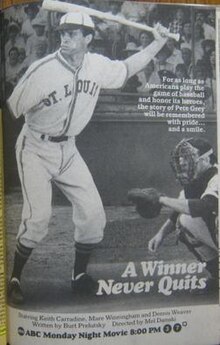
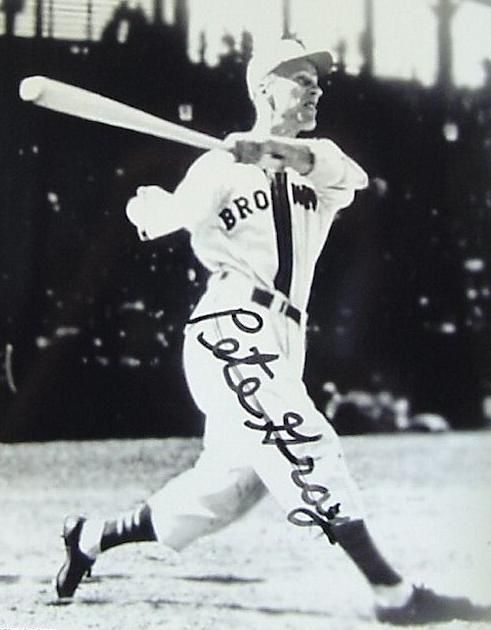
I Watched A Winner Never Quits (1986, dir. by Mel Damski)


In 1945, Peter Gray made history when he became the first one-armed major league baseball player.  Gray grew up in poverty in Pennsylvania.  His father was a miner and Peter was one of five children.  He was only seven years old when he lost his right arm in a wagon accident but he loved baseball and he wasn’t going to let his disability keep him from playing.  He learned how to bat and catch and throw with his left hand.  He quit school when he was thirteen and worked for a while as waterboy while playing baseball in the local leagues.  Eventually, he made his way up to the minor leagues and, in 1945, he was called up to the majors.  He played one season for the St. Louis Browns.

The media loved the story of the one-armed baseball player but Peter always said that he resented feeling like he was being put on display whenever he took the field.  He was a competitive outfielder who could catch a ball, remove his glove, and then throw the ball to the infield just as quickly as anyone with two hands.  As a hitter, he struggled because pitchers figured out early on that he couldn’t hit the breaking ball.  After the 1945 season, Peter was sent to back to the minors, where he spent the rest of his career.  Though Peter was known for being an angry player who resented anyone pointing out his disability, he still made time to visit amputees in military hospitals to show them that they could still find success and to encourage them to chase after their dreams.

Peter’s story was the basis of A Winner Never Quits, which I watched on YouTube this weekend.  It was a good baseball movie, starring Keith Carradine as Peter.  What I liked is that the movie didn’t make him into a saint.  Carradine played Peter as being angry and with a definite chip on his shoulder.  Peter had every right to be angry and I’m glad the movie acknowledged that.  In both the movie and in real life, Peter was worried that he was just being treated as a sideshow.  In the movie, his attitude improves when he meets a young boy who recently lost his arm and who looks up to Peter.  Peter remained a friend to the boy and his family for the rest of his life.  A Winner Never Quits is about pursuing what you love and never giving up.  That’s what baseball is all about.  A Winner Never Quits is a good and inspiring baseball movie that’s not just for the fans.

Retro Television Review: St. Elsewhere 1.9 “Rain”


Welcome to Retro Television Reviews, a feature where we review some of our favorite and least favorite shows of the past! On Fridays, I will be reviewing St. Elsewhere, a medical show which ran on NBC from 1982 to 1988.  The show can be found on Hulu and, for purchase, on Prime!

This week, a famous face shows up in the ER!

Episode 1.9 “Rain”

(Dir by Victor Hsu, originally aired on January 3rd, 1983)

Last night, after writing my review of Goodfellas, I watched the ninth episode of St. Elsewhere and there was Ray Liotta!

Liotta played Murray, a young man who came into the ER with a deep cut on his back.  Orderly Luther took one look at him and decided that he was a member of the same gang who mugged Fiscus a few episodes ago.  Luther then told Fiscus right before Fiscus was due to stitch Murray up.  Murray was indeed rude but Fiscus wasn’t particularly polite to him.  Fiscus didn’t stich up Murray’s wound but he did pull his gun on him.  Murray fled the ER and, after knocking over several doctors who were in his way, he jumped out of a window and escaped from St. Eligius.

As for Fiscus, he got a stern talking to from Dr. Westphall.  Westphall ordered Fiscus to get rid of the gun and told him that if he ever brought a weapon to work again, his residency would come to an end.  Fiscus agreed to not bring the gun to the ER anymore but he later told Dr. Chandler that he was terrified for his life.  I’ve been critical of Howie Mandel’s performance on this show but he actually did a pretty good job in this episode.  He was able to hold his own while sharing the screen with Denzel Washington.  That’s quite an accomplishment.

While Dr. Westphall yelled at Fiscus, Dr. Craig yelled at Ehrlich for spraining his pinkie while playing handball.  Dr. Craig demands to know how Ehrlich will ever make it as a surgeon if he doesn’t protect his hands.  Ehrlich spends the entire day trying to protect his hands and he continually fails.  (Ehrlich’s a bit of a klutz.)  Finally, Ehrlich storms into Craig’s office and interrupts a meeting to announce that he’s going to continue to play handball.  Craig shrugs and dismissively says, “He’s from California.”

As for the rest of this episode, it took place over one very long and rainy day.  Peter is still struggling as both a doctor and a husband.  When his daughter (a very young Candace Cameron Bure) was rushed to the hospital after eating mothballs, Peter blamed his wife and his wife blamed Peter.  Returning home from the hospital, Peter nearly hit his wife after she tossed his dinner on the floor.  It was scary to watch.  I’m getting a bad feeling about what’s going to happen with this marriage.

Dr. Morrison made the mistake of making a house call and soon, he discovered himself constantly being called by Mr. Lukovic (George Morfogen) whenever any of Lukovic’s neighbors were taken ill.  Morrison kept telling Lukovic to take his friends to the hospital but Lukovic talked about how, in the past, doctors would always make house calls.  When Morrison finally refused to go to Lukovic’s building, Lukovic brought his neighbor to the hospital.  The neighbor was in cardiac arrest but Morrison managed to get his heart beating again.  Rather than be thankful, Lukovic blamed Morrison for not responding to his call.  Morrison lost his temper and told Lukovic that he couldn’t keep living in the past.  “I will not call you again,” Lukovic replied.  Roll the end credits!

This was a pretty good episode, one that not only answered the question of why doctors don’t make housecalls but also which featured Ray Liotta being tough and dangerous.  There were a few annoying scenes involving the guy who thinks that he’s a bird but otherwise, this was a well-done and rainy hour.