Guilty Pleasure #88: Lifeforce (dir. by Tobe Hooper)


Hey, hey, wait just one second. Lifeforce is a movie everyone treasures. Here’s Arleigh’s take on the film. Check that out first and then double back here if you like.

Lifeforce (1985, dir by Tobe Hooper)

Tobe Hooper’s Lifeforce is one of those films that had a lot of play in my Grandmother’s house, primarily because of my younger Aunt, Puddin. Puddin was the other movie lover on my Dad’s side of the family, the youngest of his generation. While she couldn’t fully make the connections between actors or directors the way my father could, she loved films all the same. With films like Marnie, West Side Story, Conan the Barbarbian, she spent most of her free time immersed in movies. If you wanted to see her swoon, mention Sean Connery, Tyrone Power or Arnold Schwarzenegger in her presence. She had a habit of using movies she watched often as white noise when cleaning around the house. As a result, we saw Lifeforce a lot growing up. She adored the film mainly because the two heroes in it barely made any mistakes, but most importantly for Henry Mancini’s score. Besides, It’s a Cannon film. You know it’s good. 

Lifeforce is the story of one of the greatest buddy pairings in of the 1980s. Yeah, Beck and Gallagher did awesome stuff in The Hidden. Riggs and Murtaugh solved the cases no matter how thin the leads were, and even with all his technology, Alex Murphy still needed Lewis for backup. These all pale in comparison to Lifeforce‘s Colonel Carlsen (Steve Railsback, Helter Skelter) and Colonel Caine (Peter Firth, The Hunt for Red October). The two characters’ laser focus and quick thinking help to keep the film moving, despite how crazy things can and do get. They also manage to have each other’s back in nearly every situation. They aren’t without troubles, however. Poor Carlsen is plagued with nightmares of making out with naked space vampires. 

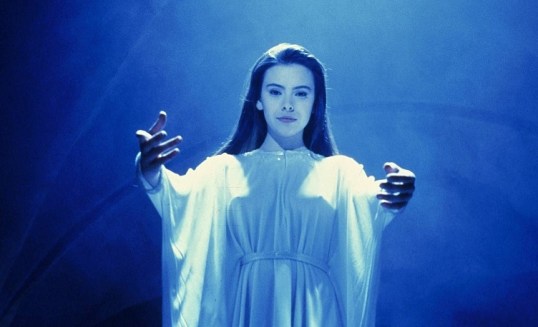
Halley’s Comet returns close to Earth. With it comes an incredibly large umbrella shaped ship that is discovered by the crew of the Churchill. Col. Carlsen, along with the other astronauts, find a series of sleeping humanoid bodies inside and bring 3 (two males and one female) on board. When the Churchill’s signal is lost, the Columbia is sent out to retrieve them. The crew is lost, Carlsen is missing, but the 3 alien bodies are brought back home to Earth for study. This goes about as well as one would hope, with the Space Girl (Mathilda May, Becoming Collette) waking up and causing havoc throughout the local Space Institute before walking away naked, into the night. Anyone she comes into contact with and kisses becomes an energy vampire, requiring a transfusion, else they shrivel and turn into dust. 

Since we’re dealing with space vampires, I should inform you now that there’s quite a bit of nudity and maybe just a wee bit of sexual tension in Lifeforce. The lines between Rabid and Showgirls comes kind of close in all this. When Carlsen forces a possible suspect to divulge the location of the Space Girl, slapping her up a bit, he tells Caine he should leave. Caine’s response is that he’s “a natural voyeur”. Does much of it make sense? No. Was it entertaining? Sure. The third act of Lifeforce is the best part, with all of London just a mess. Despite all this, Carlsen & Caine split up to save the day. 

The cast for the film is nice. In addition to Railsback and Firth, we’ve got a Dune crossover with both Freddie Jones and Patrick Stewart on hand. We also have a small cameo with Dragonslayer’s John Hallam as a nurse. The best role other than the leads go to Frank Finlay and to Mathilda May. Finley’s Doctor Fallada is kind of a Van Helsing like character, piecing together all of the clues so our heroes can take the proper action. May, though she’s not given a lot to say (or to wear, for that matter) makes for an impressive villain that talks with her eyes.

The effects for Lifeforce came by way of John Dykstra, who worked on Firefox and The Empire Strikes Back. He’d later go on to work on Invaders From Mars for Hooper. Musically, Henry Mancini’s score helps to carry the film along. Honestly, I’ve only ever known him from the Pink Panther scores, so I quite enjoyed it. I always let the end credits play through for the music. Overall, Lifeforce is a great watch if vampires are your thing and nudity isn’t too much of a problem. In my mind, The Adventures of Carlsen & Caine would rival some of the best supernatural tales.

In examining this, I also found that there are some connections between this and Hammer Films’ Five Million Years to Earth (a.k.a. Quatermass and the Pit). I’m still on the look out for that one. 

In Tobe Hooper’s Lifeforce, Col. Carlsen & Col. Caine aren’t playing around.

Previous Guilty Pleasures

  1. Half-Baked
  2. Save The Last Dance
  3. Every Rose Has Its Thorns
  4. The Jeremy Kyle Show
  5. Invasion USA
  6. The Golden Child
  7. Final Destination 2
  8. Paparazzi
  9. The Principal
  10. The Substitute
  11. Terror In The Family
  12. Pandorum
  13. Lambada
  14. Fear
  15. Cocktail
  16. Keep Off The Grass
  17. Girls, Girls, Girls
  18. Class
  19. Tart
  20. King Kong vs. Godzilla
  21. Hawk the Slayer
  22. Battle Beyond the Stars
  23. Meridian
  24. Walk of Shame
  25. From Justin To Kelly
  26. Project Greenlight
  27. Sex Decoy: Love Stings
  28. Swimfan
  29. On the Line
  30. Wolfen
  31. Hail Caesar!
  32. It’s So Cold In The D
  33. In the Mix
  34. Healed By Grace
  35. Valley of the Dolls
  36. The Legend of Billie Jean
  37. Death Wish
  38. Shipping Wars
  39. Ghost Whisperer
  40. Parking Wars
  41. The Dead Are After Me
  42. Harper’s Island
  43. The Resurrection of Gavin Stone
  44. Paranormal State
  45. Utopia
  46. Bar Rescue
  47. The Powers of Matthew Star
  48. Spiker
  49. Heavenly Bodies
  50. Maid in Manhattan
  51. Rage and Honor
  52. Saved By The Bell 3. 21 “No Hope With Dope”
  53. Happy Gilmore
  54. Solarbabies
  55. The Dawn of Correction
  56. Once You Understand
  57. The Voyeurs 
  58. Robot Jox
  59. Teen Wolf
  60. The Running Man
  61. Double Dragon
  62. Backtrack
  63. Julie and Jack
  64. Karate Warrior
  65. Invaders From Mars
  66. Cloverfield
  67. Aerobicide 
  68. Blood Harvest
  69. Shocking Dark
  70. Face The Truth
  71. Submerged
  72. The Canyons
  73. Days of Thunder
  74. Van Helsing
  75. The Night Comes for Us
  76. Code of Silence
  77. Captain Ron
  78. Armageddon
  79. Kate’s Secret
  80. Point Break
  81. The Replacements
  82. The Shadow
  83. Meteor
  84. Last Action Hero
  85. Attack of the Killer Tomatoes
  86. The Horror at 37,000 Feet
  87. The ‘Burbs

Firefox (dir. by Clint Eastwood)


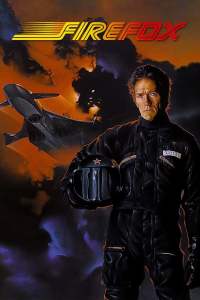
You’d think someone with a face as chiseled as Clint Eastwood’s, he wouldn’t fit in well in the spy game. You’d recognize him almost anywhere in a line up. However, being able to direct your own films means you can still be the best person for a role. There is no finer example of this than with 1982’s Firefox, my submission for the Eastwood birthday celebration on the Shattered Lens. It’s not the strongest spy film, but it plays it’s hand very well, getting in and delivering the short jabs to set the tale and then finishing with an action packed combo in the film’s third act. 1990’s The Hunt for Red October may be more famous film about smuggling a vehicle from Russia to America, but Firefox did it first (Okay, From Russia With Love may have beaten them both, but we’re talking planes and subs, not a cipher box).

I remember first noticing Firefox while driving by the smaller of two movie theatres at the Green Acres Mall over in Valley Stream with my parents. Not every film hit the Sunrise Multipex, so the little Odeon (at least I think it was called an Odeon) held other films. My family caught Predator, Aliens, and Nine Months there to name a few. When I finally saw the movie, I didn’t care for it (to my credit, I was like 10 or 12), but loved the flying sequences. As an adult, the film makes more sense and deserves a watch despite a few tiny flaws here and there. Firefox marks Eastwood’s first production credit, despite The Malpaso Company having made films way before then.

Based on the 1977 novel by Craig Thomas, Firefox focuses on Mitchell Gant (Eastwood), one of the best pilots in the United States Air Force. Despite having some PTSD, Gant is sent on a mission in the height of the Cold War. His job is to sneak in and steal the Mig-31, Codename: Firefox, an experimental aircraft capable of speeds of Mach 5, extreme stealth and a special thought based firing system. He has all the necessary credentials. He can speak the language, has a good build and can fly the plane. After receiving a brief from his superiors (including Freddie Jones, who was in just about everything in the Early 1980s – Dune, Krull, Firestarter, Lifeforce), he’s dropped into Russia for his mission. Can Gant get the plane without getting in trouble? Unlike Top Gun, which used a fictional aircraft in the MiG-28, there was an actual MiG 31 in existence (or introduced to the world) at the time of filming Firefox, known as the “Foxhound”. The real MiG 31 and the films’ one are different. It was just a coincidence, but I know my Dad would point that out if he watched it.

What I loved the most about Firefox is that Gant’s character has to assume multiple roles/characters in order to blend in with the crowd and keep the KGB off of his tail. While we’re all aboard for seeing the plane in action, the real adventure is getting there and the characters that help along the way. One wrong turn, one wrong move could mean the different between success and failure, and it does get pretty tense in places. There’s one particular scene in a shower where I was like “Uhm, get up, get going, they’re on to you!”, but the pacing of the film is pretty good. As a director, Eastwood keeps the film moving without lingering too long in any one scene unless it’s truly necessary. This, along with some quick cuts and getting the most of the cast’s performances, allows the film to make some good use of the 2 hour and 16 minute runtime.

Firefox has a supporting cast that also helps to move the story along. Outside of Freddie Jones, we also have Kenneth Colley (Admiral Piett from The Empire Strikes Back & Return of the Jedi) as the Russian Colonel on Gant’s tail. Warren Clark’s (A Clockwork Orange) gruff character helps Gant to navigate through the city. Both Nigel Hawthorne (Demolition Man) and Ronald Lacey (Raiders of the Lost Ark) play scientists loyal to Gant’s mission. Wulf Kahler (also from Raiders of the Lost Ark) is on hand as a Russian military advisor. Alan Tivern, who played R.K. Maroon in Who Framed Roger Rabbit? is also in this, as is Toy Story’s John Ratzenberger.

One other element I enjoyed was how they resolved the actual flight sequences. Since Gant is in a fighter plane alone, there really isn’t any need to have any communication. The movie uses the black box in the plane both as a recording device for Gant’s actions, and a way for Eastwood to help narrate his intentions through the course of the third act. It helps to fill what would have normally been a near silent sequence (save for the evasive maneuvering). The flight sequences were developed by Star Wars alumni John Dykstra along with Johnathan Erland, who used a special blue screen effect that allowed reflective objects to move in front of lighter backgrounds or matte photography using UV light. It was pretty innovative at the time, even if it may look a little cartoony now.

Maurice Jarre (who I swore was Australian because of his work on the Mad Max films up until a first time watch of Lawrence of Arabia in 2024) scored Firefox, giving the film a mix between dark synths and patriotic tunes. The music definitely sets the tone leading up to the third act, though

Overall, Firefox is a good watch if you’re looking for a bit of late night espionage. As an actor, Eastwood’s Gant plays a mix of the everyman and spy (knowing when to hush, when to move and when to knock someone out) so well that I could easily imagine this as a recurring role for him, if he wanted to go that route. The film’s supporting cast is where it truly shines, as the contacts Gant makes during his mission are key to his success.

Lisa Marie Reviews An Oscar Nominee: The Elephant Man (dir by David Lynch)


The Elephant Man (1980, dir by David Lynch, DP: Freddie Francis)

David Lynch never won a competitive Oscar.

He received an honorary award from the Academy in 2019.  He generated some minor but hopeful buzz as a possible nominee for Best Supporting Actor for his role in Steven Spielberg’s The Fabelmans.  He was nominated for Best Director three times and once for Best Adapted Screenplay.  But he never won an Oscar and indeed, even his nominations felt like they were given almost begrudgingly on the part of the Academy.  In an industry that celebrated conformity and put the box office before all other concerns, David Lynch was an iconoclastic contrarian and the Academy often didn’t do know what to make of him.  Of the many worthy films that he directed, only one David Lynch film was nominated for Best Picture and, in my opinion, it should have won.

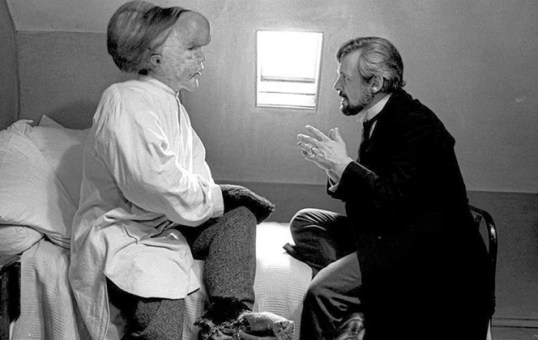
1980’s The Elephant Man is based on the true story of Joseph Merrick (renamed John for the film), a man who was horribly deformed and terribly abused until he was saved from a freak show by a surgeon named Dr. Frederick Treves.  The sensitive and intelligent Merrick went on to become a celebrity in Victorian London, visited by members of high society and allowed to live at London Hospital.  (Even members of the royal family dropped in to visit the man who had once been forced to live in a cage.)  Merrick lived to be 27 years old, ultimately dying of asphyxiation when he attempted to lie down and, in Treves’s opinion, sleep like a “normal person” despite his oversized and heavy head.  In the film, Merrick is played by John Hurt (who gives a wonderful performance that, despite Hurt acting under a ton on makeup, still perfectly communicates Merrick’s humanity) while Treves is played by Anthony Hopkins, who is equally as good as Hurt.  (Hurt was nominated for Best Actor but Hopkins was not.  Personally, I prefer Hopkins’s performance as the genuinely kind Dr. Treves to any of his more-rewarded work as Dr. Lecter.)  The rest of the cast is made up of veteran British stars, including John Gielgud, Wendy Hiller, Freddie Jones, and Kenny Baker.

Lynch’s version of The Elephant Man is only loosely based on the facts of Merrick’s life.  It opens with a disturbing fantasy sequence (one which I assume is meant to be from Merrick’s point of view) in which a herd of elephants strike down Merrick’s mother and then appear to assault her.  Shot in stark black-and-white and often featuring the sounds of droning machinery in the background (in many ways, The Elephant Man feels like it takes place in the same world as Eraserhead), the first half of The Elephant Man feels like a particularly surreal Hammer film.  (Veteran Hammer director Freddie Francis served as The Elephant Man‘s cinematographer.)  Merrick is kept off-camera and, when we finally do see his face, it’s in a split-second scene in which Merrick is as terrified as the person who sees him.  Before we really meet Merrick, we’ve already heard Treves and the hospital administrator (John Gielgud) discuss all of the clinical details of his condition.  We know why he’s deformed.  After we see him, we know how he’s deformed.  After all of that, the audience is finally ready to know Merrick the human being.  Without engaging in too much obvious sentimentality, Lynch shows us that Merrick is a kind soul, one who has been tragically mistreated by the world.  Just as with the real Merrick, almost everyone who meets the film’s John Merrick is ultimately charmed by him.  In the film, Merrick is kidnapped by his former owner, the alcoholic Bytes (Freddie Jones), who wants again puts Merrick on display in a cage.  In the end, it’s Merrick’s fellow so-called “freaks” who set him free and allow him to return to the hospital, where he has one final vision of his mother.  This vision is a much less disturbing than the one that opened the film.  The film celebrates the humanity of John Merrick but is also reveals the genius of David Lynch.  There’s so many moments when the film could have gone off the rails or become too obvious for its own good.  But Lynch’s unique style so draws you into the film’s world that even the mysterious visions of his mother somehow feel completely necessary and natural.  The Elephant Man is the David Lynch film that makes me cry.  Lynch was a surrealist with a heart.

The Elephant Man was only David Lynch’s second film.  He was hired to direct by none other than Mel Brooks, who produced the film but went uncredited to prevent people from thinking it would be a comedy.  (Lynch, however, did cast Brooks’s wife, Anne Bancroft, as an actress who visits Merrick.)  Brooks hired Lynch after seeing Eraserhead and recognizing a talent that many in Hollywood would never have had the guts to take a chance on.  (Despite the success of Eraserhead on the midnight circuit, David Lynch was working as a roofer when he was offered The Elephant Man and had nearly given up on the idea of ever making another film.)  Reportedly, Brooks stayed out of Lynch’s way and protected him from other executives who fears Lynch’s version of the story would be too strange to be a success.  Lynch and Brooks proved those doubters wrong.  Acclaimed by critics and popular with audiences, The Elephant Man was nominated for Best Picture and David Lynch was nominated for Best Director.  I like Ordinary People.  I like Raging Bull.  But The Elephant Man was the film that should have won in 1980.

The Elephant Man remains a powerful movie and an example of how an independent artist can make a mainstream movie without compromising his vision.  (Of course, I imagine it helps to have a producer who has the intelligence and faith necessary to stay out of your way.)  David Lynch may be gone but his art will live forever.  The Elephant Man will continue to make me cry for the rest of my life and for that, I’m thankful.

The Elephant Man (1980, dir by David Lynch, DP: Freddie Francis)

Horror Film Review: Firestarter (dir by Mark L. Lester)


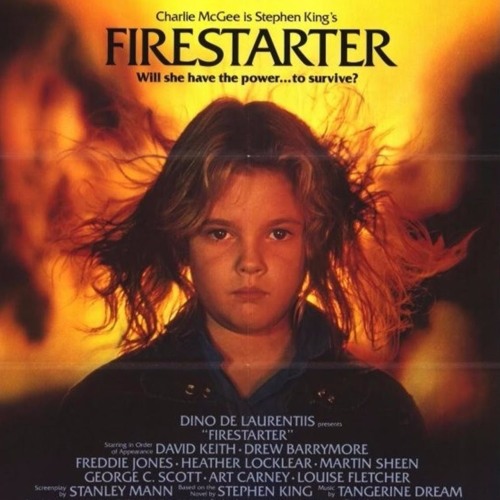
Adapted from Stephen King novel, 1984’s Firestarter is a film about a girl with a very special power.

Back in the day, a bunch of college students needed weed money so they took part in a government experiment.  Half of them were told that they were being given a placebo.  The other half were told that we would be given a low-grade hallucinogen.

Surprise!  The government lied!  It turns out that everyone was given the experimental drug!  Some of the students ended up going crazy.  One unfortunate hippie clawed his eyes out.  Meanwhile, Vicky (Heather Locklear) gained the ability to read minds.  She also fell in love with Andy McGee (David Keith), a goofy fellow who gained the ability to mentally control people’s actions.  They married and had a daughter named Charlie (played by a very young Drew Barrymore).  Charlie, it turns out, can set things on fire!  She’s a firestarter!

Well, of course, the government can’t just leave the McGees out there, controlling minds and setting things on fire.  Soon, the McGees are being pursued by the standard collection of men in dark suits.  Vicky is killed off-screen, leaving Charlie and Andy to try to find some place where they’ll be safe.

Good luck with that!  This is the government that we’re talking about.  The thing with films like this is that the government can do practically anything but it never occurs to them to not all dress in dark suits.  I mean, it just seems like it would be easier for all of these secret agents to operate if they weren’t automatically identifiable as being secret agents.  Anyway, Andy and Charlie are eventually captured and taken to The Farm, a really nice country estate where Andy and Charlie are kept separate from each other and everyone keeps talking about national security.

Running the Farm is Capt. Hollister and we know that he’s a bad guy because he wears a suit and he’s played by Martin Sheen.  Working with Hollister is John Rainbird (George C. Scott), a CIA assassin who kills people with a karate chop across the nose.  When Charlie refuses to show off her firemaking abilities unless she’s allowed to talk to her father, Rainbird disguises himself as a custodial engineer and proceeds to befriend Charlie.  Of course, Rainbird’s plan is to kill Charlie once she’s displayed the extent of her powers….

Stephen King has written that he considers this film to be one of the worst adaptations of one of his novels but, to be honest, I think the movie is actually a bit of an improvement on the source material.  Firestarter is probably the least interesting of Stephen King’s early novels.  Supposedly, Charlie was based on King’s youngest daughter and, reading the book, it’s obvious that everyone’s fear of Charlie is mostly a metaphor for a father trying to figure out how to raise a daughter.  Unfortunately, instead of concentrating on those primal fears, the book gets bogged down in boomer paranoia about MK-ULTRA experiments.

The movie, however, is just silly enough to be kind of charming.  For example, consider the way that Andy grabs his forehead and bugs out his eyes whenever he uses his powers.  Andy’s powers may be slowly killing him but he just looks so goofy whenever he uses them that you just can’t help but be entertained.  And then you’ve got Drew Barrymore sobbing while setting people on fire and George C. Scott growling through all of his dialogue and even Martin Sheen gets a scene where he gets excited and starts jumping up and down.  (And don’t even get me started on Art Carney and Louise Fletcher as the salt-of-the-Earth farmers who try to protect Andy and Charlie….)  Some of the special effects are a bit hokey, as you might expect from a film made in 1984 but occasionally, there’s a good shot of something (or someone) burning up.  It’s all so over-the-top and relentlessly dumb that you can’t help but be entertained.  You can even forgive the fact that basically nothing happens between the first 10 and the last 15 minutes of the movie.

Firestarter‘s silly but I liked it.

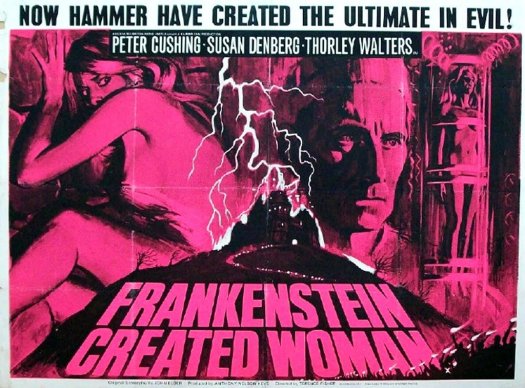
Creature Double Feature 6: FRANKENSTEIN CREATED WOMAN (Hammer/20th Century-Fox 1967)/FRANKENSTEIN MUST BE DESTROYED (Hammer/Warner Bros 1969)


gary loggins's avatarcracked rear viewer


Hammer Horrors were a staple of Boston’s late, lamented “Creature Double Feature” (WLVI-TV 56), so today let’s take a look at a demonic duo of Frankenstein fright films starring the immortal Peter Cushing in his signature role as the villainous Baron Frankenstein.

FRANKENSTEIN CREATED WOMAN was the fourth in Hammer’s Frankenstein series, made three years after EVIL OF FRANKENSTEIN. The Baron is back (after having apparently been blown to smithereens last time around), this time tampering with immortal souls rather than mere brain transplants. The movie features some ahead-of-its-time gender-bending as well, with the soul of an unjustly executed man transmogrified into the body of his freshly dead (via suicide) girlfriend, now out for vengeance!

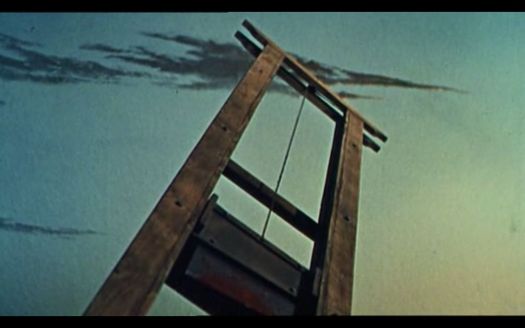
Young Hans (Robert Morris), who watched his father guillotined as a child, grows up to work for muddle-headed alcoholic Dr. Hertz (Thorley Walters , in an amusing performance), who revives the cryogenically frozen Baron…

View original post 687 more words

Horror Film Review: The Satanic Rites of Dracula (dir by Alan Gibson)


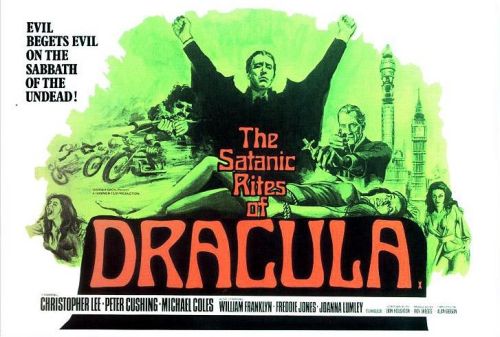
The_Satanic_Rites_of_Dracula_posterFirst released in 1973 and, like Dracula A.D. 1972, set in what was then the present day, The Satanic Rites of Dracula was the 8th entry in the Hammer Dracula series.  It was also the last to feature Christopher Lee in the role of Dracula and that perhaps is why, judging by some of the other reviews that I’ve read online, The Satanic Rites is one of the more reviled entries in the series.

Judging from a lot of those reviews, the attitude seems to be that The Satanic Rites of Dracula was so bad that it was the film that made Christopher Lee say, “No more!”  Reportedly, Lee felt that the film itself was both poorly written and that it was too violent.  And, even though the film is rather tame by the standards of today’s horror films, The Satanic Rites is still probably one of the more extreme entries in the series.  The film features a graphic and drawn-out flashback in which we see a naked woman sacrificed by a Satanic cult, a scene that’s bloody even by the standards of Hammer.  Later, when Jessica Van Helsing (played by Joanna Lumley, who took the role over from Dracula A.D. 1972‘s Stephanie Beacham) is menaced by a pack of female vampires, the vampires literally claw at her body like wild animals.  And finally, when one of Dracula’s brides is staked, blood literally splashes across the screen.

Christopher Lee was not a fan of The Satanic Rites of Dracula and neither are a lot of critics but you know what?  I think The Satanic Rites of Dracula is actually rather underrated.  If nothing else, it’s certainly far more unpredictable than some of the far more critically embraced Dracula films.

Satanic Rites opens with a British secret agent (Maurice O’Connell) escaping from a country house in which he had previously been held prisoner.  Though he’s fatally wounded during the escape, the agent manages to tell his superiors that, at the house, he witnessed a Satanic ritual that involved some of the most important people in the British government.  Since one of the accused occultists is a government minister, the secret service passes the case on to Scotland Yard’s Inspector Murray (Michael Coles, reprising his role from Dracula A.D. 1972) and then provide him with clandestine assistance.  (Or something like that.  To be honest, I get the feeling that the main reason Murray was called in was to maintain some continuity between Dracula A.D. 1972 and The Satanic Rites of Dracula.)  Murray suspects that vampires may be involved so he calls in Lorrimar Van Helsing (Peter Cushing).

After discovering that his old friend, scientist Julian Keeley (Freddie Jones), is a part of the cult, Van Helsing deduces that it’s all part of huge conspiracy headed by none other than Dracula himself.  The plan is to release a mutated form of bubonic plague and wipe out humanity.

Why is Dracula planning on destroying humanity?

Van Helsing theorizes that this might be Dracula’s way of committing suicide.  By wiping out humanity, Dracula will no longer have anyone to feed upon and his undead existence will finally end.  And, if nothing else, you have to admit that is a pretty interesting motivation!

How can you not enjoy a film that’s as strange as The Satanic Rites of Dracula?  It may not be a typical Hammer Dracula film and it may be a bit too obviously an attempt to revitalize a fading franchise by tossing everything that was then trendy at it but so what?  This is one of those movies that could have only been made at a certain point in time by a certain group of filmmakers and, as such, it’s valuable as both history and entertainment.

Christopher Lee may have hated The Satanic Rites of Dracula but he’s being way too hard on the film.  If nothing else, it provided a nice excuse for Christopher Lee and Peter Cushing to face off and how can you not appreciate that?