The TSL’s Horror Grindhouse: Puppet Master (dir by David Schmoeller)


Since there’s been like 200 Puppet Master films made over the past 30 years — goddamn, 30 years of killer puppets! — I figured that maybe I should finally sit down and actually watch one of them.  I decided to go with the original film that started the entire franchise, 1989’s Puppet Master!

So, basically, this is a movie about little puppets that kill full-sized people.  Obviously, there’s a bit more to the plot but let’s be honest.  No one who watches this movie is going to be watching it for the specifics of the plot.  They’re going to be watching it because they want to see tiny puppets go on a rampage.  I have to say that the puppets themselves are pretty cute.  I mean, they’re murderous and a little bit pervy but they’re still really cute.  I understand that all of the puppets have their own specific names but, while watching the film, I just made up names of my own.

For instance, there’s Hooky, who has a hook for one hand and a knife for the other and looks like he should be the lead singer of an aging Prog Rock band.  And then there’s Drilly, who has a drill on his head.  He can be really dangerous, especially if you’re stupid enough to crawl around on the floor and just stay there, on all fours, while he’s running straight at you.  I mean, if you just stood up, you probably wouldn’t get that badly injured but …. well, what do I know, right?  And then there’s Leechy, who is a female puppet who spits up leeches.  What’s interesting is that she never runs out of leeches but I have to wonder, if you have that many leeches, why not just send them out on their own instead of stuffing them all into some poor little puppet?  I felt bad for Leechy.  She seemed kinda sad.  And then there’s Handy, who has big hands and Facey, who can assume several different facial expressions at once.  They’re all really adorable, to be honest.

Anyway, Puppet Master is about a bunch of psychics who all spend the night in a California hotel that was once home to the “last alchemist,” Andre Toulon (William Hickey).  Toulon had the power to bring inanimate creatures — like puppets! — too life but, when the Nazi spies were closes in on him, Toulon killed himself.  Many years later, a psychic named Neil Gallagher (Jimmie F. Skaggs) discovered Toulon’s hiding place in the hotel but then shot himself as well.  So now, Neil’s former colleagues are all trying to get Toulon’s power for themselves.  Or something.  As I said, following the plot is not always easy.  The main appeal here is watching the cute puppets do really bad things.

That said, who knew that a group of psychics and witches would prove to be so stupid?  I mean, you would think that — when all of you are having constant premonitions of death and destruction — you would be smart enough to take extra precautions or maybe just leave the hotel all together.  For instance, Dana (Irene Miracle) casts a protection spell over someone else but not on herself.  Meanwhile, Frank (Matt Roe) and Clarissa (Kathryn O’Reilly) make the rookie mistake of having sex in a horror film while our nominal hero, Alex (Paul Le Mat, looking like he’s trying to figure out how he went from American Graffiti to this), wanders around in a daze.

And yet, watching the film, I could see why it became so popular.  The puppets are memorable and well-designed and the backstory, with Toulon and all the rest, is actually pretty interesting.  Puppet Master is one of those films that defines “stupid but fun.”  No wonder the puppets came back!

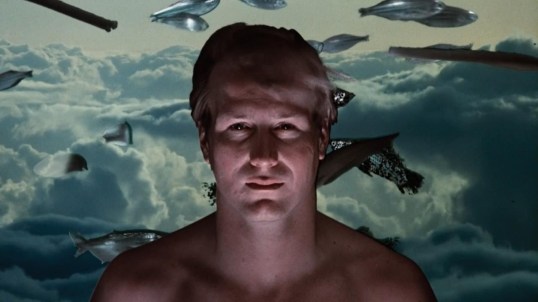
Scenes That I Love: In Heaven, Everything Is Fine From Eraserhead


From David Lynch’s 1977 film, Eraserhead.

Just a reminder that, “In Heaven, everything is fine.”

And Heaven is apparently behind your radiator.

“But Lisa, what is the scene about?”

Well, according to Lynch, the whole movie is “a dream of dark and disturbing things.”  Is that woman really living behind Jack Nance’s radiator and singing that everything is fine, despite the fact that there’s also a mutant baby in the apartment?  She may be.  Or she might just be a figment of someone’s imagination.

Perhaps it’s best not to worry too much about the how’s and the why’s.

Never stop dreaming.

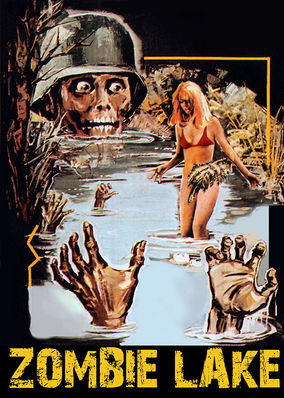
International Horror Film Review: Zombie Lake (dir by “J.A. Lazer”)


Oh, Zombie Lake!

I approach this 1981 Spanish-French film with some trepidation because, while it’s undeniably one of the best known of Eurocine’s low-budget horror films, it was also directed by one of my favorite directors and, by most accounts, it was not an experience that he particularly enjoyed being asked about.  He did not care for this film and (spoiler alert) his name was not J.A. Lazer.

In fact, for several years, it was assumed that this film was actually directed by Jess Franco.  And while it’s true that Franco was originally hired to direct Zombie Lake, he left the project because he said the budget was too low to execute his vision.  Consider that.  A budget too low for Jess Franco!  Franco left the project and went on to direct Oasis of the Zombies.  Apparently, the film’s producers did not understand that Franco had actually left the project because, on the first day of shooting, they were shocked to discover that they didn’t have a director.  In a panic, they called another fiercely independent horror director and asked him to come direct the film.  Jean Rollin agreed.

By his own account, Rollin only had a few days to prepare for shooting and since he had already made a classic zombie film called The Grapes of Death, he didn’t worry too much about trying to do anything too spectacular with Zombie Lake.  He simply filmed whatever scenes were required for the day, played the minor role of doomed police inspector, and, six days later, Zombie Lake had been filmed.

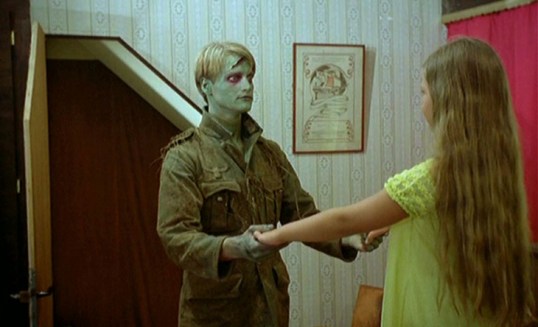
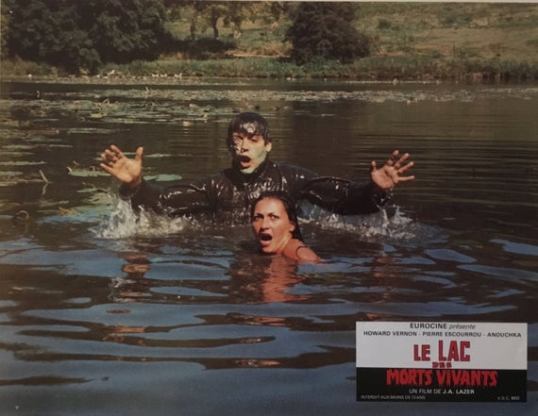
As for the film itself, it takes place in a French village that appears to be exclusively populated by cranky old men and naked young women.  There’s a lake nearby.  Despite seeing (and tossing aside) a big sign with a skull and crossbones on it, one of the naked women decides to go for a swim.  This apparently awakens the green Nazi zombies who lives at the bottom of the lake.  Soon, the zombies are randomly emerging from the lake and killing villagers.  The town’s mayor (Howard Vernon, of all people) is concerned.

It all links back to World War II, when the members of the French Resistance (led by the mayor) gunned down a squad of Nazis and dumped their bodies in the lake.  Somehow, this led to the Nazis coming back as zombies.  One of the Nazis had a daughter with a French woman shortly before he was killed.  Despite the fact that he was killed in 1943 and the movie clearly takes place in 1980, his daughter is only 12 years old.  That’s the type of film that Zombie Lake is.

Watching the film, you can tell why Rollin wasn’t particularly interested in claiming any credit for it.  It’s a messy film, largely because the green zombie makeup keeps washing off whenever the zombies have to emerge from the waters of the lake.  As for the lake itself, the underwater scenes were clearly shot in a swimming pool.  Beyond that, there’s not really any logic as to why the zombies keep emerging from the lake.  Whenever it’s plot convenient, the zombies suddenly emerge and attack anyone who has recently undressed.

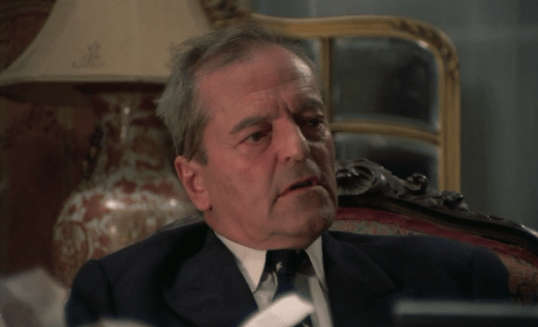
Howard Vernon in Zombie Lake

And yet, there are some good things about Zombie Lake.  (Shut up, there are too!)  For instance, it’s kind of charming how each actor cast as a zombie brings their own interpretation to the role.  Some of them walk slowly with their arms outstretched.  Others move a little bit stiffly with a thousand yard stare.  Some of them just casually stroll around, doing their business.  As well, we’re so used to assuming that any character played by Howard Vernon is going to be decadent and sleazy that it’s kind of fun to see him playing an outright hero here.  Finally, even the frequent nudity is so gratuitous that it actually become rather humorous.  One could easily use Zombie Lake to play a drinking game.  Whenever anyone takes off their top, drink!

Finally, even though this was clearly just a film he did for the money, there are a few instances where Rollin’s signature style manage to peak through.  For instance, when we first see the Mayor’s office, the camera lingers on all of the historical artifacts on the wall.  The fact that one of the zombies has cloudy memories of his former lover and only wants to see his daughter actually works a lot better than you might expect, largely because that seems to be the only storyline that Rollin — with his fascination with memory and history — seems to really care about.

Zombie Lake is a mess and certainly not representative of Rollin’s best (or more personal) films.  But I still kind of like it.

4 Shots From 4 Films: Dracula 3D, Maniac, Silent House, Sinister


4 Shots From 4 Films is just what it says it is, 4 shots from 4 of our favorite films. As opposed to the reviews and recaps that we usually post, 4 Shots From 4 Films lets the visuals do the talking!

This October, we’re using 4 Shots From 4 Films to look at some of the best years that horror has to offer!

4 Shots From 4 2012 Horror Films

Dracula 3D (2012, dir by Dario Argento)

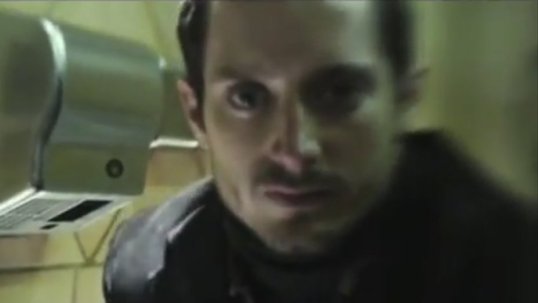
Maniac (2012, dir by Franck Kahlfoun)

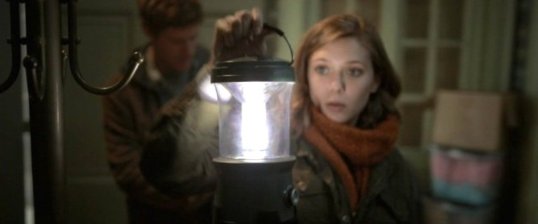
Silent House (2012, dir by Chris Kentis and Laura Lau)

Sinister (2012, directed by Scott Derrickson)

Film Review: The Gorgon (dir by Terence Fisher)


Medusa, who is probably the best-known of the Gorgons who haunt Greek mythology, is a scary creation.

That may seem like a rather obvious statement to make but seriously, let’s consider just how scary Medusa is.  First off, there’s the fact that her hair is made out of snakes.  Snakes are frightening in general.  The other day, Doc caught a grass snake and tried to give it to me by dropping it at my feet.  I have never been quicker to jump away from a cat.  It’s not just Texas grass snakes that frighten me, though.  There’s the rattlesnakes that I used to see when my family was living in New Mexico.  There’s the water moccasin that I once saw swimming in Boggy Creek when I was up in Arkansas.  I’m pretty sure that I once saw a cobra slithering through downtown Denton but all of my friends insist that it was just a water hose that somebody left out.  Well, no matter!  Snakes are scary on their own but they’re even scarier when they’re growing out of someone’s head!

And then there’s the fact that if you look at Medusa or any of her sisters, you turn to stone!  I mean, it just takes one look and boom!  You’re a statue!  I imagine the process of transforming would feel terrible.  Can you even imagine?  Even worse would be someone trying to move your body and accidentally dropping you.  I mean, you could lose a finger!  I guess it wouldn’t matter since you would be dead but still, that would totally suck to lose a finger that way.

First released in 1964 and having since achieved a certain immortality based on frequent TCM showings, The Gorgon is a production of Hammer Film.  The usual Hammer monsters are replaced by Mageara (played by Prudence Hyman), a Gorgon who has somehow found herself in a typical, isolated Hammer village.  Neither Dracula nor Baron von Frankenstein are present in this film, though the actors who played them do have roles.  Christopher Lee is Prof. Karl Meister.  Peter Cushing is Dr. Namaroff.  Together, they solve crimes and hunt the monsters!

Villagers are getting turned to stone and innocent artists are being condemned to die.  We know that it’s all due to the Gorgon but it takes everyone else in the film a while to figure it out.  For instance, Paul (Richard Pasco) has to dig up his father’s grave in order to be convinced that the old man died from being turned to stone.  At first, the only person who truly seems to believe in the Gorgon is Namaroff’s assistant, Carla (played by Hammer films regular, Barbara Shelley).  By the end of the film, of course, everyone knows that Gorgons are real!  Of course, almost everyone has been turned to stone, as well.  Even by the standards of Hammer, the body county is high and the monster is merciless in The Gorgon.

It’s an effective Hammer film, though it’s never quite as much fun as Hammer’s Dracula or Frankenstein films.  The Gorgon takes itself perhaps a tad too seriously but, at the same time, you have to love any film that features both Lee and Cushing working together for once, as opposed to trying to kill each other.  Christopher Lee especially seems to be enjoying himself as Dr. Namaroff.  Lee reportedly grew quickly tired of playing Dracula and his joy of having a different type of role is palpable and perhaps the most likable thing about The Gorgon.  As for the Gorgon herself, she’s properly frightening.  I mean, she has snakes in her hair, after all.

When this movie last aired on TCM, there were technical difficulties during the last seven minutes of the showing.  The screen went blank and then viewers were treated to several different takes of one of the Gorgon’s victims trying to write a letter as he turned to stone.  It kind of freaked everyone out, to be honest.  Had the Gorgons taken over TCM?  Fortunately, order was restored in time for everyone to watch Plague of the Zombies.  Thankfully, things worked out.

Horror on the Lens: Gargoyles (dir by Bill Norton)


For today’s horror on the lens, we have a made-for-TV monster movie from 1972, Gargoyles!

What happens when a somewhat condescending anthropologist (Cornel Wilde) and his daughter (Jennifer Salt) head out to the desert?  Well, they stop by a crazy old man’s shack so that they can look at his genuine monster skeleton.  Before Wilde can thoroughly debunk the old man’s claims, the shack is attacked by real monsters!

That’s right!  Gargoyles exist and they apparently live in Arizona!

(And, hey, why wouldn’t gargoyles live in Arizona?  I mean, they have to live somewhere, right? Real estate is not cheap.)

This film was introduced to me by TSL contributor and Late Night Movie Gang founder Patrick Smith and we had an absolute blast watching it.  There’s nothing particularly surprising about the plot but the gargoyles are memorable creations and Bernie Casey gives a good performance as their leader.  The gargoyle makeup was designed by none other than Stan Winston, who won an Emmy for his work here and who went on to win Oscars for his work on Aliens, Terminator 2, and Jurassic Park.

As well, a very young Scott Glenn shows up in the cast.  I like to think that he’s playing the same character in both Gargoyles and Sucker Punch.

Enjoy!

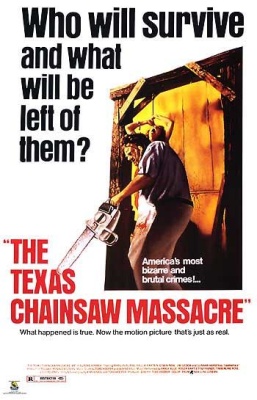
Horror Scenes That I Love: The Texas Chainsaw Massacre Finale


Today’s scene comes from the original The Texas Chainsaw Massacre, which is one of the greatest horror films ever made.  Needless to say, since this is the final scene, it’s a huge spoiler if you somehow haven’t seen this movie.

Enjoy, dance, or laugh maniacally.  I leave it up to you.

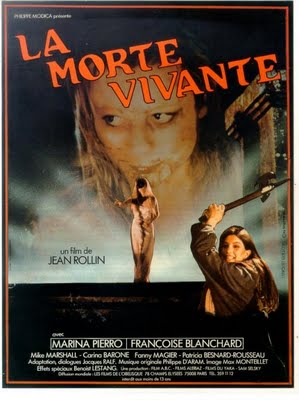
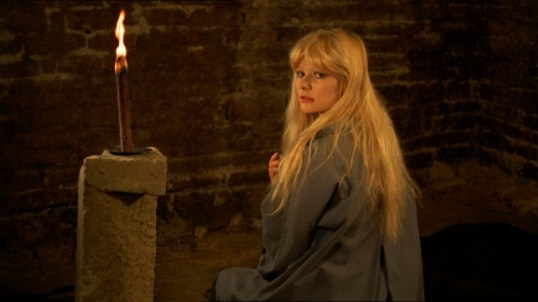
International Horror Film Review: The Living Dead Girl (dir by Jean Rollin)


Jean Rollin’s 1982 masterpiece, The Living Dead Girl, is one that makes me cry every time.

This is one of Rollin’s non-vampire films but it still features the themes for which Rollin was famous.  You’ve got a gothic castle.  You’ve got the beautiful French countryside.  You have two female friends, one of whom is haunted by her memories of the way things used to be and the other is horrified by what her present has become.  It’s one of Rollin’s most heartfelt films and also one of his saddest.

Helene (Mairna Pierro) sits in her office in Paris, thinking about her childhood friend, Catherine Valmont (Françoise Blanchard).  Catherine died two years ago and, as far as Helene knows, is still in the coffin that sits in the crypt of her family’s estate.  When her phone rings, Helene answers.  At the other end, no one speaks.  But Helene can hear the sound of a music box playing, a music box that once belonged to Catherine.

Yes, Catherine is once again alive.  She was brought back to life by ….. well, it’s not really explained.  It has something to do with some toxic chemicals that were accidentally spilled by two incompetent thieves who broke into the crypt.  The chemicals returned Catherine to a sort of life, except now she’s a silent zombie who needs to feast on blood to survive.  Though Catherine has hazy memories of her past, she’s not sure who she is and why she’s suddenly been brought back into the modern world.  Catherine promptly kills the two thieves.  She also proceeds to kill a real estate agent and her boyfriend.  It’s not that Catherine wants to kill.  Instead, it’s what she has to do in order to survive.  She’s like a cat pouncing on a bird.  It’s all instinct.

By the time Helene arrives at the castle, there’s already quite a mess that needs to be cleaned up.  But it doesn’t matter to Helene that she’s got four dead bodies of which to dispose.  Instead, she’s just happy that her friend has come back to life!  Even though Catherine is miserable at the thought of being one of the living dead, Helene is happy that her friend has returned to her and is willing to do whatever has to be done to keep her alive.  Helene even tries to offer Catherine a dead bird but Catherine shakes her head.  She needs human blood.  Fortunately, there is a village….

It’s a sad and deeply sentimental film.  Ignore the bloodletting.  Pay not attention to the toxic chemicals.  Overlook the zombiefication.  This is a film about friendship and the love that only best friends can share.  Admittedly, Helene can be seen as being a selfish character.  As much as Catherine wishes that she could return to the peace of death, Helene refuses to let her go.  But, at the same time, who hasn’t had a friend who they would do anything for?  If I came back as living dead girl, I might not enjoy having to drink blood but I’d love the friends who kept me supplied.

Rollin’s direction is heartfelt and, as was often the case with his best films, unapologetically mixes sentiment with gore.  Mairna Pierro and Francoise Blanchard give two of the best performances that Rollin ever captured on film.  Admittedly, there is a somewhat distracting subplot about two annoying American tourists but what would you expect from a director as wonderfully French as Jean Rollin?

From beginning to end, The Living Dead Girl is one of Rollin’s best and a personal favorite of mine.

4 Shots From 4 Films: The Black Waters of Echo’s Pond, Drag Me To Hell, The House of the Devil, Zombieland


4 Shots From 4 Films is just what it says it is, 4 shots from 4 of our favorite films. As opposed to the reviews and recaps that we usually post, 4 Shots From 4 Films lets the visuals do the talking!

This October, we’re using 4 Shots From 4 Films to look at some of the best years that horror has to offer!

4 Shots From 4 2009 Horror Films

The Black Waters of Echo’s Pond (2009, dir by Gabriel Bolongna)

Drag Me To Hell (2009, dir by Sam Raimi)

The House of the Devil (2009, dir by Ti West)

Zombieland (2009, dir by Ruben Fleischer)

Horror Film Review: Altered States (dir by Ken Russell)


You gotta watch out when it comes to those sensory deprivation tanks.  They may look like fun and it might seem like a pleasant idea to spend a while floating in and out of a state of consciousness but those tanks will mess you up.  Especially if you’ve got unresolved issues with your family and religion.

Also, if you’re going to go to Mexico to try a powerful hallucinogenic, make sure you’re not appearing in a Ken Russell film because again, those drugs will mess you up.  It’s like you’ll close your eyes and, when you reopen them, you’ll be in an 80s music video or something.

Now, to be honest, Altered States came out in 1980 so it’s a bit unfair to complain that it looks like a music video from the 80s or, for that matter, the 90s.  Instead, it’s more fair to say that a lot of the music videos from those two decades looked like Altered States.  That shouldn’t be particularly surprising since this film was directed by Ken Russell and Russell was a director who specialized in combining music with wild imagery.

Altered States may have been directed by Ken Russell but it was written by Paddy Chayefsky.  Chayefsky, of course, is best known for writing the script for Network.  (He also wrote the script for the Oscar-winning film, Marty.)  Chayefsky is one of those writers who is always cited as an inspiration by writers who are trying justify being heavy-handed.  For instance, when Aaron Sorkin was criticized for both Studio 60 On The Sunset Strip and The Newsroom, his supporters started talking about how he was just carrying on the proud tradition of Paddy Chayefsky.  In his autobiography, A British Picture, Ken Russell portrays Chayefsky as being a pompous control freak who refused to allow any changes to his dialogue-heavy script.  Russell responded by directing his actors to speak the dialogue as quickly as possible, rendering much of it incoherent.  In a few scenes, he even specifically had the actors eating so that their mouths would be full as they spoke.  Chayefsky was not amused and eventually demanded to be credited under his real name, Sidney Aaron.

As for the film itself, it tells the story of Dr. Eddie Jessup (William Hurt, in his film debut), who is convinced that he can cure schizophrenia by exploring states of altered consciousness.  As mentioned above, this leads to him floating in a tank and taking hallucinogenics in Mexico.  Somehow, this leads to him turning briefly into a caveman and then into some sort of primordial energy creature.  His wife (Blair Brown) is not happy that Eddie appears to be determined to reverse evolution and return to mankind’s original form.  For that matter, Eddie’s bearded colleagues (Charles Haid and Bob Balaban) all think that he’s playing a dangerous game as well.  Eddie’s daughter (Drew Barrymore, making her film debut) isn’t particularly concerned but that’s just because she’s like five and probably thinks it would be fun to have a primordial energy monster to play with.  Anyway, it all becomes a question of whether or not all questions need to be answered and whether love can defeat science.

Anyway, this is a deeply silly movie but it’s also kind of compelling, mostly because the uneasy mix of Chayefsky’s pompous, serious-as-Hell script and Ken Russell’s aggressive and semi-satiric directorial style.  Chayefsky obviously meant for the story to be taken very seriously whereas Russell takes it not seriously at all.  Though Chayesfky and Russell ended up hating each other, Russell keeps the film from becoming the cinematic equivalent of Neil DeGrasse Tyson’s twitter account.  Chayefsky’s greatest objection was that Russell directed the actors to not only speak quickly but to also speak over each other but this actually works to the film’s advantage.  Eddie and his colleagues are young, arrogant, and determined to make their mark.  Of course, they’re going to speak quickly.  They’re excited and there’s no time to lose.  The film’s best moments are the early ones, where it’s hard not to get swept up in Eddie’s enthusiasm.  Of course, once Eddie turns into a caveman, it pretty much becomes impossible to take anything that follows seriously.

For all the talk about the origins of mankind and whether or not love can save the day, the main appeal of this film is to watch William Hurt totally freak out.  Jessup’s hallucinations allow Russell to do what he did best and they’re the highlight of the film.  Despite Chayefsky’s ambitions, you don’t watch this film for the science.  You watch it for the seven-eyed ram and the scenes of Eddie walking into a mushroom cloud.  Ken Russell was smart enough to know that audiences would take one look at William Hurt, with his WASP bearing, and totally want to see just how fucked up Eddie Jessup actually was.  On that front, Russell totally delivers.

This film is a mess but at least it’s a Ken Russell mess.