Today’s song of the day comes from Ennio Morricone’s score for Exorcist II: The Heretic. This is not a film with a great reputation but I think almost everyone agrees that it has a great score.
This is Regan’s Theme. This song was also later used in Quentin Tarantino’s The Hateful Eight.
You knew this one was coming, right? Seriously, no tribute to Ennio Morricone is complete without the main theme from The Good, The Bad, and the Ugly.
Morricone’s score is as much of a character in this film as the ones played by Clint Eastwood, Eli Wallach, and Lee Van Cleef. It perfectly sets the moods, telling us that we’re about to see something that is truly epic. The opening notes, which have so often been parodied but which have never lost their power, truly capture the feel of Sergio Leone’s mythical vision of the old west.
Today’s song of the day comes to us from the classic score that Ennio Morricone wrote for Sergio Leone’s The Good, The Bad, and the Ugly! When we started our tribute to Morricone, there was no doubt that we would eventually include at least a few songs from this film’s soundtrack. Today, we share The Ecstasy of Gold, which plays in the background of one of the greatest scenes in the history of cinema. It’s hard to listen to this without thinking about Eli Wallach (as Tuco) joyfully running through that cemetery.
Becky is a fairly intense thriller, featuring two actors who you normally wouldn’t expect to appear in a film about a 13 year-old girl savagely attacking and killing a group of criminals in the woods.
For example, Kevin James is best-known for starring in The King of Queens and for playing Paul Blart: Mall Cop. He’s a member of the Adam Sandler stock company and almost his entire career has involved playing goofy but lovable manchildren. In Becky, he plays Dominick, a member of the Aryan Brotherhood who has escaped from prison and, along with a group of other fugitives, is desperately searching for a key that will apparently unlock something that will lead to a race war. Over the course of the film, Dominick murders several people. He orders his associates to kill children. He tortures a man with a branding iron and he taunts an interracial couple. He has a big bushy beard and a swastika tattooed on the back of his saved head. In other words, this isn’t the Kevin James movie to show your grandma.
And then you have Joel McHale. Joel McHale is best-known for hosting The Soup and playing Jeff Winger on Community. In Becky, McHale plays another character named Jeff. This Jeff is the father of an angry 13 year-old girl named Becky (played by Lulu Wilson). Jeff wants to have a nice weekend up at the lake with Becky and he’s hoping that he can get Becky to accept the fact that Kayla (Amanda Brugel) is going to be her new stepmother. Needless to say the weekend does not go well. Not only does Becky resent Kayla but Dominick and his crew show up at Jeff’s cabin, searching that key.
While Dominick is holding her family hostage, Becky is hiding in the woods and picking Dominick’s men off one-by-one. As Kayla explains it, Becky is unstoppable because she’s “a vindictive 13 year-old girl.” The majority of the film is taken up with scenes of Becky coming up with creative ways to kill people who are a lot bigger than her. It turns out that everything from an art pencil to a ruler can be turned into a deadly weapon. (Of course, sometimes, a lawn mower works just as well.) Becky is the type who will scream over the corpse of someone who she has just killed. It’s not because she’s upset over what she’s done. It’s because she’s so pissed off. And believe me, I could relate. I was a pissed off 13 year-old too. Luckily, I never had to kill anyone with my art supplies so let’s all be happy about that.
Becky is a bit of throwback to the grindhouse films of the past. There’s even a scene that plays a very obvious homage to the ending of the original I Spit On Your Grave. There’s a lot of violence. There’s a huge amount of gore. If you’ve ever wanted to see what an eye looks like when it’s literally hanging out of its socket, this is the film for you. There are some moments of very dark humor as well. Lulu Wilson gives a fierce performance as Becky and, In general, the film’s well-directed. The first 20 minutes of the movie are actually rather brilliant, with scenes of Becky dealing with school bullies alternating with scenes of Dominick killing people in prison.
That said, the film itself runs out of gas long before the final scene. A huge part of the problem is that Domenick and his associates are all way too stupid to really be a legitimate threat to Becky and, as a result, there’s not much suspense as to whether or not Becky will be able to kill them. (It was hard not to unfavorably compare the buffoonish, easily outwitted Neo-Nazis in this film with the legitimately terrifying ones that appeared in Green Room.) As well, for all the film’s violence and it’s homages to the grindhouse, it oddly allows two characters to survive the film despite the fact that there was no reason for the film’s villains to keep them around. Their survival reminds you that you’re just watching a movie and it takes you out of the moment. You realize that if the movie doesn’t have the guts to kill the two of them, then it’s probably not going to have the guts to really surprise us further down the road.
I have to admit, I really wanted to like this film, if just because I was intrigued by the against-type casting of Kevin James and Joel McHale. I may not care for the majority of Kevin James’s films but I’ve always felt that he was a good actor. Joel McHale, as well, has always been a personal favorite of mine and, like James, he’s a better actor than he’s often given credit for being. I was hoping that both of them would get a chance to shock viewers by brilliantly playing against type. But McHale is stuck playing a character who is just too wimpy to be sympathetic and Kevin James, bless him, often seems to be trying too hard to project menace. True menace has to feel natural. Once it becomes obvious that you’re trying to be menacing, then you’re not. Dominick is a Sid Haig role being played by Kevin James. Despite (or perhaps because of) the goofy appeal of such an idea, it just doesn’t work.
Despite its flaws, Becky is a well-shot, quickly paced film and it has enough entertaining moments to be watchable if not entirely satisfying. If you’re looking gore, this film has what you’re looking for and, as any horror fan can tell you, there’s certainly nothing wrong with that. The film doesn’t quite work but still, directors Jonathan Milott and Cary Murnion do a good enough job that I look forward to seeing where they do next.
Once Upon A Time In the West (dir. by Sergio Leone)
For the first week of our tribute to Morricone, I kind of shied away from his best-known spaghetti western themes, just because I wanted to highlight some of his other films. I wanted to remind people that Morricone’s genius wasn’t just limited to his work with Sergio Leone or the western genre.
That said, there’s a reason why Morricone’s western themes have become classics and that’s because they’re really, really good. They capture the grandeur of both Leone’s visuals and his themes. For all the credit that rightfully goes to Sergio Leone, Clint Eastwood, Lee Van Cleef, and Charles Bronson, the music of Ennio Morricone is one of the main reasons why we remember films like Once Upon A Time In The West and The Good, The Bad, and the Ugly while forgetting about certain other westerns that were being made in Europe at the same time. In Leone’s films, Morricone’s music is just as much of a character as The Man With No Name.
So, any tribute to Morricone has to include the music that he composed for Leone. Therefore, today’s song of the day is a familiar one but a great one. Here is Man With A Harmonica from 1969’s Once Upon A Time In The West:
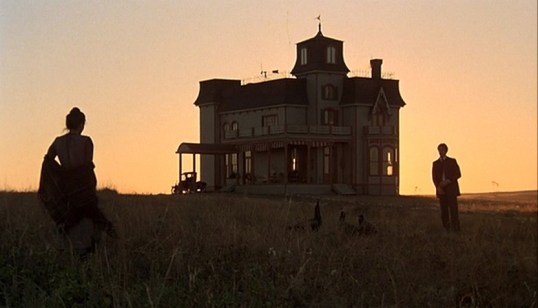
Today’s song of the day comes to us from the soundtrack of Terrence Malick’s 1978 film, Days of Heaven. Composed by Ennio Morricone, this is The Return:
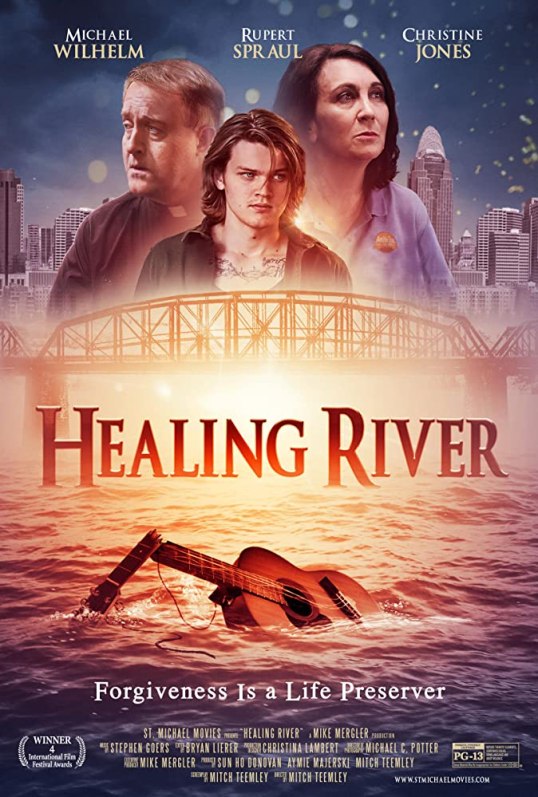
Ingrid Ambelin (Christine Jones) owns a coffee shop in Cincinnati. She has one son, a responsible young man named Michael (Spencer Lackey), and she also tends to think of herself as being a mother figure to everyone who works for her. She’s the type of boss who keeps an extra set of clothes in the backroom, just in case one of her cashiers makes the mistake of coming to work in something that Ingrid considers to be too revealing. (Actually, to be honest, that’s the sort of thing that would drive me crazy if I worked for Ingrid.) Ingrid is old-fashioned but she means well.
Alec McCortland (Rupert Spraul) is a musician and a drug addict, someone who has never had anyone willing to look out for him. Alec is the type who frequently goes to rehab but always relapses as soon as he gets out. He’s angry but he’s also young. In fact, he’s young enough that, when he accidentally drives his car straight into Michael, he’s tried as a juvenile.
At first, Ingrid is outraged that Alec will not be tried as an adult. She forms a support group that meets in the basement of her church. At first, Father Peter (Michael Wilhlem), who also happens to be Ingrid’s brother and Michael’s uncle, feels that the group will help her overcome her anger but instead, he watches as Ingrid and the group become obsessed with getting revenge. In fact, when Ingrid catches Alec again breaking the law, she reports him and gets him thrown in jail.
And then, something unexpected happens. At the urging of her brother, Ingrid finally visits Alec in prison and, as the two of them talk, Ingrid comes to realize that Alec is not the demon that she assumed he is and Alec finally starts to come to terms with his guilt over the death of Michael. To the shock of her family and her employees, Ingrid comes to forgive Alec. She works to try to reunite Alec with his father. And when Alec is up for release, she volunteers to serve as his legal guardian….
I’m a big fan of the concept of forgiveness. At the same time, I also know just how difficult it can be to truly forgive anyone, much less someone who has committed a heinous an act as Alec does in this film. Therefore, I was curious to see how Healing River would handle the topic and I have to say that I was pleasantly surprised. Healing River is a film that celebrates forgiveness and shows why forgiveness is necessary but, at the same time, it also doesn’t pretend as if forgiveness is easy. For the most part, it takes an honest approach to the concept of forgiveness. It’s portrayed as being important but it’s also not portrayed as being a magical elixir. Even after Alec and Ingrid get to know each other and grow close, there’s still a lot of pain to be dealt with.
It helps that, as opposed to a lot of other inspirational films, Healing River has a little bit of an edge. No one in the film, including Ingrid, is presented as being a saint. The characters actually curse and I was glad they did because what mother wouldn’t curse while trying to explain how she feels about the death of her son? Far too often, films like this seem to be set in a fantasy world that’s specifically designed not to challenge the target audience’s beliefs. Healing River, however, takes place in the real world and, in the real world, people curse when they’re in pain.
There are a few scenes where the film’s low-budget does become a bit of a distraction. An early scene featured a Hebrews-related pun that made me cringe. (“Hebrews …. she brews.”) There’s a narrative development in the third act that feels a bit clumsy. It’s a flawed film, as most films are. But it’s a sincere film and it’s a film that honestly explores both why forgiveness is important and why it’s also so difficult.
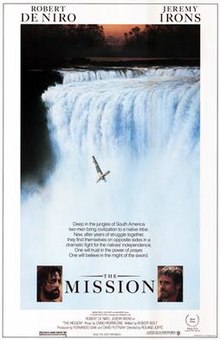
Today’s song of the day is the main theme from the 1986 best picture nominee, The Mission. As with all of the songs of the day that I’ve featured this month, this was composed by the great Ennio Morricone.
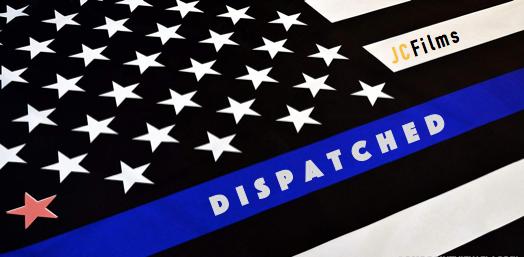
Dispatched, which is currently on Prime, is a low-budget film about a cop named Carl Thomas (Jeff Moore) who has an anger problem and a bad reputation. Even though he makes a lot of arrests and gets a lot of criminals off the streets, his chief (Dean Cain) keeps having to reprimand him for using excessive force.
Anyway, one night, Carl is convinced to go to a revival meeting with some of his fellow police officers. Carl witnesses a faith healing and, overnight, becomes the world most committed and outspoken Christian. Suddenly, he’s able to give up his anger and now, whenever he arrests anyone, he treats them with compassion. He tells them to follow Christ and get their lives together. He goes down to the jail and he passes out bibles. And….
Well, actually, that’s pretty much the entire film. There’s really not much conflict to be found in Dispatched. Admittedly, Carl’s first wife does divorce him because she can’t handle his sudden zeal for religion but most of that happens off-screen. After the divorce, we don’t hear anything else about his ex-wife or his children from his first marriage. We’re also repeatedly told that Carl was violent before he witnessed that faith healing but again, we don’t seem much evidence of it. We do see Carl overreacting during a traffic stop and he definitely doesn’t come across as being the type of cop that anyone would want to deal with but, at the same time, the film shies away from showing us anything that could make us really dislike Carl. That’s a mistake on the filmmaker’s part. For a film about any type of redemption to work, you have to actually have to see some sort of difference between who the main character was before being redeemed and who the main character is afterwards.
That said, I can’t be too hard on Dispatched because, in the end, it’s a low budget message film. The underlying message itself — that anger can be just as much of an addiction as any drug and that anyone can be redeemed if they’re truly willing to do the work — is not a bad one. However, I think this is the type of movie that will be best appreciated by people who already agree with its religious theme. If you’re like me and you tend to be a bit skeptical, you’ll probably zone out once the faith healing begins. If you’re a believer in revival meetings and faith healings, you might have less of a problem with it all. This is a film that preaches to the choir. I doubt it will win over any nonbelievers but the choir might enjoy it and you know what? There’s nothing wrong that. The choir deserves to be entertained. The real Carl Thomas appears at the end of the film. He comes across as being sincere person, which is always a nice thing.
Anyway, Dispatched really wasn’t for me but I’m not going to criticize it the way I would a studio film with a 200 million dollar budget. It’s a well-intentioned film, one that was made for a very specific audience and while will probably be most appreciated by those who already share its worldview.



 Through the Shattered Lens