4 (or more) Shots From 4 (or more) Films is just what it says it is, 4 (or more) shots from 4 (or more) of our favorite films. As opposed to the reviews and recaps that we usually post, 4 (or more) Shots From 4 (or more) Films lets the visuals do the talking.
Today, TSL celebrates the 117th anniversary of the birth of Michael Powell, the British visionary who changed the face of cinema, both on his own and through his collaboration with Emeric Pressburger. It seems appropriate that we pay tribute to Powell on the day before October, as his 1960 film Peeping Tom is considered by many to be the first slasher film. (It’s not but it’s influence on the genre cannot be overstated.)
In honor of Michael Powell, TSL is proud to present….
4 Shots From 4 Michael Powell Films
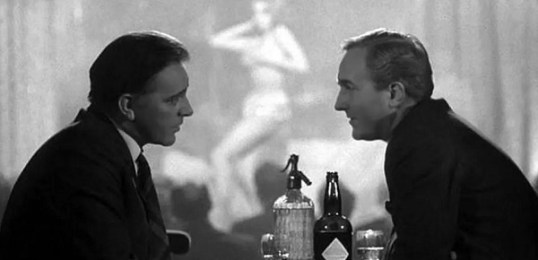
I Know Where I’m Going (1945, dir by Michael Powell and Emeric Pressburger, DP: Erwin Hillier)
Black Narcissus (1947, dir by Michael Powell and Emeric Pressburger, DP: Jack Cardiff)
The Red Shoes (1948, dir by Michael Powell and Emeric Pressburger, DP: Jack Cardiff)
Peeping Tom (1960, dir by Michael Powell, DP: Otto Heller)
Last night, I watched the 1980 film, Urban Cowboy. This was a film that had been sitting on my DVR for over a year. For some reason, I had never actually gotten around to watching it. There were many times when I started to watch it but I always ended up stopping after a few minutes. I was never quite sure why as everything that I had heard about the film was positive. Having finally watched it last night, I think I hesitated because I instinctively knew that John Travolta would look silly wearing a cowboy hat.
And let’s just be honest. He does. I mean, Travolta actually gives a fairly good performance in Urban Cowboy. He plays Bud, a kid from West Texas who moves to Houston so that he can work on an oil rig with his uncle, Bob (Barry Corbin). At first, he only wants to stay in Houston long enough to raise the money to buy some land back home. But, he soon falls in love with the Houston nightlife and the local country-western bar. (He’s Travolta so, of course, he can dance.) He also falls in love with and eventually marries Sissy (Debra Winger).
Travolta is believable as an impulsive young adult who might not be particularly smart but who makes up for it with a lot of determination. And he even does an okay job when it comes to capturing the country accent of West Texas. But that said, whenever he puts on that cowboy hat, the viewer is immediately reminded that Travolta is actually from New Jersey and probably never even attended a rodeo until he was cast in Urban Cowboy. The hat feels like an affectation, an attempt by a city boy to be more country as opposed to a country boy trying to hold onto his identity in the city. Ironically, the term “urban cowboy” has come to mean someone who, despite having never left the city, dresses like they’re heading out to herd the cattle and rope some steers. However, in the film itself, the hat is meant to be a natural part of Bud’s persona but it never quite feels that way.
Far more credible as a cowboy is a youngish Scott Glenn, who plays Wes Hightower. After Bud’s chauvinistic and abusive behavior drives Sissy away, she ends up with Wes. Wes teaches Sissy how to ride a mechanical bull, which is something Bud tried to forbid her from doing. Wes is confident and dangerously sexy and he can even make the fact that he lives in a run-down trailer work for him. Unfortunately, Wes also turns out to be even more controlling and abusive than Bud. Even though Bud still loves Sissy and Sissy still loves him, Bud soon hooks up with Pam (Madolyn Smith), the daughter of a wealthy oilman.
Many more complications follow and, of course, there’s one big tragedy that causes Bud to reexamine his life. Not surprisingly, the film’s conclusion all comes down to who can stay on that mechanical bull for the longest….
The best thing that Urban Cowboy has going for it is not Travolta or Glenn but instead, it’s Debra Winger, who gives a believable and relatable performance as Sissy, playing her as someone who may not have much but who refuses to surrender her pride. She knows that she deserves better than both Bud and Wes, even if she is hopelessly in love with one of them. Winger has chemistry with both Travolta and Scott Glenn, which makes the film’s love triangle feel like something more than just a typical story about a girl who can’t resist a bad boy. She grounds the film in reality and, as such, there are real stakes to the film’s story. Thanks to Winger, Urban Cowboy becomes about something more than just a fight over a mechanical bull.
The second best thing that Urban Cowboy has going for it is that it does manage to capture the atmosphere of a good country-and-western bar. It’s place where people go to relax after a hard day’s work. Unlike the discotheques that Travolta frequented in Saturday Night Fever, the bars in Urban Cowboy eschew glamour and artifice. Instead, they’re all about proving yourself not on the dance floor but on the back of a mechanical bull. For Sissy, the bull symbolizes freedom. For men like Bud and Wes, it symbolizes survival. Myself, I’m not a drinker so my bar experience is limited. And, though I may be from Texas and I spent a lot of time in the country while I was growing up, I’ve never been a fan of country music. That said, I’ve danced to a few country songs and I’ve certainly stopped by a few bars, even if I was usually the one who annoyed my family and friends by just asking for a glass of water. I’ve been to the rodeo and I’ve seen people get trampled. I’ve also seen a few people get tossed off a mechanical bull. I’ve never been on a mechanical bull myself but I did buy one for my Sims. (They loved it but, sadly, I had to get rid of it because they spent so much time riding it, they kept missing work and getting fired.) From my limited experience, I can say that Urban Cowboy got most of the details right. Even though it was made 42 years ago, it still feels authentic.
That said, Travolta still looks odd wearing a cowboy hat.
In Honk for Jesus Save Your Soul, Sterling K. Brown plays Lee-Curtis Childs, a once-popular and powerful preacher who is looking to make a comeback after his career and his church were both hit by a scandal.
Regina Hall plays Trinitie Childs, Lee-Curtis’s wife and the “first lady” of Wander The Great Paths Church. She is just as determined as Lee-Curtis to make a comeback.
Together, they solve crimes!
Actually, they don’t. They really don’t do much of anything, beyond trying and usually failing to talk people into returning to their church. In archival footage, we see Lee-Curtis preaching the prosperity gospel and claiming that his faith in God is the reason why he not only has expensive clothes and a big house but that it is also the reason why he deserves them. We see footage of Lee-Curtis in the past, condemning homosexuality from the pulpit but, in the present, Lee-Curtis seems to hit on almost every man that he meets. Lee-Curtis is quick to smile and to speak of how he’s made his mistakes but he’s been forgiven by God. At the same time, he also always seems to be just one minute away from having a complete meltdown.
Trinitie spends her time trying to keep that meltdown from occurring. She is someone who knows how to play the loving wife. A meeting her mother establishes that being a loving wife is what Trinitie was raised to do. It’s only in private that Trinitie reveals how difficult it is to be married to Lee-Curtis. She wants the respect that comes from being married to a powerful man, enough so that she’ll even humiliate herself by standing on a street corner while holding a sign that requests for drivers to honk if they love Jesus. When others attack her over her husband’s infidelities, she smiles and argues with them until she eventually reaches a point where she can smile no longer.
Regina Hall and Sterling K. Brown both give excellent performances, with Hall doing an especially good job of capturing Trinitie’s conflicting emotions over being the wife of Lee-Curtis Childs. As played by Hall, Trinitie is someone who knows that she deserves better but who has also become addicted to the lifestyle that comes from being the first lady of a megachurch. As such, she’ll do anything to help Lee-Curtis regain his former popularity. While Lee-Curtis practices vapid sermons and wallows in self-pity, Trinitie is the one who is left to talk to the people that Lee-Curtis victimized. Brown has the magnetism necessary to be credible as a man who could convince others that he was without sin. Hall has the determination necessary to be credible as the power behind the pulpit.
Unfortunately, as good as both Hall and Brown are, the rest of the film is a complete mess. It starts out as a mockumentary but then it includes scenes that are clearly not meant to have been filmed by the documentary film crew. Unfortunately, there’s rarely any indication whether we’re watching a mockumentary scene or a “behind the scenes” scene and it’s left to the audience to sort out which is which. Ultimately, the film’s main flaw is one that is shared by many films that have attempted to satirize the excesses of organized religion. Honk for Jesus Save Your Soul doesn’t really bring anything new to the table. At this point, is anyone shocked to discover that some pastors are corrupt? Is anyone shocked to discover that religious people can also be hypocrites? None of the criticism is quite as groundbreaking or shocking as the film seems to think that it is. The movie feels like the equivalent of the atheist who thinks that he’s the first person to make the “But if God created everything, who created God?” argument. When it comes to making an argument one way or another about organized religion, Honk for Jesus is as shallow and predictable as the God’s Not Dead franchise. This wouldn’t matter, of course, if the film’s satire had any bite or was, at the very least, consistently humorous. Unfortunately, this is pretty much a one joke movie. It is, admittedly, funny the first time that Hall switches from yelling to smiling when she realizes that she’s on camera. But, at one hour and 40 minutes, a satire needs more than one good joke.
The film is partially redeemed by Hall and Brown but ultimately, there’s little here that hasn’t been done better before.
Today’s scene that I love comes from 1975’s The Passenger, a film directed by Michelangelo Antonioni. Antonioni was born 110 years ago today, in what was then the “Kingdom of Italy.”
In The Passenger, Jack Nicholson plays a journalist who, because he’s bored with his life, impulsively assumes the identity of a deceased American businessman. What he discovers is that the businessman was an arms dealer and that the people that the arms dealer were doing business with still expect to get their weapons. Despite the fact that he knows that it might cost him his life, Nicholson is still drawn to see just how far he can take his new existence.
The film’s enigmatic final scene, in which Nicholson goes to a hotel to wait as both the people who double-crossed and his wife search for him, is Antonioni at his best.
4 (or more) Shots From 4 (or more) Films is just what it says it is, 4 (or more) shots from 4 (or more) of our favorite films. As opposed to the reviews and recaps that we usually post, 4 (or more) Shots From 4 (or more) Films lets the visuals do the talking.
Today, the Shattered Lens wishes a happy 52nd birthday to Danish director Nicholas Winding Refn! Drivewas one of the first films to really be celebrated on this site, receiving reviews from several contributors. Personally, I preferred The Neon Demon.
In honor of of the man and his work, it’s time for….
4 Shots from 4 Nicolas Winding Refn Films
Bronson (2008, dir by Nicolas Winding Refn, DP: Larry Smith)
Drive (2011, dir by Nicolas Winding Refn, DP: Newton Thomas Sigel)
Only God Forgives (2013,dir by Nicolas Winding Refn, DP: Larry Smith)
The Neon Demon (2016, dir by Nicolas Winding Refn, DP: Natasha Braier)
War is raging. Food is scarce. At the start of the film, a newscaster officially says farewell to Australia as it’s swallowed by the ocean. Due to some sort of vaguely defined cosmic event, certain citizens have developed super powers. Normally, you might think that would be a good thing. Maybe someone can use their super strength to save Australia. Instead, it’s led to a rise in supervillains. People with names like The Conductor and the Lobe are terrorizing the world. Fortunately (or not), a prison has been designed to hold all of these super villains.
Running that prison is Overseer Devlin (Michael Rooker). Devlin is quick to correct anyone who calls him a warden. That said, Devlin runs his prison with a firm and sometimes cruel hand. All of the inmates are forced to wear a leg brace that neutralizes their powers. They’re at Devlin’s mercy and Devlin knows it. A sentence to San Tiburon prison is a life sentence, regardless of what the courts may say. No one gets parole unless Devlin wants them too and Devlin’s not in the business of giving people freedom.
Corrective Measures follows four inmates in particular. Diego Diaz (Brennan Meija) is an empath, a super power that will be of little help in a prison where empathy is seen as a weakness. Gordon Tweedy (Tom Cavanagh) is also known as the Conductor because he can control electricity. Payback (Dan Payne) is a self-styled vigilante who killed evildoers on the outside and who looks forward to killing more on the inside. Finally, there’s the Lobe (Bruce Willis), who is the most feared supervillain of all. The Lobe can control minds, but only if his leg brace is removed. While the Warden prepares for his retirement and considers who among his staff he should name as a his replacement, the inmates simply try to survive from one day to the next.
Corrective Measures is an episodic film, with the focus continually shifting from one character to another. When the film begins, Payback seems like he’s going to be the main character but then the focus shifts to Diego and The Conductor. Towards the end of the film, the focus switches once again and it becomes about The Lobe and his schemes. The one theme running through the entire film is the struggle to maintain one’s freedom and dignity in even the most difficult of circumstances. Yes, Corrective Measures might be a low-budget super hero film and yes, it was based on a graphic novel but it’s also a mediation on what it means to be free in a society that persecutes anyone who is perceived as failing to conform. That theme elevates the film, making it more than just a B-movie. If Sam Fuller directed a comic book movie, it would probably look something like Corrective Measures.
The actors also do wonders with the material, with Michael Rooker giving an entertainingly evil performance as Warden Devlin and Tom Cavanagh turning The Conductor into a surprisingly poignant character. That said, I imagine most people will be watching this film because it was one of the final films that Bruce Willis worked on before announcing his retirement from acting. It is true that Willis does spend the majority of this film in his cell. It’s rare that he’s ever actually seen in a shot with any of the other actors, leading me to suspect that Willis probably shot all of his scenes in a day or two. Despite that, Willis is well-cast as The Lobe and there’s even a few scenes where he seems like the Willis of old, smirking at his opponents and dismissing them with a well-timed insult. While it’s obvious that Willis was not in the best shape when he shot his scenes, Corrective Measures still feels like a better closing act than something like American Siege.
Corrective Measures is a far better film than I think anyone would have expected it to be. It’s a celebration of freedom that understands why it’s worth celebrating.
It’s a dangerous world out there, make no doubt about it.
William Duncan (Clive Standen) thought that his days of violence were behind him. Sure, he did a tour of duty in the military. And yes, he was trained how to kill a man. In fact, he was trained how to kill dozens of men and he did just that as a part of his patriotic duty. But that was the past. Now, William lives in the suburbs of Atlanta and he’s got a pretty nice life.
Unfortunately, one day, William’s life falls apart, shortly after he picks up his 16 year-old daughter, Kat (Maddie Nichols), from softball practice. William’s plan is to pick up his daughter, grab some food for dinner, and then head home. Unfortunately, a gang led by Rory Fetter (Theo Rossi) has a different idea. The time has come for Rory’s younger brother, Danny (Cabot Badsen), to be initiated into the gang. At first, it seems like Danny doesn’t even want to join the gang but still, when he’s ordered to murder a random bystander, he does so. That bystander happens to be Kat.
Danny’s arrested for the murder but he’s released due to the influence of his father, a powerful gangster named Donnie (Bruce Willis). Having been failed by the legal system, William decides to put his military training to good use and get his vengeance. At first, he’s armed with only his dead daughter’s softball bat. Later, he joins up with an arms dealer named Dante (Thomas Jane) and the war truly begins.
It should also be noted that Dante is friends with a shady garage owner named Roach. Roach is played by Mike Tyson. Yes, that Mike Tyson. Tyson doesn’t really get to do much as Roach. His garage does serve as one of the film’s many battlegrounds but, for the most part, Tyson is something of a bystander. It’s easy to see that the main reason he was included in the film was because it would inevitably cause at least a few potential viewers to say, “Hey, Mike Tyson’s in this! Let’s watch!” That said, even with his limited screen time, Mike Tyson has a surprisingly likable screen presence. I don’t think that anyone will ever mistake Tyson for being an actor of great range but he does a good enough job here that it would be foolish for someone not to cast him in a bigger role in a future low-budget action flick.
As for Vendetta, it’s about as pulpy as pulp can get. It’s an action/revenge flick that makes no excuse for being an action/revenge flick and, as a result, it’s difficult not to be entertained by it. The story moves quickly, there aren’t really any slow spots, and the cast does well with their roles. That includes Bruce Willis. This, of course, is one of Willis’s final films. Watching the films that were released after Willis revealed that he was retiring due to aphasia can feel a bit awkward as it’s obvious that the Willis who appeared in these films was quite a bit different from the Willis who appeared in Die Hard. That said, Willis is effectively intimidating in Vendetta. Even if he doesn’t display the wiseguy charm that was his trademark, Willis still has enough of his streetwise, tough guy screen presence that the viewers will be able to buy him as being a feared crime boss.
As far as 2022’s collection of Bruce Willis films go, Vendetta isn’t bad. It’s maybe a smidgen below Gasoline Alley (which, as of this writing, is the best Willis film of 2022) but it’s a hundred times better than American Siege and A Day To Die.
To be absolutely honest, I would probably be dismissive of the trailer for Smile if not for the effort that Paramount Pictures has put into promoting this damn thing. Apparently, this weekend, they sent people out to sporting events and had them sit motionlessly in the stands and smile for the entire game. Not only did it look creepy but it probably ruined the experience of everyone who was sitting near them. Of course, the people sitting near them actually paid money to get good seats for the game. Imagine spending a few hundred dollars, just to have to deal with this:
Or this:
I mean, seriously, that’s a bold move! I thought re-releasing Morbius just because people on twitter were making fun of it was going to be the boldest studio move of 2022 but Paramount might take the title. Now that we’ve annoyed you, come see our movie. That’s an interesting gimmick.
Anyway, here’s the final trailer for Smile. The movie comes out on the 30th.
In this British crime thriller, George McKay plays Toby Nealy, a self-styled revolutionary who breaks into the homes of the very rich and paints “I Came By” on their walls. His actions have made the I Came By Tagger something of an underground legend but no one knows his true identity. In the real world, Toby is 23 years old and still lives at home with his long-suffering mother, a psychologist named Lizzie (Kelly MacDonald). Toby’s best friend and partner-in-activism, Jay (Perecelle Ascot), wants to retire from tagging and devote his time to repairing his relationship with his pregnant girlfriend.
Still, Toby is determined to continue with his activities. His latest target is Hector Blake (Hugh Bonneville), a retired judge who has a reputation for being a progressive but who Toby suspects is actually a hypocrite. (Toby notices that Blake has an ivory sculpture in his home and that’s all it takes to convince him that Blake is being insincere.) Working alone, Toby breaks into Blake’s home and discovers that not only does Blake have nice taste in furniture but he also has a half-naked man chained up in the basement.
Unfortunately, try as he might, Toby can’t get anyone to believe him. Jay is too busy with his personal problems. Lizzie, who doesn’t know about her son’s secret life as a graffiti artist, is upset that Toby doesn’t seem to understand how much privilege he has compared to the rest of the world. Toby makes an anonymous call to the police but, when they visit Blake’s home, they don’t find his torture dungeon. Besides, Blake is a respected member of the establishment and everyone also knows that Blake has been outspoken in his defense of refugees. Why would he have a man chained up in his home?
Though the film starts with Toby and his discovery of Blake’s crimes, the action is evenly divided between him, Lizzie, and Jay. All three of them are drawn into investigating Blake. Toby is outraged but he soon discovers that trying to expose Blake is far more dangerous and difficult than just spraying a pithy slogan on the wall. Lizzie goes from believing in the system to discovering that the system only exists to protect certain people and, unfortunately, neither she nor her son are considered to be among them. Meanwhile, Jay is very much aware that, as a black man, investigating Blake will be even more dangerous for him than it will be for Toby and his mother.
It’s an interesting idea and Hugh Bonneville is appropriately sinister as Blake. Indeed, while watching the film, it was hard not to think about the number of rich, self-declared “progressives” who have recently been exposed as exploiting those who they claim to be helping. (Hector Blake has much in common with Ed Buck.) Unfortunately, as intriguing as the idea may be, the execution is lacking. This is one of those films that would have worked well as a compact, 80-minute B film but instead, I Came By runs for nearly two hours. The action unfolds at a slow pace and the story is told with a heavy hand, as if the filmmakers were worried that the man chained in the basement would not be enough to convince us that Hector Blake was an evil dude. When Hector first appears, he’s grimly listening to Henry Purcell’s Music for the Funeral of Queen Mary, a detail that will immediately remind most viewers of the opening of A Clockwork Orange. A word of advice to all filmmakers: Don’t invite comparisons to Stanley Kubrick unless you’re sure you can back them up.
As some of our regular readers undoubtedly know, I am involved in hosting a few weekly live tweets on twitter. I host #FridayNightFlix every Friday, I co-host #ScarySocial on Saturday, and I am one of the five hosts of #MondayActionMovie! Every week, we get together. We watch a movie. We tweet our way through it.
Tonight, for #MondayActionMovie, the film will be 1983’s Exterminators of the Year 3000! Selected and hosted by me, this Italian film is one of the many rip-offs of Mad Max to come out in the 80s. It’s non-stop action, with a futuristic motorcycle gang trying to control a world where rain is unknown! The movie starts at 8 pm et! Here’s the playlist!
Following #MondayActionMovie, Brad and Sierra will be hosting the #MondayMuggers live tweet. We will be watching 1984’s Police Academy, the classic comedy that inspired a franchise! The film is available on Netflix!
It should make for a night of fun viewing and I invite all of you to join in. If you want to join the live tweets, just hop onto twitter, start the Exterminators of the Year 3000 playlist at 8 pm et, and use the #MondayActionMovie hashtag! Then, at 10 pm et, start Police Academy, and use the #MondayMuggers hashtag! The live tweet community is a friendly group and welcoming of newcomers so don’t be shy. And reviews of these films will probably end up on this site at some point over the next few weeks.