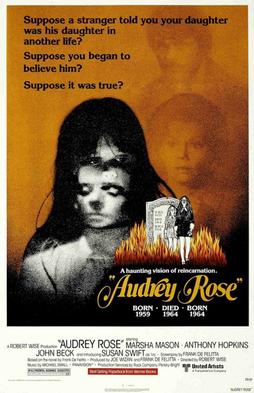
Horror Scenes That I Love: Van Helsing and Dracula Meet in Dracula A.D. 1972


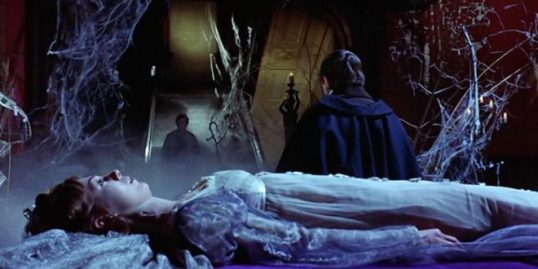
Even in the year 1972, Count Dracula (Christopher Lee) could not escape Prof. Van Helsing (Peter Cushing).  Of course, the Van Helsing here was a descendant of the Van Helsing who gave Dracula such a hard time in the 19th century but still, Dracula was not thrilled to see him.

This scene is from Hammer’s Dracula A.D. 1972.  It’s not generally considered to be one of the better Dracula films but I enjoy any chance to see Peter Cushing and Christopher Lee (who were the closest of friends off-screen) acting opposite each other.

International Horror Review: The City of the Dead (dir by John Llewellyn Moxey)


The City of the Dead, a 1960 British horror film that is also known as Horror Hotel, takes place in the town of Whitewood, Massachusetts.  (Though it takes place in America, this is a very British film, from the cast to the sensibility.)

Like most small New England towns (or, at the very least, the type of small New England towns that show up in movies like this), Whitewood has been around forever. And it apparently has quite a history, especially where witches and devil worshipers are concerned! In the 17th century, a witch was burned at the stake. Rumor has it that, before she died, she sold her soul to the devil. As long as she arranges for two virgin sacrifices a year, the spirit of the witch can torment Whitewood for as long as she likes.

Fortunately, a virgin has just arrived in town! Nan Barlow (Venetia Stevenson) is doing a term paper on the history of witchcraft and her very helpful professor, Alan Driscoll (played by the man himself, Christopher Lee), suggested that maybe Nan should visit town and stay at the Raven’s Inn.

As soon as Nan arrives, it becomes obvious to her that there’s something strange about Whitewood. All of the people are so strange and secretive and the streets always seem to be covered in fog. As Nan starts to do her research, she discovers that it will soon be time for the first annual sacrifice. The sacrifice is meant to happen at “The Hour of 13.” What does that mean? Why not go into the basement of the inn and search for some clues….

When Nan never returns from Whitewood, her brother, Dick (Denis Lotis), teams up with her fiance, Bill (Tom Naylor), and they head up to town to investigate. Once Dick arrives in town, he meets Whitewood’s only seemingly normal inhabitant, Pat (Bella St. John). Pat, who had previously befriended Nan and is the daughter of the local (and apparently quite ineffectual) reverend, agrees to help them in their search. Of course, Pat is also apparently the only virgin left in Massachusetts and the time for the second sacrifice is approaching….

Though set in America, The City of the Dead was produced in the UK and features British actors, all of whom do a fairly good job of sounding like natives of New England.  (Much like would happen later with the Italian zombie and cannibal films, this very British film was still made with the a focus on appealing to an American audience.) This deliberately paced film is a masterpiece of mood and menace. Director John Llewellyn Moxey emphasizes atmosphere over jump-scares and the black-and-white cinematography gives the entire film a gothic, dream-like feel. Though he’s not in the film as much as you might expect, Christopher Lee still makes the most of his scenes as Prof. Driscoll and the film’s fiery finale definitely makes an impression.

The City of the Dead is one of those films that, because it has fallen into the public domain, is very easy to find. (It seems to get included in every “50-DVD” box set released by Mill Creek.) It also plays frequently on TCM so keep an eye out for it!

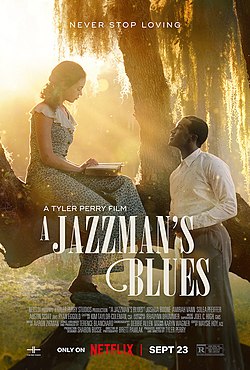
Film Review: A Jazzman’s Blues (dir by Tyler Perry)


In 1987, a wealthy white attorney is running for Congress in Georgia.  After watching an interview in which he attacks affirmative action programs, an elderly black woman named Hattie Mae (Amirah Vann) collects a stack of old letters and drops them off at the attorney’s office.  As the attorney reads the letters, he learns the truth about his past.

That’s the opening of Tyler Perry’s latest Netflix film, A Jazzman’s Blues.  The rest of the film is largely set in Georgia in the 30s and the 40s.  Hattie Mae is the mother of two sons, Bayou (Joshua Boone) and Willie Earl (Austin Scott).  Bayou is shy, innocent, and naïve.  He has a wonderful singing voice but no one takes him seriously.  Willie Earl is egotistical and temperamental.  Because he can play the trumpet, Willie Earl is his father’s favorite.  When Willie Earl and his father leave to seek fame in Chicago, Bayou remains in Georgia with his mother.

He also falls in love with Leanne (Solea Pfeiffer), who everyone calls “Bucket” because her mother abandoned her in a used bucket.  Leanne teaches Bayou to read.  Bayou tries to protect Leanne from he abusive grandfather.  Eventually, though, Leanne leaves Georgia.  Years later, she returns as the wife of the local sheriff’s political ambitious brother.  Leanne is now passing as white but Bayou still loves her.  Leanne’s mother, who is now back in the picture, lies to the sheriff and says that Bayou whistled at Leanne.  Bayou is forced to flee Georgia.  He ends up in Chicago, performing with Wille Earl, who is now junkie.

In Chicago, Bayou becomes a star while Wille Earl plays in his brother’s band.  Willie Earl grows jealous of his brother’s success.  When Bayou learns that Leanne has had a son and that he’s probably the father, Bayou makes plans to return to Georgia for a one-night performance.  Tragically, this provides Willie Earl with his opportunity to seek revenge….

Based on the first script that Tyler Perry ever wrote, A Jazzman’s Blues looks and feels like a real movie.  Netflix actually invested some money in this film and that alone represents a step up from Perry’s previous Netflix film.  Visually, the film does a good job contrasting the lushness of rural Georgia with the harshness of Chicago and the scenes in which Bayou performs in Capital Royale club are particularly well-shot.  Joshua Boone may not be the most expressive actor in the world but he’s got a great voice.  That said, this is still a Tyler Perry film and the story is still both melodramatic and predictable.  The framing device of the attorney reading the letters is rather clumsily handled and you’ll be able to guess the identity of the attorney long before the end credits roll.

The main problem with the film, to be honest, is that Willie Earl is a far more intriguing character than Bayou.  Willie Earl’s story is the interesting one and, as the film comes to a close, you find yourself wondering what Willie Earl did with the rest of his life.  Unfortunately, Perry doesn’t tell you or provide any hints.  His script uses Willie Earl as a dramatic device (and as an excuse to indulge in a bit of biblical allegory) but Austin Scott gives such a strong performance in the role that he takes over any scene in which he appears.  Can there be redemption for Willie Earl or is he doomed to spend the rest of his life in denial?  Does he regret his actions or is he so blinded by jealousy and hatred that he can justify the worst possible betrayal?  It’s the most interesting question that the film leaves us with but Perry doesn’t seem to realize that.

In the end, A Jazzman’s Blues indicates that, with the right resources, Tyler Perry can direct a real film.  But perhaps he should collaborate with another screenwriter.  A Jazzman’s Blues is not a bad film but it’s hard not to feel that Perry missed an opportunity to make it even better.

6 Horrific Trailers For October 9th, 2022


It’s Sunday and it’s October and that means that it’s time for another edition of Lisa Marie’s Favorite Grindhouse trailers!  For today, we have six trailers from the early 70s.  This was the era when horror started to truly get …. well, horrific!

  1. The Bird With The Crystal Plumage (1970)

First off, we have the blood and scream-filled trailer for Dario Argento’s The Bird With The Crystal Plumage.  This Italian thriller made quite a splash when it was released in America.  Indeed, for many Americans, this was their first exposure to the giallo genre.  This would go on to become Argento’s first (and, so far, only) film to be nominated for a Golden Globe.  (Read my review here!)

2. House of Dark Shadows (1970)

Speaking of blood and screaming, 1970 also saw the release of House of Dark Shadows.  Personally, I think this is one of the best vampire films ever.  The trailer is heavy on atmosphere.

3. The Devils (1971)

In 1971, British director Ken Russell scandalized audiences with The Devils, a film so shocking that it will probably never been in its full, uncut form.

4. Tombs of the Blind Dead (1972)

Italy was not the only country sending horror films over to the United States.  From Spain came the Tombs of the Blind Dead.

5. The Last House on the Left (1972)

Speaking of controversy, Wes Craven made his directorial debut with the infamous The Last House On The Left.  The trailer featured one of the greatest and most-repeated horror tag lines of all time.

6. Dracula A.D. 1972 (1972)

Finally, even as horror cinema changed and became more extreme, Hammer Studios continued to tell the long and twisted story of Count Dracula.  They brought him into the present age and dropped him in the middle of hippie-infested London.  No matter how much the rest of the world changed, Dracula remained Dracula.

8 Shots From 8 Horror Films: The Early 70s


4 Or More Shots From 4 Or More Films is just what it says it is, 4 shots from 4 of our favorite films. As opposed to the reviews and recaps that we usually post, 4 Shots From 4 Films lets the visuals do the talking!

This October, I’m going to be doing something a little bit different with my contribution to 4 (or more) Shots From 4 (or more) Films.  I’m going to be taking a little chronological tour of the history of horror cinema, moving from decade to decade.

Today, we take a look at the early 70s!

8 Shots From 8 Horror Films: The Early 70s

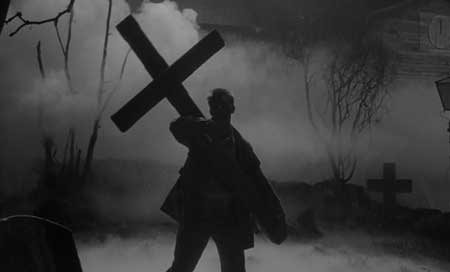
The Bird With The Crystal Plumage (1970, dir by Dario Argento, DP: Vittorio Storaro)

House of Dark Shadows (1970, dir by Dan Curtis, DP: Arthur Ornitz)

Hatchet For The Honeymoon (1970, dir by Mario Bava, DP: Mario Bava)

The Devils (1971, directed by Ken Russell, DP: David Watkin)

Tombs of the Blind Dead (1971, dir by Amando de Ossorio, DP: Pablo Ripoll)

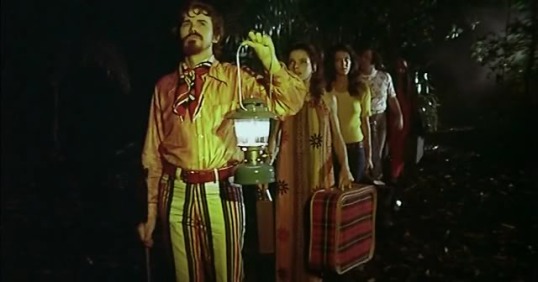
Children Shouldn’t Play With Dead Things (1972, dir by Bob Clark, DP: Jack McGowan)

Last House on the Left (1972, dir by Wes Craven, DP: Victor Hurwitz)

Dracula A.D. 1972 (1972, dir by Alan Gibson, DP: Dick Bush)

Horror Film Review: Audrey Rose (dir by Robert Wise)


The 1977 film, Audrey Rose, tells the story of an annoying little girl named Ivy (Susan Swift), who is the daughter of annoying Janice (Marsha Mason) and annoying Bill (John Beck).  Everything seems to be perfectly normal in an annoying way until, one day, they notice that they’re being followed around by an annoying man named Elliott (Anthony Hopkins).  Elliott explains that Ivy is the reincarnation of his daughter, Audrey Rose, who was herself kind of annoying.  Whenever Elliott says, “Audrey Rose,” Ivy going into a trance and starts screaming, which gets a bit annoying after a while.  Elliott explains this is because Audrey died in a fiery car crash and was apparently reincarnated too soon after her death.  Therefore, anytime Elliott shows us, Ivy relives the crash and tries to burn herself.  Annoying!

To me, it seems like there’s a simple solution to all of this.  Elliott could just go away or, at the very least, stop saying, “Audrey Rose” every ten seconds.  Anyway, at one point, Ivy starts screaming so Elliott rushes into the apartment and makes her stop.  However, Elliott is accused of attempting to abduct Ivy, arrested, and put on trial.

Elliott’s defense is that he couldn’t abduct his own daughter so therefore, if Ivy is the reincarnation of Audrey Rose, then he’s innocent.  Somehow, this leads to the trial becoming about proving reincarnation.  Hindu holy men are called to the stand.  Elliott smirks and tells his lawyer to call Janice to the stand because he’s figured out that Janice believes him.  Meanwhile, Ivy finds herself drawn towards every fire that she sees…

Audrey Rose was directed by a legitimately great director, Robert Wise.  Unfortunately, Wise takes the material way too seriously.  Just when you think the film is going to be an over the top possessed child flick, it suddenly turns into a turgid and serious debate about reincarnation.  The movie is so busy trying to be realistic that it forgets to be fun.

There’s also a lot of yelling in Audrey Rose.  In between Ivy screaming and Elliott continually calling his dead daughter’s name and Bill arguing with Janice and random characters screaming whenever Ivy gets to close to a fire, it’s easy to get a headache while watching this film.

Mason and Beck are pretty lousy in the roles of Janice and Bill.  Hopkins brings an occasionally neurotic edge to the role of Elliott.  You never quite trust him, even though the movie wants you to.  The best performances in the film come from the performers in the minor roles, character actors like Norman Lloyd, Robert Walden, and John Hillerman.  None of them are required to pretend like they’re taking their dialogue seriously and, as such, they’re a lot more fun to watch.

All in all, Audrey Rose is a fairly silly movie.  For some reason (probably the presence of Hopkins), it does seem to show up on TCM fairly regularly but I wouldn’t recommend watching.  If you want to see a good Robert Wise horror movie, check out The Haunting.
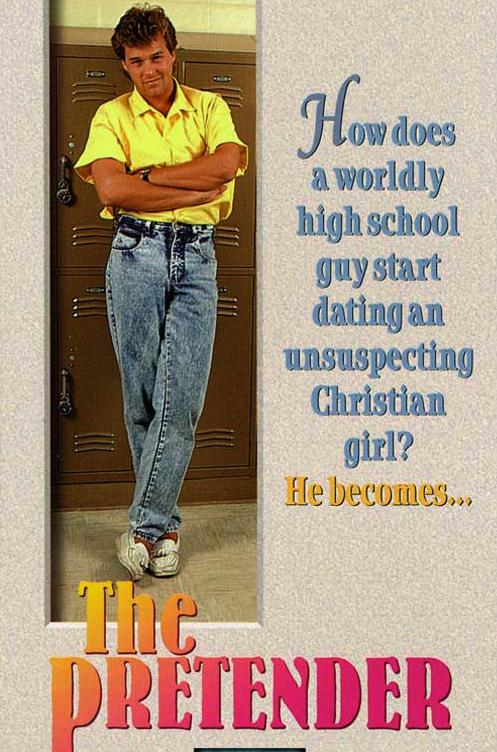
October Positivity: The Pretender (dir by Dave Christiano)


The 1987 film, The Pretender, invites us to meet Keith!

As played by Mark Rose, Keith is a typical high school student.  He has a job delivering pizzas.  He likes to hang out with his friends.  He likes to smoke.  He likes to drink.  He takes football a little bit too seriously.  And, most of all, Keith wants to get laid.

However, almost all of the girls at his high school have gone out with Keith and are tired of him.  At least, that’s the way that Keith and his friends explain it.  (Considering how unappealing Keith is, I think he might be giving himself a little bit too much credit.)  Though his friends insist that “Robin Williams” is the hottest girl in school, Keith sets his sights on Dana (Crystal Robbins).  Everyone wants to date Dana but everyone also knows that Dana is ultra-religious.

So, quicker than you can say Dangerous Liaisons or Cruel Intentions or even The Resurrection of Gavin Stone, Keith decides to pretend that he’s become ultra-religious as well!  Keith announces to everyone that he’s met that he became a Christian over the summer.  Keith even fools the leader of the school’s Christians, Frank (Dan Addington).  Keith reads the Bible.  Keith memorizes verses.  Keith goes to church.  And soon, Keith is kind of dating Dana!

Now, if you’re expecting me to say that all of this means that Keith actually becomes a Christian …. well, you’re wrong.  This is a film from the Christiano Brothers and a major theme running through almost all of their films is that most people who claim to be a Christian actually aren’t.  Indeed, the major Christiano theme always seems to be that you should trust no one.  That’s the case with Keith, who comes across as being something of a sociopath, a southwestern Patrick Bateman.  Keith is such a liar that he even convinces another friend of his to start a fight with Frank so that Keith can step in and protect Frank.  Keith may say that he’s all about Jesus but he’s still getting into fights on the football field and threatening kids in class.  Speaking of class, I’m a little bit curious about just what exactly Keith’s grades look like.  He spends so much time setting up fake confrontations and hiring people to lie for him, you have to kind of wonder if he actually has any time left for studying.  Those lies aren’t going to get you into SMU, Keith!  Eventually, much like Valmont, Keith is on the verge of getting what he wants from Dana but don’t worry!  Keith’s not a slick as he thinks he is.

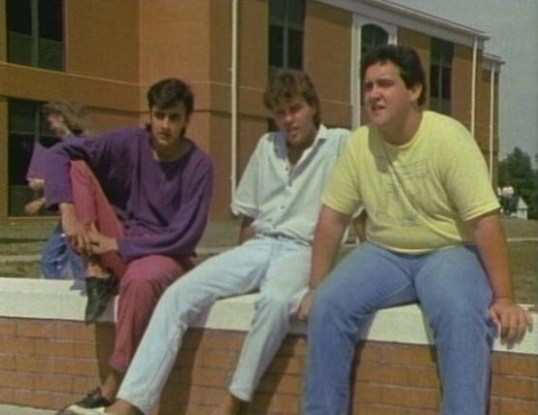
The film is a definite time capsule, full of 80s styles, 80s haircuts, and 80s attitudes.  The grainy cinematography gives the film almost a documentary feel and, as a Southwesterner, it’s always nice when I get to watch a film where everyone has the same accent that I do.  That said, it’s a pretty silly film.  The problem is that Keith’s plan is so obvious that you actually kind of lose respect for Frank and Dana when they don’t immediately see through him.  This is one of those films where things happen not because they make sense but because the film needs them to happen in order to make a bigger point.  Still, the film ends on a slightly upbeat note, suggesting that redemption is available to even sociopaths, like these three toadsuckers below.

The TSL’s Horror Grindhouse: House of The Dead (dir by Uwe Boll)


You know things are going to be bad when the 2003 video game adaptation House of the Dead opens with a lengthy narration in which we’re told exactly who is going to die in the film and who is going to live. Narration is usually a bad sign, in general. Narration that gives away a huge chunk of the plot during the opening five minutes is even worse.

Things get worse when we’re told that a bunch of college students need to find a boat so that they can attend the “rave of the century,” which is being held on an isolated island. (The island, by the way, is known as the Island of the Dead but no one seems to be that concerned by the name.) From what we see of the greatest rave of all time, it apparently involves one stage, two speakers, and exactly 8 people dancing. The dancers are often shot in slow motion, which I guess is meant to make them look like they’re having more fun than they actually are. Myself, I’m wondering why anyone would hold the “rave of the century” on an island that no one can find. According to the banner above the stage, the whole thing is being sponsored by Sega, the company behind the House of the Dead video game that gave this movie its name.

Things quickly go downhill once the zombies show up and start killing everyone. It doesn’t take long for most of the disposable characters to get killed. The majority of the film is made up of people either running through the forest or hiding in a house or a boat. Because none of the characters really have any personality, you’re never quite sure who anyone is. Their deaths don’t really register because it never seems as if they were living to begin with. Watching the film, it’s hard not to feel that everyone on the island is a member of the living dead. It’s just that some of them haven’t realized it yet.

As mentioned above, House of the Dead is based on a video game and, frequently, the action is punctuated with heavily pixelated scenes that have been lifted straight from the game. On the one hand, you have to admire the film for being honest about what it is. On the other hand, you have to regret that the film itself is never as much fun as the game probably is.

House of the Dead was one of several video game adaptations that German director Uwe Boll was responsible for in the early aughts. Up until he retired from the film industry, it was regularly argued by online film critics that Boll was the world’s worst director. Boll responded to the criticism by challenging his most vehement critics to a boxing match. A few of the critics accepted the challenge and Boll actually did fight them, knocking all of them out. I imagine that’s probably every filmmaker’s secret fantasy.

Myself, I will say that I don’t think Boll is the worst director in the world. He’s not particularly good but there are worst directors out there. That said, House of the Dead is pretty bad. The dialogue is leaden, the characters are bland, and even the intentional attempts at humor fall flat. Seventeen years after it was first released, it still pretty much represents the nadir of video game adaptations.

Anyway, the main lesson of this film is …. well, I don’t think there really is a lesson to be found, other than that it might be a good idea to take names seriously. I mean, Island of the Dead? Can anyone really be surprised that the zombies showed up?

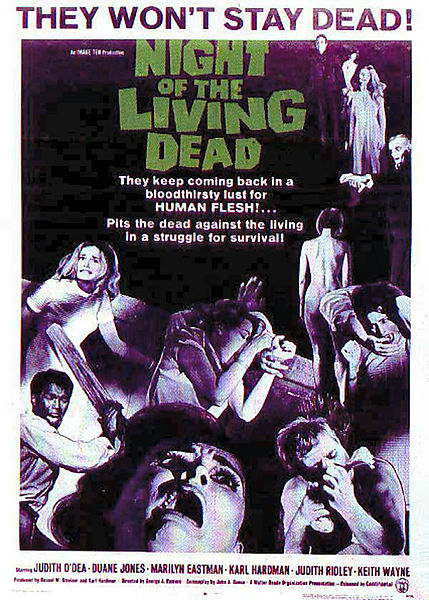
Horror Scenes That I Love: The Gas Pump Disaster From Night of the Living Dead


I remember the first time that I ever watched the original Night of the Living Dead, I was really stunned and, to be honest, quite upset by the death of Tom and Judy.  They were so likable and earnest that I guess I naturally assumed that they would survive or, at the very least, they wouldn’t die in such a pointless manner.  But, ultimately, that’s what made Night of the Living Dead such a frightening film.  It didn’t matter who you were or what you’re intentions were.  The Dead were going to kill you and then they were going to eat you.

Honestly, everyone should have just stayed in the cellar.

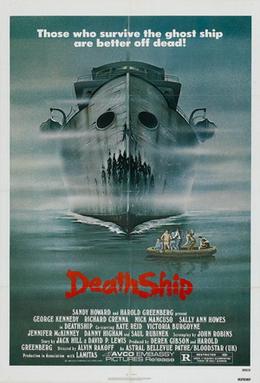
International Horror Film Review: Death Ship (dir by Alvin Rakoff)


The 1980 Canadian film, Death Ship, opens with a black freighter ominously sailing across the ocean in the middle of the night.  The freighter appears to be deserted but, when a cruise ship appears over the horizon, we suddenly hear disembodied German voices announcing that the enemy is in sight and it’s time to take battle stations.  The freighter changes direction and starts to rapidly move straight towards the cruise ship.

On the cruise ship, a really bad comedian named Jackie (played by Saul Rubinek) is telling a series of unfunny jokes.  Fortunately, before he can further offend anyone else’s comedic sensibilities. the freighter crashes into the cruise ship and sinks it.  The next morning, we see a small group of survivors floating on a piece of debris.  There’s the firm and harsh Captain Ashland (George Kennedy), who was on the verge of being forced into retirement before his boat sank.  There’s Mrs. Morgan (Kate Reid), the odd religious passenger.  There’s Trevor Marshall (Richard Crenna), his wife Margaret (Sally Ann Howes), and their two annoying kids.  There’s a guy named Nick (Nick Mancuso) and a woman named Lori (Victoria Burgoyne), who are in love but obviously doomed.  And then there’s Jackie.  That’s right, Jackie survived!  And he’s still telling bad jokes!

Suddenly, the survivors spot the freighter in the distance.  Not realizing that it’s the same freighter that previously rammed them, they board the boat and discover that it appears to be totally abandoned.  Jackie stands on the deck, encourages everyone to be positive, and makes more jokes.  Suddenly, a cable wraps around his ankles, one of the ship’s cranes suddenly moves, and Jackie is tossed back into the ocean.  The comedy Gods have spoken.

Anyway, once Jackie is no longer around to make them laugh, the cruise ship survivors set about going crazy.  It’s not that difficult to do because it turns out that not only is the freighter full of ghosts but the ship’s engine is fueled by pure hate.  That means that one passengers takes a shower just to have the water turn to blood.  Another makes the mistake of watching an old movie and eating a cursed piece of hard candy.  Yet another ends up getting tossed into the gears of the ship and loses an arm.

Meanwhile, Captain Ashland stumbles around the ship and hears voices telling him that the ship is now his.  After Ashland discovers and then puts on an old officer’s uniform, he declares that he’s in charge of the freighter and then he proceeds to try to kill everyone else on the ship.  Captain Ashland is possessed and there’s not even anyone on the boat who can make a joke about it.

Death Ship is a dumb but crudely effective movie.  This is one of those films where everyone could have saved themselves a lot of trouble by sticking together as a group instead of splitting up to search the freighter but it’s not like you’re watching a movie called Death Ship because you’re looking for a coherent narrative or anything.  The main reason you’re watching is so you can see George Kennedy get possessed and go crazy.  Fortunately, George Kennedy was just the type of character actor who you could depend upon to act the hell out of getting possessed.  There’s not a hint of subtlety to be found in Kennedy’s performance and, if nothing else, that certainly makes him entertaining to watch.  Kennedy attacks this role with the ferocity of a cheetah pouncing on a gazelle in a nature documentary.  He basically grabs hold of the film and snarls at the rest of the cast, “This is my movie!  If you steal a scene from me in your dreams, you better wake up and apologize!”  It’s fun to watch.

The same can be said about Death Ship, which is a totally over-the-top movie but which, thanks to Kennedy’s performance and a few atmospheric shots of the freighter, is also far more entertaining than it has any right to be.