4 Shots From 4 Films is just what it says it is, 4 shots from 4 of our favorite films. As opposed to the reviews and recaps that we usually post, 4 Shots From 4 Films is all about letting the visuals do the talking.
This October, I am going to be using our 4 Shots From 4 Films feature to pay tribute to some of my favorite horror directors, in alphabetical order! That’s right, we’re going from Argento to Zombie in one month!
Today’s director is Tod Browning, who started his career during the silent era, ended it in the sound era, and was responsible for some of the most important horror and suspense films of both eras!
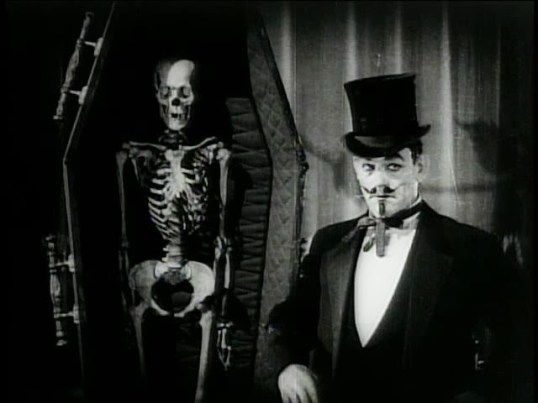
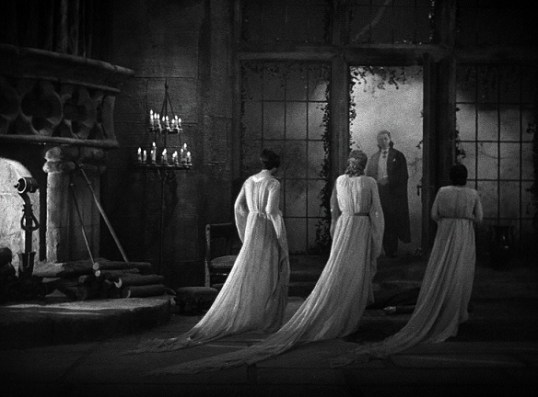
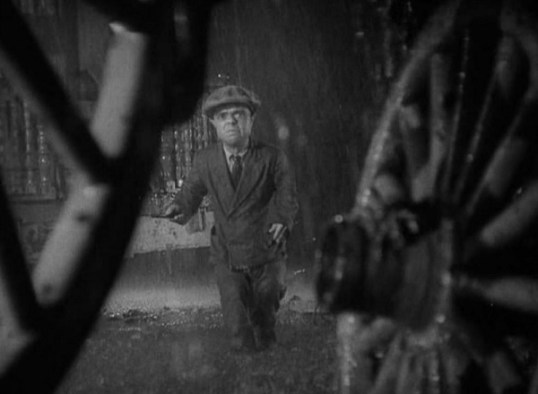
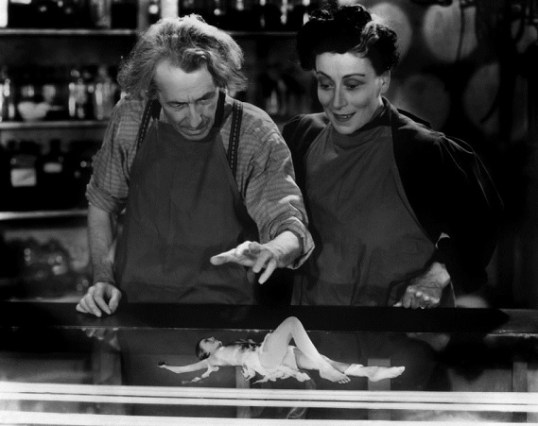
4 Shots From 4 Tod Browning Films
West of Zanzibar (1928, dir by Tod Browning, DP: Percy Hilburn)
Dracula (1931, dir by Tod Browning. DP: Karl Freund)
Freaks (1932, dir by Tod Browning, DP: Merritt Gerstad)
The Devil-Doll (1936, dir by Tod Browning, DP: Leonard Smith)
Filmed in 1978 but not released until 1984, The Astral Factor tells the story of Roger Sands (Frank Ashmore).
Known as the Celebrity Killer, Roger is a serial killer who murdered women who reminded him of his famous mother. It may seem like Roger is destined to spend the rest of his life in prison but what the legal system didn’t consider is that Roger has the ability to not only move things with his mind but to also turn himself invisible. How did Roger get those powers? Who knows? At one point, Roger’s psychiatrist mentions that Roger was a student of the paranormal. Later, it’s revealed that he had several books about the supernatural in his bedroom. Apparently, Roger figured out how to do it himself.
Anyway, Roger is now invisible and soon, he has escaped from prison. He is determined to kill the five women who testified against him at his trial, both because they remind him of his mother and also because he blames them for sending him to prison. Roger strangles his victims, which in this case means that the actresses playing them have to pretend like they’re struggling with someone who can’t be seen. In fact, Roger spends almost the entire film in a state of invisibility.
How do you catch a killer who can’t be seen? It’s a fair question but police Lt. Charles Barnett (Robert Foxworth) might have the answer. Barnett’s solution involves grabbing a gun and keep firing it until you hit something. That’s a straight-forward solution but The Astral Factor is a pretty straight forward film. The film begins with Roger turning invisible and, to its credit, it doesn’t spend too much time trying to justify or explain Roger’s magical powers. The film understands that all the audience really needs to know is that Roger can’t be seen and that it’s up to Lt. Burnett to find a way to stop his killing spree.
The Astral Factor is a low-budget film, one that is full of formerly prominent performers who obviously showed up to get a quick paycheck. Sue Lyon, Marianne Hill, Leslie Parrish, and Elke Sommer all play potential victims and all of them look like they would rather be doing anything other than appearing in The Astral Factor. Robert Foxworth, to his credit, does his best to give a convincing performance as a level-headed cop who is forced to accept the reality of the paranormal. Not only is he having to investigate a series of murders but he’s having to do it on his birthday. Stefanie Powers plays his girlfriend, Candy. Candy often refers to herself in the third person whenever she’s having a conversation with her boyfriend. I tend to do the same thing so at least there was a character in this movie to whom I could relate. Knowing the rules of the genre, I spent the entire movie expecting Candy to be put in danger and I was actually impressed when my expectations were subverted and that didn’t happen.
With the exception of a few atmospheric scenes and an entertainingly garish and tacky dance number, the film itself has the rather flat look of a made-for-TV movie, though the occasional hint of nudity indicates that it was meant to be a theatrical release. As I mentioned at the start of this review, The AstralFactor was originally filmed in 1978 but it sat on the shelf until 1984. That’s when a slightly shortened version was released under the title The Invisible Strangler. Today, the film is available in countless Mill Creek Box Sets, under its original title and with its original run time restored.
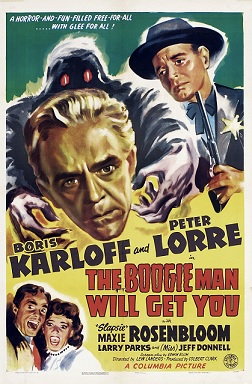
Today’s horror on the lens is a short horror comedy from 1942. In The Boogie Man Will Get You, Winnie Slade (Miss Jeff Donnell) buys an old house from Prof. Billings (Boris Karloff) with plans to covert it into a hotel. However, one of the conditions of the sale is that Prof. Billings and his servants be allowed to live on the property. What Winnie doesn’t know is that Prof. Billings had been conducting experiments on traveling salesman. He hopes to turn them into supermen who, much like Captain America, can then be sent overseas to fight the Nazis. However, his experiments have yet to be successful and have mostly just resulted into a lot of salesman being buried out in the rose garden.
However, things start to look up for Prof. Billings when he meets Dr. Lorencz (Peter Lorre), who is not only a doctor but also a mayor, sheriff, and dog catcher. Seriously, Dr. Lorencz can do it all!
The Boogie Man Will Get You is a fun little time capsule of the time in which it was made. For horror fans, it is mostly interesting because it features both Boris Karloff and Peter Lorre. Both Karloff and Lorre appear to be having a lot of fun parodying their usual screen images.
As week 1 of the 2023 Horrorthon comes to a close, it’s time for me to admit that I am absolutely, 100% exhausted. Hopefully, this latest edition of Lisa Marie’s Favorite Grindhouse Trailers will help to keep me awake!
Nightmare on Elm Street (1984)
Here’s a trailer that’s as good as any when it comes to giving you a reason to try to stay awake!
2. Bad Dreams (1988)
Freddy isn’t the only person haunting the dream world.
3. Dreammaniac (1986)
Actually, there’s a lot of dangerous things out there in Dream Land.
4. The Cell (2000)
Even Jennifer Lopez and Vince Vaughn know better than to get lost in someone else’s dream.
5. Phantasm (1979)
And, of course, we can’t talk about sleep and dreams and nightmares without including the classic trailer for Phantasm.
6. Dreamscape (1984)
Fear not, though! If things get too intense in the dreamworld, we can always call Dennis Quaid.
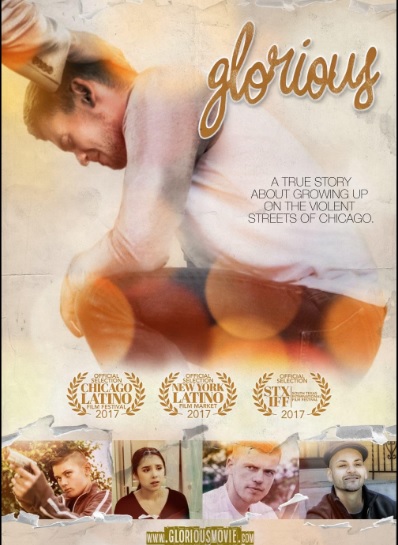
2016’s Glorious tells the apparently true story of Vince, a kid from Chicago.
Vince (played, as a child, by Gabriel Aaron Zavelta) starts life with a lot to overcome. For one thing, his family is poor. He’s never met his father and his mother (Olga Cunningham) is often busy at work, leaving Vince alone with his stepfather (Paul D. Morgan). Vince’s stepfather is quickly established as being a cruel and abusive man, one who looks for any excuse that he can find to beat Vince. When, after taking a shower, Vince drips water on the “clean rug,” his stepfather sees that as an excuse to take Vince into the basement and whip him with a belt. At school, Vince never fits in and is introverted and shy.
It’s not until a local gang leader take an interest in Vince that Vince starts to feel more confident about his life. After Vince withstands a violent initiation, he is praised for being tough and resilient and the sad thing is that this is probably the first time that Vince has ever been praised in his life. Soon, Vince is leading a double life. At school and at home, he’s still the shy kid who struggles to express himself. On the streets, he carries a gun and has no hesitation about opening fire on a car being driven by a rival gang member. In one of the film’s more shocking moments, he even opens fire on another student, shooting him outside of the school. Vince may pretend to be hard but the guilt gnaws away at him. When the cafeteria lunch lady gives him an accusatory “I saw what you did,” greeting, Vince looks like he’s about to cry.
Vince eventually ends up doing several stints in juvenile hall. Finally, the teenage Vince (now played by Darcy Grey) is accepted into a program that is designed to rehabilitate youthful offenders. He has to work maintenance for a school while attending chapel on a daily basis. Initially skeptical, Vince sticks with the program and starts to turn his life around. However, every time that he is released from juvi, his past is waiting to catch up with him. No sooner has Vince met and fallen in love with Cynthia (Tanya Nungaray) than his former friends are trying to gun him down. Can Vince escape his past or is he destined to be brought down by it?
Glorious is a low-budget but earnest look at one man’s search for redemption and it’s actually not that bad at all. The actors are all convincing in their admittedly thinly written roles and director Juan Daniel Zavaleta keeps the action moving at a good pace. One reason why the film works is because Vince doesn’t automatically become a saint. The film makes clear that, even as he commits to no longer being a criminal, Vince still has a long way to go. Unlike so many other faith-based film, Glorious does shy away from the difficulties that the main character is going to continue to face. At the same time, the film does highlight the importance of trying rehabilitate — rather than just blindly punish — the incarcerated. That’s something about which I feel very deeply and it’s obvious that this film does as well.
The budget’s low and occasionally, the film relies a bit too much on the shaky camera gimmick to create tension but, otherwise, Glorious is an effective look at one man’s path to redemption.
An all-women motorcycle gang called the Cycle Sluts roars through the desert. Why are they called the Cycle Sluts? As their leader puts it, they know what people are going to call them so they’re reclaiming the term for themselves. Nobody tells the Cycle Sluts what to do and nobody but the Cycle Sluts decides or defines who the Cycle Sluts are. They’re rebels and they’re singers, making music and fighting the patriarchy as they make their way through the dusty corners of America. Go, Cycle Sluts, go!
When the Cycle Sluts drive into the small desert town of Zariah, the residents are not happy to see them. Zariah is a peaceful and boring town and the citizens would like to keep it that way. The citizens are happy having a town where there’s only a few buildings, next to no businesses, and only a few residents. It’s a town where not much happens and everyone can live in peace, far away from all the evil temptations of the big city and corrupt civilization. However, the town becomes a lot less peaceful when the local mortician starts to bring the dead back to life. Soon, zombies are wandering through the desert on their way back to their former home and only the Cycle Sluts and a bus full of stranded blind kids can save the town!
That slight plot description probably tells you all you really need to know to get a feel for what type of film 1989’s Chopper Chicks in Zombietown is. It was released by Troma, which means that the humor is crude, the zombie attacks are bloody, and the film’s aesthetic is undeniably cheap. That said, the film itself is enjoyable when taken on its own dumb terms. The action moves quickly, the members of the cast perform their silly roles with an admirable amount of dedication, and the whole thing ends with a message of peace and equality. The townspeople learn how to be tolerant and the Cycle Sluts learn how to trust other people. It’s about as dumb as a movie about about bikers fighting zombies can be but it’s a surprisingly fun movie. It’s hard not to cheer a little when the Cycle Sluts and the towns people and the blind kids finally set aside their differences and do what has to be done. They even manage to save the life of a baby and anyone who has seen any other Troma films knows how rare that can be. In its way, Chopper Chicks in Zombietown serves as a reminded that not every Troma film is as bleak as Combat Shock or Beware! Children at Play. The Cycle Sluts do a good job and so does the film.
Speaking of doing a good job, keep an eye out for Billy Bob Thornton, making an early appearance as the unfortunate boyfriend of one of the residents of Zariah. Billy Bob seems to be having fun with this early job and his appearance here serves as a reminder that everyone started somewhere.
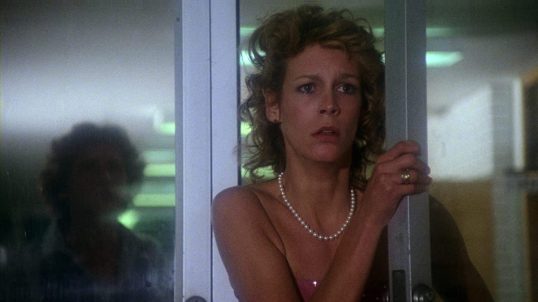
The great Jamie Lee Curtis is, of course, beloved by horror fans for starring as Laurie Strode in the original Halloween. Myself, I’ve always felt that her best horror performance was actually in 1980’s Prom Night.
Just watch her, during the film’s final minutes, when she discovers that the killer who has spent the entire day killing all of her friends is someone from her own family. This is great acting and one can see why the Canadians gave her a Genie nomination for Best Foreign Actress. Let’s hope David Gordon Green never decides or gets the chance to mess this one up.
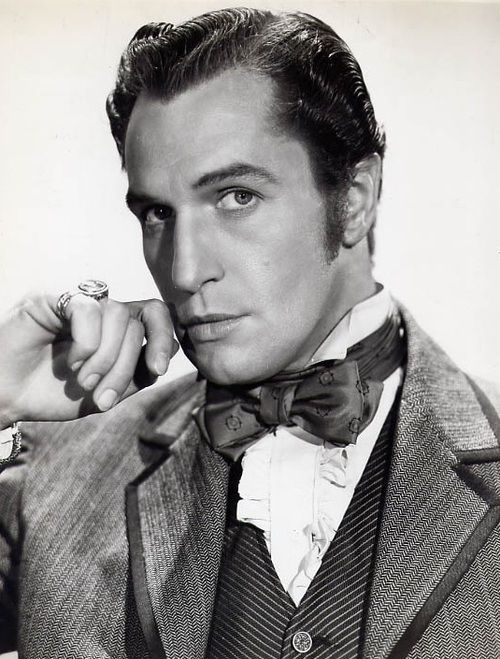
That may sound strange today, the idea of horror icon Vincent Price playing the courtly and handsome Ashley Wilkes in Gone With The Wind. But, when Price came to Hollywood in the late 30s, it actually seemed like ideal casting. Before he became known as a horror actor, the Missouri-born Price was known for being a handsome stage actor who specialized in playing romantic parts. Though Price would become best-known for his horror films, he was capable of much more and he also appeared in much more.
Here are just six of Vincent Price’s memorable non-horror performances!
Robert Wade in Service de Luxe (1938)
At the age of 27, Vincent Price made his film debut in this romantic comedy, playing Robert Wade. Robert Wade is a young man from Albany who comes to New York City because he is trying to raise money that he can then use to build and perfect a new tractor. It’s in New York that he meets and eventually falls in love with a life coach named Helen Murphy (Constance Bennett). Helen is relieved to discover that the earnest Robert is someone who doesn’t need a life coach to tell him how to live his life …. or design a tractor as the case may be! This is a rather slight film but, in his film debut, Price is charming and handsome.
2. Vital Dotour in The Song of Bernadette (1943)
In this Oscar-nominated film, Price has a key role as the prosecutor who looks into the claims that a girl named Bernadette (Jennifer Jones) has experienced visions of the Blessed Virgin Mary. Though the role does carry some hints of the type of work that lay in Price’s future, it’s still a far cry from his later horror roles and Price brings some needed nuance to a characters who, in lesser hands, could have just been a flat-out villain.
3. Shelby Carpenter in Laura (1944)
Perhaps the best-known and most-regarded of all of Price’s non-horror films, Laura features Price in the role of the good-for-nothing, wealthy boyfriend of Laura (Gene Tierney). When Laura is (incorrectly) believed to have been murdered, Shelby Carpenter is one of the more obvious suspects. Price is wonderfully sleazy in the role of Shelby.
4. William Gibbs McAdoo in Wilson (1944)
Vincent Price doesn’t really get to do much in this epic biopic of America’s worst President but it’s still amusing to see the instantly recognizable Price as Wilson’s son-in-law and wannabe successor, William G. McAdoo.
5. Baka In The Ten Commandments (1956)
Perhaps the worst of all the villains to be found in The Ten Commandments, Baka’s cruelty ends only when he’s killed by Charlton Heston’s Moses. Price truly does a wonderful job turning Baka into a villain who can be despised by all viewers.
6. Nicholas Maranov in The Whales of August (1988)
In one of his final roles, Price played a charming Russian who visits two elderly sisters (Lillian Gish and Bette Davis) at the seaside vacation home in Maine. After decades of being typecast as a horror actor, Price showed off his considerable charm and wit in this role and received a nomination for Best Supporting Actor from the Independent Spirit Awards.
In 1983, a one-eyed, illiterate drifter named Henry Lee Lucas was arrested by the Texas Rangers. Lucas was arrested for unlawful possession of a firearm but, once in custody, he confessed to murdering 82 year-old Kate Rich and his 15 year-old girlfriend, Becky Powell. Upon being transferred to the Williamson County Jail, Henry Lee Lucas confessed to one murder and then another and then another and then …. well, soon, ol’ Henry Lee Lucas had confessed to over 300 murders. According to Lucas, he had spent the past decade traveling the country with his friend and lover, Ottis Toole, and killing just about everyone they met. (Ottis, who was already in prison in Florida, was Becky’s uncle.) He claimed that he was a member of a nationwide Satanic Cult. At one point, he even confessed to killing Jimmy Hoffa.
Soon, cops from across the county were traveling down to Texas and asking Lucas if he had killed anyone in their state. Lucas’s confessed to almost every murder that he was asked about and often times, he provided details that were considered to be close enough to what happened that his confessions were considered to be credible. The police were happy because they got to take a lot of unsolved murders off the books. Lucas was happy because he was getting to travel the country, he was getting a lot of media attention, and he was being kept out of the general prison population. Indeed, many of the Texas Rangers who escorted Lucas from crime scene to crime scene would testify that, the murders aside, Henry Lee Lucas was usually polite, soft-spoken, and genial company. They would buy him a milkshake. He would confess to a murder.
It was only after Lucas had confessed to so many murderers that he had gained a reputation for being the most prolific serial killer in history that people started to take a good look at all of Lucas’s confessions. What quickly became apparent was that it would have been next to impossible for Lucas to have been everywhere that he claimed to be when he claimed to be there. Many of Lucas’s confessions fell apart under closer investigation. Lucas may have dropped out of the sixth grade but he was very good at picking up on details and manipulating people. He told the police what they wanted to hear. Even worse, it soon turned out that some of the cops were letting him look at their case files before getting his formal confession, allowing Lucas to learn details that only the killer would know. When confronted with this, Lucas recanted all of his confessions.
How many people did Lucas kill? It’s know that he killed his abusive mother when he was a teenager. And, even after he recanted, most legal observers agreed that he killed Kate Rich and Becky Powell. While some continue to insist that Lucas killed hundreds, it’s actually more probable that Lucas, as sick as he was, only killed three people. That didn’t stop Henry Lee Lucas and his confessions from serving as the basis of John McNaughton’s terrifying classic, Henry: Portrait of a Serial Killer.
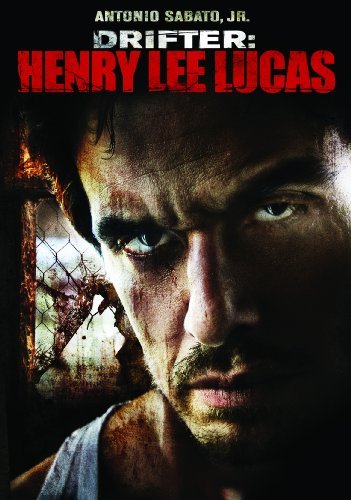
2009 saw the release of another film loosely based on the confessions of Henry Lee Lucas. Drifter: HenryLee Lucas opens with Lucas (played by Antonio Sabato, Jr.) being interrogated as to why he confessed to so many murders that he didn’t commit. The movie then flashes back to Lucas killing Becky Powell (Kelly Curran) before then flashing forward to Lucas confessing to a murder and asking for a milkshake in return and then, once again, it flashes back to Lucas’s Hellish childhood in West Virginia. That’s a lot of time jumps for just the start of the movie and it’s an early indication of just how jumbled the narrative of Drifter turns out to be. To a certain extent, the jumbled narrative is appropriate. It captures the feeling that, in many ways, Lucas is simply making up his life story as he goes along.
Physically, Henry Lee Lucas and Ottis Toole were two incredibly ugly people. Drifter casts Antonio Sabato as Henry and Kostas Sommer as Ottis, both of whom are notably better-looking than the two men that they’re playing. Sommer, in particular, is a hundred-time more handsome that Ottis Toole. (The real Toole looked like one of the toothless hillbillies from Deliverance.) Even if one overlooks their looks, both Sabato and Sommer are a bit too articulate to be believable as two backwoods murderers. Sabato does a good job of capturing Lucas’s one-eyed squint but never once do you buy that he’s someone who grew up in the backwoods of West Virginia. Meanwhile, as Becky, Kelly Curran is shrill and a bit annoying. A lot of that is due to how Becky is written but still, it doesn’t make any easier to deal with her character.
Narratively, the film avoids taking a firm position on whether or not Lucas was lying. We do see Lucas commit a few murders but they’re all told as a part of his narration, leaving open the possibility that Lucas could be lying. Unfortunately, Henry’s stories aren’t that interesting. What was interesting was that so many people chose to believe his stories, despite the fact that the majority of them fell apart under even the slightest amount of scrutiny.
In the end, Drifter reminded me that Henry Lee Lucas is far less interesting than how people reacted to Henry Lee Lucas and his willingness to confess to every crime that he was asked about. There’s a great film to be made about the people who enabled Henry Lee Lucas’s lies. Henry, himself, was far less interesting.
8 Shots From 8 Films is just what it says it is, 8 shots from 8 of our favorite films. As opposed to the reviews and recaps that we usually post, 8 Shots From 8 Films is all about letting the visuals do the talking.
This October, I am going to be using our 8 Shots From 8 Films feature to pay tribute to some of my favorite horror directors, in alphabetical order! That’s right, we’re going from Argento to Zombie in one month!
Today’s director is Mario Bava, the maestro of Italian horror and one of the most influential and important filmakers of all time!
8 Shots From 8 Mario Bava Films
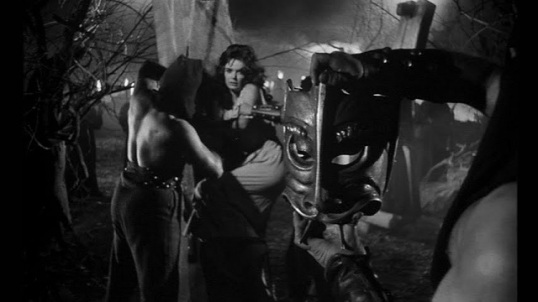
Black Sunday (1960, dir by Mario Bava, DP: Mario Bava)
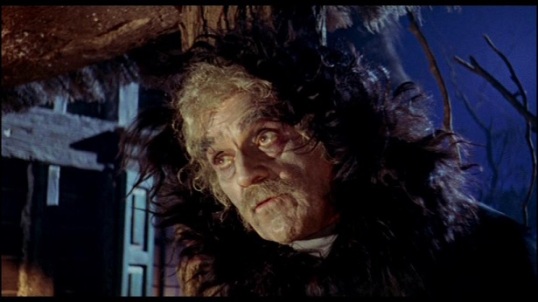
Black Sabbath (1963, dir by Mario Bava, DP: Ubaldo Terzano and Mario Bava)
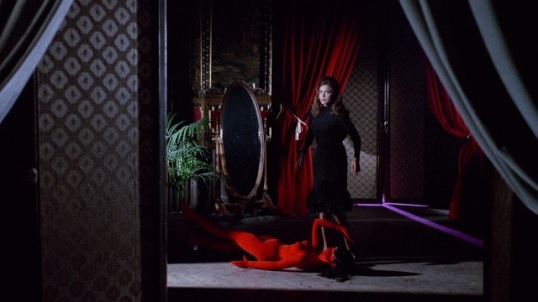
Blood and Black Lace (1964, dir by Mario Bava, DP: Ubaldo Terzano)
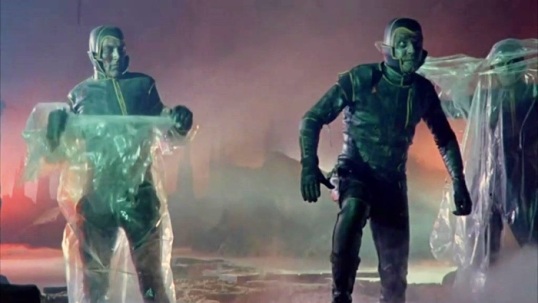
Planet of the Vampires (1965, dir by Mario Bava, DP: Antonio Rinaldi)
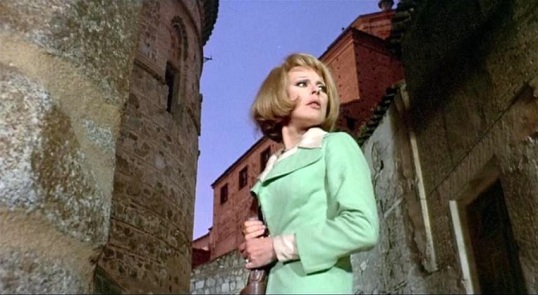
Kill Baby Kill (1966, dir by Mario Bava, DP: Antonio Rinaldi)
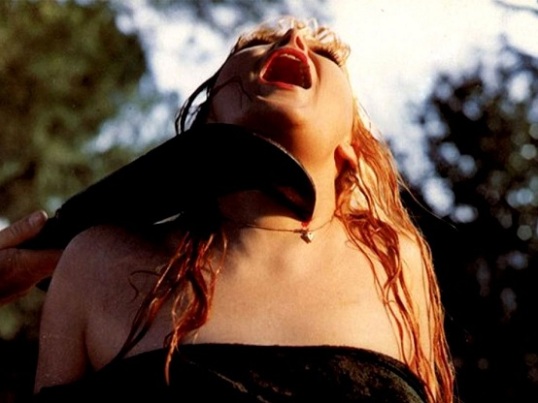
Bay of Blood (1971, dir by Mario Bava, DP: Mario Bava)
Lisa and the Devil (1974, dir by Mario Bava. DP: Cecilio Paniagua)
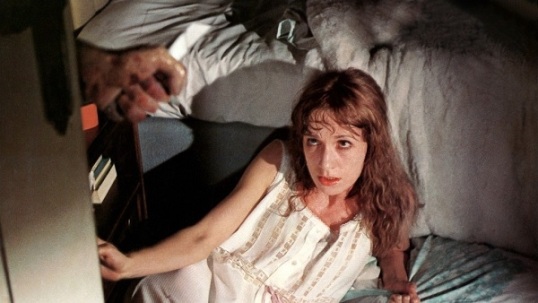
Shock (1977, dir by Mario Bava, DP: Alberto Spagnoli and Mario Bava)



 Through the Shattered Lens