Silent Horror Review: Nosferatu (dir by F.W. Murnau)


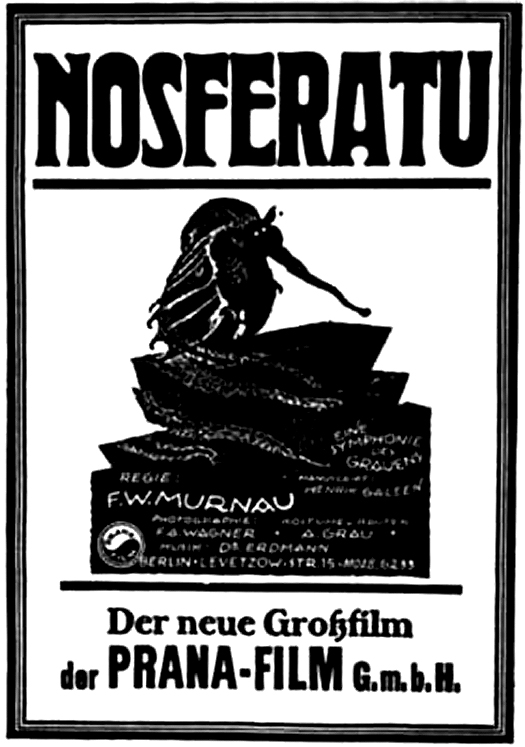
First released in 1922, the original and silent Nosferatu remains a masterpiece.

The story …. well, we all know that story.  Even if you’ve never seen any of three film versions of Nosferatu, you still know the story because it’s basically just Dracula with the names and the locations change.  Dracula is now Count Orlok (Max Schreck), a mysterious nobleman with bat-like features and a fascination with blood.  Jonathan Harker, the estate agent who traveled from England to Transylvania to visit with Dracula, is now Thomas Hutter (Gustav van Wangenheim), a real estate agent who travels from Germany to Transylvania to see Count Orlok.  The mad, bug-eating Renfield is now the mad, bug-eating Knock (Alexander Granach).  Mina Harker is now Ellen (Greta Schroder).  Prof. Van Helsing is now Professor Bulwer (John Gottowt).  Dracula came to England aboard the Demeter.  Count Orlok comes to Germany about the Empusa.

There are a few differences, of course.  Director F.W. Murnau may have used Dracula as his starting point but he brought his own ideas and sensibility to the project as well.  In Nosferatu, Orlok received his vampiric powers from the demon Belial and he not only drinks blood but he also brings with him the threat of plague.  The Empusa brings not just Orlok but also thousands of rats who spread disease in the German town of Wisburg.  The town, which is so vibrant during the early parts of the film, soon becomes a dark and ominous place where the people blame Knock for every curse the Orlok has brought to them.  If Dracula could be destroyed by a stake to the heart and stopped by a cross, Orlok can be stopped by a pure woman sacrificing herself and allowing him to drink her blood as the sun rises.  Orlok, for all of his feral cleverness, cannot resist the twin temptation of blood and innocence.  It leads to an ending that’s quite a bit different from the ending of Bram Stoker’s novel.  In Werner Herzog’s 1979 remake of the film, the insinuation was that the town itself was not worth the sacrifice.  F.W. Murnau is far less cynical.

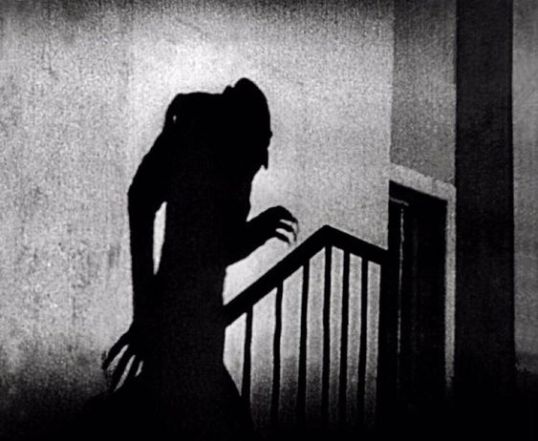
Typically, it takes some effort to adjust to watching a silent movie.  Everything from the frequently melodramatic title cards to the overly expressive acting can tend to make silent cinema seem more than a little campy.  Nosferatu, however, requires less adjustment than most because it’s a film that it still being imitated to this day.  The images of Orlok standing on the bridge of the ship or slowly entering Hutter’s room or leaning down over Ellen’s neck are so haunting and dream-like that it doesn’t matter that they are found in a silent film.  Fear is the universal language and Murnau’s visuals still carry a lot of power.

Made at a time when the world was still recovering from the carnage of the First World War, Nosferatu perfectly captures the feeling of innocence and optimism being replaced by despair and paranoia.  It’s been argued that Nosferatu reflected the fears and anxieties of post-war German society, with the vampire representing the fear of Germany being taken over by outside forces.  There’s probably something to that.  Tragically, those fears also led to the rise of Hitler so I’ll just say that the majority of the cast of Nosferatu fled Germany when Hitler came to power.  John Gottowt, the film’s version of Van Helsing, was murdered by the SS.  Director F.W. Murnau died in a car accident before Hitler came to power but, as a gay man, he would not have been welcome in Hitler’s Germany.

The film itself was a hit when it was first released in Germany.  Unfortunately, calling the vampire Orlok instead of Dracula did not dissuade Bram Stoker’s widow from suing for copyright infringement.  Mrs. Stoker won her case and all copies of Nosferatu were ordered destroyed.  Fortunately, a few prints survived and Nosferatu continues to be regarded as one of the greatest horror films ever made.

4 Shots From Horror History: The 1920s Part Two


This October, I’m going to be doing something a little bit different with my contribution to 4 Shots From 4 Films.  I’m going to be taking a little chronological tour of the history of horror cinema, moving from decade to decade.

Today, we take a look at the latter half of the 1920s.

4 Shots From 4 Horror Films

The Phantom of the Opera (1925, dir by Rupert Julian)

The Phantom of the Opera (1925, dir by Rupert Julian)

Faust (1926, dir by F.W. Murnau)

Faust (1926, dir by F.W. Murnau)

London After Midnight (1927, dir by Tod Browning)

London After Midnight (1927, dir by Tod Browning)

The Fall of the House of Usher (1928, dir by Jean Epstein)

The Fall of the House of Usher (1928, dir by Jean Epstein)

4 Shots From Horror History: 1920s Part One


This October, I’m going to be doing something a little bit different with my contribution to 4 Shots From 4 Films.  I’m going to be taking a little chronological tour of the history of horror cinema, moving from decade to decade.

Today, we take a look at the first half of the 1920s.

4 Shots From 4 Horror Films

The Cabinet of Dr. Caligari (1920, dir by Robert Wiene)

The Cabinet of Dr. Caligari (1920, dir by Robert Wiene)

Haxan (1922, dir by Benjamin Christensen)

Haxan (1922, dir by Benjamin Christensen)

Nosferatu (1922, dir by F.W. Murnau)

Nosferatu (1922, dir by F.W. Murnau)

The Hands of Orlac (1924, dir by Robert Wiene)

The Hands of Orlac (1924, dir by Robert Wiene)

Film Review: Nosferatu (dir. by Robert Eggers)


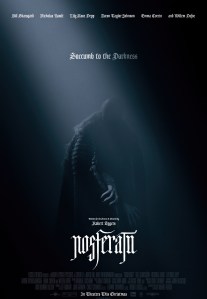
I stepped out of the doors of the Regal Times Square yesterday, feeling giddy as a schoolkid. In my hands were a custom popcorn bucket and an Orlock Funko-Pop. I thoroughly enjoyed Robert Eggers Nosferatu and Christmas Morning was a delight. It was Film Euphoria. It was as if Halloween had one last gift to give, one final end of film zinger, and give it did.

At my early morning showing for Robert Eggers Nosferatu, we had at least one fellow who fell asleep and snored through the bulk of the film. Not loud enough to be disruptive, but it almost mimicked the strange purring sounds of the film’s antagonist. Granted, I understand. My showing was around 10a.m. on Christmas Morning and perhaps they partied hard the night before. Anything’s possible. Still, part of me likes to think that a person walking into a Robert Eggers film may have some expectations. With only three films under his belt – The Witch, The Lighthouse, and The Northman, regular audiences know that he has a taste for the macabre (perhaps even the unhinged), usually employs a slow burn when it comes to pacing and works with a great deal of light and shadow. If either of his previous films worked for you, Nosferatu‘s a near perfect fit for his style. If you’re not a fan of Eggers work, nor a fan of the previous renditions of Nosferatu, there’s little here that will make you change your mind (save for just a little more gore, perhaps). It’s a little hard to spoil a story that’s more than a century old, but Eggers makes enough changes to keep the film from being the exact note for note story as before. Is it scary? Yes. Is there blood? Sure, but none of it is in the ‘jumpscare every other second’ variety. If that’s what you’re looking or hoping for, none of the Nosferatu’s (including this one) will deliver that and you will be quite disappointed. This is a prime cut of wagyu beef, not your everyday sirloin.

As most know, Nosferatu was essentially stolen from Bram Stoker’s Dracula. The original – Nosferatu: A Symphony of Horror was a silent film released back in 1922 by F. W. Murnau. Although the story was written and changed to fit German audiences, elements were still very close to Stoker’s and the Stoker Family tried to get rid of it. Copies were burned, but like that Jumanji box, it managed to slither through the years, gaining popularity to the point of Canonization. If Film History is your thing, I highly recommend watching the 1922 film, if you haven’t already. It amazes me how most of what they did was accomplished (my favorite scene being Orlok prepping his coffins for his trip). At the time of this writing, the movie is currently available on Amazon Prime. For me, I love the 1979 update by Werner Herzog, Nosferatu The Vampyre. There are a few minor changes in the plot, but it’s just as powerful.

Thomas Hutter (Nicholas Hoult, Mad Max: Fury Road) is married to his lovely wife Ellen (Lily-Rose Depp, The King) in the town of Wisborg. Ellen suffers from fits of melancholia, which cause her to either spurt morbid tales or put her in convulsive fits. He’s looking for a way to improve his financial station with his bride while keeping her problems hushed, and has found a great opportunity from his boss, Herr Knock (Simon Burney, Mission Impossible: Rogue Nation). It appears a wealthy old man wishes to move to Wisborg and purchase an estate there. The only stipulation is that he is infirm and cannot make the journey. Thomas is charged with traveling to the Carpathian mountains, where he is to visit Count Orlock at his home with the deeds and contracts. During his trip, Thomas is warned of the dangers ahead, but proceeds full on, meeting the Count and his strange ways. Upon learning of Ellen and her beauty, the Count sets off a chain of events that will put all of Wisborg at risk. Can the Count be stopped in time?

There’s so much love in this production, it seems. It certainly has the atmosphere down. Cinematographer Jarin Blaschke, who worked on all of Eggers previous films, weaves some magic with light that in some scenes rival Alejandro Amenabar’s The Others. Lanterns and candles are blinding, while at the same time, you might find yourself squinting to see the figure in the shadows. I had a few “look around the screen” moments while watching it. There’s absolutely nothing to complain about from a visual standpoint, it’s just beautiful. It’s also quite dark in nature. We’re dealing with vampires, possession and the occult, which Eggers takes in a few extremes (particularly through Skarsgard, Depp and Burney). Ancient tomes? Check. Romani banishing the darkness with Garlic? Check. Consecrating the soil? Done. The sound design in the film is nice, particularly with the breathing and talking for Orlok, which felt like it travelled through the audience. Blood squelches, screams are crisp. There’s little more I can say there, really. I was entertained and transported.

The cast is wonderful. The only thing I’ve ever watched Lily-Rose Deep do was Yoga Hosers, and she’s come a long way from that. Ellen is a tortured character, and Deep rides this through – fits, convulsions and all – to a point where you may wonder if she was really okay on set. We follow Nicholas Hoult’s Thomas as he moves from quiet reservation to curious disbelief and then ultimately, just full on terrified. Even the smaller roles work. Simon Burney’s character becomes repulsive. Emma Corrin, who had a fun turn earlier this year in Deadpool & Wolverine has good moments, along with Aaron Taylor-Johnson (Kraven the Hunter). Then there’s Dafoe. It never hurts to have Willem Dafoe in your lineup. This is his third film with Eggers and he’s come something of a lucky charm as Prof. Ebenhart von Franz. As the Van Helsing of the story, Dafoe is a treat to watch on screen, especially when paired with Ralph Ineson from The Witch. I could watch the two of them as detectives solving Gothic/Victorian X-Files in their own series or movies.

As Orlock, Bill Skarsgard (John Wick 4) really melts into the role, giving the character a low near constant purr and a voice that enunciates every word. Perhaps it was just me, but I did have a bit of a problem figuring out what Orlock was saying at some points. It improved as the story went on, though. Orlock’s look does veer from the traditional, through. That’s a jolt in itself. While he looks more like the Draugr in Skyrim or in Eggers own The Northman, I found myself thinking of “Taserface” in Guardians of the Galaxy, Vol. 2. If you can get past that feeling, it still works. It’s a creepy character and Skarsgard does it justice, I felt.

Clocking in at about 2 hours and 12 minutes, it’s considered the longest Nosferatu film. I found this odd because were a number of sequences the original and remake had that Eggers missed (like the loading of the coffins). The film is cut pretty well, for what it’s worth, though I’m not sure what they could have removed to trim scenes down.

If the film has any faults, any problems, there was one. The one weird misstep in all of this is a sex scene that seemed just a little out of place. I understand why it happened, and how it was supposed to fuel the story, but it comes on so fast and fierce that I sat there in the audience whispering…”Wait…what’s happening…Whoa…now? Here? Why?” Mind you, this is coming from someone who watched Shame more than once when it was first released. That, if anything, might freak a few people out if they’re not ready for it. Either that, or I’m becoming prudish in my old age.

Overall, I loved Nosferatu. If it weren’t so expensive to get out to a theatre, I’d make another run at it. As a remake, it easily stands toe to toe with John Carpenter’s The Thing and Chuck Russell’s The Blob as one you can sit on the shelf next to those who came before it. It’s a worthy adaptation, with moments of sheer dread and some that may push a boundary or two.
Horror on the Lens: Nosferatu (dir by F.W. Murnau)


Today’s Horror on the Lens is a classic film that really needs no introduction!  Released in 1922, the German silent film Nosferatu remains one of the greatest vampire films ever made.  It’s a film that we share every October and I’m happy to do so again this year!

Enjoy!

6 Shots From 6 Best Picture Winners: 1927 — 1939


4 Shots From 4 Films is just what it says it is, 4 shots from 4 of our favorite films. As opposed to the reviews and recaps that we usually post, 4 Shots From 4 Films lets the visuals do the talking!

Today, I’m using this feature to take a look at the history of the Academy Award for Best Picture.  Decade by decade, I’m going to highlight my picks for best of the winning films.  To start with, here are 6 shots from 6 Films that won Best Picture during the early days of the Academy Awards!  Here are….

6 Shots From 6 Best Picture Winners

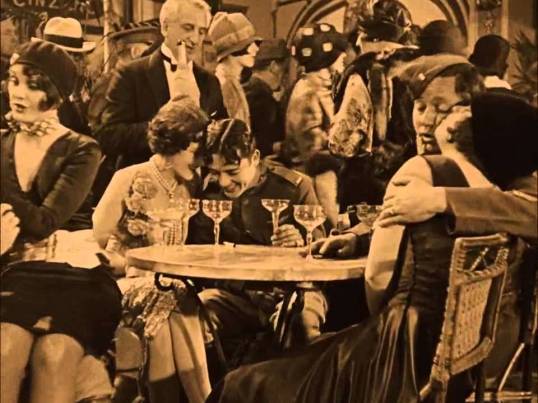
Sunrise: A Song of Two Humans (1927, dir by F.W. Murnau, DP: Charles Rosher and Karl Struss)

Wings (1927, dir by William Wellman, DP: Harry Perry)

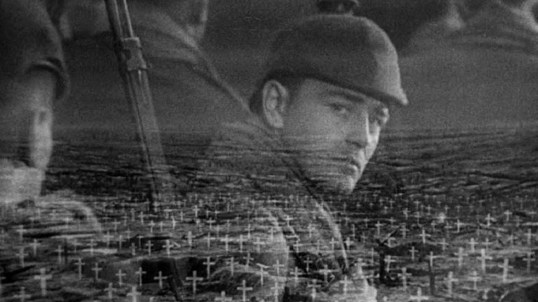
All Quiet On The Western Front (1930, dir by Lewis Milestone, DP: Arthur Edeson)

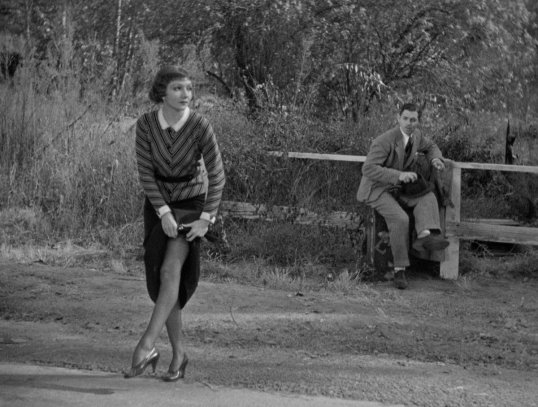
It Happened One Night (1934, dir by Frank Capra, DP: Joseph Walker)

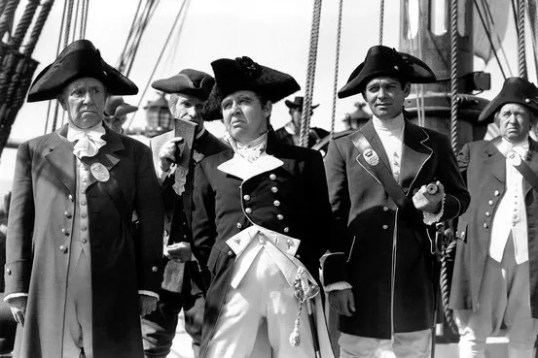
Mutiny on the Bounty (1935, dir by Frank Lloyd, DP: Arthur Edeson)

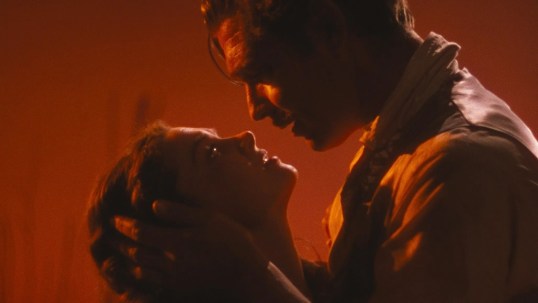
Gone With The Wind (1939, dir by Victor Fleming, DP: Ernest Haller)

4 Shots From 4 Films: Special F.W. Murnau Edition


4 Shots From 4 Films is just what it says it is, 4 shots from 4 of our favorite films. As opposed to the reviews and recaps that we usually post, 4 Shots From 4 Films lets the visuals do the talking.

Today was celebrate the visionary director, F.W. Murnau!  Murnau was born 135 years ago today, in Germany.  He went on to become a leading expressionist and one of the most influential filmmakers of all time.  Needless to say, it’s time for….

4 Shots From 4 F.W. Murnau Films

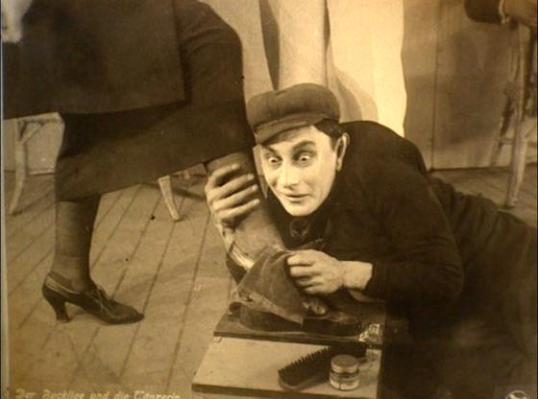
The Hunchback and the Dancer (1920, dir by F.W. Murnau)

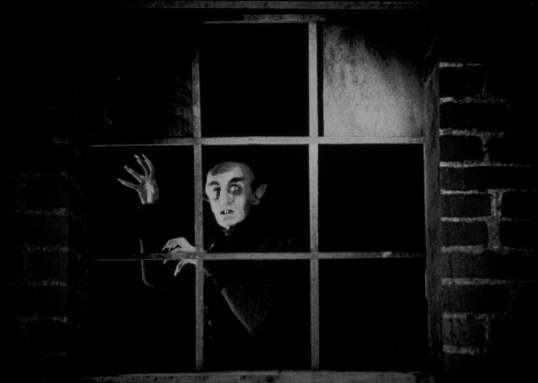
Nosferatu (1922, dir by F.W. Murnau)

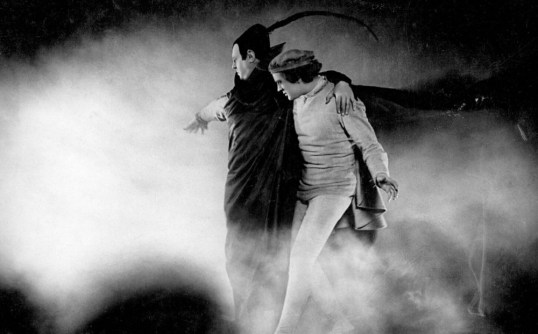
Faust (1926, dir by F.W. Murnau)

Sunrise: The Story of Two Humans (1927, dir by F.W. Murnau)

Horror on the Lens: Faust (dir by F.W. Murnau)


Today’s Horror on the Lens is a silent German film from 1926. Based on the legend of the alchemist who sold his soul to the Devil, Faust was dismissed by European critics when it was initially released but it has since been recognized as one of the greatest cinematic examples of German Expressionism.

It was after directing this film that Murnau traveled to Hollywood and directed his masterpice, Sunrise: A Story of Two Humans. (Murnau was also responsible, many years earlier, for directing Nosferatu.) The role of Fasut was played by Swedish actor Gosta Ekman, who tragically developed an addiction to cocaine while making the film and who would die as a result in 1938. Playing the role of Mephisto is German actor Emil Jannings, who would later go to win the very first Academy Award for Best Actor. Unfortunately, with the advent of sound, Jannings — who had no interest in learning English — returned to Germany and, after making some classic films with Marlene Dietrich, spent the rest of his career appearing in Nazi propaganda films. Whether or not Jannings was a committed Nazi or just an opportunist remains a point of contention but it’s still undoubtedly not the career path that one would hope for one of the very first Oscar winners.

Here is Faust:

Horror on the Lens: Nosferatu (dir by F.W. Murnau)


Today’s Horror on the Lens is a classic film that really needs no introduction!  Released in 1922, the German silent film Nosferatu remains one of the greatest vampire films ever made.  It’s a film that we share every October and I’m happy to do so again this year!

Enjoy!

Horror on the Lens: Nosferatu (dir by F.W. Murnau)


Today’s Horror on the Lens is a classic film that really needs no introduction!  Released in 1922, the German silent film Nosferatu remains one of the greatest vampire films ever made.  It’s a film that we share every October and I’m happy to do so again this year!

Enjoy!