Embracing the Melodrama #57: Winter’s Bone (dir by Debra Granik)


winters-bone

I can still remember what it felt like, back in 2010, as I stepped out of the theater where I had just watched Winter’s Bone.  I had just spent 100 minutes engrossed in that film’s world and it was somewhat jarring to suddenly find myself back in my world.  The air around me was still.  The clear sky above me seemed to be a totally new shade of blue.  The sounds of passing cars and overheard conversations echoed in my head.  When I walked, I felt as if I was moving at a different, dreamier pace than everyone else, as if I was still only partially back in my world.

That’s the type of film that Winter’s Bone is.  It’s a film about life on the fringes, a portrait of a very real part of America that a lot of people don’t even realize exists.  It’s a film that sticks with you and dares you to try to forget the people who it has introduced you to and the stories that it tells.

Winter’s Bone takes place in the Ozarks, a society and world that is dominated by meth and secrets.  Speaking as someone who still has family who live on the outskirts of the world depicted here, I can say that Winter’s Bone gets both the big picture and the little details right.  Everything from the unbreakable cycle of poverty to the defiant resilience of the people is depicted just as it is.  Make no mistake about it — the people in Winter’s Bone may not have much but they do have their pride.  It’s portrayed best in the scene where meth head Teardrop (John Hawkes) glares down the county sheriff (Garret Dillahunt), letting him know that, regardless of who is wearing the uniform, this is Teardrop’s world.

Teardrop is the uncle of 17 year-old Ree Dolly (Jennifer Lawrence), who is considering joining the army once she graduates from high school but, for now, spends all of her time taking care of her mentally ill mother and her two younger siblings.  Her father, who is one of the county’s best meth cooks, was recently arrested and has a court date approaching.  However, he has apparently skipped bail and disappeared.  When Ree is told that, unless her father shows up for his court date, she and her family will lose their house, Ree sets out to try to find him.

05_Flatbed_1 - JANUARY

Ree, however, knows that her father would never have jumped bail and she also knows that there’s no way he died in a meth lab fire, as some people are claiming.  She knows that her father has been murdered but, unlike Teardrop, Ree has no interest in getting revenge.  She just wants to find his body so she can prove that he’s dead and her family can keep their home.  Unfortunately, even this brings Ree into conflict with the local crime boss.

Taking place on a blasted landscape of dilapidated farms, rusty pickups, and the burned ruins of abandoned meth labs, Winter’s Bone is an unusually powerful piece of Southern gothic. It’s also a film that — unlike a lot of other acclaimed movies — actually gets better with repeat viewings.  When you first see it, you’re overwhelmed by the film’s bleakness.  When it ends, you’re not sure if you should be happy or sad.  The second time, however, you can better appreciate the skill with which director Debra Granik tells her story, the way she frames Ree against the landscape as if Ree was the lone hero in a classic western and how the scenes where Ree searches for her father in a swamp are full of shadows and menace.  The third time, you can better appreciate the performances of characters actors like John Hawkes, Garret Dillahunt, and especially Dale Dickey.  The fourth time, you no longer have any doubts.  Winter’s Bone is one of the best films that you’ve ever seen.

And, through it all, Jennifer Lawrence is there and reminding you why she became a star in the first place.  She may have won her Oscar for Silver Linings Playbook and she may be best known for being the face of The Hunger Games franchise but Winter’s Bone remains Jennifer Lawrence’s best and bravest performance.  Without a hint of vanity or reluctance, Lawrence portrays Ree as a resilient and unsentimental survivor and you can’t help but cheer her on as she refuses to back down to any authority, legal or otherwise.  By the end of the film, you know that Ree is probably as trapped as anyone but you can’t help but hope that she’ll somehow find something better.

If you haven’t seen Winter’s Bone, you need to.

Target Practice

Embracing the Melodrama #56: Fierce People (dir by Griffin Dunne)


Fierce People

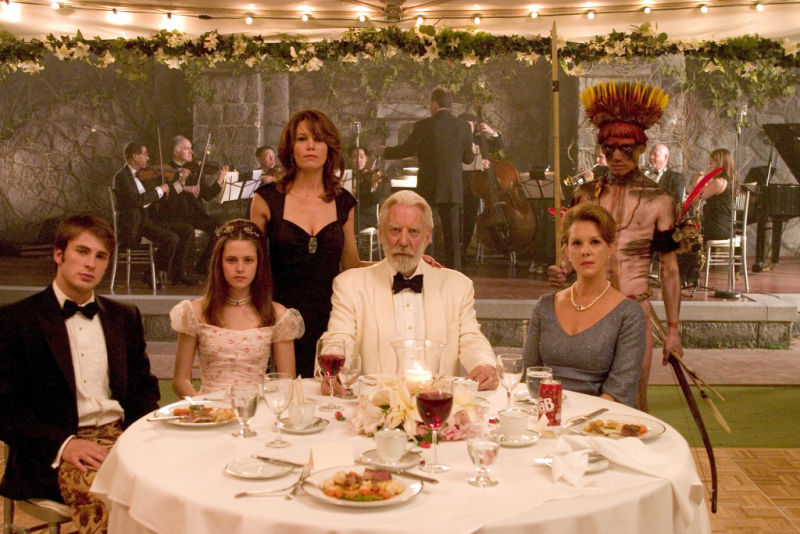
Much as how Inside Out is a perfect example of how one bad plot twist can ruin an otherwise good film, the 2007 sin-among-the-wealthy melodrama Fierce People shows how one good actor can partially redeem a really bad movie.  That actor’s name is Donald Sutherland and Fierce People is worth seeing for one reason: his performance.

Fierce People tells the story of a teenager named Finn Earl (Anton Yelchin).  As a character, Finn Earl is almost as annoying as his cutesy name.  He’s a permanently sarcastic 16 year-old who goes through life with the same judgmental smirk on his face, while the whole time delivering some of the smuggest narration ever recorded for a voice over in an American film.  Finn’s mother is Liz (Diane Lane), a massage therapist with a drug problem.  Finn’s father is some jerk who spends all of his time in South America, studying cannibal tribes.  (Actually, he’s studying a real-life Indian tribe known as the Yanomami, or the Fierce People.  However, I prefer to assume that he was actually studying a cannibal tribe because that means it’s entirely possible that he was eaten at some point and therefore, Finn will never get a chance to spend any time with father.  That’s the type of reaction that Finn, as a character, inspires.)

Liz and Finn are invited to spend the summer living the guesthouse of the fabulously wealthy Ogden Osburne (Donald Sutherland).  At first, Finn is weary of Ogden and assumes that he must be sleeping with Liz.  However, in a scene that works only because of the performance of Donald Sutherland, Ogden very graphically shows Finn why he’s not interested in having an affair with Liz.  Instead, Ogden is just a nice, rich eccentric.  Unfortunately, the other wealthy people who live around Ogden are not quite as nice and they soon, they start to resent the presence of Finn and his mother.  Finn does manages to befriend Ogden’s decadent grandson (played by Chris Evans) and even starts a tentative romance with Ogden’s granddaughter (Kristen Stewart) but the rest of the Osburne clan is not prepared to be so accepting.  Soon, the film goes from being an annoying comedy to being an annoying drama with a burst of violence and murder.

Fierce People is not a very good movie.  It’s based on a novel and, even if you didn’t know that beforehand, you would guess just from the way that the film tries and fails to present a lot of themes that undoubtedly work better on the page than on the screen.  The film’s attempts to draw parallels between the Yanomami and the wealthy (They’re two tribes and they’re both fierce — OH MY GOD, MIND BLOWN!) are way too obvious and the film’s sudden lurch into drama is handled rather clumsily.  It’s interesting to see Chris Evans before he became Capt. America and Kristen Stewart before she became Bella (and both of them, by the way, give good performances) but Anton Yelchin’s performance as Finn alternates between being smug and being whiny.  (In Yelchin’s defense, he’s developed into a pretty good actor and I loved him in Like Crazy.)

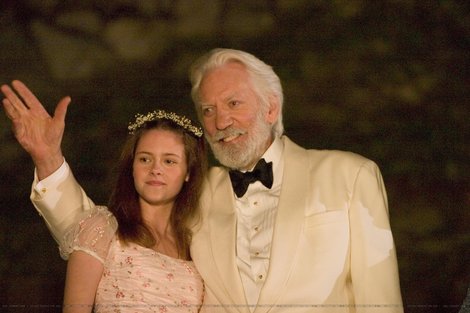
And yet, Fierce People works as an example of what a truly great actor can do with so-so material.  As played by Donald Sutherland, Ogden becomes the jaded moral center of the universe.  Sutherland plays Ogden with a perversely regal air and yet also makes us totally believe that Ogden actually could be helping the Earls out of the kindness of his heart.  It’s a great performance and every minute that Sutherland is on screen, Fierce People works.

If the film had simply been called Fierce Ogden, it would have been a hundred times better.

Donald Sutherland and Kristen Stewart

Embracing the Melodrama #55: Inside Out (dir by David Ogden)


Eriq La Salle in Inside Out

Eriq La Salle in Inside Out

Welcome to the suburbs!

It’s a world of secrets and lies, where friends spend their time exchanging gossip and no one’s marriage is that happy once you get behind closed doors.  It’s a place where any sign of nonconformity is viewed as being a threat and where everyone is desperate to be a neighborhood insider because being an outsider is Hell on Earth.

The suburbs have also been the setting of a countless number of Hollywood melodramas.  I’ve reviewed a few of them, like Sin In The Suburbs, over the past two weeks.  The 2005 film Inside Out continues the cinematic tradition of casting a skeptical eye on the suburbs and it actually works pretty well, up until about the final 10 minutes of the movie.  Yes, Inside Out is one of those movies that basically starts out strong and then ruins it all by building up to a thoroughly ludicrous final twist.

Don’t get me wrong.  I love twist endings when they work.  When they don’t work, they lead to something like Inside Out.

Inside Out starts out well enough.  Eriq La Salle plays a mysterious man who moves into an idyllic suburban neighborhood in the middle of the night.  When his neighbors attempt to greet him, he simply responds with a cold glare and then proceeds to alienate them even more by loudly mowing his lawn in the middle of another night.  When he decides to hold a sudden garage sale, everyone is surprised to discover that he’s not selling the usual second-hand stuff.  Instead, he’s selling expensive and new electronics and valuable antiques.  When one neighborhood woman asks why he’s selling all of it, La Salle simply replies that they once belonged to his son.

Finally, La Salle does start to socialize with one neighbor (played by Steven Weber) but the friendlier that La Salle is, the more suspicious Weber becomes.  Weber cannot bring himself to trust his new neighbor and instead, he starts his own investigation.  As Weber finds out more and more about La Salle, he starts to grow more and more paranoid….

And, up until the final 10 minutes, the entire movie is actually kind of working.  Director David Ogden is keeping things nicely off-center.  Weber is both sympathetic and somewhat frightening as he grows more and more paranoid.  Best of all, Eriq La Salle creates a character that seems to radiate a very genuine sort of menace.  You really want to know what La Salle is hiding in his basement and you worry what will happen to Weber once he inevitably breaks in La Salle’s house to investigate…

And then, out of nowhere, the film launches one of the biggest and stupidest twists in the history of the movies.  No, you won’t see it coming.  Yes, you will be shocked.  But not because the twist is effective or surpising.  No, the twist is shocking because it makes no sense, it comes out of nowhere, and it is just amazingly stupid.

And that’s a shame because there’s a lot of talent on display in this film.

Is the film worth seeing despite the twist?  Perhaps.  It shows up on Encore occasionally and  I would recommend it on the strength of Weber and La Salle’s performances.  As I said, there’s a lot to appreciate during the first 80 minutes of the film.  But, before it reaches that twist, you might want to stop the film and come up with a better ending of your own.

Embracing the Melodrama #54: Where the Truth Lies (dir by Atom Egoyan)


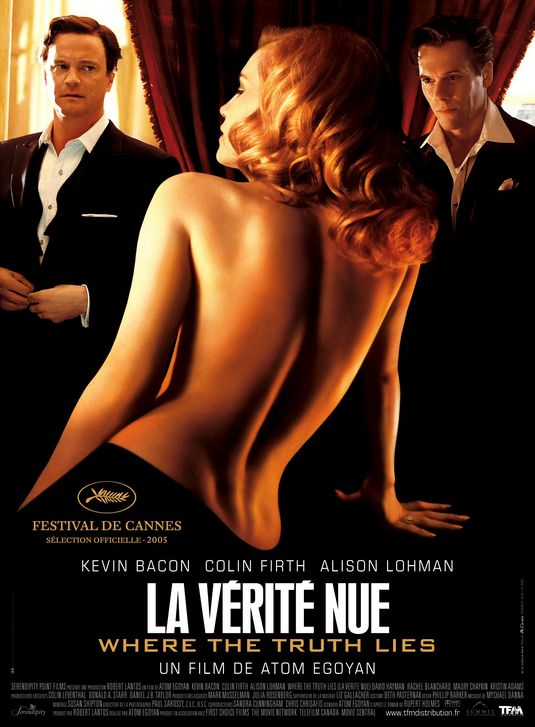
where_the_truth_lies_ver2

Atom Egoyan’s 2005 showbiz melodrama Where The Truth Lies is a historic film for me.

First off, it’s the first film that I ever saw at the wonderful Dallas Angelika theater, which would quickly become my favorite place to watch movies in the Dallas/Ft. Worth metroplex.  And I have to say that, as much as I love the Alamo Drafthouse that opened up last year, the Angelika will always hold a special place in my heart.

Secondly, and perhaps even more importantly, Where The Truth Lies was the first NC-17 film that I ever actually watched in a theater.  In fact, I went into Where The Truth Lies knowing next to nothing about it.  I just saw that it was an NC-17 film that was playing in a “real” theater and that was pretty much all I needed to call up some friends and head down to Dallas.

I felt terrifically grown up until I tried to buy the ticket and I was asked to show ID.  I handed over my driver’s license.  The ticket seller stared down at it for what seemed like an eternity.  She looked up at me and then back down at the license a few times.  Finally, she said, “Are you sure you’re 19?”

“I’m going to be 20 in November,” I replied.

She squinted at me for a few minutes and then said, “If you say so,” before handing me my license and a ticket.

And so, on that day, I managed to cross one goal off my list (See an NC-17 movie in a theater) and replaced it with another (Buy a ticket for an R-rated or NC-17 movie without being asked for ID).  I’m still working on that 2nd goal but I have to admit that I’m starting to dread the idea that one day, I’ll be able to pass for an adult.

But what about Where The Truth Lies?

Well, the main question that I had, in 2005, as I sat down to watch this movie was why exactly was it rated NC-17.  Having watched the movie in the theater and then on cable a few times after, I still honestly have no idea why the rating was as harsh as it was.  Yes, there’s a lot of sex in the movies.  You see a lot of boobs and you see a lot of bare asses but — well, so what?  It’s really nothing wore than what you have seen in countless red band trailers for various R-rated comedies.  Add to that, in Where The Truth Lies, all of that skin is on display for a reason.  The film may be explicit but it’s never gratuitous.

As for the film itself, it’s technically a murder mystery but the mystery is really only an excuse for Egoyan to take a look at the seamier side of show business.  In the 1950s, entertainers Lanny Morris (Kevin Bacon) and Vince Collins (Colin Firth) are the nation’s top comedy team.  However, after co-hosting a 39-hour polio telethon in Miami, Lanny and Vince fly to New Jersey to do a few shows at a hotel owned by a local mobster.  When the naked body of Maureen O’Flaherty (Rachel Blanchard) is found in their room, the scandal destroys both of their careers.

Fifteen years later, in the early 1970s, Lanny Morris has written a book about his life and career.  Vince decides to retaliate by writing his own book.  Karen O’Connor (Alison Lohman) is hired to be his ghostwriter.  Karen, however, has her reasons for being obsessed with Lanny and Vince and she is also determined to discover whether Maureen truly did die of a drug overdose or if she was murdered.

Where The Truth Lies is, in many ways, an uneven film but I like it.  The mystery of who killed Maureen is intriguing and, unlike a lot of viewers (check out the film’s entry at the imdb if you really need to know how much some people hate this film), I actually appreciated Egoyan’s hallucinatory and disjointed approach to telling his story.  Kevin Bacon and Colin Firth both give excellent performances, both cast in the type of roles that you might not normally expect to see them playing.  As a character, Karen is frustratingly inconsistent but Alison Lohman does the best that she can with the role.

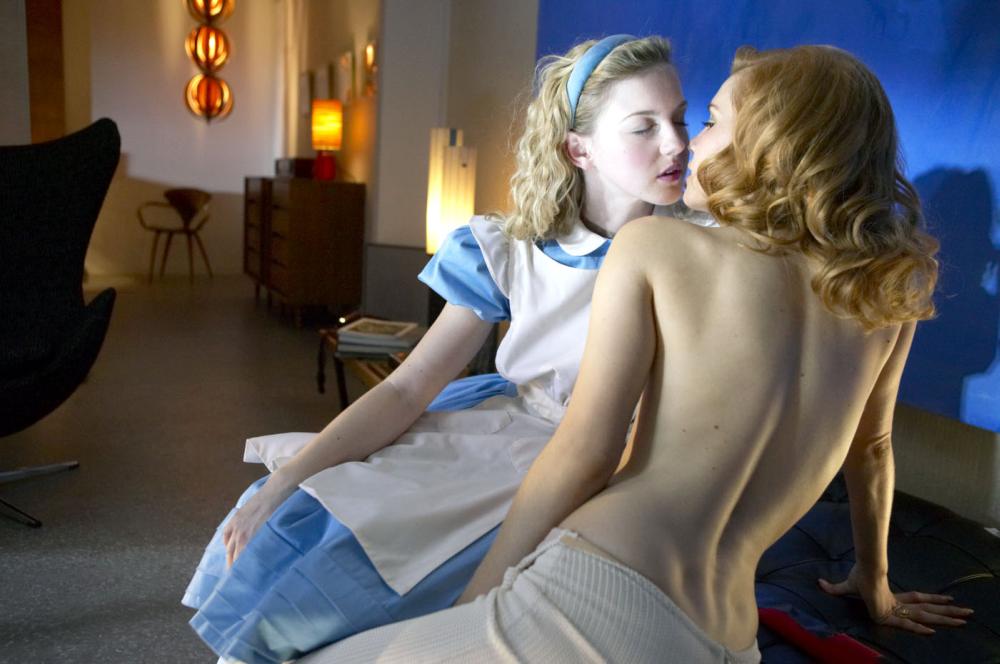
Finally, Where The Truth Lies does contain one undeniably brilliant scene, in which a drugged Karen watches as an actress dressed to look like Alice in Wonderland sings White Rabbit.  It’s a wonderfully strange scene, all the more so become it comes almost out of nowhere.

Where The Truth Lies is not a perfect film but, for my first experience seeing an NC-17 film in a theater, it wasn’t bad at all.

Where The Truth Lies


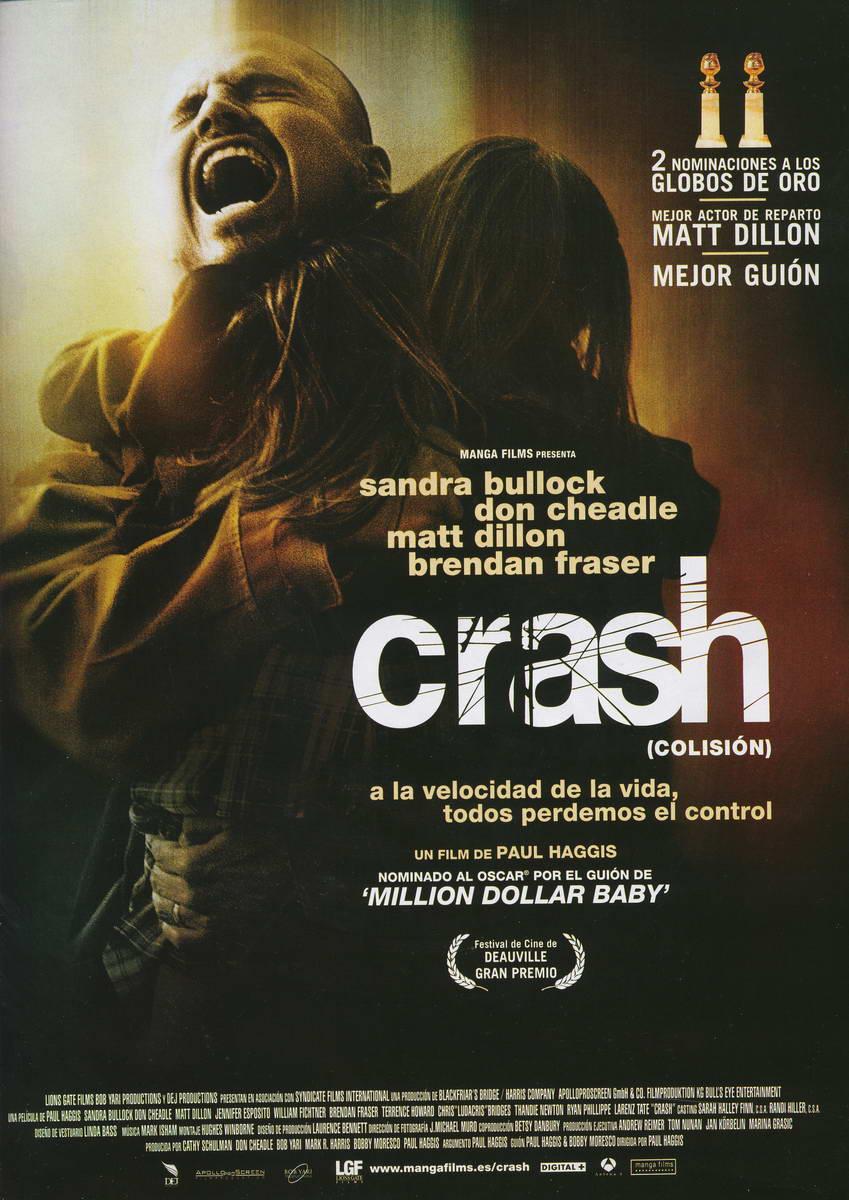
Embracing the Melodrama #53: Crash (dir by Paul Haggis)


crash-2004-poster

For the past two weeks, I’ve been reviewing, in chronological order, some of the most and least memorable melodramas ever filmed.   We started way back in 1916 and now, after 52 reviews, we’ve finally reached the year 2004.  And that can only mean that it is time to review the worst film to ever win an Oscar for best picture of the year.  I am, of course, talking about Crash.

Crash is an ensemble piece that follows a multi-racial cast of characters as they deal with issues of race, crime, and — well, that’s about it.  In Crash, everyone’s life revolves around race and crime.  Well, I take that back,  There is at least one character whose life revolves around being a good maid to the white woman who employs her.  But otherwise, it’s all about race and crime.  The film is set in Los Angeles which, from what I’ve read, is actually a pretty big city but you really wouldn’t know that from watching Crash.  All of the characters in Crash are constantly and randomly running into each other.  I think director/screenwriter Paul Haggis is trying to make a statement about the power that coincidence plays in the world but, often times, it just feels like lazy plotting.

Anyway, here are the characters who are meant to bring Los Angeles to vivid cinematic life:

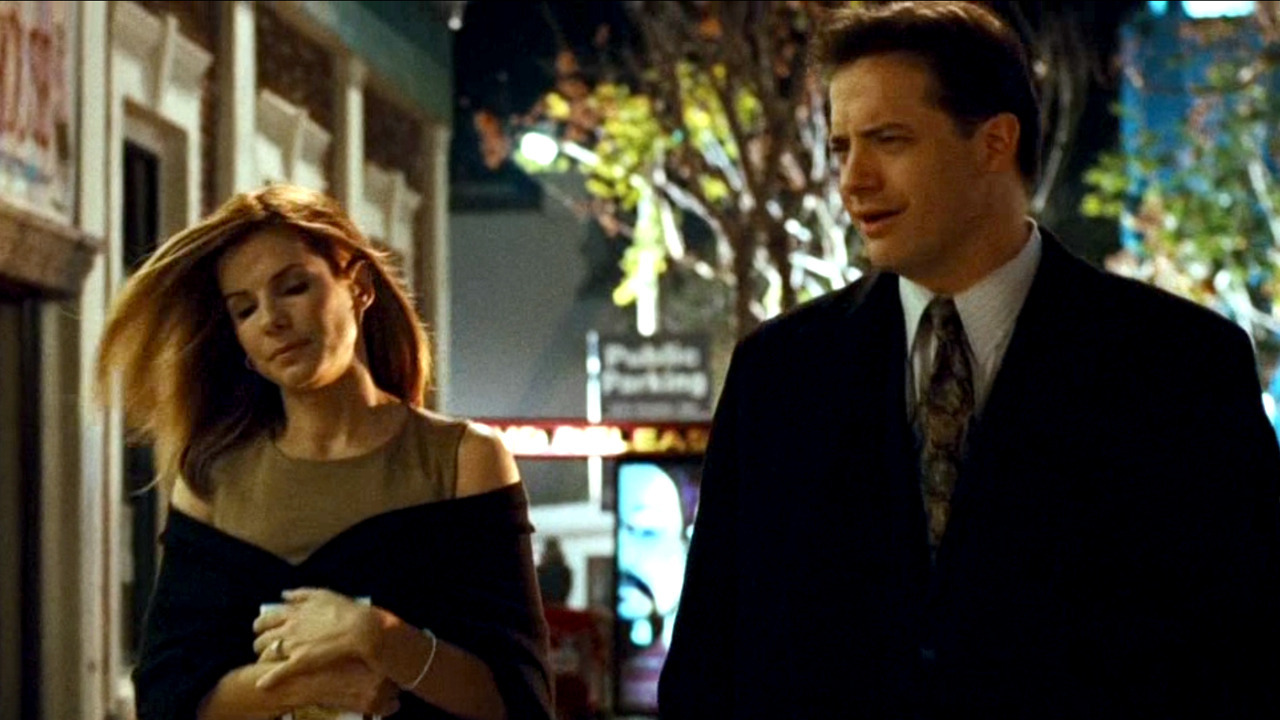
Brendan Fraser and Sandra Bullock play rich white people Rick and Jean Cabot.  Rick Cabot has just been elected District Attorney of Los Angeles County.  (Because when I think of a successful urban politician, I automatically think of Brendan Fraser…)  Jean is his materialistic wife.  At the start of the film, they’re carjacked by two young black men, which leads to Jean suspecting that every non-white she sees is secretly a gang member.  Later, Jean falls down a flight of stairs but she’s helped by her maid, who happens to be — surprise, surprise — not white!  Apparently, this teaches Jean an important lesson about tolerance.  The message, I guess, is that white people can be redeemed by interacting with their minority servants.

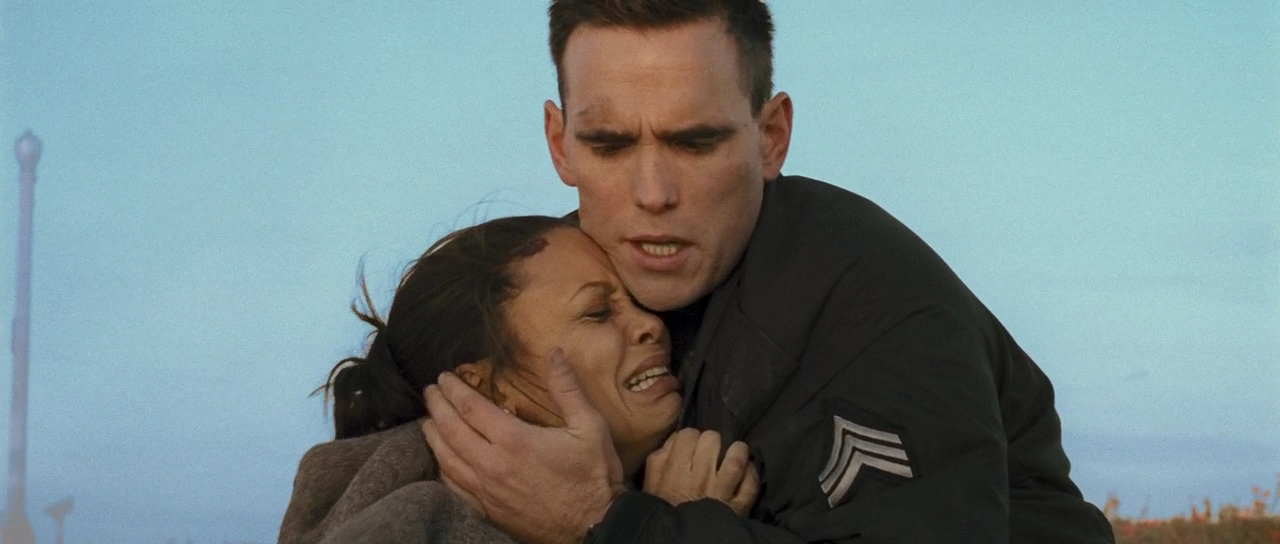
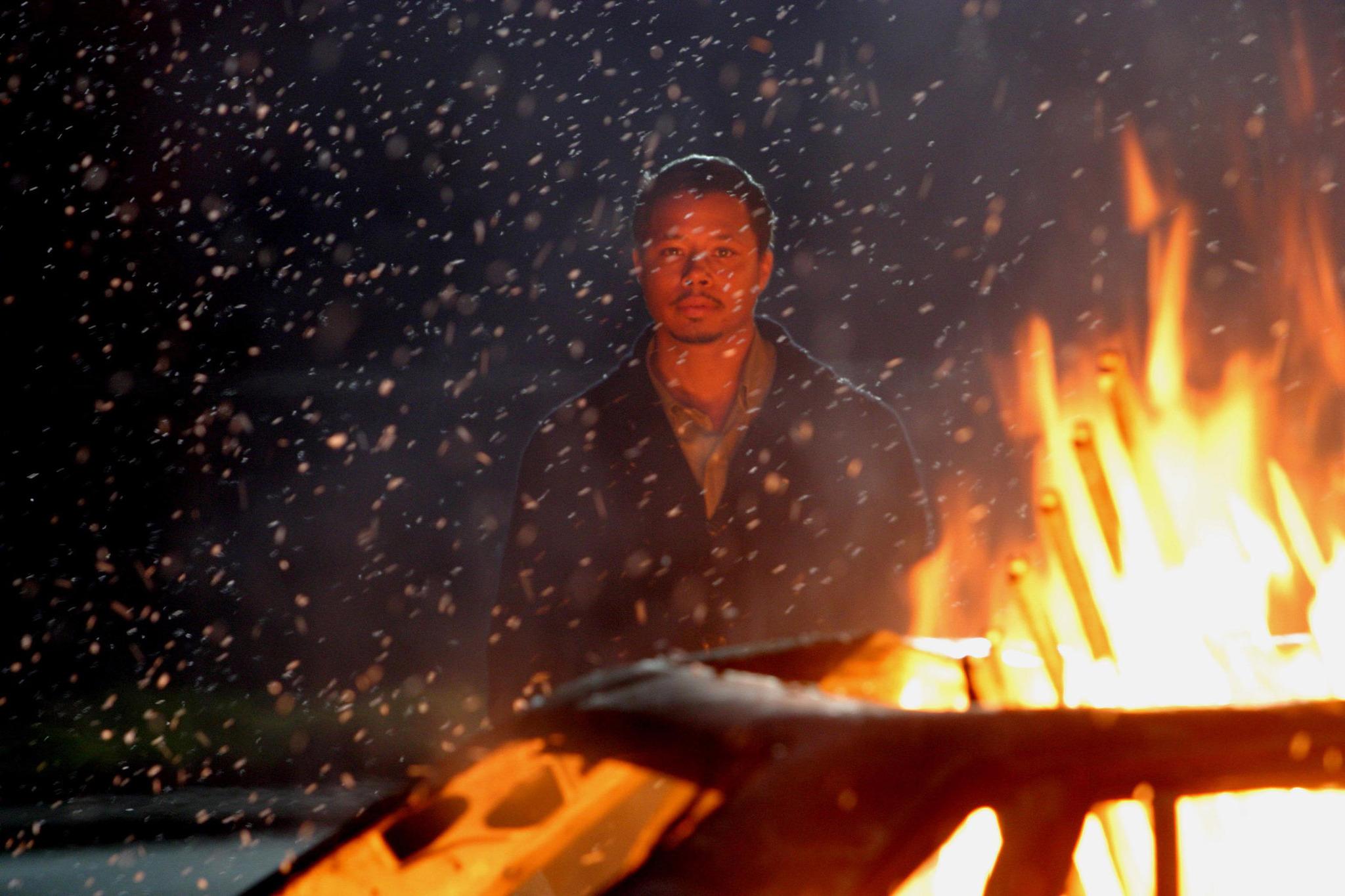
And then there’s Cameron (Terrence Howard) and his wife Christine (Thandie Newton) who are upper class and black.  Cameron directs sitcoms for a living and, at work, he has to deal with Fred (Tony Danza) constantly double guessing him and demanding that he reshoot scenes.  One night, as they leave an awards ceremony, Cameron and Christine are pulled over by two white cops — the racist Ryan (Matt Dillon) and his idealistic partner Hansen (Ryan Phillippe).  Ryan proceeds to molest Christine while giving her a pat down.  The next day, Christine is involved in a car accident on the freeway and is pulled from the burning car by none other than Officer Ryan.  The point here, I suppose, is that the same pervert who finger rapes you one night is just as likely to be the same guy who comes across your overturned car on the freeway.  For that scene alone, Crash deserves the title of worst best picture winner ever.

crash-2004 4

But that’s not all!

There’s also Detective Graham Waters (Don Cheadle), who has been assigned to investigate a police corruption case that would not be out of place in an episode of … well, just insert your own generic cop show title here.  Graham also visits his mentally unstable mother who demands that Graham find his younger brother.  Now, of course, as soon as we hear this, we know that Graham’s brother is going to have to turn out to be one of the other characters in the film.  Since there are only three other black males in this film (and since Cameron appears to be the same age as Graham), it’s not difficult to figure out who it’s going to be.

It’s either going to be Anthony (Ludacris) or Peter (Larenz Tate), who also happen to be the same two men who carjacked the Cabots’ car at the start of the film.  Larenz Tate probably gives the best performance in this whole sorry mess of a film, even if his role is ultimately a thankless one.

There’s also a locksmith named Daniel (Michael Pena), who finds himself being stalked by an angry Middle Eastern man.  Daniel’s story contains a hint of magic realism, presumably because Paul Haggis was reading something by Gabriel Garcia Marquez while writing the script.

Crash

You can fault Crash for many things but you also can’t deny that it’s far more ambitious than the typical bad film.  In the space of 112 minutes, Paul Haggis attempts to say everything that needs to be said about race and class in America.  Unfortunately, while watching the film, it quickly becomes obvious that Haggis really doesn’t know much about race and class in America.  Hence, the film becomes a collection of scenes that think they mean something while actually meaning nothing.  Crash is less about race in America and more about how other movies have traditionally portrayed race in America.  Unfortunately, director Haggis does not have the self-awareness to truly bring the subtext of screenwriter Haggis’s script to life.

The main theme of Crash seems to be that everyone has a good side and a bad side and that you can the hero of one story while being the villain of another.  That’s not a bad theme, it’s just an incredibly mundane one.  The film illustrates this theme by continually having a character say something racially offensive just to then have him do something heroic in the very next scene.  As a result, the characters don’t come across as being so much complex as just incredibly inconsistent.  Crash is never as deep as it thinks it is.

Reportedly, Crash was inspired by Paul Haggis’s own experience of getting carjacked.  Haggis has said that being a victim of crime led to some intense soul searching on his part.  Hopefully, Haggis got something better than just Crash out of the whole experience.

still-of-terrence-howard-in-crash-(2004)-large-picture

Embracing the Melodrama #52: The Heart is Deceitful Above All Things (dir by Asia Argento)


600full-the-heart-is-deceitful-above-all-things-poster

Based on a controversial collection of short stories by JT LeRoy (which was a pen name used by the writer Laura Albert), The Heart is Deceitful About All Things covers three years in the life of Jeremiah and his dug addict mother Sarah.  Over the course of the film, Jeremiah is played by thee different actors — Jimmy Bennett at age 7 and, at age 10, Cole and Dylan Sprouse.  Sarah is fearlessly played by the film’s director, Asia Argento.

Partially in response to her extremely religious upbringing, Sarah spends most of her time drinking, smoking meth, and moving from man to man, the majority of whom treat both her and her son badly.  It looks like things are going to get better when Sarah marries the seemingly stable Emerson (Jeremy Renner) but, when Sarah suddenly abandons both her husband and her son so that she can go to Atlantic City, Emerson rapes Jeremiah.

Jeremiah is sent to live with his grandfather (Peter Fonda) and grandmother (Ornella Muti) who, it turns out, are members of an ultra-religious cult.  Thought Jeremiah initially manages to bond with his cousin Buddy (Michael Pitt), life in the cult proves to be no safer than life with his mother.  After three years with the cult, Jeremiah is standing on a street corner and yelling that everyone is going to go to Hell unless they repent when he is suddenly approached by Sarah.  Sarah grabs him and carries him over to a nearby truck that is being driven by her current boyfriend.

Sarah now supports herself as a dancer and as a prostitute.  When she realizes that the presence of her son is making men reluctant to pay for her, Sarah grows out Jeremiah’s hair and starts to dress him in her old clothes so that she can pass him off as being her younger sister.

Eventually, Sarah and Jeremiah find themselves living with amiable but slow-witted meth addict Jackson (Marilyn Manson) and that’s when things really start to head down hill…

In some ways, The Heart Is Deceitful About All Things is a difficult film to recommend because it is so extremely dark and depressing.  Much as in her debut film, Scarlet Diva, Asia Argento refuses to compromise on the bleakness of her vision.  She set out to make a realistic portrait of what it’s like to live on the fringes of American society and that’s exactly what she did.  If the end result is depressing…well, the fringes aren’t exactly a happy place.  In the end, you’re actually happy that the film is full of familiar actors like Argento, Michael Pitt, Peter Fonda, and Winona Ryder because you need that reminder that, ultimately, you’re watching a movie and that everyone was able to go home after they finished filming.

The Heart Is Deceitful Above All Things may not be easy to enjoy but it is a film that, as a result of its uncompromising vision,  ultimately wins your respect.

heart-is-deceitful-above-all-things-0

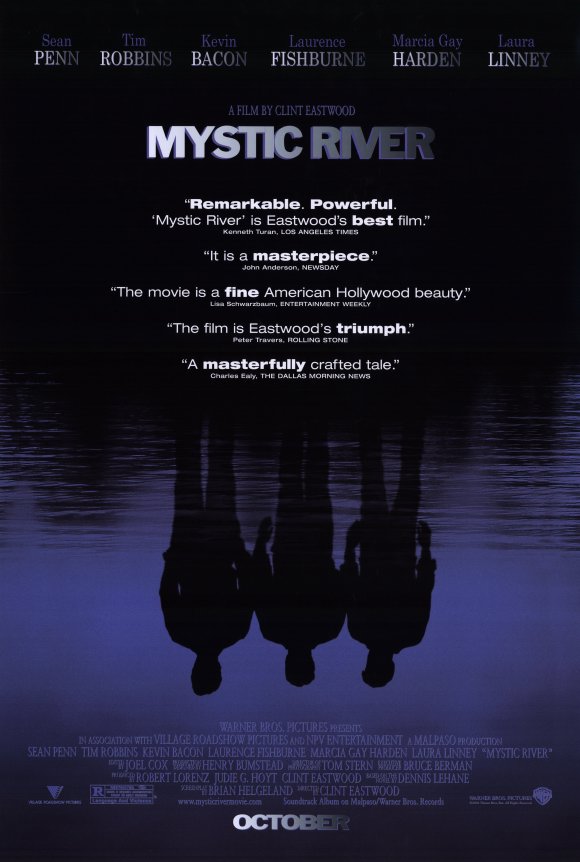
Embracing the Melodrama #51: Mystic River (dir by Clint Eastwood)


mystic-river

Much like In The Bedroom, 2003’s Mystic River is a film that deals with guilt, murder, and vengeance in New England.  Whereas In The Bedroom deals with the guilt of just four people, Mystic River deals with the guilt of an entire neighborhood.

Mystic River opens in Boston in 1975.  Three young boys are writing their names in wet cement when a car pulls up beside them.  An angry-looking man (played by the always intimidating John Doman) gets out of the car and announces that he’s a police officer and that the three boys are under arrest.  He orders them to get in the car.  Of the three boys, Jimmy and Sean refuse but meek Dave gets into the car, where he’s greeted by a leering old man.  Jimmy and Sean watch as the car drives away with their friend trapped in the back seat.  Dave is held prisoner and abused by the two men for four days until he finally manages to escape.

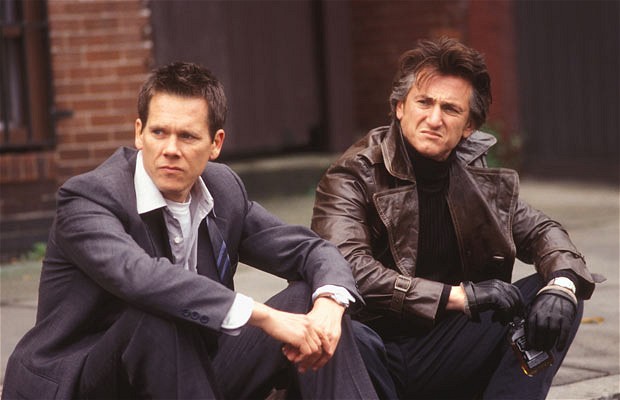
Twenty-five years later, the three boys have grown up but are still haunted by what happened.  Sean is now a detective with the Massachusetts State Police.  Jimmy is an ex-con who now owns a local store and who, despite being married to Annabeth (Laura Linney), the daughter of a local gangster, is trying to lead a law-abiding life.  As for Dave (Tim Robbins),  he is married to Celeste (Marcia Gay Harden) and manages to hold down a job but he’s also the neighborhood pariah.

Mystic River 1

When Jimmy’s daughter Katie (Emmy Rossum) is brutally murdered, Sean and his partner Whitey Powers (Laurence Fishburne) are assigned to the case.  The distraught Jimmy, however, starts to investigate the murder himself and, after talking to Celeste, he discovers that, on the night Katie died, Dave came home with blood on his clothes and claiming that he had a fight with a mugger.  That’s all the evidence that Jimmy and his friends need to believe that Dave is the murderer…

I have a lot of friends who will probably never forgive Clint Eastwood for not only endorsing Mitt Romney in 2012 but for also giving the “empty chair” speech at the Republican Convention.  From the way that a lot of them reacted, you would think that Eastwood had filmed himself drowning puppies as opposed to simply expressing his own cantankerous opinions about current events.  (Honestly, do you know any 82 year-olds who weren’t disgruntled in 2012?)  Myself, I thought the empty chair speech was an act of brilliant performance art, one that not only highlighted the fact that most politicians really are just empty chairs but also exposed just how humorless most political activists truly are.  (Admit it — if John Fugelsang had done that same routine at the 2004 Democratic convention and referred to the empty chair as being President Bush, most of the people who went on and on about how terrible it was that Eastwood was being disrespectful to the President would still be using it to create Facebook memes.)

Eastwood

Unfortunately, I sometimes find myself wondering why Clint Eastwood the director sometimes seem to struggle to be as interesting, innovative, and thought-provoking as the empty chair speech.  It sometimes seems that for every Eastwood film that works, there’s a handful films like Hereafter, Changeling, and Jersey Boys.  These aren’t bad films as much as they’re just uninspired films.  (Well, Hereafter is pretty bad…)  Ultimately, Eastwood is more of a storyteller than a Martin Scorsese-style innovator.  If Eastwood has a good story to tell, the film will work.  If he has a weak story — well, then the film will be weak.

Fortunately, with Mystic River, Eastwood has a good story and the end result is one of the best films of his uneven directorial career.  Eastwood uses a fairly standard murder mystery to explore themes of guilt, redemption, and paranoia.  Jimmy may be looking for revenge and Sean may be doing his job but ultimately, both of them are trying to absolve themselves from the consequences of their childhood decisions.  If Dave is guilty, then Jimmy will justified in having let him get in that car.  If Dave is innocent, Sean can finally step up and save him.

And complicating all of this is the Neighborhood, which is as much a character in this film as Jimmy, Dave, and Sean.  The Neighborhood will never allow anyone to forget or live down the past.  When, towards the end of the film, Jimmy is declared to be the “king of the neighborhood” by Annabeth, there’s little doubt that she’s right.  The question is whether Jimmy’s kingdom is one worth ruling.

Mystic River

Embracing the Melodrama #50: In the Bedroom (dir by Todd Field)


in_the_bedroom_ver3

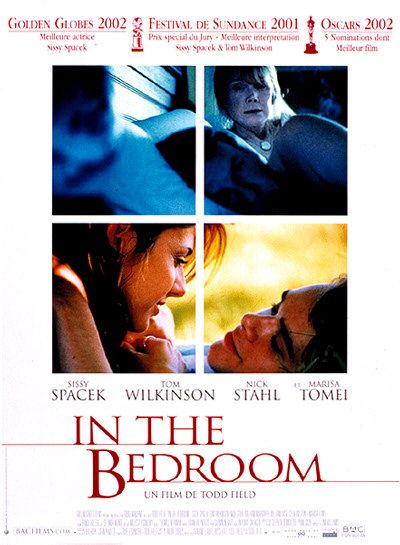
If some enterprising young filmmaker were to try to remake Ordinary People as a film noir, he would probably be wasting his time because director Todd Field already beat him to it with the 2001 best picture nominee In The Bedroom.

In the Bedroom takes place in a small town in Maine, the type of idyllic location where almost everyone is a fisherman and, in one way or another, everyone’s future is dependent on the whims of the rich and powerful Strout family.  Dr. Matt Fowler (Tom Wilkinson) and his wife Ruth (Sissy Spacek) seem to have the perfect life: a happy marriage and a smart and likable son, Frank Fowler (Nick Stahl).  Frank has just graduated from college and appears to have a great future ahead of him except for one thing.  He’s fallen in love with Natalie Strout (Marisa Tomei), the ex-wife of the abusive Richard Strout (William Mapother).  When Frank announces that he’s thinking about not going to grad school but instead staying in town so he can work as a fisherman and marry Natalie, Ruth is horrified that her son is throwing his life away.  However, Matt argues that Frank is just going through a phase.

The violent and unstable Richard is determined to win Natalie back.  When Frank attempts to protect Natalie during one of Richard’s rampages, Richard kills Frank by shooting him in the eye.  Richard is arrested for the murder but, largely as a result of his family’s influence, he is only convicted of accidental manslaughter and gets off with probation.  Matt and Ruth are left to both work through their grief and guilt and to eventually seek their own violent vengeance on Richard Strout.

In the Bedroom is probably one of the darkest films that I’ve ever seen in my entire life.  Not only is the film thematically dark but a good deal of it takes place at night and Todd Field fills the screens with shadows.  In the Bedroom is full of scenes of characters just staring at each other, struggling to find the right words to express their feelings and, far too often, simply giving up and saying nothing.  Field makes good use of the frequent silence though.  When Matt and Ruth yell at each other in the kitchen of their home, it’s both shocking and poignant because it stands in such sharp contrast to their usual silence.  Later. when Matt confronts Richard, the frequent pauses in their strained conversation serves to make the scene all the more ominous and creepy.

However, despite being one of the saddest films ever made, In The Bedroom is worth watching just for the performances of the cast.  You probably know that Tom Wilkinson, Sissy Spacek, and Marisa Tomei are all great so instead, I’m going to focus on the two members of the cast who did not receive Oscar nominations.  William Mapother does a really good job playing an unlikable character.  The dangerous yet dorky vibe that made him so menacing when he played Ethan Rohm on Lost is fully present and put to good use here.  Finally, Nick Stahl gives a wonderful performance as poor, doomed Frank.  With limited screen time, Stahl makes Frank into such a believable and sympathetic character that his death becomes a tragedy that the audience feels as well.

Sadly, Nick Stahl has recently been in the new more for his personal troubles than his film careers.  Films like In The Bedroom and Bully show why Nick deserves a chance to make a comeback.

bedroom-11

Embracing the Melodrama #49: Scarlet Diva (dir by Asia Argento)


Scarlet Diva

I’ve always loved Asia Argento because, as both an actress and a public personality, she is tough, hard, and sexy all at the same time.  She’s not one of those actresses who feels the need to hide who she really is.  Watching her on-screen, you realize that she doesn’t give a fuck whether you like her or not.  Instead, she’s going to do whatever it is that she wants to do and, if you’re lucky, you might get to watch.  Some hold her responsible for the erratic output of Dario Argento’s post-Opera career but those people far too often fail to take into account that Asia, with her naturally off-center presence, has often been the most interesting thing about Dario’s later films. (Say what you will about Trauma, The Stendhal Syndrome, and Mother of Tears, they’re all better with Asia than without her.)  Asia Argento is one of those talented actresses who could never have played Ophelia because no one would ever believe that she would so easily drown.  Instead, she’d simply pull herself out of the water and then go kick Hamlet’s ass for being so indecisive.

In the year 2000, Asia Argento made her directorial debut with the underrated Scarlet Diva.  In Scarlet Diva, Asia plays Anna Batista, a 24 year-old Italian actress who, having won both acclaim and awards in Italy, is now being tempted with offers to come out to Hollywood.  Over the course of this frequently (and intentionally) disjointed film, Anna is forced to deal with the dark reality of being young, rich, and famous.  (Yeah, yeah, I know you’re rolling your eyes but just calm down…)  After being told that she’ll costar with De Niro, she finds herself playing Cleopatra in a hilariously bad movie that does not co-star Robert De Niro.  She meets a sleazy producer (Joe Coleman) who invites her to his hotel room and then promptly undresses and demands that she “earn” a part in his next film.  Anna runs from him and the naked producer chases after her with the camera focused (in close-up) on his hairy ass all the way.  While dealing with all of that, Anna also find time to visit her best friend in Paris, just to discover that she has spent the last two days bound and gagged in bed.  She also buys drugs underneath a highway overpass and suffers from frequent dream sequences and flashbacks to growing up with her mentally unstable mother (played by Asia’s real-life mother, Daria Nicolodi).

And yet, during all of this, Anna can still find happiness because she thinks that she’s in love with rock star Kirk Vaines (Jean Sheperd, playing a role that was written for Vincent Gallo).  When Anna discovers that she’s pregnant, she decides not to have her usual abortion and instead to keep the baby.  However, when Kirk reacts to Anna’s news with indifference, it leads to one of the longest (and most emotionally raw) running sequences that I have ever seen, as the pregnant Anna flees down the streets of Rome…

asia_argento_-_scarlet

Just to judge from the movies that various actor have made about the trials of being a star, fame is a special sort of Hell, the type that is dominated with surreal dream sequences and frequent claustrophobia.  That’s certainly true of Scarlet Diva, which is perhaps one of the most self-indulgent films ever made.  And yet, it’s that very self-indulgence that makes Scarlet Diva so much more watchable and, in its own way, likable than most debut films from actors-turned-directors.  For all the drama and pain that Anna goes through, Asia Argento seems to understand just how narcissistic this film truly is and, in a few scenes, it’s evident that she’s gently mocking her own “poor me” self-indulgence.

Ultimately, Asia seems to be saying that Anna (and probably, at the time she made this film, Asia herself, since she has said that this film is partially autobiographical) is her own worse enemy.  Hence, this film — which was made with an admirable lack of concern about going too far or for being TMI — is a massively cathartic work for all of the rest of us who are also occasionally our own worst enemy.

Yes, Scarlet Diva may be a self-indulgent, narcissistic film.  It’s also a very brave and honest film that deserves a lot more praise and attention than it has received.

Scarlet Diva

Embracing the Melodrama #48: Coyote Ugly (dir by David McNally)


coyote_ugly

“Never give up on your dreams!” is such a familiar movie cliché that I have to admit that there’s a part of me that really wants to see a mainstream, big budget studio film that proudly declares, “Give up!”  We’ve seen so many films about photogenic people who leave pretty but predictable small towns and end up in big, scary New York City that we pretty much know exactly what’s going to happen as soon as they step off that bus.  They’re going to get robbed.  They’re going to end up at an all-night dinner.  They’re going to meet the lover of their dreams.  They’re going to get quirky friends.  They’re going to become a success.  And, most importantly, they’ll be advised to “never give up on your dreams!”  It’s not that I’m cynical or that I don’t enjoy watching people succeed.  It’s just all so predictable that I found myself yearning for a film that will not slavishly follow the formula.

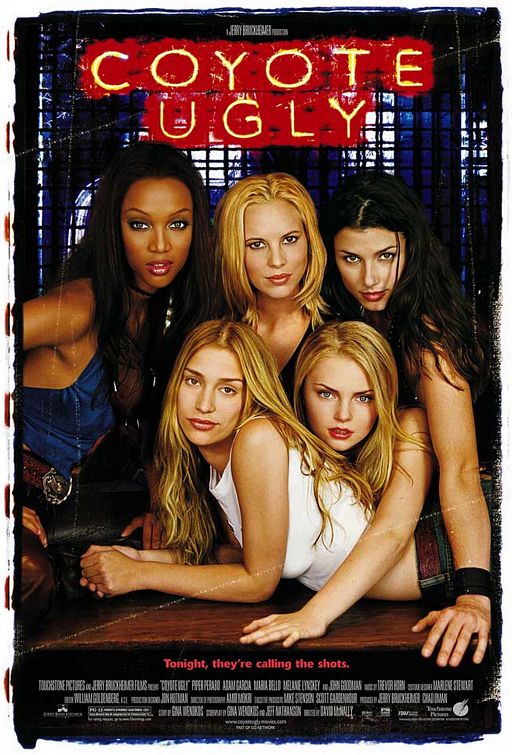
Unfortunately, 2000’s Coyote Ugly is not that film.  In fact, Coyote Ugly is such a thoroughly predictable film that it’s perhaps not surprising to discover that it’s also a film that’s been embraced by a lot of people.  It never ceases to amaze me how, whenever Coyote Ugly shows up on cable, twitter is full of viewers declaring their love.

Coyote Ugly tells the story of  Violet (Piper Perabo), who may look like an ordinary waitress from New Jersey but who aspires to be a songwriter in New York City.  As the film begins, she is in the process of leaving her loving but overprotective father (John Goodman) and her best friend (Melanie Lynesky) so that she can move to the big city and never give up on her dream.  Before she leaves, she’s asked to sign a piece of paper so that it can be tacked to the wall of the local pizza place.  It’s a tradition, apparently.  Before anyone leaves town for New York, they’re asked to leave behind an autograph.  The wall is covered with signatures, indicating that apparently every waitress in New Jersey thinks that she’s a songwriter.

Violet moves to New York and, at first, it seems like she might not make it.  Her apartment is a dump and her neighbors get mad whenever she sings.  (Violet responds by setting up a small recording studio on the roof of her building.)  Nobody is willing to listen to her demo.  About the only good thing that happens to Violet is that she meets Kevin (Adam Garcia), an Australian who encourages her to never give up on her dreams.

Eventually, Violet finds herself in one of those all-night diners that always seem to pop up in movies like this.  She notices that the girls seated at a table near her seem both to be happy and to have a lot of money.  It turns out that they work at the Coyote Ugly Saloon and since one of them (played by Tyra Banks, in a cameo) is quitting so she can go to law school, that means that there’s soon going to be an opening at the bar.

After talking to the Coyote’s owner, Lil (Maria Bello), Violet manages to get a job as a bartender.  Along with serving drinks to a combination of hipsters, frat boys, and stock brokers, another part of Violet’s job is to jump up on the bar and dance.  Eventually, she even gets a chance to sing when it’s discovered that the sound of her voice (or, to be technical about it, LeAnn Rimes’s voice since Rimes provided Violet’s singing voice) can somehow inspire drunks to stop fighting and act civilized.  Violet bonds with her fellow bartender Cammie (Izbella Miko) while the other bartender, Rachel (Bridget Moynahan) takes an instant and almost pathological dislike to her.  Lili is tough, Cammie is a flirt, and Rachel likes to set things on fire.  That’s about all we find out about them.

Even when her father disowns her for working at the Coyote and even when she and Kevin have a fight over her extreme stage fight and Kevin’s refusal to talk about his troubled past, Violet never gives up on her dreams!

And, if you can’t guess every single thing that happens in Coyote Ugly before it happens, then you really need to start watching more movies.

Despite the fact that the movie is named after the Coyote Ugly Saloon and it’s full of scenes of Violet and her co-workers dancing on top of that bar, the Coyote Ugly itself is actually pretty superfluous to the overall film.  The film itself is all about Violet pursuing her dream to become a songwriter and the bar itself really doesn’t play that major of a role into her eventual success.  Instead, it’s just a place where she works.  Violet could just as easily have worked at a particularly rowdy Dave and Buster’s and the overall film would have turned out the same.

And that’s a shame because, while watching the film, it’s hard not to feel that a movie about either Lil, Cammie, or Rachel (or, for that matter, a film about Tyra Banks going to law school) would be a thousand times more interesting that any film about boring old Violet.  I mean, here we have a film named after a business that is owned by a woman and that specifically employs and potentially empowers other women and what does the movie do with all of this material?

It tells a story so predictable and so simplistic that it could just as easily been generated by a computer program.

Coyote Ugly is a massive mixed opportunity but, for whatever reason, some people seem to love it.

https://twitter.com/jhali_/status/487998680163561472

And good for them.

ii7t6bbe89ch6tbi