Review: The Girlfriend Experience (dir. by Steven Soderbergh)


“Sometimes clients think they want the real you, but at the end of the day, they say they don’t. They want what you want to be.” — Chelsea

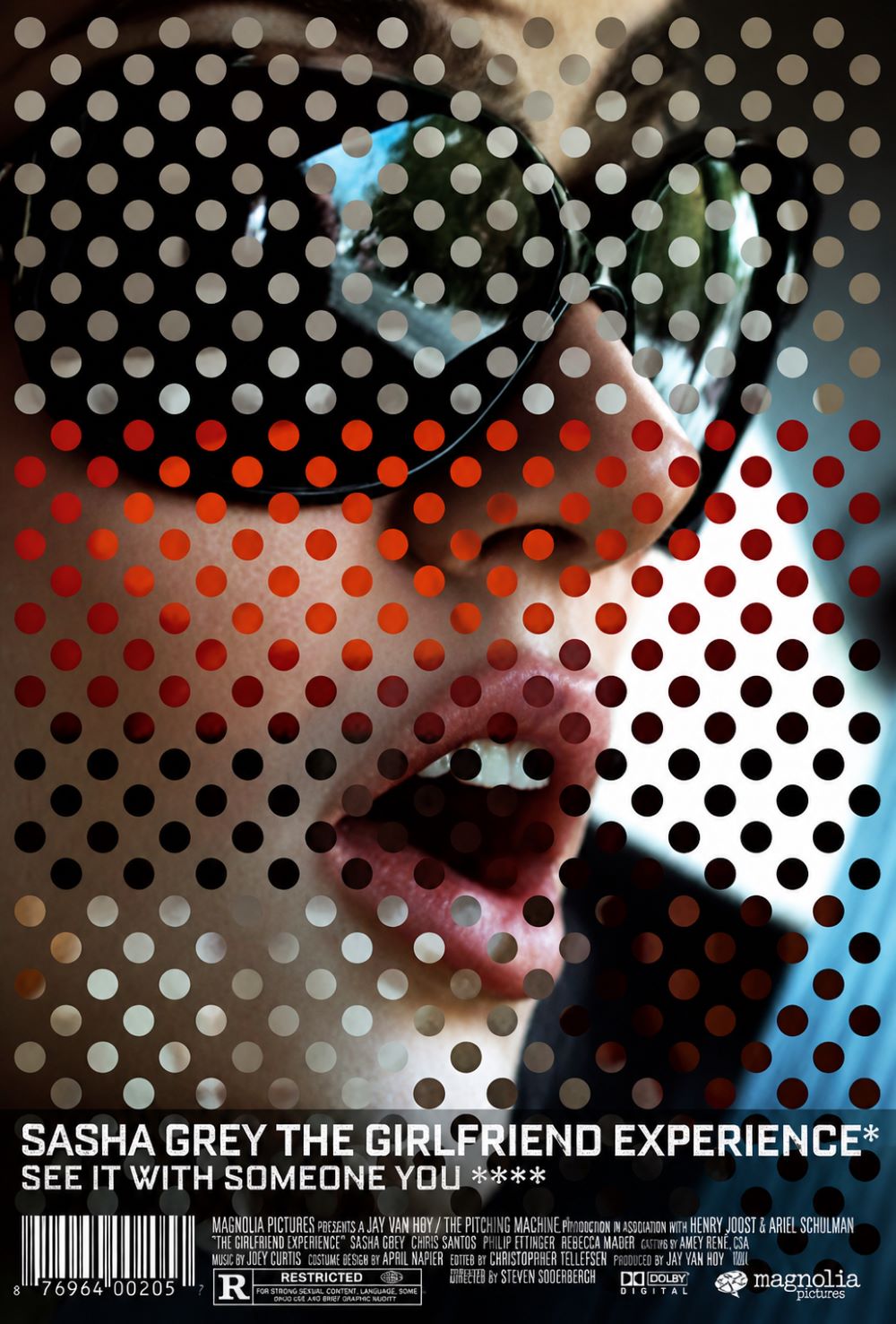
In between his larger projects (the Che biopic) and studio work (Ocean’s 11 through 13), Steven Soderbergh has kept busy with low-budget, experimental films like Bubble and Full Frontal. His latest entry in this HD-shot, minimalist phase is The Girlfriend Experience. When it was first announced in 2008, much of the buzz centered on Soderbergh’s decision to cast real-life porn star Sasha Grey in the lead role. From that point through its festival run, discussion of the film fixated heavily on that choice. Yet The Girlfriend Experience is ultimately a more intriguing work than its casting gimmick suggests, attempting to draw parallels between the high-end sex industry and the power structures of modern capitalism.

First off, Sasha Grey is not the film’s weak link, despite expectations tied to her background. While her performance can be uneven, there are several moments where she displays clear presence and control. What some have interpreted as a flat or vacuous screen persona actually aligns closely with the character. Chelsea is a $10,000-a-night escort whose clientele consists of wealthy, powerful men—people accustomed to buying whatever and whoever they want. What they purchase from Chelsea is the illusion of intimacy: the “girlfriend experience.”

One of the earliest scenes illustrates this perfectly, as Chelsea spends time with a client in what initially appears to be a normal relationship between a successful man and a poised, younger partner. That illusion, however, defines the entire film. Chelsea is not simply selling sex; she is selling the performance of a perfect relationship. On the surface, everything appears polished and authentic, but beneath it lies something transactional and deeply artificial.

Grey captures this duality effectively. Where some may see a performer out of her depth, her detachment instead feels intentional—part of the character’s constructed identity. It becomes difficult to distinguish where Grey ends and Chelsea begins. Whether this translates into a long-term mainstream acting career is uncertain, but with the right material and direction, she shows potential beyond the limitations of typecasting.

Despite its subject matter, The Girlfriend Experience is less about sex than it is about the commodification of fantasy. Even Chelsea’s boyfriend, Chris (played by Chris Santos), participates in this economy of illusion as a personal trainer selling physical transformation and confidence. The film avoids sentimentality, and when it briefly leans in that direction, it feels out of step with its otherwise clinical tone. Its strength lies in exposing how fragile these constructed realities are once stripped away.

Chelsea herself embodies this contradiction. She is savvy and business-minded, clearly aware of how to leverage her work into future opportunities, yet she clings to a lingering naivete. As competition emerges and her client base becomes less secure, her vulnerability surfaces. Despite operating within a world of calculated transactions, she remains susceptible to the same power dynamics that define her clients’ world.

Shot quickly during the financial collapse of 2008–2009, the film subtly mirrors that instability. Soderbergh draws a parallel between Chelsea’s profession and the broader economic system—both built on selling aspirational illusions. Just as consumers were sold the dream of prosperity they couldn’t afford, Chelsea sells emotional intimacy that isn’t real. In both cases, the illusion eventually collapses, revealing a harsher truth underneath.

Soderbergh’s direction may be challenging for some viewers. The film unfolds in a non-linear, fragmented style typical of his more experimental work. Those familiar with his filmography will likely adjust, but audiences expecting something closer to his mainstream efforts may find it disorienting. Still, his continued experimentation with HD cinematography is notable. The image is strikingly crisp—sometimes to the point of artificiality—which reinforces the film’s thematic focus on surface versus reality. Beneath that clean exterior lies something far more complicated and unpolished.

Of Soderbergh’s work in this digital format, The Girlfriend Experience stands as his strongest effort so far. It is far from perfect—at times it feels visually and emotionally restrained for a filmmaker of his caliber—but it carries an unmistakable French New Wave influence, particularly reminiscent of Jean-Luc Godard. The film is unlikely to earn major accolades, and it may ultimately be remembered as a curious crossover moment for Sasha Grey. Still, its very existence speaks to a willingness—on both the director’s and the actor’s part—to take risks outside conventional boundaries.

In an industry often driven by safety and predictability, that alone makes The Girlfriend Experience worth noting. Whether or not it succeeds by traditional standards is almost beside the point; the film exists, invites interpretation, and leaves its audience to decide its value on their own terms.
Review: The Book of Eli (dir. by The Hughes Brothers)


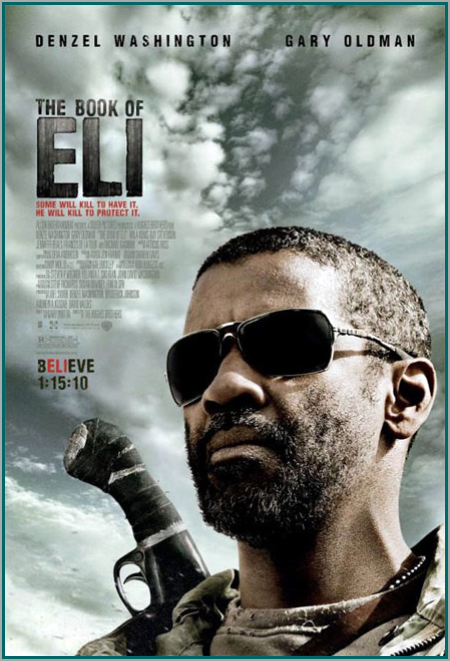
In 2001 the Hughes Brothers released their film adaptation of the celebrated and very dense graphic novel From Hell. A graphic novel meticulously researched and every detail reconstructed to tell the tale of Jack the Ripper and his killing spree in the London slum of Whitechapel during the turn of the 19th-century into the 20th. It was a film fans of the graphic novel have been waiting for years since it was initially announced. When it was finally released in 2001 the reception and reaction from both critics and audiences were a resounding thumbs down. The Hughes Brothers first major film outside of their comfort zone of the urban setting was seen as a colossal failure and for almost a decade they seemed to have put themselves into a self-imposed exile from Hollywood. It’s now 2010 and with a cas consisting of Denzel Washington and Gary Oldman on opposite sides it looks like the Hughes Brothers have returned from their exile with a very good post-apocalyptic Western called The Book of Eli.

I call The Book of Eli a post-apocalyptic Western because it’s what the film reminded me most of. The setting may be all ashen gray with the world and the environment decades into what the cast can only describe as “the flash” which ended everything. But with all that the film still felt like a throwback to the Westerns of Sergio Leone with equal parts Akira Kurosawa samurai epics. Taking cue from the screenplay by Gary Whitta, the Hughes Brothers set up the rules of the film from the very first frames. We see a world still raining ash even thirty years since a war (hinted as being caused and fought between the major religions of the world). It is a world where cats have become not just the source of food but also oil for chapped lips. If one bought into the world being presented in the very first ten minutes of the film then the rest the remaining hour and forty minutes would be easy going.

The very first twenty minutes of the film was pretty much free of dialogue as we see the No-Name walker (played by Denzel Washington) survive a day on the road inside an abandoned homestead with only an ancient iPod and the titular book to keep him company. When we finally hear his character speak it is in hushed tones, almost a whisper as if his time of wandering the blasted landscape in solitude has made speaking out loud something almost forgotten. In fact, throughout most of the film Denzel’s character rarely speaks and when he does it doesn’t bode well for those trying to keep him from the path he had been set on for the past thirty years since after “the flash.” It’s during these “encounters” when his character must protect himself that the Hughes Brothers show their unique style in how to film an action scene.

The action scenes owe much of their smooth, precise and deadly ballet to the work of stunt coordinator Jeff Imada and his team of stunt men and women. There’s none of the fast cut and edits to make an action scene seem more chaotic than it really is. Each brutal fight sequence from the hand-to-hand combat to the shootouts are shot with a wide lens to give the audience a clear view of every move, decision and attack made through the fight.  When the camera does move from combatant to combatant it flows from one to another without missing a beat. I will also say that the violence in these fights are quite sudden and brutal. Limbs and heads are cut off with ease that it takes several beats before the audience even realizes what has happened. While the film does have it’s share of action sequences the Hughes Brothers actually seem to hold themselves back from putting in more to keep the fast-pace moving. Instead they use these sudden burst of violence to break whatever monotony may set in during scenes of dialogue.

It is during these downtime from the action that the meat of the story shows itself. The book being protected by Washington’s character may seem to look like a MacGuffin from the onset as he tries to stay on path to deliver it somewhere West. It’s during his brief stop in an unnamed town that we find out just exactly what the book really is. It is also in this part of the film where the audience meets the opposite of Washington’s character in the Carnegie, the town’s dictatorial mayor played by Gary Oldman channeling his inner Stansfield from his time more than a decade ago on the film Leon: The Professional. There really is no one better right now when it comes to playing a villain with some sophistication to go with an equal amount of sociopathic tendencies. Oldman’s Carnegie gets most of the lines in the film and it’s from his lines of dialogue that we learn not just why but also the motivations for his need to have the book in Washington’s possession.

This section of the film where some explaining of the motivations from both leads bring up some interesting ideas about the nature of faith and religion and how both ideas which seem to share a common ground could also be so different from each other. While the ideas of faith and religion gets screen time there’s not much heavy-handed preaching to alienate the audience. Whitta’s script (with some extensive doctoring from a few individuals) gives the audience enough explanation without forcefeeding them. The film leaves it up to the individual viewer to make up their minds about what had been brought up. I do think that the script and the how the two leads in the film were drawn up left little gray area to be explored. We clearly see Washington’s character as the good guy trying to preserve civilization and society as the Good Book teaches while Oldman’s Carnegie wants to use the power of said Book to cement his power and hold over his town and beyond. There definitely could have been room for some more work on the script to actually complicate the two characters’ motivations where both could be seen as correct in what they want done. Instead there’s no delineation as to who is good and who is bad. It is only through Oldman’s performance that the character of Carnegie escapes becoming a one-note villain.

The rest of the cast perform ably enough but still just left to become plot device characters to help move the story forward. It was good to see Jennifer Beals in another major motion picture. The same goes to Ray Stevenson of HBO’s Rome. While their roles were quite small compared to the two leads they still did quite well with what they had to work with. I was surprised to see Tom Waits make an appearance as the town’s Mr. Fixit man and it was a delight to see. Even the small roles played by Michael Gambon and Frances de la Tour didn’t disappoint. Many in the audience, including myself, reacted quite positively to their slightly demented, but funny elder couple. Their time on-screen was brief but they sure made great use of the time they were given.

The one misstep that almost broke the film for me was the miscasting of Mila Kunis in the role of Solara. While I can understand why she looked quite clean in a town and world where everyone’s hygiene was really not a priority she just looked too clean. It seemed like she just stepped out of a Beverly Hills, 90201 remake by way of The Road Warrior. While her performance was good it still paled when compared to the rest of the principals she interacted with. When we finally see what happens to her in the end of the film there’s no reaction of rousing claps, but instead I could hear snickers and more than a few laughs.

While the story was quite good, albeit with some flaws, the film really stands out with its art direction and the work of DP Don Burgess. With the latter, The Book of Eli was given a very washed out looked of browns and greys. There was barely much any color outside of those two that the film, at times, took on a black & white quality in its visual tone. Burgess and the Hughes Brothers’ decision to use the Red HD-camera allowed the team to create a world that’s been turned on its head. This decision also allowed the filmmakers to combine live-action with the matte paintings to show the blasted landscape in the background. But not everything about the look of the film was perfect and/or well-done. At times some of the scenes clearly looked like they were filmed in front of a green-screen. Maybe it was a deliberate choice but one that, at times, became too distracting.

In the end, while not a perfect film, the Hughes Brothers’ The Book of Eli was a very good take on the current spate of post-apocalyptic films. While Hillcoat’s The Road was a depressing and agonizingly morbid take on the same subject, the Hughes Brothers were able to convey the same sentiments with their film but giving enough of a glimmer of hope. The ending doesn’t mean that society is saved by any means, but it does show that the chance for rebuilding is there if given the chance. So, whatever director hell the brothers have been relegated to for most of the last decade this film surely has brought them back from exile. While all was still not forgiven for their work on From Hell they’ve at least gotten back into the good graces of the film-going public and, hopefully, they’ve got more work to come.

10 Best Films of 2009


While some have called 2009 as not being so great in terms of quality films, there have been others who think the year was a very good year for films from start to finish. Not all the best films of 2009 came out during the so-called “awards season” from October thru December. Some of the worst films, in my opinion, were released very late in the year and clearly done so to try and force its way into award contention. While the year of 2009 saw some very good films come out early in the year and, to my surprise, even during the popcorn and brainless season of the summer blockbusters.

My list consists of the 10 films I saw in 2009 which I believe to be the best of all them. Some people will probably agree with me on and some won’t. Some of my picks may have been little seen outside of independent arthouse theaters or film festivals but it doesn’t diminish just how much I think it deserves inclusion in a “best of” list. In the end, I thought these films doesn’t just celebrate what’s great about films but also celebrating those filmmakers who show that when given room to breathe and do things their way magic can still happen.

10. Bad Lieutenant: Port of Call – New Orleans (dir. Werner Herzog)

9. The Messenger (dir. Oren Moverman)

8. Collapse (dir. Chris Smith)

7. Moon (dir. Duncan Jones)

6. Der Baader Meinhof Komplex (dir. Uli Edel)

5. Avatar (dir. James Cameron)

4. Up In The Air (dir. Jason Reitman)

3. District 9 (dir. Neill Blomkamp)

2. Inglourious Basterds (dir. Quentin Tarantino

1. The Hurt Locker (dir. Kathryn Bigelow)

20 Favorite TV Shows of the Past Decade


The beginning of the new millenium brought to tv something which was relegated to MTV for most of the 1990’s. I speak of the so-called “reality tv” shows like The Real World and Road Rules. They were a nice enough diversion from the usualy network and cable fare. They drew great ratings for a cable show and with each successive season for both series becoming more and more like car-wrecks with their beautiful and quite fake cast members the other networks began to take notice. In comes from nowhere Mark Burnett and his pitch to the CBS network of a survival show where ordinary citizens picked to play were to try and survive the season until only one is left to win the million dollar cash prize. Thus was born the reality-tv show, Survivor.

Soon other networks began to greenlight their own reality-tv shows (which were as real as some of the boobs on the cast of later Real World cast members). Fox gave us American Idol. NBC would introduce The Biggest Loser and Donald Trump’s The Apprentice. ABC got into the act with Who Wants to be A Millionaire then with The Bachelor (and to show they were not sexist, The Bachelorette). Even cable channels like The Food Network, Bravo and AMC got into the reality-tv show. Hell, even The Discovery Channel started their own which actually delivered on the label of “reality-tv” with their very popular series, Deadliest Catch.

While the decade from 2000-thru-2009 seemed to be dominated by these cheap to produce “reality shows” the decade had their bonafide hits of every kind. Every type of show were ably represented from comedies, dramas, police procedurals to pop-level shows. The Writer’s Strike of 2007-2008 ended some very good shows just when they were about to breakout. While of some these shows were able to get a second-chance either with a follow-up full season (many series had seasons cut short due to the strike) others got picked up by cable networks like USA or TNT.

Below is the list of the 20 of my favorite tv shows of the past decade. I decided against doing a “Best of…” list since some shows that many would say should be on the list won’t be since I never really watched them or got into them. So, as a list of favorites I’m able to decide on picking shows I’ve actually spent time watching at least halfway into the first season, if not all of the episodes shown.

  1. The Wire (HBO)
  2. Rome (HBO)
  3. Deadwood (HBO)
  4. Dexter (Showtime)
  5. The Shield (FX)
  6. Sons of Anarchy (FX)
  7. Battlestar Galactica (SciFi)
  8. Supernatural (CW)
  9. South Park (Comedy Central)
  10. The Chappelle Show (Comedy Central)
  11. 24 (Fox)
  12. Terminator: The Sarah Connor Chronicles (fuck you Fox!)
  13. Deadliest Catch (Discovery Channel)
  14. MadMen (AMC)
  15. Burn Notice (USA)
  16. Jericho (CBS)
  17. Chuck (NBC)
  18. NCIS (CBS)
  19. The Universe (The History Channel)
  20. Diners, Drive-Ins and Dives (The Food Network)

Inception 2nd Teaser Trailer


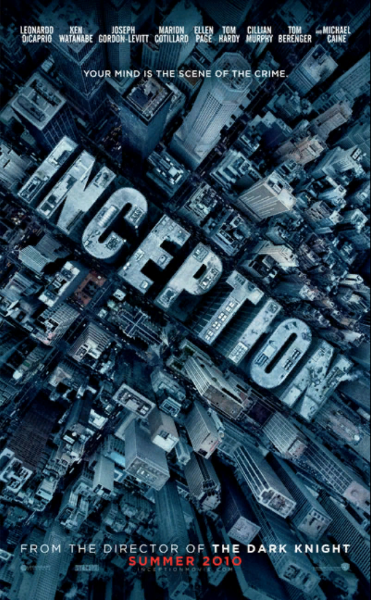
I still have no clear idea what Christopher Nolan’s follow-up film to The Dark Knight is all about. Inception seems to be about the power of the mind to alter things. From this latest trailer there a sense of Proyas’ Dark City in the some of the visuals and more than just a passing influence from the Wachowski Brothers’ Matrix Trilogy. But this being Nolan whatever influences we may see will probably be supplanted by his own take on the nature of reality, memory and dreams.

If rumors are true about the supposed budget for this film (some saying it’s 200million or more) then Nolan is really inching towards Cameron territory when it comes to acquiring the sort of budget to make his ideas come to life. I’m interested in knowing if Nolan will be shooting some of this film on IMAX like how he did some of the more expansive sequences in The Dark Knight. From the look of some of the scenes in this trailer I wouldn’t be shocked if he did.

ThinkHero: http://www.thinkhero.com/2009/12/28/inception-teaser-trailer-2-video/

HD ver. @Quicktime: http://www.apple.com/trailers/wb/inception/