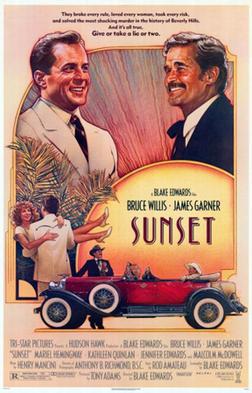
In 1920s Hollywood, famed comedian Alfie Alperin (Malcolm McDowell) has made the transition from screen stardom to working behind the scenes as a producer and studio head. With the coming of the talkies and the death of silent cinema, Alfie plans to make his mark with an epic western starring Tom Mix (Bruce Willis) as Wyatt Earp. The real Wyatt (James Garner) is hired to act as an on-set consultant. Wyatt’s former girlfriend, Christina (Patricia Hodge), is now married to Alfie.
What Mix and Earp discover is that, despite his beloved public image, Alfie is actually a monster who is involved with organized crime and sex trafficking and who has the police on his payroll. While searching for Christina’s missing son (Dermot Mulroney), Mix and Earp get caught up in a murder involving Alife’s sister (Jennifer Edwards) and a gangster named Dutch (Joe Dallesandro). At the first Academy Awards are handed out in Beverly Hills, Tom Mix and Wyatt Earp prepare for the final showdown with their producer.
The idea behind Sunset was promising. Wyatt Earp, a real cowboy who survived the end of the West, teams up with Tom Mix, a movie cowboy who is trying to survive the end of the silent era. (Earp and Mix were friend in real life, as well.) Bruce Willis comes across as being too contemporary in the role of Tom Mix but James Garner plays Wyatt Earp with a weary dignity and Malcolm McDowell does a convincing Charlie Chaplin impersonation. Unfortunately, Blake Edwards’s direction allows the story to meander and the mystery itself is so full of red herrings that it’s impossible to follow. Edwards didn’t seem to know if he wanted this movie to be a buddy comedy, an elegiac tribute to the end of the silent era, or a satire of Hollywood. He tried to include elements of all three but the movie itself just doesn’t come together. Only Garner and McDowell emerge from the film relatively unscathed.
Fortunately, for Bruce Willis, DieHard was released just two months after Sunset.
Liam Neeson is John Ottway, a sharpshooter who works for an oil company in Alaska. His job is to protect the company’s employees from dangerous wildlife in the area. He’s flying with a group of his co-workers from a remote drilling site when the plane crashes out in the middle of nowhere. There’s a small group of survivors who must now face harsh weather conditions with very little supplies. If that isn’t bad enough, a pack of hungry wolves are after them. Ottway takes charge of the group and tries to lead them out of the remote, frozen wilderness to safety. As impossible as it all seems, it turns out to be even worse, and all of those lucky enough to survive the plane crash must try to come to terms with the difficult moments that lie ahead.
I’ll go ahead and say that THE GREY is my favorite film starring Liam Neeson. When I first saw the movie in the theater back in 2012, I was expecting more of a typical “man versus nature” survival thriller. I wasn’t expecting director Joe Carnahan to deliver a powerful story that would transcend its basic premise and force me to assess the meaning of my life! When I watch THE GREY, I think about the things that make my life meaningful, and if I truly appreciate those things. I think about my own mortality, and if I am living a life that makes a real difference to anyone. I think about the need to take advantage of every moment in my life, and I’m doing this while I’m watching a movie where men are desperately trying not to be eaten by big wolves. Carnahan pulls off this feat brilliantly! With that said, if you’re looking for mindless wall-to-wall action, THE GREY is probably not the movie for you. This is a thinking person’s film, and even though I wasn’t expecting that element when I first watched it, I love it!
Liam Neeson gives an incredible performance as a man who goes from being so emotionally damaged at the beginning of the film that he considers killing himself, to a man who’s willing to go one on one with a giant black alpha male wolf for one more chance at life! For a man who played Oskar Schindler, I don’t think Neeson has ever been better than he is in THE GREY. If you don’t get misty-eyed in the scene where he holds a man’s hand as he’s dying and talks him through his fear, then you must have a heart of stone. It’s a beautifully acted scene by Neeson and actor James Badge Dale. There are other good performances in the film, mainly from Frank Grillo, Dermot Mulroney, and Dallas Roberts as the plane crash survivors that make it deep into the story with Neeson. Each of these actors have strong moments at different times. But make no mistake, Neeson’s performance is the backbone of the story and elevates THE GREY to something special.
Throughout the story, Neeson’s character recites a poem that was written by his father:
Once more into the fray, into the last good fight I’ll ever know. Live and die on this day, live and die on this day.
In THE GREY, we see various characters live their lives and face their deaths in different ways. While none of them wants to die, some fight harder for life than others. At the end of the day, we have to honestly ask ourselves… are our own lives really worth fighting for?
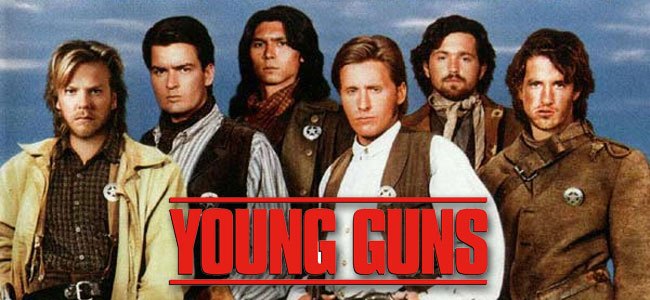
Every Monday night at 9:00 Central Time, my wife Sierra and I host a “Live Movie Tweet” event on X using the hashtag #MondayMuggers. We rotate movie picks each week, and our tastes are quite different. Tonight, Monday May 19th, we are showing YOUNG GUNS (1988) starring Emilio Estevez, Kiefer Sutherland, Lou Diamond Phillips, Charlie Sheen, Dermot Mulroney, Casey Siemaszko, Terence Stamp, Jack Palance, Terry O’Quinn, Brian Keith, and Patrick Wayne.
This movie focuses on a group of young gunmen, led by Billy the Kid (Emilio Estevez), who become deputies to avenge the murder of John Tunstall (Terence Stamp), the rancher who took them in, gave them jobs, and taught them how to read. But when Billy takes their authority too far, they soon find themselves to be the outlaws and the ones being hunted down.
Join us tonight for #MondayMuggers and watch the extremely fun YOUNG GUNS! It’s on Amazon Prime. The trailer is included below:
The Sundance Film Festival is currently underway in Utah. For the next few days, I’ll be taking a look at some of the films that have previously won awards at Sundance.
First released in 1990, Longtime Companion was one of the first mainstream feature films to deal with the early days of the AIDS epidemic.
The film follows a group of friends and lovers over the course of ten years. The film opens with a crowded and joyous 4th of July weekend at Fire Island. Willy (Campbell Scott) is a personal trainer who has just started a relationship with an entertainment lawyer who, due to his beard, is nicknamed Fuzzy (Stephen Caffrey). Willy’s best friend is the personable and popular John (Dermot Mulroney). David (Bruce Davison) and Sean (Mark Lamos) are the elder couple of the group. Sean writes for a soap opera and one of Fuzzy’s clients, Howard (Patrick Cassidy), has just landed a role on the show. He’ll be playing a gay character, even though everyone warns him that the role will lead to him getting typecast. The group’s straight friend is Lisa (Mary-Louise Parker), an antique dealer who lives next door to Howard and who is Fuzzy’s sister. The film takes it times showing us the friendships and the relationships between these characters, allowing us to get to know them all as individuals.
Even as the group celebrates the 4th, they are talking about an article in the New York Times about the rise of a “gay cancer.” Some members of the group are concerned but the majority simply shrug it off as another out-there rumor.
The movie moves quickly, from one year to another. John, the youngest of them, is the first member of the group to die, passing away alone in a hospital room while hooked up to a respirator. (The sound of the respirator is one of the most haunting parts of the film.) Sean soon becomes ill and starts to dramatically deteriorate. It falls to David to take care of Sean and to even ghostwrite his scripts for the soap opera. Howard’s acting career is sabotaged by rumors that he has AIDS while Willy and Fuzzy tentatively try to have a relationship at time when they’re not even sure how AIDS is transmitted. At one point, Willy visits a friend in the hospital and then furiously scrubs his skin in case he’s somehow been infected. When one member of the group passes, his lover is referred to as being his “longtime companion” in the obituary. Even while dealing with tragedy and feeling as if they’ve been shunned and abandoned to die by the rest of America, the characters are expected to hide the details of the lives and their grief.
It’s a poignant and low-key film, one that was originally made for PBS but then given a theatrical release after production was complete. Seen today, the film feels like a companion piece to Roger Spottiswoode’s And The Band Played On. If And The Band Played On dealt with the politics around AIDS and the early struggle to get people to even acknowledge that it existed, Longtime Companion is about the human cost of the epidemic. The film is wonderfully acted by the talented cast. Bruce Davison was nominated for an Oscar for his sensitive performance as David. If not for Joe Pesci’s performance in Goodfellas, it’s easy to imagine that Davison would have won. The scene where he encourages the comatose Sean to pass on will make you cry. Interestingly, when David gets sick himself, it happens off-screen as if the filmmakers knew there was no way the audience would have been able to emotionally handle watching David suffer any further.
Longtime Companion played at the 1990 Sundance Film Festival, where it won the Dramatic Audience Award.
Laws of Man opens with two U.S. marshals driving through the desert of Utah. Tommy Morton (Jackson Rathbone) is young and impulsive, a Korean war vet who is quick to open fire. Frank Fenton (Jacob Keohane) is older and more cautious. He also served in the military, though his service was during World War II. Frank is haunted by flashbacks to a particularly gruesome battle. Tommy and Frank may spend most of their time wearing black suits in the desert but neither one breaks a sweat.
The year is 1963. Kennedy is in the White House. The communists are on the move. And Tommy and Frank are busy executing arrest warrants in the most desolate part of the country. An attempt to arrest Mormon cult leader Crash Mooncalf (Ricard Brake) leads to a bloody shootout that leaves Mooncalf and his followers dead. Their next assignment leads them to a small town in Nevada, where Bill Bonney (Dermot Mulroney) and his violent family is suspected of killing local ranchers and stealing their land.
From the minute that Tommy and Frank arrive in Nevada, something feels off. They stay at a cheap motel, where Tommy picks up a woman named Dinah (Ashley Gallegos) and Frank spends his time talking to a bartender named Callie (Kelly Lynn Reiter). An old rancher named Don Burgess (Forrie J. Smith) shows off his gun and says that he would rather suffer a violent death than give up his land. A traveling preacher named Cassidy Whitaker (Harvey Keitel) approaches Frank in the parking lot and starts talking about sin and redemption. Meanwhile, FBI agent Galen Armstong (Keith Carradine) appears to be curiously unconcerned with the Bonneys and their reign of violence. As for the sheriff (Graham Greene), he spending his time sitting outside a burned-out ranch house. The charred bodies of the owners are still inside, seated around the dinner table.
An attempt to arrest Bill Bonney at his home leads to a violent shootout, one in which no one is killed but Bill is still not happy about having a bunch of bullet holes in his roof. Tommy and Frank attempt to serve the arrest warrant, just to discover that it’s not going to be as easy as they thought. Frank, whose World War II flashbacks are getting more and more intense, wants to leave town. Tommy, however, is obsessed with discovering what exactly everyone is hiding.
And, through it all, people who know their history will notice that the film is taking place in November of 1963 and the 22nd is rapidly approaching….
Laws of Man gets off to a strong start but begins to meander about halfway through. Luckily, the film’s final third features a wonderfully insane twist that recaptures the viewer’s attention. No matter what you may think is going on in the film, it can’t prepare you for just how weird things eventually get. Laws of Man is an entertaining film, one that is occasionally a bit too self-consciously quirky for its own good but which ultimately works. Jackson Rathbone and Jacob Keohane both give strong performances in the lead roles and the familiar faces in the film’s supporting cast all do their best to bring the film’s often surreal world to life. Dermot Mulroney and Keith Carradine give especially strong performance while Harvey Keitel appears to be having fun as the offbeat preacher.
Laws of Man managed to truly take me by surprise. For fans of paranoid cinema, it’s definitely worth making time for.
Duffy (Frank Grillo) is haunted by the past. When he was serving in the U.S. military, he watched as his friends and fellow soldiers were killed in battle. Now that he’s back in America, he’s haunted by the memories and the trauma has left him incapable of finding peace. He’s angry and paranoid and restless. He drifts around the country, making whatever money that he can as a gambler. But when a poker game at a Los Angeles roadhouse leads to a physical confrontation, Duffy is offered a new opportunity.
Max (Mekhi Phifer) watches as Duffy defends himself and is impressed with what he sees. Max is a ex-con who works as a recruiter for underground fight clubs. Max recognizes the source of Duffy’s anger because Max’s brother was also a veteran who returned to America carrying the mental and physical scars of war. Max feels that he failed his brother but maybe he can make up for it by saving Duffy’s life. Max recruits Duffy as a fighter and gives him a place to live. Duffy and Max soon find themselves in conflict with an evil gym owner (Dermot Mulroney, making the most of a rare villainous role) and a corrupt cop (Jaime King) who is secretly in charge of the town’s underground fight scene.
Lights Out is a fast-paced and occasionally self-aware B-movie. I always find movies like this fascinating because they present a world where there’s an underground fight club located in every backroom and lumber yard. Don’t get me wrong. I’m not saying that there aren’t underground fight clubs. I’m sure they’re out there and I’m sure that there are some dangerous people involved in promoting them. I’m just saying that I kind of suspect that there might not be as many of them as there tends to be in the movies. I always find it interesting that so many underground fight clubs seem to have a “fight until the death” rule. I mean, it seems to me that would cause you to quickly run out of fighters. I also wonder what people do when they want to start an underground fight club but they don’t have access to an abandoned warehouse or any acquaintances in the Russian Mafia. I guess those people are just screwed.
While Mulroney and King definitely make an impression as the two over-the-top villains, Lights Out is dominated by Frank Grillo. Grillo has been lucky enough to be blessed with a down-to-Earth screen presence that allows him to be likable while also leaving little doubt that he is someone who can handle himself in a fight. He has the weathered good looks of some one who has seen some things but who hasn’t yet surrendered his humanity. He’s like the modern day version of one of those wonderful character actors who used to populate the gangster movies of the 1930s. Grillo’s tough sincerity and streetwise persona is well-used here. John Garfield had his Body and Soul. Frank Grillo has his Lights Out.
As we all know, this year’s Sundance Film Festival started yesterday.
To me, Sundance has always signified the official start of a new cinematic year. Not only is it the first of the major festivals but it’s also when we first learn about some of the films that we’ll be looking forward to seeing all year. It seems like every year, there’s at least one successful (or nearly successful) Oscar campaign that gets it start at Sundance. For instance, it is probable that Past Lives will receive an Oscar nomination for Best Picture on Tuesday and its campaign started with how it was received at the 2023 Sundance Film Festival.
My plan for this year is to spend the last few days of January looking at some of the films that have won awards or otherwise created a splash at previous Sundance Film Festivals.
Like 1995’s Living in Oblivion for example….
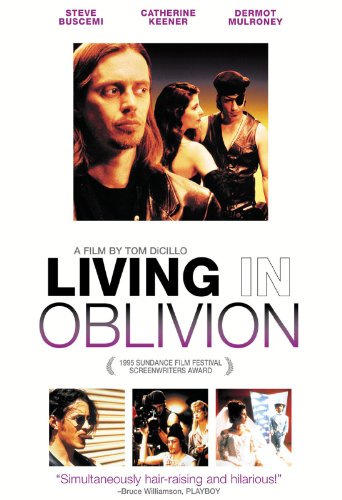
Living in Oblivion centers around the filming of an independent movie called, appropriately enough, Living in Oblivion. The film is being directed by Nick Reve (a youngish and, I’ll just say it, hot Steve Buscemi), a filmmaker whose indie cred does not protect him from the difficulties of shooting a movie with next to no budget. His cinematographer is Wolf (Dermot Mulroney), who is talented but pretentious and who is dating the first assistant director, Wanda (Danielle von Zerneck). The film stars Nicole (Catherine Keener), a struggling actress who is best known for appearing in a shower scene in a Richard Gere movie. Also appearing in the movie is Chad Palomino (James LeGros), an up-and-coming star who is appearing in Nick’s film to build up his critical reputation. (He also assumes that Nick is friends with Quentin Tarantino.)
We don’t really learn much about the plot of the film-within-a-film. It appears that Nicole is playing Ellen, a woman who is trying to come to terms with her abusive childhood and her romantic feelings towards her friend, Damien (played by Chad Polomino). The scenes of the film that we see alternate between being insightful, melodramatic, and pretentious. We see Ellen confronting her mother about her abusive childhood but we also see a dream sequence in which Ellen, who is dressed as a bride, attempts to grab an apple from Tito, a person with dwarfism (played, in his film debut, by Peter Dinklage).
To talk too much about the film’s narrative structure would be to spoil one of Living In Oblivion‘s most clever twists. What I can safely say is that, much as with Truffaut’s Day For Night, Living In Oblivion is more concerned with the production than the film that’s being shot. Nick struggles to keep his cool. Nicole struggles with her fear that she’ll always just be known as the “shower girl” and with the difficulty of keeping her performance fresh through multiple retakes. Wolf makes a point of wearing an eyepatch after claiming Wanda injured his eye and turns sullen when Nick says he doesn’t want to shoot a scene with a hand-held. A smoke machine first produces too little smoke and then too much. When Chad does show up on set, he is passive-aggressively tries to change the blocking of one of the film’s most important scenes. As for the dream sequence, it’s threatened when Tito denounces the scene and his role in it as being an indie film cliche. Throughout, director Tom DiCillo contrasts the studied structure of a finished film with the chaotic reality that goes into shooting.
Living In Oblivion is an affectionate satire, one that pokes fun at the indie film scene while also celebrating all of the hard work and different personalities that are involved in making a movie. Steve Buscemi and Catherine Keener give heartfelt performances as two people who understand that every movie could be their last while Dermot Mulroney scores some of the biggest laughs as the self-important Wolf. James LeGros is hilariously shallow and vain as a character who is rumored to be based on one of the biggest movie stars of the past 30 years. (“I want an eyepatch!” Chad declares while looking at Wolf.) Living In Oblivion is a movie that celebrates the beautiful madness of trying to shoot an important film for next to no money in a grubby warehouse. Throughout the film, the film’s crew is forced to compromise but, at the same time, there are also the small and unexpected moments that make it all worth it.
Living In Oblivion‘s witty script deservedly won the Waldo Salt Screenwriting Award at the 1995 Sundance Film Festival. Living in Oblivion is a celebration of both cinema and independence.
That is a question that has haunted journalists, cops, and true crime fans since the late 60s. It is known that the Zodiac Killer murdered at least five people in Northern California in 1968 and 1969. He targeted young couples, though he is also thought to have murdered on taxi driver as well. What set Zodiac apart from other killers is that he was a prolific letter writer, who sent cards and ciphers to the police and the journalists who were reporting on his crimes. In one of his ciphers, Zodiac claimed that he had killed 37 people. Cartoonist Robert Graysmith later wrote two books about his personal obsession with the case. He estimated that the Zodiac may have been responsible for hundred of murders, up through the 80s. Of course, reading Graysmith’s first Zodiac book, it’s also easy to suspect that Graysmith reached a point where he saw the Zodiac’s hand in every unsolved murder in the San Francisco area. Of all the unidentified serial killers in American history, Zodiac is one that most haunts us. Zodiac was a serial killer who operated in an era when such things were still considered to be uncommon. Much as Jack the Ripper did during the Victorian Age, Zodiac announced the arrival of a new age of evil.
Zodiac wrote about being a film fan and he was probably happy about the fact that he inspired quite a few films. 1971’s The Zodiac Killer came out while Zodiac was still sending letters to the police and cops actually staked out the theaters showing the film just to see if he would show up. Dirty Harry‘s Scorpio Killer was also based on Zodiac, right down to the taunting letters that he sent the mayor and again, one has to wonder if Zodiac ever showed up to watch Clint Eastwood take him down.
And, if Zodiac survived into the 21st Century, one has to wonder if he showed up in the theaters for 2007’s Zodiac.
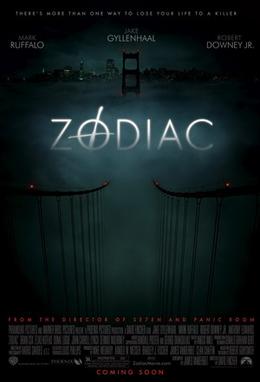
One of the best true crime films ever made, Zodiac not only recreates the crimes of the Zodiac but it also examines the mental price of obsessing over the one unknown force of evil. Mark Ruffalo plays Dave Toschi, the celebrity cop who nearly sacrificed his professional reputation in his search for the identity of the killer. Jake Gyllenhaal plays cartoonist Robert Graysmith, who spends over a decade searching for the Zodiac’s identity and who loses his wife (Chloe Sevigny) in the process. And Robert Downey, Jr. plays Paul Avery, the crime reporter to whom the Zodiac wrote and who sunk into paranoia and addiction as a result. This is a film that is less about the Zodiac’s crime and more about how this unknown killer seemed to unleash a darkness that would come to envelope first a city and eventually an entire nation.
As one might expect from a film directed by David Fincher, Zodiac plays out like a filmed nightmare with the starkly portrayed murders being all the more disturbing because they often take place outside, where people would think they would be safe. (The second murder is especially terrifying, as it plays out without even the sound of background music to allow us the escape of remembering that it’s only a movie.) Fincher heightens our paranoia but having a different actor play the killer in each scene, reminding us that the Zodiac could literally be anyone. Indeed, one of the scarier things about Zodiac is that, in the course of his investigation, Graysmith meets so many different people who seem like they could be the killer. Even if they aren’t the Zodiac, the viewer is left with the feeling that the world is full of people who are capable of committing the same crimes. The film becomes a journey into the heart of darkness, with the Zodiac becoming both a malevolent force and potentially your next door neighbor. And with the film’s detailed recreation of the 60s and the 70s, the film becomes a portrait of a country on the verge of changing forever with the Zodaic and his crimes representing all the fear waiting in the future.
Again, as one might expect from a Fincher film, it’s a well-acted film, especially by Robert Downey, Jr. Zodiac came out a year before Iron Man, when Downey was still better known for his personal troubles than for his talent. Downey perfect captures his character’s descent into self-destruction, as he goes from being cocky and self-assured to being so paranoid that he’s carrying a gun. (Paul Avery’s actual colleagues have disputed the film’s portrayal of Avery being mentally destroyed by the Zodiac.) Ruffalo and Gyllenhaal also do a good job of portraying Toschi and Graysmith’s growing obsession with the case while Charles Fleischer and John Carroll Lynch both make strong (and creepy) impressions as two men who might (or might not) be the killer.
Though the film was not a success at the box office and it was totally ignored by the Academy, Zodiac has built up a strong reputation in the years since its released. It’s inspired a whole new generation of web sleuths to search for the killer’s identity. Personally, my favored suspect is Robert Ivan Nichols, an enigmatic engineer who abandoned his former life and changed his name to Joseph Newton Chandler III in the 70s and who committed suicide in 2002. I think much like Jack the Ripper, the Zodiac’s identity will never be definitely known. There have been many compelling suspects but most of the evidence seems to be circumstantial. (That’s certainly the case when it comes to Nichols.) The Zodiac was thought to be in his 30s or even his early 40s in 1969 so it’s doubtful that he’s still alive today. In all probability, his identity and his motive will forever remain an unsolvable mystery.
In 1986’s The Drug Knot, Dermot Mulroney plays a high school student.
At the time this show aired, Dermot Mulroney was 25 years-old and he looked like he was 30 but, looks aside, he actually gives a pretty convincing performance as Doug Dawson. Doug is a smart and musically-gifted high school senior. He’s talented enough to make beautiful music with a saxophone and rebellious enough to skip class so that he can play the sax in the school locker room. His girlfriend, Kim (Meryl Streep look-alike Kim Myers), is totally in love with Doug but she also worries that he’s getting too heavily into dugs. He’s gone from smoking weed to snorting cocaine. He hides his drugs in his bedroom. His mother (Mary Ellen Trainor) has no idea that Doug is a drug addict while Doug’s little brother (David Faustino) wants to be just like him.
Can you see where this is heading?
In order to combat the school’s growing drug problem, the school has invited a speaker named David Toma to give a speech at a school assembly. Toma is a former cop who struggled with addiction himself. He inspired not one but two television shows, one called Toma and the other called Baretta. He goes from school to school and he gives speeches about all of the teenagers that he knows who have died as a result of doing drugs. As we see throughout the episode, Toma is a confrontational speaker, one who is not afraid to yell at his audience. Doug shows up for the assembly but his bad attitude leads to Toma kicking him out.
Personally, I’ve always had mixed feelings about the idea of trying to change people’s behavior by yelling at them. I know that it’s a popular technique and there’s been a lot of television shows (Intervention and Beyond Scared Straight come to mind) that are all about getting in people’s faces and screaming at them. My feeling, though, has always been that this approach is more about making other people feel good than actually changing behavior. Everyone wants to see the people who have caused them stress get yelled at. On talk shows, audiences would applaud whenever a disrespectful teen got sent to boot camp but it’s rare that you ever heard about whether or not the approach actually worked. I mean, I assume the approach works for some people but I know that if someone yells at me not to do something, my usual reaction is to go ahead do it just because I resent authority. David Toma’s approach would not have worked with me.
(One interesting thing about The Drug Knot is that David Toma is a real person and he plays himself. Apparently, he’s still out there and still at it, even though he’s in his 90s now. I should note that, on YouTube, there’s a lot of comments from people who say that getting yelled at by David Toma saved their lives so maybe the yelling approach does work for more people than I assumed.)
Anyway, as always when it comes to these made-for-TV anti-drug programs, the drugs lead to tragedy and The Drug Knot ends on a particular dark note. For once, there is no redemption.
Here is The Drug Knot, complete with an anti-drug message from Michael Jordan:
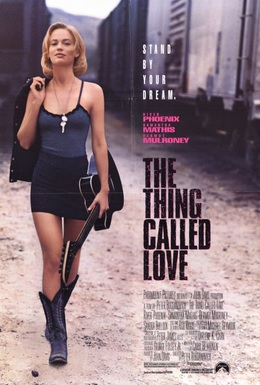
First released in 1993 and directed by Peter Bogdanovich, The Thing Called Love takes place in Nashville, the city that, for many people, has come to define Americana.
Of course, for those who actually love movies, it’s difficult to watch any film about Nashville and the country music scene without being reminded of Robert Altman’s American epic, Nashville. Much like Nashville, The Thing Called Love follows a group of wannabes, stars, writers, and performers. However, whereas Robert Altman used the city and its residents as a way to paint an acidic portrait of a nation struggling to find its way in an uncertain new world, The Thing Called Love is far less ambitious.
The Thing Called Love centers around Miranda Presley (Samantha Mathis). Miranda is from New York but she loves country music. She comes to Nashville to try to sell her songs and become a star. Instead, she ends up working as a waitress at the “legendary” Bluebird Cafe. While she waits for her big break, she meets two other aspiring writer/performers, Linda Lu (Sandra Bullock) and Kyle Davidson (Dermot Mulroney). Kyle falls in love with Miranda but Miranda falls in love with and marries James Wright (River Phoenix, brother of Joaquin). Unfortunately, while James is talented, he’s also a bit of a jerk.
The Thing Called Love aired on TCM last year and I can still remember checking out the #TCMParty hashtag on twitter while the film was airing. The majority of the comments were from people who loved TCM and who couldn’t understand why the channel was showing this rather forgettable movie. The answer, of course, is that the film was directed by Peter Bogdanovich and Bogdanovich was one of the patron saints of TCM. Along with being responsible for some genuinely good films (Targets, The Last Picture Show, Paper Moon, Saint Jack, Mask, The Cat’s Meow), Bogdanovich was also a very serious student of the history of film. Up until he passed away in January, Bogdanovich was a familiar and welcome sight on TCM. Listening to him talk about John Ford, Alfred Hitchcock, and especially Orson Welles was always a delight.
Unfortunately, as Bogdanovich himself often admitted, the majority of his later films failed to reach the heights of his earlier work and that’s certainly the case of The Thing Called Love. It’s not so much that The Thing Called Love is bad as it’s just really forgettable. There’s very little about the film that suggests that it was directed by cineaste who was responsible for The Last Picture Show. Samantha Mathis is likable but a bit bland in the role of Miranda while River Phoenix plays James as being such a jerk that you really don’t care about whether or not he finds success. From what I’ve read, Phoenix based his performance on watching Bob Dylan in the documentary Don’t Look Back. Dylan is notably mercurial in that documentary but, it should be noted, that Dylan eventually abandoned that persona once he realized that it was a creative dead end.
To be honest, I think the film would have worked better if Samantha Mathis had switched roles with Sandra Bullock. This was one of Bullock’s first films and she steals every scene in which she appears, giving an energetic and likable performance as someone who never allows herself a single moment of doubt or despair. As opposed to the self-loathing Phoenix and the bland Mathis and Mulroney, Sandra Bullock represents the hope and optimism that Nashville is meant to symbolize. In the end, her performance is the best thing about The Thing Called Love.
 In 1920s Hollywood, famed comedian Alfie Alperin (Malcolm McDowell) has made the transition from screen stardom to working behind the scenes as a producer and studio head. With the coming of the talkies and the death of silent cinema, Alfie plans to make his mark with an epic western starring Tom Mix (Bruce Willis) as Wyatt Earp. The real Wyatt (James Garner) is hired to act as an on-set consultant. Wyatt’s former girlfriend, Christina (Patricia Hodge), is now married to Alfie.
 Through the Shattered Lens