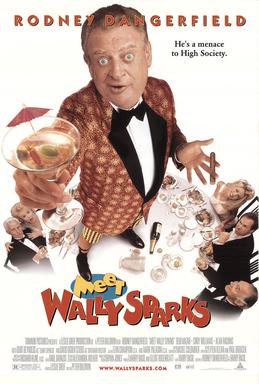
 Wally Sparks (Rodney Dangerfield) is a talk show host with a program that is so raunchy that even Jerry Springer says, “At least this isn’t The Wally Sparks Show!”
Despite being a huge hit amongst teens and college students, the show is on the verge of being canceled by the head of the network, Mr. Spencer (Burt Reynolds, wearing a fearsome toupee). He is tired of Wally’s antics and he tells Wally and his producer, Sandy Gallo (Debi Mazar), that they have a week to make the show respectable.
Wally doesn’t know what to do. Wally Sparks act respectable? Wally’s a guy who don’t get no respect, no respect at all. Then Sandy finds a letter inviting Wally to attend a party at the home of Georgia Governor Floyd Patterson (David Ogden Stiers), a noted critic of the show. Hoping to get the interview that will save the show, Wally and Sandy head down south.
At the party, Wally acts like Wally and scandalizes all of the politicians and socialites. He also shares a bottle of whiskey with a horse and then rides the horse through the mansion. The party is a disaster but, after Wally claims that he can’t walk because of a spinal injury he suffered when he fell off the horse, the Governor allows him to recuperate in the mansion. Wally causes more chaos while also teaching the Governor’s wife (Cindy Williams) how to play strip poker and eventually exposing a scheme to blackmail the Governor into building a Confederate-themed amusement park.
Rodney Dangerfield playing a talk show host sounds like a great idea and there are a lot of talented people to be found in Meet Wally Sparks. Debi Mazar is an actress who should have appeared in a lot more movies and she and Rodney Dangerfield make a good team. The movie actually gets off to a funny start, with a montage of actual talk show hosts talking about how much they hate Wally Sparks and his show. Gilbert Gottfried has a cameo as a manic guest and Wally repeats some of Rodney Dangerfield’s classic jokes.
Unfortunately, the movie starts to fall apart as soon as Burt Reynolds threatens to cancel the show for being too lowbrow. No network executive has ever threatened to cancel a show that’s bringing in the ratings, regardless of how lowbrow it might be. Things get even worse after Wally goes to Atlanta and ends up staying there. The movie tries to recreate the Snobs vs. the Slobs dynamic of previous Dangerfield films but the Governor comes across as being such a decent man that there’s no joy to be found in watching his life get turned upside down. The movie has a surprisingly large number of subplots, including one about Wally’s son (Michael Weatherly) falling for the Governor’s daughter (Lisa Thornhill), but most of them go nowhere and just distract from the man who should have been the film’s main attraction, Rodney Dangerfield. By the end of the movie, even the usually irrepressible Dangerfield seems to have been neutered.
Rodney Dangerfield was a national treasure but Meet Wally Sparks was not the best showcase for his persona or his style of humor. Fortunately, Caddyshack and Back To The School are available to watch anytime that we need a good laugh and we want to show Rodney Dangerfield a little respect.

 Through the Shattered Lens