Guilty Pleasure #85: Attack of the Killer Tomatoes (dir by John DeBello)


The 1978 film, Attack of the Killer Tomatoes, opens with a title card that would make James Nguyen proud.  It informs us that people laughed when they first watched a film called The Birds.  Then, years later, a flock of birds went mad and started attacking people.  No one is laughing now.

As for the rest of the film, it opens with a housewife being menaced by a giant tomato and then it just keeps rolling on from there.  Something is causing normal, everyday tomatoes to go on a rampage and no one can figure out what.  The government is powerless.  (The government’s competence is best exemplified by a scene where a helicopter crashes.  Reportedly, the helicopter crash was not scripted but the film’s director decided to keep the scene anyway.)  The president puts Mason Dixon (David Miller) in charge of defeating the tomatoes.

The film is one gag and one song after another.  Mason has a group of eccentric people working for him, including a superstar gymnast and a man who is always dragging a parachute behind him.  The streets are soon running red with tomato juice while clueless teenagers continue to listen to absolutely terrible song called Puberty Love….

In the past, I’ve struggled to define how a pleasure can be guilty but I think Attack of the Killer Tomatoes is actually one of the rare films that truly can live up to the label.  It’s a pleasure because it’s just so silly and cheerfully stupid that it’s hard not to smile at it.  It’s guilty because, premise aide, the film itself is never really as funny as you want it to be.  Comedy — even when its something as silly as this film — is all about timing and Attack of the Killer Tomatoes never nails the timing of its gags.  Instead, it plays out like a stoned daydream, amusing to talk about but a bit boring to actually witness.

That said, the film deserves some sort of award for its title and also for going on to inspire not only a few sequels but also a cartoon series.  Producer Stephen Peace went on to have a successful career in California politics.  Good for him.

Previous Guilty Pleasures

  1. Half-Baked
  2. Save The Last Dance
  3. Every Rose Has Its Thorns
  4. The Jeremy Kyle Show
  5. Invasion USA
  6. The Golden Child
  7. Final Destination 2
  8. Paparazzi
  9. The Principal
  10. The Substitute
  11. Terror In The Family
  12. Pandorum
  13. Lambada
  14. Fear
  15. Cocktail
  16. Keep Off The Grass
  17. Girls, Girls, Girls
  18. Class
  19. Tart
  20. King Kong vs. Godzilla
  21. Hawk the Slayer
  22. Battle Beyond the Stars
  23. Meridian
  24. Walk of Shame
  25. From Justin To Kelly
  26. Project Greenlight
  27. Sex Decoy: Love Stings
  28. Swimfan
  29. On the Line
  30. Wolfen
  31. Hail Caesar!
  32. It’s So Cold In The D
  33. In the Mix
  34. Healed By Grace
  35. Valley of the Dolls
  36. The Legend of Billie Jean
  37. Death Wish
  38. Shipping Wars
  39. Ghost Whisperer
  40. Parking Wars
  41. The Dead Are After Me
  42. Harper’s Island
  43. The Resurrection of Gavin Stone
  44. Paranormal State
  45. Utopia
  46. Bar Rescue
  47. The Powers of Matthew Star
  48. Spiker
  49. Heavenly Bodies
  50. Maid in Manhattan
  51. Rage and Honor
  52. Saved By The Bell 3. 21 “No Hope With Dope”
  53. Happy Gilmore
  54. Solarbabies
  55. The Dawn of Correction
  56. Once You Understand
  57. The Voyeurs 
  58. Robot Jox
  59. Teen Wolf
  60. The Running Man
  61. Double Dragon
  62. Backtrack
  63. Julie and Jack
  64. Karate Warrior
  65. Invaders From Mars
  66. Cloverfield
  67. Aerobicide 
  68. Blood Harvest
  69. Shocking Dark
  70. Face The Truth
  71. Submerged
  72. The Canyons
  73. Days of Thunder
  74. Van Helsing
  75. The Night Comes for Us
  76. Code of Silence
  77. Captain Ron
  78. Armageddon
  79. Kate’s Secret
  80. Point Break
  81. The Replacements
  82. The Shadow
  83. Meteor
  84. Last Action Hero

Film Review: The Caine Mutiny Court-Martial (dir by Robert Altman)


In the 1980s, director Robert Altman found himself even more outside of the Hollywood system than usual.  A series of films that confused critics and repelled audiences had led to Altman becoming something of a pariah.  As no studio was willing to give Altman a chance to make the type of quirky feature films that he made his name with in the 70s, Altman instead directed a series of low-budget theatrical adaptations.  These films may not have gotten the attention of his earlier films but they allowed Altman to show off his talents, especially when it came to working with actors.

1988’s The Caine Mutiny Court-Martial was one of those films.  Made for television and based on the play by Herman Wouk, The Caine Mutiny Court-Martial was a courtroom drama that Altman brought to life with his usual flair.  Anyone who has read either the play or Herman Wouk’s original novel (or who has seen the 1953 film version, The Caine Mutiny) will know the story.  In the final days of World War II, Lt. Steven Maryk (Jeff Daniels) has been court-martialed for mutiny.  During a particularly violent storm, Maryk took command of the USS Caine away from Lt. Commander Queeg (Brad Davis).  Maryk and his fellow officers, including aspiring novelist Lt. Thomas Keefer (Kevin J. O’Connor), claim that, after several incidents that indicated he was mentally unstable, Queeg froze up on the bridge and had to be relieved of command.  Queeg claims that everything he did was to enforce discipline on the ship and that he never froze.  Prosecuting Maryk is Lt. Commander John Challee (Peter Gallagher).  Defending him is Lt. Barney Greenwald (Eric Bogosian), who is determined to win the case even though he doesn’t necessarily agree with Maryk’s actions.

The Caine Mutiny Court-Martial is very much a filmed play.  Almost all of the action takes place in one location, a gymnasium that has been converted into a court of military law.  We don’t actually see what happened on the Caine when Maryk took control.  Instead, we just hear the testimony of those involved.  Queeg defends himself, ably at first but soon he starts to show signs of the pressure of being in command.  Maryk explains his actions and we want to believe him because he’s played by fresh-faced Jeff Daniels but, at the same time, there’s something a little bit too smug about his declaration that Queeg was not fit for command.  The other officers on the Caine testify.  Under Greenwald’s skillful cross-examination, Queeg is continually portrayed as being a flawed officer.  But only Greenwald understand that Queeg was isolated not only by the loneliness of being in charge but also by members so his own crew, like Keefer, who hated the Navy and didn’t want to take their part in the war effort seriously.  As a Jew who is very much aware of what’s at stake in the war, Greenwald has mixed feelings about the way that Queeg was treated.  It ends with a party, where a drunk Greenwald calls out the true architect of The Caine Mutiny.  As opposed to the way the scene was portrayed in the 1953 film or in Willam Friedkin’s recent adaptation), Altman focuses not so much on Greenwald but on the party occurring around him.  If the other versions of this story ended on a note of triumph for Greenwald, this one ends on a note of sadness with Greenwald’s words being almost unheard by the officers of the Caine.

Altman gets excellent performances from the entire cast and, even more importantly, he avoids the downfall of so many other theatrical adaptations.  The Caine Mutiny Court-Martial may be a talky film and it may largely take place in only one location but it’s never boring.  Altman’s camera is continually prowling around the makeshift courtroom, reflecting the tension of the case in every movement.  The end result is one of Altman’s best theatrical adaptations.

Hail, Hero! (1969, directed by David Miller)


After going away to college, Carl Dixon (25 year-old Michael Douglas, in his film debut) has returned to his rural hometown.  Though Carl comes from a family with a long military tradition, he’s against the war in Vietnam and is considered to be a hippie by his family.  As soon as his stern father (Arthur Kennedy) sees Carl, he sits him down in the kitchen and, after declaring that no one is going to mistake his son for a girl, cuts his hair.  Meanwhile, Carl’s mother (Teresa Wright) stays out of the conflict between her husband and her son while Carl’s older brother (Peter Strauss) continues to resent Carl for the accident that injured his spinal cord and kept him from going off to war.

Carl has an announcement to make.  Despite being against the war in Vietnam, he’s joined the army.  He will soon be going overseas, where he’ll get a chance to be a hero and where he says he hopes to love the enemy.  No one in his family can understand his decision, though they certainly spend a lot of time talking about it.  Carl can’t explain it either, though he certainly keeps trying.  Eventually, Carl ends up going for a swim with a local girl (Deborah Winters), smoking weed with a woman who lives in a cave with a mummified baby, and painting the family barn with a mural that’s supposed to explain it all.

Hail, Hero! is an extremely talky film that wants to say something about the war in Vietnam but it doesn’t seem to know what.  The film’s too sincere in its confusion to be a disaster but it’s also too muddled to really be effective.  Carl is opposed to the war but he drops out of college and enlists because it’s what his father would have wanted him to do but his father doesn’t seem to be impressed with the decision and Carl doesn’t seem to like his father to begin with so why volunteer for something that you find to be immoral?  The film would have been effective if Carl had been drafted into the war and had to choose between reporting for duty or fleeing to Canada.  But having him drop out of college and volunteer to serve makes it more difficult to sympathize with him when he talks about how opposed he is to the war.

If the film gets any attention today, it is probably because of Michael Douglas in the lead role.  This was Douglas’s film debut.  He was 25 when he made the film and he was already a dead ringer for his father.  Unfortunately, he doesn’t give a very good performance.  He’s miscast in the lead role.  Carl Dixon is supposed to be insecure and conflicted.  Insecure is not something that comes to mind when you think about Michael Douglas.  Instead, Carl just comes across as being petulant and self-righteous.  Hail, Hero! tries to say something about the war in Vietnam but Carl Dixon’s the wrong messenger.

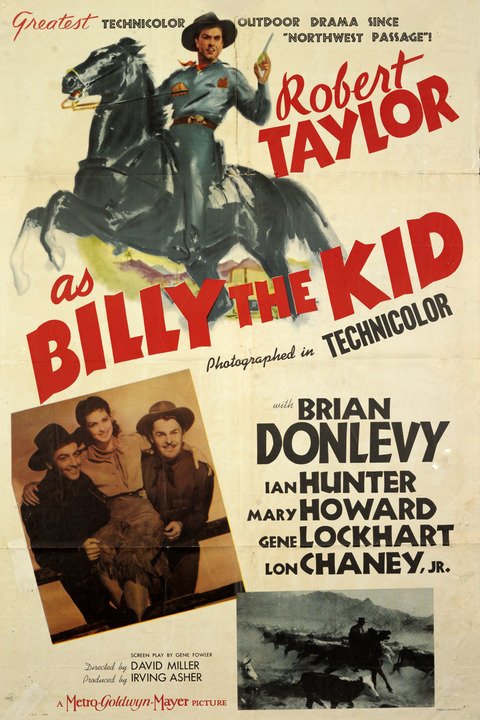
Saddle Sore: BILLY THE KID (MGM 1941)


gary loggins's avatarcracked rear viewer

billy1

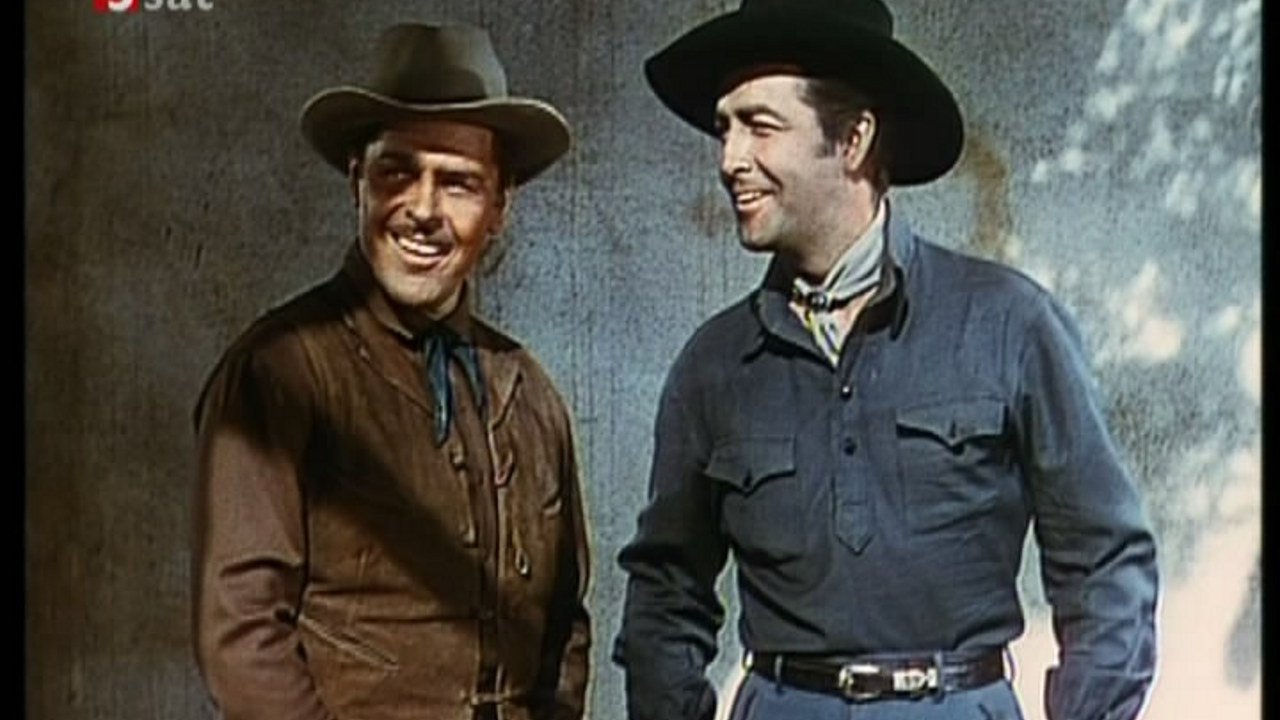
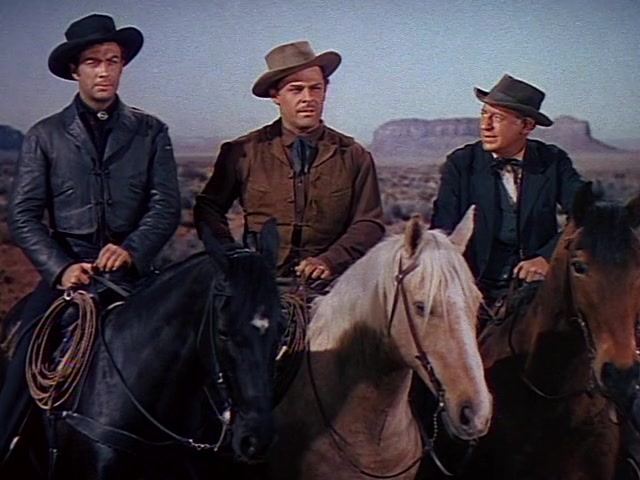
What kind of topsy-turvy world is this? Perennial bad guy Brian Donlevy is on the side of the law, loveable Gene Lockhart is the villain, and almost 30 Robert Taylor is BILLY THE KID. This 1941 Technicolor horse opera has only a passing resemblance to reality, and was actually a remake of a 1930 film starring Wallace Beery and Johnny Mack Brown, which depicted the outlaw’s legend a bit more truthfully… but not much!

billy2

In this version, Billy joins up with ruthless cattleman Hickey, who’s out to takeover Lincoln County. They start a stampede of rival Keating’s cattle, and during the commotion Billy encounters childhood friend Jim Sherwood, now working for Keating. Billy and his pal Pedro switch sides, and Pedro takes a bullet for it. The Kid is out for revenge, but Keating’s cooler head prevails, and he sets out to seek help from the territorial governor.

billy3

But Keating doesn’t make it, as we…

View original post 534 more words

44 Days of Paranoia #2: Executive Action (dir by David Miller)


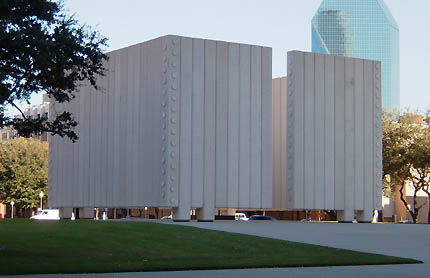
The Kennedy Memorial in Downtown Dallas

The Kennedy Memorial in Downtown Dallas

Even though it happened 22 years before I was born, I sometimes feel as if it was only yesterday that President John F. Kennedy was assassinated.

A lot of that is because I’m from Dallas.  When I was born, my family lived in Oak Cliff, a few blocks away from where the accused assassin Lee Harvey Oswald once lived.  I drive by the Kennedy Memorial several times a week.  I’ve gone to the Sixth Floor Museum.  I’ve made out on the Grassy Knoll.  On a daily basis, I see tourists who have come down here from up north with their preconceived prejudices, their unwieldy copies of Stephen King’s 11/22/63, and their overactive sweat glands.  (“How do you handle the heat!?” they ask when the temperature is barely above 90.)  With the 50th anniversary of the assassination approaching, the Dallas Morning News has been running daily stories examining every detail of that terrible event.

The rest of the nation, of course, will never let us forget that JFK was assassinated in Dallas.  Just last week, there was an idiotic and bitter opinion piece in The New York Times, written by James McAuley, in which he claimed that Dallas was a “city of hate” that should feel more guilt over the JFK assassination.  As McAuley (who is studying history at Oxford and is not a resident of that city that he apparently feels qualified to judge) put it, “For 50 years, Dallas has done its best to avoid coming to terms with the one event that made it famous: the assassination of John F. Kennedy on Nov. 22, 1963.”

This, of course, is bullshit.

There are two competing schools of thought about the assassination of John F. Kennedy.  One says that Lee Harvey Oswald was solely responsible.  The other is that Kennedy was killed as the result of a complex conspiracy.

JFK Assassination Bullets

Let’s say, for the sake of argument, that Lee Harvey Oswald acted alone.  Well, Oswald was born in New Orleans but he was raised up north in New York City.  He was also a communist with a history of mental instability.  Hence, if you accept that Oswald was the lone assassin than you also have to be willing to accept that Oswald would have tried to kill Kennedy regardless of what city he was living in.

IMF Head-Perp Walk

Things get a bit more complicated if you believe that Kennedy was killed as the result of a conspiracy.  But let’s consider the usual suspects that come up whenever people start talking about the possibility of conspiracy.  The Mafia was based in the north.  The CIA was based in Washington, D.C.  The anti-Castroites were based in Miami.  Again, all of these conspirators would have killed Kennedy regardless of what city he went to in November.

It’s easy for the rest of the country, in a fit of jealousy, anger, and delusion, to blame Dallas and Texas for the assassination of John F. Kennedy but, regardless of whether you believe in the lone assassin or a larger conspiracy, the truth is far more complex.

Over the next few days, as part of the 44 Days of Paranoia, I’ll be taking a look at some of the many films that were inspired by this assassination.  Let’s start things off with one of the lesser known entries in the JFK genre, 1973’s Executive Action.

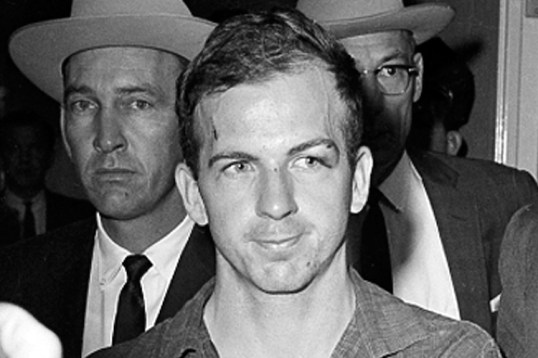
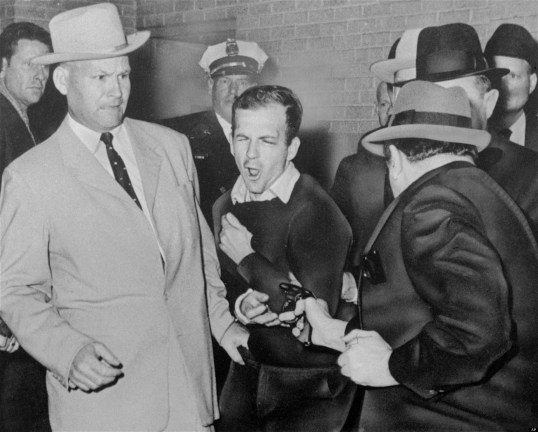
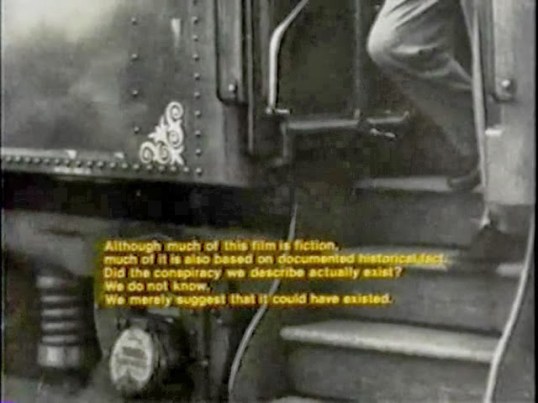
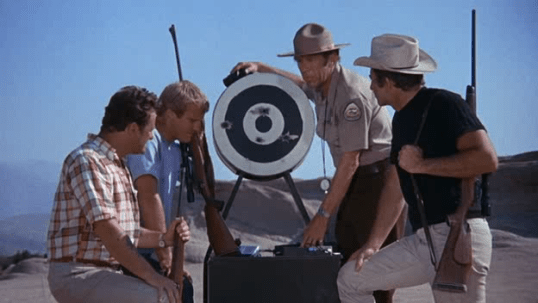
Executive Action opens with a series of grainy, black-and-white photographs of both America in the 1960s and the men who, over the course of the film, will be portrayed as having plotted and carried out the assassination of President Kennedy while a mournful piano plays in the background.  It’s a low-key but eerily effective opening and it also lets the viewers know exactly what type of film they are about to see.  As opposed to Oliver Stone’s far better known JFK, Executive Action is a low-key, almost deliberately undramatic film.   Despite the fact that there are some familiar faces in the cast (or, at the very least, familiar faces to those of us who watch TCM), Executive Action almost feels as if it could have been a documentary.

blogger-image--1805315534

As the film opens in 1963, we see a group of very rich men talking about the future of America.  Ferguson (Will Geer) and Foster (Robert Ryan) are concerned that President Kennedy’s policies are going to destroy America.  Foster is worried that Kennedy is planning on cutting back on military spending.  Ferguson is upset by Kennedy’s support of the Civil Rights movement.  (In one memorable scene, we see Martin Luther King delivering his Dream speech on TV before the camera pulls back to reveal Ferguson watching in disgust.)  Their associate, the shadowy Farrington (Burt Lancaster), argues that the only way to stop Kennedy is to assassinate him and put the blame on a lone gunman.

With the support of Ferguson and Foster, Farrington recruits a group of gunmen (led by Ed Lauter and including Roger Corman regular Dick Miller) and works to set up the perfect patsy.  A man (James MacColl) goes around Dallas, acting obnoxious and telling anyone who will listen that his name is Lee Oswald.  At Ferguson’s insistence, a picture is doctored to make it appear as if Lee Harvey Oswald is posing in his backyard with a rifle.  As all of this goes on, the date of November 22nd steadily approaches…

ex3

As I stated before, Executive Action is an almost obsessively low-key film.  That, however, works to the film’s advantage.  Ferguson, Foster, Farrington, and the other conspirators are chillingly believable because they are presented almost as being anonymous.  Instead of being portrayed as being super villains, they are instead men who approach assassination as just another part of doing business.  The impression one gets is that Kennedy isn’t the first leader they’ve had killed and he probably wasn’t the last.  Director David Miller seamlessly mixes historical footage with film reenactments and the end result is a disturbingly plausible film.

Unfortunately, Executive Action is less well-known than some of the other films that have argued that a conspiracy was responsible for the assassination for John F. Kennedy.  However, it may very well be the best.

executive-action-movie-poster-1020681901