Horror Book Review: Blood Meridian (by Cormac McCarthy)


“Whatever in creation exists without my knowledge exists without my consent.” — Judge Holden

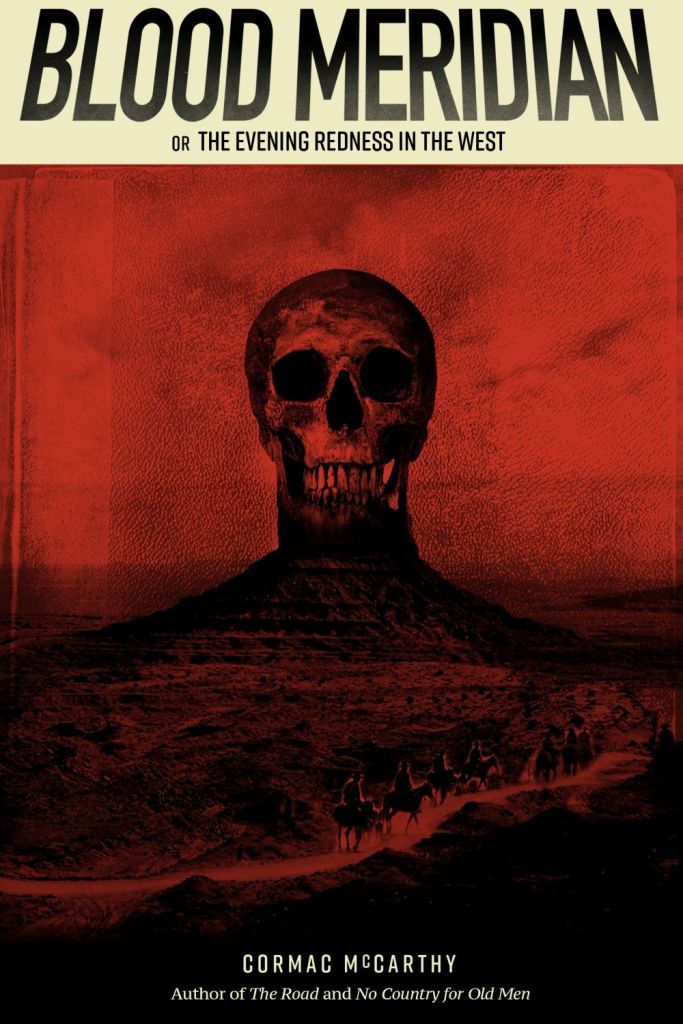
Blood Meridian initially appears to be a story set in the violent American West, but beneath the surface, it presents a profound exploration of evil—a world where history and cosmic darkness merge in a landscape drenched with blood and despair.

Cormac McCarthy’s novel defies easy classification. It follows the Kid, a teenage drifter who joins the ruthless Glanton gang of scalp hunters during the lawless 19th-century borderlands. Yet this story is not about heroism or conquest; rather, it reveals a brutal, merciless world governed by cruelty and cosmic malevolence.

No traditional heroes emerge here. Every character either inflicts horror or suffers it, trapped in an endless cycle of violence. The Kid moves passively through this brutal landscape, lacking the conviction or agency typical of Western protagonists. This moral ambiguity immerses readers in a narrative saturated by horror at every turn.

Violence permeates the novel—not merely through vivid depictions of scalping and massacres but as a fundamental force governing existence itself. Violence shapes life’s fragile and transient nature. Spilled blood binds the characters and marks a universe where death and cruelty endure indefinitely. The visceral portrayal underscores violence as a relentless ritual as pervasive and elemental as the landscape itself.

At the violent core stands Judge Holden—monstrous and compelling. His towering, hairless, albino form immediately signals his unnaturalness: massive, lacking body hair, and displaying a blank, eerily calm expression that can swiftly shift into chilling ferocity. This physical otherness aligns him with mythic terrors that transcend humanity.

Holden’s vast intellect spans languages, science, and philosophy, making him appear nearly godlike. Yet his worldview exalts war and violence as the universe’s ultimate realities. He declares, “war is god,” and insists everything exists only under his knowledge and consent. He casts violence as the ultimate power and true order, positioning himself both as agent and embodiment of these forces.

He bears striking resemblance to the archons of Gnostic thought—malevolent cosmic rulers who imprison humanity in suffering and ignorance. Holden’s bald, pale form and inscrutable nature make him a living symbol of the universe’s cold indifference to human pain and violence. He embodies cosmic cruelty and indifferent fate, physically manifesting the harsh, uncaring forces shaping mankind’s brutal destiny.

Holden shrouds the narrative with cosmic dread. His mysterious origins, command over knowledge and power, and seeming invincibility elevate him beyond mere man. He becomes an embodiment of eternal evil and incomprehensible cosmic forces that dominate the novel’s bleak universe.

The desert landscape intensifies this cosmic horror. It is not mere backdrop but a symbol of a universe indifferent to life and moral distinctions. Traditional binaries of good and evil dissolve into endless cycles of destruction. Mercy and justice vanish, replaced by an uncaring void that swallows hope and meaning. The environment thus anchors the story’s existential dread.

The Kid’s journey reveals the story’s psychological core—his slow destruction of innocence. Initially barely aware of right and wrong, he sinks deeper into the Gang’s savagery. The line between victim and perpetrator blurs until innocence disappears. This loss exposes a deeper horror: the self’s annihilation through human cruelty.

McCarthy’s prose reflects this mythic and cosmic scale. His dense, biblical cadence challenges readers but deepens the story’s epic tone. Sparse punctuation and sweeping descriptions evoke a vast, harsh world that feels inevitable and overwhelming. This rigorous style immerses readers in a mood of doom and fatalism, amplifying the narrative’s grim vision.

Philosophically, Blood Meridian meditates on timeless cosmic evil. Holden transcends mere antagonist status to become a metaphysical force of destruction, both ancient and eternal. The novel’s final scenes suggest this cosmic power will forever govern human suffering and violence.

The novel echoes ancient philosophies that portray evil as pervasive and intrinsic. Violence weaves into existence’s fabric, turning the universe into a dark battleground where malevolent forces prevail unchecked. The text confronts complex themes of fate, power, and the buried truths beneath history’s surface.

Seen holistically, Blood Meridian transcends its Western roots to emerge as a raw chronicle of violence, evil, and cosmic dread. It offers no solace or redemption—only exposure to a primal darkness where humanity’s basest impulses attain mythic significance.

This potent combination of brutal historical insight, existential horror, and mythic storytelling delivers an intense, unforgettable literary journey. The novel stands as both a frontier saga and profound philosophical inquiry into evil itself—forcing confrontation with humanity’s deepest darkness and the indifferent vastness of the cosmos.

By articulating these themes through complex narrative, striking symbolism, and demanding prose, McCarthy not only reconstructs the American West but also presents a timeless meditation on human nature and the universe—a work that challenges readers intellectually and viscerally in equal measure.

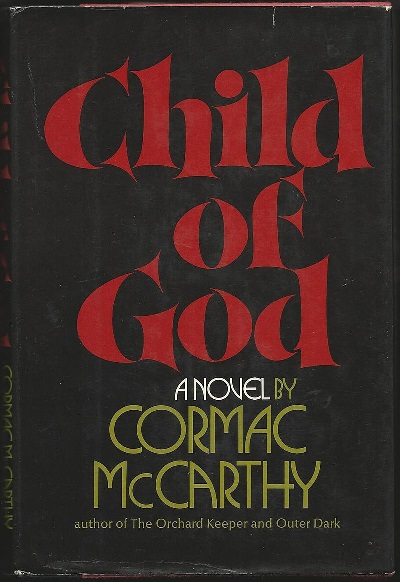
Book Review: Child of God by Cormac McCarthy


In 1960s, Lester Bullard lives alone in the mountains of Tennessee.  Abused as a child and scorned as an adult, Bullard is the type of person that most people try to ignore.  He’s angry, bitter, and not all that knowledgeable about the world outside of his own fevered imagination.  Having been evicted from his home, he moves into an abandoned shack where he spends his time voyeuristically watching the teenagers who sneak off to the isolated mountains so that they can fool around in their cars without being harassed by the grown-ups.  When Bullard stumbles across two dead bodies in a car, it doesn’t so much send him on a downward spiral as much as it just accelerates the only fate that can be waiting for someone like Lester Bullard.  Bullard does some truly disturbing things but, as the narrator reminds us, he’s “a child of God, much like yourself perhaps.”

(No, definitely not like me!  Though I do get the narrator’s point.)

First published in 1973, Child of God was Cormac McCarthy’s third novel.  It tells a disturbing story and one that will leave readers unsettled.  Inspired by the type of macabre tales that used to be told around campfires, it’s a novel of cold, gothic horror.  McCarthy’s prose creates such an atmosphere of darkness that it’s difficult to read the novel in one sitting.  You almost have to put the book down so you can step outside and take a deep breath after some of the more grotesque moments.  Child of God is also a character study of a man living on the fringes of what most people would already consider to be the fringe of society.  Just as the people living on the East and West Coasts have rejected the citizens of Appalachia, Appalachia has rejected Luster Bullard.  The book links Bullard to the violent history of Appalachia, with the Bullard family having been involved in many of the feuds that helped to define the region.  McCarthy’s matter-of-fact prose serves to make Bullard’s crimes all the more disturbing, with McCarthy refusing to give the reader the easy out of a traditional, guns-blazing ending.  Bullard’s ultimate fate feels almost as random as his crimes, challenging the idea of any sort of karmic justice.  In the end, Bullard is destined to become another barely-remembered regional legend, like Ed Gein or the Bloody Benders.  By telling his story without a hint of melodramatic excess, McCarthy leaves the reader with no choice but to consider that the world is full of real Lester Bullards.


4 Shots From 4 Films: Special Cormac McCarthy Edition


4 Or More Shots From 4 Or More Films is just what it says it is, 4 shots from 4 of our favorite films. As opposed to the reviews and recaps that we usually post, 4 Shots From 4 Films lets the visuals do the talking!

Today, we say goodbye to the man who was the great American novelist of his time.  The shots below are all taken from films based on the work of Cormac McCarthy.

4 Shots From 4 Films

All The Pretty Horses (2000, dir by Billy Bob Thornton, DP: Barry Markowitz)

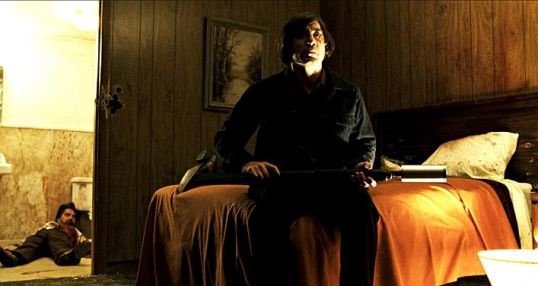
No Country For Old Men (2007, dir by Joel and Ethan Coen, DP: Roger Deakins)

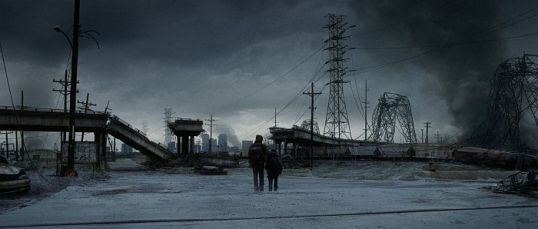
The Road (2009, dir by John Hillcoat, DP: Javier Aguirresarobe)

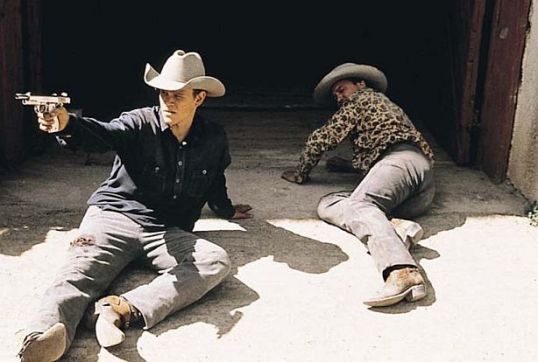
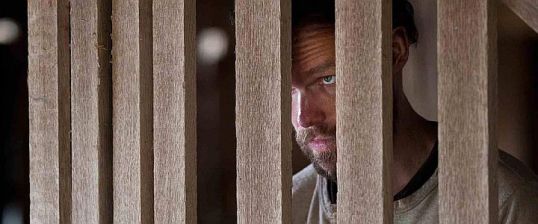
Child of God (2013, dir by James Franco, DP: Christina Varos)

Embracing the Melodrama Part II #107: No Country For Old Men (dir by the Coen Brothers)


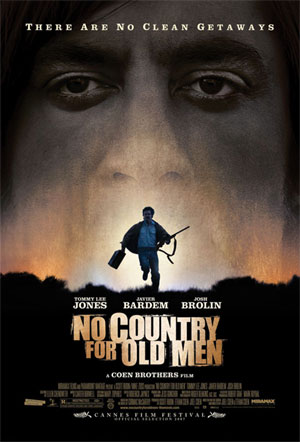
No_Country_for_Old_Men_posterI love my home state of Texas and I love movies. Therefore, it has always upset me that most movies set in Texas get the state totally wrong.  That’s not exactly shocking.  Unlike the rest of the states, there’s actually a lot of variety to Texas.  We’re a big state and we’re home to a lot of people.  Unlike some place like Vermont, Texas is a world all its own and it’s not surprising that most outsiders are incapable of getting their mind around that and instead find themselves embracing simple-minded clichés and stereotypes.  That’s perhaps why the best films about Texas tend to be ones that were actually made by Texans.  If you want to see the real Texas — flaws and all — than I suggest watching the films of Richard Linklater or perhaps Wes Anderson’s Rushmore.

And yet, it took two outsiders to write, produce, and direct one of the best films ever made about Texas.  The 2007 best picture winner No Country For Old Men was largely the work of two brothers from Minnesota, Joel and Ethan Coen.  It’s not only one of the best films about my home state but it’s also one of the best films of the past decade.

Based on a novel by Cormac McCarthy, No Country For Old Men tells the story of three determined men in South Texas whose lives are interconnected despite the fact that three of them spend almost the entire movie one step behind each other.  In fact, despite a few brief encounters where their paths meet, it can be argued that, at no point, do any of them truly interact with each other face-to-face.

Llewelyn Moss (Josh Brolin) is the type of person that anyone who has ever lived in Texas will have met.  He’s a hard-working, plain-spoken man, the type who drives a pickup, owns a gun, and likes to begin and end the day with a beer.  He lives in a trailer with his wife, Carla Jean (Kelly MacDonald, who may be Scottish but speaks here with an almost flawless Texas accent).  Llewelyn’s not a bad guy but he’s not as smart as he thinks and, like a lot of folks down here, he doesn’t like the idea of being told what to do.  In fact, he’d almost rather die for his trouble than admit to making a mistake.  When Llewleyn comes across the aftermath of a drug deal turned violent, he takes off with a suitcase that contains $2,000,000.  After barely escaping the remaining drug dealers (and the scene where Llewelyn is chased by a pit bull is a classic), Llewelyn sends Carla Jeans to stay with her sick mother and then he grabs the suitcase and heads over to the next county.  It quickly becomes apparent, to the viewers at least, that Llewelyn has absolutely no idea how to get out of the mess that he’s found himself in.

And it’s quite a mess because Anton Chigurh (Javier Bardem) has been hired to track down the money.  Perhaps one of the greatest movie villains of all time, Chigurh is an almost unstoppable force of death and destruction.  Chigurh pursues Llewelyn across Texas, killing almost everyone who he meets along the way.  Interestingly enough, just as Llewelyn continually makes excuses for his own greed, Chigurh also makes excuses for his murderous activities, seeming to obsess over the role of fate and chance.  Whereas Llewelyn refuses to give up the suitcase, even though it means that he’s putting his own wife in danger, because he insists that he can figure out a way to keep the money, Chigurh occasionally dodges responsibility for his own actions by flipping a coin and putting the blame on fate.

And finally, there’s Sheriff Ed Tom Bell (Tommy Lee Jones), who is both the most decent and the most ineffectual male character to be found in the film.  He’s an old-fashioned lawman, the type who, had this film been made in the 50s or the 60s, would have been played by Gary Cooper and would have both vanquished Chigurh and given Llewelyn and Carla Jean marriage advice as well.  In the world of No Country For Old Men, however, Ed is almost always one step behind both Chigurh and Llewelyn.  Instead of saving the day, Ed spends most of the movie shocked and saddened by the violence around him.  As the film draws to its conclusion, he’s left to wonder whether any one man can make a difference.  He’s left to literally wonder whether his area of South Texas has truly become no country for old men.

I recently rewatched No Country For Old Men on TCM and I was surprised to discover just how well this film holds up, even after repeat viewings.  If anything, the film actually improves on repeat viewings.  Once you know how the story is going to end (and, in a fashion typical of both the Coens and Cormac McCarthy, No Country For Old Men does not have a traditional ending), it’s easier to see all of the things that you may have been too overwhelmed to appreciate the first time, like Kelley McDonald’s performance as Carla Jean and Stephen Root’s cameo as Chigurh’s shady employer.

However, for me, the main reason that I appreciate No Country For Old Men is because it is one of the few films that actually manages to get South Texas right.  My mom was born and grew up in South Texas, in the town of Benavides to be exact.  I’ve spent a lot of time down there.  The portrait that No Country For Old Man paints of South Texas is not always flattering but it is largely accurate.  No County For Old Men captures both the region’s terrifying violence and its natural beauty.  It’s honest about the fact that there are men like Anton Chigurh but, at the same time, you occasionally meet an Ed Tom Bell as well.  And, of course, there’s a Llewelyn Moss in every town.  He’s the one who you meet and you hope — often against your better instincts — that he won’t get in over his head.

The Academy named No Country For Old Men the best film of 2007.  For once, the Academy was right.

Defending the Counselor


The_Counselor_Poster

(Spoilers Below)

The Counselor was one of the most anticipated films of 2013.  After all, it was based on a screenplay by the Pulitzer-prize winning novelist Cormac McCarthy and it was directed by Ridley Scott.  Its cast included such stars as Michael Fassbender, Javier Bardem, and Brad Pitt.  The film’s two trailers promised a return to the thematic territory that the Coen Brothers explored in their Oscar-winning adaptation of McCarthy’s No Country For Old Men.

And yet, when The Counselor was released in October, the reviews were scathing and audience response was reportedly terrible.  Writing for Salon, film “critic” Andrew O’Hehir suggested that The Counselor was not only the worst film of 2013 but the worst film of all time.

And you know what?

For not the first time, Andrew O’Hehir was wrong.  The Counselor is not the worst film of 2013.  Instead, it’s one of the best.  It’s a film that will be studied long after more acclaimed films have been forgotten.

Why is The Counselor so hated?

It’s not an easy film to love.  In fact, the film is rather brave about alienating its audience and refusing to allow for the crowd-pleasing moments that viewers have come to expect from even the most prestigious of films.

In order to truly defend the Counselor, it’s necessary to know the plot of The Counselor.  Needless to say, everything that follows constitutes a huge spoiler so, if you’re one of those types, feel free to stop reading now.
Brad-Pitt-Michael-Fassbender-Counselor

Okay, still here?  Here’s a condensed version of what happens in The Counselor:

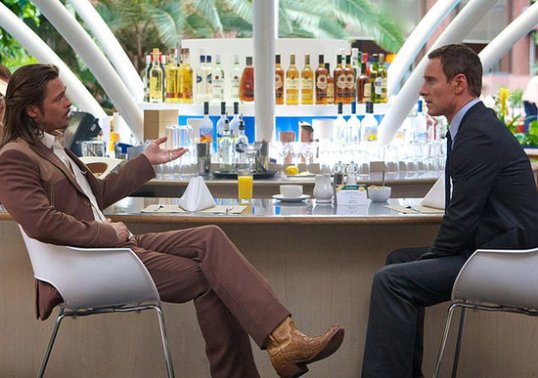
The Counselor (Michael Fassbender) is an honest lawyer in El Paso who has never broken the law and is engaged to marry the beautiful and saintly Laura (Penelope Cruz).  For reasons that are never explicitly stated (but, as I’ll explain below, are obvious to anyone who is willing to look for the clues), The Counselor agrees to help his clients Westray (Brad Pitt) and Reiner (Javier Bardem) smuggle a huge shipment of cocaine into the U.S. from Mexico.  However, Reiner’s girlfriend Malkina (Cameron Diaz) steals the drugs and frames the Counselor for the theft.  As a result, Reiner ends up getting executed by the Mexican cartel, Westray is beheaded on the streets of London, and the Counselor ends up hiding out in Juarez, Mexico, sobbing as he looks at a DVD copy of a cartel-produced snuff film that features Laura being murdered.  The end.

Yeah, it’s not exactly a happy film.  And yet, it’s a film that sticks with you, a portrait of a shadowy underworld that is fueled solely by greed, paranoia, and masculine posturing.  Ridley Scott makes good use of the South Texas landscape and the talented cast creates a memorable gallery of rouges.

And yet, The Counselor is getting some of the worst reviews of the year.  What’s especially interesting is that the things that so many critic cite as flaws are actually the film’s greatest strengths.

The Counselor

Consider the following common criticisms:

1) The film features some of the most overly articulate drug deals of all time.

This is the most frequent complaint that I’ve come across concerning The Counselor and there is some validity to it.  The Counselor is a very talky film.  The film’s first hour is pretty much made up of The Counselor having three conversations, all about the same thing and all reaching the same conclusion.  Cormac McCarthy’s dialogue is, perhaps not surprisingly, rather portentous and florid.  The Counselor does ask the audience to accept a world where even the head of Mexico’s most powerful cartel is given to going off on long philosophical digressions.  The Counselor is one of those films where nearly every line seems to have a double meaning.

That said, I think that those who attacking the film’s dialogue are missing the point.  This is not meant to be a naturalistic film.  Instead, it’s a heavily stylized B-film that uses its sordid story as a metaphor for dealing with deeper issues of greed, masculinity, and the changing mores of American culture.  Much as every line of dialogue has a deeper meaning, so does every pulpy plot twist.  It takes a while to adjust to McCarthy’s dialogue but, ultimately, that dialogue serves to remind us that the film has a lot more on its mind than just telling the story about a drug deal gone bad.  The combination of overly articulate dialogue with primitive violence and desires encourages us to look under the film’s surface.

2) The film’s plot is predictable.

This may be true but I think that’s actually McCarthy’s point.  From the start of the film, the Counselor is continually warned that things could potentially go very wrong.  Despite these warnings, the Counselor still gets involved in Reiner’s drug and, through a combination of hubris and fate, he loses everything that he loved.

The Counselor’s downfall is not meant to be a surprise.  Instead, McCarthy’s point is that the consequences of our actions are usually obvious but we, as human beings, chose to live in denial about just how little control we actually have over our own fate.

TheCounselor-Diaz-Cheetah-Tat

3) Ridley Scott’s direction is stylish but ultimately empty.

This argument goes that, while Scott manages to capture some gorgeous images of the Texas/Mexico border, those images ultimately don’t add up to much.  The idea goes back to a charge that is frequently leveled against Ridley Scott as a director, that he’s all style and technique with little substance.  (Interestingly enough, this is the same charge that is often made against the Coen Brothers.)

In the past, I’ve been critical of Ridley Scott.  (For proof, check out my reviews of Robin Hood and Gladiator.)  However, that being said, I think that, with The Counselor, Scott does a good job of visually interpreting the concepts at the heart of McCarthy’s script.  My mom was from South Texas and I’ve spent enough time down there to understand just how perfectly Ridley Scott manages to capture the combination of beauty and harshness that one finds along the border between Texas and Mexico.  In Scott’s hands, the emptiness of the Texas landscape serves as a perfect parallel for the emptiness of the lives of the majority of the film’s characters.

Speaking of which…

4) The motivations of the Counselor remain a mystery.

Why does the Counselor get involved in the drug deal in the first place?  Many of the film’s critics have complained that the Counselor’s motivations remains a mystery and therefore make it impossible for audiences to sympathize with the character.

Nothing could be further from the truth.

What these critics are failing to realize is that the Counselor’s motives are obvious every time that he appears on-screen.  The audience has to be willing to look for them.  The audience has to be willing to think and that, of course, is asking quite a bit of some viewers.
The-Counselor

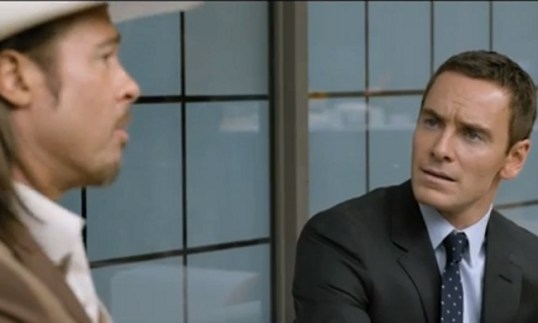
While the Counselor hints that his reason for getting involved with the drug deal is so that he can make enough money to provide a good life for Laura, his actual motivations are far more selfish.  One need only see the Counselor in his perfectly pressed suits or in his sleek but sterile home to understand exactly who the Counselor is.  He is a character who has made his living by defending those who break the law but who has never had the courage to actually flaunt the rules himself.   He is a man who lives in a self-constructed prison of ennui and associating with Reiner and Westray gives him a chance to escape from his conventional existence.   He is a character who spends his day profiting from the crimes of others but, because he can go home to his beautiful home and his beautiful fiancee, assumes that he’s somehow detached from the consequences of the actions of his associates.

The Counselor starts the film as an unemotional, blank-faced cipher, a man whose entire identity is based on his job title.  (Indeed, we never learn once learn or hear the character’s actual name.)  The only time that he shows even a hint of human depth or emotion is when he’s with Laura.  He’s a man who, in many ways, is dead on the inside.  It’s only after he gets involved with Reiner and Westray that the Counselor starts to show any signs of life until, by the end of the film, he literally cannot control his emotions.   The Counselor frees himself from his stifling and conventional existence at the cost of everything and everybody that he loves.  In his pursuit of freedom, he simply moves from one self-imposed prison to another.

5) Particularly in its portrayal of Malkina, there is a strong streak of misogyny running through the film.

This is a point that I’ve seen made by several critics and it’s one that bothers me as both a feminist and as a female who happens to love genre films.  Just because a film features a misogynistic character does that therefore make the film itself misogynistic?

The majority of those who claim that The Counselor is anti-female often point to the character of Malkina.  As played by Cameron Diaz, Malkina is a hyper sexual sociopath who manipulates and destroys everyone else in the film.  Even though he’s obsessed with her, Reiner also claims to fear her and he has several conversations with the Counselor in which he cites her as proof that women cannot be trusted.

However, just because Reiner says this, that doesn’t necessarily mean that the film agrees.  In fact, as should be obvious to anyone who is actually willing to pay attention to the film, Reiner is portrayed as being a fool who, ultimately, is just as delusional as the Counselor.  Reiner, Wainstray, and the Counselor all exist in a hyper masculine environment.  For all of their posturing and macho talk, it’s also obvious that none of them are capable of truly dealing with women.  Wainstray can only bring himself to acknowledge them as potential sexual partners while the Counselor both idealizes Laura and uses her happiness as an excuse to pursue his own criminal enterprises.  Reiner, meanwhile, is both attracted to and terrified of Malkina.

the-counselor-ferrari-diaz

In perhaps the film’s most infamous scene, Malkina removes her panties and then grinds against the windshield of a Ferrari while Reiner watches from inside the car.  Some have argued that, with this scene, the filmmakers are equating Malkina’s sexuality with evil.  I, however, would argue that this scene shows that Malkina — alone of all the film’s major characters — understands the fact that all of the men in her life are essentially boys who are either incapable of or unwilling to grow up.  Malkina uses her sexuality not because she’s evil but because she’s intelligent enough to use every weapon at her disposal to make sure that she will be one of the few characters to survive to the movie’s conclusion.  By the end of the film, it’s obvious that Malkina is both the strongest and the most intelligent character in the film.

There’s an interesting scene towards the end of the film in which the Counselor, who is hiding out in Juarez, stumbles across a group of protesters who are holding pictures of young women who have either been killed on or vanished from the streets of Juarez.  Since 1993, over 4000 women have been murdered in Juarez.  The majority of those murders are still unsolved, with many blaming the Spanish tradition of machismo.  The feeling of many is that “good” girls stay home while “bad” girls get jobs in the city and are often  murdered as a result.  And, since the victims shouldn’t have been pursuing a life outside of domestic servitude in the first place, why waste the time trying to win them any sort of justice?  For the past decade, brave activists have put themselves in danger by daring to demand justice for the dead of Juarez.  When the Counselor stumbles across their rally, it’s a brief moment in which the real world and the cinematic landscape come together.

It’s also a scene that serves to remind us that the film’s characters are living in a hyper masculine world, one that embraces the concept of machismo without understanding or caring about the consequences of that destructive  culture.  The Counselor’s horrified reaction to the rally is the reaction of a man who has finally been forced to confront the evil of which he is now a permanent part.

6) The film’s ending is depressing.

Complaining about Cormac McCarthy writing a depressing ending is a bit like getting upset at a cat for purring.  It’s what McCarthy does and anyone with any knowledge of his work has no right to be shocked that the film ends on a note of hopelessness.  Much as with No Country For Old Men, The Counselor ends the only way that it can.  It may not be a happy ending but it is, at least, an honest ending.

The Counselor may not be an easy film to like but it’s definitely a film that deserves better than to be dismissed as the worst of 2013.

Counselor-Bardem2