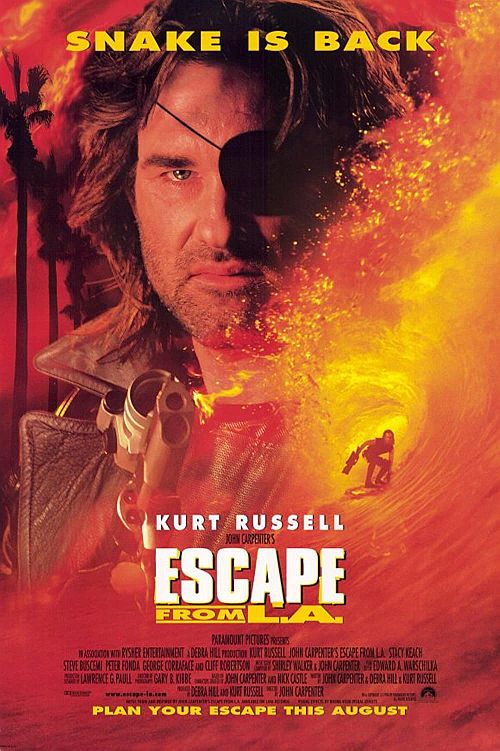
Scenes I Love: Snake Plisskin Shuts Down The World In Escape From L.A.


What is the deal with Presidents who don’t understand how important it is to stay on Snake Plisskin’s good side?

At the end of Escape From New York, The President (Donald Pleasence) made the mistake of not showing proper respect to all the people who died while Snake was rescuing him.  So, Snake destroyed the tape that was apparently key to keeping the world from descending into war.  Now, to be honest, the President was pretty shook up at the time and it’s possible that Snake was being a bit too judgmental.  After everything the President had been through, it was totally possible that he wasn’t even sure where he was.  Still, the tape was destroyed and America presumably never elected another British president.

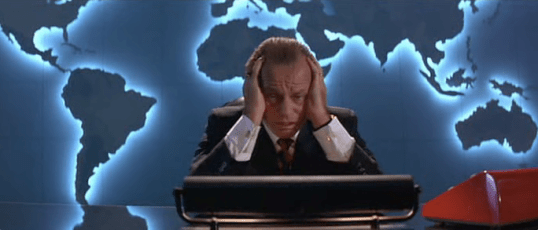
Then, in Escape from L.A., the next President (Cliff Robertson) again makes the mistake of getting on Snake’s nerves.  So, Snake basically robs the world of electricity.  (Kurt Russell has said that all of this could have been avoided if they had just left Snake have a cigarette but the President had passed a bunch of anti-smoking laws.)  Hopefully, the next President was capable of not annoying Snake Plisskin.

With all that in mind and in honor of John Carpenter’s birthday, here’s a scene that I love from 1996’s Escape From L.A.

Live Tweet Alert: Join #FridayNightFlix for Escape From L.A.!


As some of our regular readers undoubtedly know, I am involved in a few weekly live tweets on twitter.  I host #FridayNightFlix every Friday, I co-host #ScarySocial on Saturday, and I am one of the five hosts of #MondayActionMovie!  Every week, we get together.  We watch a movie.  We tweet our way through it.

Tonight, at 10 pm et, I will be hosting #FridayNightFlix!  The movie? 1996’s Escape From L.A.!

Director John Carpenter reunites with Kurt Russell and Peter Fonda, Steve Buscemi, Bruce Campbell, and Cliff Robertson are along for the ride!

If you want to join us this Friday, just hop onto twitter, start the movie at 10 pm et, and use the #FridayNightFlix hashtag!  I’ll be there tweeting and I imagine some other members of the TSL Crew will be there as well.  It’s a friendly group and welcoming of newcomers so don’t be shy.

Escape From L.A. is available on Prime and Paramount!  See you there!

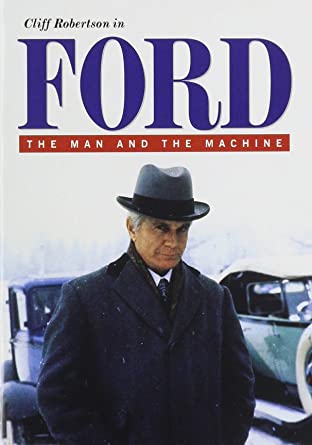
Miniseries Review: Ford: The Man and The Machine (dir by Allan Eastman)


Henry Ford changed the world, for both the better and the worst.

Starting from his own small workshop in Dearborn, Michigan, Henry Ford designed the first mass-produced automobile.  He transformed cars from being a luxury item to being something that nearly every family owned.  He created the concept of the assembly line.  He argued that workers needed to be paid a livable wage and he also advocated for an 8-hour workday.  At a time when every facet of American life was heavily segregated, he encouraged his factories an auto dealerships to hire black employees.  He was a pacifist, who took part in a widely-ridiculed but apparently sincere effort to try to convince the leaders of the world to just stop fighting.

Unfortunately, Henry Ford was also something of an unhinged lunatic, a man whose skill at engineering and his empathy for his underpaid workers did not necessarily translate into a sophisticated understanding of anything else.  When the workers in his factories tried to unionize, Ford employed violent strike breakers and he felt that most of the population were like a children and therefore incapable of governing themselves.  He understood how to make car but he also fell for all sorts of quack science and was a believer in reincarnation.

Worst of all, he was a rabid anti-Semite, who blamed almost all of the world’s problems on “Jewish bankers” and who played a huge role in popularizing a scurrilous work called The Protocols of Elder Zion in America.  Claiming to lay out the details of a Jewish plot to secretly control the world, The Protocols were a ludicrous document but many people believed them because they were promoted by Henry Ford, who was as big a celebrity in the early 20th Century as all of the social media influencers are today.  All these years later, The Protocols are still cited by anti-Semites.  A series of anti-Semitic editorials (which Ford later claimed to have signed off on but not actually written) were published in Germany under the title The International Jew, the World’s Foremost Problem.  Hitler wrote of his admiration for Ford in Mein Kampf.  Ford, it should be noted, did keep his distance from Hitler, though whether that was due to a personal distaste or the threat of an economic boycott is not known.  (Jewish leaders had already organized one successful boycott of Ford in the 20s, which led to Ford closing down his newspaper and offering up an apology.)  At the Nuremberg Trials, many of the Nazis said that they had first been introduced to anti-Semitism through the writings of Henry Ford.  Reportedly, when Ford saw newsreel footage of the concentration camps, he was so overcome with emotion that he collapsed from a stroke.

(Two years ago, when Nick Cannon regurgitated the usual anti-Semitic conspiracy theories on a podcast, he was pretty much saying the exact same thing that Henry Ford said at the start of the 20th Century.  Later, under threat of economic boycott, both Ford and Cannon would off up half-hearted apologies for their statements.  Ford continued to make cars.  Cannon continues to host a handful of television shows.  How does that work?)

First broadcast over two nights in 1987, Ford: The Man and the Machine was a Canadian miniseries about the long and controversial life of Henry Ford.  Cliff Robertson played Henry Ford.  Hope Lange played his wife while Heather Thomas played his mistress.  R.H. Thomson played Ford’s son, the sensitive Edsel.  Michael Ironside played Harry Bennett, a sinister figure who was hired to break up union activity and who eventually became Ford’s right-hand man.  If I remember correctly, I believe Canadian law actually required that Michael Ironside appear in almost every Canadian film and television show made in the 80s and the 90s.  His glowering presence and menacing line delivery practically shouted out, “Don’t mess with Canada,” and he does bring a note of genuine danger to his performance here.

Ford: The Man and the Machine opens in the late 20s, with an aging Henry Ford already starting to lose control of his mental faculties.  A series of flashbacks then show how Ford built his first engine, his first car, and eventually his first factory.  We watch as Ford goes from being an enthusiastic, self-taught engineer to being one of the most powerful men in the world.  Along the way, Ford grows arrogant.  The same stubbornness that led to his early success also leads to his later problems.  For all of his ability, Ford’s ego and his refusal to reconsider his conclusions leaves him vulnerable to both flattery and manipulation, whether it’s coming from the White House of Woodrow Wilson, from his own executives, or from the authoritarians who rose to power in Europe following the first World War.  As portrayed in the movie, he’s a loving father who also flies into a rage when Edsel designs a car on his own.  He loves his wife but he keeps a mistress.  He loves his family but he’ll always prefer to spend time working on his cars than spending time with them.  Henry Ford changes the world but his own hubris makes it impossible for him to change with it.

The miniseries is built around Cliff Robertson’s performance as Ford and Robertson does an excellent job in the role, convincingly playing Ford as he goes from being an enthusiastic dreamer to a paranoid millionaire to a doddering old man, a Bidenesque figuredhead who is only nominally in charge of his own company.  Neither the film nor Robertson shy away from showing us Henry Ford’s flaws.  Instead, both the production and the actor offer up a portrait of a complex man who transformed the way that people lived but who couldn’t escape from his own prejudices and resentments.  Ford: The Man and The Machine is a history lesson but it’s a valuable one.  If you’re a student of history, you’ll find much to think about in this miniseires.

For the record, I do drive a Ford and it’s a good car.  However, I tell myself that it’s named after Gerald Ford.

The Unnominated: Star 80 (dir by Bob Fosse)


Though the Academy of Motion Picture Arts and Sciences claim that the Oscars honor the best of the year, we all know that there are always worthy films and performances that end up getting overlooked.  Sometimes, it’s because the competition too fierce.  Sometimes, it’s because the film itself was too controversial.  Often, it’s just a case of a film’s quality not being fully recognized until years after its initial released.  This series of reviews takes a look at the films and performances that should have been nominated but were,for whatever reason, overlooked.  These are the Unnominated.

First released in 1983, Star 80 is an examination of fame, obsession, misogyny, and finally madness.  All four of those qualities are exemplified in the character of Paul Snider (Eric Roberts), a man with a charming smile, a ludicrous wardrobe, and the personality of a pimp.  When we first see Paul Snider, he’s naked and he’s covered in blood and he’s ranting about how the world is trying to destroy him.  Even if he wasn’t holding a rifle, he would be terrifying.  Suddenly, we flash back to a few years earlier.  Snider is being dangled out a window by two men.  Snider pathetically begs to be pulled back into the room.  The men laugh at him before pulling him up.  Snider, looking fairly ridiculous in a cheap suit that he probably thinks makes him look like a celebrity, fights off tears as he says he deserves to be treated with dignity.

Star 80 is based on a true story.  Mariel Hemingway plays Dorothy Stratten, the actress and Playboy playmate who was murdered by Paul Snider.  Snider, who often claimed credit for having “made” Dorothy, was married to her at the time, though Dorothy had filed for divorce and was dating director Peter Bogdanovich.  Unwilling to let her go and return to being a small-time hustler, Snider shot Dorothy and then himself.  Director Bob Fosse, who was best known for directing musicals like Cabaret and All That Jazz, was attracted to the story because he understood that type of world that produces sleazes like Paul Snider.  According to Eric Robets, Fosse even said that he probably would have ended up like Paul Snider if not for his talent.

Snider, the film quickly establishes, really doesn’t have any talent beyond the ability to manipulate people who are too naïve to see through his bullshit.  Snider wants to be a star.  He wants to be rich.  He wants people to kiss his ass.  When he meets Dorothy, he sees her as his ticket.  Dorothy’s mother (a poignant performance from Carroll Baker) sees straight through him from the start.  Tragically, Dorothy doesn’t realize the truth abut who he is until they’re already in Hollywood.  As Dorothy tries to break away from him, Paul desperately tries to find some sort of success, all the while complaining that the world is conspiring to keep him from being a man. 

Eric Roberts dominates the film and it’s one of the scariest performances that I’ve ever seen.  Roberts is convincing when he’s ranting and raving against the world that he feels is against him but what’s even more disturbing is that he’s convincing when he’s turning on the charm.  Paul Snider may not be smart.  Paul Snider may not be talented.  But he know how to gaslight.  He knows how to destroy someone’s fragile confidence, largely because his own confidence has been shattered so many times that he’s become an expert in exploiting insecurity.  Snider is a tacky dresser and nowhere near as smooth as he thinks but, intentionally or not, he uses that to his advantage.  He tries so hard to impress that it’s easy to see how someone could feel sorry for him and want to help him.  However, because Fosse lets us know from the start what Snider is really going on inside of Sinder’s head, we never make the mistake of trusting him.  We know who Paul Snider is because we’ve all known a Paul Snider.

Eric Roberts’s performance is so intense that it’s unfortunate but not surprising that it was overlooked at the 1983 Oscars.  He was playing a truly repellent character and he did it so convincingly that I imagine many viewers had a hard time realizing that Eric Roberts was not Paul Snider but was instead an actor playing a terrible character.  Some probably said, “Why should we honor such a loathsome character?” and again, the answer is because there are many Paul Sniders out there.  Roberts captured much more than just one man’s breakdown.  He captured a sickness at the heart of a fame-driven culture.

Of course, Paul Snider was not the only symptom of that sickness to be depicted in Star 80.  Every man that Dorothy either uses her in some way or just views her as being a commodity.  Hugh Hefner (Cliff Robertson) presents himself as being a fatherly mentor but Robertson plays him as being just as manipulative and ultimately narcissistic as Paul Snider.  Director Aram Nicholas (Roger Rees, playing a character based on Peter Bogdanovich) seems to love Dorothy but their relationship still feels out-of-balance.  Aram, afterall, is the director while Dorothy is the actress.  The private detective (Josh Mosel) that Paul hires to spy on Dorothy seems to have no lingering guilty over the role he played.  Even Snider’s roommate (David Clennon) is more interested in talking about his dog and his car then about the murder/suicide of two people with whom he lived.

It’s a dark film and not one to be watched when depressed.  At the same time, it’s a portrait of obsessiveness, misogyny, and an overwhelming need to be “someone” that still feels relevant today.  Along with Sweet Charity, it was the only Bob Fosse film not to be nominated for Best Picture.  (This was back when there were only five best picture nominees.  Three of the nominated films — Terms of Endearment, Tender Mercies, and The Right Stuff — hold up well.  Two of the nominees — The Dresser and The Big Chill — are a bit more iffy.)  Eric Roberts was not nominated for the best performance of his career.  Again, it’s a shame but not a surprise.  This was a dark and disturbing film, a true Hollywood horror story.  One imagines that most members of the Academy wanted to escape it far more than they wanted to honor and be reminded of it.

Previous entries in The Unnominated:

  1. Auto Focus 

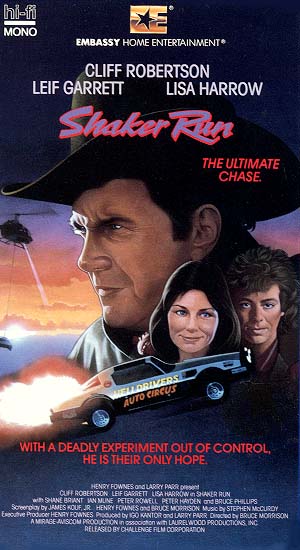
Shaker Run (1985, directed by Bruce Morrison)


Judd (Cliff Robertson) is an aging stunt driver who has been reduced to doing minor car shows in New Zealand.  He’s having trouble paying the bills and his young mechanic, Casey (Leif Garrett, looking like he’s a few days away from checking into rehab), is on him to do something — anything — to bring in some extra cash.  The opportunity presents itself when the duo are hired by an enigmatic woman named Christine (Lisa Harrow) to drive across New Zealand with a mysterious package hidden away in their trunk.  Christine will be accompanying them on their trip.  Sounds simple, right?

The only problem is that Christine is a research scientist who has developed a deadly new virus that she doesn’t want to get into the wrong hands.  She fears that the military might want to use it as bioweapon.  It turns out that she’s right and no sooner has Judd tapped the accelerator than they’re being chased across New Zealand by different factions, all who want the weapon for themselves.

Usually I love car chase scenes but Shaker Run didn’t really do much for me.  Some of the stunts are impressive but there’s also a lot of slow spots, especially at the start of the movie.  As I watched the chase scenes, I wondered why, if Christine is trying to sneak the virus out of the country, she would be stupid enough to hire someone who drives an incredibly conspicuous pink race car.  It’s not as if it’s going to be difficult for anyone to spot them on the road.  As well, one of the biggest chase scenes takes place during the dark of night, making it next to impossible to discern what’s actually going on.  The film also features Leif Garrett, giving a performance that’s obnoxious even for him.  What’s bad is that Garrett’s character probably could have been removed from the film without it making much difference.  If you’re going to put Leif Garrett in your movie, you better have a good reason.

One thing that the movie does have in its favor is Cliff Robertson in the lead role.  Robertson was a good actor whose career as a leading man was pretty much topedoed in 1977 when he discovered that David Begelman, who was the head of Columbia Studios, was using Robertson’s name and forging his signature to embezzle money from the studio.  Though the studios pressured Robertson to keep quiet, he went to the police and later spoke publicly about the incident.  Though Begelman was the one who had committed the crime, Robertson was the one who was subsequently blacklisted.  While Begelman paid a fine, did some community service, and remained a member of the Hollywood community, Robertson was blacklisted for five years.  When he finally did start appearing in movies again, it was almost always in supporting roles.  Shaker Run gave Robertson a rare leading role and, even if the movie isn’t good, Robertson is still good in it.

Unfortunately, even after people finally started to acknowledge that Cliff Robertson was mistreated, it still didn’t do much for his career and he continued to be cast in mostly forgettable movies.  Fortunately, before he died in 2011, he did get offered one iconic role and, as a result, a whole new generation of filmgoers got to know him as Spider-Man’s Uncle Ben.  If anyone could make you believe that “with great power, comes great responsibility,” it was Cliff Robertson.

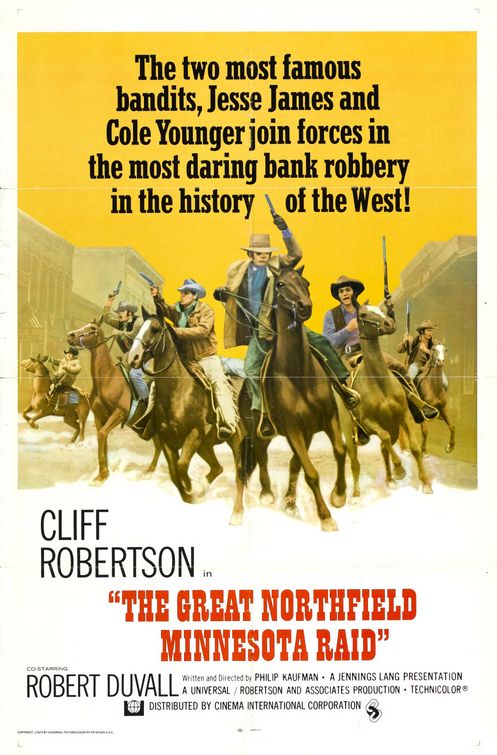
The Great Northfield Minnesota Raid (1972, directed by Philip Kaufman)


Despite having received pardons from the Missouri legislature in recognition of their military service to the Confederacy, Jesse James (Robert Duvall) and Cole Younger (Cliff Robertson) simply cannot stop robbing banks.  The James-Younger Gang has set their sights on the bank in Northfield, Minnesota, which is said to be the biggest bank west of the Mississippi.  Cole arrives in Northfield before the rest of the gang and scouts the location.  What he discovers is that most of the town’s citizens aren’t putting their money in the bank because they all assume that it will eventually be robbed.  With Jesse determined to pull off the crime of the century, Cole and Jesse have to figure out not only how to escape after the robbery but also how to get the people to deposit their money in the bank’s vault in the first place.

Philip Kaufman is a director who made a career out of reinterpreting history (his best known film is The Right Stuff) and, when it was first released in 1972, The Great Northfield Minnesota Raid was a revisionist western that mixed moments of comedy with moments of brutal violence.  Today, of course, presenting Jesse James and Cole Younger as being ruthless outlaws is no longer that daring of a narrative choice.  In The Great Northfield Minnesota Raid, Robert Duvall plays Jesse as being the western equivalent of a corrupt businessman, sending others to do his dirty work and not accepting any of the consequences for his own bad decisions.  Robertson plays Cole as being more a free spirit, an outlaw who is determined to enjoy himself.  Both of them give interesting performances but they also seem to be too contemporary for the characters that they’re playing.

Like most revisionist westerns of the early 70s, the film is full of hints that the old west and the time of the outlaws is coming to an end.  There’s a steam engine sitting outside of the bank and Kaufman spends almost as much time focusing on people reacting to that as he does on the planning and execution of the robbery.  When the robbery does finally occur, it’s not an easy robbery like you might find a 1940s western.  Instead, it’s a violent comedy of errors that leaves much of the film’s characters dead or wounded in the streets of Northfield.  The contrast between the quirky comedy of the first part of the film and the violence of the robbery is occasionally interesting but it often feels forced.  Sometimes, Kaufman seems like he’s trying too hard to be Sam Peckinpah.  In the end, Kaufman often doesn’t seem to be sure what he’s trying to say with this film.  He seems to be suggesting that Jesse and Cole are soon to be relics of a bygone era but why then cast Duvall and Robertson in the roles and have them play the roles like two mid-level hoodlums in 20th Century New York?

It’s an interesting but muddled film that never quite works.  For the definitive film about the James/Younger Gang, check out Walter Hill’s The Long Riders.

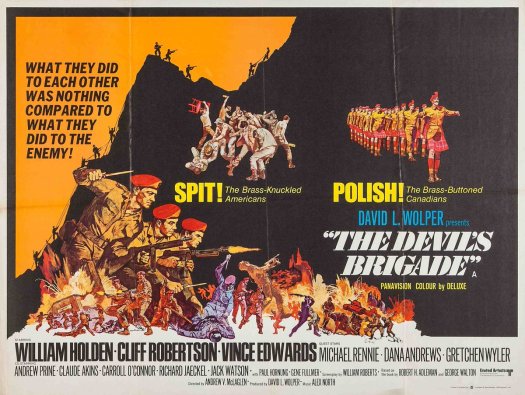
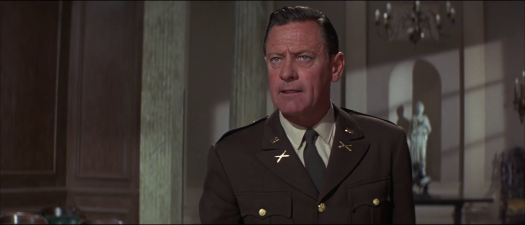
Special Memorial Day Edition: THE DEVIL’S BRIGADE (United Artists 1968)


gary loggins's avatarcracked rear viewer

In the wake of 1967’s THE DRITY DOZEN came a plethora of all-star, similarly themed films. THE DEVIL’S BRIGADE is one of those, though just a bit different: it’s based on the true-life exploits of the First Special Service Force, a collection of American misfits straight from the stockades and the crack, highly disciplined Canadian military, forging them into one cohesive fighting unit.

William Holden  heads the cast as Lt. Col. Robert Frederick, tasked with putting the units together. His seconds-in-command are the cigar chomping American Major Brecker (Vince Edwards) and proud Canadian Major Crown (Cliff Robertson). The Americans, as rowdy a bunch of reprobates as there ever was, include Claude Akins , Luke Askew, Richard Jaeckel, and Tom Troupe, while the Canadians are represented by the likes of Richard Dawson, Jeremy Slate, and Jack Watson , war movie vets all.  Andrew Prine is also aboard as an AWOL…

View original post 365 more words

A Movie A Day #169: Malone (1987, directed by Harley Cokeliss)


It’s Burt Reynolds vs. Cliff Robertson.  Cliff has got the money but Burt’s got the mustache and the toupee.

Robertson plays Charles Delaney, a wealthy businessman who, with the help of a mercenary army, has bought nearly all the land in a small Oregon town.  Only the owner of a local gas station, Paul Barlow (Scott Wilson), has refused to sell.  Delaney and his men think that they can intimidate Paul into selling but what they do not realize is that Paul has a houseguest.  Richard Malone (Burt Reynolds) was driving through town when his car broke down.  While waiting for it to get fixed, he has been staying with Paul and his teenage daughter, Jo (Cynthia Gibb).  What no one knows is that Malone used to be an assassin for the CIA.

If ever there was a film that demanded the talents of Charles Bronson, it is Malone.  The tough and ruthless title character would have been a perfect Bronson role, especially if Malone had been made twenty years earlier.  Instead, the role went to Burt Reynolds, who was on the downside of his career as an action hero.  Sometimes, Burt tries to play the role as serious and emotionally guarded.  Then, in other scenes, Burt will suddenly smile and wink at the camera as he briefly turns back into the Bandit.  This is not one of Burt’s better performances.  He gets good support from the entire cast, including Lauren Hutton as his CIA handler, but, in most of his scenes, Burt comes across as being tired and his toupee makes him look like The Brady Bunch‘s Robert Reed.  Burt was 51 when he made Malone and he looked like he was at least ten years older, making the scenes where Jo comes onto him even more improbable.

Where Malone succeeds is in the action scenes.  Along with Burt’s final assault on Delaney’s compound, there is also a classic showdown in a barbershop.  Malone had a budget of ten million dollars.  How many blood squibs did that buy?  Pay close attention to the scene where two hitmen attempt to surprise Malone in his room and find out.

Malone is may not feature Burt at his best but it is still a damn sight better than some of the other films that awaited Burt once his starpower started to diminish.  Mad Dog Time, anyone?

A Movie A Day #160: Ace Eli and Rodger of the Skies (1973, directed by John Erman as “Bill Sampson”)


Sometimes, the story behind a movie is more interesting than the movie itself.

A young Steven Spielberg received a “story by” credit for Ace Eli and Rodger of the Skies but, at one time, he was going to be credited with much more.  Spielberg wrote the treatment for Ace Eli and sold it to 20th Century Fox because he was hoping to make his directorial debut with the film.  However, shortly after selling the story, there was an executive shakeup at the studio.  Spielberg’s supporters were out and the men who replaced them gave the treatment to another screenwriter and director.  Spielberg was so angered by his treatment that it would be close to thirty years before he ever again worked with 20th Century Fox.  (In 2002, 20th Century Fox co-produced Minority Report with Dreamworks.)  Ace Eli ended up being directed by television veteran John Erman, who was so upset by the studio’s final edit of the film that he demanded to be credited under a pseudonym.

The plot of Ace Eli and Rodger of the Skies is recognizably Spielbergian.  Ace Eli (Cliff Robertson, who was a pilot in real life and who, after he won his Oscar of Charly, was involved in several flying films) is a stunt pilot in the 1920s.  After his wife is killed in a crash, Eli and his 11 year-old son, Rodger (Eric Shea), set off on a barnstorming tour.  Going from small town to small town, Eli deals with his pain through nonstop womanaizer.  With Eli refusing to take any responsibility for his actions, Rodger is forced to grow up quickly.  It is a typical Spielberg coming of age story, combining a nostalgia for the past with a clear-eyed portrayal of irresponsible adulthood.

In fact, it is easy to imagine the approach the Spielberg would have taken if he had been allowed to direct his story.  Unfortunately, Spielberg did not get to direct the film and John Erman takes an impersonal approach to the material.  Whereas Spielberg would have captured the excitement of both flying and life on the road, Erman keeps the audience at a distance.  An underrated actor, Cliff Robertson is still miscast as the irresponsible Ace Eli.  The reason why Cliff Robertson was perfect for the role of Uncle Ben in Spider-Man is the same reason why he feels all wrong as Ace Eli.  He is just too upstanding a citizen to be as impulsive as Eli often is.  An actor like Warren Oates would have been perfect for the role.

Steven Spielberg directing Warren Oates in Ace Eli and Rodger of the Skies?  That would have been something worth seeing!

Things Could Be Worse: 8 Fictional Presidents Who Were Terrible At Their Job


Jack Nicholson

2016 is an election year and things are looking pretty grim right now.  It’s enough to make you throw your hands up in frustrating and demand that someone push the reset button.  However, things could always be worse.  From the world of film, here are 8 President so incompetent, corrupt, and sometimes murderous that they will make you long for the dull mediocrity of a Jeb Bush or a Martin O’Malley.

1) The President (William Devane) in The Dark Knight Rises (2012)
devaneYou’re the leader of the free world and a masked terrorist has just launched a deadly attack on a major U.S. city.  He has blown up a major sporting event on national television.  He has killed the mayor.  He is allowing a crazy sociopath to preside over show trials.  The terrorist demands that you neither send troops into the city nor do you aid anyone who is trying to leave.  What do you?  If you are the President played by William Devane in The Dark Knight Rises, you say, “Okay,” and then breathe a sigh of relief when Batman turns out not to be dead after all.  William Devane also played JFK in The Missiles of October and President James Heller on 24.  Neither of them would have backed down to Bane as quickly as the President in The Dark Knight Rises.

2) The President (Billy Bob Thornton) in Love Actually (2003)

This President thinks that he can bully the world until he makes the mistake of getting on the bad side of the new British Prime Minister (Hugh Grant).  How are you going to call yourself the leader of the free world when even Hugh Grant can make you look like a fool?

3) The President (Donald Pleasence) in Escape From New York (1981)
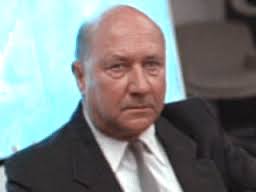
DonaldHey, Mr. President, when Snake Plisskin nearly gets killed trying to save your life, you might want to try showing a little gratitude.  Escape From New York ends with Snake asking The President who he feels about all the people who died rescuing him from New York.  When the President can only mutter a few words of regret, Snake responds by destroying the tape that would have presumably prevented World War IV.  Way to go, Mr. President!  Would it have killed you to shed a few crocodile tears, at least over the fate of Cabbie?

4) The President (Cliff Robertson) in Escape From L.A. (1996)

The President from Escape From New York was practically Lincolnesque compared to the jerk who succeeded him.  A theocrat who claimed to have an open line to God, this President banned smoking, drinking, cursing, red meat, guns, atheism, pre-marital sex, and everything else that made life fun.  Anyone who disagreed got exiled to the island of California.  Good thing that Snake Plisskin was still around to set things straight, even if it did mean that Florida ended up getting conquered by Cuba.  Why doesn’t Snake ever run for President?

5) President Thomas J. Whitmore (Bill Pullman) in Independence Day (1996)
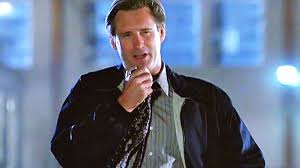
billIn a word, overrated.  Yes, President Whitmore did lead the army that repealed the alien invaders but he would not have had to do that in the first place if he had prevented the Earth from being invaded in the first place.  How many warning signs did the Whitmore administration ignore until it was too late?  And how much funding did his administration cut from the military that the Air Force was left in such poor shape that they could get shown up by Randy Quaid in a crop duster?  As for Whitmore’s famous speech and the battle that followed, a sequel to Independence Day is coming in June so he must not have done that good of a job of scaring the aliens off.

6) President James Dale (Jack Nicholson) in Mars Attacks! (1996)

At least President Whitmore got a chance to redeem himself by leading the battle against the invaders.  James Dale did not even get that far.  After foolishly believing everyone who told him that the aliens came in peace, he made the mistake of offering his hand in friendship and ended up with a flag sticking out of his chest.

7) President Alan Richmond (Gene Hackman) in Absolute Power (1997)

Not only did President Richmond think that he could get away with murder, he also thought he could outsmart Clint Eastwood.  Big mistake.  Clint Eastwood is no Hugh Grant.

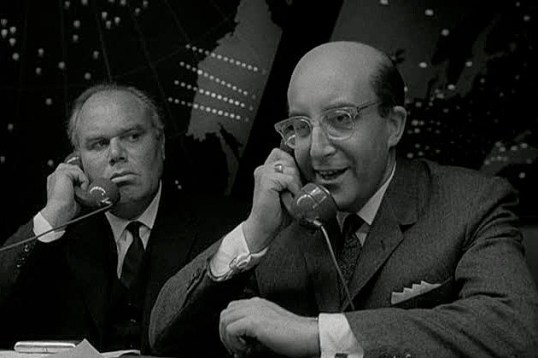
8) President Merkin Muffley (Peter Sellers) in Dr. Strangelove: Or How I Learned To Stop Worrying And Love The Bomb (1964)

Mixing the raw charisma of Adlai Stevenson and the phone skills of Bob Newhart, President Merkin Muffley attempts to stop the end of the world and fails miserably.  He even allows the Soviet ambassador to get a picture of the Big Board!  But don’t worry.  President Muffley may have failed to prevent nuclear war but he will not allow there to be a mineshaft gap!

When this election year get you down, just remember: things could always be worse!
strangelove