Brad reviews JACK REED: A SEARCH FOR JUSTICE (1994), starring Brian Dennehy!


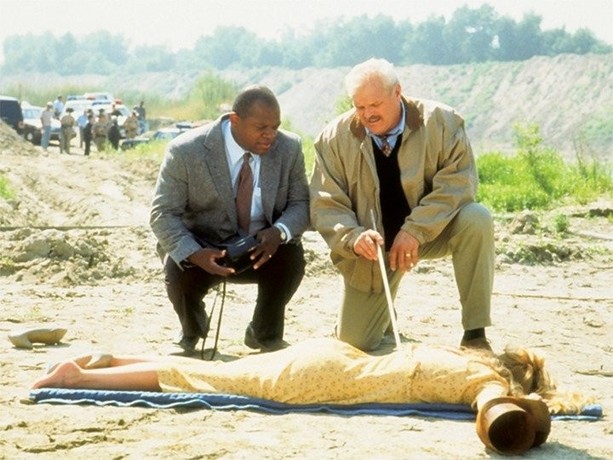
Brian Dennehy directed, co-wrote and starred in this made-for-TV movie about Chicago homicide detective Jack Reed. This is the third TV movie based on Reed’s exploits, following 1992’s DEADLY MATRIMONY, and 1993’s BADGE OF HONOR. In A SEARCH FOR JUSTICE, Jack Reed (Brian Dennehy) investigates the murder of pregnant stripper Lorelei Bradley (Marjorie Monaghan), who also happens to love children, even running a daycare center in the trailer park she lives in. Reed’s investigation quickly identifies the politically connected businessman and strip club owner, Win Carter (Miguel Ferrer), as the prime suspect. As if trying to solve the murder isn’t tough enough, Reed must also deal with corrupt superiors within his own department and train his new boss Charles Silvera (Charles S. Dutton), the latest in a long line of men to be promoted over him. No matter what obstacles Reed encounters, he remains determined to bring the killer to justice!

JACK REED: A SEARCH FOR JUSTICE, is my first “Jack Reed” film, and I enjoyed it. The character of Jack Reed is based on real life Cook County, Illinois Sheriff John “Jack” Reed, with each of the different movies loosely based on cases that Reed investigated throughout his career. As you might imagine, Brian Dennehy is excellent in the lead role as the tough, principled cop who will stop at nothing to catch criminals. The Chicago backdrop adds a nice wrinkle to the proceedings with its strong reputation for corruption, something that plays strongly into this installment and makes Reed’s job that much harder. I also really like Charles S. Dutton’s character, Lieutenant Charles Silvera. Initially promoted due to the color of his skin, and as a way to stick it to Reed, Silvera turns out to be an incorruptible lawman who develops a great working relationship with Reed. I’ve always been a fan of Dutton as an actor, mainly because of his ability to project decency and integrity on screen, and I’m looking forward to seeing them work together in future installments. Miguel Ferrer is also a good villain. He doesn’t go over the top here, rather he plays the part as low key, politically connected, amoral, and ultimately, very dangerous. It’s a good choice.

The fact that JACK REED: A SEARCH FOR JUSTICE is based on real life cases helps bring a little more realism than you might get in most TV movie cop movies of the time. As an example, our cops are more concerned about putting together solid evidence and getting a conviction over anything else. There is some action, but after watching this installment, I realize that these movies are just as likely to end with lawyers cutting a deal than with a big shootout. On the flip side, there are elements of the story that don’t seem realistic at all, such as Reed’s wife Arlene (Susan Ruttan) doing her own undercover work at one point, and our victim’s unlikely dual life as a stripper and daycare operator. What can I say, it’s not a perfect movie, but if you enjoy 90’s TV cop dramas like I do, you should enjoy this film and this series. The cast is good, and the characters are men of integrity trying to bring justice to a corrupt world. That’s a recipe for enjoyment as far as I’m concerned, and I’m looking forward to watching the rest of the film series! 
Film Review: Executive Decision (dir by Stuart Baird)


In 1996’s Executive Decision, terrorists hijack an airplane.  Their leader, Nagi Hassan (David Suchet) demands that the U.S. government not only give him and his men safe passage but that they also release Hassan’s commander, Jaffa (Andreas Katsulas).

In Washington D.C., it is decide to use a stealth plane to transport Col. Austin Travis (Steven Seagal) and his men into the passenger plane.  Accompanying them will be Dr. David Grant (Kurt Russell), a consultant for U.S. Intelligence.  Dr. Grant is the world’s leading expert on Hassan, even though neither he nor anyone else is even sure what Hassan looks like.  Travis distrusts Grant because he’s a civilian and also because he holds Grant responsible for a botched raid on a Russian safehouse in Italy.  Dr. Grant is going to have to prove himself to Col. Travis because Travis doesn’t have any time for people who can’t get the job done.  And Travis is determined to get on that plane and save all those passengers.

In other words, Travis is a typical Steven Seagal character and, for the first fourth of this movie, Seagal gives a typical Steven Seagal performance.  He delivers his line in his trademark intimidating whisper, he glares at everyone else in the film, and essentially comes across as being a total douchebag who can still handle himself in a fight..  However, when it’s time to board the airplane through a docking tunnel, something goes wrong.  Everyone — even nervous engineer Dennis Cahill (Oliver Platt) is able to slip through the stealth plane’s docking tunnel and get into the hijacked airplane cargo hold without being detected.  But the two planes are hit by severe turbulence.  Suddenly, it becomes apparent the one man is going to have to sacrifice his life and close the hatch before the docking tunnel decompresses.

David, already in the cargo hold, looks down at Austin in the tunnel.  “We’re not going to make it!”

“You are!” Austin replies before slamming the hatch shut and getting sucked out of the tunnel.  (There’s your Oscar Cheers Moment of 1996!)  After all that build-up, Steven Seagal exits the film early and now, it’s up to Kurt Russell and what’s left of Austin Travis’s men to somehow stop the terrorists.  Not only do they have to stop Hassan but they also have to do it before the Air Force — which has no way of knowing whether or not any of their men were able to get on the plane before the tunnel fell apart — shoots down the airliner.

(If the airplane looks familiar, that’s because Lost used the same stock footage whenever it flashed back to the plane crash that started the show.)

It’s actually a rather brilliant twist.  When this film came out, Seagal was still a film star.  He played characters who always got the job done and who were basically infallible.  He wasn’t a very good actor but he did manage to perfect an intimidating stare and that stare carried him through a lot of movies.  No one would have expected Seagal to die within the first 30 minutes of one of his movies and when Col. Travis, who the film has gone out of its way to portray as being the consummate warrior, is suddenly killed, there really is a moment where you find yourself wondering, “What are they going to do now?”  In just a matter of minutes, Executive Decision goes from being a predictable Steven Seagal action film to a genuinely exciting and clever Kurt Russell thriller.  For once, Russell is not playing a man of action.  He’s an analyst, a thinker.  And, to the film’s credit, he uses his mind more than his brawn to battle Hassan’s terrorists.  With excellent support from Halle Berry (as a flight attendant who discreetly helps out David and the soldiers), Oliver Platt, B.D. Wong, Whip Hubley,  David Suchet, Joe Morton, and even John Leguizamo (as Travis’s second-in-command), Executive Decision reveals itself to be an exciting and ultimately rewarding thrill ride.

And to think, all it took was sacrificing Steven Seagal.

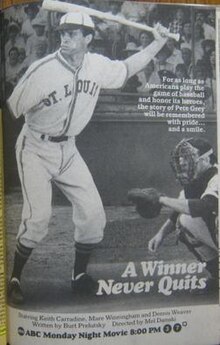
I Watched A Winner Never Quits (1986, dir. by Mel Damski)


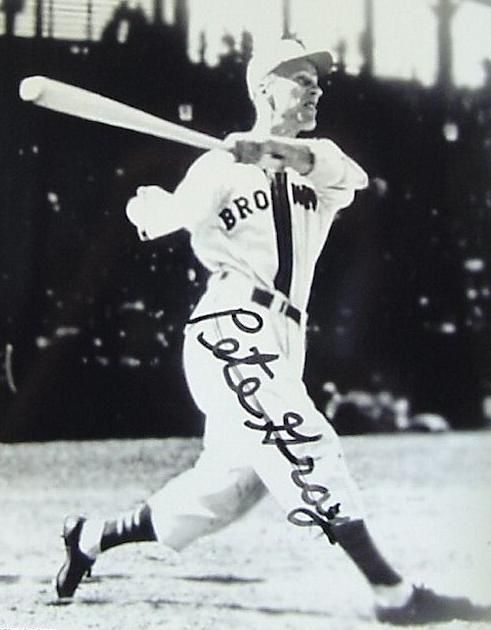
In 1945, Peter Gray made history when he became the first one-armed major league baseball player.  Gray grew up in poverty in Pennsylvania.  His father was a miner and Peter was one of five children.  He was only seven years old when he lost his right arm in a wagon accident but he loved baseball and he wasn’t going to let his disability keep him from playing.  He learned how to bat and catch and throw with his left hand.  He quit school when he was thirteen and worked for a while as waterboy while playing baseball in the local leagues.  Eventually, he made his way up to the minor leagues and, in 1945, he was called up to the majors.  He played one season for the St. Louis Browns.

The media loved the story of the one-armed baseball player but Peter always said that he resented feeling like he was being put on display whenever he took the field.  He was a competitive outfielder who could catch a ball, remove his glove, and then throw the ball to the infield just as quickly as anyone with two hands.  As a hitter, he struggled because pitchers figured out early on that he couldn’t hit the breaking ball.  After the 1945 season, Peter was sent to back to the minors, where he spent the rest of his career.  Though Peter was known for being an angry player who resented anyone pointing out his disability, he still made time to visit amputees in military hospitals to show them that they could still find success and to encourage them to chase after their dreams.

Peter’s story was the basis of A Winner Never Quits, which I watched on YouTube this weekend.  It was a good baseball movie, starring Keith Carradine as Peter.  What I liked is that the movie didn’t make him into a saint.  Carradine played Peter as being angry and with a definite chip on his shoulder.  Peter had every right to be angry and I’m glad the movie acknowledged that.  In both the movie and in real life, Peter was worried that he was just being treated as a sideshow.  In the movie, his attitude improves when he meets a young boy who recently lost his arm and who looks up to Peter.  Peter remained a friend to the boy and his family for the rest of his life.  A Winner Never Quits is about pursuing what you love and never giving up.  That’s what baseball is all about.  A Winner Never Quits is a good and inspiring baseball movie that’s not just for the fans.

TRUE BELIEVER -James Woods & Robert Downey, Jr. take on the system!


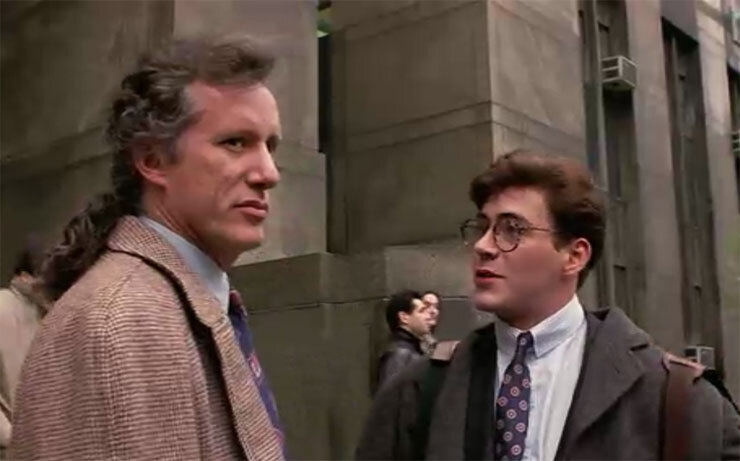
I’ve been going through my movies and re-watching some of my favorites. A movie that clearly falls into that category is TRUE BELIEVER starring James Woods and Robert Downey, Jr. I became a fan of James Woods around 1988 primarily based on the strength of two action films that he worked on around that time, those being BEST SELLER (1987) and COP (1988). I spent hours combing through the rental selections at our local Hastings Entertainment store and I remember both of these movies being in the “New Release” section at the same time. They’re both hard hitting, violent films, and Woods is especially good in both. Being an obsessive completist, I found myself searching out the prior work of the star for some more good movies. It was during this time that TRUE BELIEVER was released to the theaters in February of 1989. I enjoy courtroom dramas, and knowing the intensity that Woods brings to his films, I had no doubt I would like it.

The story revolves around Eddie Dodd (Woods), an attorney who used to fight for the cause of the little guy, but now mostly finds himself protecting drug dealers from the law. Enter Roger Baron (Downey Jr.), a recent law school graduate who idolizes Dodd, and is now disappointed to see his legal hero reduced to his current cynical state. When a Korean mother comes into the law offices one day and says her son, Shu Kai Kim, has spent 8 years in prison for a crime he didn’t commit, cynical Dodd doesn’t want to take the case. Young Baron shames him into it though, and soon the two men find themselves taking on the New York District Attorney himself Robert Reynard (Kurtwood Smith) as they try to prove Shu Kai Kim’s innocence and help him taste freedom once more!

Often when people ask me to name my favorite James Woods film, I’ll quickly answer TRUE BELIEVER even though there are many good films to choose from. There are a few reasons for that. First, even though the film is a serious legal thriller with many dark undertones, director Joseph Ruben has given his movie a dark sense of humor. Woods and Downey, Jr. are able to find the humorous elements inherent in their characters and that brings some fun to the otherwise serious proceedings. Second, I really enjoy the story of underdogs taking on the big, bad system. Shu Kai Kim is an underdog who maintains his innocence when all the evidence appears flawlessly stacked against him. Eddie Dodd, the once feared civil rights lawyer who is now a hopeless burnout, is an underdog who appears to be out of his league as he goes up against the most powerful attorney in New York. These underdog story lines give us something to really root for as the story plays out. And finally, the performances are phenomenal from top to bottom. James Woods, an actor known for his electric intensity, is at the top of his game and Kurtwood Smith is a great adversary. Robert Downey, Jr. brings a bright-eyed enthusiasm to the role that compliments the cynical Woods nicely. And Yuji Okumoto as Shu Kai Kim shows us quite a transformation from a man who goes from almost being dead inside as a result of his eight years in prison, to a man who allows a glimmer of hope to seep in for a second chance. I think Okumoto is great in the role. The story takes many twists and turns and I enjoy every moment as it plays out.

TRUE BELIEVER is definitely one of my favorites!

Horror on the Lens: Cast a Deadly Spell (dir by Martin Campbell)


For today’s horror on the lens, we have a real treat!

Produced for HBO in 1991, Cast a Deadly Spell takes place in an alternate 1948, where magic is used regularly and zombies are used as slave labor but the streets of Los Angeles are just as mean as they’ve ever been.  Fred Ward gives a fantastic performance as Harry Phillip Lovecraft, a hard-boiled P.I. who refuses to use magic on general principle.  Lovecraft, however, may have no choice when he finds himself embroiled in a case involving a magic book, Julianne Moore, and Clancy Brown!

Enjoy!

(If you want to know more about the film, check out this review that I wrote for Horror Critic.)

Shattered Politics #54: Dave (dir by Ivan Reitman)


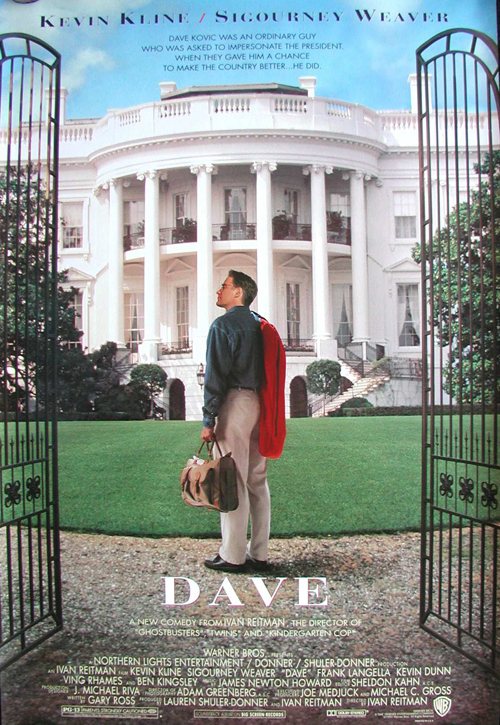
Dave Poster

Way back in 1919, the terrible U.S. President and tyrannical dictator Woodrow Wilson* suffered a stroke that left him semi-paralyzed and unable to perform his duties.  By all standards, Wilson should have been removed from office, if just temporarily.  However, in those pre-Internet days, it was a lot easier to hide the truth about Wilson’s physical and mental condition.  While Wilson spent his days locked away in his bedroom, his wife Edith would forge his signature on bills.  Whenever anyone asked for the President’s opinion, Edith would give her opinion and then assure everyone that it was actually the President’s.

(And really, as long as you were promoting eugenics and white supremacy, it probably was not difficult to imitate Wilson’s opinions.)

Of course, back then, people were used to the idea of never seeing their President in public.  Hence, it was very easy for Wilson to remain sequestered in the White House.  If a similar situation happened today, it’s doubtful that anyone could successfully keep the public from finding out.  When we don’t see the President every day, we wonder why.  How, in this day and age, could a Presidential incapacitation be covered up?

The 1993 film Dave offers up one possible solution.

Dave is the story of two men who happen to look exactly like Kevin Kline.  One of them is named Bill Mitchell and he’s the arrogant and corrupt President of the United States.  The other is named Dave Kovic.  He’s a nice guy who runs a temp agency and who has a nice side job going as a professional Bill Mitchell imitator.

So, when Bill has a stroke while having sex with a white house staffer (Laura Linney), it only makes sense to recruit Dave Kovic to pretend to the President.  White House Chief of Staff Bob Alexander (played by Frank Langella, so you know he’s evil) tells Dave that Vice President Nance (Ben Kingsley) is insane and corrupt.  Dave agrees to imitate the President.  Of course, Alexander’s main plan is to convince Nance to resign and then get Dave to appoint him as Vice President.  Once Alexander is Vice President, it will be announced that Mitchell has had another stroke and then Alexander will move into the Oval Office.

However, what Alexander did not take into account was just how much Dave would enjoy being President.  From the moment that he joyfully shouts, “God Bless, America!,” Dave’s enthusiasm starts to win the public over.  Suddenly, people are realizing that President Mitchell isn’t such a bad President after all.  Even more importantly, Dave wins over the first lady (Sigourney Weaver) who, previously, had little use for her philandering husband.  When Alexander claims that there’s no money in the budget to continue funding a program for the homeless, Dave calls in his best friend, an accountant named Murray (Charles Grodin), and has him rewrite the budget…

And you know what?

Dave is one of those films that tempts me to be all cynical and snarky but, ultimately, the film itself is so likable and earnest that I can even accept the idea that one accountant could balance the budget through common sense alone.  I’ll even accept the idea that Dave could come up with a program that would guarantee everyone employment without, at the same time, bankrupting the country.  Kevin Kline is so enthusiastic in the lead role and the film itself is so good-natured that it almost feels wrong to criticize it for being totally implausible.

Sometimes, you just have to appreciate a film for being likable.

Dave—–

* For those of you keeping count, that’s the third time in two weeks that I’ve referred to Woodrow Wilson as being  a dictator.  Before anyone points out that some historians rank Wilson as being in the top ten of President, allow me to say that I don’t care.  I DO WHAT I WANT!