Asura’s Wrath is a title by Capcom and developer CyberConnect2 and first made it’s appearance at E3 2010. It’s actually a title that has flown way below my radar when it comes to interesting games coming up in the forseeable future. It’s a good thing that Capcom brought it to this year’s E3 once more and showed more details about what the g ame is really about and some of it’s core gameplay.
Let’s just say that from the trailer this game looks to be one over-the-top of an action game that reminds me of the SEGA/Platinum Games title Bayonetta. More people seem to compare this game both aesthetically and spiritually to the Sony God of War franchise and they wouldn’t be wrong. Asura’s Wrath really ends up being a mash-up of both those series with a sci-fi helping from Too Human.
The art design for the game looks beautiful. Looks like developer CyberConnect2 decided to go for the 3D cel-shading that looks quite similar to Capcom’s own look for the recent Street Fighter IV. The game is not flat and actually has depth to all the scenes, but the flat-look of the cel-shading really gives this game a unique look that’s quite uncommon in gaming of this latest generation.
Asura’s Wrath doesn’t have a set release date, but all points to sometime around 2012 (hopefully)
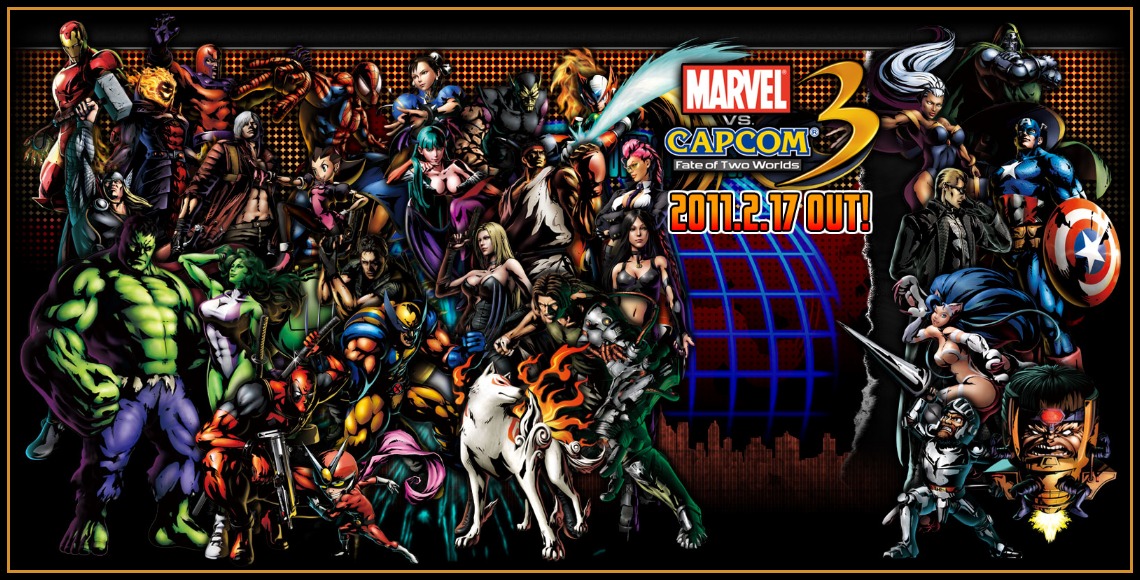
It’s been over a decade (no, seriously! Marvel vs. Capcom 2 came out in 2000! It was on the Dreamcast!) since we last dropped into this remarkable franchise of fighting games. A lot of our favourite characters are missing, but the feel hasn’t changed.
Unfocused Ramblings
As usual, I like to begin these reviews with a boring story about my personal life. About ten years ago, a friend of mine owned the Sega Dreamcast. He never had a ton of games for it, and we all agreed that the controller was preposterously big, but it was probably the console that my group of friends and I played the most during that stretch. Because whatever we thought about the Dreamcast, and however few games there were on it, or however few my friend owned… he did own Marvel vs. Capcom 2. At this point, years later, I don’t even remember much about the fine details of the game. But I do remember its feel… and that feel has returned, to my hazy memory more or less intact, this year with the release of Marvel vs. Capcom 3: The Fate of Two Worlds. So now that I’ve played it, and the excitement is all flooding back to me, the unfortunate truth comes out: for all of its selling points (and it has them to spare) this game is not as much fun as its predecessor.
It’s not. You may think it is, and you may even be having more fun with it now… but it’s a matter of circumstance. And this game is not as much fun as the last one.
Does that mean that Marvel vs. Capcom 3 isn’t a great game? No. Actually, I’ve been impressed by basically everything that I have seen from the new title so far. It has the same feel of the old game. That hyper-frenetic superhero/comic book/action game and so on action is quite intact. You still have the hyper combo bars. You still have three different characters who are flying in and out of the action supporting one another and generally causing some havoc. You can still fill the screen with blasts of energy and crazy attack schemes that seem like no one could ever possibly survive them (and be just as disappointed to see that your opponent blocked in time). In other words, they’ve done a magnificent job of recreating what made Marvel vs. Capcom great. So we can say that this sequel is a faithful one. So what’s the problem?
I’m not sure this game translates as well to playing against faceless strangers on the internet as some of the other fighting games that have come out over time. Of course, it’s not a different experience on XBox Live (or the equivalent service of your choice) but this game, unlike other games, is a more intense frenetic experience and should be less about a cold, tactical approach. To me, this makes it more fun to play with friends than in multi-player match-making. Ultimately, that’s subjective, and if you like fighting games you should enjoy the multi-player experience here as well. Of course, whatever I may say about frenetic superhero/video game combat, the more skillful players of fighting games will still maintain a big advantage in this game due to the huge variety of combos available, even if the move-sets of each character are relatively simple. A lot of universal concepts translate across all characters (such as chaining together flashy aerial or team combos, and the counters to those moves).
The game does offer some options to help teach people about the game-play mechanics. If your fingers aren’t made of steel you may get frustrated attempting to execute long multi-team-mate-extravaganza type combos, but the mission mode (sort of a training mode with specific objectives as far as moves) encourages you to explore chaining moves together (from the basics of knocking a foe in the air and coming down on top of them with a crushing blow all the way to the aforementioned 500000 hit combos). I suspect that if you explore some of these modes, and trouble to learn the moves of a few favourite fighters, you’ll quickly get the hang of winning in this game.
Oh, and don’t be overly troubled by the absence of some Marvel vs. Capcom favourites. I’m sure they will all be available through DLC sooner or later. What’s that, you say? They announced that Jill Valentine and Shuma Gorath will appear as DLC characters even before launch? Let the games begin!
The Big Question
What were they thinking, not including characters like Megaman X? Presumably they were already looking at the prospect of selling DLC packages… but there is an infinite pool of characters to draw on between Marvel and Capcom. It still feels a little cheap to have excised some of the staples that we’ve been playing with since the first installment in the series.
Overall Game-Play
It’s a seamless game-play experience that has more than its fair share of flashy effects and super-cool sets of moves. My one gripe with the game on the whole is the inconsistency in move-sets between the characters, where some of the characters have a huge variety of diverse moves that can work in every situation… while other characters… are basically stuck with a signature move or two and a series of button combos. I can see how the innate attributes of the different fighters necessitate some of this for the purposes of balance, but it’s a little disappointing to find out that a personal favourite character has a lackluster move set. I suspect that this will be the exception rather than the rule for most players, but I do think it’s worth mentioning.
Graphics
It’s not visually breathtaking, but it has a certain (and to my mind, incredibly appropriate) style, and you won’t be disappointed by the attack animations. A ton of unlockable artwork accompanies the game in addition to the rendered character models, and there’s a lot to like with the visuals in this game. More important than the overall graphical presentation is probably the tightness of the experience, which doesn’t seem to have any glitches or bugs to it.
Sound
An upbeat main soundtrack accompanies unique themes for every fighter in the game as well as for the mighty Galactus. You’ll likely recognize a lot of the music as remixes on songs associated with the character in question (for example, Chun-Li’s appearance in a bout is accompanied by an overclocked remix of her battle theme from Street Fighter II) and you’ll probably come to appreciate a few favourites. I didn’t find the score forgettable which is a point in its favour. Obviously there’s not a ton of room for mood music in a fighting game, so the character themes and menu themes are essentially it. As for the voice acting, I haven’t encountered any voices that send me to my knees screaming at the heavens, and I take that to be a good sign. For a handful of bonus points, if you have some good surround sound and bass, you may be blown out of your seat by comments from Galactus, who addresses Thor with a hearty “If you are a god… then what shall we call Galactus!?” and other fun-loving quips.
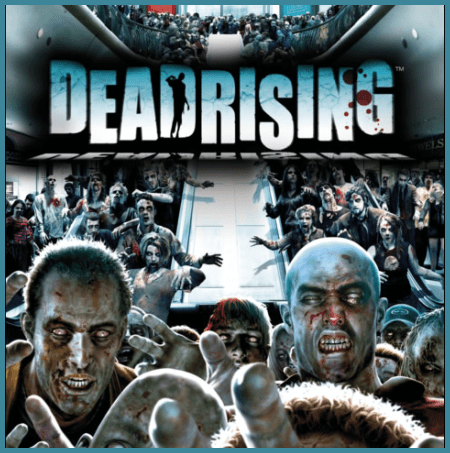
Capcom’s Dead Rising stands as one of the most fun titles to come out for the Xbox 360 since its initial release in late 2005. From the makers of the Resident Evil series for past console systems, Capcom has taken a new approach in adding to their growing library of zombie titles. Dead Rising is a semi-freeroaming action-horror game which takes the classic premise of George A. Romero’s Dawn of the Dead — survivors trapped in the mall teeming with flesh-eating zombies — and makes a fun and exciting game.
The game takes place Willamette, Colorado, population 53,594 where nothing exciting happens in town outside of visiting the local mega-mall which seems to dominate the entire town. Dead Rising uses a time-based mission system and the intro cutscene in the beginning of the game hints at this. You play as freelance photojournalist Frank West, who never fails to mention that he’s covered riots, wars, and all sorts of dangerous events, who gets a tip from an unknown source that something big is happening in little old Willamette. The intro both introduces Frank West, flying over the town to bypass the military blockade and cordon of the town, and the controls for the photography mechanics of the gameplay. It’s in this hands-on tutorial part of the intro that we see a bird’s eye view of the crisis that has befallen Willamette. From there you’re dropped onto the roof of the Willamette Mall where you meet one of the few survivors of the town. The rest of the game moves on from there at a very frantic pace.
It’s the game itself that shines for Dead Rising. Despite a save system that could’ve been done much better (more on that later), Dead Rising‘s gameplay mechanics has quite a bit in common with Rockstar’s Grand Theft Auto series. From the get-go the player as Frank can just go down into the mall and begin killing zombies left and right, and everyway from Monday through Sunday. All manner of items stocked in the mall walkways and stores can be picked up and used either as a weapon, a change in clothing attire, and/or food. This is where Dead Rising will get most of its mention for being fun. When Capcom programmers decided to allow the player to use anything that could be picked up as a weapon they meant it. There’s over 200 useable items to be picked up as a weapon. These items range from the gore-inducing lawnmower (an homage to Peter Jackson’s Dead Alive zombie film), chainsaws, and excavators (a garden tool that has one of the bloodiest and funniest killing animation) to the ridiculously funny use for CDs, shower-heads, novelty masks, teddy bears and skateboards. There’s also the more traditional weapons such as a pistol, shotgun, submachine gun, machine-gun, swords and axes. Being a game developed by Capcom, Dead Rising has more than a few wink-wink acknowledgement to other Capcom games such as Mega Man and Resident Evil.
One could spend all their time just killing zombies, but the strict time-based missions in the game might make zombie-killing take a backseat to actually solving the mystery of what’s caused the zombie outbreak in the town. There’s two types of missions Frank could try solving. There’s the mandatory “Case Missions” which deal directly with him trying to solve the mystery within the 72-hour time limit. Each case mission must be solved in a linear order to open up the next case. The second set of missions are named “Scoops” and act more as sub-missions that can be taken on and accomplished or ignored. They really don’t affect the availability of further case missions. What they do give Frank are prestige points that can go a long way to levelling him up to gain more skills and abilities. Most scoop missions usually entail finding scattered survivors within the mall and leading them back to the safety of the security office near the roof. Some survivors could be armed with extra weapons Frank carries and defend themselves when attacked, and some survivors are so incapacitated that Frank must carry them to safety. While carrying a survivor Frank will be unable to use a weapon so this type of mission usually takes several tries before the player figures out the best path to safety. Like most game AI, the survivors need a bit of constant attention from the player to make sure they’re actually following you and not stopping every second to fight the closest zombie. It’s not a gamebreaker but the survivor AI could’ve used some more tweaking to make them follow much better.
As mentioned above, Frank can level up to a level cap of 50 by acquiring prestige points (called PP in the game). Prestige points can be acquired through many different ways within the game. Taking pictures of different nature and quality will give Frank prestige points as high as several tens of thousand. Shots with poses that follow a certain genre gives more points than those that are just generic poses. Such genres that shots can be taken of are shots of burtality, horror, outtakes, drama and erotica. Erotica shots are pretty much just photographs taken of survivors and zombies (creepy) in sexually-suggestive poses. Brutality shots are usually pictures where extreme violence and fighting poses are framed and photographed. Horror is pretty much self-explanatory. Drama shots usually involve pictures with survivors and main npc characters in dramatic poses. Outtakes usually entail photographs taken of survivors and zombies involved in any sort of funny situations. Usually them slipping and falling down or wandering around aimlessly with novelty masks over their heads.
Other ways to gain prestige points will be to finish case missions and scoop missions. The PP reward for finishing part or all of each mission usually range from several thousand to as high as 50,000 PP. The high amount of PP reward for taking on and accomplishing these two types of missions go a long way to levelling up Frank. The most fun way of getting PP, though not as much and takes a long time, will be to kill zombies. For every 50 zombies killed Frank gets 500 PP and everytime Frank reaches 1000 zombies killed he gains 20,000 PP. It’s a much slower path to gaining PP but it’s surely the most fun of the three ways.
The main storyline in Dead Rising is actually a very good one. Like most games outside of the role-playing game genre, storylines were usually the weakest of all the games had to offer. In Dead Rising, Capcom was able to create an intriguing storyline that didn’t rip-off the Dawn of the Dead story that the game will always be compared to. There’s conspiracies, betrayals and just outright weirdness to help tie together the mystery of why Willamette, Colorado has suddenly gone zombiefied and why the U.S. military and government were quick to quarantine the whole area.
The game itself leans more towards comedic horror than outright horror. There were some cutscenes and plot developments that were downright creepy and scary, but most of the time you’ll just laugh in glee at all the carnage you’re causing within the mall. The characters of Frank West and those npcs he has to deal with in the context of the case missions were pretty well drawn both in animation and personality. As the game progressed and certain characters were put in danger it was hard not to feel saddened by such tragic events. It helps that the voice-acting in Dead Rising was pretty high quality. The spoken dialogue during the cutscenes were pretty well done and one could sense that Capcom wanted to really capture the cinematic tone they were going for with Dead Rising.
Now to the one glaring negative in Dead Rising. The save system in this game could be called unforgiving and that’s saying it lightly. The game only allows for one save per memory unit. This means that you can only save the game once if you only have the 360 HDD as your memory unit. This means that once you save over a previous save then thats it. If you’re current save doesn’t give you the chance to finish your current case mission then you pretty much have to start the game over. This would sound terrible if not for one saving grace. Dead Rising allows the player to start the game over with all skills, abilities, levels and PP acquired to be transferred over to the new game. This lessens the impact of having to start the game over. It also helps in power-levelling Frank to a level high enough that you can breeze through the case missions. Starting the game over and over with stats and skills included also gives the player a chance to try different methods of solving a case until finding the one thats easiest to do. I know of players who have done nothing but just kill zombies and try on a few case and scoop missions to gain PP to level up then start the game over then repeat the cycle again. This makes the game much easier in the long run, but also takes time.
The graphics in Dead Rising is good to above-average. Capcom went away from making the best-looking graphics and instead opted to go for just good with most of the 360’s power under the hood set aside for the zombies. The game has lots and lots of zombies on-screen and when I say lots I mean in the hundreds, if not thousands. There’s barely any slowdown in frame-rate as the action on the screen gets heavy and crowded. The look of the mall itself was also well done. Each store and utilitarian room has their own unique look with most items rendered with enough detail to be recognized as either weapon, sustenance, etc.
Overall, Capcom has created a great game with their action-horror/comedy Dead Rising. With a choice to either play the game in the free-roaming style of Grand Theft Auto to a more time-based, linear mission-style of an action game this game more than makes up for unforgiving save system its developers decided to give it. Outside of the save system which keeps this game from reaching excellent status, Dead Rising is a great and fun game that should remain fun to pick up long after the player has finished its main mission. With a sequel already set to be released on the tail-end of summer 2010, this game is a good way for one to reacquiant themselves with some zombie-killing.