Georgie, the Chaser (Cesar Romero) is a con artist who works for a low-level gangster named Sunshine Joe (William Frawley). When Georgie reads about an heiress named Clarice van Cleve (Patricia Ellis) who impulsively falls in love with any man wearing a uniform, Georgie pretends to be a member of the Foreign Legion and tracks her down. Georgie thinks that Clarice’s father will pay him off, just as he’s paid off all of her other suitors. Instead, Clarice’s father disinherits her and Clarice ends up living at Georgie’s place, along with his other criminal associates (Andy Devine, Warren Hymer, and George E. Stone).
Georgie reacts by getting out of town, leaving Clarice behind with his good-natured gang. However, even the gang gets tired of Clarice insisting that they dress up for dinner and that they all get a good night’s sleep. After Sunshine Joe cheats them out of their money, the remaining criminals head to the Yale-Harvard football game, hoping to win some bets and to set Clarice up with the player that her father wants her to marry, studious benchwarmer Hector Wilmot (Buster Crabbe).
Just a little over an hour long, Hold ‘EmYale is actually a pretty amusing movie. It was based on a short story by Damon Runyon and all of the characters are familiar Runyon types, streetwise but good-natured criminals who enjoy drinking and gambling and the film gets a lot of laughs out of their reactions to Clarice’s attempts to civilize them. Patricia Ellis is great as the ditzy Clarice and this film provides a chance to see Buster Crabbe playing a character who isn’t a natural-born athlete for once. It’s a minor film but worth watching for the cast and the snappy dialogue. Who would have guessed a good movie could be built around Ivy League football?
One of the ten films to be nominated for Best Picture of 1937, In Old Chicago tells the story of the O’Leary family.
When we first meet the O’Learys, they’re riding across the Illinois frontier in a covered wagon. After patriarch Patrick O’Leary (J. Anthony Hughes) is killed in a freak accident, Hazel O’Leary (Alice Brady) decides to settle in the bustling town of Chicago. Hazel and her three sons build a life for themselves in a poor, largely Irish neighborhood known as the Patch. Hazel makes a living as a laundress and soon, her home is big enough for her to take in a cow named Daisy. Better not put that lantern too close to Daisy, Mrs. O’Leary….
As for the O’Leary boys, they all build a life of their own in 19th century Chicago.
Free-spirited Dion (Tyrone Power) hangs out in the saloon owned by sinister Gil Warren (Brian Donlevy) and, to his mother’s consternation, he falls for a singer named Belle (Alice Faye). Eventually, Dion and Belle open up their own saloon and go into competition with Warren. Dion soon emerges as one of the leaders of the Patch, a rogue with a charming smile and zero ethics but a total love for his family.
The youngest, Bob (Tom Brown), falls in love with a German immigrant named Gretchen (June Storey). Bob asks Gretchen to marry him while Mrs. O’Leary’s cow stares straight at camera.
Finally, the oldest of the O’Leary boys is Jack (Don Ameche). Jack become a crusading lawyer and eventually, he runs for mayor on a reform ticket. With Dion’s help, Jack is able to defeat Gil Warren. But now that Jack is mayor, he immediately sets his sights on tearing down the Patch and, in his words, “starting over.”
In Old Chicago has a two-hour running time and a lot happens in those two hours. Not only is there all the drama between the brothers but also there’s a handful of production numbers featuring Alice Faye. (Considering that she’s performing at a saloon in the slums of Chicago, it’s impressive that Belle can put on such an elaborate show.) Of course, anyone with a knowledge of history knows that every minute of In Old Chicago is building up to the moment when Mrs. O’Leary’s cow kicks over that lantern and all the wooden buildings in Chicago go up in flames. In Old Chicago is an early disaster movie and, talented cast aside, the main reason that anyone will be watching will be for the recreation of the Great Chicago Fire. As flames roar around them and cattle stampede through the streets, hundreds of extras run for their lives. As Alice Brady, Tom Brown, and Alice Faye stare off to the horizon, the city of Chicago explodes in front of them. Even today, the scenes of the city on fire are impressive.
As for the rest of the film, I enjoyed the melodramatic excess of it all. The stars weren’t exactly the most dynamic actors of the 1930s but Tyrone Power and Don Ameche were both handsome and likable enough to carry the film and it’s easy to see why In Old Chicago was, at the time of its production, the most expensive film ever made. It’s a big film, with ornate sets, hundreds of extras, and elaborate production numbers. It’s entertaining, even though I did occasionally find myself growing impatient as I waited for the fire to finally start burning.
One thing this film is not is historically accurate. Not only is it now generally agreed that Mrs. O’Leary’s cow was innocent of starting the fire but Mrs. O’Leary’s son was never mayor of Chicago. It is true that Chicago caught fire in 1871 and that the mayor turned to General Philip Sheridan (played here by Sidney Blackmer) for help in both putting out the fire and keeping order in the streets. For the most part, though, In Old Chicago is total fiction. That didn’t bother me but then again, I don’t live in Chicago.
In Old Chicago was nominated for Best Picture of the Year but lost to The Life of Emile Zola. However, Alice Brady won the Oscar for Best Supporting Actress.
This B-western takes place in the legendry frontier town of Deadwood. It’s a town that’s patrolled by General George Custer (Addison Richards) and which is home to Wild Bill Hickok (Richard Dix) and Calamity Jane (Frances Farmer). When outlaw Jack McCall (Lon Chaney, Jr.) and his gang start disguising themselves as Sioux and start robbing stagecoaches, young homesteader Jim Holliday (Robert Stack) is appointed town marshal. Unfortunately, Jim’s older brother, Bob (Broderick Crawford), has gotten involved with McCall and his gang. Bob has also never forgiven Jim for marrying Anne (Ann Rutherford), the woman that Bob loved. Jim struggles to get the town to take him seriously. When Jim tries to put out a fire that’s threatening to burn down several businesses, the citizens laugh at him and shoot a hole in the water hose. No one said that the people of Deadwood were smart. Ann wants to leave town but McCall and his gang are growing more brazen in their attacks and when one of Jim’ mentors is murdered, Jim has no choice but to get justice and revenge. Meanwhile, the real Sioux grow tired of being blamed every time a stagecoach is robbed and they launch their own attack on the town.
Though the plot may be predictable, Badlands of Dakota is memorable for the cast that was assembled to bring its familiar story to life. Along with those already mentioned, the cast also includes Andy Devine as a saloon owner, Hugh Hubert as the town drunk, Fuzzy Knight as the town’s stagecoach driver, and the folk band, The Jesters, as the town’s entertainment. They all do their part to bring the town of Deadwood to life. Frances Farmer steals the film with her tough and unsentimental portrayal of Calamity Jane and Lon Chaney, Jr. is an effectively hard-edged villain. This was one of Robert Stack’s first films and he’s appropriately stiff and upright as Jim. Jim is the only honest man in Deadwood, which also means that Jim is fairly boring when compared to everyone else around him. It’s also difficult to accept him as being Broderick Crawford’s younger brother, though Crawford does a good job of portraying the personal betrayal that Bob feels when he discovers that Jim has married Anne.
Not surprisingly, Badlands of Dakota plays havoc with history. This is especially true when it comes to Addison Richards’s sober and reasonable portrayal of a middle-aged General Custer. (The real-life General Custer died when he was only 36 and could reportedly be slightly erratic. Not to mention, Custer died the same year that Deadwood was founded so it’s doubtful that he ever visited the city, much less had a personal friendship with Wild Bill Hickok and Calamity Jane.) Still, there’s a lot here to entertain fans of B-westerns. Along with all of the familiar faces in the cast, there’s also a sequence with an out-of-control stage coach that makes good use of rear projection and the film’s final gun battle is exciting and well-directed. It’s a quick 76 minutes, full of all the action and bad history that a western fan could hope for.
You know the story that’s told in this 1936 film already, don’t you?
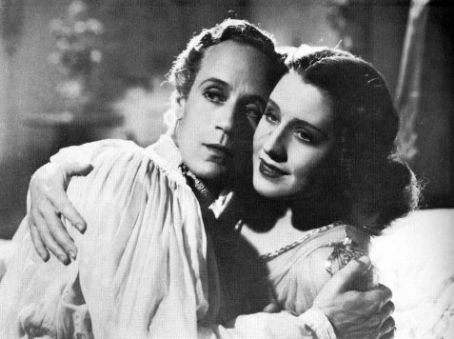
In the city of Verona, Romeo Montague (Leslie Howard) has fallen in love with Juliet Capulet (Norma Shearer). Normally, this would be cause for celebration because, as we all know, love is a wonderful thing. However, the House of Capulet and the House of Montague have long been rivals. When we first meet them all, they’re in the process of having a brawl in the middle of the street. There’s no way that Lord Capulet (C. Aubrey Smith) will ever accept the idea of Juliet marrying a Montague, especially when he’s already decided that she is to marry Paris (Ralph Forbes). Things get even more complicated with Juliet’s cousin, Tybalt (Basil Rathbone), kills Romeo’s best friend, Mercutio (John Barrymore). Romeo then kills Tybalt and things only grow more tragic from there.
It’s hard to keep track of the number of films that have been made out of William Shakespeare’s tale of star-crossed lovers and tragedy. The plot is so universally known that “Romeo and Juliet” has become shorthand for any story of lovers who come from different social sects. Personally, I’ve always felt that Romeo and Juliet was less about love and more about how the rivalry between the Montagues and the Capulets forces the young lovers into making hasty decisions. If not for Lord Capulet throwing a fit over his daughter’s new boyfriend, she and Romeo probably would have split up after a month or two. Seriously, I’ve lost track of how many losers I went out with in high school just because my family told me that I shouldn’t.
Producer Irving Thalberg spent five years trying to get MGM’s Louis B. Mayer to agree to greenlight a film version of Romeo and Juliet. Mayer thought that most audiences felt that Shakespeare was above them and that they wouldn’t spend money to see an adaptation of one of his plays. Thalberg, on the other hand, thought that the story would be a perfect opportunity to highlight the talents of his wife, Norma Shearer. It was only after Warner Bros. produced a financially successful version of A Midsummer Night’s Dream that Mayer gave Romeo and Juliet the go ahead.
Of course, by the time the film went into production, Norma Shearer was 34 years old and a little bit too mature to be playing one of the most famous teenagers in literary history. Perhaps seeking to make Shearer seem younger, Thalberg cast 43 year-old Leslie Howard as Romeo, 44 year-old Basil Rathbone as Tybalt, and 54 year-old John Barrymore as Mercutio, (In Barrymore’s defense, to me, Mercutio always has come across as being Verona’s equivalent of the guy who goes to college for ten years and then keeps hanging out on the campus even after dropping out.)
In short, this is the middle-aged Romeo and Juliet and, despite all of the good actors in the cast, it’s impossible not to notice. There were few Golden Age actors who fell in love with the authenticity of Leslie Howard and Basil Rathbone is a wonderfully arrogant and sinister Tybalt. Norma Shearer occasionally struggles with some of the Shakespearean dialogue but, for the most part, she does a good job of making Juliet’s emotions feel credible. As for Barrymore — well, he’s John Barrymore. He’s flamboyant, theatrical, and a lot of fun to watch if not always totally convincing as anything other than a veteran stage actor hamming it up. The film is gorgeous to look at and George Cukor embraces the melodrama without going overboard. But, everyone in the movie is just too old and it does prove to be a bit distracting. A heart-broken teenager screaming out, “I am fortune’s fool!” is emotionally powerful. A 43 year-old man doing the same thing is just not as effective.
Despite being a box office failure (it turned out that Mayer was right about Depression-era audiences considering Shakespeare to be too “arty”), Romeo and Juliet was nominated for Best Picture of the year, the second Shakespearean adaptation to be so honored. However, the award that year went to another big production, The Great Ziegfeld.
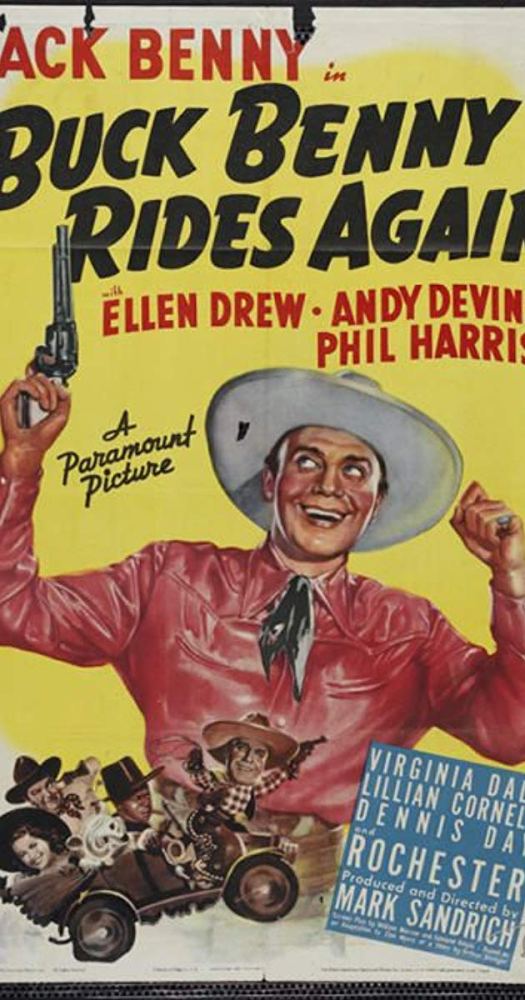
The gang’s all here in BUCK BENNY RIDES AGAIN – Jack Benny’s radio gang, that is! Eddie “Rochester” Anderson, announcer Don Wilson, band leader Phil Harris, comic actor Andy Devine, and crooner Dennis Day all show up for this fun-filled musical comedy romp directed by Mark Sandrich. Even Jack’s radio nemesis Fred Allen is heard (though not seen) cracking jokes at his rival’s expense!
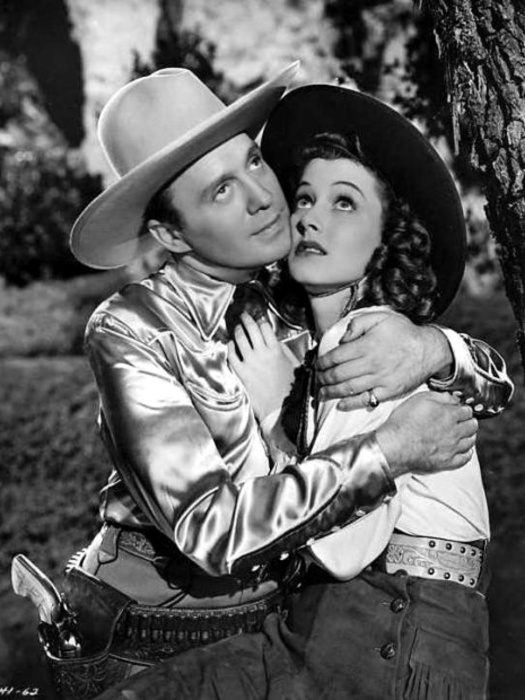
The movie plays like an extended sketch from one of Jack’s radio or TV programs, as the vain Jack falls for pretty Joan Cameron (Ellen Drew), one of a trio of singing sisters (the other two are Virginia Dale and Lillian Cornell) trying to break into show biz. They “meet cute” when Jack accidentally smashes into Joan’s taxi. Jack keeps flubbing his chances with Joan, who only goes for manly, rugged Western types (“I wouldn’t go out with him if he drove up in a sleigh…
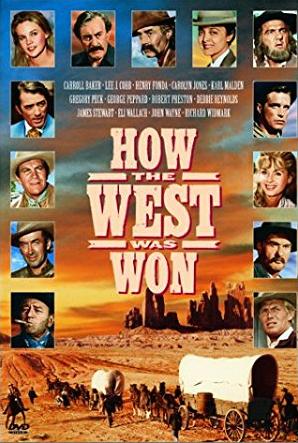
(With the Oscars scheduled to be awarded on March 4th, I have decided to review at least one Oscar-nominated film a day. These films could be nominees or they could be winners. They could be from this year’s Oscars or they could be a previous year’s nominee! We’ll see how things play out. Today, I take a look at the 1963 best picture nominee, How The West Was Won!)
How was the west won?
According to this film, the west was won by the brave men and women who set out in search of a better life. Some of them were mountain men. Some of them worked for the railroads. Some of them rode in wagons. Some of them gambled. Some of them sang songs. Some shot guns. Some died in the Civil War. The thing they all had in common was that they won the west and everyone had a familiar face. How The West Was Won is the history of the west, told through the eyes of a collection of character actors and aging stars from Hollywood’s Golden Age.
In many ways, How The West Was Won was the Avatar of the early 60s. It was a big, long, epic film that was designed to make viewers feel as if they were in the middle of the action. Avatar used 3D while How The West Was Won used Cinerama. Each scene was shot with three synchronized cameras and, when the film was projected onto a curved Cinerama screen, it was meant to create a truly immersive experience. The film is full of tracking shots and, while watching it on TCM last night, I tried to imagine what it must have been like to see it in 1963 and to feel as if I was plunging straight into the world of the old west. The film’s visuals were undoubtedly diminished by being viewed on a flat screen and yet, there were still a few breath-taking shots of the western landscape.
The other thing that How The West Was Won had in common with Avatarwas a predictable storyline and some truly unfortunate dialogue. I can understand why How The West Was Won was awarded two technical Oscars (for editing and sound) but, somehow, it also picked up the award for Best Writing, Screenplay or Story. How The West Was Won is made up of five different parts, each one of which feels like a condensed version of a typical western B-movie. There’s the mountain man helping the settlers get down the river story. There’s the Civil War story. There’s the railroad story and the outlaw story and, of course, the gold rush story. None of it’s particularly original and the film is so poorly paced that some sections of the film feel rushed while others seem to go on forever.
Some of the film’s uneven consistency was undoubtedly due to the fact that it was directed by four different directors. Henry Hathaway handled three sections while John Ford took care of the Civil War, George Marshall deal with the coming of the railroad, and an uncredited Richard Thorpe apparently shot a bunch of minor connecting scenes.
And yet, it’s hard not to like How The West Was Won. Like a lot of the epic Hollywood films of the late 50s and early 60s, it has its own goofy charm. The film is just so eager to please and remind the audience that they’re watching a story that could only be told on the big screen. Every minute of the film feels like a raised middle finger to the threat of television. “You’re not going to see this on your little idiot box!” the film seems to shout at every moment. “Think you’re going to get Cinerama on NBC!? THINK AGAIN!”
Then there’s the huge cast. As opposed to Avatar, the cast of How The West Was Won is actually fun to watch. Admittedly, a lot of them are either miscast or appear to simply be taking advantage of a quick payday but still, it’s interesting to see just how many iconic actors wander through this film.
For instance, the film starts and, within minutes, you’re like, “Hey! That’s Jimmy Stewart playing a mountain man who is only supposed to be in his 20s!”
There’s Debbie Reynolds as a showgirl who inherits a gold claim!
Is that Gregory Peck as a cynical gambler? And there’s Henry Fonda as a world-weary buffalo hunter! And Richard Widmark as a tyrannical railroad employee and Lee J. Cobb as a town marshal and Eli Wallach as an outlaw!
See that stern-faced settler over there? It’s Karl Malden!
What’s that? The Civil War’s broken out? Don’t worry, General John Wayne is here to save the day. And there’s George Peppard fighting for the Union and Russ Tamblyn fighting for the Confederacy! And there’s Agnes Moorehead and Thelma Ritter and Robert Preston and … wait a minute? Is that Spencer Tracy providing narration?
When Eli Wallach’s gang shows up, keep an eye out for a 36 year-old Harry Dean Stanton. And, earlier, when Walter Brennan’s family of river pirates menaces Karl Malden, be sure to look for an evil-looking pirate who, for about twenty seconds, stares straight at the camera. When you see him, be sure to say, “Hey, it’s Lee Van Cleef!”
How The West Was Won is a big, long, thoroughly silly movie but, if you’re a fan of classic film stars, it’s worth watching. It was a huge box office success and picked up 8 Oscar nominations. It lost best picture to Tom Jones.
(By the way, in my ideal fantasy world, From Russia With Love secured a 1963 U.S. release, as opposed to having to wait until 1964, and became the first spy thriller to win the Oscar for Best Picture.)
(WARNING: The movie I’m about to review is so bad, I can’t even find a proper poster for it. Beware… )
I was so excited when I found out TCM was airing THE PHYNX at 4:00am! I’d heard about how bad it for years now, and couldn’t wait to view it for myself today on my trusty DVR. I wasn’t disappointed, for THE PHYNX is a truly inept movie, so out of touch with its audience… and just what is its audience? We’ve got a Pre-Fab rock band, spy spoof shenanigans, wretched “comedy”, and cameos from movie stars twenty years past their prime. Just who was this movie made for, anyway?
The film defies description, but I’ll give it a whirl because, well because that’s what I do! We begin as a secret agent attempts to crash into Communist Albania in unsuccessful and unfunny ways, then segue into some psychedelic cartoons…
Last night, as a part of my effort to clean out my DVR by watching and reviewing 38 movies in 10 days, I watched the 1956 Best Picture winner, Around The World In 80 Days.
Based on a novel by Jules Verne, Around The World In 80 Days announces, from the start, that it’s going to be a spectacle. Before it even begins telling its story, it gives us a lengthy prologue in which Edward R. Murrow discusses the importance of the movies and Jules Verne. He also shows and narrates footage from Georges Méliès’s A Trip To The Moon. Seen today, the most interesting thing about the prologue (outside of A Trip To The Moon) is the fact that Edward R. Murrow comes across as being such a pompous windbag. Take that, Goodnight and Good Luck.
Once we finally get done with Murrow assuring us that we’re about to see something incredibly important, we get down to the actual film. In 1872, an English gentleman named Phileas Fogg (played by David Niven) goes to London’s Reform Club and announces that he can circumnavigate the globe in 80 days. Four other members of the club bet him 20,000 pounds that he cannot. Fogg takes them up on their wager and soon, he and his valet, Passepartout (Cantinflas) are racing across the world.
Around The World in 80 Days is basically a travelogue, following Fogg and Passepartout as they stop in various countries and have various Technicolor adventures. If you’re looking for a serious examination of different cultures, this is not the film to watch. Despite the pompousness of Murrow’s introduction, this is a pure adventure film and not meant to be taken as much more than pure entertainment. When Fogg and Passepartout land in Spain, it means flamenco dancing and bullfighting. When they travel to the U.S., it means cowboys and Indians. When they stop off in India, it means that they have to rescue Princess Aouda (Shirley MacClaine!!!) from being sacrificed. Aouda ends up joining them for the rest of their journey.
Also following them is Insepctor Fix (Robert Newton), who is convinced that Fogg is a bank robber. Fix follows them across the world, just waiting for his chance to arrest Fogg and disrupt his race across the globe.
But it’s not just Inspector Fix who is on the look out for the world travelers. Around The World In 80 Days is full of cameos, with every valet, sailor, policeman, and innocent bystander played by a celebrity. (If the movie were made today, Kim Kardashian and Chelsea Handler would show up at the bullfight.) I watch a lot of old movies so I recognized some of the star cameos. For instance, it was impossible not to notice Marlene Dietrich hanging out in the old west saloon, Frank Sinatra playing piano or Peter Lorre wandering around the cruise ship. But I have to admit that I missed quite a few of the cameos, much as how a viewer 60 years in the future probably wouldn’t recognize Kim K or Chelsea Handler in our hypothetical 2016 remake. However, I could tell whenever someone famous showed up on screen because the camera would often linger on them and the celeb would often look straight at the audience with a “It’s me!” look on their face.
Around The World in 80 Days is usually dismissed as one of the lesser best picture winners and it’s true that it is an extremely long movie, one which doesn’t necessarily add up to much beyond David Niven, Cantinflas, and the celeb cameos. But, while it may not be Oscar worthy, it is a likable movie. David Niven is always fun to watch and he and Cantinflas have a nice rapport. Shirley MacClaine is not exactly believable as an Indian princess but it’s still interesting to see her when she was young and just starting her film career.
Add to that, Around The World In 80 Days features Jose Greco in this scene:
Around The World In 80 Days may not rank with the greatest films ever made but it’s still an entertaining artifact of its time. Whenever you sit through one of today’s multi-billion dollar cinematic spectacles, remember that you’re watching one of the descendants of Around The World In 80 Days.
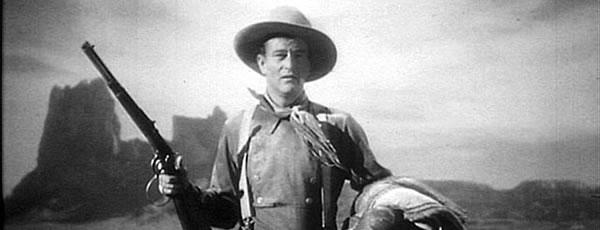
If you think the characters and Western tropes in STAGECOACH are familiar, you’re right. But let’s be clear… STAGECOACH introduced many of these now-clichéd devices to film, and is one of the enduring classics of the American West. Director John Ford was well versed in Westerns, having cut his professional teeth on them during the silent era. This was his first sound Western and Ford was determined to reinvent the genre, with much more adult themes than the usual Saturday matinée kiddie fare. He succeeded with a daring story featuring an outlaw and a prostitute as his heroes, and exceeded his goal by creating a brand new Hollywood star in the process: John Wayne.
Wayne had been a football player for the USC Trojans when an injury caused him to lose his scholarship. Through some university connections, he was able to gain employment in the film industry as a prop…
— Mrs. Norman Maine (Janet Gaynor) in A Star Is Born (1937)
When I first saw the red neon of the opening credits of the 1937 best picture nominee, A Star Is Born, I thought to myself, “This is a real movie movie.” And I was so impressed by that thought that I even jotted it down in my review notes and now, looking down at my notes, I’m struggling to figure out how to explain just what exactly it was that I meant.
I think that what I was trying to say, in my own way, was that, when we think of a typical big budget Hollywood romance, A Star Is Born is the type of film of which we tend to think. It’s a big, glossy film that is shot in vibrant technicolor and which features a self-sacrificing woman (Esther Blodgett, played by Janet Gaynor) falling in love with a self-destructive but ultimately noble man (Norman Maine, played by Fredric March). It’s a film that has romance, humor, and tragedy. It’s a film that’s designed to make you laugh, cry, and ultimately fall in love. It’s pure melodrama, the type of film that would probably be made for Lifetime today. (And, in fact, it has been remade for Lifetime a number of times, just never under the title A Star Is Born.)
It’s a familiar story that, if I may indulge in a cliché, as old as the movies. Esther is a girl who lives on a farm in North Dakota and she wants to be a star, despite being told by her aunt that she need to start concentrating on finding a man and having children. Esther’s grandmother (Fay Robson) tells Eleanor to pursue her dreams and loans her some money to take with her to Hollywood.
With stars in her eyes, Esther goes out to California and deals with rejection after rejection. (She does, however, manage to rent out an apartment. The weekly rent is $6.00.) Esther does befriend an assistant director (Andy Devine) who gets Esther a job as a waitress at a party. As Esther serves the food, she imitates everyone from Katharine Hepburn to Mae West, all in an attempt to get noticed.
And, amazingly enough, it works! She meets film star, Norman Maine. With Norman’s help, she gets her first screen test and, after her name is changed to Vicki Lester, Esther is put under contract to a studio. She and Norman also fall in love and soon end up married. However, while Vicki Lester is rising to stardom, Norman is descending into irrelevance. He’s an alcoholic who has managed to alienate almost everyone in Hollywood. When Vicki wins her first award, Norman shows up at the ceremony drunk and destroys what little is left of his career.
Will Vicki be able to save Norman from his demons? And will she be able to do so without destroying her own career?
Well, you probably already know the answer. A Star Is Born is one of those stories that everyone seems to know, regardless of whether they’ve actually seen the film or not. (And even if they haven’t seen the 1937 version, chances are that they’ve seen one of the many remakes or ripoffs.) The original Star Is Born is an undeniably familiar and old-fashioned movie but it holds up as a celebration of both old Hollywood glamour and a heartfelt romance.
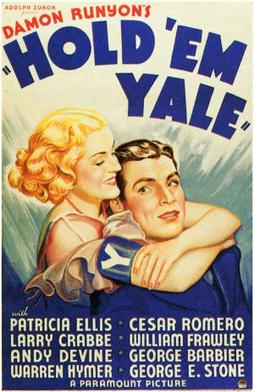 Georgie, the Chaser (Cesar Romero) is a con artist who works for a low-level gangster named Sunshine Joe (William Frawley). When Georgie reads about an heiress named Clarice van Cleve (Patricia Ellis) who impulsively falls in love with any man wearing a uniform, Georgie pretends to be a member of the Foreign Legion and tracks her down. Georgie thinks that Clarice’s father will pay him off, just as he’s paid off all of her other suitors. Instead, Clarice’s father disinherits her and Clarice ends up living at Georgie’s place, along with his other criminal associates (Andy Devine, Warren Hymer, and George E. Stone).




 Through the Shattered Lens