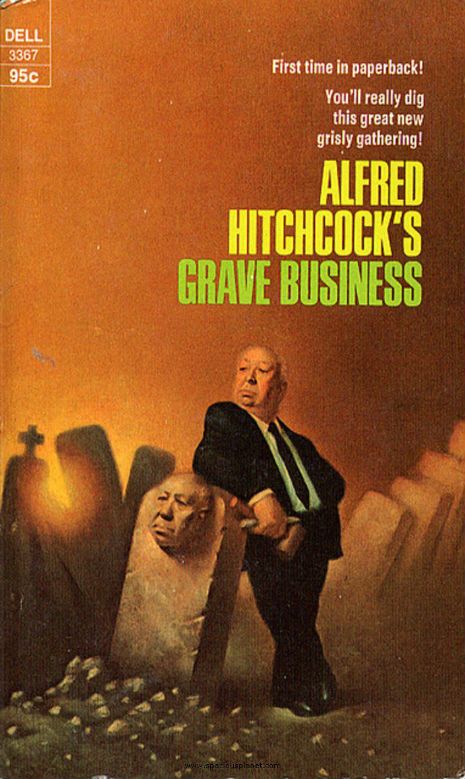
Artist Unknown
And business is good!
Artist Unknown
And business is good!
The great Cary Grant was born 122 years ago today.
In honor of Cary Grant’s legendary career and screen charm, today’s scene that I love comes from one of my favorite Cary Grant/Ingrid Bergman/Claude Rains/Alfred Hitchcock movies! From 1946’s Notorious, here is a scene that I love.
This October, I’m going to be doing something a little bit different with my contribution to 4 Shots From 4 Films. I’m going to be taking a little chronological tour of the history of horror cinema, moving from decade to decade.
Today, we start the 1960s!
4 Shots From 4 Horror Films

Psycho (1960, dir by Alfred Hitchcock)

The Pit and the Pendulum (1961, dir by Roger Corman)

The Awful Dr. Orlof (1962, dir by Jesus Franco)

Black Sabbath (1963, dir by Mario Bava)
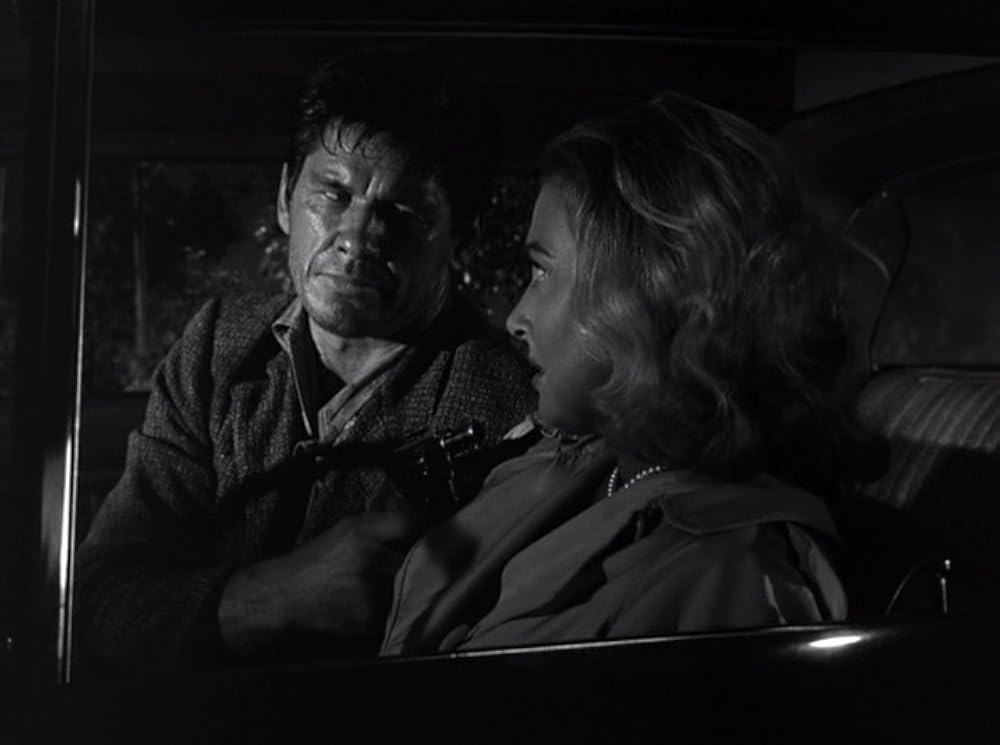
Charles Bronson appeared in three episodes of the ALFRED HITCHCOCK PRESENTS T.V. series. His first two appearances came in the first season in early 1956 when Bronson was still in the early stages of his career. When “The Woman Who Wanted to Live” aired on February 6th, 1962, Bronson’s standing in the film and television community had risen dramatically. Since those first two appearances, he had headlined several low budget films (MACHINE GUN KELLY and SHOWDOWN AT BOOT HILL), starred in his own television series (MAN WITH A CAMERA), and even co-starred as one of the seven gunmen in the western classic, THE MAGNIFICENT SEVEN! As opposed to those two early appearances, Bronson was a well known commodity to audiences in 1962, and he was on the precipice of breaking out in even bigger roles, as THE GREAT ESCAPE and THE DIRTY DOZEN were just over the horizon!
In “The Woman Who Wanted To Live,” we meet escaped convict Ray Bardon (Charles Bronson), a hardened criminal who was shot in the arm when busting out of prison. In serious pain and in need of some quick cash and a getaway vehicle, Bardon robs a remote gas station, even killing the attendant when he makes a move for his gun. Soon a beautiful young woman named Lisa (Lola Albright) drives up to the station. Bardon wants to steal her car and take off, but surprisingly Lisa, who sees his wounds, convinces him to let her drive him wherever he wants to go. As Bardon wonders why she’s willing to help him, Lisa assures him that she will do whatever he wants her to do as she just wants to stay alive. As they flee into the night, they have to deal with a flat tire and a gang of dangerous thugs, but Lisa continues to help Bardon and even passes up a couple of opportunities to take off to safety. Why is Lisa so invested in Bardon’s survival? If you’re guessing there’s more to the story, you would definitely be right!
After watching all three of Charles Bronson’s episodes of ALFRED HITCHCOCK PRESENTS, I believe that “The Woman Who Wanted To Live” just may be the best of the bunch. It’s not as creepy as “And So Died Riabouchinska,” and it certainly doesn’t play up the black comedy like “There Was An Old Woman,” but it does pack quite the emotional punch. First, the story is very effective, as we watch the bond that seems to be developing between the escaped criminal and his captive. You can’t help but wonder if we may be watching two twisted souls who may actually need each other. Hitchcock was always good at throwing people into desperate situations together, and script definitely goes that route here. In the short 25 minutes contained in this episode, each character is given the opportunity to truly help the other, as she helps mend his wounds and he protects her from roadside thugs with bad intentions. Even as the two help each other, as the story plays on, a tightening grip seems to take hold on the audience as to why Lisa hasn’t escaped when she’s had her chances. The strength of the episode just may be the fact that when the big reveal happens, it’s as plain as the nose on your face even though I never considered it a single time, something I have in common with our criminal, Frank Bardon. Second, this episode features two excellent performances from the stars. Interestingly, Charles Bronson and Lola Albright would appear together in the Elvis movie, KID GALAHAD, later this same year. As usual, Bronson brings a real world intensity to the role of the wounded and desperate criminal. With his lived in features, Bronson is incapable of presenting himself in a way that doesn’t seem true and authentic, whether he’s playing a cop or a killer, and his presence here is a clear indicator of his impending stardom. In a tribute to Albright’s performance, the two stars have quite a nice chemistry together, and she steals the final scenes as her character transforms right in front of our eyes and we understand why she’s refused to run away.
With its strong script and the excellent lead performances from Bronson and Albright, I easily recommend “The Woman Who Wanted To Live” as a superior episode of ALFRED HITCHCOCK PRESENTS. This episode truly surprised me and has lingered with me since I first watched it a few days ago.
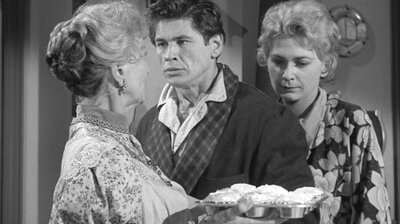
For a little bit of historical perspective, Charles Bronson was an up and coming young character actor when he appeared in the 25th episode of season 1 of ALFRED HITCHCOCK PRESENTS, “There Was an Old Woman,” which originally aired March 18, 1956. Having already shared the screen with the likes of Gary Cooper, Spencer Tracy, Katherine Hepburn and Burt Lancaster, Bronson had an interesting face that would allow him to comfortably play a wide range of roles in 1950’s Hollywood, from Native Americans (DRUM BEAT and APACHE), murderous criminals (CRIME WAVE and BIG HOUSE USA), compassionate doctors (the TV series MEDIC), and even deaf mutes (HOUSE OF WAX). In the mid-1950’s, Bronson was alternating between character parts on the big screen and guest starring roles on the small screen. For someone like me, it’s fun looking back at these early years and roles when Bronson was a hungry, young actor just trying to keep working. Not blessed with matinee idol looks, he attacked his roles with a gusto that, with the benefit of hindsight, would form a foundation that would eventually lead to him becoming the most popular actor in the world a decade later.
In “There Was an old Woman,” down-on-their-luck married couple, Frank Bramwell (Charles Bronson) and Lorna Bramwell (Norma Crane), are desperate for cash. While finishing off their breakfast at the local cafe, they overhear a private conversation between a milkman and the counter guy concerning the vast wealth of a local old woman named Monica Laughton (Estelle Winwood), an eccentric widow who lives alone in a grand, outdated Victorian house. The Bramwell’s think they’ve won the lottery and soon they’ve hatched a scheme to work their way into Mrs. Laughton’s home in hopes of relieving her of all that money. Once inside her home, the young couple gets much more than they bargained for when they discover that the kind and proper old woman lives in a fantasy world of imaginary people, imaginary dinner parties, and imaginary funerals. They play along with her delusions for a while and set about looking for the money, but when they can’t find it, Frank pulls out his knife and threatens to kill Mrs. Laughton and all her “guests” if she doesn’t give them her money. Needless to say, Mrs. Laughton may be nutty, but she has a few tricks up her sleeve and the Bramwell’s just may be on their way to being permanent guests!
If you enjoy entertainment that features black comedy, ironic twists of fate, and deadly danger in the most unexpected of places, you’ll enjoy this macabre gem of an episode. “There Was an Old Woman” sets the Bramwell’s up to think that they’re the ones in charge, until it’s revealed in an instant that they are in way over their head with the eccentric Mrs. Laughton. Bronson and Norma Crane are good as the married couple with bad intentions. I guess it would be more accurate to say that Bronson’s character has the bad intentions while Norma’s character just seems to have picked the wrong man. Bronson is in his amoral, bully-thug mode here, a type of role he played very well in the early years of his career. I thought Norma Crane projected a sort of innocent sweetness, and I felt sorry for her as events spiraled out of control. But the real star of the episode is Estelle Winwood as the delusional “old woman” of the title. She steals the show as Monica Laughton, delivering a fun and deceptively cunning performance as the grande dame who’s much more aware of the dangers around her than she lets on. She may be eccentric, but she’s nobody’s fool. Estelle Winwood is perfect in the role, a testament to a woman who was 73 years old when this episode aired and who would go on to work for over 20 more years, with her final role on an episode of the TV series QUINCY, M.E. that aired in 1980. One of the joys of watching older TV shows and movies is discovering more about some of these talented actors and actresses who starred in them. Winwood had an incredible, five decade career, and she would pass away in 1984 at 101 years of age.
Overall, I recommend “There Was an Old Woman” to any person who appreciates Alfred Hitchcock, vintage TV, black comedy, Charles Bronson, Norma Crane, and Estelle Winwood. It’s interesting and fun stuff!
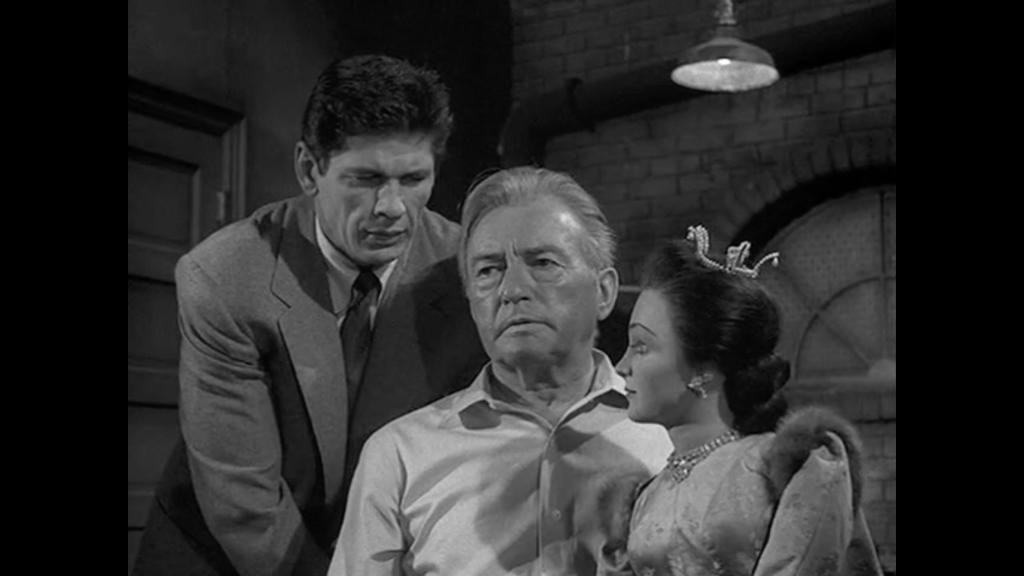
I’ve never been a rabid consumer of horror films, but I do love Alfred Hitchcock. And when you consider that Charles Bronson was featured three times in his TV series, ALFRED HITCHCOCK PRESENTS, you know I’m all in. Bronson first appeared in the season 1 episode, “And So Died Riabouchinska” which starred the Invisible Man himself, Claude Rains! I thought it would be fun to revisit this early episode from the classic TV series.
When a juggler named Ockman is found dead in the basement of a vaudeville theater, Detective Krovitch (Charles Bronson), a no-nonsense police investigator, is on the case. The prime suspect quickly emerges to be John Fabian (Claude Rains), a ventriloquist whose act revolves around his beautiful female dummy, Riabouchinska, who we find out is modeled after a long, lost love. As Krovitch interrogates Fabian and all of those around him, including his embittered wife Alyce (Wynne Miller), and her lover, the shady manager Douglas, it becomes clear that the ventriloquist has a dark and dangerous past. We discover a Fabian who is lost in a world of obsession, self delusion and even perversion, a world that the now deceased Ockman was threatening to expose. Without giving too much away, this episode blends psychological horror with police procedural and spits out an episode that still resonates loudly on the freaky-meter!
Adapted by Mel Dinelli from Ray Bradbury’s short story, “And So Died Riabouchinska” is an exceptional entry in Season 1 of the ALFRED HITCHCOCK PRESENTS TV series. Claude Rains is incredible as Fabian. It’s a thespian tour-de-force, with Rains creating a role that’s creepy, pathetic, and oddly relatable all at the same time. I haven’t seen many of Rains’ most notable works, but based on his performance here, I do know that he’s amazing. Charles Bronson, whose strong screen presence was as obvious as the nose on his face, even this early in his career, goes toe to toe with Rains (and Riabouchinska) and helps ground the episode in something resembling the real world. It’s not a showy role for the legendary tough guy, but he conveys the toughness and authority that would go on to define his career. Performances aside, the episode is truly set apart with an emotional storyline that plumbs the depths of the human psyche in a way that seems daring for 1956 television. There are parts of this episode that will definitely make you squirm in your seat!
Overall, in my opinion, “And So Died Riabouchinska” is an essential episode of the ALFRED HITCHCOCK PRESENTS series. It’s a lot of fun seeing Hitchcock introduce the show at the beginning and wrap it up at the end, but the best part is the fact that the story that takes place in-between is creepy, clever, and compulsively re-watchable.
Have y’all been to Mt. Rushmore? My wife and I stopped by in 2023 on the way home from Yellowstone. It was pretty cool stuff!
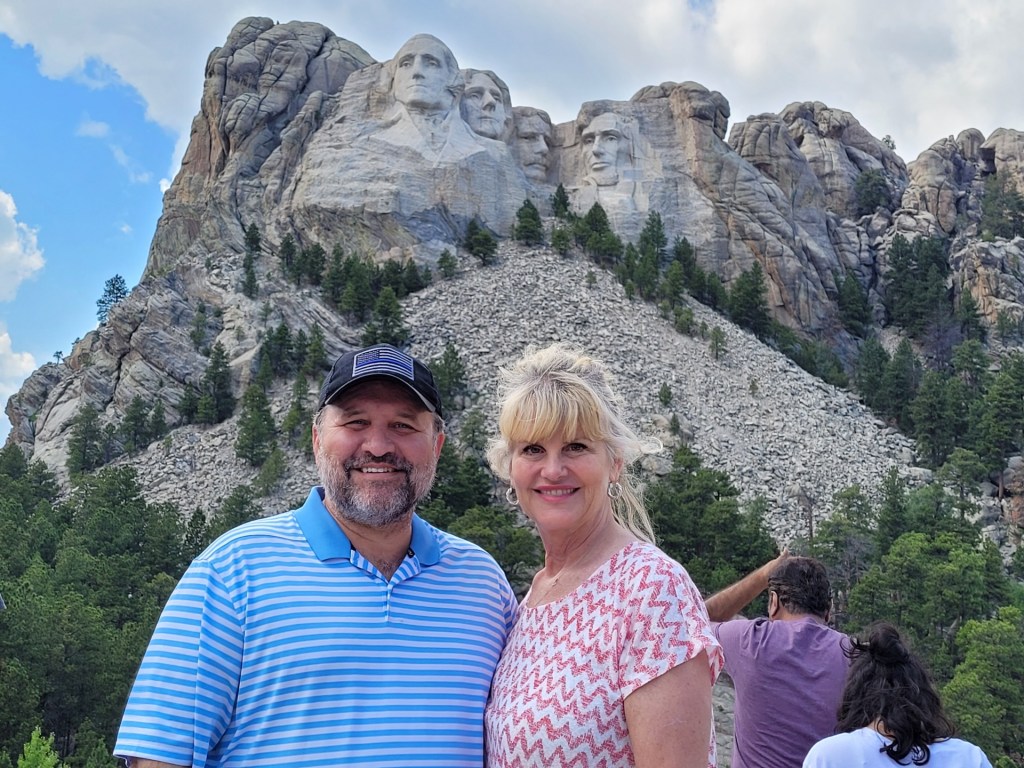
I remember as I was driving up to Mt. Rushmore, I saw a sign that mentioned the Alfred Hitchcock movie NORTH BY NORTHWEST (1959) being filmed there. I hadn’t seen the movie in many years, so I decided to watch it again when I got home to celebrate the trip. I enjoyed seeing Cary Grant and Eva Marie Saint hanging out near the giant rock faces of some of America’s great presidents. In celebration of Hitchcock’s 126th birthday in cinema heaven, I thought I would share that scene with all of you!
Today’s song of the day is the opening theme from Franz Waxman’s score for Alfred Hitchcock’s Rebecca.
4 Or More Shots From 4 Or More Films is just what it says it is, 4 shots from 4 of our favorite films. As opposed to the reviews and recaps that we usually post, 4 Shots From 4 Films lets the visuals do the talking!
One of the all-time great directors in the history of cinema, Alfred Hitchcock, was born on this day in 1899. Today, I celebrate this master filmmaker with some images from some of his best films. Enjoy!
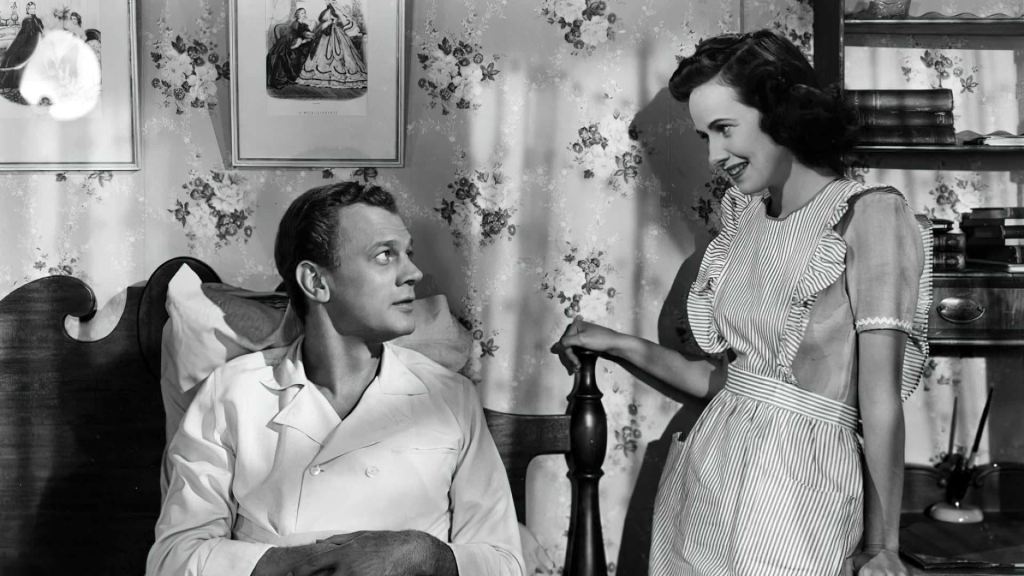
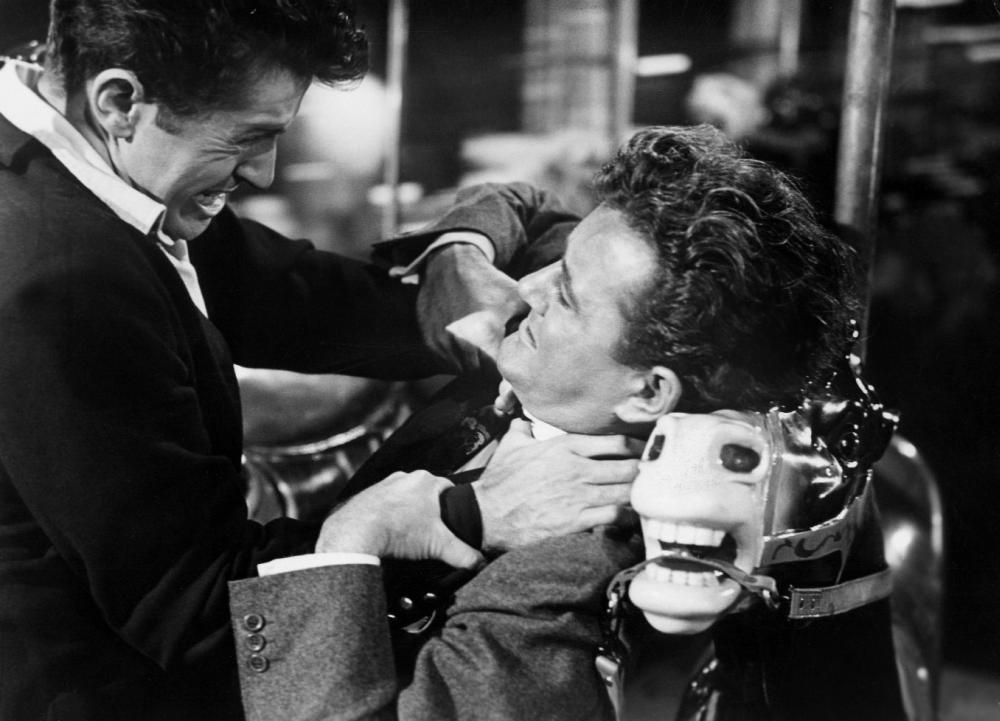
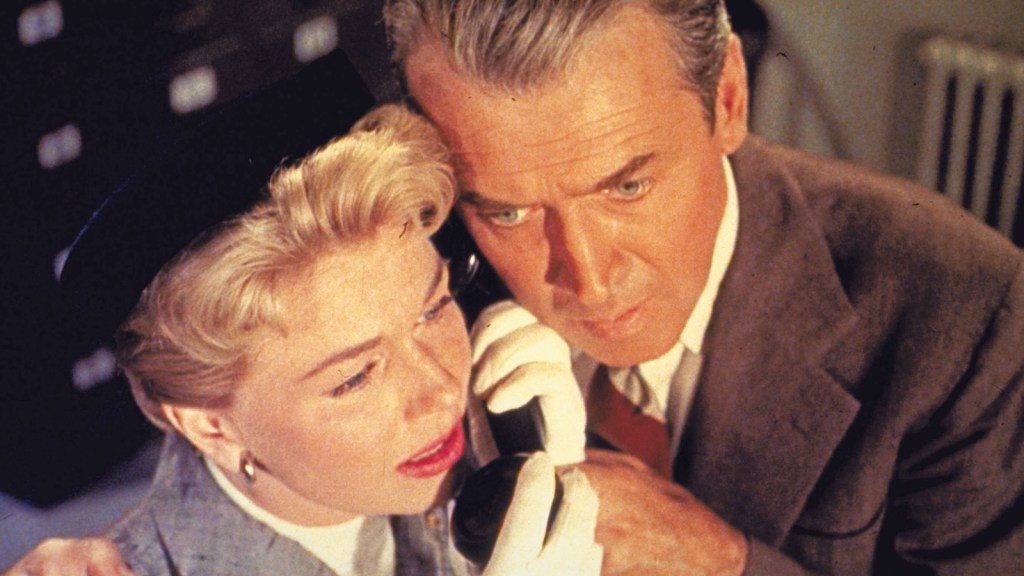
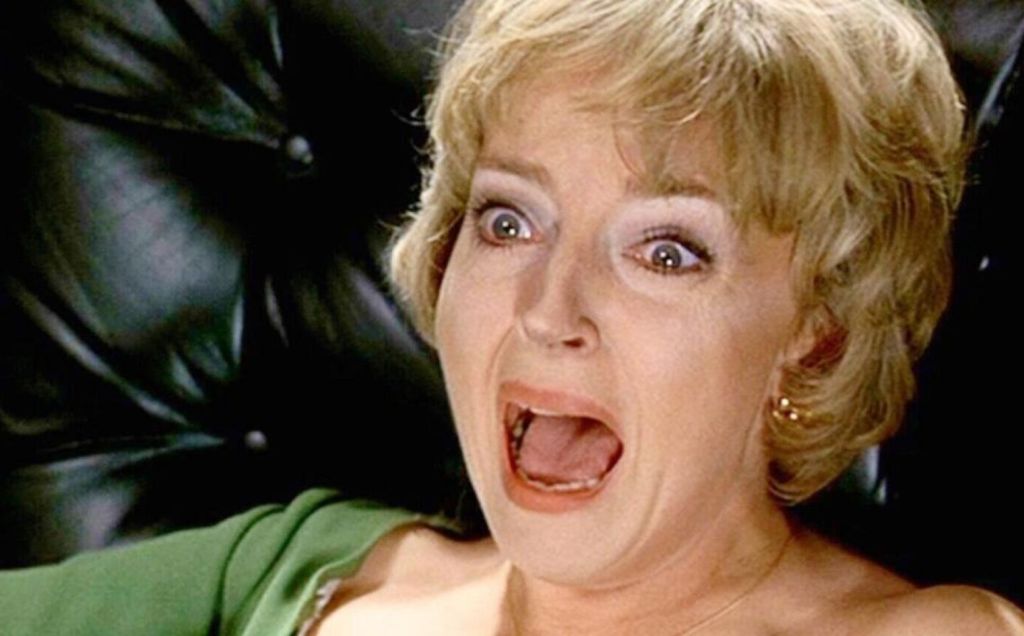
Yesterday was Janet Leigh’s birthday and today is Pat Hitchcock’s birthday so it seems appropriate that today’s scene that I love should feature both of them. From 1960’s Psycho, this scene features Leigh and Hitchcock as office co-workers who meet the very wealthy Mr. Lowry (played by Frank Albertson).
“He was flirting with you. He must have seen my wedding ring,” remains one of the greatest lines ever written.
 Through the Shattered Lens