Roger Corman directed MACHINE GUN KELLY (1958), Charles Bronson’s first starring role!


I’ve always appreciated the legendary Roger Corman, who was born on this day in 1926, because he gave Charles Bronson his first starring role in MACHINE GUN KELLY. I’ve heard Quentin Tarantino himself say that It’s the best movie that Corman ever directed. It was such an important movie for Bronson because it directly led to a HUGE break 10 years later when Alain Delon wanted him for his co-star in FAREWELL, FRIEND (1968). Delon wanted Bronson because he admired his performance as George Kelly.

Happy Birthday in heaven, Mr. Corman! Thanks for giving Charles Bronson, and so many greats, the break of a lifetime!

Brad’s Song of the Day – “Toshiro and I” from CHARLES BRONSON – More Than a Vigilante – THE MUSICAL! 🎶 


Toshiro Mifune is one of the all time great actors in the history of world cinema, and he’s also one of my personal favorites. Charles Bronson may sit alone at the top of Mt. Bradmore, but there’s a tier of actors just below him who I also obsess over. That tier includes people like Chow Yun-Fat, Clint Eastwood, Lau Ching-Wan, Roy Scheider, James Woods, Rutger Hauer, John Wayne, Jimmy Stewart and Toshiro Mifune. I have read voluminous books about Mifune, and I’ve collected so many of his Japanese films. His work with Kurosawa is amazing, but he’s also done impressive work with other great Japanese directors like Kihachi Okamoto, Masaki Kobayashi, and Hiroshi Inagaki. 

It makes me so happy that Charles Bronson and Toshiro Mifune had the opportunity to make the enjoyable East meets Western, RED SUN, together. Although Mifune had more range than Bronson as an actor, they both had such a magnificent screen presence. And the one time they worked together, Bronson actually had the more showy role. Watching Bronson underplay his scalawag cowboy against the honorable samurai played by Mifune is a true delight to any person who appreciates macho cinema. Henry Brooks really hones in on their macho personas in his song “Toshiro and I” from his new musical, CHARLES BRONSON – More Than a Vigilante – THE MUSICAL. It’s my favorite song in the entire musical, and I’m glad to be able to share it on the legendary Toshiro Mifune’s 105th birthday! Enjoy!

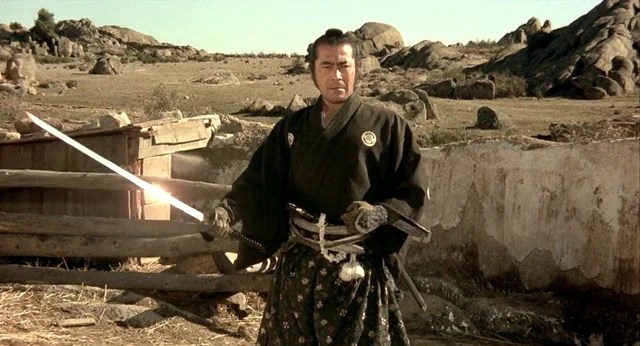
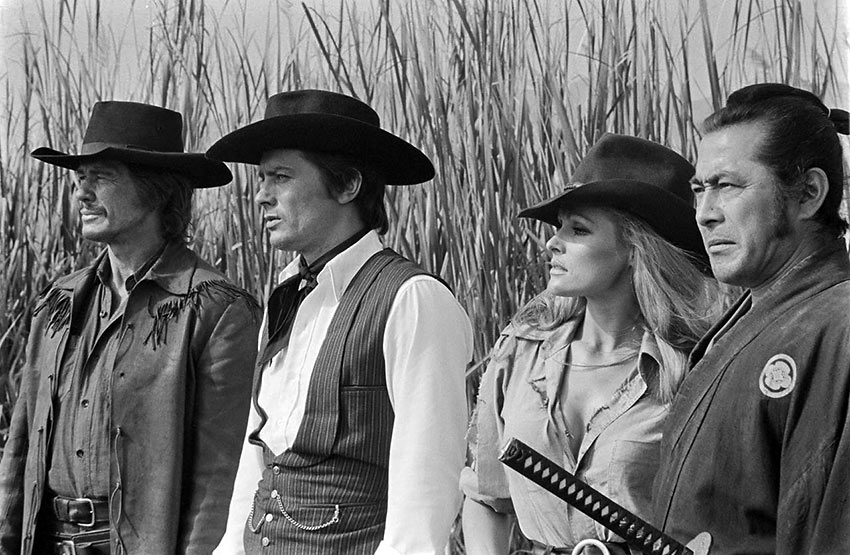
The underrated RED SUN (1971) – Charles Bronson & Toshiro Mifune in an East meets Western! 


Every so often I’m going to throw out a movie that I don’t think gets enough love, and that just doesn’t set right with me. Today’s movie is RED SUN. 

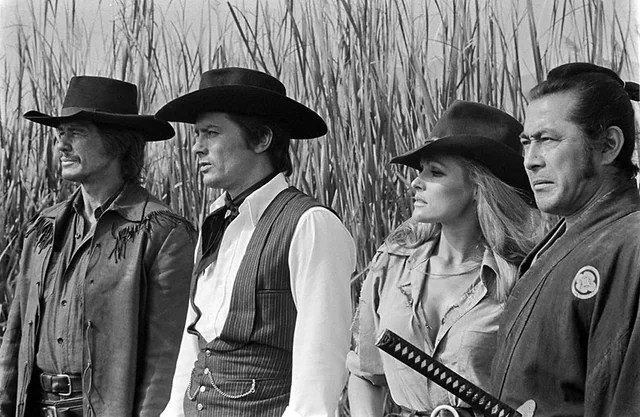
In RED SUN, two of the most macho actors in the history of world cinema team up in a western where train robber Link (Bronson) is forced to lead the honorable samurai Kuroda (Mifune) on a cross country trek to reclaim a stolen sword that was intended to be a gift from the Empire of Japan to the US President. If the two men can’t get the sword back in a week’s time, honor demands that the two men will lose their lives out of shame. Link isn’t really down with this plan, but he doesn’t have much of a choice in the matter due to the power and skill of Kuroda. Charles Bronson & Toshiro Mifune command the screen, with Charlie showing a likable sense of humor in his role as the bad / good cowboy. The two must find the evil Gauche (French superstar Alain Delon). Gauche is Bronson’s old train robbing partner who stole the sword and killed a samurai in the process, providing even more motivation for Kuroda. Add in Ursula Andress as a sexy woman who has a history with both Link and Gauche, and it doesn’t get much better than this!

RED SUN is not a perfect movie, but I couldn’t imagine anyone being disappointed by this enjoyable East meets Western that features true international superstars. In my book, it’s highly recommended!

Enjoy the trailer below:

Scenes That I Love: Alain Delon in Purple Noon


Alain Delon was left out of last week’s Oscar memorial montage but that doesn’t mean we can’t honor him here.  In today’s scene that I love, Alain Delon walks with style.  This is from the end of 1960’s Purple Noon, a French adaptation of Patricia Highsmith’s The Talented Mr. Ripley.

4 Shots From 4 Films – some of Brad’s “favorite westerns” edition!


4 Shots From 4 Films is just what it says it is, 4 shots from 4 of our favorite films. As opposed to the reviews and recaps that we usually post, 4 Shots From 4 Films lets the visuals do the talking!

I thought I’d try one of these “4 shots” posts. It’s really hard for me not to say anything, because each of these movies mean a lot to me, and the western remains my favorite genre even if I am a little stuck in the past. I’ll probably take a stab at a review of each of these films at some point. I hope you enjoy!

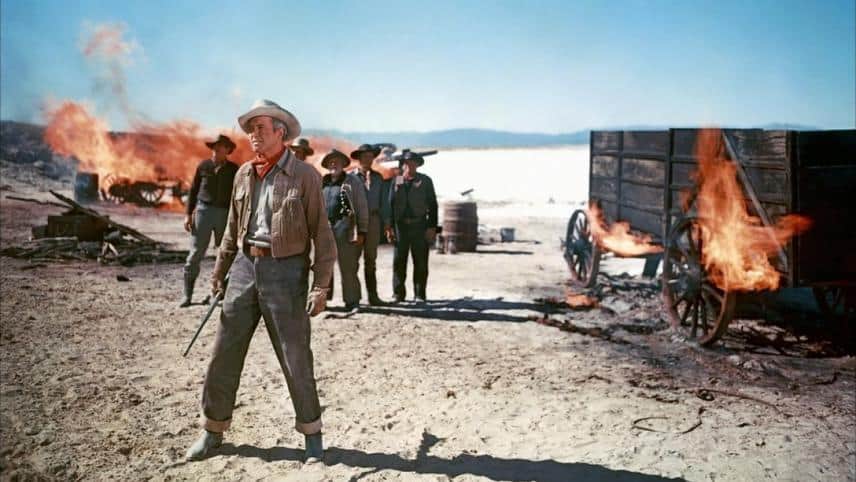
THE MAN FROM LARAMIE (1955)

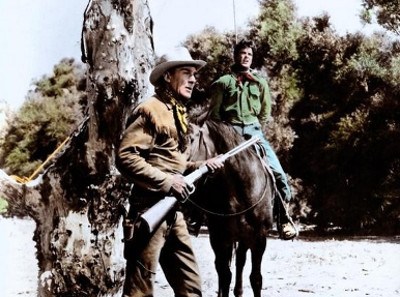
RIDE LONESOME (1959)

RED SUN (1971)

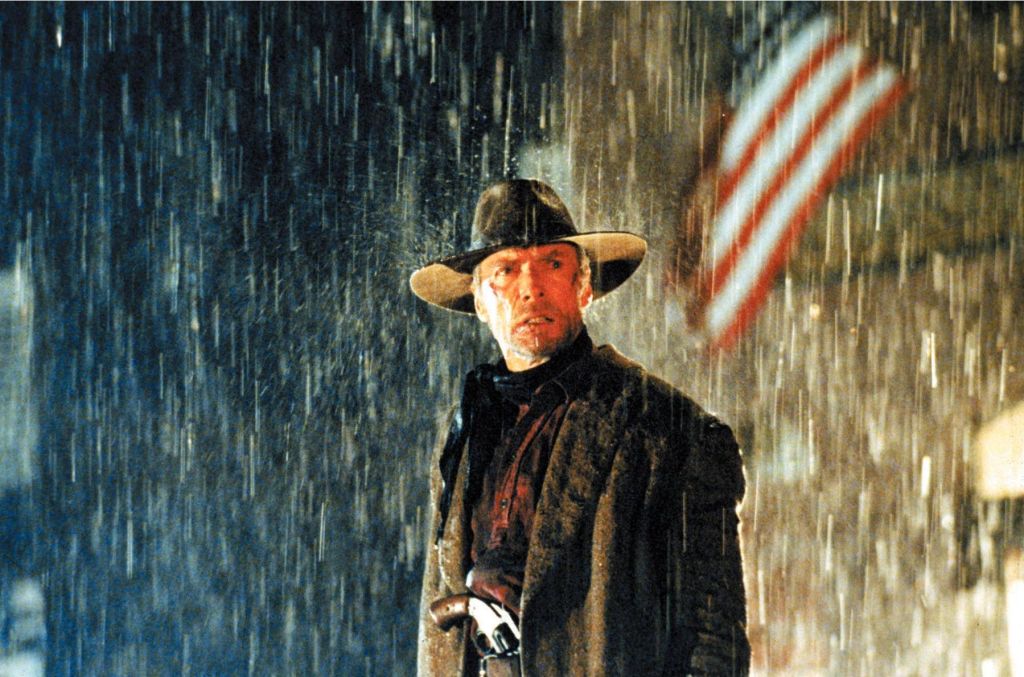
UNFORGIVEN (1992)

4 Shots From 4 Films: Assassin Edition


4 Shots From 4 Films is just what it says it is, 4 shots from 4 of our favorite films. As opposed to the reviews and recaps that we usually post, 4 Shots From 4 Films is all about letting the visuals do the talking.

4 Shots from 4 Assassin Films

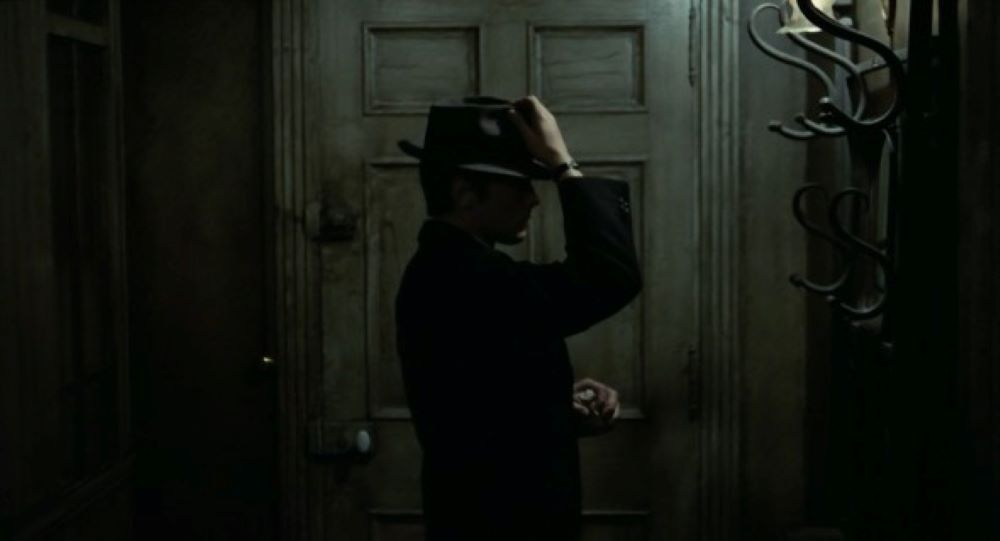
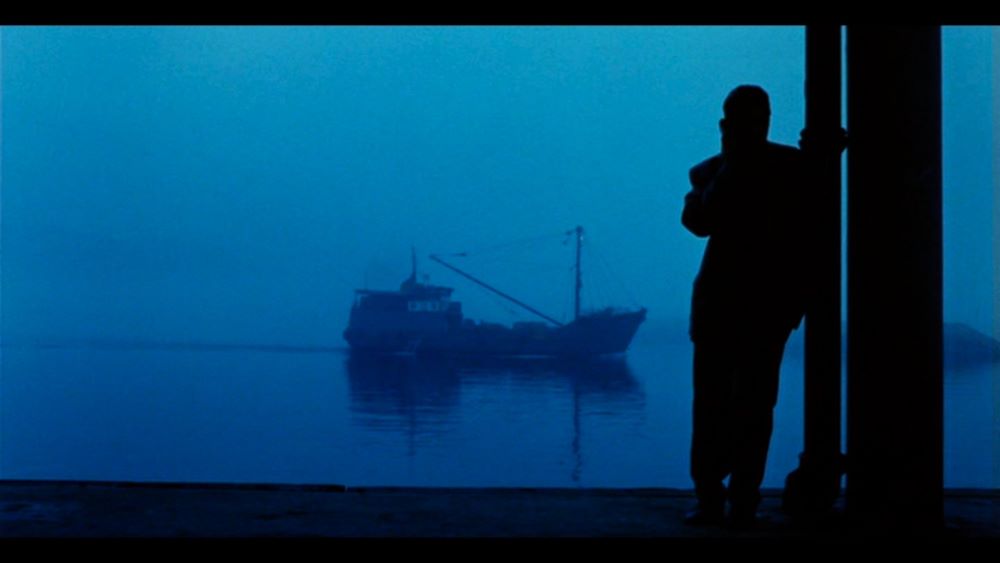
Le Samourai (1967, dir. by Jean-Pierre Melville, DP: Henri Decaë)
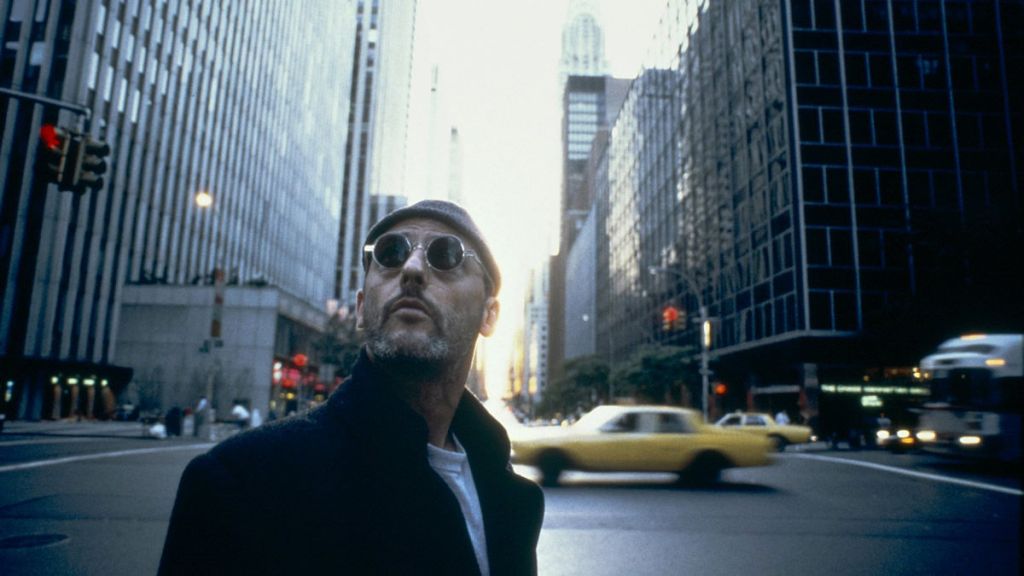
Léon: The Professional (1990, dir. by Luc Besson, DP: Thierry Arbogast)
The Killer (1989, dir. by John Woo, DP: Peter Pau and Wong Wing-Hang)
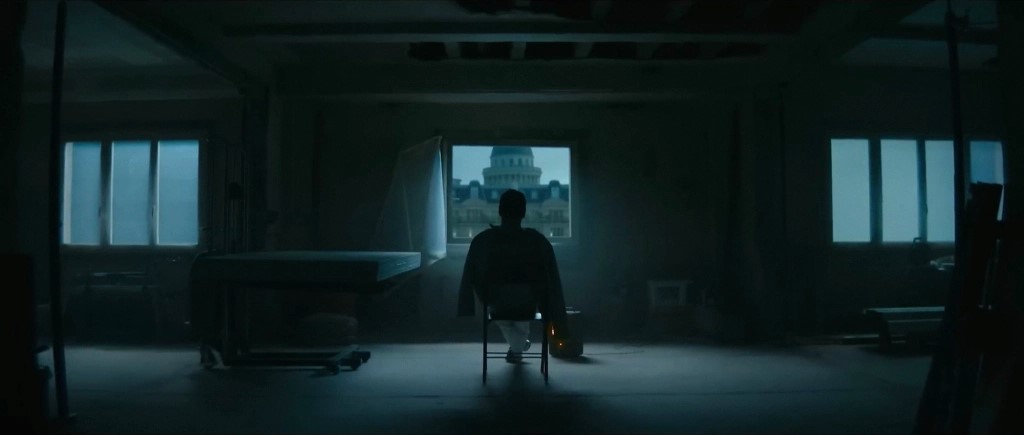
The Killer (2023, dir. by David Fincher, DP: Erik Messerschmidt)

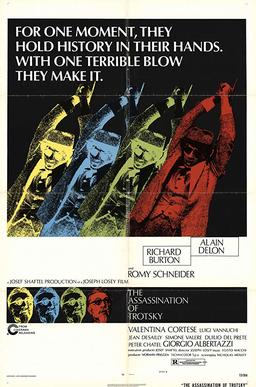
Icarus File No. 16: The Assassination of Trotsky (dir by Joseph Losey)


If you study the history of the International Left in the years immediately following the death of Lenin, it quickly becomes apparent that the era was defined by the rivalry between Joseph Stalin and Leon Trotsky.

Trotsky, the self-styled intellectual who was credited with forming the Red Army and who many felt was Lenin’s favorite, believed that he should succeed Lenin as the leader of Communist Russia.  Stalin, the ruthless nationalist who made up in brutality what he lacked in intelligence, disagreed.  Stalin outmaneuvered Trotsky, succeeding Lenin as the leader of the USSR and eventually kicking Trotsky out of the country. Trotsky would spend the rests of his life in exile, a hero to some and a pariah to others.  While Stalin starved his people and signed non-aggression pacts with Hitler, Trotsky called for worldwide revolution.  To Stalin, Trotsky was a nuisance whose continued existence ran the risk of making Stalin look weak.  When Trotsky was assassinated in Mexico in 1940, there was little doubt who had given the order.  After Totsky’s death, the American Communist Party, which had already been weakened by the signing of the non-aggression pact between Hitler and Stalin, was further divided into Stalinist and Trotskyite factions.

Ideologically, was there a huge difference between Stalin and Trotsky?  Many historians have suggested that Trotsky probably would have taken many of the same actions that Stalin took had Trotsky succeeded Lenin.  Indeed, the idea that Trotsky was somehow a force of benevolence has more to do with the circumstances of his assassination than anything that Trotsky either said or did.  In the end, the main difference between Stalin and Trotsky seemed to be Trotsky was a good deal more charismatic than Stalin.  Unlike Trotsky, Stalin couldn’t tell a joke.  However, Stalin could order his enemies killed whenever he felt like it and some people definitely found that type of power to be appealing.  Trotsky could write essays.  Stalin could kill Trotsky.

First released in 1972, The Assassination of Trotsky is a cinematic recreation of the events leading to the death of Leon Trotsky in Mexico.  French actor Alain Delon plays Frank Jacson, the Spanish communist who was tasked with infiltrating Trotsky’s inner circle and assassinating him with a pickaxe.  Welsh actor Richard Burton plays the Russian Trotsky, giving long-winded monologues about world revolution.  Italian Valentina Cortese also plays a Russian, in this case Trotsky’s wife, Natalia.  And finally, French actress Romy Schneider plays Gita Samuels, who is based on Jacson’s American girlfriend.  This international cast was directed by Joseph Losey, an American director who joined the Communist Party in 1946 and who moved to Europe during the McCarthy era.

Losey was an interesting director.  Though his first American feature film was the anti-war The Boy With Green Hair, the majority of his American films were on the pulpy side.  Not surprisingly, his European films were far more open in their politics.  Losey directed his share of undeniable masterpieces, like The Servant, Accident, and The Go-Between.  At the same time, he also directed his share of misfires, the majority of which were bad in the way that only a bad film directed by a good director can be.  The same director who gave the world The Go-Between was also responsible for Boom!

And then there’s The Assassination of Trotsky.  It’s a bit of an odd and rather uneven film.  Alain Delon’s performance as the neurotic assassin holds up well and some of his scenes of Romy Schneider have a true erotic charge to them.  The scenes of Delon wandering around Mexico with his eyes hidden behind his dark glasses may not add up too much but they do serve as a reminder that Delon was an actor who could make almost any scene feel stylish.

But then we have Richard Burton, looking like Colonel Sanders and not even bothering to disguise his Welsh accent while playing one of the most prominent Russians of the early 20th Century.  The film features many lengthy monologues from Trotsky, all of which Burton delivers in a style that is very theatrical but also devoid of any real meaning.  As played by Burton, Trotsky comes across as being a pompous phony, a man who loudly calls for world revolution while hiding out in his secure Mexican villa.  Now, for all I know, Trotsky could have been a pompous phony.  He certainly would not have been the first or last communist to demand the proletariat fight while he remained secure in a gated community.  The problem is that the film wants us to admire Trotsky and to feel that the world was robbed of a great man when Jacson drove that pickaxe into his head.  That’s not the impression that one gets from watching Burton’s performance.  If anything, Burton’s overacting during the assassination scene will likely inspire more laughs than tears.

The Assassination of Trotsky is one of those films that regularly appears on lists of the worst ever made.  I feel that’s a bit extreme.  The film doesn’t work but Alain Delon was always an intriguing screen presence.  (Interestingly enough, Delon himself was very much not a supporter of communism or the Left in general.)  The film fails as a tribute to Trotsky but it does make one appreciate Alain Delon.

Previous Icarus Files:

  1. Cloud Atlas
  2. Maximum Overdrive
  3. Glass
  4. Captive State
  5. Mother!
  6. The Man Who Killed Don Quixote
  7. Last Days
  8. Plan 9 From Outer Space
  9. The Last Movie
  10. 88
  11. The Bonfire of the Vanities
  12. Birdemic
  13. Birdemic 2: The Resurrection 
  14. Last Exit To Brooklyn
  15. Glen or Glenda

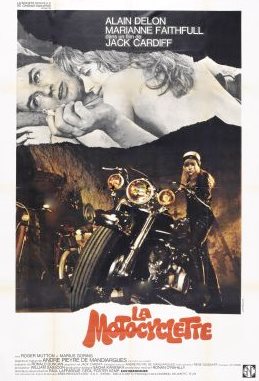
Film Review: The Girl On A Motorcycle (dir by Jack Cardiff)


Who would have guessed that a film from 1968, starring Marianne Faithfull and Alain Delon, would be a little bit pretentious?  I’m as shocked, as anyone.

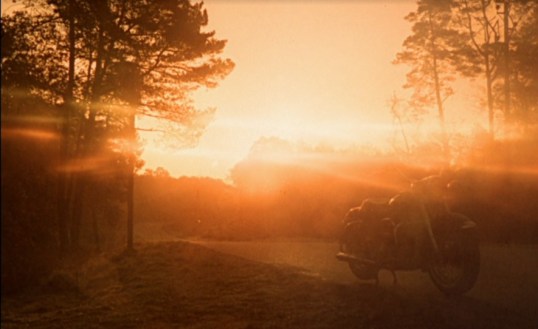
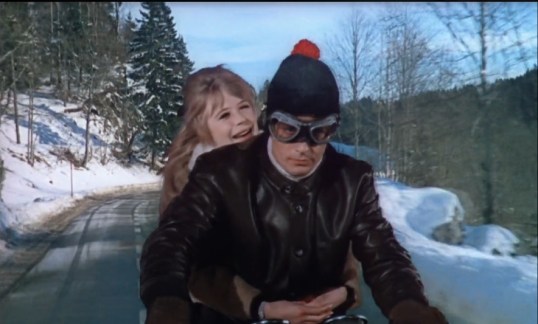
The Girl On A Motorcycle is Rebecca (Marianne Faithfull), the wife of Raymond (Roger Mutton).  One day, Rebecca wakes up, puts on a black leather jumpsuit, and gets on her motorcycle.  Abandoning her husband and her home, she rides through France and eventually reaches Germany.  Along the way, she thinks about how the motorcycle represents freedom and how no one is truly free unless they’re doing what they want to do.  We hear her inner monologue and it’s hard not to notice that, for someone riding a motorcycle across two countries, she often doesn’t seem to be paying that much attention to the road.  Rebecca has more important things to think about, like free love and Vietnam.  She watches as a transport of soldiers drive past her and she silently tells them not to look at her.  She drives through a city and starts to laugh while shouting “Bastard!” at the top of her lungs.  Pedestrians, all of whom are unhappy and middle-aged, stare at her in shock.

Along the way, Rebecca thinks about her life.  She’s married to Roger, who is a mild-mannered teacher who is so ridiculed by his students that even the local gas station attendant mentions how little respect anyone has for him.  However, Rebecca is haunted by memories of Daniel (Alain Delon), who is very, very French.

How French? This French.

Rebecca first met Daniel while working in her father’s bookstore and they had a passionate affair, despite the fact that Rebecca was already engaged to boring old Raymond.  Daniel even taught her how to ride a motorcycle.  When Rebecca got married, Daniel sent her the motorcycle that she is now riding as a wedding gift.  Rebecca is racing through Germany to be reunited Daniel, though it’s never quite clear if she’s truly leaving her husband or if she just wants to have a quick tryst before returning home.  Will Rebecca make it or will the unpredictable whims of fate intervene?

The Girl on a Motorcycle was directed by Jack Cardiff, a veteran cinematographer who first found acclaim working with directors like Michael Powell, Alfred Hitchcock, and John Huston.  Not surprisingly, the film is full of striking shots.  Unfortunately, Cardiff was 54 when he directed The Girl On A Motorcycle and he had been involved in the film industry since he was a child.  Watching the film, one gets the feeling that Cardiff was trying a bit too had to appeal to a young counterculture audience that he didn’t really have much of a natural affinity for.  As such, Cardiff drags out every psychedelic trick in the book.  Do you want excessive use of the zoom lens, ludicrously skewed camera angles, pointlessly surreal flashbacks, portentous narration, extreme close-ups, retina-burning solarization effects, and an ending that feels like it was stolen from Godard?  The Girl On A Motorcycle has all of them!  For every impressive shot of Rebecca riding on her motorcycle, there are several more shots that feel as if they were filmed in migrainevision.

There’s also quite a few shots that make remarkably poor use of rear projection.

The Girl On A Motorcycle is definitely a film of its time.  To give credit where credit is due, Alain Delon is handsome and charismatic as the enigmatic Daniel.  The viewer gets the feeling that Rebecca is probably idealizing him and assuming that he has more depth than he actually does but it’s still easy to understand why she would not be able to resist the temptation.  Marianne Faithfull seems a bit lost as Rebecca.  She smiles a lot and she laughs a lot but her inner monologue is flatly delivered and, as a result, the character comes across as being vapid.  The ideal Rebecca probably would have been a young Helen Mirren.

As it is, The Girl On A Motorcycle is a time capsule of the 60s aesthetic (albeit an aesthetic translated through the lens of a director who seems to be trying too hard to remain relevant).  Due to a few flashes of nudity and some sex scenes that are so psychedelic that they’re nearly impossible to watch, Girl On A Motorcycle was the first film to be slapped with an X rating in the United States.  It seems rather tame today.

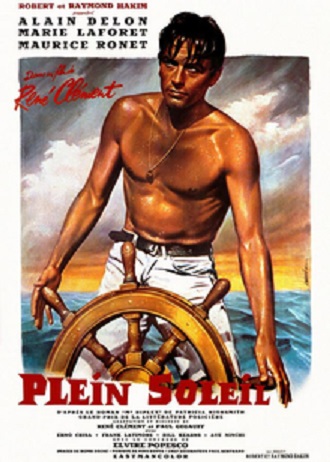
International Film Review: Purple Noon (dir by Rene Clement)


Early on in the 1960 French film, Purple Noon, there’s a scene in which a young American con artist named Tom Ripley (Alain Delon) looks at his reflection in a mirror, leans forward, and kisses it.

What are we to make of this scene?  The easiest assumption would be to say that Ripley is a narcissist and certainly, there is some truth to that.  Delon was 25 when he appeared in Purple Noon and the famously handsome actor was probably never better-looking than he was at that time.  As well, Delon was an actor who brought, at the very least, a hint of narcissism to every role that he played.  That was a part of his appeal.  He looked like an angel but he moved like the devil and, when the camera focused on his face, it was easy to see that there were less than pure thoughts brewing underneath the beautiful surface.

However, in Purple Noon, there’s more to that mirror kiss than just Tom Ripley (or, for that matter, Alain Delon) admiring his own reflection.  Instead, Tom has dressed up in the clothes of Philippe Greenleaf (Maurice Ronet) and, when he speaks to his reflection, he speaks in an imitation of Philippe’s voice.  He addresses his words not to his reflection but to Philippe’s girlfriend, Marge Duval (Marie Lefort).  When he kisses the mirror, is he kissing himself, Marg, Philippe, or himself as Philippe?  Perhaps every answer is correct.

Tom Ripley is a young man who doesn’t appear to have much going on inside of him but who has definitely learned how to fake it enough to get by.  He went to school with Philippe, a wealthy and casually cruel heir to a fortune. Because Philippe is currently living a rather decadent life in Europe, Tom has been hired by Philippe’s father to bring his son back to San Francisco.  Tom, who were told grew up without money and who Philippe’s father used to dislike because he felt that Tom’s manners were too “common,” is happy to finally be a part of Philippe’s world and, when we first see them together, it appears as if Philippe is happy to have Tom as a part of his life as well.  We watch as they give money to a blind man and then buy his cane.  Though Philippe is the one who proceeds to walk around with the cane while pretending to be blind, it’s hard not to notice that Tom is the one who suggested the idea to him.  For Philippe, deception is a game whereas, for Tom, it’s a way of life.

As the opening scene of the film suggests, things are not always how they seem.  It quickly becomes apparent that Philippe’s charm and money hides a cruel and sadistic streak and, when he grows bored with Tom’s sycophantic ways and Tom’s constant requests for money, Philippe decides to send him away.  Unfortunately, for Philippe, Tom is not ready to leave and he’s certainly not ready to abandon Marge, though it’s left to the viewer to decide if Tom is truly attracted to Marge or if he’s just attracted to the fact that she’s a part of Philippe’s world.  Because Tom has no identity, it is disarmingly easy for him to slip into a new one, whether it means becoming a friend, a criminal, a loyal employee, or even Philippe himself.  During one eventful afternoon, Tom and Philippe’s relationship comes to a violent conclusion while the two of them are on a yacht that’s floating in almost indescribably beautiful sea of water.

If this all sounds a bit familiar, it may be because, while Purple Noon may have been the first adaptation of Patricia Highsmith’s classic novel The Talented Mr. Ripley, it was not the last.  In 1999, Matt Damon starred in The Talented Mr. Ripley, another adaptation of Highsmith’s classic thriller.  Directed by Anthony Minghella, The Talented Mr. Ripley is a bit more faithful to its source material than Purple Noon and yet I have to say that, even with all of the liberties that it takes to Highsmith’s original story, I actually prefer Purple Noon.  They’re both good films but Purple Noon is the one that sticks in the viewer’s mind.

While Matt Damon may be the better actor of the two, Alain Delon was the better Mr. Ripley.  Delon’s natural lack of expressiveness may have often made him seem stiff and remote as a performer but it is ideal for a character like Tom Ripley, one who only exists on the surface.  Whereas Damon’s Ripley is obviously unstable from the minute he makes his first appearance, Delon’s Ripley has perfected a sort of likable blandess.  The viewer can believe that Philippe and Marge would want to spend time with Delon’s Ripley while also understanding why Philippe would quickly grow bored with him and his superficial ways.  Damon’s Ripley realizes that his crimes have determined his future whereas Delon lives day-to-day as an existential con artist, improvising his way from one crime to another.  Whereas the second adaptation was a big and glamorous production, Purple Noon takes a far grittier approach.  Director Rene Clement emphasizes the shadows and the ominous atmosphere that dominates Ripley’s world.

Purple Noon does slightly alter Patricia Highsmith’s original ending, something that Highsmith was reportedly not at all happy about.  Highsmith reportedly felt that Alain Delon masterfully captured Ripley’s character while complaining that the film’s ending was a concession to “public morality.”  (Interestingly, when Wim Wenders made his own film about Tom Ripley, The American Friend, Highsmith had the opposite reaction, appreciating that the film retained her downbeat ending while complaining that Dennis Hopper’s performance as Ripley was not true to the character she had created.)  One can understand and even agree with Highsmith’s objections while also appreciating that the Purple Noon‘s ending does actually work quite well for the story that’s been told.  For all of his cleverness, not even Tom Ripley can escape the randomness of fate.

Short Horror Film Review: Spirits of the Dead — William Wilson (dir by Louis Malle)


Directed by Louis Malle, William Wilson is the second part of the 1968 anthology film, Spirits of the Dead.  All three of the stories were adapted from the work of Edgar Allan Poe.

William Wilson is one of Poe’s best known and most highly regarded stories.  It’s also one that has been adapted into several films, perhaps most famously as the silent German film Student of Prague.  So, how did Louis Malle do when it came time to direct his own version?

Malle’s William Wilson opens with the title character (played by Alain Delon) running through the cobblestone streets of a gray city.  As we shall soon learn, the time is the early 19th century.  William Wilson is an officer in the Austrian army, assigned to an occupied Italian village.  Wilson, with blood on his head, rushes into a church, ducks into a confessional, and tells the priest that he has just murdered someone.

Wilson goes on to tell the story of not just his life but also the life of his Doppelganger, who is also named William Wilson and who is just as virtuous as the first Wilson is corrupt.  All of his life, the first William Wilson has just wanted to be evil in peace and every time, the Doppelganger has shown up and ruined things.  The Doppelganger first showed up when Wilson was a young boy and he’s proceeded to always pop up wherever Wilson may happen to go.  When the first Wilson was enrolled in medical school and wanted to dissect a village girl, his Doppelganger had to show up and stop things.  When the first Wilson beat the famous courtesan, Giuseppina (Brigitte Bardot), at cards and won the right to whip her, the Doppelganger had to show up and let everyone know that Wilson had cheated.  Is the Doppelganger real or is he just a figment of Wilson’s imagination?  Is Wilson just evil or is he crazy as well?  Wilson isn’t sure but he does know that a well-placed dagger is one way to determine the truth…

Reportedly, Malle agreed to direct William Wilson because he was trying to raise the money to direct a far more personal film, Murmer of the Heart.  As such, Malle didn’t have a personal stake in William Wilson and made several compromises to keep the film’s producer happy.  As a result, William Wilson often doesn’t make much sense.  For instance, how does Wilson go from being merely decadent to suddenly trying to dissect a living human being?  Though the idea of Wilson cheating at cards is taken straight from Poe’s original story, Brigitte Bardot’s lengthy cameo still feels out of place.

That said, Malle was a good enough director that, even if he was detached from the end result, his segment of Spirits of the Dead is always watchable.  The film’s best moments are the ones that simply study Alain Delon’s fascinating face.  Delon feels miscast as the virtuous Doppelganger (who, let’s just be honest, is kind of a prig) but he is dangerously compelling at William Wilson.  The coldness of his eyes tells us everything that we need to know about who William Wilson is.

William Wilson is technically better than the 1st part of Spirits of the Dead, Roger Vadim’s Metzengerstein, but it’s never as much fun.