For this week, let’s jump ahead one year to 1986. According to the Academy, the five best films of the year were:
1) Children of a Lesser God, an adaptation of play about an angry deaf girl and the teacher who falls in love with her,
2) Hannah and Her Sisters, a Woody Allen film about three sisters and the neurotic people they know,
3) The Mission, a film about Jesuit missionaries in South America that also won the Palme d’Or at Cannes,
4) Room With A View, James Ivory’s super romantic adaptation of E.M. Forster’s novel,
and finally, the winner,
5) Platoon, Oliver Stone’s autobiographical film about the Viet Nam war.
Unlike Out of Africa, Platoon has remained a fairly respected winner. Still, was Platoon actually the best film of 1986? If I had been a member of the Academy back in 1986, I would have been torn between A Room With A View and Hannah and Her Sisters with my final vote going to Room With A View. How about you?
Now, here comes the fun part. Let’s say that Platoon turned out to be a disaster. Let’s say that Room With A View never made it over to American theaters and maybe Woody Allen decided to retire early. Let’s say that none of the best picture nominees had been eligible to be nominated. Which five films would have nominated in their place?
You can vote for up to five films and yes, write-ins are accepted!
(I voted for Blue Velvet, Ferris Bueller’s Day Off, Pretty In Pink, Betty Blue, and Something Wild.)
This week, let’s go back to the year of my birth, 1985. According to the Motion Picture Academy, the five best films of the year were:
1) Steven Spielberg’s controversial adaptation of Alice Walker’s The Color Purple,
2) Witness, a film about a tough cop (Harrison Ford) who hides out with the Amish,
3) Kiss of the Spider Woman, one of the first independent films to ever be nominated for best picture,
4) Prizzi’s Honor, a darker than dark Mafia comedy from John Huston that starred Jack Nicholson,
and finally,
5) Out of the Africa, the film that was eventually named best picture of 1985.
Despite its victory at the Oscars, Out of Africa hasn’t aged well. If any year seems to be worthy of a little second guessing, it would certainly be 1985. If you were a member of the Academy in 1985, which nominee would you have voted for? Personally, I would have voted for Witness. How about you?
Now, here comes the fun part. Let’s say that Out of Africa wasn’t released in 1985. Let’s say that Steven Spielberg never made The Color of Purple and that Jack Nicholson refused to star in Prizzi’s Honor. Let’s say that none of the five nominated film had been eligible in 1985. Which films would you have nominated in their place?
You can vote for five of the film listed below and yes, we do accept write-ins!
(Incidentally, I voted for Brazil, The Breakfast Club, To Live and Die In L.A., The Purple Rose of Cairo, and Insignificance.)
Here are the official winners at the 2013 Cannes Film Festival:
Palme d’Or – Blue Is the Warmest Colour by Abdellatif Kechiche Honorary Palme d’Or – Adèle Exarchopoulos and Léa Seydoux for Blue Is the Warmest Colour Grand Prix – Inside Llewyn Davis by Joel & Ethan Coen Best Director – Amat Escalante for Heli Best Screenplay – Jia Zhangke for A Touch of Sin Best Actress – Bérénice Bejo for The Past Best Actor – Bruce Dern for Nebraska Jury Prize – Like Father, Like Son by Hirokazu Koreeda
Both The Tree of Life and Amour were nominated for best picture after winning the Palme d’Or and, in fact, it could be argued that neither one of those films would have had the momentum necessary to score an Oscar nod if they hadn’t first won at Cannes. It’ll be interesting to see if this trend will continue with Blue Is The Warmest Colour.
As for Bruce Dern — a Hollywood veteran who has appeared in a lot of iconic films but who has never won an Oscar — I have a feeling that he’ll be winning a lot of other awards before the Oscar season has ended.
Back in 2011, I experimented with something that I like to call “Let’s second guess the Academy.” Basically, we take a look at past Oscar contestants and we ask ourselves if 1) the Academy made the right choice and 2) what else would we have nominated if we had all the power. It was always a lot of fun (and occasionally surprising) to see which films ended up getting the most love in hindsight.
So, I figured why not revive the tradition by considering the race for best picture of 2009. This was the first contest, since the 1943, to feature 10 nominees. At the time, most critics felt that the race was between Avatar and The Hurt Locker. Personally, as happy as I was to see a woman finally win best director, I thought The Hurt Locker was overrated and I hated Avatar. Which of the 10 nominated films would I have voted for? Well, as much as I loved both District 9 and A Serious Man, I would have voted for An Education. How about you?
Now, here comes the fun part. Let’s say that James Cameron never made Avatar. Let’s say that An Education never made it over from the UK. And maybe The Hurt Locker never got a distributor and just remained an independent film that occasionally popped up on the program at various film festivals. In other words, let’s say that none of the 10 best picture nominees for 2009 had been available to be nominated. Which ten films would have nominated in their place?
You can vote for up to 10 of the films listed below and yes, we do accept write-ins!
Personally, I voted for: Adventureland, The Girlfriend Experience, Moon, (500) Days of Summer, The Informant!, Bright Star, Where The Wild Things Are, The Fantastic Mr. Fox, The Bad Lieutenant: Port of Call New Orleans, and Me And Orson Welles.
Last night, I had a little party. Me, my boyfriend, my sister, my best friend, and my 7,000 followers on twitter got together to watch the 85th Annual Academy Awards.
Why Were We Watching It?
If you love movies then the Oscars are like the Super Bowl. Seriously, how could I not watch it?
What Was It About?
It was about the best of times and the worst of times. It was about self-promotion, self-congratulation, and Michelle Obama. It was about whether or not Seth McFarlane would self-destruct. It was about rooting for the underdog and checking out who was wearing what. It was the Oscars and, for 210 minutes, the nation sat entranced.
What Worked?
Brave won the Oscar for Best Animated Feature Film! Seriously, that one award pretty much made the entire night for me. Actually, there were a lot of good winners last night: Ang Lee for Best Director, Christoph Waltz for Best Supporting Actor, Paperman for Best Animated Short Film, and Jennifer Lawrence for Best Actress. I was especially happy to see both Lawrence and Anne Hathaway win because, for whatever reason, these two actresses have recently had to deal with some of the most petty criticism that I’ve ever seen.
I also appreciated the fact that Quentin Tarantino, upon winning Best Original Screenplay, managed to spend his entire speech basically patting himself on the back while pretending to thank his cast. It may not be remembered as the most classy speech in the history of the Oscars but it definitely served to remind us of why we love Quentin.
As host, Seth McFarlane was such a mixed bag that I’ve included him under both things that worked and things that didn’t work. McFarlane started out surprisingly strong. Unlike a lot of female critics, I wasn’t offended by The Boob Song and I thought it was actually a pretty clever parody of McFarlane’s public image. (The joke was clearly meant to be on McFarlane and not the actresses mentioned in the song.) Unfortunately, as the show went on, McFarlane occasionally seemed to be determined to live up to that parody.
Oddly enough, I really enjoyed Lincoln when I saw it but yet I still found myself happy to see it lose in so many categories. I think it’s probably because Lincoln was so aggressively hyped and so many self-important Oscar pundits (like Sasha Stone) declared that Lincoln was the best film of the year before they had even seen it. It was hard not to resent the condescending tone that was taken by many of Lincoln‘s online supporters. Plus, it’s always fun to root for the underdog. It’s hard not to suspect that if Ben Affleck had actually been nominated for Best Director then Steven Spielberg and his film might have actually won big last night. But by snubbing Affleck, the Academy cast Steven Spielberg and Lincoln in the role of Goliath.
On one final petty note, I was happy to see Jennifer Lawrence win because I know her victory probably annoyed the editors of Awards Daily.
What Did Not Work?
I could have done without Michelle Obama showing up to present Best Picture. Yes, I know that Hollywood loves the Obamas but seriously, it felt rather Orwellian to have the First Lady suddenly pop up on TV and tell us why movies are so important. The fact that she appeared with a few random soldiers behind her just added to the creepy vibe.
The much hyped Bond tribute turned out to be a bit of a bust, didn’t it?
The audience, which never seemed to be that excited about the prospect of Seth McFarlane in the first place, seemed to turn more and more against him as the show progressed. As a result, once the Oscars hit the 120 minute mark, Seth started to come across as being a bit desperate to get a reaction — any reaction — from the audience.
Daniel Day-Lewis gave a good acceptance speech and all but surely I’m not the only viewer who was curious to hear what Joaquin Phoenix would have said if he had won.
In the end, the show just felt a little bit too bland for my tastes. Unlike last year, there was nothing truly unexpected. There were no hints of eccentricity. No one showed up wearing anything awful. Nobody made a fool of themselves while accepting their Oscar. In short, the show was just forgettable.
“Oh my God! Just like me!” Moments
When Jennifer Lawrence fell on the way to accept her award, that was definitely an “Oh my God! Just like me!” moment. Seriously, I loved her dress but, from the minute I saw it, I knew she was going to have a hard time getting up to the podium.
Lessons Learned
Award shows are a lot more fun when things go wrong.
I stayed up way too late last night but it was totally worth it because I was watching a film from 1966, The Oscar.
Among those of us who love bad and campy movies from the 50s and 60s, The Oscar is a legendary film. It has a reputation for being one of best so bad-its-good-films ever made. The Oscar is a film that I’ve read about in several books but, until last night, I had never gotten a chance to actually see it. When I saw that the film was going to be on last night, I said “Sleep be damned!” and I stayed up and watched. What other choice did I have?
The Oscar takes place in a world where women are “dames” and men are “fellas” and everyone acts as if they’re a character in a Rat Pack-themed fanfic. One look at Frankie Fane (played by Stephen Boyd) and you know he’s the type of guy who snaps his fingers when he walks and probably uses pig Latin when he flirts. He’s one cool cat and as the film begins, he’s been nominated for an Academy Award for Best Actor.
The film begins at the Oscars. Frankie sits out in the audience, surrounded by Hollywood royalty and nervously waiting for the envelope to be opened. The camera pans over to Frankie’s personal manager, Hymie Kelley. Hymie stares bitterly at his former friend and suddenly, we hear his thoughts and do they ever let us know what type of movie we’re about to see.
As Hymie himself puts it:
“You finally made it, Frankie! Oscar night! And here you sit, on top of a glass mountain called “success.” You’re one of the chosen five, and the whole town’s holding its breath to see who won it. It’s been quite a climb, hasn’t it, Frankie? Down at the bottom, scuffling for dimes in those smokers, all the way to the top. Magic Hollywood! Ever think about it? I do, friend Frankie, I do…”
Hymie, incidentally, is played by the singer Tony Bennett. This was Bennett’s first dramatic film role and it was also his last. Whatever talent or magnetism Bennett may have had as a singer, it didn’t translate into screen presence. Bennett goes through the entire film looking embarrassed but who can blame him when the script calls for him to constantly tell Frankie that, “You lie down with pigs, you stand up smelling like garbage…”
As we discover through the use of flashback, Frankie has had to lay down with a lot of pigs to get his chance at winning an Oscar. After starting out his career working at sleazy clubs, Frankie, Hymie, and Frankie’s stripper girlfriend (Jill St. John) find themselves in New York. Frankie dumps his girlfriend (unaware that she’s pregnant with his child) after he meets artist Elke Sommer at a “swinging party.”
“Are you a tourist or a native?” Frankie asks her.
“Take one from column A and one from column B. You get an egg roll either way,” Sommer replies.
No wonder Frankie tells her, “You make my head hurt with all that poetry.”
Eventually, Frankie is discovered by a talent agent who takes him to see studio mogul Joseph Cotten (who went from Citizen Kane, The Magnificent Ambersons, and Third Man to this). Cotten is so impressed with Frankie that he says, “Once in a while, you bring me meat like this. It all has different names: prime rib of Gloria, shoulder cut of Johnny. MEAT!”
With the help of savvy talent agent Milton Berle, Frankie becomes a film star but he’s still a total heel who cheats on Sommer and takes advantage of Hymie’s loyalty. When Frankie gets nominated for an Oscar, he hires a sleazy private investigator (Ernest Borgnine, of course) to leak a story about Frankie’s criminal past. Frankie assumes that one of his fellow nominees will be blamed for the leak and that he’ll be able to ride a wave of sympathy to victory.
And who are Frankie’s fellow nominees? We only learn the identity of three of them – Frank Sinatra, Richard Burton, and Burt Lancaster. We never find out what movie Sinatra was nominated for but we’re told that Burton was nominated for The Grapes of Winter (which, I’m going to assume, was a film version of a Shakespeare play about Tom Joad) while Lancaster was nominated for his amazing performance in The Spanish Armada. Doesn’t that sound like an amazing film?
Oh, how to describe the delirious experience of watching The Oscar? In many ways, it is a truly terrible movie but it’s fun in the way that only a “racy” film from the mid-60s can be. Nobody plays his or her role with anything resembling subtleness. Instead, everyone spends the entire film yelling, screaming, and gritting their teeth while flaring their nostrils. Everyone, that is, except for Tony Bennett who gives a performance that has a definite community theater feel to it. Even better is the dialogue. People in this film don’t just say their lines – they exclaim them. If you’ve ever wanted to spend two hours in a world where every sentence ends with an exclamation point, watch The Oscar.
For a film that was apparently meant to be something of a love letter to the Academy, The Oscar was only nominated for two Oscars. It received nominations for Best Art Design and Best Costume Design. While I had a hard time seeing what was so impressive about the film’s art design (in the world of The Oscar, Hollywood has a definite Ikea feel to it), the costumes were fairly impressive in a tacky, 1966 type of way.
Finally, I think it’s time that somebody remake The Oscar. David Fincher can direct it, Aaron Sorkin can write the script, Jessie Eisenberg can play Frankie Fane, and Justin Timberlake would make for an adorable Hymie Kelley. For the supporting roles, I think Billy Crystal would be a natural for Milton Berle’s role and perhaps Philip Baker Hall could step into the shoes of Joseph Cotten. Perhaps veteran film blogger and self-described very important person Sasha Stone could make her film debut in Ernest Borgnine’s role.
Today is the last day for the members of the Academy to vote for the 86th Annual Academy Awards. With that in mind, here are my predictions as to what’s going to win next Sunday. Please note: this is not necessarily who I think should win.
Best Picture — Argo
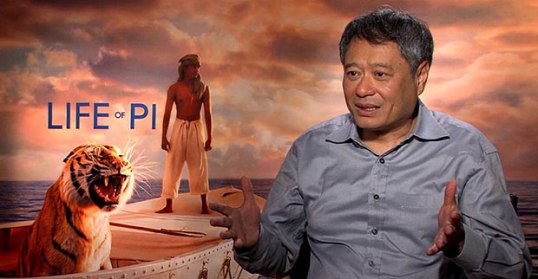
Best Director — Ang Lee for Life of Pi
Best Actor — Daniel Day-Lewis in Lincoln
Best Actress — Jennifer Lawrence in Silver Linings Playbook
Best Supporting Actor — Alan Arkin in Argo
Best Supporting Actress — Anne Hathaway in Les Miserables
Best Adapted Screenplay — Argo
Best Original Screenplay — Amour
Best Foreign Language Film — Amour
Best Animated Feature — Frankenweenie
Best Documentary Feature — Searching For Sugar Man
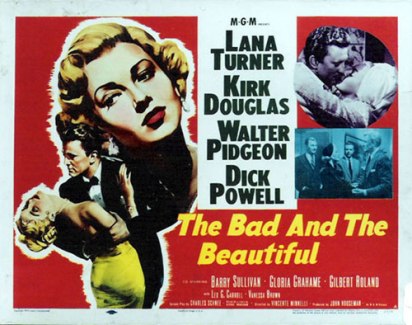
Released in 1952 and directed by Vincente Minnelli, The Bad and the Beautiful is arguably one of the greatest films ever made. It’s certainly one of my favorite films.
Perhaps appropriately, The Bad and the Beautiful is a film about the movies.
Jonathan Shields (played in a truly amazing performance by Kirk Douglas) is a legendary film producer. He’s won Oscars, he’s got a reputation for being a genius, and, as the film begins, he is one of the most hated men in Hollywood. It’s been years since Shields made a succesful film but he thinks that he’s finally come up with a movie that can put him back on top. His assistant, Harry Pebbel (played with a weary dignity by Walter Pidgeon), invites Hollywood’s best director, actress, and screenwriter to a meeting and he proceeds to spend the rest of the film trying to convince them to help Jonathan make his comeback.
The only problem is that all three of them hate Jonathan Shields and have sworn that they’ll never work with him again. Through the use of flashbacks, we see how each of them first met Jonathan and how each eventually came to despise him.
Director Fred Amiel (Barry Sullivan) first met Jonathan when Jonathan hired him to pretend to be a mourner at his father’s funeral. With Jonathan’s help, Fred moves up from directing B-movies to finally getting a chance to make his dream movie, an adaptation of a believably pretentious novel called The Far Off Mountain. With Jonathan’s help, Fred even gets womanizing film star Gaucho Ribera (a hilariously vain Gilbert Roland) to agree to star in Fred’s movie. Jonathan also introduces Fred to Georgia (Lana Turner), the alcoholic daughter of Jonathan’s mentor.
Jonathan eventually makes Georgia into a film star and Georgia falls in love with him. Of all the major actresses of the 1950s, Lana Turner seems to get the least amount of respect from film historians. She’s more remembered today as the epitome of glamour and scandal but, in The Bad and the Beautiful, Turner gives one of the best performances of her career. In her best scene, Georgia has a nervous breakdown while driving in the rain and, for those few minutes, you forget that you’re watching an iconic film star. Instead, you’re just amazed by the performance.
Finally, the screenwriter is James Lee Bartlow (Dick Powell), an intellectual novelist who is brought to Hollywood by Jonathan. While the reluctant Bartlow finds himself being seduced by J0nathan, his flighty wife (Gloria Grahame) is seduced by Gaucho.
The Bad and the Beautiful is perhaps one of the few perfect movies ever made, a film that qualifies as both art and entertainment. There are so many reasons why I love this film that its hard for me to describe them all. The film snob in me loves the fact that Minnelli directed The Bad and the Beautiful as if it were a classic black-and-white film noir. The entire film is lit and shot to emphasize shadows and moral ambiguity. As played by Kirk Douglas, Jonathan Shields is as seductive and dangerous a figure as Barbara Stanwyck in Double Indemnity. My inner film historian loves the fact that the film is full of barely disguised portraits of real life Hollywood figures like David O. Selznick, Val Lewton, Alfred Hitchcock, and Diane Barrymore. Finally, and perhaps most importantly, my girly girl side loves that this film is basically a big melodramatic soap opera. Lana Turner’s outfits are to die for and Jonathan Shields is the ultimate bad boy that we can’t help but love.
The Bad and the Beautiful received 6 Oscar nominations but it wasn’t nominated for best picture. (This snub is all the more surprising when you consider what the Academy did name as the best picture of 1952 — Cecil B. DeMille’s The Greatest Show on Earth.) Out of those six nominations, the Bad and the Beautiful won five Oscars. (Of all the film’s nominees, only Kirk Douglas failed to win.) As of this writing, The Bad and the Beautiful still holds the record for most Oscars won by a film that failed to be nominated for best picture.
Previously, I reviewed the 1935 Best Picture winner Mutiny on the Bounty, a film that still stands as one of the best adventure films ever made. However, this was not the only film made about the Bounty to be honored with several Oscar nominations. In 1962, another version of Mutiny on The Bounty was released and, like its predecessor, received a nomination for Best Picture of the year. However, while the 1935 Mutiny on the Bounty remains one of the most entertaining films ever made, the 1962 Mutiny on the Bounty is a mess.
As in the 1935 version of the story, we once again follow the HMS Bounty as it sails from England to Tahiti. Again, the ship’s captain is the tyrannical Capt. Bligh (Trevor Howard) and again, the eventual mutiny is led by Fletcher Christian (Marlon Brando). While the 1935 version presented Christian as the unquestioned leader of the mutiny, this version features an indecisive Christian who is goaded into leading the mutiny by a seaman named John Mills (Richard Harris). Whereas the 1935 Fletcher Christian never regretted his decision, the 1962 version seems to regret the mutiny from the moment it occurs and literally spends the rest of the film trying to get the mutineers to agree to return to England with him.
Perhaps the biggest difference between the two versions of Mutiny on the Bounty is that the 1935 version was a 2-hour film that felt shorter while the 1962 remake lasts 3 hours and 15 minutes (including intermission) and feels even longer. The 1962 version was made at a time when Hollywood was attempting to counteract the influences of European art films and American television by making films that were a thousand times bigger then they needed to be. Whereas the 1935 Mutiny on The Bounty was all about telling the story as efficiently as possible, the 1962 Mutiny on the Bounty was about telling audiences, at every possible moment, that they couldn’t see anything like this on television or in some French art film. Audiences in 1962 may very well have been amazed by the endless shots of Tahitians dancing and the Bounty rocking on the ocean but, for modern audiences, the entire film just feels incredibly slow and padded.
Another major difference between the two versions of Mutiny on the Bounty is that Marlon Brando, to be charitable, was no Clark Gable. Much as Clark Gable could never have been a credible Stanley Kowalski or Vito Corleone, Brando could never have been a convincing Fletcher Christian. Whereas Gable played Christian as the epitome of masculinity, Brando’s internalized, method approach serves to turn the character into something of a wimp. It doesn’t help that Brando’s twangy attempt at an English accent sounds like every bad Monty Python impersonation that’s ever been heard in a college dorm room.
The 1962 Mutiny on the Bounty was a notoriously troubled production. Marlon Brando was reportedly bored with the role of Fletcher Christian (which might explain why he gave such an eccentric performance) and he reportedly used his star status to demand and make constant changes in the script. The film’s original director, Carol Reed, reportedly quit over frustration with Brando and was replaced by Lewis Milestone. Milestone, a veteran director who had started his career during the silent era, proved just as ineffectual when it came to controlling Brando. By the end of the film, Richard Harris was literally refusing to film any scenes opposite Brando. The end result was that the film went wildly over schedule and over budget.
Despite being reviled by even contemporary critics, Mutiny on the Bounty received seven Oscar nominations, including Best Picture. The nomination was a triumph for the studio system as MGM reportedly directed all of its employees to vote for the film. That may have been enough to win Mutiny a nomination for best picture but the actual Oscar went to Lawrence of Arabia.



 Through the Shattered Lens