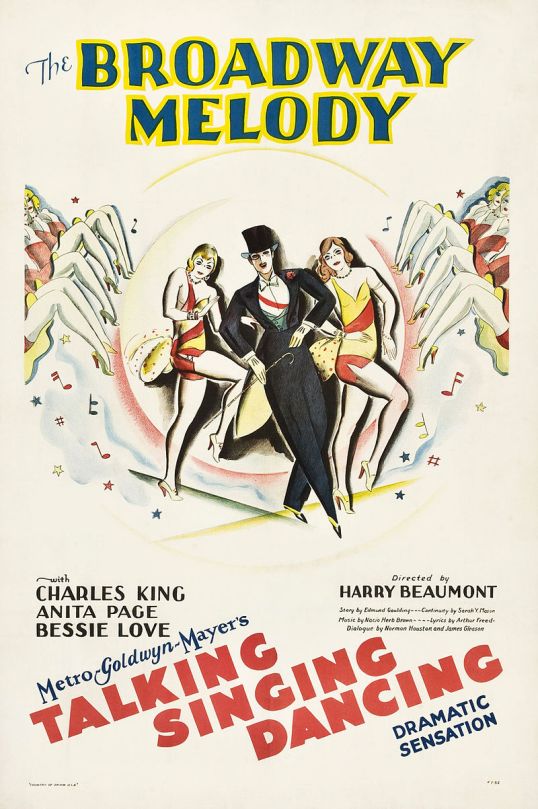
Lisa Reviews An Oscar Winner: The Broadway Melody (dir by Harry Beaumont)


broadway_melody_poster

Oh, The Broadway Melody.

Where to begin?

First released way back in 1929, The Broadway Melody is a historically significant film.  You really can’t talk about the development of film — especially sound film — without taking at least a few minutes to acknowledge The Broadway Melody.  It was the 2nd film to ever win the Oscar for Best Picture (or Best Production, as it was called back then) and it was the first sound film to win the Oscar.  (In fact, it would be 83 years before another silent film won Best Picture and it’s debatable whether or not The Artist can really be considered a silent film in the same way that Wings was silent film.)  It was also the first musical to win best picture and some people consider it to be the first true musical to have ever been produced.  It was such a huge box office success that it could be argued that The Broadway Melody is responsible for nearly every musical that followed it.

To say that The Broadway Melody tells a familiar story would be an understatement.  I’ve read a few reviews that have suggested that the clichés in this film really weren’t clichés until after The Broadway Melody was released but I’ve seen enough silent films to know that this is not the case.  It tells the story of two sisters who want to be stars.  After spending years working in vaudeville, they’ve been invited to perform in a revue that’s being produced by Francis Zanfield (Eddie Kane).

(I assume that Zanfield was meant to be a stand-in for Florence Ziegfeld, himself the subject of a later Best Picture winner, The Great Ziegfeld.)

The sisters are Hank (Bessie Love) and Queenie (Anita Page).  Hank is the driven one.  Hank is the one with the raw talent and she’s also the one who best understands how the business of entertainment works.  Her younger sister, Queenie (Anita Page), may not have Hank’s drive or quite the same level of talent but she does have beauty.  Guess who finds the most success?

Songwriter Eddie Kearns (Charles King) is engaged to marry Hank but soon, both he and Queenie find themselves falling in love.  Not wanting to hurt her sister, Queenie instead runs off with a notorious playboy named Jock Warner (Kenneth Thomson).

As I stated previously, The Broadway Melody has not aged well.  The fact that it’s one of the first sound films just allows contemporary viewers to hear the creakiness of the plot.  As impressive as sound film was to audiences in 1929, it’s obvious today that the cast and crew of The Broadway Melody were still struggling to figure out how to work with the new technology.  As a result the performances are still a bit too broad, which only serves to make the film seem even more melodramatic than it actually is.  As for the songs, they’re not particularly memorable.  I always enjoy backstage musicals but Broadway Melody is no 42nd Street.

I did appreciate the relationship between Bessie Love and Anita Page.  That was one of the few things about the film that felt real to me, perhaps because I have three older sisters.  Interestingly enough, when Anita Page died in 2008, she was the last surviving attendee of the first Academy Awards ceremony.

The Broadway Melody was named the Best Picture of 1929.  This was the year that the winners were selected by a committee and there were no official nominations.  Though the notes from the meeting indicate that there was some consideration given to awarding the Best Actress Oscar to Bessie Love, Best Picture was the only Oscar that The Broadway Melody received.
Check Out This Montage Of Every Best Picture Nominee!


2013 oscars

So, I was searching for short films about the Oscars on YouTube and look at what I came across.  This video was put together by All About The Oscar.  It’s a montage of every film nominated for best picture between 1927 and 2015!

Seriously, I love this!

Watch it below:

How many of these films have you seen?  I’ve still got a way to go but someday, I will be able to say that I’ve seen every single one.

(Except, of course, for The Patriot…)

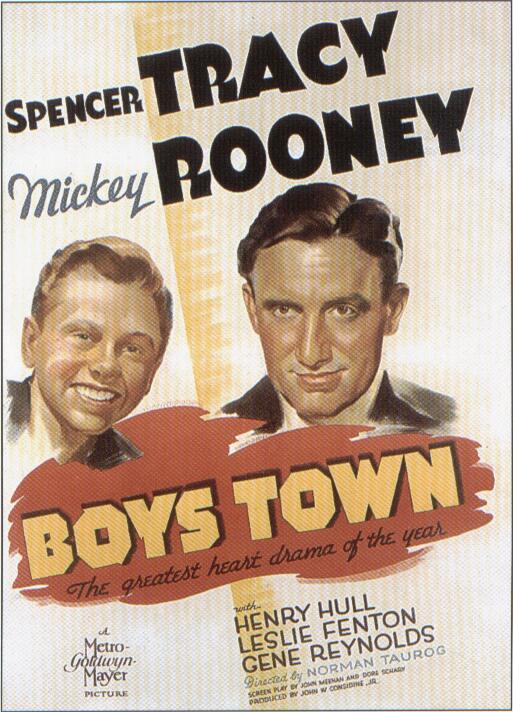
Lisa Reviews An Oscar Nominee: Boys Town (dir by Norman Taurog)


boys_town

Before writing about the 1938 film Boys Town, I want to share a story that might be false but it’s still a nice little story.  Call this an Oscar Urban Legend:

Boys Town is about a real-life community in Nebraska, a home for orphaned and homeless boys that was started by Father Edward Flanagan.  In the film, which was made while Father Flanagan was still very much alive, he was played by Spencer Tracy.  Boys Town was a huge box office success that led to the real Boys Town receiving a lot of favorable publicity.  When Tracy won his Oscar for Boys Town, his entire acceptance speech was devoted to Father Flanagan.

However, a problem arose when an overeager PR person at MGM announced that Spencer Tracy would be donating his Oscar to Boys Town.  Tracy didn’t want to give away his Oscar.  He felt that he had earned it through his acting and that he should be able to keep it.  Tracy, the legend continues, was eventually persuaded to donate his Oscar on the condition that he would get a replacement.

However, when the replacement arrived, the engraving on the award read, “Best Actor — Dick Tracy.”

That’s a fun little story, one that is at least partially true.  (Tracy’s Oscar — or at least one of them — does currently reside at the Boys Town national headquarters.)  It’s also a story that, in many ways, is more interesting than the film itself.

Don’t get me wrong.  Boys Town is not a bad movie.  For me, it was kind of nice to see a movie where a priest was portrayed positively as opposed to being accused of being a pederast.  In a way, Boys Town serves as a nice counterbalance to Spotlight.  But, with all that said, there’s not a surprising moment to be found in Boys Town.  It’s pretty much a standard 1930s juvenile delinquency melodrama.

The movie opens when Father Flanagan giving last rites to a man who is about to be executed.  (Boys Town takes a firm stand against the death penalty, which is one of the more consistent and laudable stands of the modern Church.)  The man says the he never had a chance.  From the time he was a young boy, he was thrown into the reform school system.  Instead of being reformed, he just learned how to be a better criminal.  Father Flanagan is so moved by the doomed man’s words that he starts Boys Town, under the assumption that “there’s no such thing as a bad boy.”

Father Flanagan’s techniques are put to the test when Whitey Marsh (Mickey Rooney ) arrives.  Whitey is angry.  He’s rebellious.  He tries to run away every chance that he gets and, during one such escape attempt, he even gets caught up in a bank robbery.  Can Father Flanagan reach Whitey and prove that there’s no such thing as a bad boy?

Well, you already know the answer to that.  As I said, there’s really nothing surprising to be found in the plot of Boys Town.  It’s just not a very interesting movie, though there is a great shot of a despondent Whitey walking past a several lines of former juvenile delinquents, all kneeling in prayer.  As Father Flanagan, Spencer Tracy is the ideal priest but his role is almost a supporting one.  Believe it or not, the film is dominated by Mickey Rooney, who gives a raw and edgy performance as the angry Whitey Marsh.

(That said, it’s hard to take Whitey seriously as a future gangster when he’s always wearing a bowtie.  Then again, that may have been the height of gangster style in 1938.)

Boys Town was nominated for best picture but lost to You Can’t Take It With You.

10 Horror Films That Should Have Been Nominated For Best Picture


Horror films!

Audiences love them but the Academy has never quite felt the same way.  True, there have been a few horror films nominated.  The Exorcist was a major contender.  Jaws was nominated.  So was The Sixth Sense.  Silence of the Lambs won.

But, for the most part, horror films have struggled to get Academy recognition.  While the Academy has recently shown a willingness to honor science fiction, the horror genre has yet to benefit from the decision to increase the number of best picture nominees.

Because I love horror and I love movies and I love lists, here are ten horror films that I think deserved a best picture nomination:

  1. Frankenstein (1931)

One of the most popular and influential horror films of all time, Frankenstein was sadly ignored by the Academy.  It’s certainly better remembered than the film that won best picture of 1931, Cimarron.

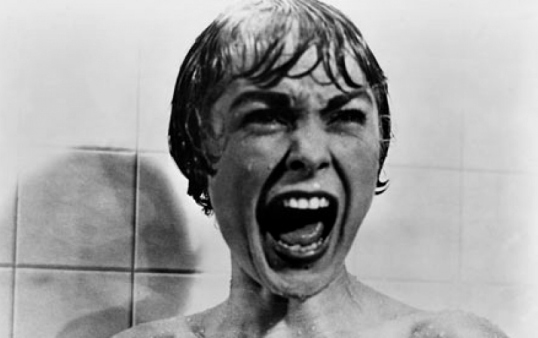
Psycho

2. Psycho (1960)

Psycho may have received nominations for best director, supporting actress, cinematography, and art design but the film that made people afraid to take showers did not receive a nomination for best picture.  The winner that year was a legitimate classic, The Apartment.  But it’s hard not to feel that Psycho should have, at the very least, received a nominations over the other 4 films nominated.

429px-Night_of_the_Living_Dead_affiche

3. Night of the Living Dead (1968)

George Romero’s zombie classic may have set the standard for zombie movies to come but it was not honored the Academy.  The Academy was more comfortable with Oliver!

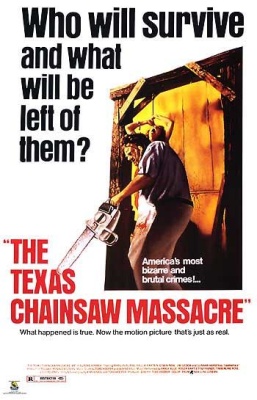
TheTexasChainSawMassacre-poster

4. The Texas Chainsaw Massacre (1974)

1974 was a very good year for the movies and certainly, I would not argue that The Texas Chainsaw Massacre deserved a nomination over The Godfather Part II, The Conversation, or Chinatown.  But over The Towering Inferno?  That’s another story.

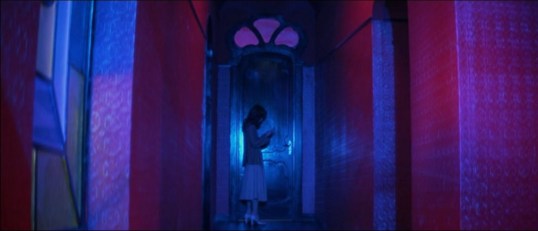
5. Suspiria (1977)

Oscar nominee Dario Argento?  In a perfect world, yes.

HalloweenIntro

6) Halloween (1978)

The night he came home … to Oscars!  If nothing else, John Carpenter’s score definitely deserved to win.

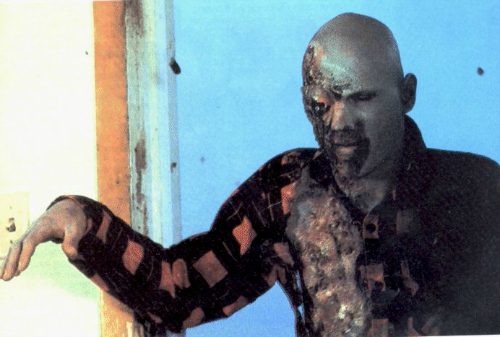
dawnofthedeadzombie

7) Dawn of the Dead (1979)

Few sequels have been nominated for best picture.  Dawn of the Dead definitely should have been one of them.  Who wouldn’t want to see, at the very least, Tom Savini’s speech as he accepted his special award for best makeup?

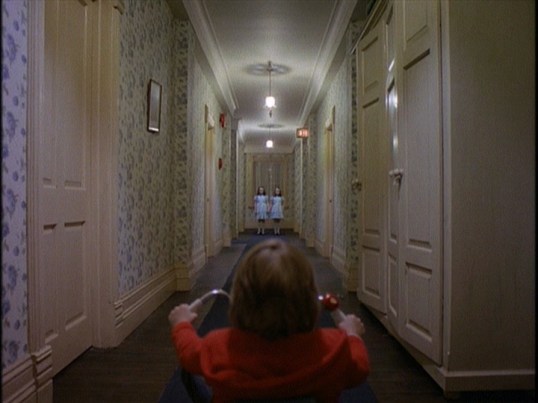
8) The Shining (1980)

Stanley Kubrick’s film may be recognized as a classic now but the reviews, when it was first released, were mixed.  So, I guess we shouldn’t be surprised that it wasn’t given any recognition by the Academy.  It’s a shame because I’ve watched The Shining a few dozen times and it still scares the Hell out of me.

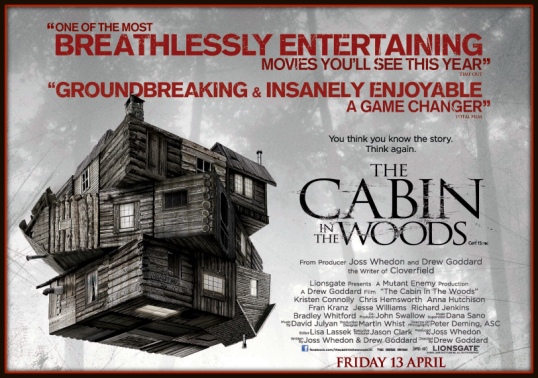
CabinInTheWoods

9) The Cabin In The Woods (2012)

One of the best films of the new century, this joyful tribute to the horror genre was sadly overlooked by the Academy in 2012.

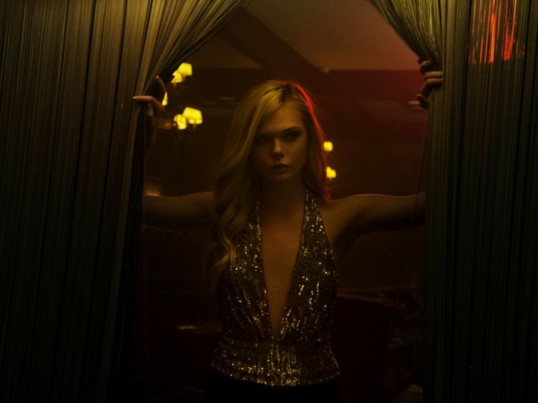
the-neon-demon-elle-fanning-900x0-c-default

10) The Neon Demon (2016)

Is Nicholas Winding Refn’s The Neon Demon truly a horror movie?  It’s close enough.  Though the film opened to mixed reviews, it’ll be recognized as a classic in another ten years.


Lisa Reviews An Oscar Nominee: Alfie (dir by Lewis Gilbert)


alfie_original

One night, in the UK, in 1965…

In a London flat, a phone rings.  Up-and-coming actor Terrence Stamp answers.  On the other end, the producers of an up-coming film called Alfie ask Stamp if he would be interested in playing the lead role.  In many ways, Stamp seems like the obvious choice.  After all, he already starred in the stage version of Alfie.  He knows the character and everyone knows that he’s going to be a big star…

And that’s why Stamp turns down the role.  The character of Alfie is an irresponsible and self-centered womanizer who, over the course of the play, has numerous affairs, arranges for one illegal abortion, treats almost everyone terribly, and, at the end of the movie, ends up alone.  Not only will the film’s risqué subject matter provide a challenge, even if it is being made in “swinging London,” but Alfie just isn’t a heroic figure.  He has some good lines.  He makes a few good jokes and, after arranging an abortion for one of his girlfriends, he realizes just how empty his life really is.  But, as written, Alfie is hardly sympathetic.

Stamp says he’s not interested in playing Alfie on screen and then he hangs up.

Two minutes later, the phone rings again.  Stamp answers.  It’s the producers of Alfie.  They ask to speak to his roommate, a cockney actor who was born Maurice Micklewhite but who, at the start of his acting career, changed his name to Michael Caine.

And that’s how Michael Caine came to star in the 1966 film, Alfie.

Alfie not only made Michael Caine a star, it also landed him his first Oscar nomination.  It was especially a popular film in the States, where it tapped into a youth culture that was obsessed with all things British and a desire, on the part of many filmgoers, to see films that deal with “adult” topics that American films, at that time, wouldn’t dare touch.  Though Alfie may seem rather tame by today’s standards (for a film about a man obsessed with sex, there’s actually not much of it to be found in Alfie), one can still see why it would have taken American audiences by surprise in 1966.  At a time when American films still starred Doris Day and Bob Hope, here was a British film about a working class cockney who screws almost every woman he meets, both figuratively and literally.

And really, it’s fortunate that Michael Caine accepted that role.  Along with Stamp, Alfie‘s producers also tried to interest Richard Harris and Laurence Harvey in the role.  All three of them would have brought a harder edge to the character.  However, Michael Caine has just enough charm to make Alfie likable, even when his actions are not.  Since a good deal of the film is made up of Alfie breaking the fourth wall and talking straight to the audience (and, often times, not exactly saying that most charitable of words), that charm is essential to the film’s success.  Michael Caine’s Alfie is self-centered but, at the same time, you never doubt that there’s a better man lurking underneath the surface.  You forgive Alfie a lot because, thanks to Caine’s performance, you can see the man that he’s capable of being.

Alfie is pretty much Michael Caine’s show but he’s ably supported by the rest of the cast, especially Jane Asher as a poignantly insecure hitchhiker and Shelley Winters as a cheerfully promiscous American.  And then there’s Denholm Elliott, who plays an abortionist with a seedy intensity that catch you off-guard and drives home the dark reality lurking underneath Alfie‘s charm.

For a film that is often described as being very much a product of its time, Alfie holds up surprisingly well.  It was nominated for best picture but it lost to something far more sedate, A Man For All Seasons.


4 Shots From 4 Films: The Star, The Oscar, In & Out, Tropic Thunder


4 Shots From 4 Films is just what it says it is, 4 shots from 4 of our favorite films. As opposed to the reviews and recaps that we usually post, 4 Shots From 4 Films is all about letting the visuals do the talking.

4 Shots From 4 Films

The Star (1952, dir by Stuart Heisler)

The Star (1952, dir by Stuart Heisler)

The Oscar (1966, dir by Russell Rouse)

The Oscar (1966, dir by Russell Rouse)

In & Out (1997, dir by Frank Oz)

In & Out (1997, dir by Frank Oz)

Tropic Thunder (2008, dir by Ben Stiller)

Tropic Thunder (2008, dir by Ben Stiller)

Lisa Reviews An Oscar Nominee: The Accidental Tourist (dir by Lawrence Kasdan)


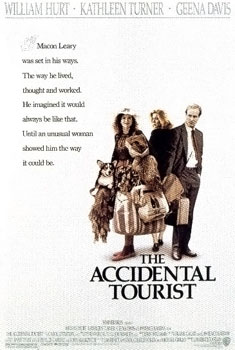
the_accidental_tourist

I have to admit that I was tempted to be a little bit snarky in my review of the 1988 Best Picture nominee, The Accidental Tourist.  I was going to say that The Accidental Tourist was a perfect example of a genre of film that has always been oddly popular with the Academy, the emotionally stunted man in New England learns to love again genre.

But, then I realized that I was wrong.  The Accidental Tourist does not take place in New England.  It takes place in Baltimore which may be located up north but which is technically considered to be part of the mid-Atlantic.  But, even with that in mind, it was impossible for me to watch The Accidental Tourist without thinking of other New England-set Oscar nominees, such as Mystic River and Manchester By The Sea.

As for the film itself, it’s about a man whose depressing life would be unbearable to watch if not for the fact that everyone around him is so extremely eccentric.  Macon Leary (William Hurt) is a travel writer.  He’s writes books giving people advice on how best to behave while seeing the world.  Throughout the film, we hear snippets of his prose.  Macon warns people about overpacking.  He warns them about arriving late at the airport.  He warns them about not properly planning out their trip.  He suggests that travelers bring a book to read but not too many books.  And don’t bring magazines because they get wrinkled too easily.  Now, to be honest, I liked most of Macon’s advice but then again, I’m OCD and I spend most of my time trying to make sure that everything I own is properly organized and can be equally divided.

A year ago, during a fast food robbery, Macon’s son was shot and killed.  Withdrawing from the world, Macon barely reacts when his wife, Sarah (Kathleen Turner), leaves him.  After breaking his leg while trying to convince his dog to climb down the stairs into the laundry room, Macon ends up moving in with his three siblings: autocratic Porter (David Ogden Stiers), slightly less autocratic Charles (Ed Begley, Jr.) and sweet but neurotic Rose (Amy Wright).

And so it goes.  Even when his agent, Julian (Bill Pullman), starts to date Rose, Macon can’t bring himself to open up emotionally.  Fortunately, Macon meets Muriel (Geena Davis), a quirky dog trainer.  Though it takes a while, Muriel starts to pull Macon out of his shell.  Soon, Macon is spending his nights over at her apartment and bonding with her sickly son.

(Why does every single mother in these type of movies have a sickly son?  Just for once, couldn’t a single mother be portrayed as having a child who is well-adjusted, popular, and healthy?)

But, just when everything seems to be perfect, Macon’s phone rings.  It’s Sarah and she wants to give their marriage another chance…

Just judging from the tone of this review, you’re probably thinking that I disliked The Accidental Tourist.  Actually, nothing could be further from the truth.  While the film’s mix of grim reality and relentlessly quirky supporting character can be a bit overwhelming at first, the film works if you stick with it.  That’s the thing — you have to stick with it.  When William Hurt first stares at the camera with his dead eyes and starts to drone about the importance of not spending too much money while in Paris, it’s tempting to just give up.  But, as the film progresses, it improves and so does Hurt’s performance.  By the time he finally worked up the strength to hold Muriel’s son’s hand while walking the boy home from school, I had tears in my mismatched eyes.

The Accidental Tourist is low-key but rather sweet film.  While the film centers around the performances of Hurt and Geena Davis (who won an Oscar for her work here), my favorite performances came from Bill Pullman and Amy Wright.  I honestly would happily watch a film that was just about their characters.

The Accidental Tourist was nominated for Best Picture but lost to Rain Man.

Scenes That I Love: “Come on, Oscar! Let’s get drunk!” from The Star!


In this scene, from the 1952 showbiz melodrama The Star, Bette Davis plays a faded film actress who has found the perfect drinking companion.

Interestingly enough, Bette Davis was nominated for an Oscar for getting drunk with Oscar.


Welcome to Oscar Sunday!


oscar trailer kitties

Happy Oscar Sunday!

Today is an unofficial holiday among the humans.  Today is the day that rich people give awards to other rich people and the whole world watches on TV!

Have a wonderful Oscar Sunday and be sure to remember: awards don’t make a film great.  Greatness makes a film great!

Plus, how can you take any awards show seriously when there’s no category for Best Animal Performance?  This year’s winner?  Keanu the Kitten!

The Academy has spoken.

This year's winner for Best Animal Actor!

This year’s winner for Best Animal Actor!

Enjoy the Oscars on ABC at 7 eastern/4 pacific!  And check back on the Shattered Lens for a whole day of Oscar-related stuff (and maybe some non-Oscar related stuff as well!)


Lisa Makes Her Oscar Predictions!


Oscar1

Okay, here’s the moment that I’m sure you’ve all been looking forward to!

It’s time for me to make my Oscar predictions!

toys

Yay!  It’s good to see that everyone’s excited!

Here is who I think will win tomorrow night:

Best Picture — La La Land

Best Director — Barry Jenkins, Moonlight

Best Actor — Denzel Washington, Fences

Best Actress — Meryl Streep, Florence Foster Jenkins

Best Supporting Actor — Mahershala Ali, Moonlight

Best Supporting Actress — Viola Davis, Fences

Best Original Screenplay — Manchester By The Sea

Best Adapted Screenplay — Arrival

Best Animated Feature — Zootopia

Best Art Direction — La La Land

Best Cinematography — La La Land

Best Costume Design — La La Land

Best Editing — La La Land

Best Makeup — A Man Called Ove

Best Sound Mixing — La La Land

Best Sound Editing — Hacksaw Ridge

Best Visual Effects — The Jungle Book

Best Original Song — “City of Stars” from La La Land

Best Original Score — La La Land

Best Documentary Feature — 13th

Best Foreign Language Film — The Salesman

Best Animated Short — Pear and Cider Cigarettes

Best Documentary Short — The White Helmets

Best Live Action Short — Timecode

To be honest, the only prediction that I’m 100% comfortable making is that this year’s Oscar ceremony is probably going to be the most political one in history.  Some people will love that.  Some people will be outraged.  Me, I just care about movies.

The Oscar air tomorrow on ABC, at 4 eastern and 7 pacific.  I will be live tweeting the awards and, of course, we’ll be posting Oscar-related stuff here on the Shattered Lens all through Sunday!

orsone-welles-clapping

Even Charles Foster Kane is excited!

And by the way, if you want get a head start on next year’s Oscars, why not check out my way too early predictions for January and February?

Enjoy!