You might recognize today’s song of the day from the opening credits of Boardwalk Empire, the Martin Scorsese-produced show that starred Steve Buscemi, who is celebrating a birthday today.
It’s just a wonderful piece of music.
You might recognize today’s song of the day from the opening credits of Boardwalk Empire, the Martin Scorsese-produced show that starred Steve Buscemi, who is celebrating a birthday today.
It’s just a wonderful piece of music.
Happy birthday, Steve Buscemi!
In today’s scene of the day, from 1992’s Reservoir Dogs, Mr. Pink explains why he doesn’t tip. Only Steve Buscemi could make a non-tipper named Mr. Pink into the film’s most likable character.
4 Shots From 4 Films is just what it says it is, 4 shots from 4 of our favorite films. As opposed to the reviews and recaps that we usually post, 4 Shots From 4 Films lets the visuals do the talking!
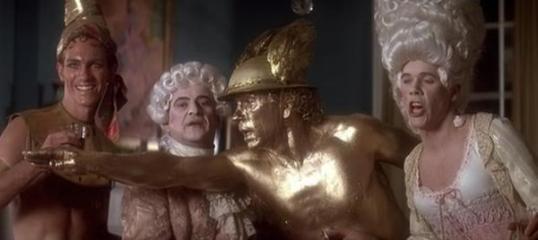
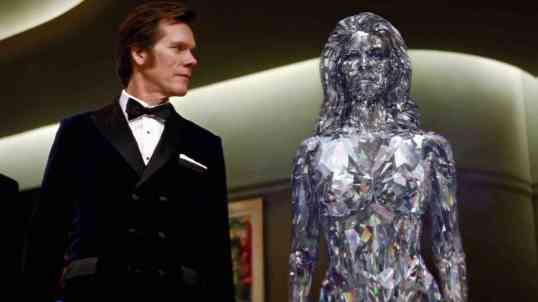
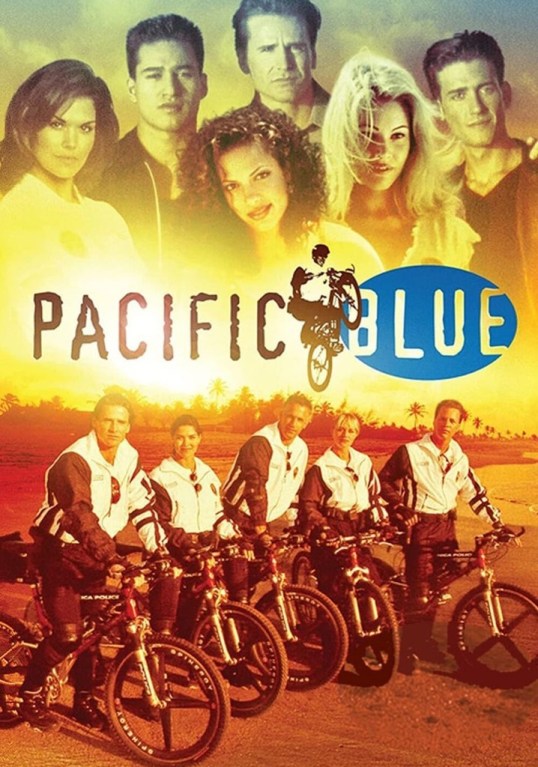
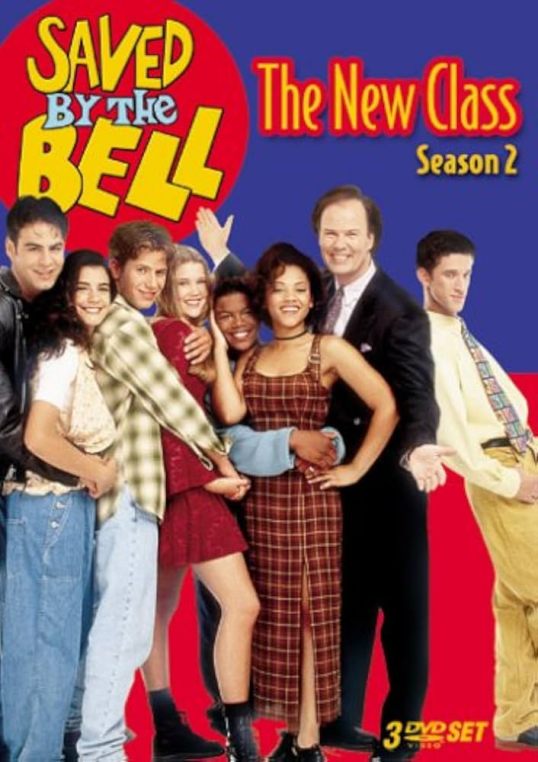
Today, the Shattered Lens wishes a happy birthday to the one and only Steve Buscemi. It’s time for….
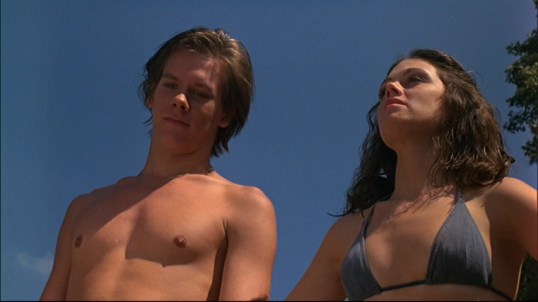
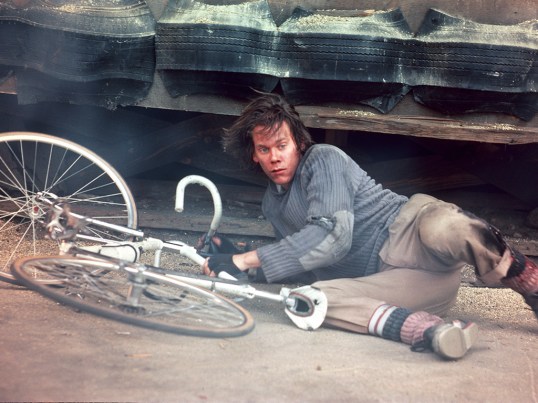
4 Shots From 4 Steve Buscemi Films
As some of our regular readers undoubtedly know, I am involved in a few weekly live tweets on twitter. I host #FridayNightFlix every Friday, I co-host #ScarySocial on Saturday, and I am one of the five hosts of #MondayActionMovie! Every week, we get together. We watch a movie. We tweet our way through it.
Tonight, for #ScarySocial, I will be hosting 2025’s Shiver Me Timbers!
If you want to join us on Saturday night, just hop onto twitter, start the film at 9 pm et, and use the #ScarySocial hashtag! The film is available on Prime and Tubi! I’ll be there co-hosting and I imagine some other members of the TSL Crew will be there as well. It’s a friendly group and welcoming of newcomers so don’t be shy!
Well, we all know this song, don’t we?
Apparently, this song was inspired by a music industry cocktail party that the band attended. It was also apparently inspired by Bob Dylan’s feelings towards the industry, though Dylan was not involved in recording or performing the song.
As for the video, what’s interesting is how literally it interprets the song. Seriously, the poor guy really is stuck in the middle and he really does have clowns and jokers to either side of him!
Nobody loses an ear in this video. That would come later….
It’s Steve Buscemi’s birthday so it just feels like the right time to share something from one of his best films.
Enjoy!

Did y’all know that actor James Woods has completed two very personal musical albums in the last couple of years? First, he wrote nine songs for the 2024 album “Hear the Thunder Crack.” This album is described as… The Life of James Woods, as sung by Shooter Jennings. His latest album, “Tombstone Opera” just dropped within the last month! I recently purchased it and will be listening to it over the holiday season. Once again, Woods wrote all the lyrics, and the primary vocals are by a gentleman named Bob Wayne. I’ve listened to a couple of the songs, and they are very good! I think these are very interesting albums, and they certainly give us insight into Woods in a way that no role in a movie ever could.
I thought I’d share the song “Cafe Central” with you today, mainly because of its references to the classic Sergio Leone film ONCE UPON A TIME IN AMERICA (1984), a film I know many of you enjoy!
“Do they have the car?”
“We have the driver.”
Those two lines of dialogue, uttered towards the end of the film, pretty much sums up F1, a terrifically entertaining movie about Formula One racing.
Brad Pitt stars as Sonny Hayes, a former FI prodigy who, in the early 90s, suffered a traumatic crash at the Spanish Grand Prix. The crash nearly killed him and it temporarily ended his career as an F1 driver. Sonny has spent the past thirty years as a drifter, gambler, and as a race car driver for hire. He lives in a van and is haunted by nightmares of his crash. When he wakes up in the morning, he groans as he stretches his tattooed, beat-up, but still muscular body. He dunks his face in a sink full of ice. He’s aging but he hasn’t surrendered just yet. The film opens with Sonny helping to win the 24 Hours of Daytona race. After his victory, he’s approached by his former teammate, Ruben (Javier Bardem). Ruben is in charge of the APEXGP F1 team. He needs a driver to partner with the young and arrogant Joshua Pearce (Damson Idris). Sonny agrees, though only after Ruben asks if Sonny wants a chance to show that he’s the best in the world. Sonny may be one of the oldest guys on the track but he’s still got something to prove.
If F1 came out in 80s, the 90s, or even the Aughts, it would be viewed as a well-made but predictable racing film, one in which a fairly by-the-numbers script was held together by Brad Pitt’s overwhelming charisma and Joseph Kosiniski’s kinetic direction. And that certainly is a legitimate way to view the film in 2025. On the other hand, coming after both the scoldy Woke Era and the authoritarian COVID Era, a film that celebrates competing without guilt, that says that it’s more fun to win than to lose, and which doesn’t apologize for embracing a culture of driving fast and breaking the rules feels almost revolutionary. Just as he did with Top Gun: Maverick, director Joseph Kosinski reminds the audience that it’s okay to be entertained. Not everything has to be a struggle session. Not everything has to be a rejection of the things that once made you happy. F1 is a film that invites you to cheer without guilt or shame.
It’s a good film, one that is full of exciting racing scenes and gasp-inducing crashes. After both this film and Top Gun: Maverick, there’s little doubt that director Joseph Kosinski knows how to harness the power of Hollywood’s few true movie stars. That said, as good as Brad Pitt is, Damson Idris is equally impressive, playing Joshua, a young driver who learns that there’s more to being a great driver than just getting good press. When we first meet Joshua, he’s young and cocky and arrogant and one thing that I respect about the film is that, even after Joshua learns the importance of teamwork and trust, he’s still more than a little cocky. He never stops believing in himself. He doesn’t sacrifice his confidence on the way to becoming the best. Though the film is definitely on Sonny’s side when it comes to their early conflicts (one can practically here the film saying, “Put down your phone, you young whippersnapper!”), it’s smart enough to not make Joshua into a caricature. Instead, he’s just a young man trying to balance celebrity and talent. Kerry Condon also gives a good performance as APEX’s technical director, though her romance with Sonny does feel a bit tacked on. (Far too often, whenever a female character says that she’s not looking for a relationship, movies refuse to take her word for it.)
When I first heard about F1, I have to admit that I wondered if Kosinski was deliberately following up the Top Gun sequel with a remake of Days of Thunder.It is true that F1 does have a lot in common with other racing films but, in the end, it doesn’t matter. Brad Pitt’s star turn and Joseph Kosinski’s direction makes F1 into an absolutely thrill ride and one of the best of 2025.

On Strike for Christmas was fun because I got to live tweet it with Lisa and that’s always a blast. The story is straight forward- Joy (Daphne Zuniga), a SAHM, is fed up with being unappreciated for her hard work in prepping for Christmas; so, she goes full-commie and strikes/organizes the other moms to fall into the perils of communism by unionizing the moms to stop all Christmas prep! Honestly, I could’ve reviewed this film for Horrorthon based upon the Marxist plot line!
I want to stay as positive as I can because it’s Christmastime but the film took a WEIRD left turn! First, the grandmother, the mom, the dad, AND the two sons were really close in age; so, you had serious teen mom vibe. Second, it was obvious that ALL of the actors had the hots for each other! It was like infamous Folgers ad (see below ).

If you are unfamiliar with the Folgers ad above, the plot is that a brother returns from Africa and the actors couldn’t help but show their attraction for one another. The same distracting event happened in this film too and not just once or twice – no no no – the sexual tension in this film was like Madmen season 1 levels and in nearly every scene.
There was one scene where the mom dressed up and the son gushed on how hot she was and it was very uncomfortable. I swear, find someone who looks at you like these actors looked at each other!!!
There were some funny parts to the film; such as, the obligatory trope that the boys and dad tried to make cookies and it’s a disaster. However, it really felt like the family had a lot of problems before this because the mom proceeded to not only go on strike, but to talk to journalists about all of her family were just POSs. I mean really if you’re already at the point where you feel comfortable going to the press about what garbage people your husband is and your son’s, the marriage is already over. And in her case, it certainly was awkward at Valentine’s Day when her dad and sons/boyfriends gave her chocolate all at the same time!!! I can only imagine what the hallmark card would look like!!!
Lisa noticed that the mom wasn’t just going on strike herself, but she proceeded to break up every family in the town. Joy needs to be stopped! I mean, it’s bad enough that she’s led all these poor people down the path of socialism and communism, which is just painful for me, but she’s also splitting up all these families!
Maybe that’s what happened in Russia? It was all just a big kerfuffle over cookies and icing and the next thing you know – nukes are pointed right at the good old US of A!!!
It should be noted that eventually the strike does end and the families try to pick up the pieces of their shattered lives. I think that was very insensitive of Joy because she always had her son/boyfriend’s number to fall back on during those cold winter nights!!!

Walter Hill’s Brewster’s Millions (1985) isn’t a perfect movie by any stretch, but it’s the kind of film that sneaks up on you. It may not be sharp enough to qualify as great satire or consistent enough to hit every comedic note, but it has an undeniable charm that pulls you in regardless. It’s loud, uneven, and often ridiculous, yet few comedies from the 1980s are as weirdly entertaining when they’re firing on all cylinders. For many movie fans, it’s that quintessential “guilty pleasure”—a film you know has problems, but that somehow feels impossible to turn off once it starts. And in many ways, that’s exactly where Brewster’s Millions finds its lasting appeal.
The setup alone is too fun to resist. Richard Pryor stars as Montgomery Brewster, a minor league baseball pitcher who unexpectedly inherits the opportunity of a lifetime—to claim a $300 million fortune from a distant relative. The catch? Before he can get it, he has to spend $30 million in 30 days under a bizarre set of conditions that make financial ruin easier said than done. He can’t give the money away, can’t destroy it, can’t buy assets or investments that retain value, and can’t tell anyone why he’s doing it. Fail, and he gets nothing. Succeed, and he becomes one of the richest men alive. It’s the sort of gleefully absurd premise that could only have come from Hollywood in the 1980s, and it’s immediately clear that the film wants audiences to sit back, grab some popcorn, and watch Pryor tear through cash in increasingly funny and desperate ways.
Richard Pryor is, without doubt, the heart and soul of the movie. He imbues Montgomery Brewster with equal parts manic energy and human frustration, giving the character a real emotional arc beneath all the comic spectacle. Pryor’s talent for blending humor with exasperation makes Brewster’s predicament believable, even when it’s insane. Watching him scramble to lose money while the world keeps rewarding him is strangely satisfying. Pryor understood how to play ordinary men caught in extraordinary circumstances, and that quality grounds the film when it could have easily spiraled into total silliness. In scenes where he loses his patience with accountants, schemes wild spending sprees, or watches his good intentions backfire, Pryor’s comic timing keeps the chaos enjoyable.
John Candy adds another layer of charm as Brewster’s best friend and teammate, Spike Nolan. Candy brings warmth, loyalty, and that unmistakable good-heartedness that made him one of the decade’s most beloved comedic actors. The chemistry between Pryor and Candy keeps the film buoyant even through its weaker stretches. Their friendship defines the film’s tone—it’s loose, goofy, and full of bro-ish camaraderie. Without Candy’s infectious energy, the movie’s more hollow comedic beats might have hit the floor with a thud. Together, they create a dynamic that feels real, even inside a premise that’s totally absurd.
As a director, Walter Hill feels like an odd fit for this kind of broad comedy, but that’s part of what makes Brewster’s Millions interesting. Hill, better known for tough, kinetic action films like The Warriors and 48 Hrs., approaches this farce with a surprising amount of structure and visual precision. The film looks slicker and sharper than most comedies of its kind, which gives the excess on-screen an unintentionally epic flair. Hill’s direction keeps the story moving, and though he’s not naturally a comedic filmmaker, his grounded style adds a peculiar edge to all the craziness. It’s chaos with discipline—an aesthetic that somehow works in the movie’s favor.
Still, Brewster’s Millions can’t quite escape its shortcomings. The pacing is uneven, especially in the middle, where the film loses some steam as Brewster cycles through increasingly repetitive spending gimmicks. The story flirts with satire but rarely commits, brushing up against deeper commentary on wealth, politics, and capitalism before retreating to the comfort of broad comedy. The “Vote None of the Above” subplot, where Brewster’s money-wasting political campaign taps into voter cynicism, is one of the smartest parts of the film—but it’s introduced and resolved too quickly to leave a mark. And while the movie is full of lively energy, not every gag lands; a few supporting performances veer into caricature, and some jokes feel very much of their time.
Yet these flaws are partly what make Brewster’s Millions such a delightful guilty pleasure. It’s the cinematic equivalent of junk food—high on calories, low on nutritional value, but deeply enjoyable all the same. Pryor’s constant exasperation, the sheer absurdity of trying to “waste” money legally, and the exaggerated set pieces (like the overblown parties or his failed attempts to lose at gambling) make for irresistible entertainment. Even when the humor dips into predictable territory, the concept keeps pulling you back in. There’s a giddy satisfaction in watching Brewster try—and fail—to lose money, especially because the universe just won’t let him.
The romance subplot with Lonette McKee’s character, Angela Drake, adds just enough heart to balance the absurdity. McKee gives a grounded, intelligent performance that prevents the love story from feeling tacked on, even if it never fully takes center stage. Her presence keeps Brewster tethered to some kind of reality, and the moral through-line—learning that not everything valuable can be bought—lands gently rather than preachily. It’s not profound, but it fits the breezy tone perfectly.
As a comedy of excess, Brewster’s Millions is very much a product of its time. The slick suits, the gaudy parties, the blind faith in wealth, and the Reagan-era optimism about money’s moral neutrality all ooze from every frame. That time-capsule quality is part of its modern appeal. Watching it today, you can’t help but smile at how on-the-nose it feels—a movie from the “greed is good” decade that accidentally ends up mocking the very mindset it sprang from. It’s self-aware only in flashes, but those flashes are enough to make you recognize the movie’s satirical edge hiding beneath its loud surface.
In the end, that’s what makes Brewster’s Millions endure as a lovable guilty pleasure. It has flaws you can’t ignore—uneven pacing, scattershot tone, underdeveloped ideas—but none of them outweigh its charm. Pryor’s comic genius makes even the weakest joke land better than it should. Candy’s warmth keeps the film light. And Hill’s straightforward direction infuses the lunacy with just enough realism to make it believable. The result is a movie that’s too silly to take seriously but too fun to dismiss. You watch it, laugh at its audacity, shake your head at the logic gaps, and yet somehow come away smiling.
Brewster’s Millions may not be a comedy classic, but it’s easy to see why people keep revisiting it. It’s comfort food cinema—lighthearted, clumsy, and endlessly watchable. And like all the best guilty pleasures, it doesn’t need to be perfect to make you happy. Sometimes, seeing Richard Pryor outsmart the meaning of money for two hours is more than enough.
Previous Guilty Pleasures