Bond 24 Officially Named “Spectre” in Announcement.


If you’re a long time reader of Through the Shattered Lens, you’re probably aware that we’re all fans of the Bond franchise in some way. Around the release of Skyfall, we collectively reviewed every single Bond film. The project – spearheaded by our own Lisa Marie Bowman – was quite the success with each writer taking a film and showcasing their love (or displeasure for it). To date, I consider that our best  “Avengers” moment.

Today, the Announcement for the next film in the series was made at the legendary Pinewood Studios. Director Sam Mendes introduced audiences to the 24th film, “Spectre”, which already seems interesting given the history of the evil group in Bond canon. I guess this means Quantum is no more, was a small piece of a larger puzzle, or perhaps it’s grown into something bigger? We’ll have to wait and see, but it’s up to speculation. Lee and I were actually talking about that yesterday. We do know that the production will take 007 from London to Mexico City, among other locations.

All of the actors were on hand, including new members Christoph Waltz (Django Unchained, Inglorious Basterds), Monica Bellucci (Malena, The Matrix Reloaded), and Lea Seydoux (Mission: Impossible -Ghost Protocol, Blue is the Warmest Color). Returning are Daniel Craig as James Bond, Ralph Finnes as M, Penny Dreadful’s Rory  Kinnear as Tanner, Ben Whishaw (Layer Cake, Cloud Atlas) and Naomie Harris (Ninja Assassin, Mandela: Long Walk to Freedom) as Moneypenny.

Although Roger Deakins won’t be on hand for the Cinematography, its okay (though he’ll be missed). Hoyt Van Hoytema is taking over the reigns. Between Spike Jonze “Her”,  “Interstellar” and “Birdman”, Hoytema knows what he’s doing.

Even Aston Martin threw their keys into the ring with the new DB10, to celebrate their 50 year relationship with Bond. 10 copies were made exclusively for the film and we hope Mendes leaves them in better condition than 007 usually does.

Production starts next Monday and the film is on track for release next November.

Quick Review: ‘The Babadook’ (dir. Jennifer Kent)


The-Babadook-Poster

‘The Babadook’ is a truly effective horror film whose beautiful and twisted imagery – as well as complex and powerful explorations of grief and the bonds between a mother and her child – cut to the bone, managing to scare and move all at once. The film, which explores maternal affection, depression, grief – and a whole multitude of similar themes – is not just one of the best horror films of the past few years, but is also just simply one of the best films of the current year.

tumblr_nfegyrQCTm1s9q35fo7_1280

The film stars Essie Davis as Amelia, a widow living alone with her hyperactive son Sam (Noah Wiseman). Amelia loves her boy, but his presence is a constant reminder of the death of her husband – who died in a crash while driving Amelia to the hospital to give birth. The grief of the accident constantly lingers over them both. This is made all the worse for Amelia as Sam has become more of a burden as of late. Sam is beginning to more strongly deal with the absence of his father and expresses this in some unusual ways – including making up scary monsters and weapons to fight them with. Their strained relationship takes a dark turn when a mysterious pop-up book appears – the character in which is a spooky creature that awakens in Amelia fears and dark thoughts about her son that have long been hidden under the surface. She doesn’t know where the book came from or who this nightmarish Babadook is – but she can’t seem to escape it. The situation and Amelia’s mental state is exasperated by sleep deprivation, social pressures and growing depression as the anniversary of her husband’s death approaches. She is soon forced to confront a demon – both physical and psychological – that threatens to destroy her and Sam.

tumblr_nfqnk2dRRm1qd7v5ao1_1280

‘The Babadook’ very much reminded me of ‘Repulsion’ and ‘The Shining’ in its portrayal of a mental spiral into very dark places – as well as ‘The Orphanage’ in its handling of grief and loss. This is all packaged in a visually striking story – lots of blacks, greys and whites – with a creature that is sure to be an instant classic. What makes it all the better is the way in which it constantly subverts the expected in both genre tropes and what we are actually seeing on the screen. Is the Babadook real? Or is it simply a mental manifestation of the pain and grief that runs deeply through the story? Either way, the fears, doubts and terror it all elicits amount to more than just scares – it also moves with real and honest emotion. Take out the horror aspects and the film is still a moving portrait of a mother dealing with loss and the responsibility of mothering a troubled child. This is a shining example of the brilliance that the horror genre can achieve – how it can be emotionally affecting in ways no other genre can. Add to that a phenomenal performance by Essie Davis and the confident direction of Jennifer Kent and the result is a masterpiece of the genre – and easily one of the year’s best films.

*I discuss the ending in the comments. I say this to warn of spoilers below – as well as to continue my above analysis for those who have seen the film.*

———

Twitter.

Star Wars: The Force Awakens Official Teaser is out!


Greetings, Ladies and Gents. Hope everyone’s faring well after the Thanksgiving Holiday here in the States and a week that’s winding down. Disney, J.J. Abrams and the powers that be have not only made the teaser for Star Wars: The Force Awakens available in select theatre locations, but have also made it available online.

Like the trailer that premiered for The Phantom Menace, we’re seeing a lot of surprises here. New droid types, unconventional lightsaber designs and the Millenium Falcon in all it’s glory. It’s a small taste of what’s to come, but enough to pique the interests of anyone in love with the franchise. If nothing else, it serves as a good conversation starter.

Enjoy!

Trailer: Predestination


predestination-review

The Spierig Brothers have been two filmmakers whose work has been coming in under the radar since their cult-favorite horror film Undead came out in 2003. They followed this up seven years later with the vampire dystopian film Daybreakers.

Both films have their moments but (IMO) failed to reach the level of the filmmakers’ ambitions for both films.

It’s now been four years since Daybreakers and the brothers have a new film out and it’s another ambitions project that tackles the themes of time paradox and predestination hence the title of the film.

Predestination made it’s premiere at this year’s SXSW festival is Austin, Texas. It has since made a limited run in the US since late August.

Quick Review: Birdman (dir. by Alejandro González Iñárritu)


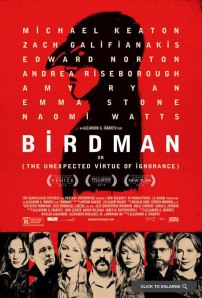
birdman-clickTo help you understand how little I knew going into this film, there was a time where I seriously thought Birdman or (The Unexpected Virtue of Ignorance) was a film adaptation of the old Hanna Barbarra cartoon character. I later found out it wasn’t (to my disappointment), but that it was a Michael Keaton movie helped to keep my interest. If Harvey Birdman is what you’re expecting, stop right there. You’re looking for the wrong film.

Here’s the short of it:

If you enjoy the Theatre, Birdman may be right up your alley. With a focus on a play, it takes the view through the nuances of getting the play into action. There are terrific, funny performances throughout (particularly from Keaton and Edward Norton) and it just flows so incredibly well. Birdman explores what it means to be into your craft (in this case, acting), the nature of what Fame actually is these days, and how much a person is willing to get/keep it. You could basically watch this back to back with Black Swan.

From a script by Iñárritu, along with 3 others, Birdman is the tale of a once famous actor dancing a fine line between total irrelevance and greatness. Hoping to reclaim that fame, he attempts to produce, direct and star in a Broadway play, but not everything is going to plan.

Forget any promos and just see it. I skipped a lot of the advertising for this and after watching the movie last night, I saw a commercial for the film that already feels like it gives too much of the film away. If you’ve followed them all, you’ve seen most of Birdman. Had I not already watched Richard Linkater’s “Boyhood”, I might consider Birdman one of the best films I’ve seen this year, especially in terms of the way it was made.

The Long Haul:

Let’s start with the Cinematography, but this will the element that stands out more than anything with this film. Emmanuel Lubezki (Gravity, Children of Men) is at the top of his game here with the use of a seemingly single tracking shot that lasts almost the entire movie. The camera moves from scene with such fluidity that I wonder if it’s entirely CGI. Most of those shots have to be.

Remember that part in Goodfellas where the camera stayed with Karen and Henry Hill on their first date, moving with them through the back of a restaurant all the way to when they took their seats? Or more recently, True Detective’s fantastic shot of an escape/arrest that had McConaghey moving behind houses and over fences? Or the opening “unpacking” tour of the haunted house in The Conjuring? Those are tracking shots. It’s one long take from Point A to Z, instead of cuts at B, C, and so on. If anyone makes a mistake during filming, the crew has to move back to the start of the take and try again if they want the entire shot to be seamless. I have no idea how it was pulled off in Birdman, but it’s beautiful to behold. If the movie gets nothing else come Awards season, Cinematography should be theirs, right now. One could argue it moves like a found footage film sans the shakiness, but you’d have a hard time selling me on that one.

My only nitpick about Birdman, the only problem I had with it was the representation of Critics. Not that what’s said about them is entirely incorrect, but I kind of hunkered down in my seat at some of the commentary. While I wouldn’t consider myself a Critic, I do share my opinions on films. That doesn’t necessarily mean we’re all out to gut the next release on Friday.

It seems almost too appropriate that Michael Keaton – once a Dark Knight himself – has this role. He’s had his ups (Batman, Beetlejuice, and my personal favorite, Johnny Dangerously), his downs (That horrid Robocop remake, blech) and his in-betweens with Need for Speed earlier this year. He carries the character with a depth that rivals Joaquin Phoenix’s performance in The Master. It’s strange, but it works.

At one time, Riggin Thompson (Keaton) was famous in Hollywood as the superhero Birdman, but after passing on a second sequel (much like Keaton leaving Batman behind and passing the baton to Kilmer and Schumacher), he hasn’t found much fame since then. The story starts with Riggin hoping to reclaim his former glories with a revival of “The Things We Talk About When We Talk About Love” on Broadway. When one of his theatre cast members are injured on set, they recruit a popular actor (played with a slightly over the top Edward Norton) that may prove too much to handle. Add to this Riggin’s shaky relationship with his daughter Sam (Emma Stone), an off again / on again love interest (Oblivion’s Andrea Riseborough) a lawyer trying to keep him afloat (Zack Galifinakis), and a voice in his head reminding him of the problems he faces…well, he’s just a mess. Then again, everyone here is a mess in their own way and maybe because of it, they all kind this good sense of chemistry.

The film is backed by a percussion score from Antonio Sanchez, which doesn’t get in the way at all. I’m not sure I’d call it a soundtrack, though. The music sounds great outside of the scope of the film, but you probably won’t recall the music afterward in the way you would for a soundtrack with a full on orchestra.

Birdman is the first film I’ve watched by Alejandro González Iñárritu. I remember that he was nominated for an Oscar with either Babel or 21 Grams. I feel like I’ve missed out on something grand because Birdman is good. Not that “good” you say when when someone puts a broken bone back into place (“Yeah, I’m good.”, he cried), but that “good” that comes from your first taste of creamy Tiramisu. (“Omigod, that is goood!”, he purred). It’s definitely one I can consider catching one more time before it ends it’s run in the cinema.


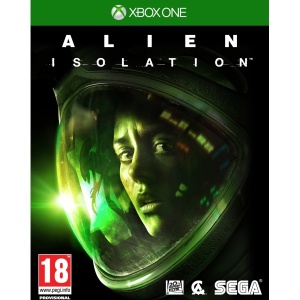
Horror on the Lens: Alien Isolation (Dev. by Creative Assembly, Published by Sega)


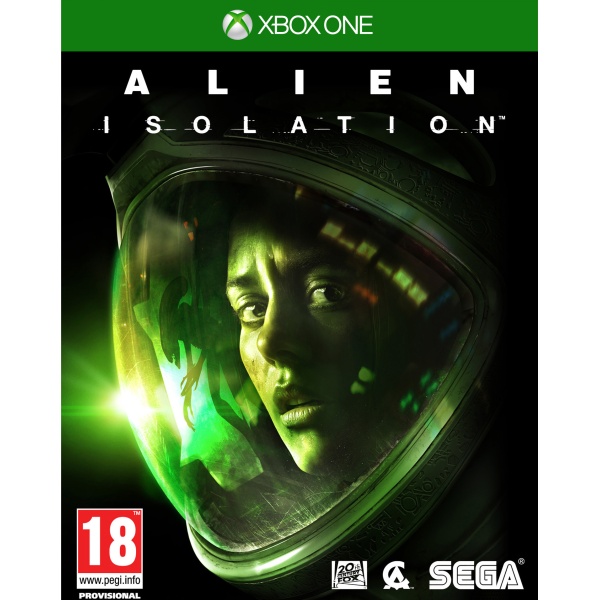
Alien-IsolationThere’s a quote from one of my old White Wolf books – I think Richard Dansky wrote it in Wraith:The Oblivion – that goes like this:

“The other aspect of horror is its sense of finality and the inability of a character to change it. If terror is the moment when the monster charges down the hall, horror is the instant you discover your feet are rooted to the spot.” 

Everyone who’s seen Ridley Scott’s Alien remembers the scene where Lambert is cornered by the Alien. Yaphet Kotto’s Parker is yelling at her to get out of the way so that he could use his Flamethrower, but she replies, crying..”I can’t!” I always thought that all she had to do was just kind of jump down and crawl or roll and then Parker could blast the damn thing. The movie would end. There’d be a gaping hole of acid in the Nostromo, but our heroes would get in the lifeboat and leave.

And yet, in playing Sega and Creative Assembly’s “Alien Isolation”, I found myself in almost the exact same position, huddled inside of a locker minutes after being introduced in the Alien and utterly terrified to move. Even worse, I’ve had situations where it appeared and I’m frozen in place, completely drawing a blank on my next move. I owe both Brett and Lambert an apology, rest their characters souls.

In the game you play Amanda Ripley, daughter of Ellen Ripley in the Alien films. In the special edition of James Cameron’s Aliens, there’s a brief scene between Burke and Ellen Ripley mentioning her daughter. For you trivia fans, the image used in that film was actually Sigourney Weaver’s actual mother. Anyway, It’s been 15 years since the disappearance of the Nostromo and Amanda is searching for any kind of clue that will help her find her mother or find out what happened to her. Supposedly, the flight recorder for the Nostromo was recovered and taken to Sevastopol station, a ship of roughly the same size. Basically, it’s a starship the size of Hogwarts. After finding herself separated from her crew, she has to both get her answers and find her way out of the station.

Easier said than done, of course. This game knows no mercy, even on it’s easiest setting.

The lighting effects are wonderful in next gen (especially PC). That molotov will only make the Alien mad.

The lighting effects are wonderful in next gen (especially PC). That molotov will only make the Alien mad.

The first rule of Alien Isolation is knowing that there are no safe places. Where most games have mechanics that allow you to take a breather to gear up and plan ahead or pause to get out the right weapon, Isolation will keep flowing as you take action. In Metal Gear, your game pauses when you use your backpack to look through your weapons. In Resident Evil (at least the earlier renditions), you had areas that were designated Save Rooms, places where the monsters couldn’t get at you. Alien Isolation does just the opposite.  Unless you’re checking your map for your next location, the game doesn’t pause. I’ve died while reading information on a workstation. I’ve died while rewiring a door. I’ve even died while putting myself in a locker and walking away from the console for food. It’s a strange kind of game design that forces you to keep one eye on what you’re doing and the other scouting around you to make sure you’re not being stalked. You essentially become a meerkat, poking its head up and going..”Did you hear something?”

And the sound is downright fantastic, especially where the Alien is involved. This is where the true horror lies. Anyone who is familiar with the Alien franchise knows what a Xenomorph looks like. We’ve seen so many of them over the years that they’ve lost that fear factor. The horror doesn’t come from having it charge you, but knowing how close it can be before everything gets to that point. There are tons of playthrough videos out there, and it’s great to see the reactions of players as they navigate this. If I worked at Creative Assembly, I’d chuckle at some of them with pride.

Case in Point: In one area, I open a door to a hallway. It’s clear, but I hear something behind me, causing me to duck behind some boxes. Taking out a noisemaker, I figure I can throw the noisemaker out the way I came (before the door closes) and quickly make my way towards my objective. As I slowly step backwards and to my left ready to pull a Romo-like pass, I just happen to turn to look at the direction I need to go.

The Alien is right there in that entraceway, standing at full height and is peering into the room behind me. There’s a collective “Holy shit!” from everyone in the room I’m in, and I freeze. It must have shot up a vent and came down a vent behind me somewhere. The Xenomorph doesn’t see me, and goes into the room it was looking at. This frees me to make my way down the hallway I need to travel, leaving a trail of fresh urine in my wake.

Heavy footsteps echo in the dark, and when it moves from the ground to the vents, there’s a distinct difference. The game begs to be played either on an extreme surround sound system or noise canceling headphones. If you even more courageous, you can enable your Xbox’s Kinect or PS3/4’s Camera – the microphone in both will pick up the sounds of your room. So, if you’re hiding in a locker with the Xenomorph outside and a friend yells out…”Are we ordering Chinese tonight?!”, the Alien will assume you’re a tender morsel dipped in duck sauce and take you out.

From a control standpoint, Alien Isolation is simple enough that you might not forget what to do when in a panic. For the more complex acts, like lighting a flare and throwing it, you’re given on screen instructions to help you follow through. This becomes a hit or miss at first. While you’re learning that action, there’s always a chance you’ll find yourself under attack by the Xenomorph. A training room feature would be nice here, but at the same time, you’re figuring out what to do with these items just as Ripley does. You’ll find yourself scouting safe areas (and by this, I mean under a table somewhere for a minute) ahead of time to craft different items out of the spare parts you find. At your disposal are flares, medkits, EMP’s, Noisemakers, Smoke Bombs, and more. Of course, before these items can be made, you’ll have to search around for the actual blueprints (which can be anywhere). The game will thankfully teach you how to use items as you get them (if you pay attention). Eventually, you’ll get Molotovs and Flamethrowers, but the Alien understands the nature of fire. To quote Newt, “It won’t make any difference.”

As Ripley turned the corner for a bite to eat from the lunchroom, she suddenly lost her appetite.

As Ripley turned the corner for a bite to eat from the lunchroom, she suddenly lost her appetite.

Saving the game can also be a nuisance at times. Rather than having an autosave, the system incorporates the added task of having to find Save Stations disguised as phone booths to save your progress. Just as with everything else, you have the ability to die if any enemy happens to be near. It can become annoying if you’re in an area where you have a large task and find yourself all the way back at previous place once you die. It’s a drawback, indeed, but it also inspires the player (or it did for me anyway) to treat these stations like an oasis in the middle of a long stretch of desert. You’d think you were playing Ninja Gaiden sometimes, without all the flipping.

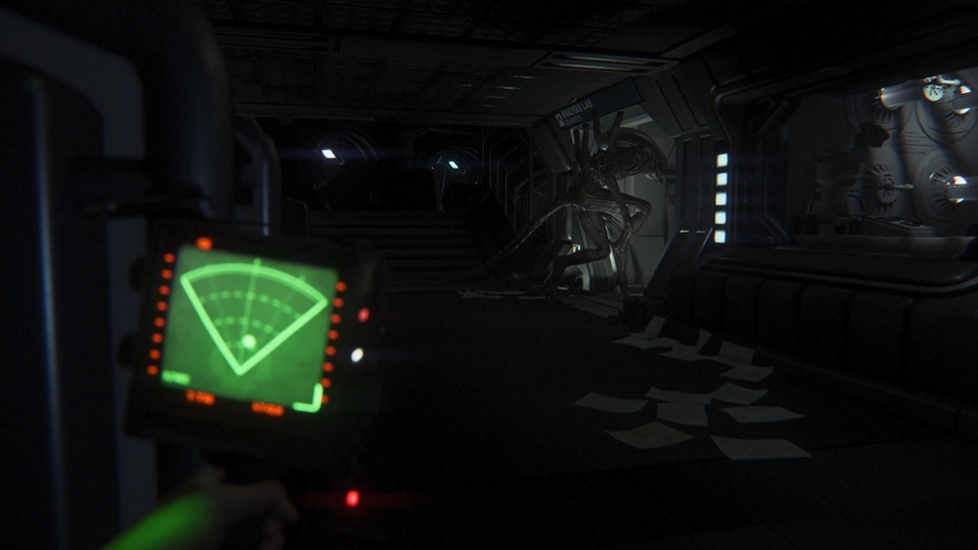
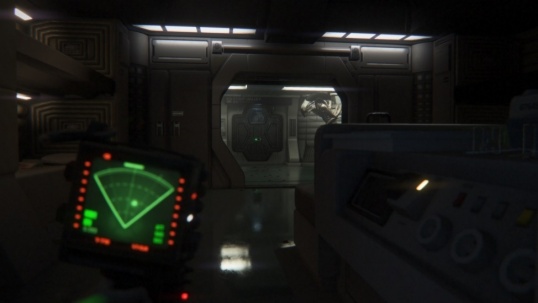
Navigating Sevestopol is done in a Metroid / Metal Gear like fashion. Basically, some areas will be locked to you without the right tool. Once you find it (be a blowtorch or a wrench), you can come back to that area. I’m not exactly sure how I feel about this just yet. It’s not exactly linear in that sense, but at the same time, I stopped playing Metroid Prime for almost the same reason. If it works for you, you’ll love it. If not, you might find yourself groaning in agony. If you’re lost, your handy Motion Tracker will help you find your nearest objective by way of a marker on the outside of your display.
4

Even in Space, the Alien can hear that beep. Put that Motion Tracker away if you have it in your line of sight. Note the marker on the outer edge telling you where to go.

Alien Isolation is slow. I mean………slow. Not in the story so much, but in the movement. You’ll want to run from point A to Point B, but with the enemies around, you’ll will sneak around for nearly the entire duration of the game (from what I’ve played so far). Don’t even bother sprinting, especially on the hardest difficulty. If you feel you’ve enough patience to play the game in this fashion, it’s a treat. If you’re hoping for something more Splinter Cell / Metal Gear like in that you’re stalking prey, it’s not happening here. Alien Isolation may have On Site Procurement of weapons, but you’ll find these are to be used sparingly, either due to the lack of ammunition / fuel, or from the echoing boom from firing the weapons. In using them you’re indirectly screaming “Hey! I’m right here on the southwest corner of the 3rd floor, kill me now! Do it!! I’m Here!!”

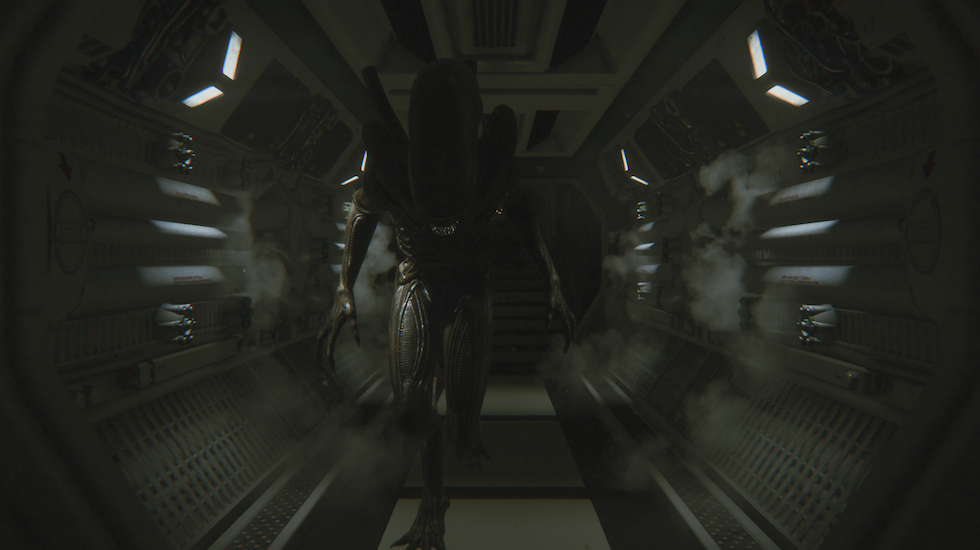
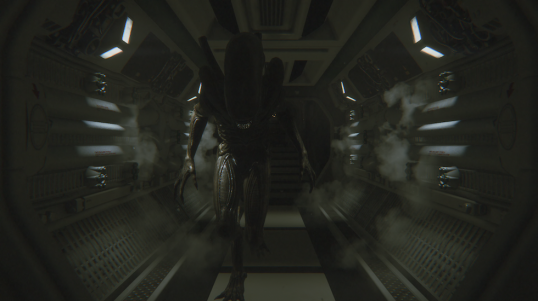
There are other threats on Sevastopol. You have the remaining humans on board who are just trying to survive, synthetics that can swarm you (like Bishop or Ash but not as technologically advanced), but these are enemies that can be defeated depending on what you have on you, and even then, they’re formidable. The Xenomorph, however is an 8 foot beast who delivers a one hit kill to you every time. Its presence will have you hiding in a locker frantically checking your motion tracker – but note that even enemies can sometimes hear the beep coming from it. You may even contemplate how long it’ll take for you to adjust to living in said locker for the rest of your days. According to Creative Assembly, the Alien was built with an adaptable AI that changes on the fly. I’ve had strange interactions in my experiences:

The Alien has no set patrol patterns as far as I can tell. You can watch it walk into a side room from a hiding point at the other end of the room, only to find it double back to the next room you enter. Despite how slow or silent you can be, the doors you move through still make noise, so as you progress, you never really “lose” the Alien so much as you throw it off for a minute or two.

The senses on this thing are creepy. If you are walking fast enough to hear your own feet on the floor, I absolutely guarantee you the Alien knows, too. Again, the Motion Tracker is your friend when it’s at a distance, but it’s also a problem if you’re close. My rule of thumb is that if I have a visual on it, the Motion Tracker isn’t necessary. Even then, use it sparingly to find where you need to go.

Vents. I can’t even tell you how many times I’ve had a chance to escape via a vent and chose a closet or death over it. I’m told you can use these to move around and escape even, but I haven’t even bothered.

Visually, I’ve played this on both the PS3 and the PS4. There’s nothing wrong with the PS3’s version of the game graphically (which is amazing), but if you have access to one, the lighting engines are just better on the next gen consoles. Shadow affects are nice between the two, but there’s a better gradient on the PS4’s newer hardware and smoke / fire effects are that much stronger on that system. Also note that the PS3 runs the game at about 720p, while the PS4 easily handles a 1080p playthrough. I am told that there can occasionally be some glitches where in crawling, you can fall through a room, but I have yet to run into these.

Renderings of the Sevastopol feel like they’re taken right from the first Alien film, as Creative Assembly was pretty much given as much access as they could get to 20th Century Fox’s archives. If you ever wondered what it would feel like to walk those dark halls of the Nostromo with a giant man sized Bone Dragon at your heels, this is the game for you. From the title sequence alone, you get an idea that CA were fans of the first film, and tried to design a game that does its best to immerse you into that universe. It doesn’t get everything right, but it does present the player with a sense of fear and stress unlike anything I’ve played before. Perhaps it’s just me.

In terms of drawbacks, one of the problems comes in the renderings of humans. They don’t seem to have the same sense of care that the Alien gets, most of them walking around with “dead eye” syndrome (like in Final Fantasy: The Spirits Within). The voice acting is okay, but isn’t particularly memorable. It’s like watching a Friday the 13th film. Do you really remember Kevin Bacon’s last lines before he was killed? Maybe, maybe not, but you do remember how he died.
ps4_online_preview_screen001_copy

If this is what you see from your Point of View, you’re probably already dead.

 Part of the soundtrack is built off of Jerry Goldsmith’s original score, and the same also features that weird “space wind” sound occasionally, which is so damn eerie. This may actually be (despite it’s flaws) the best movie tie-in/adaptation I’ve ever played. Most movie related games are either rushed projects (I’m looking at you Gearbox. I love Borderlands, but I remember the bad taste of Aliens: Colonial Marines) or fail to completely capture the feel of the movie. I’m very eager to see what Creative Assembly does next, Alien related or not. I’ve truly had fun with this game, despite it being as frustrating as Dark Souls.

Overall, Alien Isolation is a solid game for any fan of the original film. It’s the closest you’ll get to experiencing that universe (or at least playing the ultimate version of Cat & Mouse), even though the slow pace, saving mechanic and unforgiving AI may prove frustrating / unexciting to some.

Duke Tries A Halloween Marathon…Part One.


So, I think it may be fair to say that of most of the posters on this great site, I am probably the one who least enjoys the horror genre…or at least is never as excited about it as everyone else. It isn’t that I do not like horror films – there are quite a few I really love – but I just expect a lot from them. Probably – unfairly – more than I expect from other films. Why? Because I honestly think that when done right, horror films can be some of the most emotionally affecting films from any genre. But when done wrong – as I think far too many of them are – it just feels cheap and manipulative – and as someone who loves film, who loves how they can generate empathy and tell interesting stories, it always just feels like a slap to the face.

This love/hate relationship usually makes me hesitant to watch most horror films, which of course is an issue come October. This month is wall to wall horror from 12:01AM on the 1st – to midnight on Halloween. With this comes the pressure to watch a ton of horror films, and although in the past I have watched a few, I’ve never taken part in any sort of marathon that so many bloggers partake in this time of year…until now. This is part one – of what I hope will be a month long series – of quick reviews for horror films I watch this month. I hope to watch at least one a day.

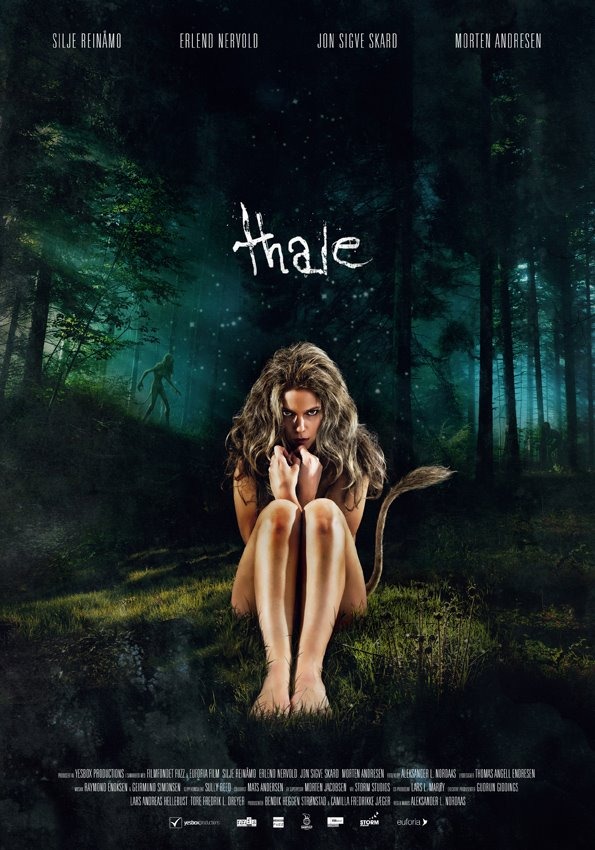
October 1st: ‘Thale’ (dir. Aleksander Nordaas)

tumblr_m490fyx40y1ruxqt3o1_1280

A very low budget Norwegian fantasy/horror film, with a lot of interesting ideas, that sadly doesn’t execute on enough of them to reach any level of greatness…which I think was possible.

‘Thale’ is about two friends, working in a crime scene cleaning service, who stumble upon a hidden basement at one of the locations they have been hired to clean. Within they find a lab of sorts, and a beautiful young woman who is unable to speak – and is most certainly more than she appears to be. The result is a rather unique horror film with fantasy elements; one that thrives on atmosphere for the first hour or so, building a genuine level of suspense and mystery. It is an intriguing story, one that is slow to build but never boring. There is certainly a lot under the surface.

The only real issue I had was that there is narration throughout that tries a bit too hard to add depth to the story, both narratively and thematically, without much success. Mainly because the exposition within would benefit more from a ‘show don’t tell’ approach – and also because the actual narrative comes off as so simple that many of the themes expressed through the narration have nothing to do with what we have actually been shown.

This isn’t too big of an issue really, and I can’t fault it for trying to give more meaning to the story, but had it executed on some of the ideas it alludes to under the surface than maybe this wouldn’t have been an issue at all – especially if it had been a half hour longer, and explored the fantasy element in more detail.

Still, the performances are very good and – given its very low budget – so are the effects and overall production. It certainly has its flaws, but it still warrants a recommendation.

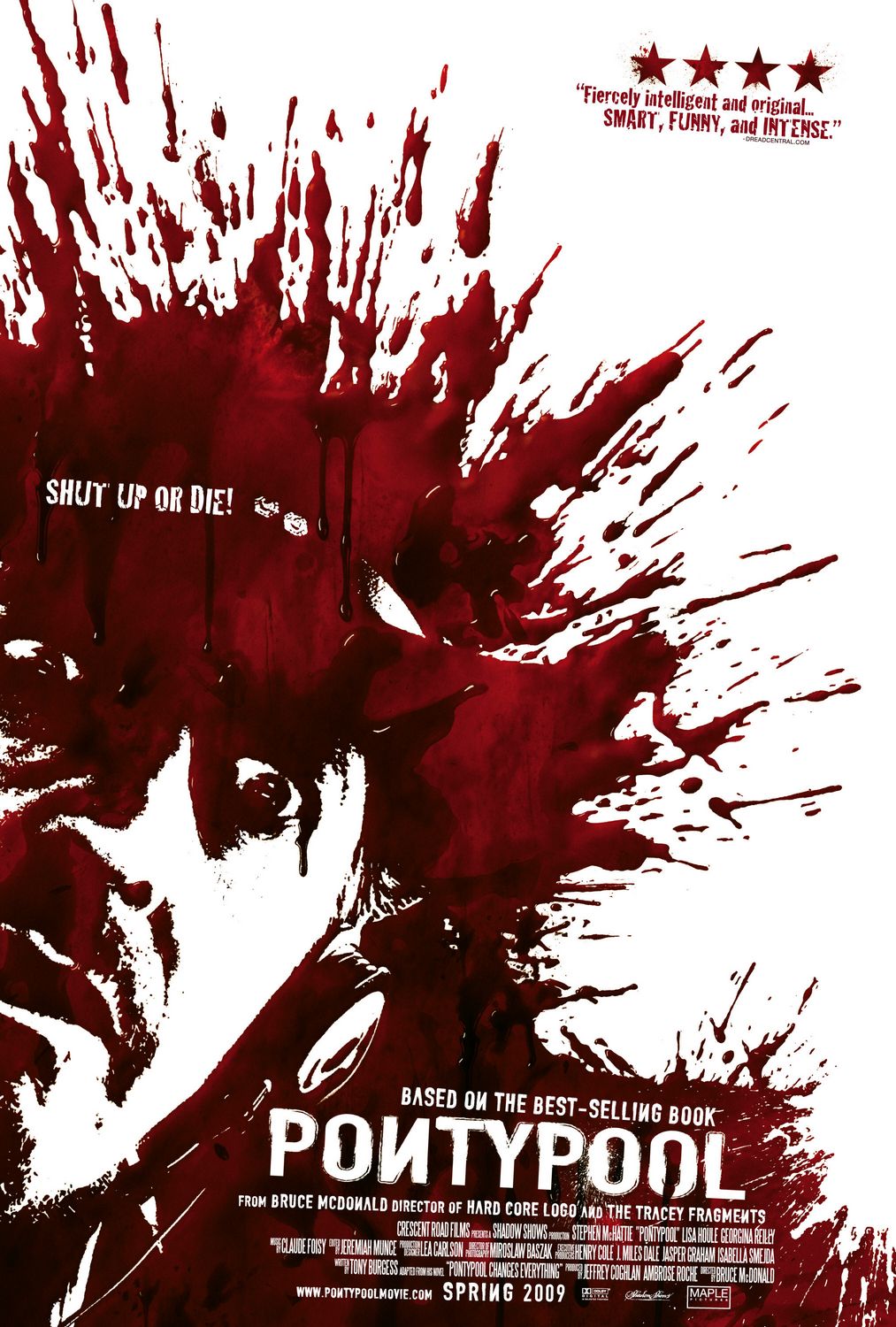
Oct. 2nd: ‘Pontypool’ (dir. Bruce McDonald)

pontypool_xlg

‘Pontypool’ is a mostly lean – though often convoluted – and creative horror film that builds slowly and contains just the right dash of humor. It is at times essentially ‘Welcome to Night Vale’ in film form.

It stars Stephen McHattie as an ex-shock jock who has reached a point in his career where he is stuck doing an early morning radio gig in a small Canadian town. He is quick to try to cause a stir, but his producer reminds him that the listeners just want to know the weather. As the morning slowly passes by the station begins to get weird reports of people, herds of people, swarming the streets. Whats seems to them to initially be a joke begins to turn into a life or death emergency situation where a virus is infecting the town, keeping the workers at the studio locked indoors, trying to figure out how it all started.

This isn’t the scariest horror film you will ever see, neither is it the most suspenseful – yet the development of the story, the unraveling mystery and the urgency of the performances make it an absorbing viewing experience. Things do start to get a little convoluted as we begin to better understand how the “virus” infecting people is being spread. The film seems to be making it up as it goes, and ironically it can’t seem to think of the rights words to explain what is actually happening.

But it does managed to create an interesting subtext on how language has been simplified and diminished by gossip, social websites and the media. It would also probably benefit from multiple viewings. But for now, I recommend you at least watch it once.

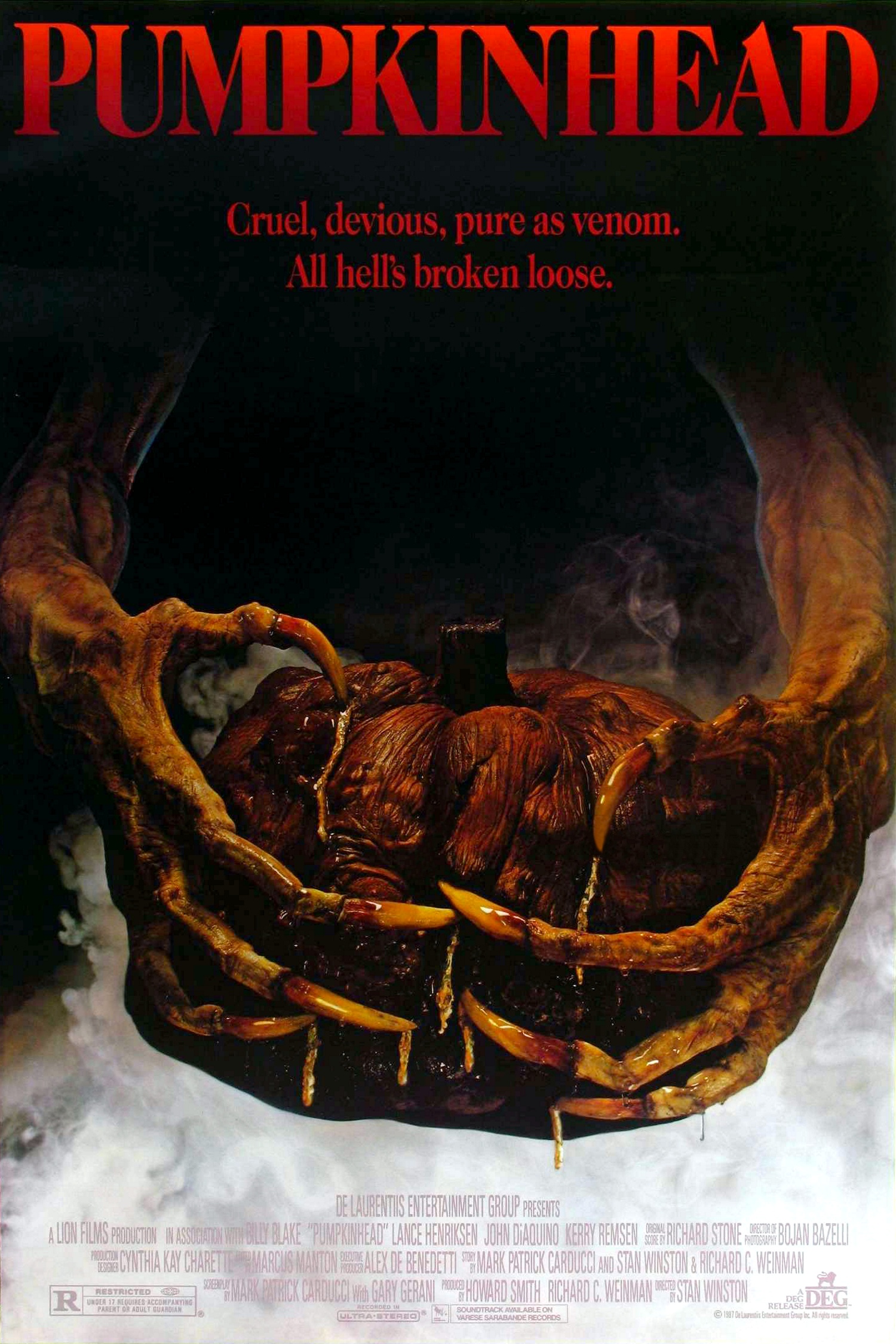
Oct. 3rd: ‘Pumpkinhead’ (dir. Stan Winston)

pumpkinhead-poster

‘Pumpkinhead’ is a creepy, cliche and cheesy as hell horror film about revenge, that manages to overcome all its faults with its brilliant creature design, a great central performance, and an emotional core that gives all the supernatural violence some resonance. The result isn’t a masterpiece – by any stretch – but it is a damn near perfect horror film for Halloween/October – especially with its eerie supernatural aesthetics.

The film stars Lance Henriksen as Ed Harley, a single father raising his son on a farm in the south. One day a group of teens (including a few blondes and a douchey “bad boy”) arrive in town. Their destination? A cabin in the woods…of course. On their way they encounter Harley at a local store he owns, which accidentally results in his son being killed by one of the teens in a dirt bike accident. The group heads for the cabin, fearing the repercussions, while Harley tracks down a creepy old lady who, according to local legend, can summon a demon-like creature to avenge the wrong doing done to a man.

From there we get a rather unoriginal creature feature – as the demon, called Pumpkinhead, hunts down the group of teens one by one. What kept this interesting, for me, was the structure of the events of the film and the development of Henriksen’s character. Henriksen is a great actor, and the bond that is built between him and his son, and the emotions he displays as he struggles with his son’s death and the revenge he seeks, manages to ground the film and gives it enough of an emotional relevancy to excuse the cheesiness of the supernatural horror elements – and some truly shitty dialogue.

On top of that are the great spooky horror aesthetics and atmosphere – moody lighting, fog…pumpkins – as well as the awesome design of the Pumpkinhead by special effects legend Stan Winston (‘Aliens’, ‘Terminator’) – who actually directed the film. It all adds up to an above average horror flick that I recommend everyone watch this October.

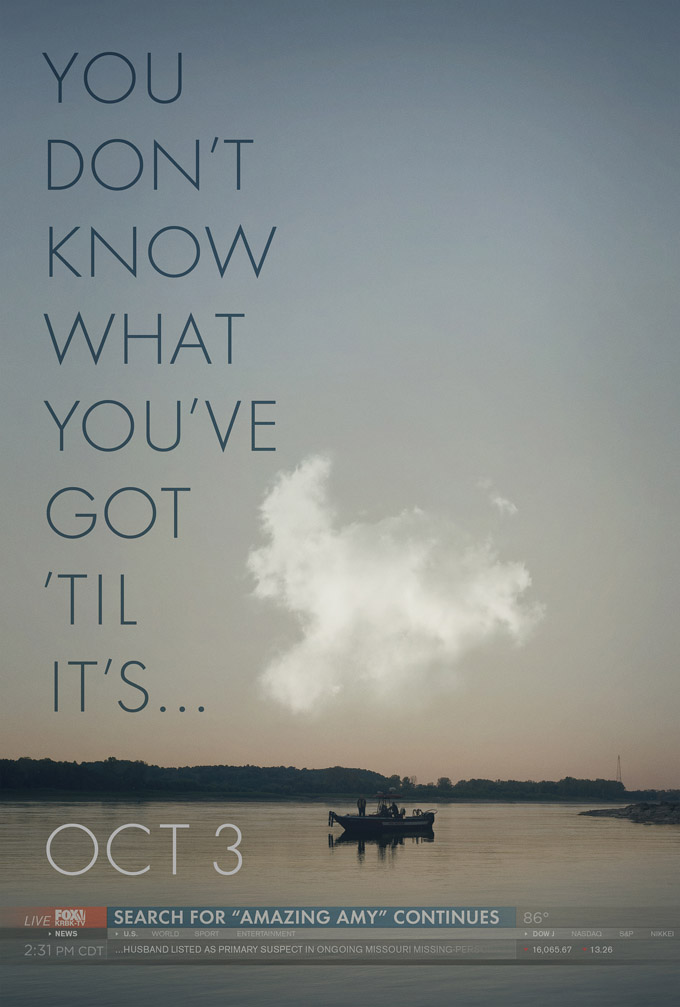
Quick Review: Gone Girl (dir. by David Fincher)


gone-girl-posterI stumbled onto the novel for Gillian Flynn’s Gone Girl in a mall. It sat near the front of the store with the rest of her books, emblazoned with one of those “soon to be a major motion picture” stickers and a “#1 New York Times Bestseller” label on top. I figured I try it, unaware that David Fincher was involved on the project. During that read, I ran to the Barnes & Noble in Union Square to pick up Flynn’s other books, Sharp Objects and Dark Places. After a co-worker and I finished these (I haven’t read Sharp Objects yet), we agreed that we enjoyed them, overall.

Of Gone Girl the Motion Picture, Flynn herself handles the screenwriting duties and she presents an adaptation so close to her novel that I wouldn’t be shocked if the film receives the same response as the first Harry Potter film. I only spotted 2 distinct changes, and these don’t damage the film in any way. They just may make you say..”Oh, crap, she didn’t keep that.”, If anything.

“But Lenny..” You might say, after hearing me tell you this over pizza and soda. “You’re losing me again, you’re talking too much. I never read Gone Girl. I could care less about the book, I just want to know about the movie because tickets are expensive, dammit! Wrap it up. Is it worth seeing or not?”

In a word, yes. Flynn’s story and Fincher’s direction are like Wine and Cheese here. Flynn’s machine gun writing and Fincher’s pacing method could make them as hot a duo as True Detective’s Nic Pizzolatto and Cary Joji Fukunaga. If actress / producer Reese Witherspoon was involved in getting these two together, she may have another gem under her belt to put next to her film Penelope.

Gone Girl is the story of Nick and Amy Dunne, a happily married Missouri couple on the verge of their 5th Anniversary. When Nick suddenly discovers his wife is missing, the investigation into her disappearance seems to lead back to him, presenting the question of whether our hero may or may not be involved. Just as with the novel, the audience is given glimpses into Amy’s story through flashbacks of their life together. The movie dances from chapter to chapter (or scene to scene, I should say) in this fashion and does so pretty well. You’ve a love story wrapped in a mystery.

The casting is spot on. There’s not a single person in this film that seemed like they didn’t fit their part. Both Ben Affleck (Argo) and Rosamund Pike (Jack Reacher, The World’s End) are magnetic when theyre not dealing with each other and if the movie manages to stumble into Awards season, their names could get thrown into the hat.

The supporting cast in Gone Girl is somewhat strong. Carrie Coon does a fine job as Nick’s sister Margo, which was definitely a good choice. It’s Kim Dickens (Hollow Man, Treme), Neil Patrick Harris and Tyler Perry who have the best screen time of any one outside of the leads. Every one of them help to pick up the story when you think it might waver a bit.

“Great!” you may say, getting up to leave. “I’ll check it out. Thanks for letting me know.”, To which I’d ask..”Don’t you want to know about the direction? Cinematography?” You might sit back down, sigh and roll your eyes, as if to say…”Sure, not like you’d let me leave without telling me anyway, right?”

At this point, everything is technical.

Fincher’s direction is straightforward. Working with Jeff Chernoweth, his cinematographer from Fight Club & The Girl With the Dragon Tattoo, the lighting is what you come to expect from the two. Colors in the present are muted, muddied and almost clinical. By contrast, Amy’s flashbacks appear bright and colorful, but the audience may notice this changing as the story progresses. You could almost say it’s the Zodiac color scheme layered on a different story. Gone Girl doesn’t feel like a “Fincher” movie in the way The Shining was Kubrick’s. It’s more of a Flynn story that would look really good if Fincher put it on screen. I’m not sure if there’s a better way to describe it, actually.

Gone Girl falters in the dialog at times. I had a few moments where scenes that felt fine in the novel fell flat in the film, particularly in some of the flashbacks. Have you ever had a moment where you watch a film, see two people talk to one another and say to yourself (or the person next to you), “Who says that, really?” The relationship of Nick and Amy was a hard, abbreviated sell for me, probably because of the time constraints. You know they’re together, and love is implied (and sexually displayed, I might add), but I can’t say that I recognized a big chemistry between Pike and Affleck. When acting around everyone else they’re great, but between each other, they lost me a little in the beginning. If it were a Blu Ray, I’d be tempted to tap that Chapter Forward button. Mind you, this is coming from a book to movie comparison, so a viewer that hasn’t read the book may respond differently to what’s on screen.

I will say that separately, Rosamund Pike and Ben Affleck are wonderful in this as Nick & Amy. I hope that this gets Pike some more lead dramatic roles, as she was more than memorable here.

Both Trent Reznor and Atticus Ross handled the scoring duties for Gone Girl. In their 3rd go around with Fincher, the sounds are similar to The Social Network, though a bit more subdued. They have a few standout tracks, and their music blends well in Gone Girl, though.

Overall, Gone Girl makes for a interesting night at the cinema, but it’s best viewed if you can manage to avoid the hype and catch it just to sate a curious mind.

Movie Review: Teenage Mutant Ninja Turtles {2014} (dir. by Jonathan Liebesman)


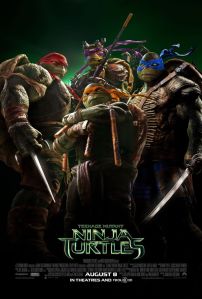
teenage_mutant_ninja_turtles_ver15_xxlg-720x1066Before I start, I’d like everyone in advance to understand I’m aware this is a kid’s movie. So, when I complain, feel free to throw it out there like the hula hoop in The Hudsucker Proxy (“You know…for kids”). I may be nitpicking about this movie, looking at it with eyes that are older than the intended audience. It may also be somewhat spoiler filled, so a little warning beforehand.

When it comes to Kevin Eastman and Peter Laird’s Teenage Mutant Ninja Turtles, I grew up on the 90’s Era cartoon. Truth be told, though, the Turtles started way back in the early 80s and the new movie may be closer to that in some ways. I can’t really say for sure due to my unfamiliarity with the comics.

I can say that while Jonathan Liebesman’s Teenage Mutant Ninja Turtles may not be my Ninja Turtles, but they may end up being someone’s Ninja Turtles. That’s really the kindest thing I can say about it. A number of kids in my audience seemed to really enjoy it, though the adults who came for the nostalgia factor (myself included) looked a little disappointed. It’s not a horrid movie. I had moments – particularly the snow sequence – that I truly enjoyed, but at best this Turtles feels like an action demo reel sliced together.

The beginning of the movie explains the Turtles, the Foot Clan, and The Shredder in the space of five minutes. This is helped along with some drawings down by Kevin Eastman himself. Everyone in the city is aware of the Foot Clan, and reporter April O’Neil (Megan Fox) is trying to crack her first big story with anything she can find about the Ninja groups criminal acts. This leads her to discovering the Turtles, Splinter and together they try to stop the Shredder’s master plan – one that involves poisoning all of New York City with a deadly mist from the top of a tower. This involves the Turtles because their blood still contains remnants of the Mutagen used to change them, which assists in their amazing healing factors. The Mutagen also acts as an antidote to the poison. It’s almost the same premise used in The Amazing Spider-Man and Batman Begins. Would it hurt to have a little creativity? Didn’t anyone in the writing department say “wait, we’ve seen this trend in movies about as much as we’ve seen the ‘Captured-Villian-taken-to-Hero’s-Base-who-Springs-Trap-that-Disables-Hero’s-Ability-to-do-Good’. Maybe we should try something different here?” Nope. Let’s simply take a tired plot line and do it again. Teenage Mutant Ninja Turtles deserves to be the final film that uses the Toxic Mist angle for a while.

A moment of silence, if you will:

R.I.P. “Toxic Mist, a.k.a. Mutagen Mist, a.k.a. Scarecrow Dust” – Born 2005 (Batman Begins) – Died 2014 (Teenage Mutant Ninja Turtles)

Here’s what I had a problem with:

Exposition by way of Explanation –
The rule of “Show, don’t Tell” states that it’s better to reveal information on screen – to the characters and the audience – than it would be to have someone just tell you what’s up. Most of Turtles moves in this fashion. When April witnesses a crime thwarted by Raphael, she runs to her boss, her room mate and pieces it all together, telling everyone exactly what we just saw – that a vigilante is fighting back against the Foot Clan. The argument could be made that the explanation is done to help kids understand what’s going on, but the scene before that already covered it.

Plot holes within plot holes-
Turtles also suffers from giving the audience information that the writers completely ignore later on. At one point, one of the members is wounded and the remaining Turtles have to get Mutagen to save them. Wait. The story already mentioned that they all had Mutagen in them – the “Mutant” part that accelerates their healing – so why would you need to administer more when what they have can already save them? It’s face palm moments like these that show how much focus was done on making the movie look good, compared to writing a solid plot. Some things don’t make sense here.

What did work:

Brian Tyler’s score for the film may be the best element of the entire movie. It may sound similar to Thor: The Dark World in some ways, but it’s a good theme for the heroes overall. I’ve had some of it on repeat on Spotify, truth be told.

The action is actually pretty good, though it takes some time to get there. Some of the fight scenes suffer from the Bourne Identity and Batman Begins blur effects, but overall, it works out. Again, I wouldn’t mind seeing that snow sequence again if I didn’t have to sit through the entire film. From that point forward, the action picks up. Each turtle (and Splinter) has their own moment in the spotlight and when it happens, it can cause a smile or two, however brief that may be. The Turtles themselves are huge and highly mobile, which make the fights look like Power Rangers battles before the enemy grows to a huge size. There aren’t as many Bay like explosions in this as you’d find in Transformers, but you can feel his influence on this. That could be considered a problem when you compare Turtles with Battle: L.A. (which I enjoyed).

The In Between:

The casting on this movie is a mixed bag. Megan Fox isn’t a bad April O’Neil by any means (she’s good), but April herself in this version isn’t the sharpest tool in the shed. By that, I mean she is as abbreviated in this as Lois Lane was in Man of Steel. In an age where we’re trying to see more well rounded female leads on screen, O’Neil becomes just another Lara Croft / Carol Marcus / Sydney Bristow with issues circulating around her father. Not saying it’s unlikely, but they could have found something else to work with as background. Again, it’s a kid’s movie. Maybe it doesn’t need to be that complex. Will Arnett felt like a sidekick in this, and I found it a little difficult to not hear his Lego Batman when he spoke, but that’s just me. The Turtles themselves could be voiced by anyone, really. I didn’t feel too much of a difference between them, save that they played to their archetypes. Raphael always seemed angry, Mike is playful and so on.

Overall, Teenage Mutant Ninja Turtles is a kid’s film and maybe only young kids will really enjoy it. There’s action for both old and new fans of the Heroes in a Halfshell, but it’s wrapped up in stories we’ve heard before. This probably one you’ll want to wait for video, at best.

‘Lucy’ Review (dir. Luc Besson)


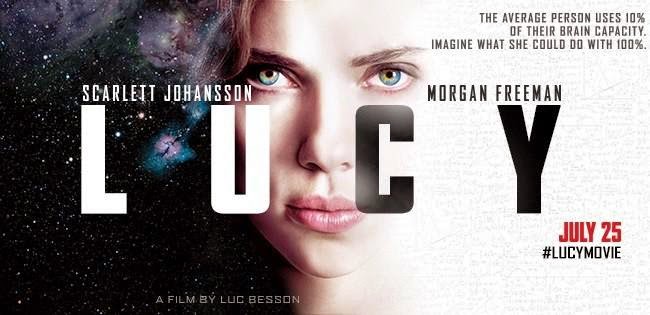
650_1000_lucy-poster

You should probably be forewarned – ‘Lucy’ is nothing like the film the marketing would make you believe. It requires one to go in with an open mind…just also be prepared for that mind to be set of fire and stomped into a mush…for better or worse.

The film stars Scarlett Johansson as Lucy, a young American student in Taiwan, who is kidnapped and forced to be a drug mule. The drug she must transport is a new one named CPH4, derived from the chemicals that a mother’s body sends its developing baby, which is surgically placed into her lower abdomen. During the transport she is beaten, causing the bag holding it to puncture, and the drug to be released into her system. The drug begins to change her at a cellular level giving her access to more of her brains potential.

I think it needs to be said that the film is not trying to say we only use 10% of the physical brain (which is the debunked myth) but rather that we only utilize 10% of its potential. Think of it not as an engine only using 10% of its parts, but rather an engine that uses 100% of its parts but only outputs 10% of the power it should and can produce. Then think of the drug, like a more powerful engine fuel, allowing the brain to generate 100% power.

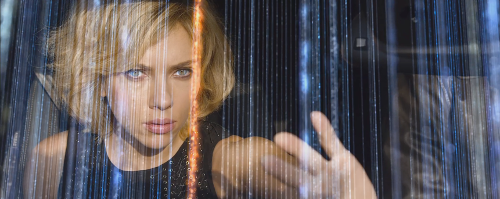
As her knowledge and cerebral capacity grows the film takes some really weird turns as it plays around with the idea of what exactly the human mind could achieve once its full potential is unlocked. Could we control all the cells in our body? Could we control others? Could we feel and manipulate matter and energy? Once you can control both, can you then control time? She begins to be able to see through people, enter their memories, see the energy output of cells, change her hair color, control radio waves…and a whole lot of other crazy stuff. To better understand what is happening to her, and to help pass on the knowledge she is beginning to learn, she sets out to meet a professor who studied and theorized the very changes she is undergoing.

Lucy 1

During all this Lucy is also being hunted by the gangsters who want their drug back. This is where the film is arguably at its worst. It leads to some ridiculous shoot outs – and one somewhat out of the blue car chase – which don’t really add much to the overall film. They do create a slight feeling of suspense, but once you get into the scientific and philosophical areas that ‘Lucy’ ventures into, then all the cliché action movie stuff just seems to get in the way.

Luckily none of that really matters as the film’s end approaches and it goes straight past ludicrous speed right into plaid as Lucy, now able to control time, cycles through the history of the earth, right past its creation all the way up to the big bang and beyond. To what end? Perhaps it is to better understand the universe or maybe it is just because she (and Luc Besson) can…there is a lot here that will make you scratch your head. The film definitely tries to be a lot smarter than it is and is built on theories based on theories based on pipe dreams. Still, it never gets any more ridiculous than most superhero-esque films.

Lucy 2

The thing that drives it all ( and really keeps it all together) is Scarlet Johansson’s performance. She once again proves to me that she is one of the most interesting actors working right now. She has chosen so many diverse roles in recent years; and as weird as it may sound there are few actors working right now who can express so much through being so completely expressionless in the way she can. She brought more life and emotion to a computer A.I. than most actors did in live action roles last year; and here, as in ‘Under the Skin’, there is quite a lot going on behind her seemingly blank stare.

Her co-star Morgan Freeman sadly does little more than offer exposition. He plays a professor who studies neuroscience and evolution and spends most of the film explaining how and why particular things are happening to Lucy. Freeman seems to be the go to for this sort of role. But that voice really is the only thing that can make this sort of pseudoscience seem convincing.

lucy 3

I have to say it truly is amazing that the film works at all. ‘Lucy’ manages to be just as dumb at times as it is smart. But I was able to overlook the silliness of much of it simply for the fact that the film does attempt to ask some interesting questions, even if they don’t make much sense. From start to finish the film travels down such a fun and exciting tongue in cheek rabbit hole of explosions and trippy visuals and I loved every minute of it. It gets so crazy that at one point Benjamin Franklin’s head literally explodes. It is a mishmash of so many ideas and themes, done with such excitement and ambition, that it is hard to hate any of it. As some critics have mentioned, it really is a Besson action film smashed together with ‘2001: A Space Odyssey’ and parts of ‘The Tree of Life’. Even better is that ‘Lucy’ has a fast enough pace and short enough running time to never leave you bored. It is entertainment, definitely not at its best, but surely at its purest and I highly recommend it.

———

More of my nonsense on Twitter.