This is from 1966. Unfortunately, the identity of the artist is unknown but I like the combination of cowboys and Dracula. Billy doesn’t look like much of a kid, though. I also like that the poster features the shadow of both Boot Hill and Dracula’s Castle in the lower left-hand corner, bringing to iconic places together for one movie.
Things got a little bit busy here at the Shattered Lens, didn’t they?
Well, it’s to be expected! It’s October and that means that it’s time for our annual Horrorthon! Basically, I spent September resting just so I could make it through this month. (Actually, I spent most of September resting. On September 27th, I posted 18 reviews, just to prove that I still could.) October is totally exhausting but this month, more than anything, reminds me of why I love sharing my thoughts on movies, books, and all the rest. If I can turn you onto a new movie or if I can encourage to give a movie second chance, I feel like I’ve done my work here. We’re only three days in and I already I remember why I love this month, this site, my collaborators, and all of our readers.
Seriously, than you for reading. All of us here at the Shattered Lens hope you enjoy what the site has to offer this October!
Well, it’s been a busy week so let’s get right the recap!
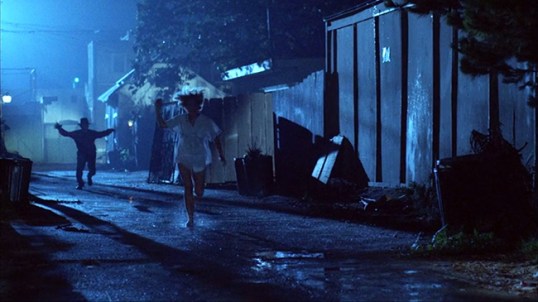
A Nightmare on Elm Street (1984, dir by Wes Craven, DP: Jacques Haitkin)
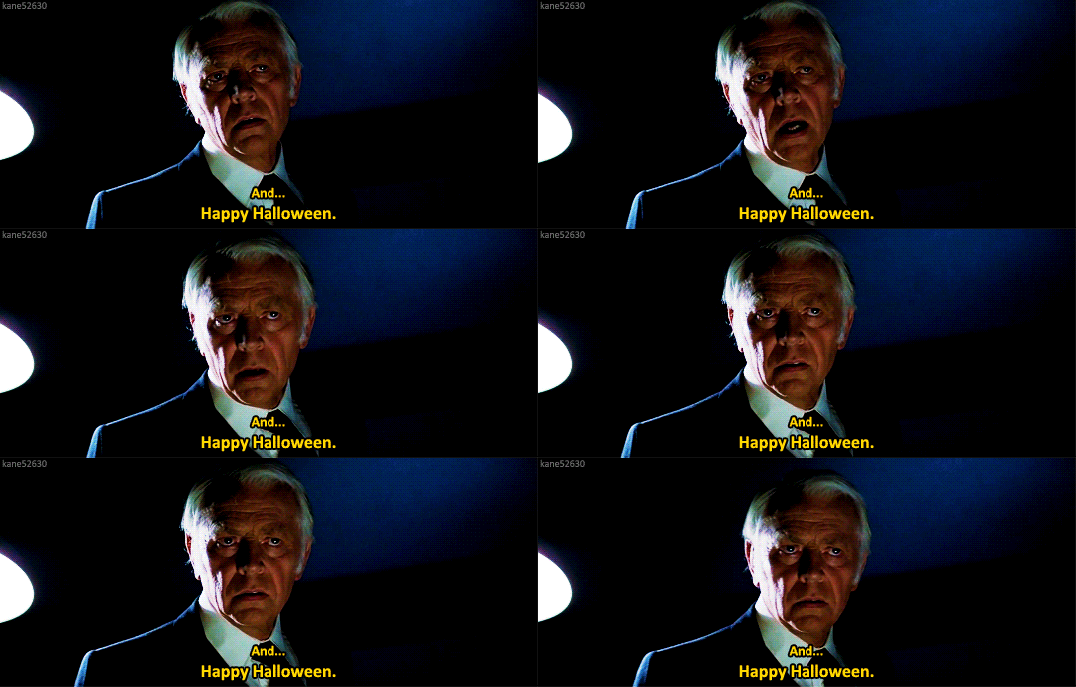
Tonight’s episode of Friday the 13th: The Series is a Halloween episode!
For some reason, Ryan and Micki decide that it would be a good idea to throw a Halloween party in a cursed antique store. Unfortunately, their evil Uncle Lewis is determined to return from Hell and what better time to do that than on the greatest holiday of them all!?
This episode is distinguished by the presence of the great character actor R.G. Armstrong, going totally over-the-top as Lewis and having a lot of fun while doing it! Something to keep an eye on during the Halloween party are the costumes. You’ll see a lot of sheets and leotards. You won’t see many familiar characters, largely because it would have cost money to feature any of them. That’s not a complaint, though. Personally, I like it when people make their own Halloween costumes, as opposed to just copying whatever’s popular.
This episode originally aired on October 26th, 1987.
Born in what is now Poland but what was then Germany, the late Ulli Lommel got his start as a frequent collaborator with the enfant terrible of New Wave German cinema, Rainer Werner Fassbinder. Lommel acted in several of Fassbinder’s films and Fassbinder produced Lommel’s third film as a director, the acclaimed The Tenderness of Wolves. In the 70s, Lommel relocated to the United States and, after marrying heiress Suzanna Love, he became a prominent part of the New York City art scene. He hung out with Andy Warhol. He made films about punk rock. He directed three films, Cocaine Cowboys, The Boogeyman, and The Devonsville Terror, that proved that he actually did have some talent when it came to taking on thrillers and horror films.
And then, it all pretty much fell apart. Reportedly, after he and Love divorced, he lost not only his frequent star but also his main financial backer. Lommel spent the rest of his lengthy career directing zero-budget horror films that were best-known for featuring stock footage that was lifted from his previous films. Starting in 2005, he started making direct-to-video movies about real-life serial killers. In interviews, Lommel insisted that his films were not exploitive but that, instead, his serial killer films were meant to offer up a critique of the hypocrisy of American society. And while it’s easy to roll your eyes at Lommel’s claim, I have no doubt that he was being, in his own way, perfectly sincere. His serial killer films are famous for not sticking to the facts but they should be even more famous for their emphasis on alienation and loneliness. All of Lommel’s serial killer films focus on people living on the fringes of society, ignored by those who would rather pretend that they didn’t exist. Lommel consistently portrayed serial killers as being a symptom of a much bigger disease.
Unfortunately, Lommel made his films with very little money and on a very tight shooting schedule. Reportedly, Lommel’s philosophy was to almost always only shoot one take. If someone screwed up a line or if there was a glaring continuity error or if the camera crew briefly appeared in the background, so be it. Indeed, because Lommel’s later films were so deliberately chaotic and semi-improvised, it was often difficult to tell if a continuity error was actually a mistake or something that Lommel deliberately planned.
Sadly, this led to Ulli Lommel getting a reputation for being one of the worst directors of all time. That’s not fair, though. Whatever one might say about his low budgets or his odd style, one cannot deny that Ulli Lommel had a unique vision and that he stuck with it. That’s more than you can see for most bad directors. If nothing else, you’ll never mistake a Ulli Lommel film for being the work of any other director.
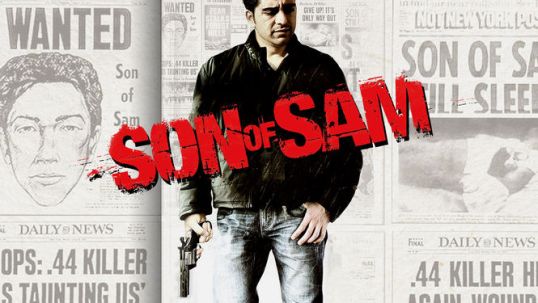
Take his 2005 film about the Son of Sam. The film is 80 minutes of David Berkowitz (played by Yogi Joshi) wandering around New York with a confused look on his face. Whenever he sees anyone, a voice commands him to kill while another voice chants “Son of Sam …. Son of Sam.” Meanwhile, there are flashforwards to the recently arrested David Berkowitz, meeting with his public defender and subsequently asking a priest (played by Lommel himself) to exorcise the demons from him. Then there are flashbacks to Berkowitz at some sort of Satanic coven meeting where the high priestess won’t stop laughing. (In typical Lommel fashion, the high priestess is clad in her underwear while everyone else in the cult is dressed in black.) Then, there’s another set of flashbacks to Berkowitz talking to an old woman who may or may not be a part of the cult. Then a dog shows up and gives Berkowitz a meaningful stare.
It’s a mess with no real plot and making it through the entire 80 minutes is a true endurance test. The film not only screws up the facts behind the murders (i.e., the real-life Berkowitz shot people sitting in cars, the film’s Berkowitz shoots a drug dealer standing in a doorway) but it also buys into Berkowitz’s self-serving claim of having been manipulated by a Satanic cult, a claim that falls apart under scrutiny and common sense but which was still recently presented as fact by a Netflix miniseries. We’re told that the film is taking place in the 70s, which is good because, despite the presence of one awkward conversation about going to Studio 54, you’d never know it otherwise.
And yet …. there’s an intensity to Lommel’s vision that I have a hard time totally dismissing. The movie plays out like a fever dream and the visuals are so chaotic and so random and just so weird that it’s hard not to feel that Lommel probably did manage to capture what it was like inside of David Berkowitz’s messed-up head.
Don’t get me wrong. Son of Sam is not a good film. It’s a mess and it’s repetitive nature gets boring fairly quickly. But it’s also hardly the work of the worst director of all time. Instead, it’s uniquely Lommel.
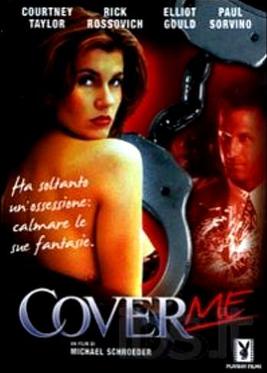
A serial killer is stalking Los Angeles, killing the models who have appeared in an adult magazine. Because they’re not very good at their jobs, neither Sgt. Bobby Colter (Rick Rossovich) nor Detective J.J. Davis (Paul Sorvino!) have come up with any leads that could lead them to the murderer. Facing a dead end, they come up with a brilliant idea. Maybe a cop could go undercover as an erotic model! Fortunately, Bobby just happens to be dating a surprisingly attractive cop named Holly (Courtney Taylor). You have to love it when a plan comes together.
At first, Holly is hesitant but, realizing that there’s no other possible way to get the killer off the streets (because it’s certainly not like Bobby or J.J. could actually do any police work on their own), she agrees to pose for some pictures. Soon, she’s appearing in the magazine, working as a stripper, and discovering that she enjoys her new uninhibited lifestyle. Meanwhile, the killer has noticed her. The killer, by the way, is Dimitri (Stephen Nichols), who frequently disguises himself as a woman and who is driven to kill by his mother. Dimitri’s identity is revealed early on in the film so this doesn’t count as a spoiler. Cover Me is a mystery but it’s a mystery where everyone figures it all out except for the people who are supposed to be figuring it out.
Cover Me was one of the many direct-to-video films that found a home on late night Cinemax in the 90s. These films were advertised as being “erotic thrillers,” though there was usually little about them that was either erotic or thrilling. Cover Me was produced by Playboy and distributed by Paramount, which means that Hugh Hefner probably used to show up on set, wearing his sea captain’s hat and asking the strippers if they wanted to come back to the mansion and help him look for his Viagra. Because it’s a Playboy film, Cover Me has higher production values than the typical 90s erotic thriller but it’s still interesting that a company best known for publishing an adult magazine would produce a film about a killer targeting nude models. In the 70s, Playboy produced things like Roman Polanski’s adaptation of MacBeth, a cinematic triumph regardless of how one feels about Polanski as a human being. By the time the 90s rolled around, they were producing slightly less classy versions of Stripped to Kill.
Still, Cover Me is better than many of the other erotic thrillers that came out during the direct-to-video era. That doesn’t mean that it was a good movie, of course. There’s a reason why “Skinemax” was go-to punchline during the 1990s. As opposed to many of the other movies of the era and the genre, Cover Me has a talented cast that tries to make the best of the material that they’ve been given. I don’t know how Rick Rossovich went from appearing in The Terminator and Top Gun to starring in something like Cover Me but he delivers his lines with a straight face, which could not have always been easy. Paul Sorvino, Elliott Gould, and Corbin Bernsen are also on hand, all playing their parts like pros. (Between L.A. Law and Psych, Bernsen was a mainstay in these type of films, almost always playing either a pimp, a pornographer, or a strip club owner.) Finally, there’s Courtney Taylor, who is actually pretty good in the role of Holly. Though the role really only calls for her to be sexy, Taylor still plays it with a lot of conviction. Taylor’s performance is natural and likable and she sells even the most clichéd dialogue. Just as when she starred in the fourth Prom Night film, Taylor is always better than her material. Unfortunately, Courtney Taylor appears to have stopped acting around 2000.
Cover Me was shot at the same time as an early CD-Rom game called Blue Heat, where I guess the player would step into Holly’s shoes and try to solve the case. Because the company that developed the game went out of business before the game was published, Blue Heat didn’t come out until two years after Cover Me. I’ve never played the game but, from what I’ve read online, it was a point-and-click game where you could go to various places in Los Angeles and search for clues and interrogate suspects. The game came with multiple endings, depending on the decisions you made. Did anyone ever play this game? Let me know in the comments!
As for Cover Me, it’s not great but it’s also not terrible, which is high praise when it come to late night CInemax.
You are standing outside the Caves of Despair and you’re feeling sad. Maybe it’s not a good idea to go into the Caves of Despair, then. Maybe you should stand outside and check your phone. Take a look at Twitter. Check out your dating apps. Play a game … you know something? Caves of Despair are looking pretty damn good right now.
Inside the Caves of Despair, there are gems! That shouldn’t come as a surprise to any Interactive Fiction veteran. How many games have we played where we were supposed to be happy just because we found a gem or a diamond in some musty old cave? This Won’t Make You Happy is one of the few games with the courage to directly address the absurdity of wasting your imaginary life on not only gems but also protecting them from obnoxious gnomes.
This Won’t Make You Happy is a meta game that comments on the shallowness of hunting for gems and paying attention to a narrator. It’s the type of game that will probably annoy people searching for a more traditional IF adventure but I liked it because it addressed several issues that I always wondered about whenever I played any of these games. For instance, who is the narrator and why are we following his orders? It’s a quick game and there’s enough funny moments that it’s worth replaying.
Every film about the Son of Sam and his reign of terror in New York City inevitably faces one huge question.
What to do about the dog?
Before he started blaming Satanists, David Berkowitz claimed that a dog told him to kill. Most people who have made films about the Son of Sam have been content to just have a dog barking in the distance. Spike Lee, however, had the guts to actually have a dog trot into Berkowtiz’s apartment and start yelling at him.
From 1999’s Summer of Sam:
The dog is voiced by John Turturro. I have to say that, for such an evil creature, it really is a cute dog.
That’s what I found myself thinking as I read R.L. Stine’s 1991 YA suspense thriller, The Girlfriend. Scotty is the book’s main character. He’s got a great life ahead of him, despite the fact that he’s an idiot. Scotty has been accepted to Princeton. He’s the quarterback of high school’s football team. His family is rich. He’s dating Lora, the head cheerleader. He and Lora have just been elected homecoming king and queen. However, Lora and her family are going on vacation to Paris and that means that she’ll miss the homecoming dance! Scotty will be a king without a queen! Scotty is so upset over this that he makes out with Shannon. Shannon has just moved to town and no one knows anything about her. Scotty certainly knows little, beyond the fact that she claims to have three overprotective older brothers and that one of them is former wrestler. Oh, and Shannon’s in love with Scotty. She likes to call him “baby.”
Now, when I say that she likes to call him “baby,” what I mean is that the word “baby” appears close to a million times in this book. I didn’t actually sit down and count all of the times that the word appeared, of course, but I am a fairly observant reader and it seems like a million is close to the right number.
Of course, overusing the word “baby” is not the only thing that Shannon does. Shannon turns out to be a bit unstable and more than a little possessive. She sets out to make Scotty and Lora’s life as miserable as possible but you know what? Good for her! Seriously, Scotty is a jerk and Lora’s incredibly bland for someone who can go to Paris whenever she feels like it. Shannon provides the book with what life it has. She’s a jolt of pure energy, forcing all of the dull people around her out of their complacency. Though it may or may not have been Stine’s intention, it’s impossible to read The Girlfriend without spending the whole time looking forward to what Shannon is going to do next. Unfortunately, she does kill two pets and, as a result, I can’t really be on Team Shannon but, even after that, she’s still more interesting to read about than either Scotty and Lora.
Anyway, The Girlfriend is an entertaining work of Stine fiction. Scotty is a uniquely unlikable lead character but Shannon brings a much-needed jolt of life to the proceedings. It’s too bad that she never returned for a sequel. Of course, it’s not too late. Scotty’s probably still working at his Dad’s architectural firm. Maybe it’s time for Shannon to stop by for a visit.
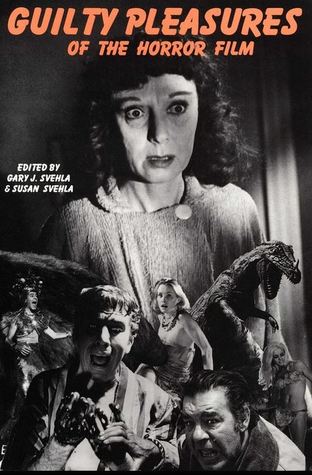
The back cover of this book announces, “THE CHARGE: Bad filmaking!”
It then offers up a list of 12 films (most of which are horror films, though a few are not) that were dismissed by the critics. The book features 12 essays, each providing a defense of one of the films in question. Those 12 films are:
Maniac (1934), which is defended by Bret Wood
Sh! The Octopus (1937), defended by John Soister
Voodoo Man (1944), defended by Gary Don Rhodes
Unknown Island (1948), defended by John Parnum
Scared Stiff (1953), defended by Ted Okunda and James L. Neibaur
Indestructible Man (1956), defended by Don Leifert
Rodan (1957), defended by Don G. Smth
The Tingler (1959), defended by Tom Weaver
The Flesh Eaters (1964), defended by David J. Hogan
When Dinosaurs Ruled The Earth (1970), defended by Mark A. Miller
King Kong (1976), defended by Robert A. Crick
Dune (1984), defended by Susan Svedha
There’s a few things that you’ll notice about this list. First off, you’ll notice that — as I already pointed out — not all of these films are horror films. Dune, in particular, is a surreal science fiction epic. Like all of David Lynch’s films, there are elements of horror but the film itself isn’t actually a part of the genre. Secondly, I was surprised to discover that Rodan and The Tingler apparently needed to be defended. Finally, just by looking at the release dates of the film included in the book, you’ll probably be able to guess that Guilty Pleasures of the Horror Film has been around for a while. The book was first published in 1996. I picked up my copy at Recycled Books of Denton, Texas, way back in 2006. And finally, in 2021, I got around to reading the entire thing. It’s funny how that works out some times.
With all that in mind, though, it’s an enjoyable book and each essayist does a good job of making their case. (The fact that it took me so long to get around to reading it has everything to do with me having ADHD and nothing to do with the quality of the book itself. My office is currently full of very good books that I need to get around to reading. And I will!) While I think the natural instinct of most readers will be to automatically jump ahead to see what the essayists has to say about David Lynch’s version of Dune (and perhaps the 70s version of King Kong), my favorite essays dealt with Indestructible Man and Flesh Eaters. While I was already familiar with the surprisingly grim and violent Indestructible Man, reading David J. Hogan’s thoughts on Flesh Eaters inspired me to make a commitment to watch and review the movie sometime this October. Really, what more can you ask for from a book like this?
Despite the fact that they’re not all horror films and I’ve never really been comfortable with the term “guilty pleasure,” (despite the fact that I’ve used it more than a few times), Guilty Pleasures of the Horror Film is an enjoyable book for those of us who love the genre and who are always willing to defend an unfairly maligned film.
Luna, a blonde wearing a miniskirt, walks down a city street. She goes to a high-rise apartment building and is buzzed in. She doesn’t live in the building but someone who is expecting her does. She gets on an elevator, one that is full of people. One person in the elevator obviously notices when she enters. Eventually, everyone gets off the elevator, except for Luna and that one person. As the elevator approaches the top floor, Luna is suddenly stabbed to death. The murderer flees. When the elevator reaches the top floor, three residents discover Luna’s dead body….
And none of them seem to care!
Professor Isaacs (George Riguad) stares at the body, unconcerned. Miss Moss (Maria Tedeschi) makes a few judgmental comments about the victim. Mizar (Carla Brait) does, at least, scream when she finds the dead body but, ultimately, she’s more worried about how she’s going to get downstairs so that she can get to her job as a stripper/performance artist in a sleazy club.
Yes, we’ve entered giallo territory! The Italian giallo films are known for their brutal murders, stylish visuals, convoluted plots, and their black-gloved killers. However, what I always find to be most disturbing about them is that it’s rare that anyone really cares about all of the murders or the victims. Instead, giallo films are often full of bystanders who, at the most, get mildly annoyed at the idea of their day being interrupted by someone else’s murder. The typical giallo takes place in a heartless world, one where even the most grotesque scenes are often viewed with a disturbing nonchalance. That’s certainly the case with the opening of the 1972 Italian film, The Case of the Bloody Iris.
The rest of the film centers on Jennifer Langsbury (Edwige Fenech) and Marilyn (Paola Quattrini), two models who have recently been hired to star in a series of print ads for the building. They also live in the building, which would seem convenient if not for the fact that there’s also a killer on the loose who is only targeting young, single women. Even without the murders occurrin around her, Jennifer is struggling a bit getting adjusted to the world. Before becoming a model, she was a member of hippie sex cult and the cult’s leader, Adam (Ben Carra), has a bad habit of randomly showing up and demanding that she return to him. However, Jennifer is far more interested in Andrea Anitnori (giallo mainstay George Hilton), the handsome architect who built the building and who has an obsessive phobia about blood, which is going to be a bit of a problem because a lot of blood is about to be spilt.
Got all that?
The Case of the Bloody Iris is a typical, if entertaining, giallo, which means there’s a lot of sex, a lot of blood, a lot of bizarre suspects, and a few incredibly incompetent police detectives. It’s also pretty damn enjoyable, even if it doesn’t exactly break a lot of new ground as far as the genre is concerned. While director Giuliano Carnimeo never matches the visual heights of an Argento, a Bava, a Martino, or even a Lenzi, he still does a good job keeping the action moving and he shows just enough of a flair for capturing stylistic violence to make his film worthy of the genre. While the mystery itself doesn’t always make a lot of sense (which is actually to be expected when it comes to the giallo genra), The Case of the Bloody Iris features Edwige Fenech and George Hilton, two mainstays of the genre, at their best and (even though dubbed) most charismatic. It’s an enjoyable little thriller, one that’s worth the 90 minutes that it takes to watch it.






 Through the Shattered Lens