1963’s Dementia13 is a significant film for another reasons.
For one, it’s the mainstream feature film debut of Francis Ford Coppola. (Coppola has said that he directed two softcore films before Dementia13 but they’ve been lost to history.) Both Coppola’s screenplay and his direction were heavily influenced by the early giallo films that were coming out of Italy. One could argue that this is the first American film to pay homage to Mario Bava.
Dementia13 is also the first film on which Coppola ever went overbudget. This film is literally the start of an era.
Coppola himself has been critical of Dementia13. Producer Roger Corman was not happy with the first cut of the film and added a few scenes that took away from Coppola’s pacing. That said, it’s still an atmospheric and creepy forerunner to the American slasher film. The scene in which Launa Anders goes for a swim has been duplicated in numerous other films and it’s still effective in the way that it chops away at the audience’s sense of security. It certainly freaks me out. Of course, I’m not much of a swimmer. I’m a good drowner, though.
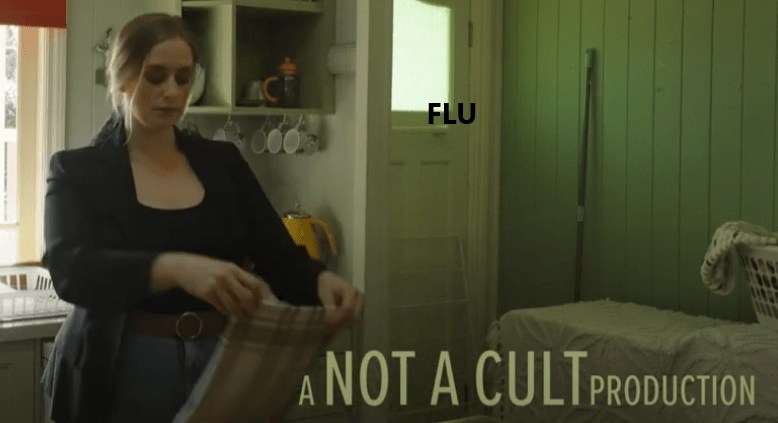
This film was not in IMDB. I could not find the actresses or director on imdb. Unless it’s just a series of slurs, I’m going to pretty lenient and hopeful. The filmmaker has no subscribers and is doing this for the love of the art. My fingers are crossed! A single mom and her friend are unlucky in love and have a budding romance. During their mundane conversation, the mother’s daughter is screaming like a demon. There are a number of signs of evil presence. Since there was not a conclusion, I believe that this short was a pitch for funding for a feature length film. When Hulu makes a faux short film, it’s very annoying, but Stacey Ellis is trying hard to get her art off of the ground and I wish her the best. Yes, I’ve gone soft.
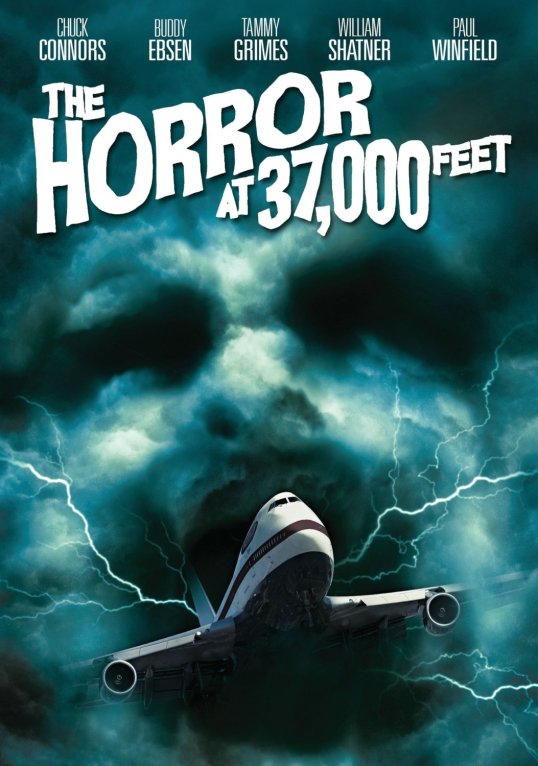
I imagine that it should go without saying that, if you’re on an airplane and you’re flying high above the ground, the last thing that you want to deal with is a bunch of angry ghost druids.
And yet, that’s exactly what happens in this made-for-TV horror film from 1973.
The ghost druids are upset because two architects (played by Roy Thinnes and Jane Merrow) have traveled to England, specifically so that they can supervise the deconstruction of ancient druid altar. Now, they’re flying the pieces of the altar back over the ocean so that the altar can be reconstructed in the United States. The spirits of the ancient druids aren’t happy about being moved so they start doing everything they can to make the journey difficult.
First, they attempt to freeze the plane. When that doesn’t work, they decide to rip it in half. One of the passengers, Mrs. Pinder (Tammy Grimes), suggests that maybe the druids will settle down if they’re offered a sacrifice. When the druids reject an offer of a doll, the passengers start to wonder if maybe the spirits would be happier with a human sacrifice.
Although some of the passengers are reluctant to buy into the whole sacrifice thing, a few of them do start to come around. For instance, there’s a perpetually angry businessman who is played by Buddy Ebsen. Once he realizes that the druids aren’t going anywhere, he has no problem with the idea of a human sacrifice. There’s also a cowboy played by Will Hutchins. If sacrificing a human is what he has to do to have another chance to ride the range, that’s what he’s going to do. Paul Winfield plays a distinguished doctor who tries to keep everyone calm while Chuck Connors is stuck in the cockpit, trying to keep the plane in the air while his passengers and crew debate the ethics of human sacrifice.
And then there’s William Shatner.
Shatner plays a former priest who has lost his faith. From the minute he gets on the plane, he starts drinking and he doesn’t stop for almost the entire movie. It doesn’t matter what’s happening on the plane, Shatner always has a glass in his hand. Playing a character who never has anything positive to say, Shatner smirks through the entire film. Shatner delivers all of his lines in his standard halfting and overdramatic fashion and it’s something of a wonder to behold. Shatner has said that The Horror At 37,000 Feet may be the worst movie in which he ever appeared and just one look at his filmography will show why this is such a bold statement.
The Horror at 37,000 Feet is definitely a film of its time. The plane comes complete with a swinging cocktail lounge, William Shatner wears a turtle neck, and all of the flight attendants wear boots and miniskirts. Everything about this film screams 1973. It’s an incredibly silly but undeniably fun movie. With a running time of only 73 minutes, the pace is fast and the druids don’t waste any time getting down to business. The film’s on YouTube so check it out the next time you’ve an hour and 13 minutes to kill.
Let’s celebrate October by taking a trip to the moon with classic film that came out 123 years ago?
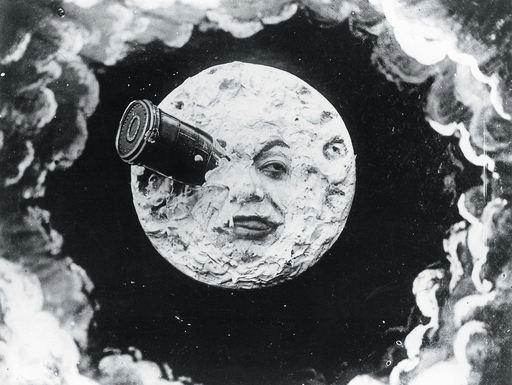
Directed and written by Georges Melies, A Trip to The Moon is often cited as the first sci-fi film and the image of the capsule crashing into the eye of the man in the moon is one of the most iconic in film history. Seen today, the film seems both charmingly innocent and remarkably ahead of its time.
For me, it always takes a minute or two to adjust to the aesthetic of early films. We’ve grown so used to all the editing tricks that modern filmmakers use to tell their stories that these old silent films, with their lack of dramatic camera movement and obvious theatrical origins, often take some effort to get used to. Still, the effort is often worth it.
Here then is Georges Melies’s 1902 science fiction epic, A Trip To The Moon.
Though the Academy of Motion Picture Arts and Sciences claim that the Oscars honor the best of the year, we all know that there are always worthy films and performances that end up getting overlooked. Sometimes, it’s because the competition too fierce. Sometimes, it’s because the film itself was too controversial. Often, it’s just a case of a film’s quality not being fully recognized until years after its initial released. This series of reviews takes a look at the films and performances that should have been nominated but were, for whatever reason, overlooked. These are the Unnominated.
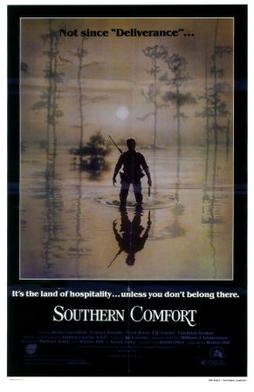
1981’s SouthernComfort takes place in 1973. While America tries to wind down its presence in Vietnam, a squad of nine National Guardsmen take part in war games in the Louisiana bayous. The squad is led by the ineffectual Sgt. Crawford Poole (Peter Coyote) while other members include the trigger-happy Lonnie Reece (Fred Ward), the weed-smoking Tyrone Cribbs (T.K. Carter), the cowardly Private Simms (Franklyn Seales), and the tightly-wound Coach Bowden (Alan Autry). Poole may be in charge but most of the members of the squad seem to look up to the laid-back and friendly Private Spencer (Keith Carradine). The newest member of the squad is Charles Hardin (Powers Boothe), a sober-minded transfer from Texas who doesn’t seem to get along with anyone but Spencer.
With the exception of Poole and Hardin, no one takes the weekend maneuvers seriously until they find themselves lost in the bayou and it becomes obvious that Poole has no idea what he’s doing. When they come across some canoes that belong to some Cajun trappers, they decide to “borrow” them. When the trappers protest, Reece fires his weapon at them. Reece’s gun is loaded with blanks but the trappers don’t know that. They fire back, killing Poole.
The national guardsmen now find themselves lost and being stalked by the trappers, a largely unseen force that always seems to attack out of nowhere. The men have no idea where they are. The trappers, on the other hand, have lived in the swamps their entire lives. The guardsmen bicker and argue over the best way to respond. Some want to fight back and some just want to get back to civilization. One-by-one, the men are picked off until only two remain.
Though the film is a somewhat heavy-handed metaphor for the Vietnam War, SouthernComfort is still a deeply affecting and suspenseful mix of horror and action. Director Walter Hill keeps the action moving at a quick pace and the film, which was shot on location and featured scenes shot during an actual Cajun celebration, perfectly captures the languid yet ominous atmosphere of the bayous. As soon as the men see those canoes unattended, we know that they’re going to steal them and that they are making the biggest mistake of their lives. Keith Carradine and Powers Boothe both give powerful performances in the lead roles and the members of the supporting cast — especially Alan Autry and Fred Ward — make a strong impression as well. I especially liked the performance of Brion James, who has a small role as a one-armed Cajun who is more crafty than he looks.
Being a mix of horror and action, it’s probably not a shock that SouthernComfort was ignored by the Academy. At the very least, I would have found room for Ry Cooder’s original score and Andrew Laszlo’s haunting cinematography.
In Children of the Full Moon, a married couple on holiday has some car trouble. They find a large house that is looked over by Ms. Ardoy (Diana Dors) and inhabited by a multitude of children, who may or may not be werewolves. This episode starts out somewhat light but the tone eventually shifts and things end on a memorably dark note. Diane Dors gives a wonderful performance as the mysterious Ms. Ardoy. Be careful about where you take your vacation.
This episode originally aired on November 1st, 1980.
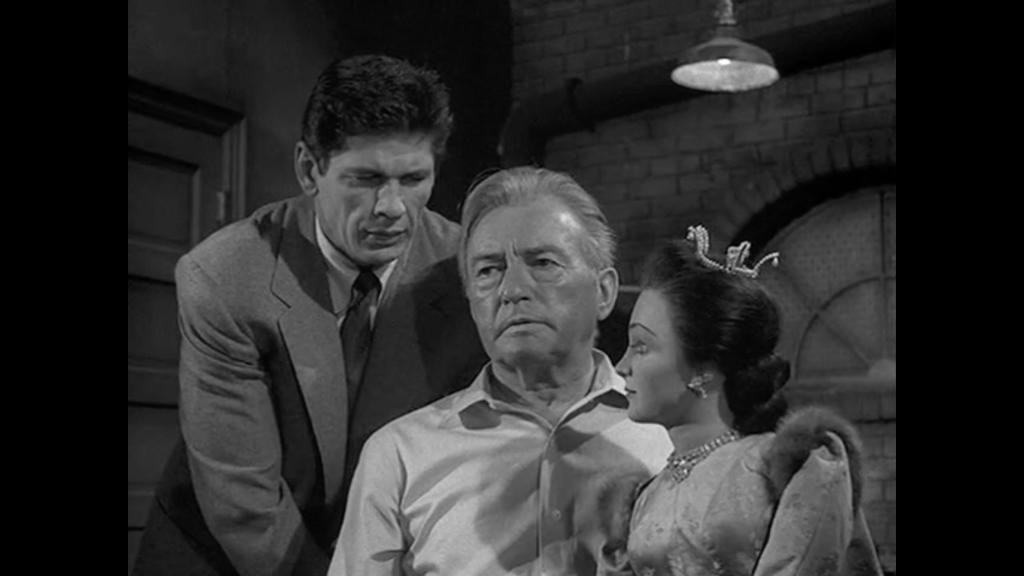
I’ve never been a rabid consumer of horror films, but I do love Alfred Hitchcock. And when you consider that Charles Bronson was featured three times in his TV series, ALFRED HITCHCOCK PRESENTS, you know I’m all in. Bronson first appeared in the season 1 episode, “And So Died Riabouchinska” which starred the Invisible Man himself, Claude Rains! I thought it would be fun to revisit this early episode from the classic TV series.
When a juggler named Ockman is found dead in the basement of a vaudeville theater, Detective Krovitch (Charles Bronson), a no-nonsense police investigator, is on the case. The prime suspect quickly emerges to be John Fabian (Claude Rains), a ventriloquist whose act revolves around his beautiful female dummy, Riabouchinska, who we find out is modeled after a long, lost love. As Krovitch interrogates Fabian and all of those around him, including his embittered wife Alyce (Wynne Miller), and her lover, the shady manager Douglas, it becomes clear that the ventriloquist has a dark and dangerous past. We discover a Fabian who is lost in a world of obsession, self delusion and even perversion, a world that the now deceased Ockman was threatening to expose. Without giving too much away, this episode blends psychological horror with police procedural and spits out an episode that still resonates loudly on the freaky-meter!
Adapted by Mel Dinelli from Ray Bradbury’s short story, “And So Died Riabouchinska” is an exceptional entry in Season 1 of the ALFRED HITCHCOCK PRESENTS TV series. Claude Rains is incredible as Fabian. It’s a thespian tour-de-force, with Rains creating a role that’s creepy, pathetic, and oddly relatable all at the same time. I haven’t seen many of Rains’ most notable works, but based on his performance here, I do know that he’s amazing. Charles Bronson, whose strong screen presence was as obvious as the nose on his face, even this early in his career, goes toe to toe with Rains (and Riabouchinska) and helps ground the episode in something resembling the real world. It’s not a showy role for the legendary tough guy, but he conveys the toughness and authority that would go on to define his career. Performances aside, the episode is truly set apart with an emotional storyline that plumbs the depths of the human psyche in a way that seems daring for 1956 television. There are parts of this episode that will definitely make you squirm in your seat!
Overall, in my opinion, “And So Died Riabouchinska” is an essential episode of the ALFRED HITCHCOCK PRESENTS series. It’s a lot of fun seeing Hitchcock introduce the show at the beginning and wrap it up at the end, but the best part is the fact that the story that takes place in-between is creepy, clever, and compulsively re-watchable.
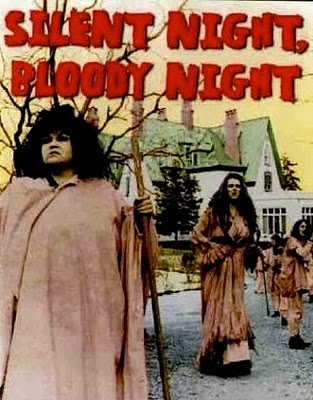
Filmed in 1972 and subsequently released in 1974, Silent Night Bloody Night is a real treat, an atmospheric thriller that has a wonderfully complicated plot that will keep you guessing.
Silent Night Bloody Night opens with attorney John Carter (Patrick O’Neal) arriving in a small town on Christmas Eve. He’s traveling with his assistant and mistress, Ingrid (Astrid Heeren). He’s been hired by Jeff Butler (James Patterson) to oversee the sell of his grandfather’s home. When Carter arrives, he finds that the town is run by a group of elderly eccentrics, including the mute Charlie Towman (John Carradine). Charlie communicates by ringing a bell and he’s the editor of the town newspaper. Carter convinces the town council to buy the Butler mansion. Then, Carter and Ingrid go to the mansion, make love, and are promptly brutally hacked to death by an unseen assailant with an axe. It’s a shocking moment because, up until their death scene, Carter and Ingrid seemed to be our main characters. Much as with Marion Crane’s shower in Psycho, their murder leaves an absence at the heart of the film.
That night, our new hero, Jeff Butler (James Patterson) comes to the isolated town to check on how the sale is going. He finds the mansion locked up and no one willing to talk about John Carter. With the help of local girl Diane (Mary Woronov), Jeff investigates his grandfather’s death and discovers that the town is full of secrets and people who are willing to kill to maintain them. As we discover through some wonderfully dream-like flashbacks, Jeff’s grandfather died nearly 40 years ago when he was set on fire in his own home. Those aren’t the only flashbacks to the film. In an extended sepia-toned flashback, we learn about the previous inhabitants of the house. They are all played by former Warhol superstars, including Candy Darling, Ondine, Tally Brown, Charlotte Fairchild, Lewis Love, Harvey Cohen, George Trakas, Susan Rothenberg, and Jack Smith. (Mary Woronov was, herself, a former member of Warhol’s entourage.)
Silent Night Bloody Night has a terrible reputation. Mary Woronov, who was married to director Theodore Gershuny at the time she made the film, later described it as being “lousy.” Personally, I think the film’s reputation has more to do with all of the grainy, bad copies of the film that have turned up in various Mill Creek box sets over the years than the quality of the film itself. (Silent Night BloodyNight is in public domain.) The film itself is atmospheric, memorably bloody, and — for those who have the patience to deal with the occasional slow spot — effectively creepy. Mary Woronov is a likable lead and the Warhol superstars definitely make an impression. The film plays out at its own deliberate pace and, at its best, it duplicates the feeling of a particularly macabre holiday dream.
Director Theodore Gershuny uses the low budget to his advantage and the sepia-toned flashbacks are truly disturbing and haunting. Ultimately, Silent Night BloodyNight feels like a dream itself and the mystery’s solution is less important than the journey taken to reach it.


 Through the Shattered Lens