I’ve already shared Vincent Price and Christopher Lee reading The Raven.
Now, how about James Earl Jones?
I’ve already shared Vincent Price and Christopher Lee reading The Raven.
Now, how about James Earl Jones?
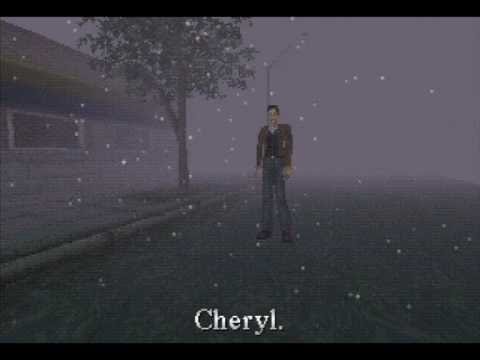 Instead of reviewing an IF game today, I decided to instead share what I consider to be one of the greatest video game opening scenes of all time.
I know people who still play Silent Hill just for the opening alone. Though it may look primitive compared to what we’re used to today, this game really blew everyone’s mind when it first came out in 1999. This is the game that showed a generation just how good a game could be. The opening not only set the mood but also let us know that there was more to Silent Hill than just walking down streets and shooting monsters. This was a game that told a comple story. That’s something that we take for granted now but, at the time, Silent Hill was revolutionary.
The score was composed by Akira Yamaoka. He was influenced by Angelo Badalamenti’s work for David Lynch.
Happy Halloween! I’ve really enjoyed participating in this year’s Horrorthon and I look forward to doing it all over again next year!
From 1994’s The Nightmare Before Christmas:
Enjoy and Happy Halloween!
Before I say anything else, I have a confession to make. I read this book really quickly. I mean, I basically sat down, and skimmed over every page and didn’t write out a single note about the book.
Why was I reading it so quickly? Bad Moonlight is a book that I ordered off of Amazon last month with the intention of reviewing it for October but then I changed my mind. As often happens, I ended up running behind and, with Halloween approaching, I decided to set aside all of the Stine books that I hadn’t yet read and reviewed because I wanted to review a different (and, to be perfectly honest, adult) horror novel for Halloween.
Unfortunately, the book that I was planning on reivewing turned out to be really bad, despite the fact that it was co-written by one of my favorite filmmakers. I didn’t feel like getting all negative on Halloween, especially when it would involve being negative about a filmmaker who I adore and who is no longer with us and whose legacy pretty much defines modern horror. So I decided to put off reviewing that book (I’ll write about it in November). Needing something for today, I grabbed R.L. Stine’s Bad Moonlight and I quickly read it. Fortunately, R.L. Stine wrote books that are pretty much designed to be a quick read.
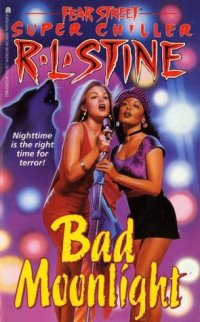
Bad Moonlight was first published in 1994. It tells the story of Danielle. Danielle is 18 but, in a rather creepy aside, we’re told that she looks like she’s closer to 12 because she’s not as developed as the typical 18 year-old. She’s the lead singer in a band. The band’s struggling but at least they have a totally hot roadie named Kit. Anyway, one night, Danielle is inspired to write a song called Bad Moonlight and then she bites Kit’s lower lip until it bleeds. The band’s fans love the new song and Danielle goes onto write several other songs that all deal with moonlight. She also writes a song that may or may not be about the death of Joey, “the sound guy.” Joey was murdered but who killed him? Everyone thinks it was Danielle, mostly because Danielle is always having these weird hallucinations. Since this is a Stine book, Danielle is also an orphan with a mysterious background. She lives with her Aunt Margaret and she sees a psychiatrist named Dr. Moore. Dr. Moore likes to hypnotize her. That’s never a good sign.
Anyway, you can probably guess, just based on the title, that this book has to do with werewolves and a big conspiracy to make Danielle into a werewolf bride. It’s actually kind of a fun book, because you can tell that Stine actually wanted to focus on all of the band melodrama but, because he’s R. L. Stine, he also had to toss in a bunch of werewolves. The effort to bring the band drama and the werewolf mythos together is a valiant one and it kind of comes out of nowhere and you have to appreciate just how weird Stine allows things to get. It’s an entertainingly silly book.
If nothing else, it shows how strange the world can look when it’s illuminated by …. BAD MOONLIGHT!
Did you know that in 1938, the same year that they horrified America with their production of The War Of The Worlds, Orson Welles and the Mercury Theater did a radio version of Dracula?
Check out this amazing cast list:
Orson Welles – Dracula/Dr. Arthur Seward
George Coulouris- Jonathan Harker
Ray Collins – Russian Captain
Karl Swenson – The Mate
Elizabeth Fuller – Lucy Westenra
Martin Gabel – Professor Van Helsing
Agnes Moorehead – Mina Harker
Coulouris, Collins, and Moorehead would, of course, all go one to appear with Orson Welles in Citizen Kane.
And now, we are proud to present, for your listening pleasure …. DRACULA!
Ah, The Crazies. The original Crazies.
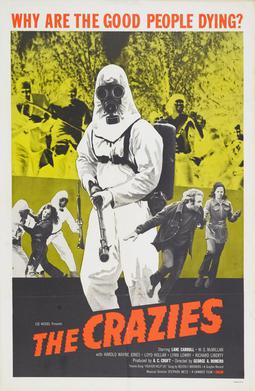
This 1973 film is one of George Romero’s best non-Dead films, though it never seems to get the respect that it really deserves. Even today, the original is often overlooked in favor of the remake. And don’t get me wrong — the remake of The Crazies is good and it features several effective jump scares. But the remake is a slick Hollywood film and, watching it, you always have the safety of knowing that you’re watching a slick Hollywood film. The original, though, is rough and low-budget and it looks and it feels real. As a result, it sticks with you long after the haunting final scenes.
The storyline is simple but effective. People in a small Pennsylvania town are going crazy and murdering each other. Usually, it’s impossible to tell who is infected until they’re already attacking you. The infected are just like the zombies from Night of the Living Dead with one key difference. The crazies may be as relentless as the Dead but they’re also human beings. They think. They plan. They scheme. And when they die, they die like humans and we’re reminded that, just a few short hours ago, they were friendly and, more or less, harmless.
The government, of course, shows up in the town and tries to contain the outbreak. The main image that most people will carry away from The Crazies is of men in white hazmat suits, walking through small-town America and killing almost everyone they see. As is typical for a Romero film, the so-called solution often seems to be worse than the problem. We also get the typical conflict between the scientists and the military. The military wants to destroy the infected. The scientists want to cure them. The film is bleakly cynical as the one man who knows how to cure the disease is ignored and finally killed in a stampede of quarantined citizens.
The film follows six people as they attempt to escape from the town and avoid getting sick themselves. Needless to say, it’s not as easy as it sounds. The characters who everyone seems to remember are Artie (Richard Liberty) and his daughter, Kathy (Lynn Lowry). What happens to them is perhaps the most disturbing moment in a film that’s full of them. The other members of the group can only hope to survive, even as they slowly lose their grip on sanity.
It’s a disturbing film, precisely because it’s not slick. The actors are not movie star handsome and the attacks are not perfectly choreographed. The grainy cinematography gives the entire film a documentary feel and serves as a reminder that Romero made industrial films before he revolutionized the horror genre. The Crazies works because it feel like it could be happening in your community or your back yard. And, ultimately, it offers up no solution. Mankind could save itself, Romero seems to be saying, if only mankind wasn’t so stupid.
Needlessly to say, a film as bleak as The Crazies was not a hit in 1973. But it’s lived on and continued to influence other horror makers. It’s one of Romero’s best.
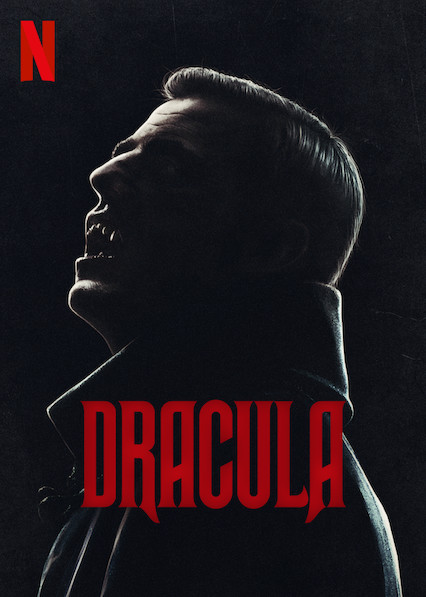
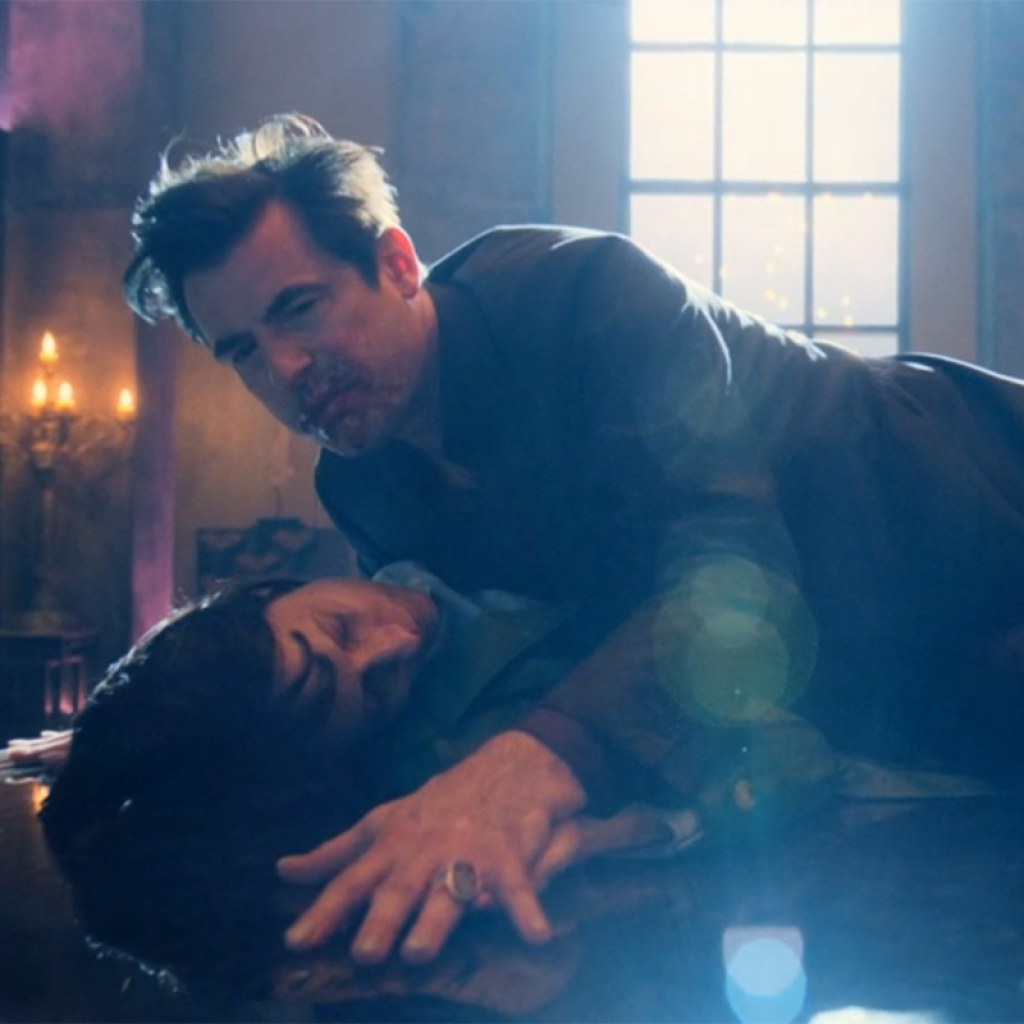
Happy Horrorthon! Part 3!!! Drac is back…..ALRIGHT!!!! So, I decided to break this up and give Part 3 its very own post! Dracula needs to face his inner-self and see what makes him tick and fear. Dracula is in the 21st century in an underground secret lab because…why not?! It kept the story fresh and there’s nothing fresher than seeing a private industry emulate bloated government spending.
He’s not there as long as you’d think because Drac got lawyered up and he fed on Agatha’s descendent, BUT she has cancer and it is poisonous to Old Drac. This creates a good plot twist and has a great payoff at the story’s end. This episode tries to plug in the ideas from the book into this modern twist. However, it wasn’t flawless; the Renfield character never really worked for me because the actor kept playing it for comic relief and thought he was in a Benny Hill sketch. Nina played it well. She represented the Information Age: the veneer of sophistication, but really it is just narcissism with an iPhone.
Nina gets into Drac and claims to not fear age or death, but that’s easy to say when you’re young, hot, and everyone wants to get into your britches. Then, once she got turned into a vampire and was burned into a horrible crisp, she couldn’t get staked fast enough! Nina does do more than just become the world’s greatest Roomba achievement; Nina allows Drac to have a mental breakthrough.
Even though Nina was not really as intrepid about death as she claimed, her purported fearlessness attracted Drac for a reason and Agatha 2.0 was going to find out why! Drac is a Veteran. He wanted to die in battle with honor, but he wasn’t able to do so. His continued existence is his shame. Instead of dying in battle, he feared death, forcing him to live as a monster coward. Therefore, his final act of forgiving himself was to drink the poisoned blood of Agatha 2.0.
Her blood, her love, her life, gave Dracula what he needed- Death. Dracula gave Agatha what she needed: to touch the mystical and, by doing so, she touched the face of God. See, I told you it was a love story.
A few Halloweens ago, we shared a video of Vincent Price reading Edgar Allan Poe’s The Raven.
Here’s Christopher Lee doing the same thing!
Enjoy!
Happy Horrorthon! Dracula is saaaaaaailing, sailing takes me away to where I’ve always heard it could be and he’s eating every one the boaaaat. This episode was almost a bottle episode. Dracula REALLY wants to go to England. I love meat pies too; I can relate! Drac spends the episode eating …. EVERYONE!!! Dracula, Food does not equal love!
I enjoyed the episode, but it was kinda rediculous. Dracula was eating everyone and NO ONE really suspected him until the end? Really? Nah, couldn’t be the weird Eastern European guy whose cabin smells like rotting flesh. Really, just look at the guy! No suspicions?!
Dramatization:
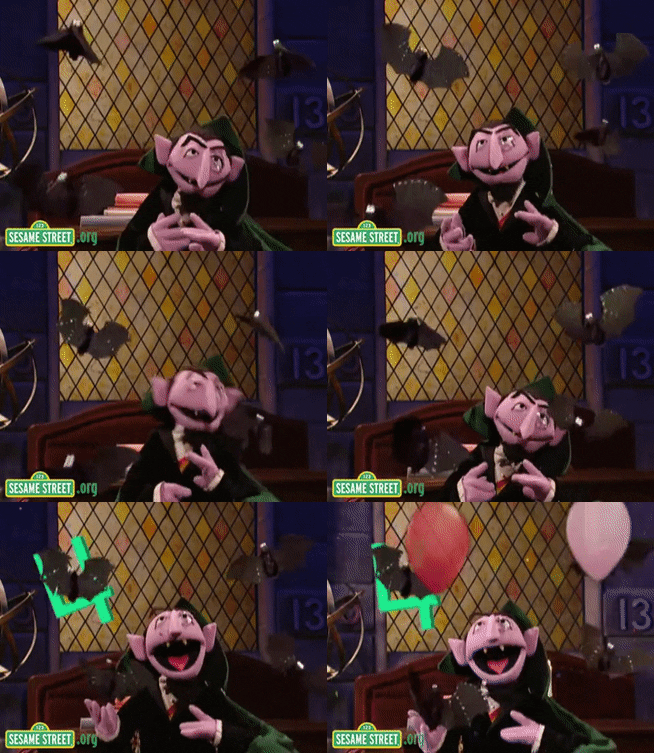
There are some interesting people on board, but really I just felt like they were kind of a distraction from the much more Frost/Nixon style debate between Dracula and Agatha. Their dialogue was masterful. It pulled you in and it was SUNDAY SUNDAY SUNDAY – Enlightenment Vs Reason! We’ll sell you the whole seat, but you’ll only need the EDGE!!!!
It turns out that Agatha is Dinner. When Agatha awakens, she and the remaining snacks manage to blow up the ship and Dracula is off the coast of England. He’s next to a hole, a hole, a hole at the bottom of the sea! When he wakes, he walks ashore and it’s MODERN DAY with helicopters! I didn’t see that coming, but why not? This was fun!
4 Shots From 4 Films is just what it says it is, 4 shots from 4 of our favorite films. As opposed to the reviews and recaps that we usually post, 4 Shots From 4 Films lets the visuals do the talking.
This October, we’ve been using 4 Shots from 4 Films to pay tribute to some of our favorite horror filmmakers! Today, we honor the father of modern horror, George Romero!
4 Shots From 4 George Romero Films
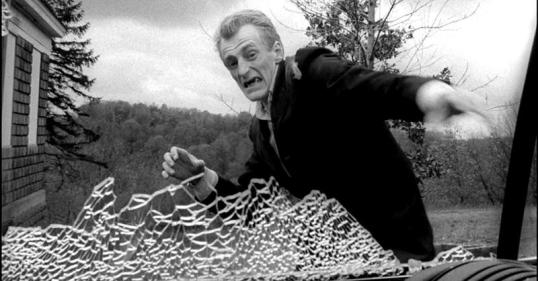
Night of the Living Dead (1968, dir by George Romero)
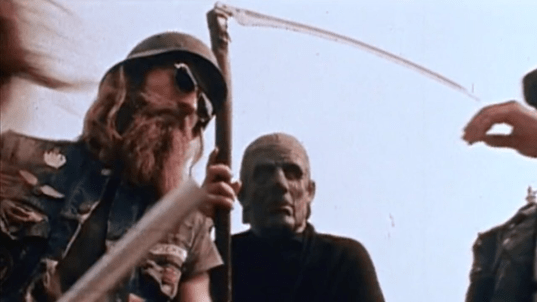
The Amusement Park (1973, dir by George Romero)
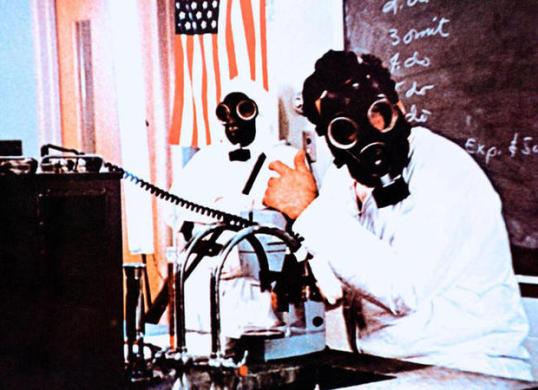
The Crazies (1973, dir by George Romero)
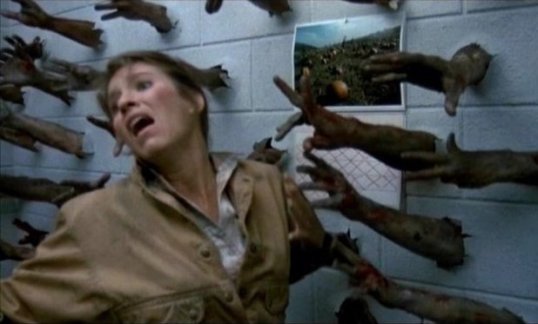
Day of the Dead (1985, dir by George Romero)

