Thousand Years of Dreams Day 02: A Hero’s Return


While “Hanna’s Departure” was my favorite dream sequence from Lost Odyssey the rest had their own emotional power and for some were more relevant. What I failed to mention in the Day 01 post was just who the person named Kaim being mentioned in the dream. Kaim is the main protagonist in the game and he’s an immortal who has lost all the memories of experiences gathered through 1000-years of journeying the world he’s in.

These dreams, when activated in the game through a fortuitous encounter with someone or witnessing a seemingly random event, begin to add layers of complexities to the Kaim character and what he had experienced throughout the millenia as wandering immortal warrior.

Day 02’s dream sequence is quite relevant to today’s times as we see Kaim re-live a memory of a warrior returning from 3 years of war and battles. We see how Kaim’s reaction to this battle-weary veteran differs from that of a younger man’s who has never experienced war first-hand. With tens of thousands of soldiers, airmen and sailors returning from battlefields in Iraq and Afghanistan it’s hard not to find a link with the experiences those men and women went through with the prospect of returning to their loved ones a major reason for them to stay alive and do what they had to do to accomplish that goal.

A Hero’s Journey

Alone in a crowd of rugged men, nursing his drink in the far corner of the old post town’s only tavern: Kaim.

A single man strides in through the tavern door. Massively built, he wears the garb of a warrior. His soiled uniform bespeaks a long journey. Fatigue marks his face, but his eyes wear a penetrating gleam—the look of a fighting man on active duty.


The tavern’s din hushes instantly. Every drunken eye in the place fastens on the soldier with awe and gratitude.

The long war with the neighboring country has ended at last, and the men who fought on the front lines are returning to their homes. So it is with this military man.

The soldier takes a seat at the table next to Kaim’s, and downs a slug of liquor with the forcefulness of a hard drinker—a man who drinks to kill his pain.


Two cups, three, four…

Another customer approaches him, bottle in hand, wearing an ingratiating grin—a typical crafty town punk.

“Let me offer you a drink,” wheedles the man, “as a token of gratitude for your heroic efforts on behalf of the fatherland.”

The soldier unsmilingly allows the man to fill his cup.

“How was it at the front? I’m sure you performed many valiant deeds on the battlefield.”

The soldier empties his cup in silence.


The punk refills the cup and adopts an ever more fawning smile.

“Now that we’re friends, how about telling me some war tales?

You’ve got such big, strong arms, how many enemy soldiers did you ki—”

Without a word, the soldier hurls the contents of his cup into the man’s face.

The punk flies into a rage and draws his knife.

No sooner does it leave its sheath than Kaim’s fist sends it flying through the air.


Faced with the powerful united front of Kaim and the soldier, the punk runs out muttering curses.

The two big men watch him go, then share a faint smile. Kaim doesn’t have to speak with the soldier to know that he lives in deep sadness. For his part, the soldier (having cheated death any number of times) is aware of the shadow that lurks in Kaim’s expression.


The tavern’s din returns.

Kaim and the soldier pour each other drinks.

“I’ve got a wife and daughter I haven’t seen since I shipped out,” says the soldier. “It’s been three long years.”

He lets himself smile shyly now for the first time as he takes a photograph of his wife and daughter from his pocket and shows it to Kaim: the wife a woman of dewy freshness, the daughter still very young.

“They’re the reason I survived.

The thought of going home to them alive was all that sustained me in battle.”


“Is your home far from here?”

“No, my village is just over the next pass. I’m sure they’ve heard the news that the war is over and can hardly wait to have me home.”

He could get there tonight if he wanted to badly enough. It was that close.

“But…” the soldier downs a mouthful of liquor and groans.

“I’m afraid.”


“Afraid? Of what?”

“I want to see my wife and daughter, but I’m afraid to have them see me.

I don’t know how many men I’ve killed these past three years. I had no choice. I had to do it to stay alive. If I was going to get back to my family, I had no choice but to kill one enemy soldier after another, and each and every one of those men had families they had left at home.”

It was the code of war, the soldier’s destiny.

To stay alive in battle, you had to go on killing men before they could kill you.


“I had no time to think about such things at the front. I was too busy trying to survive. I see it now, though—now that the war is over. Three years of sin are carved into my face. This is the face of a killer. I don’t want to show this face to my wife and daughter.”

The soldier pulls out a leather pouch from which he withdraws a small stone.

He tells Kaim it is an unpolished gemstone, something he found shortly after he left for the battlefield.


“A gemstone?” Kaim asks, unconvinced. The stone on the table is a dull black without a hint of the gleam a gem should have.

“It sparkled when I first found it. I was sure my daughter would love it when I brought it home to her.”

“Gradually, though, the stone lost its gleam and turned cloudy.”


“Every time I killed an enemy soldier, something like the stain of his blood would rise to the surface of the stone. As you can see, it’s almost solid black now after three years. The stone is stained by the sins I’ve committed. I call it my ‘sin stone.'”

“You don’t have to blame yourself so harshly,” says Kaim,
“You had to do it to stay alive.”

“I know that.” says the soldier. “I know that. But still… just like me, the men I killed had villages to go home to, and families waiting for them there…”


The soldier then says to Kaim, “You, too, I suppose. You must have a family.” Kaim gives his head a little shake. “Not me.” he says. “No family.”

“A home village at least?”

“I don’t have any place to go home to.”

“Eternal traveler, eh?”

“Uh-huh. That’s me.”

The soldier chuckles softly and gives Kaim a sour smile. It is hard to tell how fully he believes what Kaim has told him. He slips the “sin stone” into the leather pouch and says,

“You know what I think? If the stone turned darker every time I took a life, it ought to get some of its gleam back every time I save a life.”


Instead of answering, Kaim drains the last drops of liquor from his cup and rises from the table. The soldier remains in his chair and Kaim, staring down at him, offers him these words of advice:

“If you have a place you can go home to, you should go to it. Just go, no matter how much guilt you may have weighing you down. I’m sure your wife and daughter will understand. You’re no criminal. You’re a hero: you fought your heart out to stay alive.”

“I’m glad I met you.” says the soldier. “I needed to hear that.”

He holds out his right hand to Kaim, who grasps it in return.

“I hope your travels go well.” says the soldier.

 
“And your travels will soon be over,” says Kaim with a smile,
starting for the door.

Just then the punk charges at Kaim from behind, wielding a pistol.

“Watch out!” bellows the soldier and rushes after Kaim.

As Kaim whirls around, the punk takes aim and shouts,
“You can’t treat me like that, you son of a bitch!”

The soldier flies between the two men
and takes a bullet in the gut.


And so, as he so desperately wished to do, the soldier has saved someone’s life.

Ironically, it is for the life of Kaim, a man who can neither age nor die,

that the soldier has traded his one and only life.


Sprawled on the floor, nearly unconscious, the soldier
thrusts the leather pouch into Kaim’s hand.

“Look at my ‘sin stone,’ will you?

“Maybe…maybe.” he says, chuckling weakly,
“some of its shine has come back.”

Blood spurts from his mouth, strangling the laugh.

Kaim looks inside the bag and says,
“It’s sparkling now. It’s clean.”

“It is?” gasps the soldier. “Good. My daughter will be so glad…”


He smiles with satisfaction and holds his hand out for the pouch.

Gently, Kaim lays the pouch on the palm of his hand and folds the man’s fingers over it.

The soldier draws his last breath, and the pouch falls to the floor.

The dead man’s face wears a peaceful expression.

The stone, however—the man’s ‘sin stone,’ which has rolled from the open pouch—is as black as ever.

 End

Source: Lost Odyssey Wiki
Thousand Years of Dreams Day 01: Hanna’s Departure


So, we begin the first of 33 straight days of bringing the best thing about Mistwalker Studios’ 2008 role-playing game, Lost Odyssey, and why to this day its 33 short stories contained within the game as dream sequences remain one of the best writing in gaming ever. These short stories were written by Japanese novelist Shigematsu Kiyoshi. This collection of dreams would be collected under the title, “Thousand Years of Dreams”.

The first dream was the very first one a player acquires and comes across during the game. It is this dream which will trigger the main hero’s recollection of 33 total dreams as he travels and meets up and/or comes across situations to trigger a specific dream. This first dream is titled “Hanna’s Departure” and comes early in the game. Despite being the first it is also one of the best of the 33 and once you’ve watches and read the attached video clip of it above you will understand why. Below will be a transcript of the dream, but I recommend watching the video first and foremost.

Hanna’s Departure

The family members have tears in their eyes when they welcome Kaim back to the inn from his long journey.

“Thank you so much for coming.”

He understands the situation immediately.

The time for departure is drawing near.


Too soon, too soon.

But still, he knows, this day would have come sometime, and not in the distant future.

“I might never see you again,” she said to him with a sad smile when he left on this journey, her smiling face almost transparent in its whiteness, so fragile—and therefore indescribably beautiful—as she lay in bed.


“May I see Hanna now?” he asks.

The innkeeper gives him a tiny nod and says, “I don’t think she’ll know who you are, though.”

“She hasn’t opened her eyes since last night,” he warns Kaim. You can tell from the slight movement of her chest that she is clinging to a frail thread of life, but it could snap at any moment.

“It’s such a shame. I know you made a special point to come here for her…”

Another tear glides down the wife’s cheek.


“Never mind, it’s fine.” Kaim says.

He has been present at innumerable deaths, and his experience has taught him much.

Death takes away the power of speech first of all. Then the ability to see.

What remains alive to the very end, however, is the power to hear. Even though the person has lost consciousness, it is by no means unusual for the voices of the family to bring forth smiles or tears.

Kaim puts his arm around the woman’s shoulder and says, “I have lots of travel stories to tell her. I’ve been looking forward to this my whole time on the road.”

Instead of smiling, the woman releases another large tear and nods to Kaim, “And Hanna was so looking forward to hear your stories.”

Her sobs almost drown out her words.


The innkeeper says, “I wish I could urge you to rest up from your travels before you see her, but…”

Kaim interrupts his apologies, “Of course I’ll see her right away.”

There is very little time left.

Hanna, the only daughter of the innkeeper and his wife, will probably breathe her last before the sun comes up.

Kaim lowers his pack to the floor and quietly opens the door to Hanna’s room.


Hanna was frail from birth. Far from enjoying the opportunity to travel, she rarely left the town or even the neighborhood in which she was born and raised.

This child will probably not live to adulthood, the doctor told her parents.

This tiny girl, with extraordinarily beautiful doll-like features, the gods had dealt an all-too-sad destiny.


That they had allowed her to be born the only daughter of the keepers of a small inn by the highway was perhaps one small act of atonement for such iniquity.

Hanna was unable to go anywhere, but the guests who stayed at her parent’s inn would tell her stories of the countries and towns and landscapes and people that she would never know.

Whenever new guests arrived at the inn, Hanna would ask them,

“Where are you from?” “Where are you going?”

“Can you tell me a story?”


She would sit and listen to their stories with sparkling eyes, urging them on to new episodes with “And then? And then?” When they left the inn, she would beg them, “Please come back, and tell me lots and lots of stories about faraway countries!”

She would stand there waving until the person disappeared far down the highway, give one lonely sigh, and go back to bed.


Hanna is sound asleep.

No one else is in the room, perhaps an indication that she has long since passed the stage when the doctors can do anything for her.

Kaim sits down in the chair next to the bed and says with a smile.

“Hello, Hanna, I’m back.”

She does not respond. Her little chest, still without the swelling of a grown woman, rises and falls almost imperceptibly.


“I went far across the ocean this time,” he tells her. “The ocean on the side where the sun comes up. I took a boat from the harbor way way way far beyond the mountains you can see from this window, and I was on the sea from the time the moon was perfectly round till it got smaller and smaller then bigger and bigger until it was full again. There was nothing but ocean as far as the eye could see. Just the sea and the sky. Can you imagine it, Hanna? You’ve never seen the ocean, but I’m sure people have told you about it. It’s like a huge, big endless puddle.”

Kaim chuckles to himself, and it seems to him that Hanna’s pale white cheek moves slightly.


She can hear him. Even if she cannot speak or see, her ears are still alive.

Believing and hoping this to be true, Kaim continues with the story of his travels.

He speaks no words of parting.

As always with Hanna, Kaim smiles with a special gentleness he has never shown to anyone else, and he goes on telling his tales with a bright voice, sometimes even accompanying his story with exaggerated gestures.

He tells her about the blue ocean.

He tells her about the blue sky.

He says nothing about the violent sea battle that stained the ocean red.

He never tells her about those things.


Hanna was still a tiny girl when Kaim first visited the inn.

When she asked him “Where are you from?” and “Will you tell me some stories?” with her childish pronunciation and innocent smile, Kaim felt soft glow in his chest.


At the time, he was returning from a battle.

More precisely, he had ended one battle and was on his way to the next.

His life consisted of traveling from one battlefield to another, and nothing about that has changed to this day.

He has taken the lives of countless enemy troops, and witnessed the deaths of countless comrades on the battlefield. Moreover, the only thing separating enemies from comrades is the slightest stroke of fortune. Had the gears of destiny turned in a slightly different way, his enemies would have been comrades and his comrades enemies, This is the fate of the mercenary.


He was spiritually worn down back then and feeling unbearably lonely. As a possessor of eternal life, Kaim had no fear of death, which was precisely why each of the soldier’s faces distorted in fear, and why each face of a man who died in agony was burned permanently into his brain.

Ordinarily, he would spend nights on the road drinking. Immersing himself in an alcoholic stupor—or pretending to. He was trying to make himself forget the unforgettable.

When, however, he saw Hanna’s smile and begged him for stories about his long journey, he felt a far warmer and deeper comfort then he could even obtain from liquor.


He told her many things…

About the beautiful flower he discovered on the battlefield.

About the bewitching beauty of the mist filling the forest the night before the final battle.

About the marvelous taste of the spring water in a ravine where he and his men had fled after losing the battle.

About a vast, bottomless blue sky he saw after battle.


He never told her anything sad. He kept his mouth shut about the human ugliness and stupidity he witnessed endlessly on the battlefield. He concealed his position as a mercenary for her, kept silent regarding his reasons for traveling constantly, and spoke only of things that were beautiful and sweet and lovely. He sees now that he told Hanna only beautiful stories of the road like this not so much out of concern for her purity, but for his own sake.


Staying in the inn where Hanna waited to see him turned out to be one of Kaim’s small pleasures in life. Telling her about the memories he brought back from his journeys, he felt some degree of salvation, however slight. Five years, ten years, his friendship with the girl continued. Little by little, she neared adulthood, which meant that, as the doctors had predicted, each day brought her that much closer to death.


And now, Kaim ends the last travel story he will share with her.

He can never see her again, can never tell her stories again.

Before dawn, when the darkness of night is at its deepest, long pauses enter into Hanna’s breathing.

The frail thread of her life is about to snap as Kaim and her parents watch over her.

The tiny light that has lodged in Kaim’s breast will be extinguished.

His lonely travels will begin again tomorrow—his long, long travels without end.


“You’ll be leaving on travels of your own soon, Hanna.” Kaim tells her gently.

“You’ll be leaving for a world that no one knows, a world that has never entered into any of the stories you have heard so far. Finally, you will be able to leave your bed and walk anywhere you want to go. You’ll be free.”

He wants her to know that death is not sorrow but a joy mixed with tears.

“It’s your turn now. Be sure and tell everyone about the memories of your journey.”

Her parents will make that same journey someday. And someday Hanna will be able to meet all the guests she has known at the inn, far beyond the sky.


I, however, can never go there.

I can never escape this world.

I can never see you again.

“This is not goodbye. It’s just the start of your journey.”

He speaks his final words to her.

“We’ll meet again.”

His final lie to her.


Hanna makes her departure.

Her face is transfused with a tranquil smile as if she has just said,

“See you soon.”

Her eyes will never open again. A single tear glides slowly down her cheek.

End

Source: Lost Odyssey Wiki

Gamescom 2011: Battlefield 3 “Caspian Border” Multiplayer Gameplay


I’ve been hyped and itching to get my hands on Battlefield 3 for months now, but still have a little over 2 months to go before I get that chance. Until then EA and DICE (Digital Illusions CE) have come up with another way to tease it’s fans by using Gamescom 2011 over at Germany a new video footage of actual gameplay (using an earlier alpha build of the game). This time around it’s not in-game footage of the single-player campaign. What we get instead is two whole minutes of wargasmic in-game footage showing the game’s multiplayer mode (64-players playing at once over on the PC while the Xbox 360 and the PS3 get 24-player limit for ground fighting).

The footage is of the mulitplayer map simply called “Caspian Border” and it’s a multiplayer game being fought not just between players as foot-soldiers, but also driving armored vehicles, jeeps, tanks and helicopter gunships. But what got me really going is the fact that air-to-air combat with jets. I don’t mean those white-and-green wearing, following the fat, blowhard who has no rings to kiss Jets, but jet fighters performing deadly aerial ballet with their opposing number.

I think if there is ever one reason to pick up Battlefield 3 over Activision’s upcoming title to their juggernaut of a FPS franchise, Call of Duty: Modern Warfare 3, then this gameplay footage with the jets will be one major reason. I may just practice flying those jets for multiplayer and shout “Tally Ho!” over the mike when ambushing another player in their jet.

Battlefield 3 is still set for an October 25, 2011 release date in North America with Europe and the rest of the world getting it the following days.

Trailer: Warhammer 40K: Space Marine (I Am War)


Been an uneventful day for me today which usually means a slow posting day. One thing that I did come across which came out today was a new trailer for one of my more highly-anticipated games this year. The latest trailer for THQ and Relic Entertainment’s Warhammer 40,000: Space Marine has been released and shows more gameplay footage and hints at the single-player campaign’s storyline.

I was once asked if I ever was given a chance to be a fictional character who would I choose to be. Well, as this trailer clearly shows I definitely want to be a Space Marine (or the more accurate term used in this fictional world: Adeptus Astartes). I mean look at the size of these guys and they even get to wear very ornate and baroque looking armor. Though I’m sure Lisa Marie would want that I paint the armor in more pastel colors.

Warhammer 40,000: Space Marine still set for a September 6, 2011 for the Xbox 360, PS3 and Windows PC.

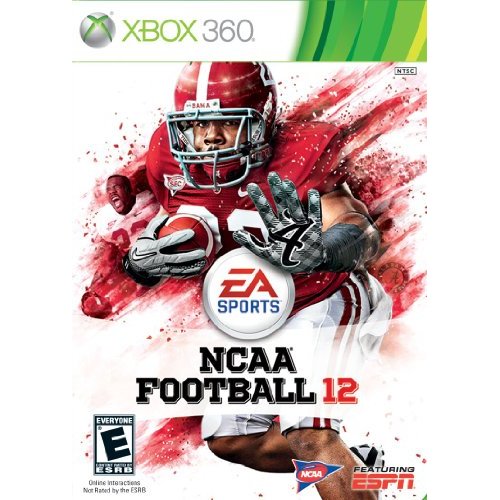
Review: NCAA Football 12


Yes, it’s that time of year everyone. Football season looms … at least, it does for the thousands of student athletes within the NCAA system. The NFL is still in limbo, even if it now appears inevitable (although either way, it won’t slow down the annual Madden release). Now, let me preface this review by saying that I don’t actually enjoy college football. I find the poor defensive play and imbalanced match-ups boring, and I hate the way that the BCS standings come together over the course of a season. The fact that the Big East has an automatic bid is a bad joke, etc. All of this is probably because I never attended a university where college football mattered. But absolutely none of that counts in the world of video games!

As a visceral experience, there’s a lot to be said for the college football style. Here, we still live in a world where running the football can be king, and a world in which the QB option (in a shocking variety of forms) can still be a primary offensive tool. Teams suffer every year from playing the service academies (who still run the triple option) because defending it is so different from the spread, or even the spread option, that most teams run. If you’re looking for a football experience where all of these systems are in play, then you should run — not walk — toward NCAA Football 12. Of course, most people are more NFL fans than NCAA fans, if the numbers are to be believed… but the one thing that the video game version will always have over Madden is that it isn’t quite so formulaic. We’re dealing with an eclectic mixture of offenses and defenses. If you care to start a dynasty (and the dynasty features are outstanding in the new version. In NCAA Football 12 we’re treated to the full coaching experience. More on that in a bit.) you have a ton of player turnover, which can make it difficult to have a consistent program. I suppose it’s probably easier if you’re a fan of Alabama or Florida. I’m not, so this title has a refreshing ‘battle uphill’ feel, especially in the Dynasty Mode.

The flagship promotion for this game has to do with the authentic recreations of the university celebrations, pre-game ceremonies, etc. It deserves to be the most outstanding feature. Granted, it has absolutely no effect on game-play, but one of the things that sets college football apart from the professional game is the sheer number of teams in play – each with their own unique celebrations, entries, and whatever else – who have their own tradition. If that kind of personalized experience doesn’t faze you, then you won’t find much of note has changed between iterations of this game. The graphics are still in the same generation, we have the same playbooks, the announcers have actually become less interesting (which may be a selling point, depending on your point of view – Lee Corso has made his departure), and there are no real innovations in game-play. The tackling feels slightly more authentic — that is, there’s less magnet tackling — and the AI that guides defensive players in zone defenses is dramatically improved over the 2011 version of this title. You can actually feel pretty confident when calling cover 3 defense… of course, this goes double for the AI player, who aggressively bats down passes (but mercifully doesn’t seem to randomly intercept any more). Still, the game emphasizes more than ever the value of lofting a pass high to avoid marauding defenders as opposed to just firing laser beam passes from point A to point B.

Outstanding features include the Dynasty mode. Returning are the online dynasty features, which were a huge improvement in last year’s title… but massively upgraded are the single player versions. You can now create your own coaching avatar who can hold the position of Offensive/Defensive Coordinator, or Head Coach, at a university of your choice – but who is held accountable for the team’s performance. The university has expectations, and you can experience first-hand being on the coaching hot seat and being fired from your job. Of course, if you’re good enough at the game, this is hardly a concern… but it does add a fascinating dynamic to the experience – a bad recruiting class could still doom you! If you are fired, you end up on the coaching carousel looking for a new job. It’s definitely a cool feature, even if you probably won’t run into it much.

The other game mode which received a significant overhaul is the Road to Glory mode. As always, you create a single player, and advance from a top-rated high school prospect through your collegiate career at whatever university. However, this time around, the experience is much more interactive. We’re treated with a game mode that allows us to fully develop a single player in a much more immersive way than in previous installments. Your created player will gain experience and skills — as always — but also adapt to (or be moved into) a specific role on the team. I imagine this is a much more authentic recreation of what going out for Div 1 sports is really like… but you tell me.

The game does take a significant step back in terms of calling audibles. I would say that the player is given more freedom than ever in terms of setting up audibles (with the addition of custom playbooks) but gone are the menus that actually tell you which button push calls what. Or, at least, they were absent for me. It seems like a senseless change, and one that left me feeling pretty bitter through my Dynasty play… when I had to frequently consult my audible chart in order to keep track of what I was calling, and when. If I could remember all of this playart, I’d probably be playing Div 1 football myself.

As always, this game will synergize with the Madden release in terms of draft classes, as the Madden schedule continues uninterrupted. Definitely worth a pick-up if you’re starved for some video game football, or if you consider yourself a college ball fan.

Game Preview: Batman: Arkham City – 10 Minute Gameplay


This may have already been posted on the Shattered Lens, and I apologize if that’s the case (did a search, didn’t see anything on it).

Eidos and Rocksteady are almost ready to bring us the next chapter in their hit Batman: Arkham Asylum with Arkham City, due out this October. With a wider playing around and a bigger story, it’s expected to be a hit. This preview showcases Catwoman as a playable character, along with some of the updates in the gameplay overall. It’s looking very good.

Song of the Day: Jade Empire Main Theme (by Jack Wall)


Today marks the end of E3 for 2011 and I have chosen one of the best intro music for any game ever created. The previous two songs chosen were from Bethesda role-playing games and while I stick to the same game genre I’ve moved onto who I consider the best RPG developers currently working today. The latest “Song of the Day” is by music composer Jack Wall and is the “Main Theme” to that oft-overlooked, but a classic rpg nonetheless, Jade Empire.

The “Jade Empire Main Theme” just hints at the epic that would become the Jade Empire story. Jack Wall does a great job of not just sticking to the usual classical European orchestral sound. He brings in traditional Asian musical instruments from throughout Chinese history. He even brings in some Japanese taiko drums to give this theme just a touch of that martial sound. This main theme really highlights the Asian themes and influences BioWare used to create the fictional realm that Jade Empire takes place. The way the music plays out it wouldn’t be too farfetched to hear it scoring an Ang Lee or Zhang Yimou wuxia epic.

Jade Empire is one of those games, despite having not as big a following as some of the bigger and more popular rpg franchises, whose fans are very vocal about their love not just for the game but for the soundtrack which I consider one of the best soundtracks ever composer for a video game.

E3 2011: Asura’s Wrath (E3 Trailer)


Asura’s Wrath is a title by Capcom and developer CyberConnect2 and first made it’s appearance at E3 2010. It’s actually a title that has flown way below my radar when it comes to interesting games coming up in the forseeable future. It’s a good thing that Capcom brought it to this year’s E3 once more and showed more details about what the g ame is really about and some of it’s core gameplay.

Let’s just say that from the trailer this game looks to be one over-the-top of an action game that reminds me of the SEGA/Platinum Games title Bayonetta. More people seem to compare this game both aesthetically and spiritually to the Sony God of War franchise and they wouldn’t be wrong. Asura’s Wrath really ends up being a mash-up of both those series with a sci-fi helping from Too Human.

The art design for the game looks beautiful. Looks like developer CyberConnect2 decided to go for the 3D cel-shading that looks quite similar to Capcom’s own look for the recent Street Fighter IV. The game is not flat and actually has depth to all the scenes, but the flat-look of the cel-shading really gives this game a unique look that’s quite uncommon in gaming of this latest generation.

Asura’s Wrath doesn’t have a set release date, but all points to sometime around 2012 (hopefully)

E3 2011: Ace Combat: Assault Horizon (Official E3 Trailer)


Namco Bandai is less than 6 months away from releasing the next entry in their long-running and critically-acclaimed arcade combat flight simulator series Ace Combat. This upcoming entry will simple be called Ace Combat: Assault Horizon.

They’ve released a story trailer just in time for this year’s E3 and anyone who has been a fan of the franchise should be very excited about this upcoming game. It looks like new types of gameplay has been added to the tried-and-true fixed-wing aerial combat. Players can now get behind the controls of attack helicopters and even AC-130 gunships. The in-game graphics (used in the trailer itself) looks to have made some major improvements from the last title in the series. If I’m looking at the trailer correctly it looks like pretty much everything a player sees on the screen is destructible whether it’s an enemy vehicle or just a decorative fountain in some African warlord’s palace.

This series has always been good at delivering an extensive and exhaustive single-player campaign. Multiplayer has always been hit-or-miss. The last game in the series made some serious in-roads into multiplayer. Now that this next title will be released not just for the Xbox 360 and it’s Xbox LIVE on-line component, but for the PS3 and it’s counterpart in the PSN, there should be some expectations of a hefty on-line multiplayer component.

Ace Combat: Assault Horizon will have a release date of October 11, 2011 for North America and October 14, 2011 for Europe.

Song of the Day: Reign of the Septims (by Jeremy Soule)


The next E3 2011 Edition of the “Song of the Day” is the intro and main theme to the follow-up game to The Elder Scrolls III: Morrowind. This song is called “Reign of the Septims” and it sets the epicness of what was, and is, The Elder Scrolls IV: Oblivion.

“Reign of the Septims” actually sounds similar in certain areas to the Morrowind intro of “Nerevar Rising”. Where this intro differs is how it’s less about hope (a term and emotion that Lisa Marie mentioned she felt listening to the previous song) but about rising up to take one’s destiny and become the leader the game’s storyline requires of the player. There’s a certain martial aspect to the song which could be heard in the brass section and strings working in concert right in the beginning and throughout most of the song until they begin to fade to give “Reign of the Septims” a simpler and more mellow ending.

I really can’t imagine any future games in this series having its soundtrack being composed by anyone other than Jeremy Soule. It’s a good thing that he will be on hand for the next game, Skyrim, and from what I’ve heard of the initial theme to that game it’s a nice progression from the intro for both Morrowind and Oblivion.