Horror On The Lens: Where Have All The People Gone? (dir by John Llewellyn Moxey)


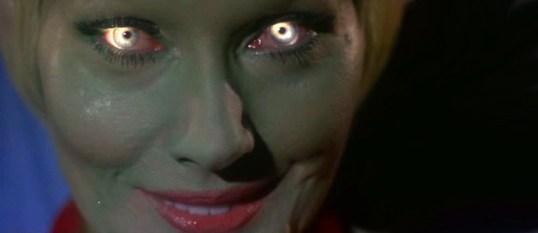
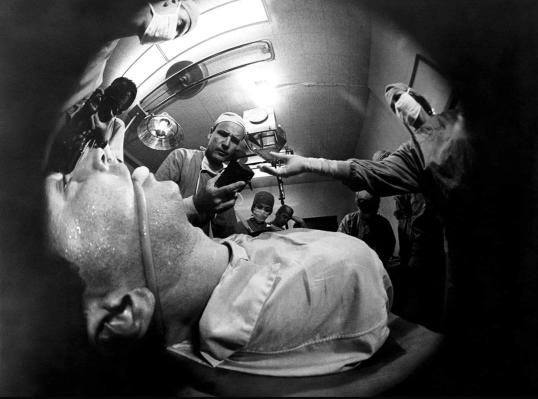
In the creepy 1974 film, Peter Graves plays a father who goes on a camping trip with his two teenage children (one of whom is played by Kathleen Quinlan).  A sudden earthquake and a solar flare causes the trio to try to return to civilization, where they discover that almost everyone has been reduced to a powdery substance and there are only a few crazed survivors.  They try to make their way back to their home in Malibu, facing danger at every leg of their journey.

(It’s almost a low-budget and far more dramatic version of Night of the Comet.)

Effective despite its made-for-TV origins, Where Have All The People Gone? was obviously mean to serve as a pilot for a television series.  The series didn’t happen but, even with a somewhat open-ended conclusion, the movie still works.


Unidentified, Short Film Review by Case Wright


I was unable to find anything on IMDB for this film; so, I used this photo from a previous review where it looked like they were going for a Santa Pedo vibe. Read that review below:

https://unobtainium13.com/2021/10/23/creepshow-time-out-the-things-in-oakwoods-past/: Unidentified, Short Film Review by Case Wright

Unidentified is about an ordinary guy who sees an alien invasion. This concept is so overdone that it is really its own subgenre of suckiness. Some random schmoe sees aliens and is unable to do anything about it accept die?! Mr. Filmmaker of Unidentified, why you are bothering me this garbage? Who cares?!

Hear me, it’s one thing if the ordinary person is heroic or we are setting up the story or he causes a resolution, but when it’s just some doofus driving around for 60% of the short, you are wasting my time! Mr. Filmmaker of Unidentified, I understand that creating a story is hard like how you must be always confused when you try to get the mail or turn on your phone, but that doesn’t mean you should pursue the art of film. Instead of making these terrible shorts that lack even a basic story let alone an ending, how about working on a simplistic craft? I’ll even consider putting it on my fridge! Really, my fridge has some prime real estate on it: magnets, shopping list sticky notes, and stains if it’s my housecleaning day.

If this terrible film did pique your interest…..somehow, the story is a British man in a sedan who drives for several minutes and sees a big monster- yep, that’s it. UGHHH. Maybe Alex Magana has a British cousin?

6 Trailers For October 13th, 2025


For today’s edition of Lisa Marie’s Favorite Grindhouse And Exploitation Film Trailers, we share some trailers from the maestro of Italian horror, Mario Bava!

  1. Black Sunday (1960)

After starting his career as a cinematographer and a visual effects engineer, Mario Bava made his directorial debut with 1960’s Black Sunday, starring Barbara Steele!

2. Black Sabbath (1963)

In 1963, Bava directed one of his most popular films, the horror anthology Black Sabbath.  The trailer put the spotlight on the great Boris Karloff.

3. Planet of the Vampires (1965)

One of Bava’s best films, Planet of the Vampires, was later cited by many as an influence on the Alien films.

4. Bay of Blood (1971)

One of the first slasher films, Bay of Blood was also a social satire that featured Bava’s dark sense of humor.

5. The House of Exorcism (1974)

When it was released in the United States, Bava’s Lisa and the Devil was re-titled House of Exorcism and, after new scenes were filmed, sold as a rip-off to The Exorcist.

6. Shock (1977)

Bava’s final film as a director was Shock, which starred Daria Nicolodi as a woman who is being haunted by the ghost of her first husband.

October Positivity: Holyman Undercover (dir by David A.R. White)


In 2010’s Holyman Undercover, David A.R. White plays Roy.  Roy is an 18 year-old Amish dude from Kansas.  It’s time for him to experience Rumspringa, a period in which he can live life amongst “the English” and decide whether or not he wants to commit to being Amish.  Roy decides to go Los Angeles so he can track down his uncle and work with him as a missionary.

Roy struggles in Los Angeles.  Giving money to one homeless man leads to him nearly getting mugged.  When he meets his uncle, he discovers that Brian (also played by David A.R. White) is now a struggling actor who has a taste for cocaine.  (Brian claims that he’s a holyman working undercover.)  Accompanying Brian to an audition leads to Roy getting cast as Satan on a primetime soap opera.  His wife is played by vapid supermodel Tiffany Towers (Jennifer Lyons).  Meanwhile, the show’s producer is a former country girl named Annie (Andrea Logan White) and soon, Roy is having fantasies about Annie dressing up like an Amish woman and dancing in a field with him.  However, the head of the network (Fred Willard) wants Roy to date Tiffany because it’ll be good publicity for the show.

Throughout it all, Roy remains innocent and confused about the modern world.  He’s never watched television.  He doesn’t know how to use a phone.  He doesn’t understand what a credit card is.  He’s earnest and honest to a fault and, even after Tiffany makes out with him, he continues to insist that he only has eyes for Annie.

Of course, in reality, I imagine that the typical Amish person knows how to use a phone.  I imagine that they probably also know what a television is and they probably even understand that you’re expected to pay your credit card debt.  The Amish may choose to reject a good deal of the modern world but that doesn’t mean that they don’t know what the modern world is.  But this film isn’t meant to be a realistic portrayal of the Amish or of Hollywood or of really anything.

Indeed, I’m not really sure what to make of this film.  It’s faith-based and it ends with Roy delivering a simple message about loving others but the film’s humor is often rather mean-spirited and there’s several jokes that are more than a little racist and homophobic.  (Japanese tourists take pictures while shouting, “Godzilla!”  When Brian ends up in jail, his cellmate is a hulking black man who says his name is Beef because “it’s what’s for dinner.”)  David A.R. White is not bad as Roy but his performance as Brian is incredibly shrill and there’s really no reason, beyond ego, for director White to have cast himself in both roles.

Probably the best thing that one can say about the film is that the name actors — Fred Willard, Clint Howard, Edie McClurg, and Staci Keanan — all manage to survive with their dignity intact.  Indeed, the highlight of the film is, believe it or not, John Schneider earnestly playing himself as the actor who replaces Roy as Satan and who then promptly launches a presidential campaign.  “The country’s going to Hell anyway!” he says, with just the right amount of self-awareness.

Interestingly enough, the film does end with one particularly prophetic scene, as Roy and Annie leave Hollywood to produce an Amish dating show.  Tiffany moves with them to the farm and a group of Amish men compete for her hand in marriage.  Farmer Wants A Wife, anyone?

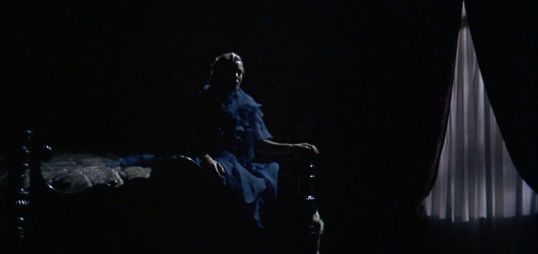
So, I Watched The Descent Part 2 (2009, Dir. by Jon Harris)


The Descent Part 2: Back to the Cave!

That’s what I would have called it.

Sarah (Shauna Macdonald) goes back to the caves that she barely escaped from during the first Descent to help the police look for the remains of her friends.  Sarah is suspected of killing all of them so I don’t think the police would have gone into a narrow cave with her.  Sarah was also traumatized by what happened in the cave so I don’t think she would voluntarily go back down there either.  As soon as they enter the cave, they get attacked by the crawlers.  What did they think would happen?

I loved the first Descent because it was a horror film that featured interesting and multi-layered women who weren’t just put on screen to be whimpering victims.  When I watched The Descent, I was just as invested in the personal drama as I was the horror in the caves.  I also liked that the first Descent left it open to interpretation about what actually happened in the cave.  The sequel didn’t really do that and it also didn’t add anything to the story.  Juno (Natalie Mendoza) returns but I’m not sure how considering what happened during the first movie.

The Descent Part 2 also shows a lot more of the crawlers than the first film did.  They’re much more visible and much more busy but they aren’t as scary once you can actually see them.  Plus revealing the crawlers as much as this movie does also ruins the ambiguity that I loved about the first Descent.

The Descent Part 2: More Splatter, Less Heart.

I should get a job writing tag lines.


Wizards of the Lost Kingdom (1985, directed by Hector Olivera)


The kingdom has been conquered by an evil sorcerer named Shurka (Thom Christopher).  Young Simon (Vidal Peterson), the son of the king’s wizard, barely escapes with his best friend and pet, the white fur-covered Gufax (Eugenio Martin).  In the wilderness, they meet warrior Kor (Bo Svenson), who teams up with them to free the kingdom.

This is another Roger Corman-produced sword and sorcery film from Argentina.  Corman did a lot of these in the 80s.  Wizards of the Lost Kingdom stands out by being considerably more kid-friendly than the rest of them.  There’s no nudity.  The violence is not excessive and is largely directed at fake looking giant insects.  There’s no nudity and no scenes of the bad guys forcing themselves on women.  The hero even has a toy-friendly companion!

Wizards of the Lost Kingdom also has a lot of stock footage.  The entire pre-title sequence is stock footage lifted from movies like Death Stalker to explain how “King Tyler” came to control the kingdom.  (King Tyler sounds like someone who would be the kegger king of the local college.)  Wizards of the Lost Kingdom is a short movie with a barely 72-minute run-time.  Fourteen of those minutes is footage from other movies.

Wizards of the Lost Kingdom takes a lighter approach to the sword-and-sorcery genre and it pays off with a simple and easy-to-watch movie featuring swords, magic, and monstrous insects.  It’s not a film that demands much of the audience and Bo Svenson looks convincing grunting and carrying a sword.  It wasn’t a box office hit but found a second life on video.  Of course, it got a sequel.  None of the original cast returned.

Horror Scenes That I Love: Dick Miller In The Howling


A true scene stealer, the character actor Dick Miller was a Navy veteran who earned a Phd in psychology, even while he was already appearing on stage.  His 1952 move from New York to California was originally so that he could pursue a career as a writer.  Instead, he ended up becoming one of the most beloved members of Roger Corman’s stock company.  (Famously, in 1952’s Apache Woman, he played both a Native American and the townsperson who shot him.)  Many of the directors who started their careers under Roger Corman continued to cast Dick Miller in their own films, keeping Miller busy as a character actor.  Miller worked with everyone from Martin Scorsese to Joe Dante to James Cameron to Steven Spielberg to Jim Wynorski.  Miller often played characters named Walter Paisley, a reference to his first starring role in Corman’s A Bucket of Blood.

In this scene from 1981’s The Howling, Dick Miller lets two reporters know what’s truly going on with the werewolves.

October True Crime: Karla (dir by Joel Bender)


When it comes to true crime cases, few are as disturbing as the story of Paul Bernardo and Karla Homolka.

Paul and Karla were a young, married couple who lived in Ontario.  They were both attractive.  They were both popular.  They were both superficially charming, in the style of someone who you might have taken a class with but the only thing you can really remember about them is their smile.  And they were both killers.  Paul Bernardo, a wannabe rapper who had previously made his money by smuggling cigarettes and who was also a serial rapist, murdered at the least three teenage girls, including Karla’s sister, Tammy.  When Paul was arrested, Karla told prosecutors that she had helped Paul with his murders but only because he threatened and abused her.  Prosecutors, perhaps moved by a picture that Karla’s friend took of her bruised face after one of Paul’s beatings, made a deal with her for her testimony.  In return for testifying against Paul Bernardo, Karla was convicted only of manslaughter and given a 12-year prison sentence.  (She was 23 at the time and would only be 35 when released from prison, assuming that she served the full sentence.)  However, during the trial, video tapes of the murders were uncovered and showed that Karla had been a far more active participant in the murders than she had originally admitted.  That included the murder of her sister, Tammy.

There were calls to rescind Karla’s plea bargain and to try her for murder but since her plea bargain had only required her to provide enough evidence to convict Paul, it was ruled that she had upheld her end of the bargain.  While Paul Bernardo is currently serving his life sentence, Karla Homolka is now free and living somewhere in Canada.

Needless to say, the case drew international attention, both due to the circumstances of Karla’s plea bargain and also to Paul and Karla’s image of being the “Ken and Barbie Of Serial Killers.”  It’s a case that continue to haunt Canada, an example of how the accused was ultimately treated with more respect than the victims.  For her part, Karla continues to claim that it was all Paul and that she was forced into helping.  Paul claims that he and Karla were equal partners and that the actual murders were all committed by Karla.  Personally, I think they’re both lying.

2006’s Karla stars Laura Prepon as Karla Homolka.  The film opens with her already in prison and being interviewed by a psychiatrist (Patrick Bauchau) who has been assigned to determine if there’s a risk of her reoffending.  As Karla tells her story, we see flashbacks of Karla’s life with Paul (Misha Collins).  Prepon and Collins are both chillingly believable as the soulless Paul and Karla.  Laura Prepon plays Karla as being a narcissistic sociopath who is incapable of understand that she’s not the victim in this story.  I imagine that Prepon’s performance probably captures the essence of the real Karla, even if Prepon doesn’t really look like her.

That said, the film itself is largely a surface level exploration of the case.  The film’s script attempts to maintain some ambiguity as to whether or not Karla Homolka was a voluntarily participant in the murders or if she actually was just too scared of Bernardo to stop him.  Prepon plays her as being a sociopath but the script still tries to play both sides of the debate and, as a result, the film falls flat.  The film may be called Karla but it doesn’t really get into her head and, as a result, it has all the depth of an Investigative Discovery special.  In the end, the film feels like it’s trying to exploit the notoriety around a famous case without taking a firm position on the case’s biggest controversy.  When it comes to the crimes of Karla Homolka, that’s not an option.

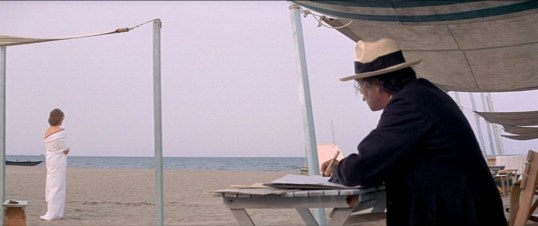
Under the Moon’s Shadow: The Many Faces of the Modern Werewolf in Cinema


“Beneath the full moon’s gaze, the werewolf’s howl reminds us that the monster we fear most lives within.”

Werewolves have been haunting movies for almost a century, capturing our deepest fears and hidden desires. But today’s werewolf films go beyond the classic horror formula, offering fresh takes that reflect different genres, tones, and cultural vibes. From the intense, action-packed Dog Soldiers to the emotionally charged coming-of-age story in Ginger Snaps, modern werewolf stories keep evolving. This piece explores five standout films—Dog Soldiers (2002), Ginger Snaps (2000), Wolfen (1981), The Howling (1981), and An American Werewolf in London (1981)—to see how they each put their unique spin on the age-old monster myth.

The Werewolf as Warrior: Dog Soldiers’ Brutal Siege

Neil Marshall’s Dog Soldiers breaks away from the lonely, tragic werewolf trope and cranks up the action. Set deep in the Scottish Highlands, it throws a squad of British soldiers against a ferocious pack of werewolves. This film turns the myth into a survival war story packed with tension and raw energy, reminiscent of classics like Aliens and Zulu. The werewolves here aren’t lonely victims—they’re terrifying predators, more beast than man, rarely fully shown to keep the suspense sharp. The movie focuses on the squad’s fight to survive and the bonds they share, putting teamwork and instinct front and center.

The werewolves are intentionally faceless threats, less about human drama and more about pure danger. Instead of personal transformation, Dog Soldiers is about external combat, the struggle between man and beast in its rawest form.

Adolescence Unleashed: Ginger Snaps and the Lycanthropic Metaphor

Ginger Snaps takes a totally different route, using werewolf transformation as a metaphor for female puberty and all the confusing emotions that come with growing up. The bridge between monster and metaphor is Ginger’s first period, which triggers her curse and mirrors the changes and fears of adolescence. The movie digs deep into sisterhood, identity crises, and the loss of control, wrapping its horror in psychological drama and dark humor.

Instead of flashy creature effects, Ginger Snaps keeps things subtle, focusing on emotional truth. It’s a personal story about change and fear of becoming “other,” making the monster symbolic of real-life struggles rather than just an external threat.

Urban Shadows: Wolfen’s Mystical Guardians of Decay

Wolfen stands apart for taking the werewolf myth into the world of urban decay and social unrest. Set in New York City’s rundown South Bronx, it follows detectives chasing a mysterious “Wolfen” creature tied to Native American spirituality. These aren’t just monsters—they’re ancient protectors fighting back against the destruction of nature by the city.

This movie trades fast-paced horror for slow-building atmosphere and social commentary. It uses the werewolf myth to reflect on displacement, environmental trauma, and the clash between nature and modern life.

Satire and Savagery: The Howling’s Shifting Tones

Joe Dante’s The Howling mixes body horror, camp, and satire in a way few horror movies do. The film tracks a journalist who stumbles upon a hidden werewolf colony and shifts effortlessly between chilling scares and self-aware humor. The transformation scenes set a new standard with unforgettable effects, and the movie sneaks in sharp critiques of media culture and cult mentality.

The werewolves in The Howling have a raw, animalistic design inspired by medieval art, which adds to the unsettling vibe. The film plays with expectations, flipping between serious horror and playful camp to keep viewers on their toes.

Tragedy and Humor: An American Werewolf in London’s Genre Fusion

An American Werewolf in London changed the game by blending horror, comedy, and tragedy all in one. It tells the bittersweet story of an American backpacker cursed after a werewolf attack in England. The special effects were groundbreaking, making the transformation scenes legendary. But more than the effects, its mix of sharp wit and real sadness gives it an emotional depth rare for horror films.

Unlike the external threats in Dog Soldiers or Wolfen, this film focuses on the inner turmoil of becoming a monster and the tragic human cost. The humor lightens the mood but never undercuts the emotional punch.

Thematic and Stylistic Divergence: A Closer Look

What stands out most when looking at these films is just how differently each approaches the werewolf myth, using it to tap into a wide variety of fears and ideas.

Tone and Mood

The films differ widely in tone. Dog Soldiers is intense and gritty, pulling viewers into a tense battle for survival marked by an unrelenting external threat. In contrast, Ginger Snaps is more reflective and symbolic, presenting the werewolf as a metaphor for adolescent change and identity struggles, especially in the context of female puberty. Its tone is intimate and emotionally charged.

Wolfen adopts a slower, more brooding atmosphere, emphasizing mystery and social critique through ecological and urban decay themes. The Howling fluctuates between genuine body horror and camp satire, challenging viewer expectations with its mix of fear and humor. Finally, An American Werewolf in London balances horror and comedy with a tragic undertone, creating an emotional complexity that few other werewolf films achieve.

Narrative Focus

The stories told by these films further highlight their differences. Dog Soldiers centers on a group dynamic, focusing on survival against a faceless external menace. Ginger Snaps is more inward-looking, exploring personal growth, family bonds, and the emotional upheaval of transformation.

Wolfen zooms out to look at social and environmental issues, making the werewolf a symbol of nature fighting back against urban chaos. Similarly, The Howling blends personal horror with cultural critique, exploring media obsession and cult psychology, all while keeping the story focused on its characters. An American Werewolf in London chooses to dive deep into one man’s tragic journey, showing the emotional impact of becoming a monster.

Cultural Themes

Together, these films show how the werewolf myth can reflect whatever fears or themes society is grappling with. Dog Soldiers taps into worries about survival and overwhelming outside forces; Ginger Snaps gets at the confusion and pain of growing up; Wolfen reflects alienation and environmental concerns; The Howling examines media hype and societal madness; and An American Werewolf in London highlights inner conflict and loss.

This broad range of themes and styles proves the werewolf legend is still incredibly adaptable—still a powerful way for films to engage with human experience in all its complexity.

Other Modern Werewolf Films in Context

Beyond these main works, many other films contribute to the werewolf legacy. The Company of Wolves (1984) explores gender and sexuality through fairy tale visuals. Silver Bullet (1985) adapts Stephen King for a small-town horror tale. Joe Johnston’s The Wolfman (2010) revives gothic horror with modern effects and includes standout makeup work by Rick Baker, delivering a visually rich yet emotionally complex take on the classic. Mike Nichols’ Wolf (1994) uses lycanthropy as a metaphor for aging and desire.

Most recently, Leigh Whannell’s remake of The Wolfman (2024) offers a fresh perspective on the myth, blending psychological horror with visceral transformation sequences. Whannell’s version emphasizes the protagonist’s internal struggle and familial curses within a contemporary setting, melding suspense with a nuanced character study and updated special effects to appeal to modern audiences while honoring the gothic roots.

Adding a lighter touch is The Monster Squad (1987), where a group of kids face off against classic monsters—including a reluctant Wolfman—in a mix of horror, adventure, and youthful courage. Its playful tone offers a nostalgic, fun take on the werewolf legend, proving that these creatures can captivate across genres and generations.

Together, these films highlight how the werewolf myth keeps evolving, adapting to reflect new cultural moments and storytelling styles.

Conclusion: Why the Werewolf Still Howls

The lasting power of werewolves in cinema lies in their extraordinary adaptability. These films show how the werewolf morphs to fit different narratives and cultural concerns: from brutal external threats in Dog Soldiers to metaphors for personal growth in Ginger Snaps; from mystical protectors in Wolfen to symbols of media mania in The Howling; and from tragic heroes in An American Werewolf in London to youthful adventurers in The Monster Squad.

The werewolf is not just a monster of flesh and fur but a cultural shape-shifter—malleable, symbolic, and endlessly fascinating. Its transformations mirror not only physical change but societal anxieties, personal struggles, and the complexities of human nature. This versatility guarantees the werewolf’s howl will echo across cinema for generations to come.

4 Shots From 4 Horror Films: 1950s Part One


This October, I’m going to be doing something a little bit different with my contribution to 4 Shots From 4 Films.  I’m going to be taking a little chronological tour of the history of horror cinema, moving from decade to decade.

Today, we look at the start of the 1950s.

4 Shots From 4 Horror Films

The Strange Door (1951, dir by Joseph Pevney)

The Strange Door (1951, dir by Joseph Pevney)

The Black Castle (1952, dir by Nathan H. Juran)

The Black Castle (1952, dir by Nathan H. Juran)

The Maze (1953, dir by William Cameron Meznies)

The Maze (1953, dir by William Cameron Meznies)

House of Wax (1953, dir by Andre De Toth)

House of Wax (1953, dir by Andre De Toth)