Well, we’re starting in on the final week of our tribute to Ennio Morricone so today, I want to share one of his most important compositions.
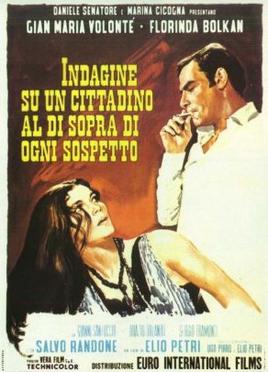
The 1970 film, Investigation Of A Citizen About Suspicion, was a dark satire about police corruption and murder in Italy. It was not only critically acclaimed but it also won the Academy Award for Best Foreign Language Film. (That award is now known as Best International Film.) The success of this film showed that Morricone was more than just a composer of epic Western themes and it also introduced his music to a whole new group of filmgoers.
Here is Morricone’s Main Theme From Investigation of a Citizen Above Suspicion:
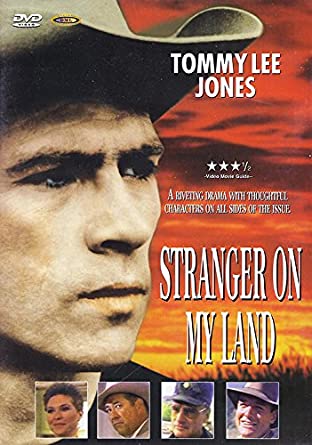
The Air Force wants to build a new air base in Utah but the Whitman family refuses to sell their ranch. Bud Whitman (Tommy Lee Jones) served in Vietnam and he disapproved just as much of forcing Vietnamese villagers to move as he now disapproves of the idea of allowing the government to force American citizens to move. When a judge rules that the Air Force can force the Whitmans to vacate their property under the rule of eminent domain, Bud announces that he still will not be moving. With several of Bud’s old combat buddies showing up to support Bud, the villainous county surveyor, Connie Priest (Terry O’Quinn), prepares to take matters in his own hands.
Tommy Lee Jones vs. Terry O’Quinn? That sounds like it should have the makings of a classic but Stranger On My Land is a largely forgettable made-for-TV movie. A huge part of the problem is that O’Quinn’s character doesn’t have any real motivation beyond just being a prick and that seems like a waste when you consider the number of interesting villains that Terry O’Quinn has played over the years. This is the actor who, in The Stepfather, actually made a multiple murderer seem a little bit likable. Connie Priest seems like a villain that O’Quinn could have done a lot with if only the film’s script hadn’t been so simplistic. Tommy Lee Jones is always well-cast as a modern day western hero but again, the script doesn’t do much with his character. He’s just Tommy Lee Jones yelling at people to get off his property. You could probably go to Tommy Lee Jones’s own ranch and have the exact same experience without having to sit through the rest of this movie. Even Bud’s ethical objections to the Vietnam War feel like something that was just tossed in to assure the people watching at home that he’s not meant to be some sort of gun-toting militiaman. The best performance in the movie comes from Ben Johnson, who is plays Tommy Lee Jones’s father. That’s prefect casting. If Ben Johnson wasn’t actually Tommy Lee Jones’s father, he probably should have been.
The main problem with Stranger On My Land is that it was made for television and it had to operate within the limits of what was acceptable for television in 1988. The entire movie seems to be building up to a fierce battle between Bud and law enforcement but instead, it settles for a personal fight between Bud and Connie. The film’s sudden ending doesn’t feel authentic but it does feel like what you’d expect to find on ABC in the late 80s.
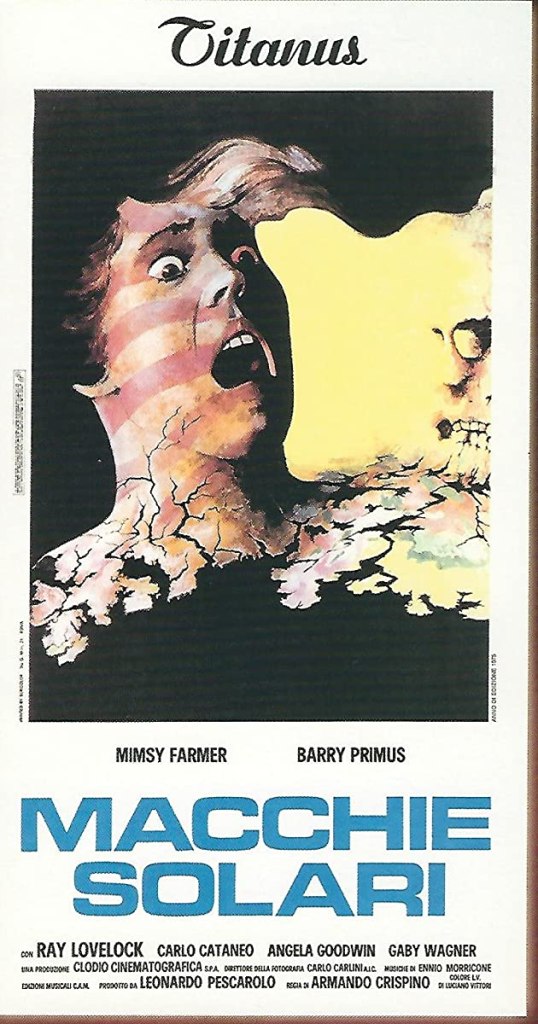
The 1975 film Autopsy is a great giallo, one that definitely deserves to be better known than it is. Another thing that deserves to be better known is Ennio Morricone’s wonderful score for this film. Hence, today’s song of the day: Ennio Morricone’s Main Theme From Autopsy!
I mean, I’ve often been tempted to get one, even though I pretty much know all about my family history. My maternal grandmother was born in Spain while my grandfather’s parents came to this country from Italy. On my father’s side of the family, everyone is pretty much Irish with a little bit of German and French mixed in. Despite the fact that I know all of this, it’s still tempting to do the whole DNA thing because then I’d have percentages to go along with my family history. Percentages make every story better, or so I’ve heard.
Of course, there’s a lot of other people who get DNA tests because they’re hoping that they’ll turn out to have a really badass ancestor or that they’ll find some evidence that they’re actually more interesting than they appear to be. Remember when Elizabeth Warren got that DNA test that proved she had less Native American ancestry than the average American? That’s not a story that you’ll see repeated in a 23andMe commercial but it’s one that I found fascinating as an example of the importance that people put on having interesting ancestors. I mean, technically, what’s wrong with saying, “Yes, my family’s boring but I’m not?” Instead, we all want to say, “I’m interesting and so is everyone who has ever shared my DNA!”
That said, I’ll still probably never get a DNA test. People always assume that DNA tests and ancestry research are going to bring them good news (“and then I discovered that I’m descended from the first person to ever open up a fast food restaurant in the state of Wyoming and it just changed everything….”) but it seems to me like they’re just asking for trouble. Sure, you might be descended from a great and respected historical figure. Then again, you also might discover that the people you thought were your parents stole you from the hospital. You might discover that your father was actually the Goatman or something. (It could happen.) I mean, seriously, why take the risk when you can just take your grandmother’s word that, just because some your ancestors fought with Franco in the Spanish Civil War, that doesn’t mean that they necessarily agreed with him about everything.
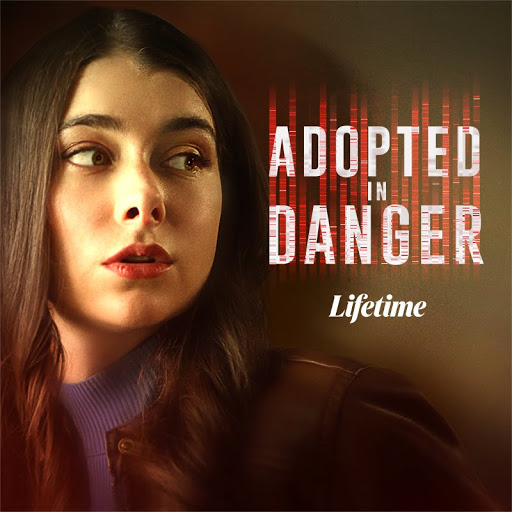
In Adopted in Danger, Candace (Allison Paige) actually does have a fairly good reason for wanting to get a DNA test. She’s adopted and she has no idea who her birth parents are. At the very least, she would like to know where she came from just so she can have a complete medical history before she and her husband try to start a family. That certainly seems reasonable but, unfortunately, it turns out to be a lot more trouble than its worth. Candace’s DNA indicates that she’s the daughter of real estate developer Tom Mason (Jason Brooks). However, when Candace goes to see Tom and tells her that he’s her father, Tom refuses to consider the idea. Tom, in fact, accuses her of just being after money and kicks her out of his office.
Why is Tom so adamant that he’s not Candace’s father? That’s something that Candace and her friends investigate, in between drinking a lot of wine. And I do mean a lot of wine. I think this film may have set a record as far as scenes involving friends drinking wine and discussing DNA might be concerned. However, all of that wine cannot stop the murderous schemes of a powerful family with a secret to hold and soon, Candace finds herself and everyone she knows being targeted.
The main problem with Adopted in Danger is that it’s fairly predictable. I kept waiting for a big twist that would reveal that there had been a mix-up with the DNA or that Tom Mason was some sort of imposter or something that would have taken me by surprise but nope. There’s no mix-up with the DNA. Tom Mason is Tom Mason. It’s just he comes from a terrible family and they don’t want anyone to know that Candace is his daughter. Everything plays out the way you would expect it to play out.
That said, if you’re going to solve a mystery, you might as well do it while hanging out with your two BFFs. DNA, in Adopted in Danger, may show where you’re from but but your friendships and your lovers show who you are and that’s not a bad message at all.
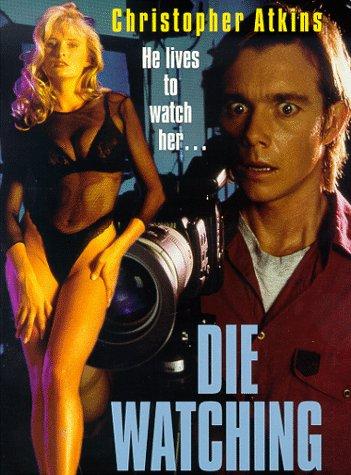
Mentally scarred by the night that his mother murdered his father, Michael Terrence (Christopher Atkins) is a video editor who makes his living filming naked models and who deals with his mental issues by then asphyxiating those same models. Michael’s main kink is that he ties his victims up in front of a monitor and then films them as they die, basically forcing them to witness their own murders. In other words, Michael is one sick puppy who has perhaps seen Michael Powell’s Peeping Tom a few too many times.
Despite the fact that dead actresses and models are turning up all over Los Angeles, Detectives Lewis (Tim Thomerson) and Barry (Carlos Palomino) have no idea that Michael is responsible. In fact, no one suspects Michael. His neighbor, an aspiring artist named Nola (Vali Ashton), even hires Michael to help her promote her artwork. Despite the fact that Nola already has a boyfriend, she and Michael fall in love. Falling in love causes Michael to lose his urge to kill but it may already be too late as a video of one of his murders has fallen into the wrong hands.
For some reason, Christopher Atkins was a direct-to-video and Cinemax mainstay in the 90s. I’ve never understood why because he was a terrible actor with absolutely no screen presence. Unlike C. Thomas Howell, who was bland in mainstream films but usually surprisingly good when he did direct-to-video work, Atkins was always forgettable regardless of whether he was appearing in a major studio production or something like Die Watching. For a film like this to work, the film has to convince you that there’s at least a chance the murderer could have been a decent human being if not for his tragic past. Atkins just comes across like a natural born weirdo. Atkins gives a sweaty and nervous performance but he makes Michael so obviously disturbed that it’s impossible to buy that Nola would dump her boyfriend for him. Judd Nelson or, again, C. Thomas Howell probably could have pulled off the role. Christopher Atkins just feels wrong.
Of course, the target audience for this film doesn’t care about the acting or the plot or anything else. They care about the women and those who watch a film like this solely for the nudity won’t be disappointed. Vali Ashton is actually really likable as Nola, though the film is stolen by Erika Nann, who plays Nola’s sex-obsessed roommate and who gets the best lines. (Of course, there’s a difference between getting the best lines in Die Watching and getting the best lines in something like Hamlet.) It’s also good to see Tim Thomerson in practically anything, even when it’s something as dumb as Die Watching.
Die Watching is pretty dire but it does predict the rise of a very specific type of internet culture. When Michael accidentally sends one of his murder tapes to a producer instead of one of his sex tapes, the producer is not disturbed but instead, he’s intrigued by the commercial possibilities. Even Michael knows that’s messed up! If Die Watching were made today, of course, that producer would probably own an adult website and he would be talking about selling the murder videos on the dark web. It just goes to show that the more things chance, the more they remain the same.
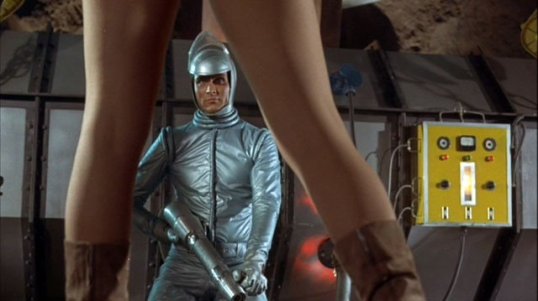
The film is 1968’s Danger Diabolik! The music is courtesy of Morricone. The direction is courtesy of Mario Bava. Does the scene make any sense? Does it have to? This film is all about pure style and it’s hard to think of any place as stylish (by 1968 standards) as Valmont’s Nightclub.
Today, as we continue to honor the memory of Ennio Morricone and celebrate the birthday of Mario Bava, this just seems like the perfect scene to share.
For those of you who were wondering if the worst film of 2019 was going to have a sequel …. well, here’s your answer!
Joseph Langford and Hero Fiennes Tiffin are back as the two most boring young lovers alive. This trailer certainly makes it look steamy but I’ll be surprised if the actual film lives up to the promise of the preview. That’s one reason why I love trailers. Trailers are often more interesting than the film itself.
Anyway, After We Collided will be released on October 2nd so don’t worry! In only a few more months, you will once again have a chance to watch two people with almost zero romantic and sexual chemistry take a shower together.
On June 4th, 2004, the small town of Granby, Colorado was briefly the center of the nation’s attention.
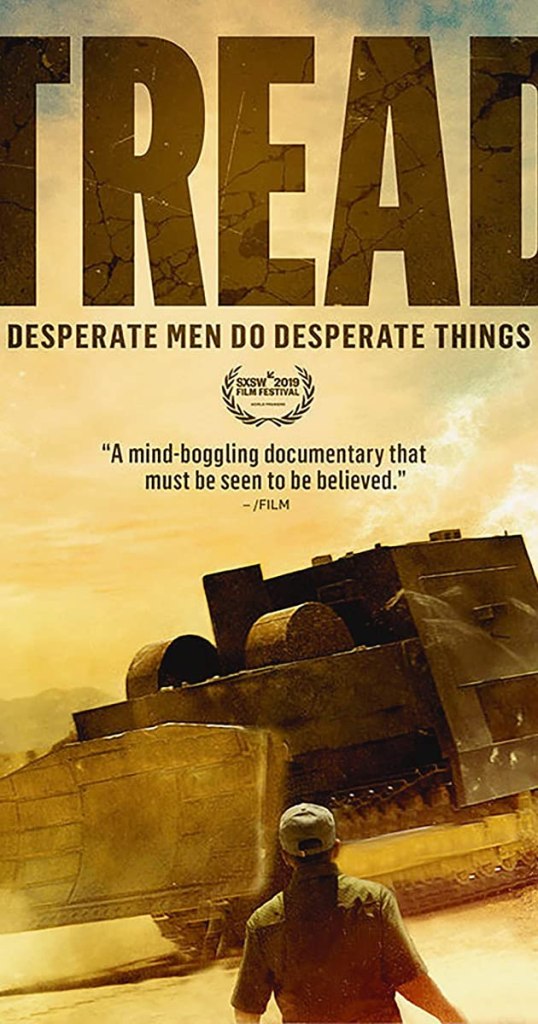
On that day, an armor-plated bulldozer rumbled down the streets of Granby. The driver of the bulldozer was a local business owner named Marvin Heemeyer. Heemeyer, who had previously been at the center of a zoning controversy, spent two hours driving the bulldozer through various buildings in Granby. He destroyed the muffler shop that he had once owned. He destroyed a nearby concrete plant. He drove through the Granby City Hall. He smashed the bulldozer through the offices of the local newspaper. He demolished the home of a family who he felt had conspired against him. He took out a hardware store. For two hours, the police chased him, firing their weapons at the bulldozer and discovering that nothing could slow him down. In fact, it wasn’t until one of the bulldozers’ treads dropped into the hardware store’s basement that the rampage stopped, Unable to free the tread, Marvin Heemeyer committed suicide by shooting himself in the head.
Before he went on his rampage, Heemeyer recorded himself talking about why he was going to do what he did. He mailed those tapes to his brother in South Dakota a few hours before getting in the bulldozer. His brother later turned those tapes over to the FBI. In the tapes, Heemeyer discussed what he felt was years of harassment by the Granby town council and the zoning board. He described himself as being an “American patriot” and he even went so far as to say that he felt his rampage was predestined. He also went on to express amazement that he was able to spend two years openly modifying the bulldozer and turning it into a tank without anyone asking him what was going on. He also made clear that when he entered the bulldozer for the last time, he knew that he was never going to leave it. He truly was going on a suicide mission.
Those tapes are at the center of Tread, a documentary about Marvin Heemeyer and his 2004 rampage. The film alternates between people discussing their memories of Marvin and that day and the taped voice of Marvin himself attempting to explain his motivations. Almost everyone who is interviewed talks about what a friendly and genuinely nice person Marvin seemed to be. Even though Marvin spent two years planning his rampage, no one — not even his girlfriend — appeared to suspect a thing. Even in the weeks directly before his rampage, Marvin was making plans for the summer. One friend of Marvin’s does speculate that Marvin spent “too much time alone.”
As many people interviewed point out, Marvin was, by most measures, a successful businessman. He had a reputation for being the best welder in the county and he opened up a muffler shop in a building that he bought for $44,000. He later sold that building for $400,000. However, as the tapes reveal, Marvin didn’t view selling his shop for a profit as being a success. Instead, he viewed as something that he was forced to do by the town council and their refusal to side with him in a zoning dispute that he had with the manufacturers of a concrete plant. Marvin felt that the town was ruled by one family and that family was conspiring against him and singling him out for harassment.
I’m about as anti-government as they come so my natural instinct, when Tread began, was to be sympathetic to Marvin’s anger, if not his solution. And, having now watched the documentary, I still have no doubt that Marvin probably was, to an extent, targeted by the zoning board and the town council. The fact of the matter is that it’s rare that people don’t let the least amount of power go to their head. That’s especially true when it comes to small towns. There seems to be a natural pettiness that comes along with having power. That’s true regardless of whether you’re the mayor of a small town in Colorado or the governor of a state like …. oh, I don’t know, let’s just say Michigan and New Jersey. At the same time, when you listen to Marvin’s voice on tapes, it’s obvious that there was more going on in Marvin’s head than just anger over the zoning dispute. When Marvin talks about how God obviously wanted him to modify the bulldozer and use it to destroy the town, you realize that, if it hadn’t been the zoning dispute, it probably would have been something else. Marvin comes across as time bomb while the town leaders come across as being the people who unknowingly lit the fuse.
I have to admit that, until I watched this documentary, I had never heard of him but a simple Google search revealed that, in the years following his death, Marvin Heemeyer has gone on to become a hero to certain anti-government activists. Though it’s been 16 years since he unleashed his bulldozer on the town of Granby, his story still feels relevant today. There’s still a lot of angry people out there and, if anything, the people in power have gotten even more heavy-handed and arbitrary in their behavior today than they were in 2004. That said, if you’re looking for a film that either vilifies or blindly celebrates Marvin Heemeyer, Tread is not that film. Overall, Tread portrays Marvin Heemeyer as being a complicated man who, in the town of Granby, found the perfect reason (or, depending on how much sympathy you may or may not have for him, excuse) to strike out.
Yeah, okay, it’s an obvious joke and not a particularly clever one but I’m sure that I’m not the only one who instinctively makes a joke about Taken whenever I see another trailer featuring Liam Neeson holding a gun or cracking a safe.
Anyway, Honest Thief stars Liam Neeson as a veteran thief who wants to retire so that he can marry Kate Walsh. However, he’s just been double-crossed by two FBI agents and now, he has to do what he has to do to get his money back.
Honest Thief is scheduled to be released on October 9th. Here’s the trailer!

 Through the Shattered Lens