4 Shots From 4 Films: Special Steven Soderbergh Edition


4 Shots From 4 Films is just what it says it is, 4 shots from 4 of our favorite films. As opposed to the reviews and recaps that we usually post, 4 Shots From 4 Films lets the visuals do the talking.

Today, we wish a happy birthday to one the early pioneers of independent film, Steven Soderbergh.  Soderbergh was 26 years old in 1989, when he became the youngest director to ever win the Palme d’Or at Cannes.  Soderbergh went on to become one of the busiest and most interesting director in Hollywood, working in all genres and inspiring filmmakers the world over.

4 Shots From 4 Films

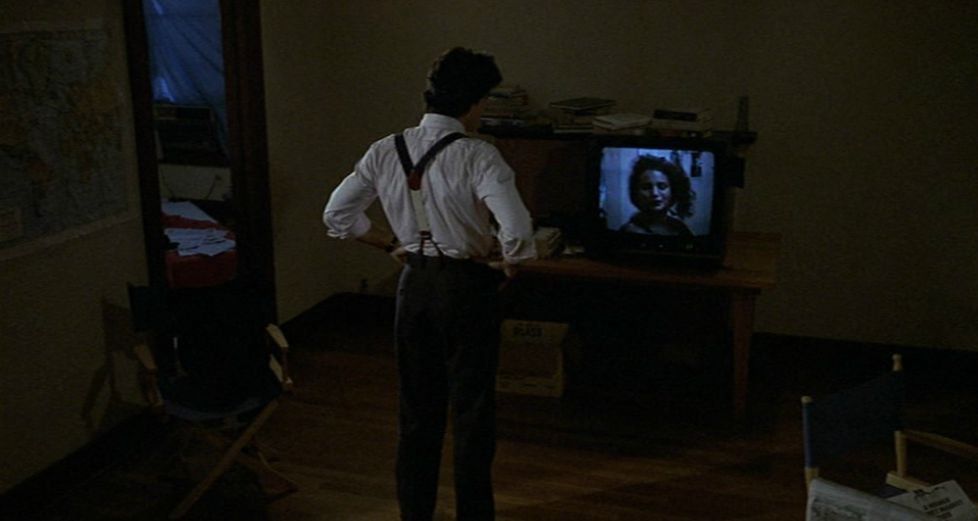
sex, lies, and videotape (1989, directed by Steven Soderbergh)

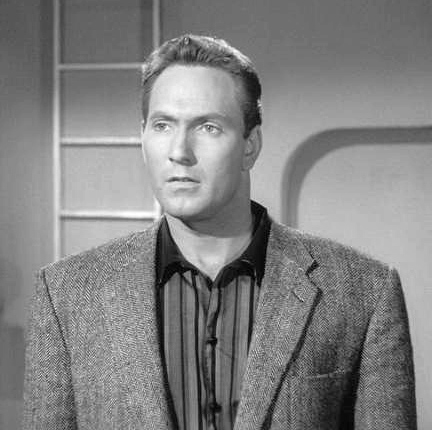
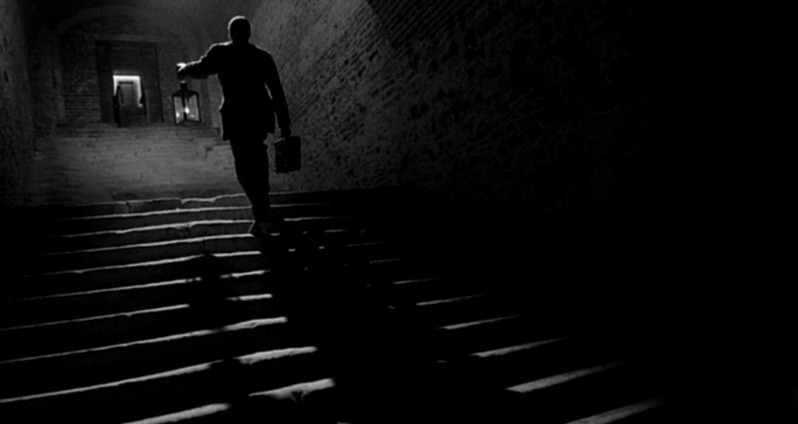
Kafka (1991, directed by Steven Soderbergh)

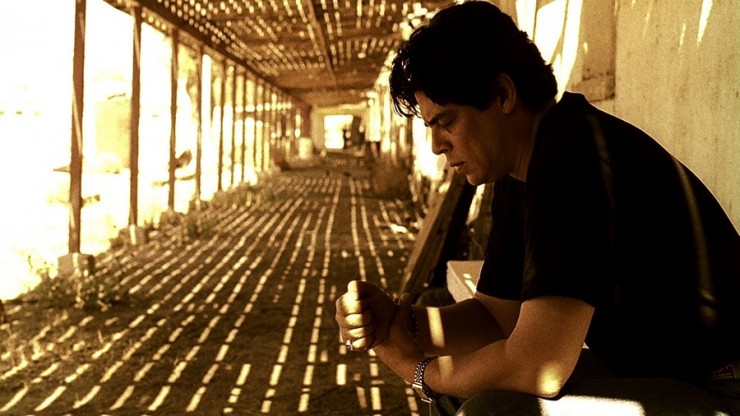
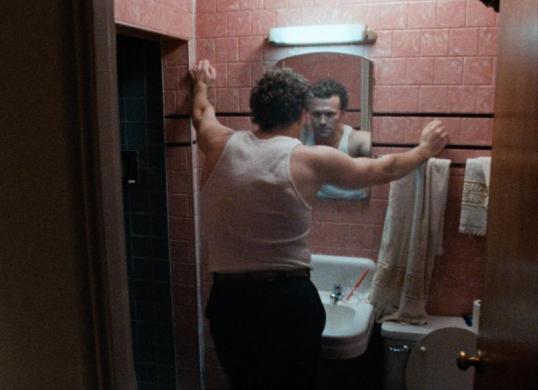
Out of Sight (1998, directed by Steven Soderbergh)

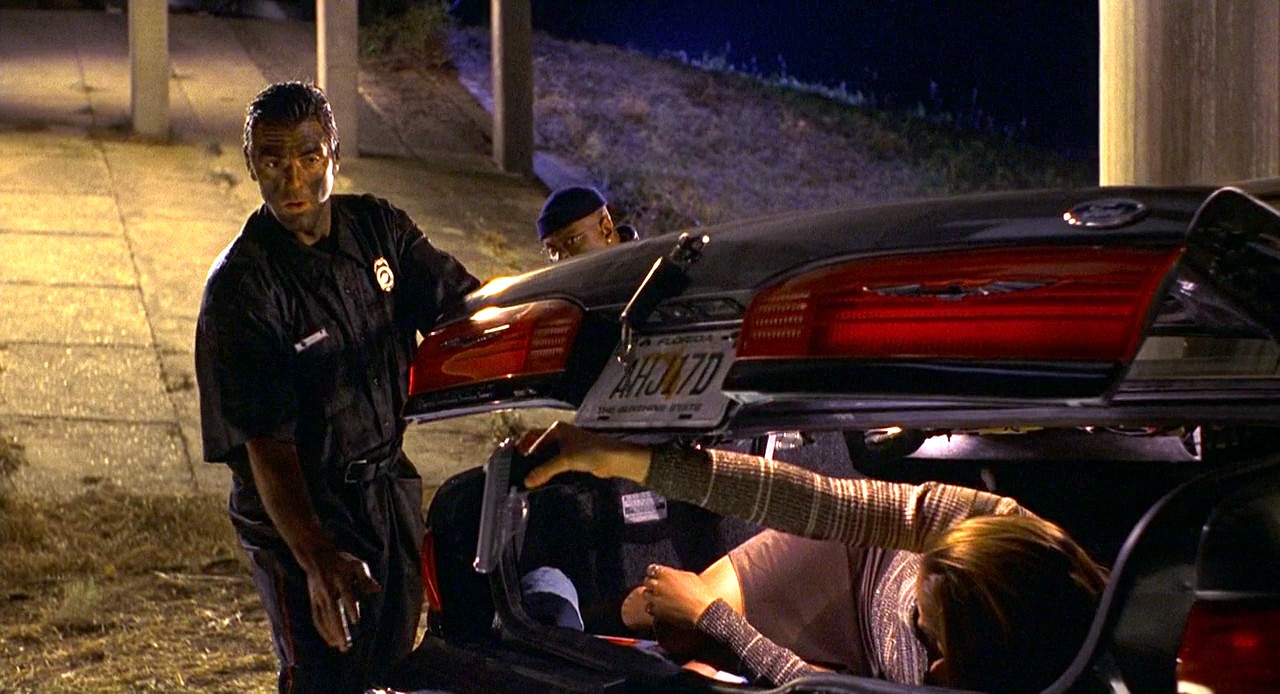
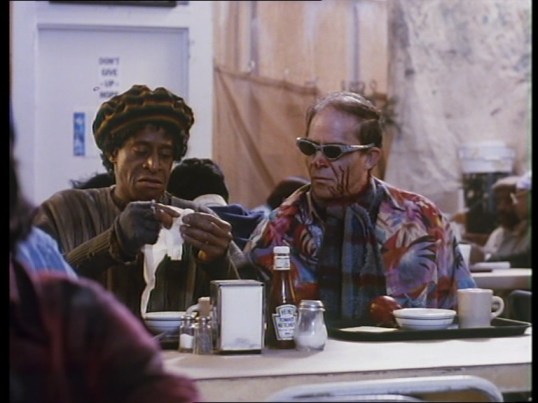
Traffic (2000, directed by Steven Soderbergh)

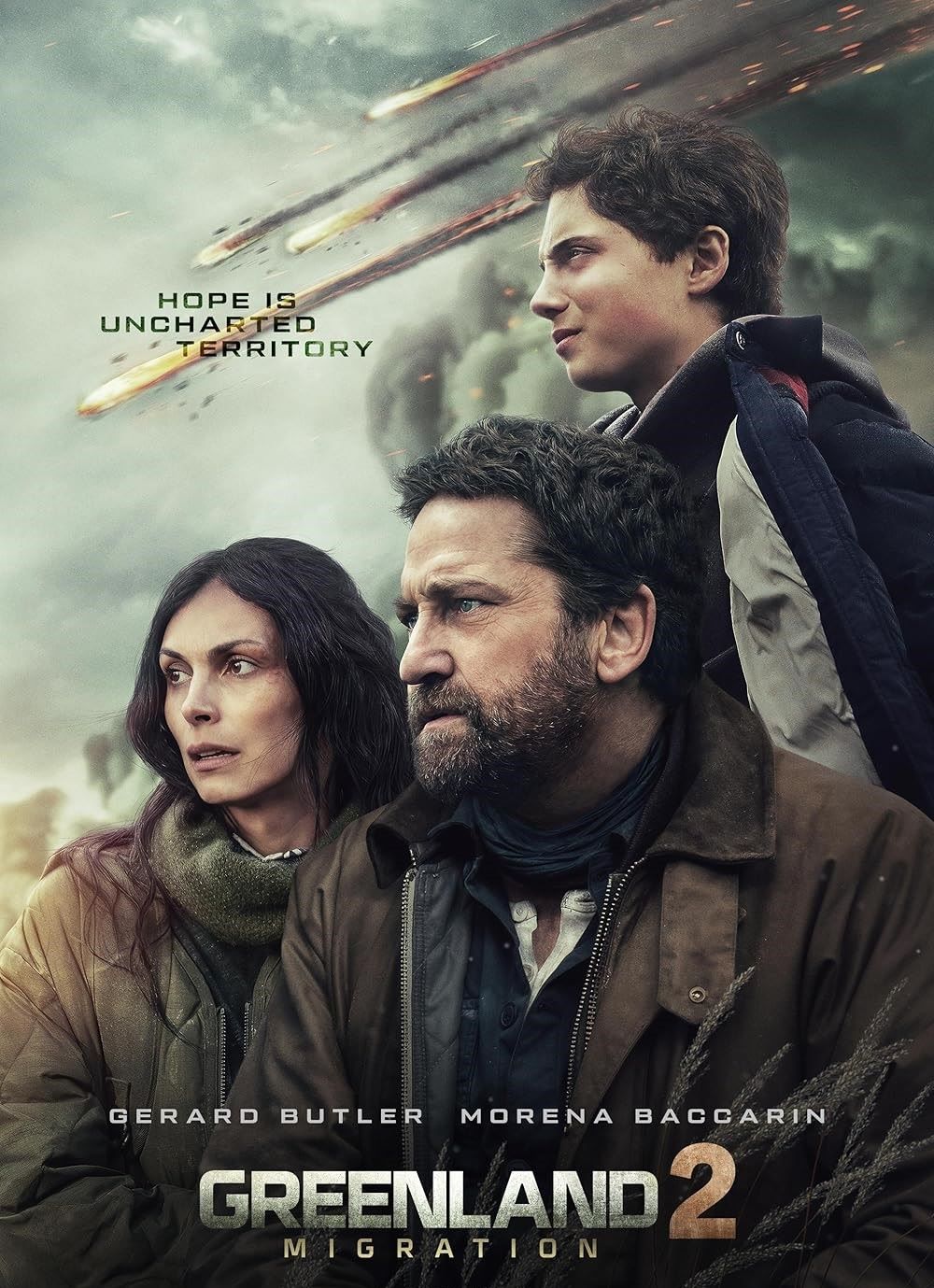
Review: Greenland 2 – Migration (dir. by Ric Roman Waugh)


Greenland 2: Migration is a sequel that mostly leans into “if it ain’t broke, don’t fix it,” for better and for worse. It delivers sturdy spectacle, a committed Gerard Butler, and a tense family-through-hell journey, but it also rehashes a lot of the first film’s beats and pushes the plausibility envelope more often this time around. If you were on board with Greenland as a grounded, human-scale disaster movie, this one feels like the more bombastic, road-movie expansion pack rather than a full evolution.​

Set about five years after the comet strike that wiped out most of civilization, Greenland 2: Migration finds the Garrity family still holed up in the Greenland bunker complex, part of a fragile community waiting for the surface to become livable again. John (Gerard Butler) now works as a scout/engineer, Allison (Morena Baccarin) has stepped into more of a leadership role within the bunker, and their son Nathan is older, restless, and itching to prove himself outside the relative safety of underground life. When escalating quakes, electromagnetic storms, and general planetary chaos literally collapse the bunker around them, the film quickly turns into a survival trek across a devastated Europe toward the Clarke impact crater in southern France, rumored to be the one spot on Earth that has actually healed.​

As a premise, the film works; it gives the story a clear A-to-B structure and justifies the shift from the contained panic of the first movie to a post-apocalyptic road odyssey. The script keeps the stakes straightforward: reach the crater region or die trying, while dodging unpredictable weather events, territorial military forces, and desperate survivors who are just as dangerous as the environment. There is something appealingly old‑school about how it plays as a throwback survival picture—less interested in intricate worldbuilding and more in reaction, improvisation, and narrow escapes.​

The downside is that you can feel the film constantly echoing Greenland’s structure: another long, peril-filled journey, another series of escalating close calls, another parade of briefly sketched side characters who exist to either help or threaten the Garritys for a single sequence. The first film had novelty on its side and a sharper sense of dread as the comet approached; here, the formula is familiar enough that you can often tell who will live, who will die, and roughly when another set piece is about to kick off. That predictability doesn’t kill the tension outright, but it does flatten the emotional peaks, especially if you walked in hoping for a genuinely new angle on this world.​

Gerard Butler remains the anchor, and this is squarely in his comfort zone. He plays John as perpetually exhausted yet stubbornly practical, the kind of guy who will grumble his way through heroism, and there’s an easy, weathered charm to that. Morena Baccarin gets a bit more agency this time, with Allison often driving decisions instead of just reacting to them, though the movie still stops short of really turning her into a co-lead with equal interiority. Roman Griffin Davis steps in as the older Nathan, and he brings a nervous, teenage energy that fits the “kid who grew up in a bunker and wants to see the world” vibe, even if the character’s arc hits pretty familiar notes about bravery and responsibility.​

The script does flirt with heavier themes: the psychological toll of surviving the end of the world, the guilt of those who made it into the bunkers versus those left outside, and the question of what “home” even means when the planet itself has effectively turned against you. There are moments—like the chaotic clashes around remaining bunkers or the wary interactions with other survivor groups—that suggest a more morally murky, Children of Men‑style story lurking underneath. But the movie rarely lingers on these ideas; it tends to touch them, nod, and then hurry back to the next escape sequence or visual spectacle.​

Visually, though, Greenland 2: Migration is where the sequel justifies its existence. Director Ric Roman Waugh and the crew make great use of European locations and Icelandic landscapes to sell a world that has been carved up by tectonic violence and choked with ash, but is slowly, unevenly rebuilding. The dried-out English Channel, the ravaged coastlines, and the eerie, storm‑lit skies give the film a distinct apocalyptic texture that feels different enough from the North American focus of the first movie. While some of the physics and survival odds strain credibility—especially as the Garritys walk away from setpiece after setpiece—there’s no denying the spectacle is engaging on a big screen.​​

The pacing is generally brisk; at around an hour and a half, the film doesn’t overstay its welcome, and it’s usually onto the next problem before you have time to overthink the last one. That said, the middle stretch starts to feel a little modular, like a video game where each region is an encounter: Liverpool bunker standoff, English Channel crossing, roadside bandits, insurgent ambush, and so on. Each of these sequences is competently staged, but because the emotional throughline is fairly simple—protect the family, get to the crater—the movie risks becoming a string of obstacle courses rather than a journey that deepens the characters in meaningful ways.​

Where the film does land emotionally is in its treatment of sacrifice and the long-term cost of survival. John’s cumulative radiation exposure, picked up over years of scouting the hazardous surface, is a smart, quietly tragic detail, and the way the story gradually brings that to the forefront gives the third act a genuine sense of finality. The losses along the way, including allies who join the trek and do not make it, often feel a bit telegraphed, but they at least reinforce the idea that survival in this world comes with a steep bill that keeps coming due. The film’s ending, at the Clarke crater, delivers a cautiously hopeful image without completely sugarcoating what it took to get there, and that balance of bleakness and optimism fits the series well.​

On the more mechanical side, the editing and sound design do a lot of heavy lifting. The cross‑cutting in the disaster scenes keeps geography mostly clear, and the low, grinding rumble of shifting earth and sudden storms adds tension even when the visuals are mostly people running or driving. The score is functional rather than memorable, but it meshes with the film’s focus on constant forward momentum instead of big thematic musical statements. It’s the kind of craft that doesn’t call attention to itself, which suits a movie that wants to feel like a direct, unpretentious survival yarn.​

In terms of how it stacks up to the original, Greenland 2: Migration is solid but clearly a step less distinctive. The first film surprised people by grounding its spectacle in everyday logistics—pharmacy runs, traffic jams, family arguments—and by keeping the camera mostly at human scale during an extinction‑level event. The sequel, by comparison, nudges closer to standard disaster‑franchise territory: bigger vistas, more action, and a stronger sense of franchise‑building, but less of that “this could be you and your neighbors” feeling that made Greenland stand out. Depending on what you want from a sequel, that may be a selling point or a letdown.​

Overall, Greenland 2: Migration is a competent, occasionally affecting continuation that doesn’t embarrass the original but also doesn’t redefine it. If all you’re looking for is another round of grounded‑ish apocalypse survival with Gerard Butler grimly shepherding his family through increasingly wild scenarios, this delivers exactly that, with a few striking images and some sincere emotional beats along the way. If you were hoping for a more daring thematic leap or a significantly different narrative shape, this will probably feel like a polished retread with a new coat of ash and ice. Either way, it’s an easy recommendation for fans of the first film and a decent mid‑winter disaster flick for anyone in the mood to watch people crawl through the end of the world one more time.

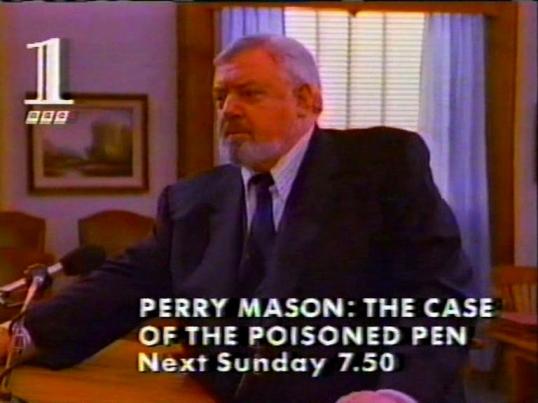
I Watched Perry Mason: The Case of the Poisoned Pen (1990, Dir. by Christian I. Nyby II)


When an arrogant true crime writer named Bradley Thompson (David Warner) is poisoned while attending a writers conference, his ex-wife (Barbara Babcock) is arrested and charged with his murder.  Perry Mason (Raymond Burr) and Ken Malansky (William R. Moses), who had their own run-in with Thompson, defend her in court and try to track down the real murderer.

This was a good whodunit.  The mystery was pretty easy to solve but all of the suspects were memorable and the supporting cast, which included Cindy Williams, Tony Lo Bianco, and Earl Boen, were entertaining to watch.  My favorite character was Max Mulgrew, a tough-guy crime writer who was played by Kiel Martin.  When Mulgrew was asked if he hated Thompson enough to murder him, Mulgrew says yes but he would have shot him instead of poisoning him!

Amy Hastings, who Alexandra Paul played in the previous three movies, is not in this movie and nobody says anything about her so, hopefully, her character has moved on.  Without Amy around, that means that Della (Barbara Hale) gets to help out with the investigation for once.  It was nice to see Della showing why she was the best assistant that Perry could have ever hoped for.

I remember enjoying this movie when I watched it with my aunt a few years ago.  I enjoyed it again when I watched it last night.

Phantom Ranger (1938, directed by Sam Newfield)


Treasury agent Pat Doyle (John St. Polis) is sent to investigate a counterfeiting ring in Wyoming but ends up getting kidnapped by gang leader Sharpe (Karl Hackett) instead.  With Doyle’s daughter, Joan (Suzanne Kaaren), demanding that the government rescue her father and generating all sorts of bad publicity for the Secret Service, the decision is made to send in Tim Hayes (Tim McCoy).  Hayes, who will be working undercover, is selected because he’s not a “city boy.”  He’s a cowboy, through and through.  If you want to tame the west, you have to send a cowboy.

Phantom Ranger is a low-budget, 56-minute western from Monogram Pictures.  The plot is nothing special but the film itself still interesting because it’s a western that takes place in the 1930s.  Tim Hayes may ride a horse and wear a cowboy hat but he also works in a Washington D.C. office building and he interacts with a woman dressed like a flapper.  In this movie, the frontier has not caught up with the modern world but the modern world has also forgotten what life is like away from civilization.

The movie has the usual collection of B-western stalwarts.  Karl Hackett, John Merton, Charles King, Frank Ellis, Herman Hack, and Horace B. Carpenter are all present and accounted for.  Tim McCoy, a former rodeo performer and army officer, plays the hero and brings a lot of natural authority to the role.  McCoy was not only one of the first western heroes but he was also one of the best.

There’s no phantoms to be found in Phantom Ranger.  It’s still a good western.

Scenes That I Love: Gregory Walcott Defends Earth In Plan 9 From Outer Space


Gregory Walcott, who was born 100 years today, appeared in a lot of good films over the course of his long career.  He had supporting roles in major blockbusters.  He was a friend and frequent collaborator of Clint Eastwood’s.  In 1979, he played the sheriff in the Oscar-nominated Norma Rae.

That said, he will probably always be most remembered for playing Jeff, the patriotic pilot, in Ed Wood’s 1957 masterpiece, Plan Nine From Outer Space.  Walcott gave probably as good a performance as anyone could in Plan 9, though that didn’t prevent the film from wrong being declared one of the worst ever made.  Walcott, for most of his career, was not a fan of Plan 9 but, in the years before he passed away in 2015, Walcott’s attitude towards the film mellowed considerably.  He even appeared in Tim Burton’s Ed Wood.

In this scene from Plan 9, Walcott shows how to deal with a snooty extra-terrestrial invader.  Never has Earth had been a better defender!

4 Shots From 4 Film: Special John McNaughton Edition


4 Shots From 4 Films is just what it says it is, 4 shots from 4 of our favorite films. As opposed to the reviews and recaps that we usually post, 4 Shots From 4 Films is all about letting the visuals do the talking.

Today is the birthday of director John McNaughton!  It’s time for….

4 Shots From 4 John McNaughton Films

Henry: Portrait of a Serial Killer (1986, dir by John McNaughton, DP: Charles Lieberman)

The Borrower (1991, dir by John McNaughton, DP: Julio Mucat and Robert C. New)

Normal Life (1996, dir by John McNaughton, DP: Jean de Segonzac)

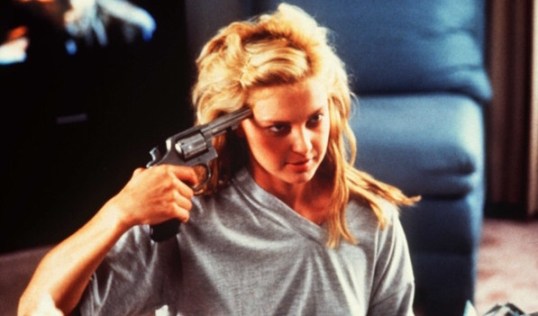
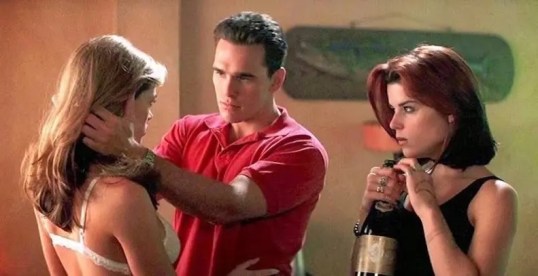
Wild Things (1998, dir by John McNaughton, DP: Jeffrey L. Kimball)

Sinners Wins In Nashville


The Music City Film Critics Association has announced its picks for the best of 2025!  The winners are in bold!

Best Picture
Bugonia
Frankenstein
Hamnet
Marty Supreme
One Battle After Another
Sentimental Value
Sinners
The Testament of Ann Lee
Train Dreams
Weapons

Best Director
Paul Thomas Anderson – One Battle After Another
Ryan Coogler – Sinners
Guillermo Del Toro – Frankenstein
Josh Safdie – Marty Supreme
Chloé Zhao – Hamnet

Best Actress
Jessie Buckley – Hamnet
Rose Byrne – If I Had Legs I’d Kick You
Chase Infiniti – One Battle After Another
Amanda Seyfried – The Testament of Ann Lee
Emma Stone – Bugonia

Best Actor
Timothée Chalamet – Marty Supreme
Leonardo DiCaprio – One Battle After Another
Joel Edgerton – Train Dreams
Ethan Hawke – Blue Moon
Michael B. Jordan – Sinners

Best Supporting Actress
Odessa A’zion – Marty Supreme
Inga Ibsdotter Lilleaas – Sentimental Value
Amy Madigan – Weapons
Wunmi Mosaku – Sinners
Teyana Taylor – One Battle After Another

Best Supporting Actor
Benicio Del Toro – One Battle After Another
Jacob Elordi – Frankenstein
Delroy Lindo – Sinners
Sean Penn – One Battle After Another
Stellan Skarsgård – Sentimental Value

Best Young Actress
Shannon Mahina Gorman – Rental Family
Olivia Lynes – Hamnet
Madeleine McGraw – The Black Phone 2
Sora Wong – Bring Her Back
Nina Ye – Left-Handed Girl

Best Young Actor
Everett Blunck – The Plague
Miles Caton – Sinners
Cary Christopher – Weapons
Jacobi Jupe – Hamnet
Alfie Williams – 28 Years Later

Best Acting Ensemble
Marty Supreme
One Battle After Another
Sentimental Value
Sinners
Wake Up Dead Man

Best Music Film
The Ballad of Wallis Island
KPop Demon Hunters
Sinners
The Testament of Ann Lee
Wicked: For Good

Best Animated Film
The Day the Earth Blew Up
KPop Demon Hunters
Little Amélie or the Character of Rain
Predator: Killer of Killers
Zootopia 2

Best Documentary
The Alabama Solution
Cover-Up
John Candy: I Like Me
The Perfect Neighbor
Predators

Best International Film
It Was Just an Accident
No Other Choice
The Secret Agent
Sentimental Value
Sirāt

Best Screenplay
Marty Supreme
One Battle After Another
Sinners
Sorry, Baby
Weapons

Best Cinematography
Frankenstein
Hamnet
One Battle After Another
Sinners
Train Dreams

Best Editing
F1: The Movie
Marty Supreme
One Battle After Another
The Perfect Neighbor
Sinners

Best Production Design
Frankenstein
Marty Supreme
Sinners
The Testament of Ann Lee
Wicked: For Good

Best Original Song
“As Alive As You Need Me to Be” – Nine Inch Nails, Tron: Ares
“The Girl in the Bubble” – Ariana Grande, Wicked: For Good
“Golden” – EJAE, Audrey Nuna, and Rei Ami, KPop Demon Hunters
“I Lied to You” – Miles Caton, Sinners
“Train Dreams” – Nick Cave, Train Dreams

Best Score
Frankenstein
Marty Supreme
One Battle After Another
Sinners
Train Dreams

Best Sound
F1: The Movie
One Battle After Another
Sinners
Warfare
Wicked: For Good

Best Stunt Work
Ballerina
F1: The Movie
Mission: Impossible – The Final Reckoning
Sinners
Superman

Best Action Film
F1: The Movie
Mission: Impossible – The Final Reckoning
One Battle After Another
Predator: Badlands
Superman

Best Comedy Film
The Ballad of Wallis Island
Friendship
The Naked Gun
Splitsville
Wake Up Dead Man

Best Horror Film
28 Years Later
Frankenstein
Sinners
The Ugly Stepsister
Weapons

The Jim Ridley Award
The Day the Earth Blew Up
Dracula
A Little Prayer
Resurrection
Sirāt

One Battle After Another Wins In Hawaii


The Hawaii Film Critics Society has announced its picks for the best of 2025!  The winners are in bold.

Best Picture
Jay Kelly
Marty Supreme
One Battle After Another
Sentimental Value
Sinners

Best Director
Paul Thomas Anderson, One Battle After Another
Ryan Coogler, Sinners
Guillermo del Toro, Frankenstein
Josh Safdie, Marty Supreme
Chloé Zhao, Hamnet

Best Actor
Timothée Chalamet, Marty Supreme
Leonardo DiCaprio, One Battle After Another
Ethan Hawke, Blue Moon
Michael B. Jordan, Sinners
Wagner Moura, The Secret Agent

Best Actress
Jessie Buckley, Hamnet
Chase Infiniti, One Battle After Another
Sally Hawkins, Bring Her Back
Renate Reinsve, Sentimental Value
Sophie Thatcher, Companion

Best Supporting Actor
Benicio del Toro, One Battle After Another
Jacob Elordi, Frankenstein
Adam Sandler, Jay Kelly
Sean Penn, One Battle After Another
Stellan Skarsgård, Sentimental Value

Best Supporting Actress
Elle Fanning, Sentimental Value
Inga Ibsdotter Lilleaas, Sentimental Value
Amy Madigan, Weapons
Amanda Seyfried, The Housemaid
Teyana Taylor, One Battle After Another

Best Original Screenplay
Eddington
Marty Supreme
Sentimental Value
Sinners
Weapons

Best Adapted Screenplay
Frankenstein
Hamnet
One Battle After Another
The Housemaid
Train Dreams

Best Editing
F1: The Movie
Marty Supreme
One Battle After Another
Sinners
Together

Best Cinematography
F1: The Movie
Frankenstein
One Battle After Another
Sinners
Train Dreams

Best Art Direction
Frankenstein
Hamnet
Marty Supreme
Sinners
The Phoenician Scheme

Best Costume Design
Frankenstein
Hamnet
Sinners
The Phoenician Scheme
Wicked: For Good

Best Animated Film
Arco
Dog Man
KPop Demon Hunters
The Day the Earth Blew Up: A Looney Tunes Movie
Zootopia 2

Best Documentary
George A. Romero’s Resident Evil
Orwell: 2+2=5
Pee-wee as Himself
Predators
The Perfect Neighbor

Best Make-Up
28 Years Later
Frankenstein
Sinners
Weapons
Wicked: For Good

Best Sound
F1: The Movie
Frankenstein
One Battle After Another
Sinners
The Testament of Ann Lee

Best Score
F1: The Movie
Frankenstein
One Battle After Another
Sinners
Tron: Ares

Best Song
“As Alive as You Need Me to Be,” Tron: Ares
“Highest 2 Lowest,” Highest 2 Lowest
“Hurry Up Tomorrow,” Hurry Up Tomorrow
“I Lied to You,” Sinners
“Train Dreams,” Train Dreams

Best Visual Effects
Avatar: Fire and Ash
Frankenstein
Jurassic World: Rebirth
Predator: Badlands
Sinners

Best Action Movie
Ballerina
F1: The Movie
Mission: Impossible – The Final Reckoning
One Battle After Another
Predator: Badlands

Best Stunt Work
Ballerina
F1: The Movie
Mission: Impossible – The Final Reckoning
One Battle After Another
Sinners

Best New Filmmaker
Ugo Bienvenu, Arco
Ben Leonberg, Good Boy
Charlie Polinger, The Plague
Michael Shanks, Together
Eva Victor, Sorry, Baby

Best First Film
Arco
Good Boy
Sorry, Baby
The Plague
Together

Best Overlooked Film
Clown in a Cornfield
Eddington
Nouvelle Vague
Rental Family
The Life of Chuck

Best Vocal / Motion Capture Performance
Eric Bauza, The Day the Earth Blew Up: A Looney Tunes Movie
Oona Chaplin, Avatar: Fire and Ash (TIE)
Ebon Moss-Bachrach, The Fantastic Four: First Steps
Sam Rockwell, The Bad Guys 2 (TIE)
Alison Wright, Predator: Badlands

Best Animal Performance
Bing the dog, The Friend
Indy the dog, Good Boy
Jolene the dog, Superman
Olga the cat, Sorry, Baby
Tico the cat, Caught Stealing

Best Horror Film
Bring Her Back
Keeper
Shelby Oaks
Together
Weapons

Best Comic Book Movie
100 Nights of Hero
Captain America: Brave New World
Superman
The Fantastic Four: First Steps
Thunderbolts*

Best Foreign Language Film
It Was Just an Accident
Left-Handed Girl
No Other Choice
Sentimental Value
The Secret Agent

Best Underrated Film
Companion
Heart Eyes
Rental Family
The Life of Chuck
The Long Walk

Best Hawaiian Film
A Paradise Lost, dir. Laurie Sumiye (Hawaii)
Lahaina Rising, dir. Matty Schweitzer (Maui)
MĀHŪ: A Trans-Pacific Love Letter, dir. Lisette Marie Flanary (Oahu)
Reeling, dir. Yana Alliata (Oahu)
Sharing Aloha, dir. Blair Treu (Hawaii)

The Ha’aheo Award (Pride in Achievement for Film, TV, or Theater)
Chief of War

The Jason “Phormat” David Award celebrating originality and artistic playfulness in cinema
The Phoenician Scheme (dir. Wes Anderson)

Worst Film of 2025
Death of a Unicorn
Eddington
Hurry Up Tomorrow
Karate Kid: Legends
The Strangers: Chapter 2
So, I Watched Perry Mason: The Case of the All-Star Assassin (1989, Dir. by Christian I. Nyby II)


Ken (William R, Moses), who is now a lawyer, is representing a hockey player (Jason Beghe) in his contract negotiation with a tyrannical team owner (Pernell Roberts).  When the owner is murdered, the player is arrested and Ken turns to his mentor, Perry Mason (Raymond Burr), for help in winning his first murder case.

This was pretty forgettable.  The mystery wasn’t interesting, there weren’t enough suspects to keep me guessing, and even the wrongly accused player was unlikable.  Amy (Alexandra Paul) returned to help out Ken and was annoying as ever.  I don’t understand the Amy/Ken relationship.  They’re in love.  They’re getting married.  But they always act like they hate each other.  Give me sex addict Paul Drake, Jr, any day!  I read that this was Amy’s final appearance in the series and I hope that’s true.

This movie also features some of the worst courtroom dialogue of the series.  Poor Bruce Greenwood plays Pernell Roberts’s son and gets stuck with the worst lines.  Deidre Hall plays Pernell Roberts’s unfaithful wife, which is appropriate because this movie was just a bad soap opera.

The Nevada Buckaroo (1931, directed by John P. McCarthy)


When the population of a small frontier town all sign a petition asking that the governor name their town the new county seat, the petition is stolen by outlaw Cherokee (George “Gabby” Hayes).  Cherokee substitutes a different petition requesting a pardon for a member of his gang, The Nevada Kid (Bob Steele).

The Nevada Kid gets his pardon, is released from prison, and returns to the town.  No one is happy to see him, even though he says that he has changed his ways.  Even if the pardon was gotten through illicit means (which the Nevada Kid himself knew nothing about), the Kid still says that he’s going to take advantage of his second chance.  When Chereokee and the gang start to demand that the Nevada Kid once again work with them, Nevada gets his chance to show whether or not he’s really left being an outlaw behind.

I never expect much from these Poverty Row westerns but The Nevada Buckaroo, despite having not a great title, is actually pretty good.  A very young-looking Bob Steele gives a good performance as the Nevada Kid and George Hayes show that, before he became everyone’s favorite sidekick, he was capable of being a very intimidating actor.  The movie actually has something to say about trust, community, and second chances.

I don’t know much about director John P. McCarthy and I think this is the first of his films that I’ve seen.  He and cinematographer Faxon M. Dean put together a film that looks infinitely better than the average B-western.  That was obvious with even the grainy print that I watched.  The final shot, of the Nevada Kid riding into the sunset, is a perfect western image.