The 2006 film, Open Water 2: Adrift, is a film about a group of people who are literally too stupid to live.
Now, that may sound like a harsh judgment but just consider what this film is about. A group of shallow friends get together for a birthday party on a yacht. They head out to the middle of the ocean. One-by-one, they all get into the water. One of the friends has been terrified of the water ever since her father drowned in front of her. She doesn’t want to get in the water so, of course, the owner of the boat picks her up and jumps overboard with her. With the exception of a sleeping infant, everyone is now in the water.
Oh! And guess what!
It didn’t occur to anyone to lower the ladder before getting in the ocean. That means there’s no way to get back on the boat! And now, everyone’s stuck in the water where they’ll presumably eventually die of either hypothermia or just general stupidity. They’ll also end up yelling at each other and arguing about whose fault it is. They’ll all discuss issues of wealth, religion, and envy. There’s nothing like a weighty theological discussion being conducted by a bunch of idiots floating in the ocean.
Of course, they do make a few attempts to get back on the boat. One guy tries to use a knife to climb back up the side of the boat but he just ends up getting stabbed instead. An attempt to grab hold of an American flag just leads to desecrated symbol of patriotism. One girl decides to pray, just to be reprimanded by the group atheist. At one point, everyone takes off their swimsuits and they attempt to tie them into a makeshift rope. It doesn’t work but now everyone’s naked. This movie knows what it’s doing.
We get a lot of shots of people floating listlessly in the ocean. In order to pad out the run time, there’s a lot of pointless slow motion. Amy (Susan May Pratt), the hydrophobe, has a flashback to her father’s death and it’s amazing how little sympathy the film manages to generate for someone who watched helplessly while a parent drowned. Because Amy’s supposed to be scared of the water, she spends most of the movie floating around with this dumbass look on her face. I’m a hydrophobe too. If I found myself in this situation, I’d probably scream until I exhausted myself and drowned. But I wouldn’t float around with this stupid beatific look on my face.
This film was sold as being a sequel to Open Water, though it actually went into production before Open Water was released. After Open Water was a surprise box office success, the film’s title was changed from Adrift to Open Water 2: Adrift. There are obvious similarities between the two films but the major difference is that the couple in Open Water ended up stranded through no fault of their own. On the other hand, the folks in Open Water 2 were just too dumb to lower a ladder.
Open Water was effective but depressing. Open Water 2 is just kind of stupid.
1941’s THE MALTESE FALCON may not be the first film noir (most people agree that honor goes to 1940’s STRANGER ON THE THIRD FLOOR ). It’s not even the first version of Dashiell Hammett’s 1930 detective story – there was a Pre Code film with Ricardo Cortez as Sam Spade that’s pretty good, and a 1936 remake titled SATAN MET A LADY with Warren William that’s not. But first-time director John Huston’s seminal shamus tale (Huston also wrote the amazingly intricate screenplay) virtually created many of the tropes that have become so familiar to fans of this dark stylistic genre:
THE HARD-BOILED DETECTIVE – Private investigators had been around since the dawn of cinema, from Sherlock Holmes to Philo Vance to Charlie Chan, but none quite like Humphrey Bogart’s Sam Spade. Both Cortez and William played the character as flippant skirt-chasers, but in Bogie’s hands, Sam Spade is a harder…
So, who wants to spend 80 minutes watching two people slowly die?
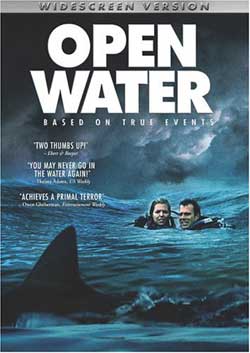
That’s the question that’s posed by the 2003 film, Open Water. Apparently, quite a few people had a positive response to that question because Open Water, which was made for about $120,000, went on to gross over 55 million dollars. It also inspired two sequels and it continues to be something of a mainstay on the SyFy channel, where it usually airs during Shark Week.
I have to admit that, largely because I have a huge phobia about drowning, I didn’t see Open Water until three years after it was initially released. I watched it with my cousin Paulie. At the end of the film, he exclaimed, “Oh, nice fucking movie, Lisa Marie!,” and I understand where he was coming from. There’s not much hope or positivity to be found in Open Water. It’s not a happy film. Instead, it’s a movie about a couple who end up getting stranded in the middle of the ocean. Eventually, one of them gets eaten by sharks while the other one drowns.
That may sound like a spoiler but really, it’s not. From the minute we first see Daniel (Daniel Travis) and Susan (Blanchard Ryan), we know there’s no way they’re getting out of the movie alive. They’re both so happy about taking a vacation and finally getting to spend some quality time together that it’s obvious that there’s no way things aren’t going to end in tragedy. Their vacation takes them to the Caribbean, where they hope to go scuba diving. Unfortunately, their scuba diving group leaves without realizing that Daniel and Susan are still underwater. When the two of them resurface, they discover that they’re stranded out in the middle of the ocean.
At first, they assume that someone will notice them missing and come back to rescue them. They make jokes about how this is a story that they’ll be able to tell for the rest of their lives. They laugh. They joke. They briefly argue. Daniel gets frustrated and spends a while screaming with splashing water. Eventually, the jelly fish arrive and they both get stung. Then. the sharks show up….
It’s all very dark and depressing and the film certainly did not help me with my fear of swimming. Imagine Jaws if the whole film was just an hour and a half of Chrissie Watkins getting eaten by the Great White and you kind of have an idea of what Open Water was like. As a result of the film’s low-budget, Open Water has an effectively rough, documentary-like feel to it. Daniel Travis and Blanchard Ryan seem like any ordinary couple that you might run into while on vacation. They’re easy enough to relate to that you certainly don’t want to see them die.
Unfortunately, after Daniel and Susan get stranded out in the ocean, the film gets stranded along with them. At that point, all you can do is watch as they two of them get eaten by undersea life. It gets a bit tedious. One imagines that Werner Herzog could probably make this material compelling and, whenever I watch Open Water, I like to imagine the sound of Herzog saying, “I believe the common denominator of the universe is not harmony, but chaos, hostility, and murder.” However, as it is, Open Water is one of those well-made films that leave you with no desire to ever watch it again.
Since it’s currently Spring Break, I figured that I would spend the next two weeks reviewing films about people on vacation. Some of the films will be about good vacations. Some of the films will be about bad vacations. But, in the end, they’ll all be about celebrating those moments that make us yearn for the chance to get away from it all.
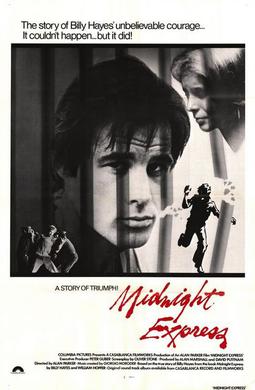
Take Midnight Express, for instance. This 1978 film (which was nominated for six Oscars and won two) tells the story of what happens when a carefree college student named Billy Hayes decides to spend his holiday in Turkey.
When the film begins, Billy Hayes (played by Brad Davis), is at an airport in Turkey. He’s preparing to return home to the United States. His girlfriend, Susan (Irene Miracle), informs him that Janis Joplin has just died. When Billy responds by making a joke, Susan accuses him of not taking anything seriously. What Susan doesn’t realize is that Billy actually has a lot on his mind. For one thing, he’s got several bricks of hashish taped around his waist. He purchased it from a cab driver and he’s planning on selling it to his friends back in the United States. Unfortunately, Billy’s not quite as clever as he thinks he is. Because of recent terrorist bombings, the Turkish police are searching everyone before they board their plane. Billy finds himself standing out in the middle of the runway with his hands up in the air, surrounded by gun-wielding Turkish policemen.
Billy finds himself stranded in a country that he doesn’t understand, being interrogated by men whose language he cannot speak. An enigmatic American (Bo Hopkins) shows up and assures Billy that he’ll be safe, as long as he identifies the taxi driver who sold him to the drugs. Billy does so but then makes the mistake of trying to flee from the police. In the end, it’s the American who captures him and, holding a gun to Billy’s head, tells him not to make another move.
Soon, Billy is an inmate at Sağmalcılar Prison. He’s beaten when he first arrives and it’s only days later that he’s able to walk and think clearly. He befriends some of the other prisoners, including a heroin addict named Max (John Hurt) and an idiot named Jimmy (Randy Quaid). Billy watches as the prisoners are tortured by the fearsome head guard (Paul L. Smith) and listens to the screams of inmates being raped behind closed doors. After being told that his original four-year sentence has been lengthened to a 30-year sentence, Billy starts to degenerate. When Susan visits, Billy end up pathetically masturbating in front of her. When another prisoner taunts Billy, Billy bites out the man’s tongue, an act that we see in both close up and slow motion. If Billy has any hope of regaining his humanity, he has to escape. He has to catch what Jimmy calls the “midnight express…..”
Midnight Express is a brutal and rather crude film. Though it may have been directed by a mainstream director (Alan Parker) and written by a future Oscar-winner (Oliver Stone), Midnight Express is a pure grindhouse film at heart. There’s not a subtle moment to be found in the film. The camera lingers over every act of sadism while Giorgio Moroder’s synth-based score pulsates in the background. When Billy grows more and more feral and brutal in his behavior, it’s hard not to be reminded of Lon Chaney, Jr. turning into The Wolf Man. The film may be incredibly heavy-handed but it’s nightmarishly effective, playing out with the intensity of a fever dream.
As for the cast, Brad Davis wasn’t particularly likable or sympathetic as Billy. On the one hand, he’s a victim of an unjust system, betrayed by his own country and tortured by another. On the other hand, Billy was an idiot who apparently thought no one would notice all that hash wrapped around his chest. That said, Davis’s unlikable screen presence actually worked to the film’s advantage. If you actually liked Billy, the film would be unbearable to watch. Before Davis was cast, Dennis Quaid and Mark Hamill were both considered for the role. If either of those actors has been cast, Midnight Express would be too intense and disturbing to watch. For instance, it would be depressing to watch Dennis Quaid rip a man’s tongue out of his mouth. You would be like, “No, Mr. Quaid, you’ll never recover your humanity!” But when Brad Davis does it, you’re just like, “Eh. It was bound to happen sometime.”
For more effective are John Hurt and Bo Hopkins. Hurt and Hopkins both have small roles but they both make a big impression, if just because they’re the only two characters in the film who aren’t either yelling or crying all of the time. While everyone else is constantly cursing their imprisonment, Hurt is quietly sardonic. As for Hopkins, we’re supposed to dislike him because he’s with the CIA and he sold out Billy. But honestly, no one made Billy tape all that hash to his chest. Finally, you’ve got Randy Quaid and Paul L. Smith, who both glower their way through the film. Smith is wonderfully evil while Randy Quaid is …. well, he’s Randy Quaid, the loudest American in Turkey.
Midnight Express was such a success at the box office that it caused an international incident. There’s not a single positive Turkish character to be found in the entire film and it’s impossible not to feel that the film is not only condemning Turkey’s drug policies but that it’s also condemning the entire country as well. The Turkish prisoners are portrayed as being just as bad as the guards and even Billy’s defense attorney comes across as being greedy and untrustworthy. Watching the film today can be an awkward experience. It’s undeniably effective but it’s impossible not to cringe at the way anyone who isn’t from the west is portrayed. In recent years, everyone from director Alan Parker to screenwriter Oliver Stone to the real-life Billy Hayes has apologized for the way that the Turkish people were portrayed in the film.
Despite the controversy, Midnight Express was a huge box office success and it was nominated for best picture. It lost to another controversial film about people imprisoned in Asia, The Deer Hunter.
If you’ve seen enough Lifetime films, you know that it’s never a good idea to move to the suburbs.
I mean, sure. Inevitably, you’ll end up living in a big house. And you’ll have all the closet space in the world. And your neighbors will all be really sexy and witty and they’ll always invite you over to have a glass of wine and gossip about everyone’s deep, dark secrets. I mean, it sounds like a great idea but things never work out as well as they should.
For example, just check out the latest Lifetime movie, Suburban Swingers Club.
Everything you need to know about the film is right there in the title. It takes place in the suburbs. There’s a club. And they’re all swingers. And when I say swingers, I mean they’re real swingers. They’re not like Nick Offerman and Megan Mullally in those annoying Sling commercials. No, these are people who get together and toss their house keys into a punch bowl. Each night, keys are randomly drawn and neighbors go upstairs together. Of course, only the really wealthy and attractive neighbors get to take part. For instance, there’s this old guy who is occasionally seen standing out in his front yard. He never gets invited.
As soon as Lori (Dana Davis) and Grant (Jesse Ruda) move into the neighborhood, they’re invited to join the club. Grant is immediately intrigued while Lori is immediately weirded out by the whole idea. In fact, Lori thinks that Grant might just be looking for an excuse to have an affair. Their marriage has been rocky ever since the death of their baby. However, then Lori catches sight of the neighbor across the road, doing manly stuff without his shirt on. In fact, Noah (James William O’Halloran) doesn’t even seem to own a shirt! Lori eventually tells Grant that they can swing as long as 1) they’re totally honest about it, 2) they think about each other while having sex with other people, and 3) they stop doing it as soon as one of them objects. Grant’s like, “That’s a lot of rules but as long as I get laid, I’m happy.”
However, it doesn’t take long until Grant’s no longer happy. Lori ends up pulling Noah’s key and soon Grant is getting jealous. Grant says that he’s exercising his right to say “stop.” Lori explains the situation to Noah and Noah is like, “Well, no one told me about any rules!” Soon, Noah is stalking Lori and Grant is threatening to kill him. Of course, when Noah turns up dead, Grant automatically becomes the number one suspect….
Unfortunately, this film doesn’t feature quite as much swinging as I was expecting. It doesn’t take long for Grant to get jealous and exercise his “stop” option and after that, the film becomes a fairly typical Lifetime stalking film. But no matter. I still enjoyed Suburban Swingers Club, if just because the film didn’t waste anytime plunging into its story of suburban melodrama. This is one of those films where your new neighbors come over, take one look at you, and then invite you to join a swinger’s club. Lori can’t even look out of her bedroom window without seeing two people having sex across the street and, once morning comes, it’s time for Noah to start casually walking around outside without his shirt on. Suburban Swingers Club is like the Lifetime version of one of those wonderfully campy 60s sexploitation films where bored housewives seduce the pool cleaner and the whole thing is written, directed, and acted with just enough self-awareness to let us know that the film is cheerfully aware of its excesses. It’s a lot of fun, as any swinging club should be. Joe Sarno would be proud.
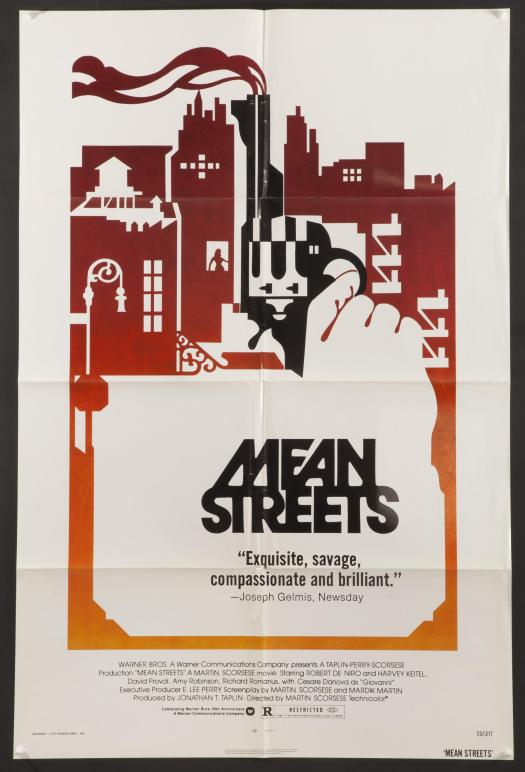
Let’s talk about Martin Scorsese a bit, shall we? The much-lauded, Oscar-winning director/producer/film historian has rightly been recognized as one of out greatest living filmmakers, with classics like TAXI DRIVER, RAGING BULL, GOODFELLAS, GANGS OF NEW YORK, and THE DEPARTED on his resume. Yet Scorsese started small, directing shorts and the low-budget WHO’S THAT KNOCKING AT MY DOOR? as a film student. He got work as an editor (UNHOLY ROLLERS) and assistant director (WOODSTOCK) before directing a feature for Roger Corman called BOXCAR BERTHA, starring Barbara Hershey and David Carradine. When Scorsese and Mardik Martin cowrote a screenplay based on Martin’s experiences growing up in New York’s Little Italy, Corman wanted to produce, but only if the film could be turned into a Blaxploitation movie! Fortunately, Warner Brothers picked it up, and the result was MEAN STREETS, which put Scorsese on the map as a filmmaker to be reckoned with.
When Jan-Michael Vincent died on February 10th, we lost a legend.
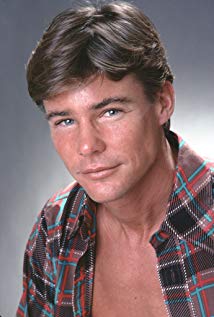
For obvious reasons, the life and career of Jan-Michael Vincent is often held up as a cautionary tale. Vincent went from being a rising star in the 70s to being nearly unemployable in the 90s. When you watch Vincent in one of his early film, like The Mechanic or Big Wednesday, you see an actor who had both the talent and the looks to be a major star. He was such a natural and deceptively low-key performer that it is not a surprise that he was twice cast as Robert Mitchum’s son. He could play everyone from a hippie to a cowboy to a surfer to an assassin. Unfortunately, once the 80s rolled around, Vincent became better known for his struggles with drugs and alcohol than for his talent. After a brief but profitable stint starring in Airwolf, Jan-Michael Vincent found himself appearing mostly in straight-to-video action films. By the mid-90s, he was a mainstay on late night Cinemax. Even though the films had gotten smaller and his famous good looks had been ravaged by years of hard living, Vincent was still capable of giving a good performance.
It is impossible to talk about the legend of Jan-Michael Vincent without talking about Red Line. In this direct-to-video car chase film, Vincent was cast as a gangster named Keller. When an auto mechanic named Jim (Chad “Son of Steve” McQueen) makes the mistake of taking one of Keller’s cars for a joyride, Keller blackmails Jim into stealing a corvette from a police impound lot. Red Line was typical of the type of films that Vincent was usually offered in the 90s, an action-filled crime film with a handful of recognizable faces.
It was also a film that Vincent nearly didn’t live to make. Two days before filming was to begin, Jan-Michael Vincent was nearly killed when he crashed his motorcycle. Vincent suffered severe facial lacerations and he would later tell Howard Stern that his eye was nearly popped out of his head as a result of the accident. Vincent was rushed to the hospital and put in intensive care.
However, Jan-Michael Vincent still had a movie to make. So, what did he do? Two days after his accident, he checked himself out of the hospital and, unexpectedly, showed up on set. With his face noticeable bruised and swollen and with the stitches and sutures still visible, Vincent played the role of Keller. If you watch carefully, you can even spot his hospital ID, still hanging around his wrist. The script was hastily rewritten to explain Vincent’s injuries and, though he could barely speak or walk, he still delivered his lines and filmed his scenes. And goddamn if Jan-Michael Vincent didn’t steal the entire movie. Even after years of hard-living (not to mention just two days after nearly dying), Jan-Michael Vincent still had it. Even though he had to whisper his lines and film most of his scenes sitting down, Vincent was still credibly threatening in the role of Keller. He even points out his own injuries, saying, “I’m sick of looking like Frankenstein!”
Jan-Michael Vincent in Red Line
The rest of the cast was made up of an eclectic collection of familiar faces. Dom DeLuise played Chad McQueen’s boss. Michael Madsen and Corey Feldman (!) both played rival gangsters while Roxanna Zal played the young woman who becomes McQueen’s partner in crime. B-movie fans will want to keep an eye out for Julie Strain, Robert Z’Dar, and Chuck Zito. None of them make as much of an impression as Vincent, though.
Red Line was meant to be an homage to the type of car chase films that Steve McQueen made famous. Chad McQueen even gets to drive a replica of the car that his father drove in Bullitt. Some of the chase scenes are exciting but Chad doesn’t have his father’s screen presence and the film never overcomes its low-budget. Watching the movie is a lot like watching someone else play Grand Theft Auto. Red Line is a forgettable movie but it will always be remembered as an important chapter in the legend of Jan-Michael Vincent.
– Bob Dylan, in the liner notes from the 1965 LP “Bringing It All Back Home”
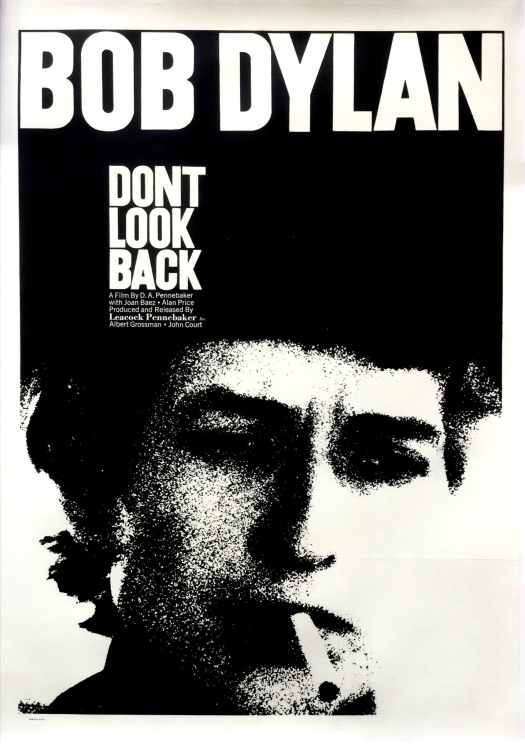
Bob Dylan has been put under the media microscope, bisected, dissected, and trisected for the past six decades, with everyone and their mother trying to interpret the essence behind the enigma. Documentarian D.A. Pennebaker doesn’t go that route in DON”T LOOK BACK; instead, his cinema verite, free form style adheres to the old adage “show, don’t tell”, as he and his camera crew follow the troubadour on his 1965 tour of Great Britain, culminating in his historic set at the Royal Albert Hall. This would be Dylan’s final tour as a solo performer with guitar and harmonica – the album “Bringing It All Back Home” would soon be released, featuring electric and acoustic sides, and later that year he’d plug in with his band…
Fortunately, for me, it’s not a question that I have to answer. Michael Jackson’s music has never been an important part of my life. All of the songs and albums that people rave about — Thriller, Bad, that song about the rat — were all pretty much before my time. Usually, whenever I have heard any of those so-called classics, my usual reaction has been that 1) they’re ludicrously overproduced and 2) they tend to drag on forever. (Seriously, there’s no reason to ask Annie if she’s okay that many times.) Some people grew up with the idea of Michael Jackson being the King of Pop and a musical innovator. I grew up with the idea of Michael Jackson being a rather frightening eccentric who didn’t appear to have a nose and who wrote songs about how unfair it was that the world wouldn’t accept that he just really, really enjoyed the company of children. Since neither Jackson nor his music have ever been an important part of my life, it’s rather easy for me to shrug and say, “Sure, let us never hear his music again.”
Still, there are many people debating the question of whether or not it’s time to cancel the legacy of Michael Jackson. That’s because of Leaving Neverland, a 4-hour documentary that premiered at Sundance and which recently aired on HBO. Leaving Neverland deals with two men — choreographer Wade Robson and former actor Jimmy Safechuck — who claim that they were both sexually abused by Michael Jackson as children. Interviewed separately, both Robson and Safechuck tell nearly identical stories about first meeting Jackson, being invited into the sanctuary of Jackson’s Neverland, and eventually being brainwashed, abused, and eventually abandoned by Jackson. It’s not just that Robson and Safechuck both separately tell the same story. It’s also that the details will be familiar to anyone who has ever been abused. The grooming. The manipulation. The thrill of sharing a secret eventually giving way to the guilt of feeling that you’re somehow at fault. And, of course, the combination of fear and denial that both Robson and Safechuck say initially caused them to lie and deny having been abused by Jackson. Both men talk about how Jackson used their own broken families to control them, suggesting that only he understood what they were going through and that they were only truly safe when they were with him. Jimmy Safechuck, in particular, speaks in the haunted manner and nervous cadences of a survivor. Their stories are frequently harrowing and, watching the documentary, one can understand why counselors were on hand for the Sundance showing.
That said, those who have complained that Leaving Neverland is a very one-sided affair do have a point. (To see what many of Michael Jackson’s supporters have to say about the men and their stories, check out #mjinnocent on twitter.) Leaving Neverland is very much a product of our current cancel culture. From the start it clearly chooses a side and, for four hours, it focuses only on that side. Far more attention is paid to the civil suit that Jackson settled out of court than the criminal trial in which Jackson was acquitted. Much has been made on twitter about inconsistencies in Safechuck and Robson’s stories. Yet, are those inconsistencies the result of an intentional attempt to subvert the truth or are they the result of the trauma that the two men suffered at the hands of their abuser? When I checked in on twitter during the documentary’s airing, it was fascinating to watch as the two camps debated who should be cancelled, Michael Jackson for being accused of pedophilia or Wade Robson for saying that Jackson’s hair felt like a brillo pad.
Ultimately, Leaving Neverland is a portrait of the power of fame. One imagines that if a stranger had approached the mothers of Wade Robson and Jimmy Safechuck and said that he wanted to spend a weekend sleeping in the same bed as their sons, the mothers would have a very different response than they did when Michael Jackson did essentially just that. For all the red flags to be found in Jackson’s public behavior, he was often dismissed as just being an eccentric artist, a harmless Peter Pan-like figure. (You have to wonder if there was no one in his camp who was willing to say, “Y’know, Michael, maybe you should stop being photographed with little boys for a while.”) One of the more interesting things about the documentary is to see how quickly Jackson recovered from the 1993 abuse allegations. The same reporters who very gravely report the allegations about Jackson in ’93 are later seen glibly referring to Jackson as being the “king of pop,” just a few years later.
Leaving Neverland is a powerful documentary but I doubt it will change anyone’s mind. That’s one of the dangers that comes from picking a side as deliberately and unapologetically as this documentary does. Your argument may be great but only those who agree with you are going to listen. Those who support Jackson will see it as being a hit piece. Those who believe Jackson was guilty will see the documentary as being validation. Ultimately, whether or not it’s still okay to listen to Michael Jackson’s music is a decision that only you can make for yourself.
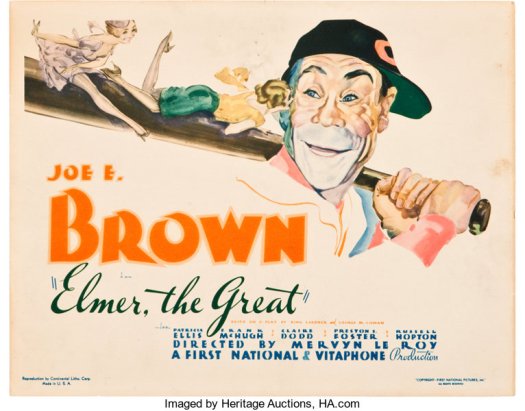
It may be cold and snowy here in New England, but down in sunny Florida, Spring Training has already begun – which means baseball season is on it’s way! The Red Sox are looking good, although they got pounded by the Orioles in the game I watched this afternoon (I’m writing this on a Saturday), but just hearing the crack of the bats has whetted my appetite for the return of America’s National Pastime. So while we wait for Opening Day to arrive, let’s take a look at the 1933 baseball comedy ELMER THE GREAT.
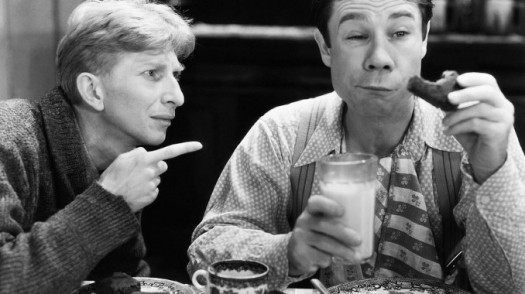
Comedian Joe E. Brown plays yet another amiable country bumpkin, this time Elmer Kane of small town Gentryville, Indiana. Elmer’s laid back to the point of inertia, except when he’s eating… or on a baseball field! He’s better than Babe Ruth and he knows it, and so do the Chicago Cubs, who’ve bought his contract…



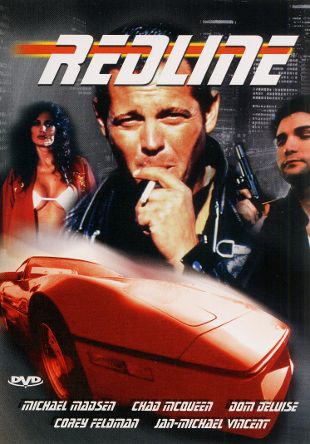 It is impossible to talk about the legend of Jan-Michael Vincent without talking about Red Line. In this direct-to-video car chase film, Vincent was cast as a gangster named Keller. When an auto mechanic named Jim (Chad “Son of Steve” McQueen) makes the mistake of taking one of Keller’s cars for a joyride, Keller blackmails Jim into stealing a corvette from a police impound lot. Red Line was typical of the type of films that Vincent was usually offered in the 90s, an action-filled crime film with a handful of recognizable faces.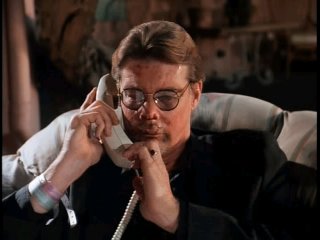

 Through the Shattered Lens