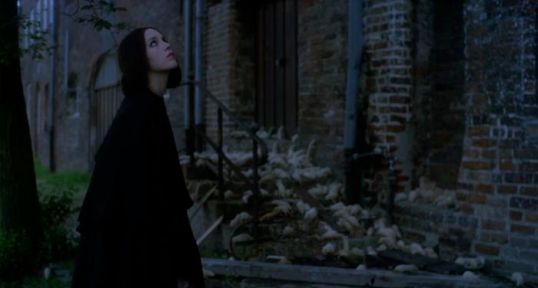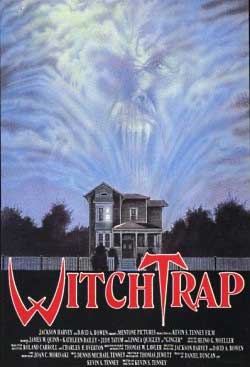
Not A Sequel: Witchtrap (1989, directed by Kevin Tenney)


“This is NOT a sequel to Witch Board!”

It may be directed by the same director and have a suspiciously similar title and it might feature a ghost that seems a lot like the malevolent spirit from Witch Board but Witchtrap is most assuredly not a sequel to Witch Board!  Got that?  Just in case you missed thr point, this VHS version of this movie opens with a credit that repeats “This NOT a sequel to Witch Board!”  On the version I saw, this was followed immediately by a trailer for Witch Board.

Witch Trap takes place in a haunted bed and breakfast.  The owner wants to make a lot of money with but first he wants a group of psychics to spend the night and determine whether or not the place is really haunted by the ghost of a magician and serial killer named Avery Launder.  (Avery Launder is played by J.P. Luebsen, who also played the evil spirit in Witch Board, to which this film is definitely not a sequel.)  Accompanying the psychics is a former cop named Tony Vincente (James W. Quinn) and an A/V technician named Ginger Kowalski (Linnea Quigley).  Ginger’s there so she can set up a tripod and take a shower.  Guess who is the first to die?

Witchtrap is the type of movie that used to show up all the time on late nighy Cinemax in the early to mid-90s.  There’s not much of a story but there’s boobs and plenty of blood and, back then, that’s all that a teenager secretly staying up late and watching cable really needed.  Watching it today, Witchtrap is mostly dull but it does try to be about something more than just ghosts and Linnea Quigley shower scenes.  The psychics spend a surprisingly large amount of time debating the universe and the concept of morality.  It doesn’t add up too much but at least it’s there.

As far as Kevin Tenney horror movies are concerned, Witchtrap can’t hold a candle to Night of the Demons and rumor has it that it’s not a sequel to Witchboard.  It’s forgettable but worth watching if you’re having early Cinemax nostalgia pains.
International Horror Film Review: Nosferatu, the Vampyre (dir by Werner Herzog)


Agck!  The rats!

Nosferatu, Werner Herzog’s 1979 remake of the F.W. Murnau’s classic silent vampire film, may be best known for Klaus Kinski’s feral performance of Count Dracula but, for me, I’ll always remember the rats.

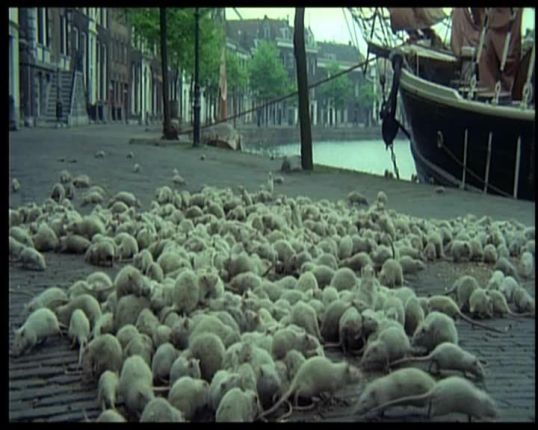
When Dracula first comes to the city of Wismar, he travels via a boat.  Spending the day in his coffin, he arises at night to kill the crew of the ship.  (Eventually, the captain’s dead body ends up tied to the wheel to ensure that the boat’s course is not altered.)  In order to keep the people of Wismar from realizing that they have a vampire in their midst, Dracula travels with thousands of rats and forges the ship’s log to make it seem as if the crew has fallen victim to the plague.  When the boat docks at Wismar, thousands of rats flood into the streets.  When Lucy (Isabelle Adjani) later walks through the streets of the Wismar, it becomes obvious that the rats have conquered the city.  The remaining people are too busy burying their dead and preparing for the end to do much about the rats.  One group cheerfully eats a lavish meal while thousands of rats wait behind them.  Later, the rodents have taken over the table.  The people are gone but the rats remain.

Werner Herzog has often cited the original Nosferatu as one of the films that most inspired him as a young filmmaker.  His remake is both a respectful homage to the original film and also a uniquely Herozgian work.  Much as the Spanish expedition at the center of Aguirre, The Wrath of God ended with the raft being conquered by monkeys, the city of Wismar is conquered by both rats and mythology.  Even towards the end of the film, when it becomes obvious that a vampire has come to town, the people refuse to believe it.  Some wait for God to save them.  Some just decide to celebrate the end.  But only Lucy, who we are told is pure of heart, is willing to sacrifice herself for the people of Wismar.  And yet, the film leaves us wondering if that sacrifice would really be worth it.  Are the people of Wismar worth saving?  This version of Nosferatu suggests that perhaps they’re not.


Lucy is the wife of estate agent Jonathan Harker (Bruno Ganz).  As with almost every version of Dracula, Nosferatu opens with Harker traveling to Dracula’s castle, dismissing the claims of local villagers are being mere superstition, and then eventually meeting the count himself.  Klaus Kinski may be made up to look like Max Schreck from the original film but he still turns Dracula into a uniquely Kinski-like creation.  Kinski’s Dracula has little of the old world charm of Bela Lugosi or even Christopher Lee.  Instead, he’s like a feral animal, hissing out his dialogue and almost always hiding in the shadows.  It’s been such a long time since this Dracula was human that he no longer knows how interact with them.  Instead, like an abused animal, he cringes when Harker attempts to speak to him.  There’s a loneliness to this Dracula and an unexpected sadness in his eyes.  Asking him to control his thirst for blood would be like asking a wild animal not to obey its natural instinct to kill.  The only time that this Dracula doesn’t seem to be full of self-loathing is when he’s actually hunting blood.  Then he moves like a calculating predator.

As one might expect from a Herzog film, Nosferatu moves at its somewhat odd but deliberate pace.  (Harker’s lengthy journey to reach Dracula’s remote castle will remind you of Klaus Kinski trying to conquer the Amazon in Aguirre and Fitzcarraldo.)  The imagery is surreal and dream-like.  I already mentioned the rats and the scene of Kinski stalking the captain of the boat feels like it was taken from a filmed nightmare.  It’s also impossible to forget the images of black-clad men, marching down the streets of Wismar and carrying coffins on their shoulders, all ignoring Lucy as she begs them to understand that there is something even deadlier than the plague at work in Wismar.

Both the original and the remake of Nosferatu are classic vampire films.  I suggest watching both.  Herzog shot two version of Nosferatu, one in German and one in English.  Though both versions are essentially the same, I recommend the German version just because, in the English version, it’s obvious the actors are occasionally having trouble performing in a foreign language.  The German version feels more authentic.  Since the film is basically a visual poem, it’s effective even if you’re watching it without subtitles.


Horror Film Review: One Hour Photo (dir by Mark Romanek)


I guess some people might argue that the 2002 film, One Hour Photo, isn’t really a horror film.

It’s an argument that I can understand.  The film does have its scary moments, like the scene where Sy Parrish (Robin Williams) dreams that his eyes are exploding.  But there aren’t any ghosts or vampires or hockey mask-wearing slashers to be found in One Hour Photo.  Even the film’s most disturbing moment — in which we see that Sy’s apartment is nearly empty except for a giant collage of pictures that cover his living room wall — is more depressing than scary.

It’s really a very sad movie.  In fact, it’s probably even more sad today than when it was originally released.  Now, when you see Robin Williams’s sad eyes and you hear him talking about how reality can never live up to a photograph, it’s impossible not to think about the actor’s 2014 suicide.  I remember that, when One Hour Photo and Insomnia came out in the same year, there was a lot of talk about how unexpected it was to see Robin Williams playing such dark characters.  Now, of course, that darkness is a key part of Robin Williams’s persona.

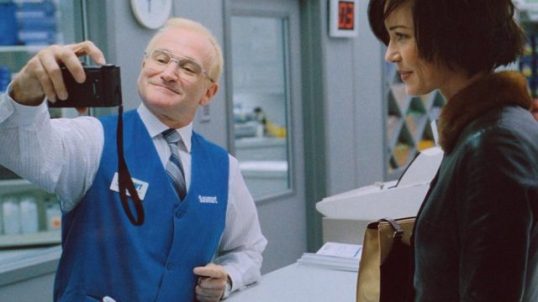
In hindsight, it’s also sad because one watches the film with the knowledge that, even if Sy hadn’t lost it at the end of One Hour Photo, he still probably be a lost soul in 2019.  When we first meet Sy, he’s working at the one-hour photo lab in SavMart.  He talks about how much he loves developing pictures.  When someone mentions that they’ve been thinking about getting a digital camera, Sy nervously chuckles and says, “Don’t do that, you’ll put us out of business.”  Of course, in 2019, people take pictures with their phones and even digital cameras are viewed as being something of a relic.  If Sy were around and free today, I doubt he’d have a job.  If he did have a job, it’s doubtful it would be one that would allow him to cover his wall with someone else’s photos.  Instead, in 2019, I imagine Sy would be one of those people following strangers on social media and printing out all their pictures and probably sending them unsolicited DMs and private messages.

Sy is obsessed with the Yorkin family, Will (Michael Vartan), Nina (Connie Nielsen), and their son, Jake (Dylan Smith).  Even though the family barely knows who Sy is, he knows them because Sy has spent years developing (and stealing) their photos.  Sy views them as being the perfect family.  They’re the family that he wants to be a part of.  “Sometimes I think of myself as being Uncle Sy,” he says at one point.  But then Maya Burson (Erin Daniels) brings in her photos to be developed and Sy learns that the reality of the Yorkins is not as perfect as the photographs.  And Sy loses it.

Actually, there’s quite a few reasons why Sy loses it and the film suggests that, if the Yorkins had never stepped into SavMart, Sy would have found another family on which to obsess.  Something is missing inside of Sy.  Incapable of dealing with reality, Sy instead deals with posed pictures of happy times.  Towards the end of the film, there’s a throw-away line that attempts to offer some sort of insight into why Sy is such a lost soul.  Personally, I think the film works better without an explanation.  Why is less important than the fact that Sy exists.

In the end, One Hour Photo qualifies as a horror film not because of any paranormal danger but because it’s a film about the horror of everyday life.  You never know who might be watching you.  That friendly clerk who waits on you at the grocery store might be following you home and imagining that he’s a part of your life.  You never know.  One Hour Photo is the film that suggests that, lurking behind every friendly smile, there’s a blank Sy Parrish.  It’s a scary thought.

Horror on the Lens: Plan 9 From Outer Space (dir by Edward D. Wood, Jr.)


Watching Ed Wood’s infamous Plan 9 From Outer Space is something of an October tradition here at the Shattered Lens!  And you know how much I love tradition!

Some people say that this film has a reputation for being the worst film ever made.  Personally, I don’t think that it deserves that reputation.  Is it bad?  By traditional standards of quality, I guess it can be argued that Plan 9 From Outer Space is a bad movie.  But it’s also a lot of fun and how can you not smile when you hear Criswell’s opening and closing statements?

Enjoy and be sure to read Gary’s review!

(And also be sure to read Jedadiah Leland’s tribute to Criswell!)

(On another note: Watch this as quickly as you can because, over the least year or so, it seems like all the films of Ed Wood get yanked off YouTube as soon as they are posted.  Copyright violations, they say.  Personally, I think that’s shameful.  First off, Ed Wood is no longer alive.  Wood had no children and his widow died in 2006, having never remarried.  Whatever money is being made off of his films is not going to support his family.  Wherever he is, I think Ed would be more concerned that people see his films than some faceless corporation make money off of them.)

(It seems like, every year, someone threatens to either remake Plan 9 or produce a sequel.  Again, the original is all that is needed.)

Monster Chiller Horror Theatre: Deadly Companion (1980, directed by George Bloomfield)


Deadly Companion starts with John Candy sitting in a mental institution and snorting cocaine while happily talking to his roommate, Michael Taylor (Michael Sarrazin).  Michael has been in the institution ever since the night that he walked in on his estranged wife being murdered.  Because of the shock, he can’t remember anything that he saw that night.  When his girlfriend Paula (Susan Clark) comes to pick Michael up, Michael leaves the institution determined to get to the truth about his wife’s murder.  Once Michael leaves, John Candy disappears from the movie.

Michael suspects that his wife was killed by her lover, Lawrence Miles (Anthony Perkins) but there is more to that night than Michael is remembering.  Deadly Companion is a typical low-budget shot-in-Toronto thriller from the early 80s, with familiar Canadian character actors like Michael Ironside, Al Waxman, Kenneth Welsh, and Maury Chaykin all playing small roles.  Michael Sarrazin is a dull lead but Anthony Perkins gets to do what he did best at the end of his career and plays a thoroughly sarcastic bastard who gets the only good lines in the film.

What’s interesting about Deadly Companion isn’t the predictable plot and it’s certainly not Michael Sarrazin.  Instead, what’s strange is that several cast members of SCTV show up in tiny supporting roles, though none of them get as much of a chance to make as big an impression as John Candy.  Deadly Companion is a serious thriller that just happens to feature Candy, Joe Flaherty, Eugene Levy, Catherine O’Hara, and Dave Thomas.  It’s strange to see Michael Sarrazin trying to figure out who killed his wife while Eugene Levy loiters in the background.  It leaves you waiting for a punchline that never comes.

The SCTV people are in the film because it was directed by George Bloomfield, who also directed several episodes of SCTV.  Since this film was made before SCTV really broke into the American marketplace, it was probably assumed that no one outside of Canada would ever find the presence of John Candy in a dramatic murder mystery distracting.  Of course, when Deadly Companion was later released on VHS in the late 80s, Candy and the SCTV crew were all given top billing.

The Things You Find On Netflix: El Camino: A Breaking Bad Movie (dir by Vince Gilligan)


As one might expect from the sequel film to Breaking Bad, the shadow of Walter White hangs over very minute of El Camino.

Physically, Bryan Cranston doesn’t have a large role in El Camino.  Like many of the characters from Breaking Bad, he appears only in a flashback.  Jesse Pinkman (Aaron Paul) spends a good deal of this movie dwelling on the past, perhaps because the only way that he can have a future is by mentally forgiving himself for all the stuff that went on while he was cooking meth with Walter White and, later, for the Nazi bikers who kept him chained up in a cage like an animal.  So, it makes sense that we would see a lot of flashbacks, the majority featuring characters who are no longer alive.  Cranston’s Walter White only appears towards the end of the film, when Jesse remembers the conversation they had at a diner about what Jesse was going to do with the money that they were making.  It’s a bit jarring to see them, largely because Walter still looks like an earnest and frail science teacher while Jesse is still young, loud, and more than a little obnoxious.  It’s quite a contrast to what we know will eventually happen to both characters.

For obvious reasons, Walter White isn’t in much of El Camino but his ghost seems to following Jesse through the entire movie. For that matter, so does the ghost of Tod Alquist (Jesse Plemons).  It’s not just that a good deal of the movie deals with Jesse trying to figure out where Tod hid all of his money.  (Jesse is planning on using the money to hopefully escape New Mexico and start a new life in Alaska.)  It’s also that Jesse has been scarred, both physically and mentally, by the Hellish time that he spent as Tod’s …. well, Tod’s pet.  Tod treated Jesse like a dog, keeping him on a leash, punishing him for being “bad,” and then offering Jesse pizza as a reward whenever Jesse did something right.  To be honest, the flashbacks with Tod take some getting used to, largely because Plemons has obviously aged quite a bit between the finale of Breaking Bad and the shooting of El Camino.  But, still, Plemons is absolutely terrifying as the unfailingly polite but definitely sociopathic Tod.  At one point, Tod casually brings Jesse over to his apartment so that Jesse can help dispose of the body of his cleaning lady.  Tod murdered her because she came across some money that he was hiding in a hollowed-out book.  Tod shrugs as he tells the story of her murder, as if his actions are as commonplace as waking up and going to bed.

Throughout Breaking Bad, Jesse spent most of the series being manipulated by evil men.  What was ironic, of course, was that Jesse was the only one of those men who must people automatically considered to be a criminal.  Everyone thought that Walter was a tragic family man.  Tod was largely anonymous and those who did notice him usually assumed he was just an eccentric weirdo.  Jesse, on the other hand, was the guy who was continually getting hauled in by the police and harassed by the DEA.  He was the one who was viewed as being a danger to society even though he eventually proved himself to be one of the few characters with anything resembling a conscience.  In El Camino, Jesse finally gets a chance to determine his own fate.  Will he embrace the lucrative but soul-destroying greed of Walter and Tod?  Or will he escape and try to make a new life for himself?

El Camino is a visually stunning tour-de-force, anchored by Aaron Paul’s empathetic performance as Jesse.  Jesse is no longer as loud as he may have been in Breaking Bad.  He’s a man haunted by the past and, watching the film, you know, regardless of whether he makes it to Alaska, the scars will never fully heal.  He has the haunted eyes of a man who is never going to be fully okay, regardless of where he ends up.  In fact, if we’re going to be realistic, he probably doesn’t have much of a future ahead of him.  Those ghosts are always going to follow him and, as Robert Forster’s Ed sagely explains it, much of what has happened is due to Jesse’s own poor decisions.

Still, whatever mistakes he’s made in the past, you can’t help but wish the best for Jesse Pinkman.

He’s earned it.

The Dirt On The Relentless: American Satan (2017, directed by Ash Avildsen)


The Relentless are the biggest band in the world, even though their music sounds like it belongs in the 80s.  Led by charismatic singer Johnny Faust (Andy Biersack), the Relentless have just released their debut album, American Satan.  Now, they’re touring the country, doing every drug they can get their hands on and every groupie that stops by their hotel.  The moral guardians say that The Relentless are a bad influence and are leading their children into Satanism.  For once, the moral guardians are right.  Back when they were just a struggling band in Los Angeles, The Relentless made a deal with Satan (Malcolm McDowell).  All they had to do was sacrifice the lead singer of a rival band (played by former teen idol Drake Bell) and all their dreams would come true.  However, if Johnny Faust had bothered to study his namesake, he’d know better than to make a deal with the devil.
The best thing about American Satan is that it was obviously made by people who know the music industry.  All of the details at the start of the film, with the Relentless struggling to get noticed and having to hit the streets and sell tickets to their own show, felt true.  It helps that most of the members of the Relentless were played by actual musicians.  What they lacked in acting talent, they made up for with authenticity.  The music industry is a tough business to break into, regardless of how good or bad your band is.  After watching Johnny and the Relentless struggle with crooked promoters and unsympathetic label owners, it was believable that they would consider signing a deal with the devil.

Much like the band, the movie lost its way after the contract with the devil was signed and official.  The rioting, the groupies, and the drugs were all too predictable and the movie just became The Dirt with Satan replacing Ozzy.  American Satan seems to be building up to an epic conclusion but it never seals the deal.  Instead, it just ends with a whimper, as if no one was sure where the story was supposed to be heading.  Still, any movie that finds roles for Malcolm McDowell, Bill Duke, Goldberg, and Denise Richards can’t be all bad.

At its worse, American Satan is an anti-climatic take on the Faust legend.  At its best, its Tipper Gore’s worst nightmare.

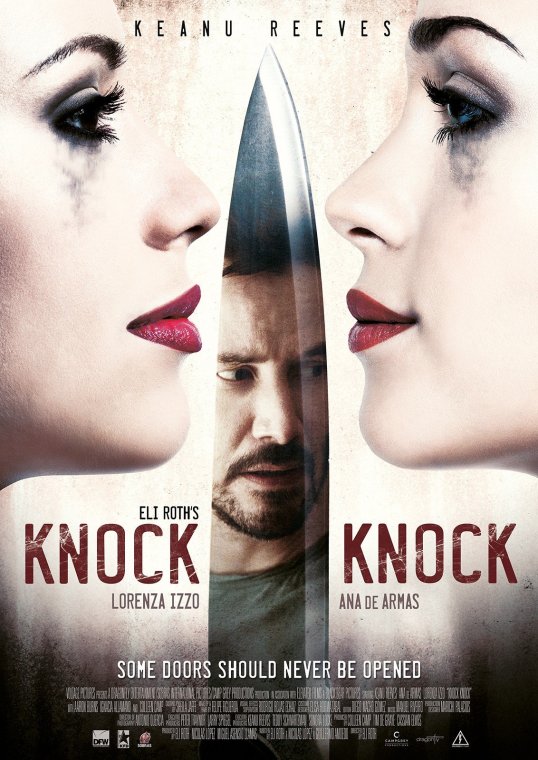
Horror Film Review: Knock Knock (dir by Eli Roth)


Knock Knock starts out as a satire of vapid male fantasies before then becoming a vapid male fantasy.  It then transforms itself into a satire of vapid torture porn before then becoming vapid torture porn.  And, in the end, your main response will probably be, “Eh, who cares?”

Keanu Reeves plays Evan, an architect who has a nice house, a nice family, and a nice dog.  He also has an injured shoulder, which leads to him staying home while his wife and children spend the weekend at the beach.  Evan is looking forward to having the house to himself, especially when it starts to rain.  I mean, who wants to be at the beach in the middle of storm, right?  That night, Evan is relaxing in his home when he hears someone at the door.

Knock knock.

Two young women, Genesis (Lorenza Izzo) and Bel (Anna de Armas), are standing on his front porch, soaked.  They tell him that they’re looking for the address of a party and that their phone has gotten wet and could they please come inside for just a few minutes and get online and find the correct address?  Evan agrees.  Genesis and Bel enter the house.  They tell him that they’re models.  They tell him about their girlfriends.  They talk about their sex lives and Evan responds with a goofy smile.  They ask if they can take off all their clothes and toss them in a dryer.  Evan agrees.  “Uh, I’ve got some robes,” Evan says and it’s a funny line because Keanu Reeves sounds sincerely bewildered when he says it.

Anyway, you can tell where this leading.  It starts with a threesome and then it ends with the house getting destroyed and people getting buried alive and, to be honest, it gets a little bit boring after a while.  Perhaps if Evan was truly a loathsome character, as opposed to just an awkward Keanu Reeves, there would be some sort of joy in watching Genesis and Bel taunt him while destroying his home and destroying his wife’s artwork but instead it just amount to a bunch of repetitive taunting.  Despite all of their talk about how Evan represents the 1% and how quickly Evan was willing to cheat on his wife and potentially destroy his family, Genesis and Bel don’t come across as being revolutionaries or avenging angels.  Instead, they just seem to be overcaffeinated with no real reason for doing what they’re doing beyond the fact that there wouldn’t be a movie otherwise.

Keanu Reeves gives a strange performance in this film.  At the start of the film, he actually seems like he’s perfectly cast.  When Genesis and Bel first show up at his door, there’s some genuine wit to found in his confused reaction to the two girls.  But then, as the film progresses, Reeves has to start pretending to be desperate and that’s never really been his strong suit.  Perhaps because he’s trying to keep up with the hyper performances of Lorenza Izzo and Anna de Armas, Reeves starts to shout every single line and it just becomes rather humorous before then becoming rather dull.  “STOP IT!  I COULD GO DEAF!”  he shouts when the girls force him to listen to loud music.  Later, when he curses the girls, he sounds like a cartoon character talking about how much he hates Bugs Bunny.  I like Keanu Reeves but he’s just not a very good shouter.

I’ve defended Eli Roth in the past and I imagine that I’ll do so again in the future but it’s best to keep the door closed on Knock Knock.

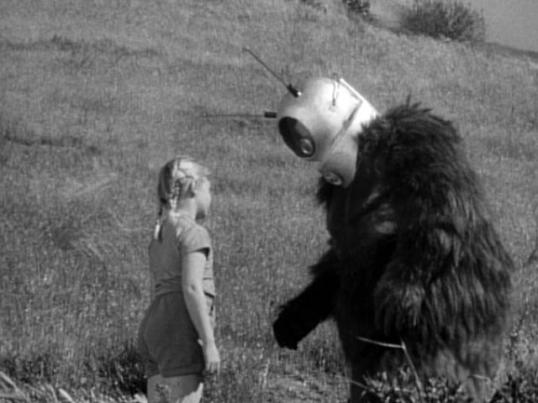
Horror on the Lens: Robot Monster (dir by Phil Tucker)


Today’s horror film is a true classic of its kind, the 1953 science fiction epic Robot Monster.

Now, I should admit that this is not the first time that I’ve shared Robot Monster in October.  I share it every year and, every year, YouTube seems to pull the video down in November.  That sucks because Robot Monster is one of those weird films that everyone should see.  So, I’m going to share it again.  And, hopefully, YouTube will let the video stay up for a while.

As for what Robot Monster is about…

What happens with the Earth is attacked by aliens?  Well, first off, dinosaurs come back to life.  All of humanity is killed, except for one annoying family.  Finally, the fearsome Ro-Man is sent down to the planet to make sure that it’s ready for colonization.  (Or something like that.  To be honest, Ro-Man’s exact goal remains a bit vague.)

Why is Ro-Man so fearsome?  Well, he lives in a cave for one thing.  He also owns a bubble machine.  And finally, perhaps most horrifically, he’s a gorilla wearing a diver’s helmet.  However, Ro-Man is not just a one-dimensional bad guy.  No, he actually gets to have a monologue about halfway through the film in which he considers the existential issues inherent in being a gorilla wearing a diver’s helmet.

Can humanity defeat Ro-Man?  Will Ro-Man ever get his intergalactic supervisor to appreciate him?  And finally, why are the dinosaurs there?

All of those questions, and more, are cheerfully left unanswered but that’s a large part of this odd, zero-budget film’s considerable charm.  If you’ve never seen it before, you owe it to yourself to set aside an hour and two minutes in order to watch it.

You’ve never see anything like it before.

Enjoy!

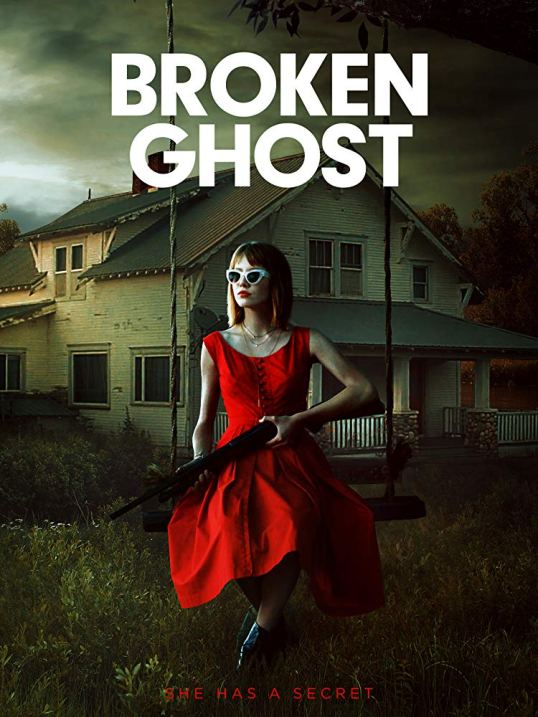
The TSL’s Horror Grindhouse: Broken Ghost (dir by Richard Gray)


Odd film, Broken Ghost.

It opens with two bikers slowly approaching a big house that appears to be sitting out in the middle of nowhere.  They enter the house, we hear gunshots, and then suddenly….

….a new family is moving into the house!  The Day family is full of secrets, some of which we learn about immediately and others of which are only gradually revealed.  Samantha Day (Scottie Thompson) has recently bought the local drug store and is frustrated by the fact that her husband, William (Nick Farnell), is impotent.  William is a moody artist who is struggling to get over an addiction to pornography.  And then there’s their teenage daughter, who insists on being called Imogen (Autry Haydon-Wilson) even though her real name is Grace.  Or maybe she now wants to be Grace and her original name was Imogen.  To be honest, it’s hard to keep track because everyone refers to her by both names throughout the film.  We do know that Samantha occasionally calls her the wrong name because everyone yells at her about it.

Anyway, Imogen is the reason that the Days have moved to a new house.  Apparently, something bad happened at Imogen’s old school and, as a result, she’s changed her name and her hair.  Imogen is an interesting character and Autry Haydon-Wilson does a good job playing her.  Imogen’s moods swing back and forth, between depression and angry, insecurity and defiance.  You’re on her side as soon as you meet her.  Imogen suffers from a severe vision impairment and the film occasionally shows the world through her eyes.  It’s a uniquely threatening place.

As soon as the Days move into their new home, strange things start to happen.  The television turns on at random and it’s usually showing porn.  Imogen starts to hear a voice calling her name.  Samantha finds herself tempted to run off with every strange man that she sees at the local bar.  William, at least, finds himself artistically inspired.  When his wife and his daughter point out to him that the house is obviously haunted and that it might be a good idea to move somewhere else, William replies, “I’m doing my best work!”

It turns out that the house has quite a history, one that goes beyond those two bikers that we saw earlier.  The house was previously owned by another artist, one who murdered his wife and his children.  When William finds the murderer’s artwork, he starts to slip even further into insanity.  Could it be that William is possessed by the murder’s malevolent spirit or is there a twist lurking in the shadows….

Yes, there is a twist.  I won’t spoil it, beyond saying that it was a pretty bad twist and that it didn’t really make any sense.  In fact, it made me want to throw something at the television.  But, oh well.  I guess we should be happy that Broken Ghost tried to do something unexpected.  Still, as a result of the twist, the movie ends on a rather sour note and it’s hard not to feel that one member of the Day household has been excessively punished while another member of the family has basically gotten away with acting like a complete asshole.  And that’s all I’ll say about that.

So, it’s a flawed film that doesn’t really work but there are still some effective moments.  As I said, Imogen’s an interesting character and I almost wish that the film had dropped all of the supernatural mystery stuff and instead just focused on her character and her struggle to move on with her life.  Say what you will about the script but the cinematography is gorgeous and full of atmosphere.  There’s good moments all through Broken Ghost.

It’s just a shame about that ending.