Love on the Shattered Lens: Rapture (dir by John Guillermin)


The 1965 film, Rapture, is an odd one.

It takes place in France, largely at an isolated home sitting on a cliff above the Brittany coast.  Frederick Larbaud (Melvyn Douglas) is a former judge who has largely retreated from society.  He lives in his house with his teenager daughter, Agnes (Patricia Gozzi) and his promiscuous housekeeper, Karen (Gunnel Lindbloom).  He’s a stern man, one who is obviously struggling to overcome a vaguely defined personal tragedy.  He is very overprotective of his daughter, Agnes.

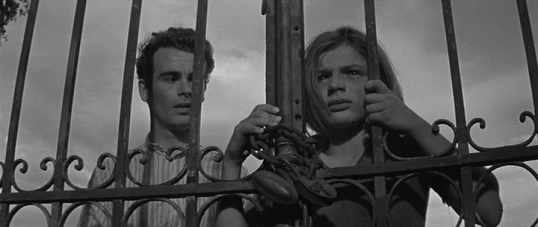
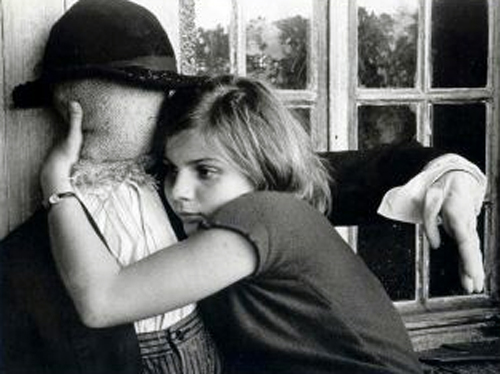
As for Agnes, she alternates between moments of childish immaturity and moments of surprising clarity.  She’s the type who still plays with dolls but who also casually tosses them over the cliff so that they can shatter on the rocks below.  She seems to be naive and innocent but, at the same time, she’s also capable of blackmailing Karen and threatening to tell her father that Karen’s boyfriend sneaks into the house at night.  When the sheltered Agnes gets her father’s permission to make a scarecrow for the garden, she throws herself into the work, even going so far as to flirt with the scarecrow after it’s been built.

Meanwhile, a sailor named Joseph (Dean Stockwell) has been arrested for getting into a fight during a drunken night on the town.  While he’s being transported to jail, the prison bus runs off the road.  Joseph escapes from the bus and runs up a hill, passing by Frederick, Agnes, and Karen.  Though the police manage to seriously wound Joseph, he still escapes.

Later that night, during a violent storm, Agnes is shocked to see that her scarecrow has vanished.  While she’s out searching for it, she comes across a delirious Joseph.  Because Joseph has stolen the scarecrow’s clothes, Agnes decides that her scarecrow has come to life and, as a result, Joseph belongs to her.  Surprisingly, Frederick expresses no reservations about allowing Joseph to stay at the house while he recovers from his gunshot wound.

Once Joseph recovers, he explains to Frederick what happened and says that he should probably turn himself in and hope for the best.  Frederick, however, disagrees.  It turns out that Frederick has an agenda of his own and part of that agenda is revealing that brutality of the police.  He continues to allow Joseph to hide out at his house but little does Frederick know that Joseph is falling in love with Agnes (and, of course, Agnes still thinks that Joseph is her scarecrow come to life).
Rapture took me by surprise.  When the film started, I honestly thought it was going to be unbearably pretentious and I wasn’t exactly filled with confidence when I discovered that the film was directed by John Guillermin, a prolific British director whose career spanned from the 50s and the 80s but whose overall output is not particularly highly regarded among film historians.  With its obvious debt to Ingmar Bergman, Rapture did not seem like the type of movie that one would expect to be successfully directed by the 1960s equivalent of Taylor Hackford.  And, it should be said, that the first fourth of the film is rather pretentious and a bit silly.  The black-and-white cinematography is frequently gorgeous and atmospheric but Agnes’s eccentricity often feels overwritten and it seems to take forever for Joseph to actually show up at the house.

However, things get better.  The film, itself, doesn’t become any less pretentious but eventually Joseph starts to fall for Agnes and the chemistry between Dean Stockwell and Patricia Gozzi is strong enough that it carries the viewer over the film’s rough spots.  The film becomes less about how strange Agnes is and more about a sheltered girl falling in love for the first time and, freed from the inconsistency that marred her characterization during the first part of Rapture, Patricia Gozzi’s performance starts to click as Agnes becomes relatable and even sympathetic.

The film hits a high point when Joseph and Agnes try to start a life for themselves away from Agnes’s father and we watch a lengthy montage of their steadily deteriorating relationship.  In a manner of minutes, we witness how quickly the intrusion of the real world threatens to cause their too perfect romance to go awry.  Most of the montage is made up of overhead shots and it captures the feeling of two naive lovers being overwhelmed by the difficulties of living in the real world.  With each movement of the camera, we feel Agnes and Joseph’s world getting a little bit more claustrophobic and a little more threatening.

The film ends on a sad note, which shouldn’t come as a surprise to anyone watching.  From the minute that Agnes leads a wounded Joseph into the house, we know that their love is doomed.  That said, it’s still a rather odd ending and one that raises more questions than it answers.  It’s a strange ending for a strange film and it’s one that will stick with you long after you watch it.

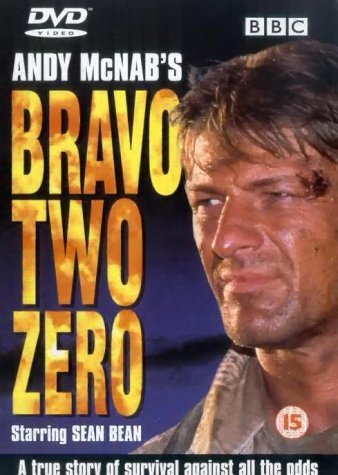
Bravo Two Zero (1999, directed by Tom Clegg)


In 1991, during the Gulf War, a British SAS patrol — codenamed Bravo Two Zero — is dropped behind enemy lines in Iraq.  Led by Andy McNabb (played by Sean Bean), their mission is to track down and destroy Iraqi scud missile launchers and also to disrupt communications between Baghdad and Northwestern Iraq.  Almost from the minute that the 8 member teams is dropped behind enemy lines, things start to go wrong.  The weather turns against them.  They’re spotted by both Iraqi civilians and soldiers.  While the team tries to make it back to safety, McNabb and three others are captured by the Iraqis and are forced to endure torture while looking for an opportunity to escape.

Bravo Two Zero, which originally aired in two parts on the BBC, is based on Andy McNabb’s memoir about what happened when Bravo Two Zero found themselves trapped behind enemy lines, their mission compromised.  It’s a rousing story but it’s also a controversial one.  Several other people who were involved with the operation claimed that McNabb (which was a pseudonym adopted to protect the identities of the other members of the unit) exaggerated certain details, particularly the extent that he was tortured and the number of Iraqi soldiers that the unit had to fight on their way to the Syrian border.  What is known for sure is that the unit was trapped behind enemy lines and, of the 8 who set out, only five returned, having survived against almost impossible odds.  It’s possible to debate the exact details but no one debates the bravery of the men involved.

As a film, Bravo Two Zero takes McNabb at his word.  It’s a tough and gritty war film and Sean Bean gives an excellent performance in the role of McNabb.  Real-life footage from the Gulf War is mixed in with the recreation of what happened to the unit and it gives the film both a semi-documentary feel and it also ratchets up the suspense.  While the news broadcasts present what appears to be a very easy victory over Iraq, we’re reminded that it wasn’t as easy for the men who were actually getting shot at on a daily basis.  Will the men be able to make it to Syria before the rest of the world moves on?  Though the film is clearly on the side of the Coalition Forces, it’s hardly blindly jingoistic.  While the Iraqis who torture McNabb are presented as being sadists, the majority of the Iraqi citizens come across as just people trying to survive day-by-day while bombs rain down upon them.  For the most part, the Iraqi people are presented as being caught in the middle of a war that, regardless of who wins, will never benefit them, pawns in a battle between competing super powers.  The film’s villain is Saddam Hussein and not the people living under his dictatorship.

Bravo Two Zero is an excellent war film, one that emphasizes the hard work and training that goes into serving with the SAS over the usual action film heroics.  While never glamorizing combat or war, it pays tribute to those who have served and made the ultimate sacrifice.

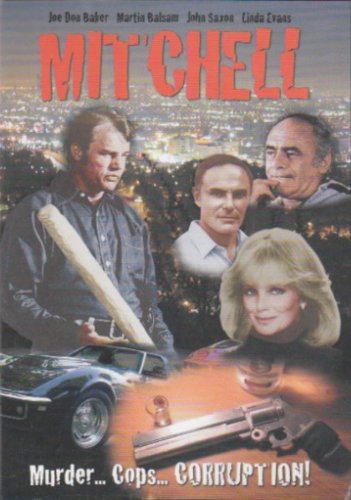
Mitchell (1976, directed by Andrew V. McLaglen)


Mitchell (played by Joe Don Baker and don’t you forget it) is a detective who rubs everyone the wrong way because he’s a huge slob.  In order to keep Mitchell from investigating a murder committed by a mobbed-up lawyer named Walter Deaney (John Saxon), Mitchell’s superiors order him to conduct surveillance on businessman James Arthur Cummings (Martin Balsam).  Cummings is in the export/import game, which can only mean that he’s looking to smuggle heroin in the United States.  Mitchell balks at having to spend hours sitting in a car and watching a house but he finally agree to do it just so he can show up his superiors.  “I’m going to get Deaney and Cummings!” he says.

In order to get Mitchell off of his back, Deaney sends him a prostitute named Greta (Linda Evans).  Mitchell doesn’t have any problem having sex with Greta but he does have a problem with her smoking grass.  After spending two nights with her, he hauls her off to jail for possession because the only intoxicant that Mitchell needs is Schlitz beer.

Eventually, both Deaney and Cummings get tired to being harrassed by this slob so they team up to kill him.  This leads to both a dune buggy accident that has to be seen to be believed and an exciting helicopter chase.

Mitchell is best-known for having been featured on an episode of Mystery Science Theater 3000.  Everyone remembers Joel and the bots making savage fun of Joe Don Baker and commenting on the plot’s incoherence.  What is less well-known is that the version that was shown on MST 3K was a heavily edited version that was missing some key scenes.  Earlier today, I watched the unedited version of Mitchell.  It’s still pretty bad but the plot does make slightly more sense.  In the unedited version, we actually learn why John Saxon just vanishes from the movie and we also see the end result of Mitchell’s final confrontation with Cummings, instead of just cutting away.  Even more importantly, in the unedited version, we discover that Mitchell spends the entire movie being threatened, abused, and insulted.  It makes it easier to understand why he’s in such a terrible mood throughout the entire film.  The unedited version of Mitchell is not much better than the edited version but it is a tougher and more violent film in every way.

Mitchell is usually described as being a take on Dirty Harry but it’s actually more of a French Connection rip-off.  The slovenly Mitchell has more in common with the erratic Popeye Doyle than with the cool and collected Harry Callahan.  Unfortunately, Mitchell doesn’t have any scenes that can compare to the chase scene from The French Connection nor does it have that film’s gritty, semi-documentary tone.  Whereas Doyle and Callahan got results through being smart along with being tough (Dirty Harry, for instance, goes out of its way to show that Callahan is dogged investigator and not just a trigger-happy cop), Mitchell just annoys people until they try to kill him.

For all the shit that Joe Don Baker has taken for starring in Mitchell, his performance is not that bad.  He’s convincing as a borderline fascist cop who doesn’t get much sleep and who doesn’t trust anyone.  It’s just that Mitchell, as written, is never a likable hero.  Instead, he’s the type of hero who busts his girlfriend because she has a tiny amount of grass in her purse.  Of the villains, John Saxon is believably sleazy as Deaney but Martin Balsam sleep walks through his role as Cummings and, even in the unedited version, his plan never makes much sense.  Balsam and Saxon should switched roles.

Finally, no review of Mitchell would be complete with including the lyrics of the haunting Mitchell theme song, sung by Hoyt Axton:

“My my my my Mitchell
What do your Mama say?
What would she do
if she knew you
were fallin’ round and carryin’ on that way…
Crackin’ some heads, jumpin’ in and out of beds
and hangin’ round the criminal scene…
Do you think you are some kind of a star like the guys on the movie screen…

Well oh my my my Mitchell
What would your captain say?
If he knew you was hangin’ round
Eatin’ with the crooks and shootin’ up the town
Know you been out there, roundin’ up the syndicate
succeedin’ where the others have failed
Oh my my my Mitchell
You shoot ’em just to get ’em in jail
When they take a look in the record book, they’ll find you got a lot of class…

The whole shebang, arrestin’ painted ladies for a little grass
Oh my my my Mitchell!”

“Mitchell!”

The cover of the unedited Mitchell DVD features Joe Don Baker from Walking Tall, Linda Evans from Dynasty, and a publicity still of John Saxon. Martin Balsam, however, does appear to have been taken from the film.

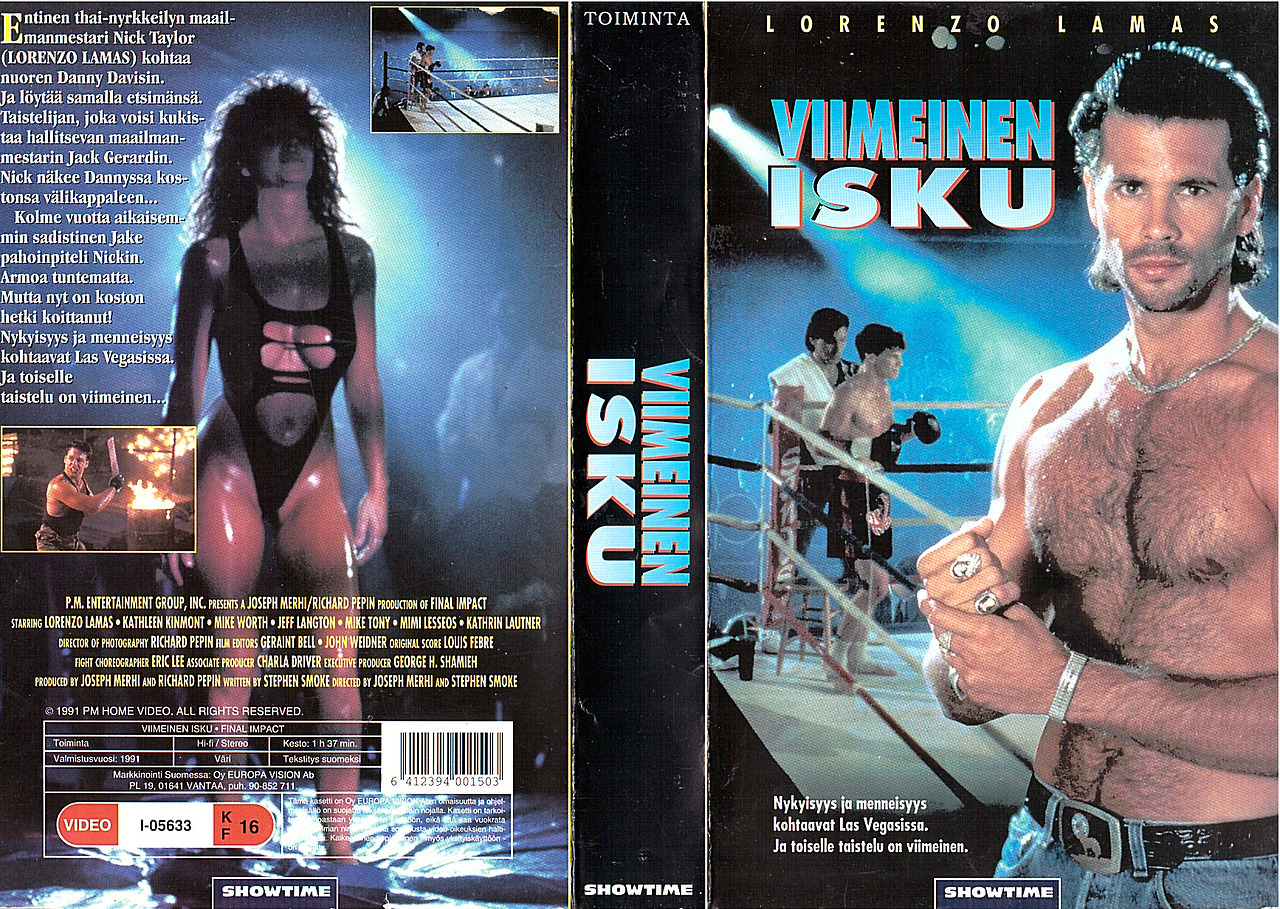
Cinemax Friday: Final Impact (1991, directed by Joseph Mehri)


The girl on the back cover of the VHS box is only in the film for 5 seconds.

Danny Davis (Michael Worth) is the light heavyweight kickboxing champion of Ohio but he wants to be the national champion so he approaches Nick Taylor (Lorenzo Lamas) for training.  Nick used to be the national champion but he is still haunted by his brutal defeat at the hands and feet of Jack Gerard (Jeff Langton).  Nick is now an alcoholic who makes his money on the oil wrestling circuit.  (The girls wrestle in oil while Nick kickboxes in a ring.  Guess what most of the people in the bar end up watching?)  When Danny and Nick first meet, the arrogant Nick refuses to have anything to do with him.  But when Nick sees Danny win his match and shout out, “I am invincible!,” Nick decides to take him under his wing.  The kid’s good but he needs to learn some lessons about making potentially ironic declarations in the ring.

Nick trains Danny and shows him that all of his talent won’t mean anything if he allows himself to become predictable.  Soon, Nick and Danny are making the national circuit and fighting in Las Vegas.  But as Danny becomes successful, Nick starts to grow jealous.  He starts to feel as if his girlfriend, Maggie (the incredible Kathleen Kinmont), prefers Danny to him and he becomes so insecure that he can’t even perform long enough to cheat with a local prostitute that he picks up in a bar.  Making matters worse is that, for Danny to become the champ, he’s going to have to defeat Jake Gerard, the man who ended Nick’s professional career.

Occasionally, late night Cinemax took a break from showing nudity-filled neo-noirs to show films like this one, a low-budget rip-off of Rocky, The Karate Kid, and Kickboxer.  Of all the films that came out of this very 90s genre, Final Impact is one of the better examples.  The fight scenes are exciting but the real appeal of this film is that it stars Lorenzo Lamas and Kathleen Kinmont, back when they were still a couple.  Kinmont was one of the best of the 90s video vixens, beautiful and not a bad actress either.  Meanwhile, Lorenzo Lamas was the male Shannon Tweed.  Lamas may not have been a great actor but his total lack of shame and his ability to deliver deadpan dialogue like, “No one is invincible,” without cracking a smile made him more entertaining than many of his fellow direct-to-video stars.  Lamas lurches drunkenly through Final Impact, taking both himself and the movie far too seriously and playing Nick’s emotional breakdown like an actor begging the Academy to just take a look.  It’s fun to watch.

Final Impact ends as these films always do, with a champion being crowned.  As far as I’m concerned, everyone in the film is champion, a champion of 90s Cinemax.

Love on the Shattered Lens: Lying Eyes (dir by Marina Sargenti)


If you want to see something creepy, just check out the first 5 minutes of the 1996 television film, Lying Eyes.

It takes place at a high school basketball game.  While the team is heading into the locker room for halftime (which is something that I assume they do in basketball, though I’ve never actually watched a game so I could be wrong), the cheerleaders run out onto the court and do their routine.  The camera switches back and forth from closeups of the cheerleader’s backsides to shots of a handsome man named Derek Bradshaw (Vincent Irizarry) sitting in the stands and obviously enjoying the show.

The scene already has a leering quality but what makes it disturbing is the little smile that comes to Derek’s face while he watches the cheerleaders.  Derek maybe handsome but he’s also quite a bit older than the teenagers who are sitting around him.  It’s obvious that he’s come to the game alone and it’s also obvious, just from the way that he’s watching, that he didn’t come because he’s a fan of high school basketball.  Instead, he’s there to ogle the cheerleaders.

Later, one of the cheerleaders — Amy Miller (Cassidy Rae) — is driving home.  We’ve already seen a scene where Amy explains to her best friend, Dana (Ashlee Levitch), that she’s tired of dating immature teenage boys.  While Amy’s sitting at a stop light, another car rear ends her.  The driver gets out and checks to see if Amy’s okay.  The other driver is ….. DEREK!

Amy is immediately charmed by Derek, especially after he offers to pay for the damage done to her bumper so that she won’t have to report the accident to her insurance company.  Later, when Amy goes to pick up her car from the garage that Derek recommended, she discovers that not only has the bumper been replaced but that Derek also had the mechanic install a CD player!  (Remember, this movie was made in 1996.)  And Derek’s given her a bundle of CDs!  When she thanks him, he smiles and says that he hopes that she likes Hootie and the Blowfish.

(Seriously, he says that.  I’m not joking.)

Anyway, Derek and Amy are soon having an affair.  Amy thinks that Derek is the best and even accepts his word when he explains that he’s married but he and his wife are separated.  However, everyone else in Amy’s life is suspicious of Derek and so are we, because we’ve seen a 100 movies just like this one!  Plus, we saw Derek acting all pervy at the high school basketball game….

Soon, Amy’s grades are slipping and her friends are getting mad at her because she’s no longer spending any time with them.  However, Amy has other things to be concerned about.  For instance, someone leaves a note in her mailbox, calling her a whore.  Someone keeps calling the house.  Someone takes a knife to her new leather jacket.  Apparently, someone is not happy about Amy’s relationship and, even after Amy breaks it off with Derek, the harassment continues.

Who is out to get Amy?  Could it be Derek?  Could it be Derek’s wife?  Could it be Dana or maybe even Dana’s older sister, Jennifer (Alison Smith)?  Or could it be someone who Amy doesn’t even suspect?

Lying Eyes is an enjoyably trashy film.  This is one of those movies where you know exactly what’s going to happen but the film itself is just so cheerfully melodramatic that you can’t help but get sucked into it.  Though the film was originally made for NBC, it has since become a Lifetime staple.  This really is the ultimate Lifetime film.  Unfortunately, it’s not as a good as it used to be because, the last few times I watched the film, I noticed that the original kickass soundtrack had been replaced by a generic soundtrack.  I get that this sort of thing happens and it has to do with whether or not the distributor feels like its worth the trouble to pay for the rights to the songs that originally appeared in the film.  But seriously, the generic music that replaced the original soundtrack often doesn’t even go with the scenes in which it is heard.  This is especially true of the film’s opening, where the cheerleaders’ opening routine was obviously choreographed to totally different music from what is now playing in the background.

On the plus side, Vincent Irizarry is both perfectly sleazy and perfectly charming in the role of Derek and Cassidy Rae is relatable and sympathetic at Amy.  Falling for a guy who is obviously wrong but refusing to listen to your friends and family because you want the fantasy to be true?  Seriously, we’ve all been there.  That was pretty much my entire life when I was 18 years old.  Rae does such a great job that you don’t even mind that Amy often behaves like an idiot.  (Seriously, if someone is stalking you, threatening to kill you, and forcing your car off the road, you might want to consider not shrugging it off.)

Lying Eyes is a good, trashy melodrama and if you’re looking for some Valentine’s Day counter programming, it’s on Amazon Prime.  I just wish they would bring back the original soundtrack.

Love On The Shattered Lens: Romeo and Juliet (dir by Franco Zeffirelli)


Happy Valentine’s Day!

Now that the Oscars and the Sundance Film Festival are over with, it’s time to start a new series of reviews here on the Shattered Lens.  For the rest of February, I will be looking at some films that deal with the universal topic of love.  Some of these films will be romantic.  Some of them will be sad.  Some of them might be happy.  Some of them might be scary.  Some of them might be good.  And some of them might be bad.  In fact, to be honest, I haven’t really sat down and made out a definite list of which films I’ll be reviewing for Love On The Shattered Lens.  Instead, I figure I’ll just pick whatever appeals to me at the moment and we’ll see what happens!

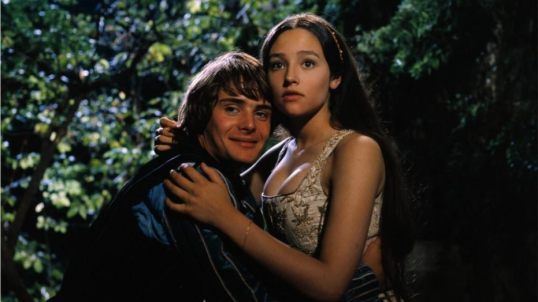
Let’s start things off with the 1968 film version of William Shakespeare’s Romeo and Juliet.

“Oh my God!  Romeo and Juliet are hippies!”

Well, that’s not quite true.  I mean, it is true that Romeo (played by Leonard Whitting) and Juliet (Olivia Hussey) are played by actual teenagers in this version of the classic play.  It’s also true that, even though the film is set in a painstakingly recreated version of 15th century Verona, almost all of the actors have what would have then been contemporary haircuts.  Romeo, Benvolio (Bruce Robinson), and Mercutio (John McEnery) all have longish hair, dress colorfully, and look like they could all be in the same band, covering the Beatles and writing songs about dodging the draft.  Even Tybalt (Michael York) seems a bit counter-cultural in this version.

As played by Olivia Hussey, Juliet comes across as being far more rebellious in this version of Romeo and Juliet than in some of the others.  It’s hard to imagine that Olivia Hussey’s Juliet would have much patience with Juliets played by Norma Shearer, Claire Danes, Hailee Steinfeld, or even the version of the character that Natalie Wood played in West Side Story.  Olivia Hussey’s Juliet is always one step away from running away from home and hitch-hiking to the free Rolling Stones concert at the Altamont Speedway.  Like the audience that the film was intended for, Romeo and Juliet both know that their parents are out-of-touch and that their friends are only temporary.  Embracing love and pursuing all that life has to offer is what matters.

Was this the first film version of Romeo and Juliet to make explicit that the two characters had consummated their marriage?  I imagine it was since it was apparently also the first version of Romeo and Juliet to feature on-screen nudity.  That’s quite a contrast to the largely chaste 1936 version, in which Norma Shearer and Leslie Howard both seemed determined to keep a respectable distance from each other.  Leonard Whiting and Olivia Hussey have an amazing chemistry together.  They’re the two prettiest people in Verona and they just look like they belong together.  From the minute they meet, you believe not only that they would be attracted to each other but that they’re also meant to be lovers.

Of course, we all know the story.  The Capulets and the Montagues are rival families.  Juliet is a Capulet.  Romeo is a Montague.  Juliet’s cousin, Tybalt, kills Romeo’s friend Mercutio.  Romeo kills Tybalt.  Juliet fakes her death.  Romeo commits suicide.  Juliet wakes up and does the same.  The Prince shows up and yells at everyone.  This film version moves around some of the events and it leaves out a few scenes but it actually improves on the play.  For instance, poor Paris (Roberto Bissaco) doesn’t die in this version.  Seriously, I always feel bad for Paris.

Throughout it all, director Franco Zeffirelli emphasizes the youth of the characters.  It’s not just Romeo and Juliet who are presented as young.  The entire Montague and Capulet feud is largely portrayed as being just a silly turf war between two competing high school cliques.  When Tybalt and Mercutio have their fateful duel, it starts out largely as a joke and, when Tybalt kills Mercutio, it comes across as if it was an accident on Tybalt’s part.  Tybalt appears to be just as shocked as anyone, like a scared kid holding a smoking gun and trying to explain that he didn’t know it was loaded when he pulled the trigger.  When Mercutio curses both the Capulets and the Montagues, it’s all the more powerful because Mercutio is undoubtedly wondering how the duel could have so quickly gone from playful taunting to a fatal stabbing.  The entire conflict between the Montague and the Capulets is a war that makes no sense, one in which the young are sacrificed while the old retreat to the safety of their homes.

Romeo and Juliet was a hit in 1968 and it’s still an achingly romantic film.  Whiting and Hussey generate more chemistry in just the balcony scene than Leonardo Di Caprio and Claire Danes did in the entirety of Baz Luhrmann’s version of the tragic tale.  Along with being a box office hit, it was also a critical hit.  The Academy nominated it for best picture, though it lost to Oliver!

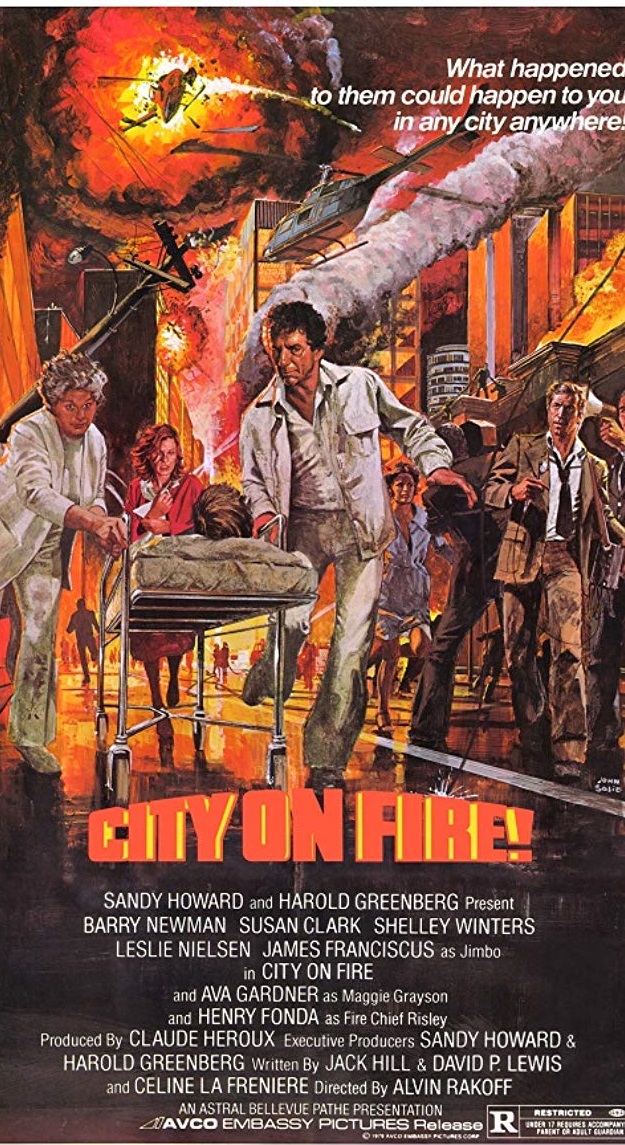
City on Fire (1979, directed by Alvin Rakoff)


In an unnamed city somewhere in the midwest, Herman Stover (Jonathan Welsh) is fired from his job at an oil refinery.  Herman does what any disgruntled former employee would do.  He runs around the refinery and opens up all the valves and soon, the entire location is covered in a combustible mix of oil and chemicals.  One spark is all it takes for the refinery to explode and the entire city to turn into a raging inferno.

While Fire Chief Risley (Henry Fonda, getting a special “And starring” credit for doing what probably amounted to a few hours of work) sits in his office and gives orders to his subordinates, Dr. Frank Whitman (Barry Newman) cares for the injured at the city’s new hospital.  Also at the hospital is Mayor William Dudley (Leslie Nielsen) and local celebrity Diana Brockhurst-Lautrec (Susan Clark), who is having an affair with the mayor.  Diana also went to high school with Herman and he still has a crush on her.  When he shows up at the hospital to try to hit on her, he’s roped into working as a paramedic.  Also helping out at the hospital is Nurse Shelley Winters.  (The character may be named Andrea Harper but she’s played by Shelley Winters and therefore, she is Shelley Winters.)  At the local television station, news producer Jimbo (James Franciscus) tries to keep his anchorwoman, Maggie Grayson (Ava Gardner), sober enough to keep everyone up to date on how much longer the city is going to be on fire.

Mostly because it was featured on an early pre-Comedy Central episode of Mystery Science Theater 3000, City on Fire has a reputation for being a terrible movie but, as far as 70s disaster films are concerned, it’s not that bad.  The special effects are actually pretty impressive, especially during the first half of the film and there’s really not a weak link to be found in the cast.  It’s always strange to see Leslie Nielsen playing a serious role but, before Airplane! gave him a chance to display his skill for deadpan comedy, he specialized in playing stuffy and boring authority figures.  He actually does a good job as Mayor Dudley and it’s not the film’s fault that, for modern audiences, it’s impossible to look at Leslie Nielsen without instinctively laughing.  Of course, there is a scene towards the end where Leslie Nielsen picks up a fire hose and starts spraying people as they come out of the hospital and it was hard not to laugh at that because it felt like a scene straight from The Naked Gun.

What the film does suffer from is an overabundance of cliches and bad dialogue.  From the minute the movie starts, you know who is going to live and who isn’t and sometimes, City on Fire tries too hard to give everyone a connection.  It’s believable that Herman would be stupid enough to start a fire because we all know that happens in the real world.  What’s less believable is that, having started the fire, Herman would then go to the hospital and keep asking Diana if she remembers him from high school.  It’s not asking too much to believe that Diana, as wealthy local celebrity, would be invited to the opening of a new hospital.  It’s stretching things, though, to then have her deliver a baby while the hospital is in flames around her.

Coming out at the tail end of the disaster boom, City on Fire didn’t do much at the box office and would probably be forgotten if not for the MST 3K connection.  A year after City on Fire was released, Airplane! came out and, through the power of ridicule, put a temporary end to the entire disaster genre.

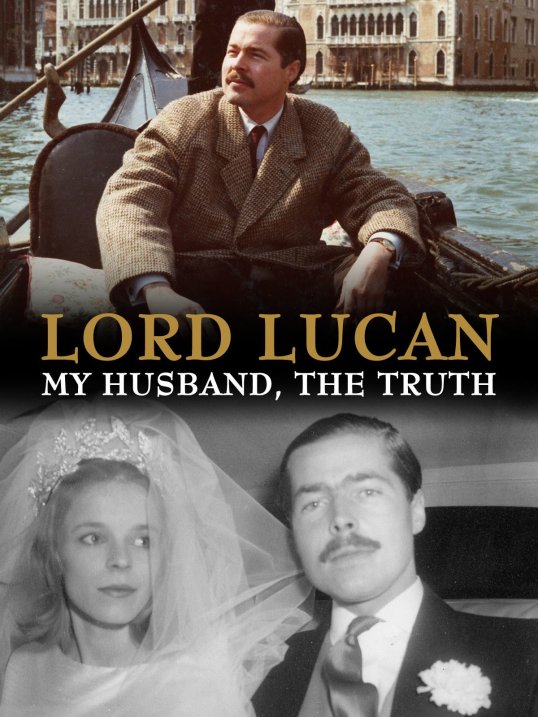
Documentary Review: Lord Lucan: My Husband, The Truth (dir by David O’Neill)


Who was Lord Lucan?

He was a British aristocrat, born not only wealthy but also with all the right connections.  His birth name was John Bingham but he eventually inherited the title of Lord Lucan when his father died in 1964.  At the time, the new Lord Lucan was 30 years and had been married for less than a year.  Lord Lucan was handsome and charming, so much so that Cubby Broccoli considered him for the role of James Bond in On Her Majesty’s Secret Service.  Lucan had no formal acting experience but he had the right look.  Nothing, of course, ever came of the idea of casting Lucan as Bond.  It’s rumored that he may have done a screen test but nothing can be said for sure.  Would Lord Lucan have had better luck with the role than George Lazenby?  Well, it’s hard to imagine how he possible could have had worst luck.

Like James Bond, Lord Lucan loved to gamble.  Unlike Bond, who was rarely seen to lose a hand whenever he sat down at the poker table, Lucan was not a particularly good gambler.  In fact, he lost so often that he was often broke.  Fortunately, his rich friends usually took care of him whenever he needed money or someone to testify as to his courage whenever he was accused of neglecting his wife, Lady Lucan.  When Lord and Lady Lucan separated in 1972, it forced the members of British high society to pick sides and most of them sided with Lord Lucan.  That remained true even in 1974 when Lord Lucan was accused of murdering his children’s nanny, Sandra Rivett.  Rivett, who bore a superficial resemblance to Lady Lucan, was bludgeoned to death with a piece of lead pipe while making a cup of tea in Lady Lucan’s home.  Lady Lucan claimed that she came across Lord Lucan in the house and that he admitted to having attacked Sandra in a case of mistaken identity.  Meanwhile, shortly after the murder, Lord Lucan reportedly called his mother and told her that he had just happened to be driving by his old home when he saw an unidentified man fighting with his wife.

The same night that Sandra Rivett was murdered, Lord Lucan vanished.  Both the police and Lady Lucan speculated that Lord Lucan had committed suicide by drowning himself in the Thames.  However, for years after Sandra Rivett’s murder, there were regular sightings of Lord Lucan around the world.  While many of those sightings were undoubtedly due to hysteria caused by the extensive press coverage surrounding the case, there were other sightings that seemed to be a bit more credible.  There was much speculation that Lucan’s powerful friends had helped him escape from Britain and he had relocated to either southern Africa or Australia.  As late as 2012, sightings of Lord Lucan were still being investigated.  If Lucan were still alive, he would be 86 years old today.

The story of Lord Lucan and the murder of Sandra RIvett is a fascinating one and the 2017 documentary, Lord Lucan: My Husband, The Truth, is a must-see for everyone interested in the case.  Produced for British television, this documentary is essentially an hour-long interview with Lady Lucan, during which she discusses not only her abusive marriage but also her feelings about the question of whether or not Lucan was still alive.  (For the record, she felt that he committed suicide “as a nobleman would do.”)  The documentary also features video that was shot by Lucan himself in the 60s, showing himself, his wife, and their wealthy friends touring Europe and basically acting like members of the idle rich.  Lady Lucan discusses how the notoriety surrounding the case affected her own life, leading to her becoming estranged from her children.  When asked if she was a “cold” towards her children, Lady Lucan chillingly replies, “All of my relationships are cold.”  When asked why she once claimed that Lord Lucan was still alive and hiding out somewhere in either Europe or Africa, Lady Lucan replies that she was “drugged up” when she said it and, as such, had no control over anything she said.  The documentary than shares a clip of a very stoned-looking Lady Lucan being interviewed in 1981 and saying that her former husband was still alive.

It’s an interesting story and a rather sad one.  Lord Lucan: My Husband, the Truth is a documentary that should appeal to anyone who is interested in true crime, missing fugitives, and the scandals of the very rich.  Despite the rumors of him still being alive, Lord Lucan was declared dead in 2016 so that his son could inherit his title and his place in the House of Lords.  As for Lady Lucan, she committed suicide shortly after being interviewed for this documentary.

Lord Lucan: My Husband, The Truth can be viewed on Amazon Prime.


Smash-Up On Interstate 5 (1976, directed by John Llewellyn Moxey)


Smash-Up On Interstate 5 begins with ominous shots of a crowded California interstate.  It’s the 4th of July weekend and old people are returning home, young people are looking for a party, and Sergeant Sam Marcum (Robert Conrad) of the California Highway Patrol is looking for a killer.  When one car swerves into the next lane and hits another, it leads to a chain reaction as hundreds of cars, trucks, and one motorcycle crash into each other.  While the vehicles crash, we see the people inside of them.  There’s Buddy Ebsen!  There’s Vera Miles!  There’s Sue Lyon (of Lolita fame) on the back of a motorcycle!  In a voice-over, Sam tells us that the accident will be classified as being due to “mechanical failure” and that 14 people are going to die as a result.  He might be one of them.

Smash-Up On Interstate 5 is a 70s disaster film so, after the pile-up, the movie flashed back 48 hours and we get to know everyone whose lives are going to eventually collide on Interstate 5.  Erica (Vera Miles) is recently divorced and trying to get back into the dating scene.  Albert (Buddy Ebsen) is trying to bring some joy to his terminally ill wife’s final days.  Lee (Scott Jacoby) and Penny (Bonnie Ebsen) are the hippies who are trying to get to Big Sur without getting arrested.  Burnsey (Sue Lyon) loves her biker boyfriend.  Some of them will survive the pile-up.  Some of them will not.

Smash-Up On Interstate 5 is an above average made-for-TV movie.  It’s got a notable cast and the movie does a good job of mixing together’s everyone’s subplots.  For instance, Burnsey and a group of bikers show up in the background of several scenes and harass Erica at one point long before the crash on the interstate.  It’s only a 100-minute film so the film doesn’t go into too much detail about everyone’s past but we learn just enough to make everyone stand out.  The crash itself is intense, even when seen today.  Made before the days of CGI, this is a film where the stunt crew definitely earned their paycheck.

Tommy Lee Jones plays a patrolman who is also Sam’s brother-in-law.  I was surprised when I first saw him but as soon as I saw the strained smile and heard the accent, I knew it was him.  Jones’s role is small and probably could have been played by anyone but the mere presence of Tommy Lee Jones definitely makes this film cooler than it would have been otherwise.

One final note: This film was directed by the made-for-TV horror specialist, John Llewellyn Moxey.  Be sure to read Gary Loggins’s tribute to this often underrated director.

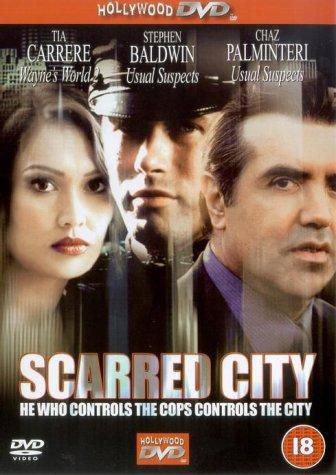
Scarred City (1998, directed by Kim Sanzel)


John Trace (Stephen Baldwin) is a patrolman who has managed to shoot four unarmed suspects in one month.  Most people would say that it might be time to put Trace on desk duty but Lt. Devon (Chazz Palminteri) thinks that Trace will be a perfect addition to the SCAR unit.  SCAR is an elite group of police officers who deal with the city’s worst thugs by gunning them down.  A typical SCAR operation involves setting up a fake adult bookstore just so they can ambush a group of men who come in to rob the place.

Even for someone as trigger happy as John Trace, being a member of SCAR proves to be too much.  When the SCAR team murders a group of gangsters who were having a party in a mansion, Trace is disgusted when two prostitutes are blown away as well.  When he discovers a third prostitute, Candy (Tia Carrere), hiding in an upstairs bedroom, Trace helps her escape.  With both the police and the mob now after them, Trace and Candy try to escape the city.

For some reason, Stephen Baldwin appeared in a lot of direct-to-video action films in the 90s.  I guess it was because he had appeared in The Usual Suspects and, at the time, he was also the cheapest Baldwin brother available.  (The Baldwins were hot commodity in the 90s.  Today, you could probably put William, Daniel, and Stephen all in the same film and still have enough money left over to hire a halfway decent cinematographer.)  Stephen has such a goofy screen presence that it was always strange to see him playing either tough cops or hardened criminals.  In Scarred City, he does that thing where he closes his eyes while delivering his lines and he looks even more awkward handling a gun than usual.

However, for a direct-to-video Stephen Baldwin action film, Scarred City isn’t that bad.  The script is surprisingly witty and even the bad guys get their share of good one-liners.  “Pretty fucking dead, sir,” one of the cops yells to their lieutenant when he asks how one of their partners is handling having been shot.  (Later, the same cop looks at her partner’s dead body and says, “Thanks to his dead ass, we’re going to have a parade.”)  Tia Carrere and Chazz Palmentiri both bring a lot of life to their otherwise underdeveloped roles and the action scenes are violent, exciting, and well-shot, which is good since the last half of the movie is a nonstop chase.  Scarred City may just be a B-movie but it’s a good one.