A man (Ben Loggins) leaves his home one day, thinks about how his life has recently gone wrong, and then goes to an unfinished office building where he kills not only the people who he considers responsible but also anyone else who gets in his way. Trapped in the building with him and trying to survive through the night until the doors automatically unlock in the morning are the building’s manager, Mary Ann Marshall (Kathleen Quinlan), and a corporate spy who is only willing to say that May Ann should call him John Doe (Bruce Abbott).
Trapped was produced for and originally aired on the USA network and it went on to become a USA mainstay for most of the 90s. It’s a surprisingly violent and gory for a made-for-TV film from 1989 and the nearly-empty office building is an appropriately creepy setting. Director Fred Walton does a good job of creating and maintaining a sense of suspense and he’s helped by three excellent lead performances from Kathleen Quinlan, Bruce Abbott, and especially Ben Loggins. Loggins is credited as simply being “The Killer” and the film keeps his motives murky. If you pay attention, you can discover what has driven him over the edge but the film is smart enough to concentrate on the cat-and-mouse game that he plays with Quinlan and Abbott. One thing that sets Trapped‘s Killer apart from other psycho move stalkers is that Trapped‘s Killer is ambidextrous, carrying a dagger in one hand and a baseball bat in the other, making him even more intimidating than the typical movie psycho. Kathleen Quinlan, an underrated actress who is probably best-known for playing Tom Hanks’s wife in Apollo 13, is also a feisty and likable heroine.
Don’t let its origin as a made-for-TV film scare you off. Trapped is a good and suspenseful thriller.
The Stand at Paxton County, which is currently playing on Netflix, opens with an ominous title card warning us that what we’re about to see is “based on a true story.”
I may be alone in this but I find the term “based on a true story” to be fascinating. It’s signifies that the film that we’re about to watch was inspired by something that actually happened but it’s not actually a recreation of that event. It’s an invitation to watch and to try to figure out how much is true and how much is just a product of a screenwriter’s imagination. “Based on a true story” is a real cinematic tease.
The Stand at Paxton County tells the story of Janna Connelly (Jacqueline Toboni), an army medic who is still haunted by her memories of serving in Afghanistan. When her rancher father, Dell (Michael O’Neill), has a heart attack, Janna returns home to Paxton County, North Dakota. What she discovers is that, after she left home, the ranch fell into disrepair. Dell only has one ranch hand, a seemingly amiable doofus named Brock (Greg Perrow) and it doesn’t appear that Brock’s been doing a very good job.
When Sheriff Bostwick (Christopher McDonald) shows up to do a compliance check on the ranch, he finds a lot of problems. When he returns with a cold-eyed veterinarian named Dr. Morel (Marwa Bernstein), Dell is informed that his ranch is in such disrepair that the sheriff can take away his livestock and essentially put Dell out of business!
How can the sheriff get away with this, Janna asks. Dell explains that, years ago, the voters of the state voted down a proposition that would have given law enforcement the right to confiscate a rancher’s livestock. However, a bunch of unelected lobbyists and left-wing activists went ahead and forced the law through the state legislature! Now, the sheriff can pretty much do whatever he wants and anyone who tries to stand up for their Constitutional rights is subject to harassment and perhaps even murder!
While all of this is going on, Brock vanishes from the ranch. It turns out that Brock is a professional bad employee who goes from ranch to ranch and goes out of his way to mess things up so that the ranchers lose their livestock. The livestock is then sold to the highest bidder or sometimes the sheriff will just keep a horse for himself. With Brock gone, Janna hires sexy Matt (Tyler Jacob Moore) to be the new ranch hand and then sets out to get justice for her father.
I had mixed feelings about The Stand at Paxton County. On the one hand, I’m not a fan of the government regulation in general and I’m always happy to watch a libertarian-themed film. Christopher McDonald’s smug and corrupt sheriff felt like a stand-in for all of the authoritarian-minded politicians and bureaucrats who have recently come out of the woodwork and used the COVID-19 pandemic to increase their own power. (“Hey, it’s Clay Jenkins!” I said as soon as the sheriff showed up.) So, on that level, I enjoyed the film.
Unfortunately, The Stand at Paxton County doesn’t just stick to criticizing the government for overstepping their authority. Instead, it also portrays animal rights activists as being a part of a sinister financial conspiracy and that’s where it lost me. It’s a lot easier to buy into the idea of a corrupt sheriff than it is to imagine the head of the PSCA sitting in a darkened war room and ordering his minions to torment one rancher, all so he can resell the rancher’s livestock. That doesn’t mean that activists should be immune from criticism or that there isn’t a legitimate argument to be made that even well-intentioned regulations are vulnerable to abuse. But the film’s portrayal of its central conspiracy just got a bit too cartoonish to be effective. Once the villains went from being smug to being downright evil, it became impossible to take the movie seriously. If the film had simply stuck to criticizing government overreach instead of imagining a shadowy conspiracy, it would have been a lot more effective.
The Stand at Paxton County has some lovely shots of the North Dakota countryside and Christopher McDonald is a wonderfully smarmy villain. I always appreciate a film that has an anti-authoritarian subtext but The Stand At Paxton County is ultimately dragged down by its own heavy hand.
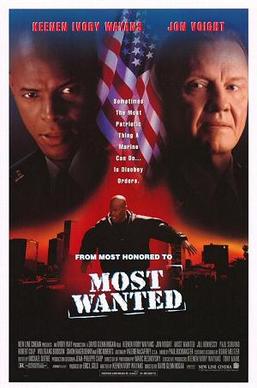
James Dunn (Keenan Ivory Wayans) is an army sergeant with a talent for getting framed for crimes that he didn’t commit.
During the Gulf War, Dunn’s superior officer orders Dunn to shoot a shepherd boy. Dunn refuses and, when the two men get into a fight over a gun, his commanding officer is accidentally shot and killed. The army refuses to listen to Dunn’s explanation. He’s convinced of murder and sentenced to death. However, while Dunn is on his way to Leavenworth, he is rescued by Col. Casey (Jon Voight). Casey explains that he is giving Dunn a chance to join a super secret vigilante group that targets evil doers. Yes, Dunn will be expected to assassinate people but they’ll all be bad. With no other options available to him, Dunn agrees to work for Casey.
Dunn’s first target is the corrupt owner of a pharmaceutical company (played by Robert Culp) but — surprise — it turns out that the target was actually the First Lady and that the entire plan was to set up Dunn as a patsy! Now a “most wanted” fugitive, Dunn is forced to go on the run with a doctor (Jill Hennessy) who recorded the assassination with a camcorder. (Remember, Most Wanted was made during the days of the landline phones.) With Casey and his second-in-command (played by Wolfgang Bodison) determined to kill him and with only Paul Sorvino (as the head of the FBI) doubting the official story, Dunn has to find a way to reveal the truth.
Though he was subsequently overshadowed by his brothers, Damon and Marlon, Keenan Ivory Wayans was a really big deal in the 90s. As the man behind In Living Color, he proved that black comedians and writers could be just as funny (and, in many cases, funnier) than their white counterparts over at Saturday Night Live. It can be argued Jim Carrey, Jamie Foxx, David Alan Grier, and Jennifer Lopez would not have the careers that they have today if not for Keenan Ivory Wayans. (All of them first found fame as members of the In Living Color ensemble, Carrey, Foxx, and Grier as cast members and Lopez as a “fly girl.”) Most Wanted was Wayans attempt to transform himself into an action hero (perhaps not coincidentally, a year before Most Wanted was released, Damon Wayans had a minor hit with Bulletproof).
Keenan Ivory Wayans not only starred in Most Wanted but he also wrote the script and it’s interesting just how straight the action is played. It would be natural to expect Wayans to turn the movie into a spoof but there’s little intentional humor to be found in Most Wanted. Most Wanted takes itself seriously and the end result is an adequate but hardly memorable action movie, with Wayans jumping off of buildings and fighting off the bad guys. The action scenes are well-shot if not particularly imaginative but, unfortunately, Wayans doesn’t really have the screen presence necessary to be a believable action hero. Both the character of James Dunn and Wayans’s performance are just too bland to really be compelling. Far more interesting are Jon Voight and Paul Sorvino, who are both entertainingly hammy in their roles.
There’s one good scene in Most Wanted, where Dunn finds himself being chased by what appears to be the entire population of Los Angeles. Otherwise, this one is adequate but forgettable.
I can’t quite remember how I found out about 1988’s Who Framed Roger Rabbit. Growing up, most of my movie news came from four major sources – Entertainment Tonight, Siskel & Ebert, the occasional movie poster you’d see at a bus stop or cinema. If you were really lucky, the production company would sometimes create a “Behind the Scenes”/”Making of” showcase a little after the movie premiered. If possible, I would read the billing block of a poster to see if I could recognize anyone familiar, Just seeing Amblin Entertainment meant you’d have Steven Spielberg, Kathleen Kennedy and Frank Marshall involved. Nothing new there. I knew Robert Zemeckis and Alan Silvestri from Romancing the Stone and Back to the Future. Movies have had mixes of animation and live action – Bedrooms & Broomsticks, Mary Poppins, etc., but the big buzz here was the film planned to somehow involve both the Disney and Warner Bros. animation studios. It was an alien concept for me, because they couldn’t be more different from each other. Historically, animation on the WB side of things were edgy and almost dared to be even raunchy if they could get away with it. Disney, on the other hand, was pristine and extremely kid friendly. Bugs Bunny and Mickey Mouse? Daffy Duck vs. Donald Duck, all on the same screen? It was the 1980’s equivalent of asking Marvel (which ironically, is owned by Disney now) and DC (which the WB has owned for decades) to write a single Justice League / Avengers crossover story.
At the time, Steven Spielberg was already well known for blockbusters like the Indiana Jones films and E.T., but did he really have enough clout to bring two major companies together like that? It blew my 13 year old mind and I became completely obsessed.
Around the time Who Framed Roger Rabbit came out, I picked up anything I could find about it. I had Alan Silvestri’s soundtrack, a poster, a stuffed Roger doll, and the video game when it came out. I even read Gary Wolf’s novel. I begged my parents to let me see it, and it was one of the rare times where my Mom took my sis and I to the movies instead of my dad (the major movie buff, who took us to see Robocop twice the year before). I think she went in part to shut me up, and to give herself a break from my nearly 2 year old brother. It remains one of the two best movie related memories I have of her.
In the world of Who Framed Roger Rabbit, humans and cartoons share the same space in Los Angeles. Cartoons live in Toontown, owned by Marvin Acme (Stubby Kaye). It’s the story of Eddie Valiant (Bob Hoskins – Hook, Mermaids), a Los Angeles Private Eye with a bit of a grudge against toons. For a quick buck, Valiant is hired by R.K. Maroon (Alan Tilvern – Firefox, Little Shop of Horrors) to snoop on Acme. Valiant’s work puts him in the path of Roger Rabbit (Charles Fleischer, Back to the Future Part II), after Eddie takes some racy pictures of Acme playing patty cake with Roger’s wife, Jessica (Kathleen Turner, Romancing the Stone). Roger angrily swears they’re still a happy couple and that Acme somehow coerced her before running off into the night. The next morning, Eddie is informed that the Marvin Acme’s been killed overnight. To make things worse, Acme’s Will is missing, leaving the fate of Toontown up in the air. All of the evidence points to Roger, but Roger asks for Eddie’s assistance in clearing his name. Can Eddie save Roger before Judge Doom (Christopher Lloyd, Back to the Future) and his pack of weasels get their hands on him?
The production for the film required jumping over a number of hurdles. Zemeckis, himself a cartoon fan, wanted to bring some of the Warner Bros. characters along with Disney characters. Even better, he also wanted to add some of Tex Avery’s classic style to the film. Similar to what he did with Ready Player One, Spielberg negotiated with some of the studios, and while he couldn’t get everyone, he did manage to get Disney, WB and a few others to commit. With this in place, they had to somehow merge animation with live-action in a way that made it look like the cartoons were interacting with their environment.
This would require one really huge magic trick, made up from an assortment of parts.
Since it was around 1986-1987, there really was no CG, yet.. James Cameron made 6 stuntmen in Alien suits look like 600 through the use of Oscar Winning Editing, and the technology that gave us the paradigm shifting dinosaurs of Jurassic Park wouldn’t occur for another 3 or 4 years. For Who Framed Roger Rabbit, the approach was a mix of robotics, puppetry, sleight of hand gadgetry, and a lot of imagination.
The art was handled by Richard Williams and his team, who would go on to win a Special Achievement Oscar for his contribution to the film. They had to draw every cell/frame by hand, on paper and then have them inked. These would then go to Industrial Light & Magic, who would add shadow, highlights and special effects To make things harder, the artists had to work around Zemeckis’ filming style and figure out how to fit the characters into each scene.
Take Jessica Rabbit’s performance of “Why Don’t You Do Right?”, sung by Amy Irving (Carrie, The Fury). At first glance, it seems a really easy shot. Girl steps on the stage, performs and leaves, right? However, there are so many things happening here on an effects level that I still don’t fully understand how they did it after all these years. ILM handled the lighting, from the sparkles in the dress, the use of the handkerchief and the great moment where Jessica blocks the spotlight in her walk from Acme to Valiant. I had to later explain to my mom that the “Wow” I whispered in the theatre during that scene had little or nothing to do with puberty. It was because I hadn’t seen anything like that before with a cartoon, and I’d hate the Academy forever if the movie didn’t win an Oscar for that.
Having cartoons on screen is one thing, but making it feel like they were interacting with people is another. Hoskins was the anchor that tied most of it all together. Having to work with nearly nothing – not even a green screen – and perform the physical actions required of the role was quite a feat compared to what some actors do with the motion capture rooms and digital walls we use today. Near lifesize models of Roger were created to help Hoskins handle some of the physical “grab and move” sequences, and actor Charles Fleischer actually spent time dressed as Roger on set (but off camera, of course) to feed his side of the conversation to Hoskins when filming a scene.
Puppeteers were brought on for moments were toon characters needed to hold objects, such as guns or knives. There is a moment of the movie where you can see one of the holes for the guns that the weasels, but it’s a pretty minute hiccup with all of the great work that was done. For the car sequences with Benny the Cab (also Fleischer), they used a special mini-car with a driver in the back. The car and driver were painted over (still, frame for frame) by the animators.
And ff course, it wouldn’t be a Zemeckis film without Alan Silvestri at the helm, musically speaking. Silvestri’s score for was a mix of detective noir and cartoony antics, which made for a perfect fit for the film. Overall, Who Framed Roger Rabbit is one of those films I cherished growing up, and it’s almost impossible for me to avoid recommending it.
When the wife and the daughter of John North (Brian “The Boz” Bosworth) are gunned down by a mysterious gunman (Jeff Kober), North refuses to accept that they were just the victims of a robbery gone wrong. Working with a tough street kid (DeJuan Guy) who needs a mentor to show him that violence is not the solution to all of the world’s problem, North sets out to discover the truth and get revenge in the most violent ways possible. What North discovers is that the gunman who killed his family works for a corrupt FBI agent named Karl Slavak (Bruce Payne) and that Slavak is selling guns to a drug lord named Dexter Kane (played by … wait for it … MC HAMMER!)
You would think that any movie featuring M.C. Hammer as a drug lord would be worth seeing but the man who brainwashed a generation into making “U Can’t Touch This” jokes is actually pretty forgettable as Dexter. This movie was made when Hammer had dropped the M.C. from his name and he was trying to reinvent himself as a harder-edged rapper. That reinvention didn’t work because there’s absolutely nothing edgy about M.C. Hammer (much like Will Smith, he was the rapper whose music wouldn’t cause your parents to have an aneurysm) and One Tough Bastard proves it.
Instead, One Tough Bastard is worth seeing because of the epic meeting between two action stars who epitomized everything great about straight-to-video movies in the 90s, Brian Bosworth and Bruce Payne! The Boz may have been a bust as a football player but he was a good action star, delivering one-liners and viscous beat downs with aplomb and, unlike some action stars (*cough* Seagal *cough*), he could play the dramatic scenes without embarrassing himself. With his long hair and his nosering, Bruce Payne may be an unlikely FBI agent but he’s a great villain and he has no fear of shouting almost all of his dialogue. Add in Jeff Kober and you’ve got a dumb but fun movie that’s enlivened by three actors who know how to be convincingly tough on camera.
One Tough Bastard lives up to the promise of its title.
Since today would have been Dennis Hopper’s 84th birthday, I decided to watch the 1971 documentary, The American Dreamer.
Filmed in 1970, between the success of Easy Rider and the release of Hopper’s infamous follow-up to that film, The Last Movie, The American Dreamer is a cinematic portrait of a very specific time in both Dennis Hopper’s life and American film history. Dennis Hopper was 34 years old at the time The American Dreamer was shot and he was at the top of his career. As a result of the success of Easy Rider, he was regularly touted as being the future of American film. He was a self-styled revolutionary who specialized in spacey yet compelling monologues about how American movies were about to enter into a new age. Eager to try to capture the same audience that had made Easy Rider a success, Universal Pictures gave Dennis Hopper a million dollars and allowed him to take the money to South America, where he used it to film The Last Movie, a film that was designed to show who Hopper truly was as a filmmaker. The American Dreamer was filmed while The Last Movie was in post-production and we do see a few scenes of Hopper editing the film.
That said, Hopper doesn’t really seem to be too interested in talking about the specifics of The Last Movie. He does talk a lot about how he’s leading a revolution that’s going to forever alter the American cultural scene but again, Hopper doesn’t really go into too many specifics when it comes to his artistic vision. He’s more into slogans than details. Fortunately, Hopper was a compelling speaker so he holds your attention regardless of how incoherent his frequent monologues are. The American Dreamer may not convince you that Dennis Hopper was a great director but it does prove that he was a good actor. In this film, he’s acting the role of being an outlaw and a visionary.
As vague as he is about his artistic vision, Hopper gets a bit more specific whenever he’s talking about his love of weed, sex, and guns. In between leading encounter groups with all of the women who are living with him in New Mexico, Hopper brags about being such a considerate love that he’s a “male lesbian.” In another scene, Hopper talks to three giggling girl in a bathtub. He explains that free love is a part of the revolution and that he’s helping people get over their hang-ups. It’s impossible not to cringe as Hopper comes across less like a lovable eccentric and more like one of those cult leaders who ends up living in a compound in Nevada and getting into a stand-off with the government.
Hopper’s a bit more likable when he’s filmed rolling a joint. Watching the film, you can tell that he was a man who truly loved getting stoned and he actually lets down his guard a bit and grins once he’s ready to light up. However, Hopper is probably at his most natural and likable when he’s shooting a gun in the desert. Hopper spends a good deal of the film talking about his love for guns. On the one hand, it’s a bit alarming as Hopper doesn’t exactly come across as being the most stable person on the planet. On the other hand, Hopper appears to be having such a good time that it’s hard not to be happy for him. Hopper explains that, when you’re an outlaw and you’ve living in New Mexico, you have to have guns for your own protection and he makes a pretty good argument. One of the frequent misconceptions about Hopper is that he was a hippie. (This despite the fact that Easy Rider more or less ridiculed the hippies.) The American Dreamer, with its emphasis on individual freedom and the right to protect yourself, shows that, even during the height of the Hollywood counterculture, Hopper’s outlook was essentially libertarian. Watching The American Dreamer, it’s easier to understand how Hopper went from directing Easy Rider to becoming one of the few Republicans in Hollywood. Indeed, whenever the bearded and often unwashed Hopper is seen walking through the desert or firing a gun at a cross, he comes across less like the revolutionary visionary that he’s trying to be and more like an old soul in a new world.
With its frequent use of freeze frames and its intentionally ragged editing, The American Dreamer is very much a film of its era. That’s actually the main appeal of The American Dreamer. It captures a very unique and very specific point of time. It captures an artist during the brief period between his biggest success and his greatest failure and while the film may be frustrating on a narrative level, it’s fascinating as a time capsule. The film is probably more poignant when viewed today than it would have been back in 1971 because, today, we know that The Last Movie bombed and that Hopper’s revolution ended as quickly as it began. It was not Dennis Hopper who determined the future of American film but instead Steven Spielberg and George Lucas. Hopper struggled, both professionally and personally, through the rest of the 70s and the early 80s before finally kicking drugs and emerging as not just as an in-demand character actor but also something of a pop cultural icon. Watching The American Dreamer, it’s fascinating to compare the older Hopper — the one who gave witty interviews and who joked about his past excesses — with the pretentious and self-serious Hopper of the early 70s.
Still, The American Dreamer shows that Dennis Hopper was always a compelling figure. It’s impossible not to roll your eyes while watching and listening to the youngish Dennis Hopper but, nonetheless, you do continue to watch and listen.
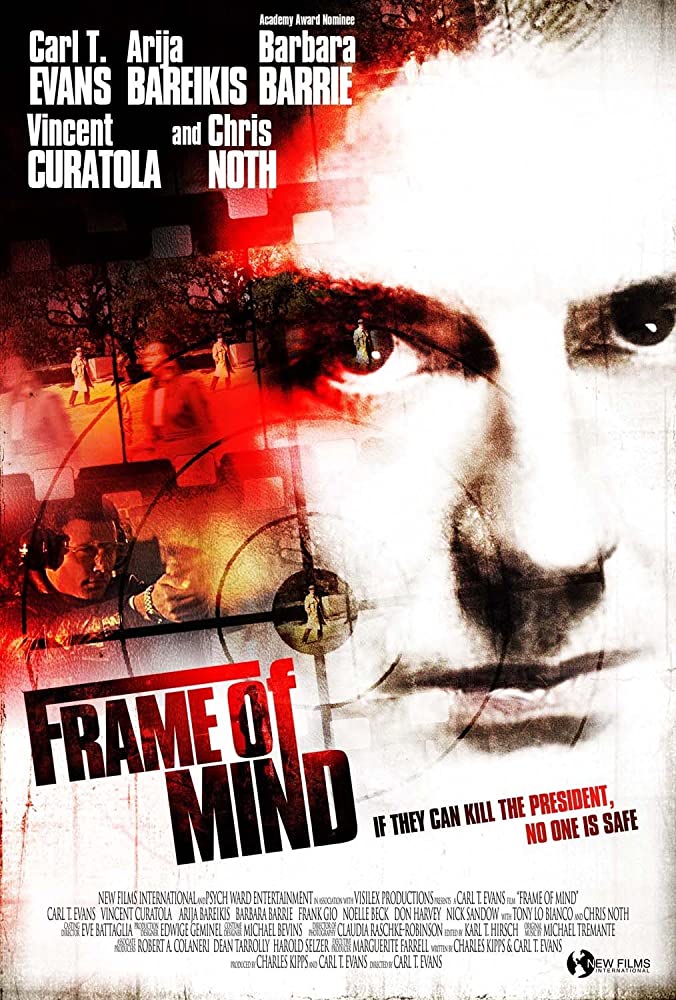
David Secca (Carl T. Evans, who also directed) is a New York cop who has just transferred to a town in New Jersey. His wife, Jennifer (Arija Bareikis) has a new job as a teacher. One day, while they’re out antiquing, they purchase a box that contains a roll of film. Looking at the film reveals pictures of a dangerous looking man who has a gun and who appears to be standing on the infamous grassy knoll in Dallas, Texas.
Convinced that he’s uncovered new evidence in the assassination of John F. Kennedy, Secca carries out his own investigation of the film. He tracks down the woman (Barbara Barrie) who actually shot the film and discovers that she is now 85 and confined to a nursing home. He talks to a skeptical conspiracy theorist (Chris Noth). As Secca investigates, his progress is monitored by people who, after all these years, still don’t want the truth about the Kennedy assassination to get out. As Secca discovers, these people are still willing to kill to protect the conspiracy.
Frame of Mind is an attempt to make a conspiracy thriller that, unfortunately, is done in by its own low budget. It’s difficult to make a conspiracy seem convincing when you don’t really have the money to hire more than a few extras. Probably the most interesting thing about the film is that, despite the low budget, there are a few established actors in the cast. Along with Barrie and Noth, Tony Lo Bianco, Don Harvey, Vincent Curatola, and even KISS’s Peter Criss all have small roles. The strangest cameo of all goes to former New York Mayor David Dinkins, who plays a senator. Being mayor of New York may be a dead end politically (just ask John Lindsay, Rudy Guiliani, Michael Bloomberg, and Bill De Blasio) but it can still serve as a launching pad for a career in the entertainment industry.
Frame of Mind might hold some interest for JFK assassination hobbyists, though it doesn’t really bring anything new to the able. It’s mostly interesting just to see who shows up in the cast.
Director Chuck Vincent wasn’t the only director who making hardcore porn in the early 80s but he was one of the few to receive critical acclaim. A director who put as much emphasis on storylines and characterizations as he did on getting the money shots, Vincent was responsible for some of the final films to come out of porn’s so-called Golden Age. His best-known adult film, Roommates, was even given a favorable review in The New York Times.
Vincent was also one of the few porn directors to regularly direct “mainstream” films as well. Of course, Vincent was never hired to direct a big studio film or anything like that. Instead, he directed B-movies, the majority of which were either neo-noirs or dumb sex comedies. Though Vincent was an above average director who had a knack for getting good performances out of unlikely actors, his mainstream films never got as much attention as his pornographic films. (It makes sense when you consider that Vincent was, at the time, the best director working in the porn industry but just one of my many competent directors making B-movies.) One place where Vincent’s B-movies were popular was on late night Cinemax.
Student Affairs is one of Chuck Vincent’s better B-films. It opens with a group of actors auditioning for a dumb teen sex comedy called Student Affairs and then it follows them as they go to a high school and shoot the movie. The film alternates between scenes of the sex comedy that they are filming and scenes of what’s going when the cameras aren’t rolling. The cast is made up of familiar types. There’s a centerfold who is worried that she is going to be washed-up at the age of 20. There’s the intellectual and classically-trained actor who has been typecast as idiot. There’s a vain male model and there’s another starlet who is convinced that she’s going to be a big star someday. The film itself is almost plotless but it’s obvious that Vincent had a lot of affection for both his cast and the characters that they play. When it comes to Student Affairs, both the film and the film-within-the-film are dumb sex comedies with predictable plots but Chuck Vincent’s direction makes this a surprisingly sincere dumb sex comedy. When Rex (Andy Nichols) complains that he’s never going to have the career that he deserves because his physical appearance has typecast him as a dumb jock, both Vincent and the movie take him seriously.
There have been many great films made about the making of movies. Francois Truffaut’s Day for Night comes to mind. So does Richard Rush’s The Stunt Man. Chuck Vincent was neither Truffaut nor Rush and Student Affairs is hardly a great film. But, for a dumb sex comedy that was made for little money, Student Affairs is better than most.
Sadly, Vincent died just five years after the release of Student Affairs. If he had lived longer and directed more films, Vincent and his oeuvre would probably be ripe for rediscovery. Unfortunately, Vincent died just before directors like Quentin Tarantino and Robert Rodriguez made B-movie cool again.
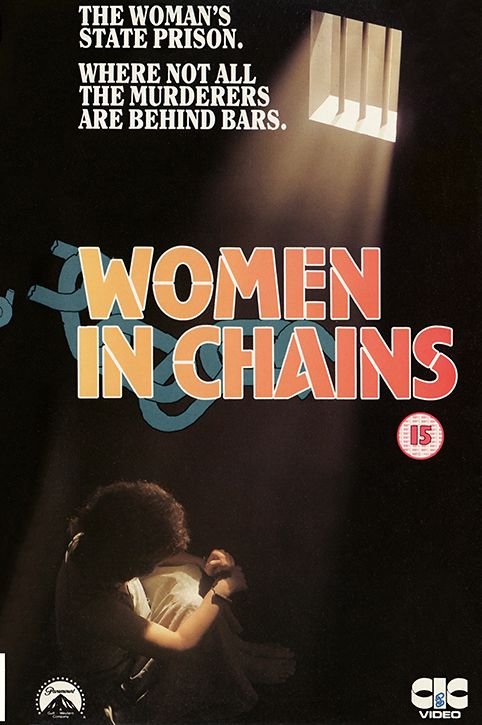
Sandra Parker (Lois Nettleton) is the world’s most dedicated parole officer. After one of her parolees is sent back to prison and then dies under mysterious circumstances, Sandra decides to investigate on her own. For Sandra, this means changing her name to Sally Porter and arranging to be sent to prison on a phony charge. For some reason, Sandra/Sally only tells one other person what she’s doing. The plan is for Sandra to spend two weeks undercover and then her friend, fellow parole officer Helen (Penny Fuller), will reveal the truth to the proper authorities and get Sandra sprung from prison. It doesn’t work out that away, as Helen is killed in the line of duty shortly after Sandra finds herself behind bars.
The prison is run by the tyrannical Claire Tyson (Ida Lupino!), a matron who is more interested in exercising power than in rehabilitation. Claire’s main enforcer is a butch prisoner named Dee Dee (Jessica Walter!!). As soon as she enters the prison, Sandra gets on Tyson’s bad side. Sandra asks too many questions and makes the mistake of demanding that her fellow prisoners be treated humanely. Sandra even demands that a prisoner be given aspirin for a migraine, which is the type insubordination that leads to a stay in solitary. (What’s strange is that, in solitary, Sandra ends up sharing a cell with another prisoner which I would think would defeat the purpose of being in solitary.) With Tyson openly plotting to kill her and the only person who knows where she is dead, Sandra has to figure out a way to escape the prison and reveal the truth about what goes on behind bars.
Compared to most women-in-prison films, Women in Chains is pretty tame. This is a women-in-prison film that you could safely watch with grandma. This one was made for early 70s television, so there’s no nudity, no strong language, and even the required prison riot is restrained. The film asks us to believe that Sandra would not only be stupid enough to only let one person know that she was going undercover but also that a parole officer could somehow walk around the prison without running into any prisoners who she previously dealt with. Obviously, the film’s plot is not its strong point but viewers with an appreciation for camp will undoubtedly enjoy the performances of Ida Lupino and Jessica Walter. They rule that cell block with an iron fist and are entertaining to watch.
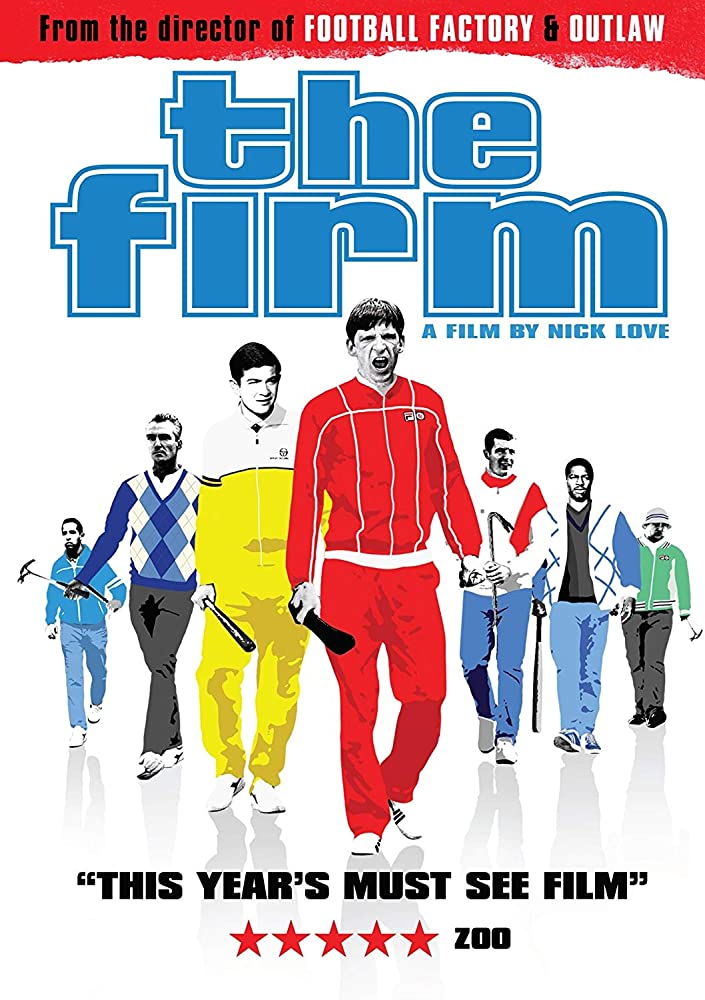
Dom (Calum MacNab) is a working class teenager living in London sometime in the 80s. (The music on the soundtrack is early 80s but the clothing and the haircuts are all late 80s so who knows what the specific year is supposed to be.) A chance meeting with the charismatic Bex Bessell (Paul Anderson) leads to Dom getting involved with Bex’s football firm. A supporter of West Ham United, Bex and his group of football hooligans travel across the UK, engaging in fights with other firms. Despite the fact that their lives seem to be structured around it, nobody in these firms seems to really care much about football. Instead, it’s all about the fighting.
At first, Dom is happy to be a member of the firm. It gives him something to do in his spare time and the other members of the group all seem to like him. Bex takes him under his wing and soon, Dom is even starting to dress like Bex. However, as Bex becomes more and more violent and grows obsessed with defeating Yeti (Daniel Mays), the leader of a rival firm, Dom starts to realize that he needs to find a way out.
The Firm is a loose remake of Alan Clarke’s 1989 film of the same title, which featured Gary Oldman giving one of the best performance of his career as Bex. The original version was a character study of Bex, who was presented as being a newly minted member of the middle class and who was addicted to the rush of being a weekend hooligan. The remake focuses on Dom, who was a minor character in the original. If the original was meant to be a socio-political critique of the UK in the 80s, the remake is a coming-of-age story that almost feels nostalgic. Dom eventually realizes that being a football hooligan isn’t for him but the remake seems to suggest that he’ll always value the memories.
The remake can’t really compare to the original, mostly because the remake doesn’t have Gary Oldman’s ferocious performance or Alan Clarke’s focused and gritty direction. Taken on its own, though, the remake is not bad. Calum MacNab is likable and relatable as Dom and Paul Anderson gives a good performance as Bex. Anderson doesn’t try to imitate Oldman but instead brings his own spin to the character. At first, Anderson’s Bex seems as if he’s considerably more buffoonish than Oldman’s Bex but, in the context of the remake, it works. In the remake, it’s easy to underestimate Bex but give him a strange look or say the wrong thing and he’ll headbutt you just as quickly the Gary Oldman did to anyone who crossed him in the original. The remake doesn’t have the original’s political subtext. Instead, director Nick Love focuses more on historical nostalgia, stylized fight scenes, and the camaraderie that Dom initially finds in the firm. The fights in the original were brutal and not always easy to watch. The fights in the remake are exciting, up until it becomes obvious that Bex is losing his mind.
The remake of The Firm doesn’t do much to improve on the other but, when taken on its own terms, it’s a watchable story of football hooliganism.
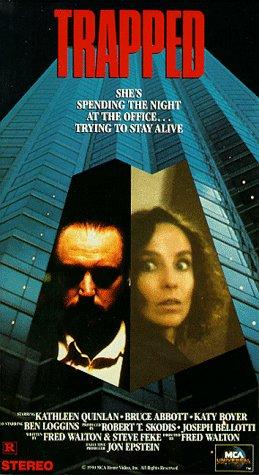 A man (Ben Loggins) leaves his home one day, thinks about how his life has recently gone wrong, and then goes to an unfinished office building where he kills not only the people who he considers responsible but also anyone else who gets in his way. Trapped in the building with him and trying to survive through the night until the doors automatically unlock in the morning are the building’s manager, Mary Ann Marshall (Kathleen Quinlan), and a corporate spy who is only willing to say that May Ann should call him John Doe (Bruce Abbott).
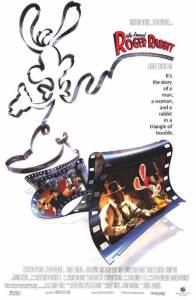 I can’t quite remember how I found out about 1988’s Who Framed Roger Rabbit. Growing up, most of my movie news came from four major sources – Entertainment Tonight, Siskel & Ebert, the occasional movie poster you’d see at a bus stop or cinema. If you were really lucky, the production company would sometimes create a “Behind the Scenes”/”Making of” showcase a little after the movie premiered. If possible, I would read the billing block of a poster to see if I could recognize anyone familiar, Just seeing Amblin Entertainment meant you’d have Steven Spielberg, Kathleen Kennedy and Frank Marshall involved. Nothing new there. I knew Robert Zemeckis and Alan Silvestri from Romancing the Stone and Back to the Future. Movies have had mixes of animation and live action – Bedrooms & Broomsticks, Mary Poppins, etc., but the big buzz here was the film planned to somehow involve both the Disney and Warner Bros. animation studios. It was an alien concept for me, because they couldn’t be more different from each other. Historically, animation on the WB side of things were edgy and almost dared to be even raunchy if they could get away with it. Disney, on the other hand, was pristine and extremely kid friendly. Bugs Bunny and Mickey Mouse? Daffy Duck vs. Donald Duck, all on the same screen? It was the 1980’s equivalent of asking Marvel (which ironically, is owned by Disney now) and DC (which the WB has owned for decades) to write a single Justice League / Avengers crossover story.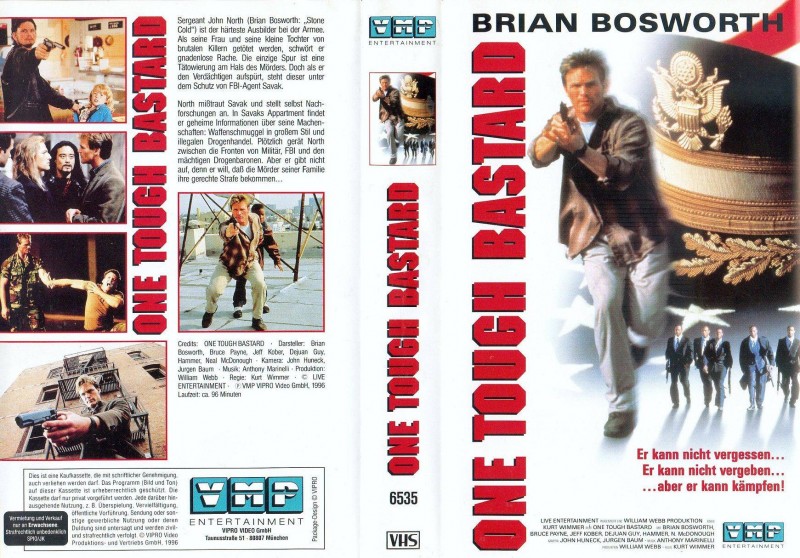


 Through the Shattered Lens