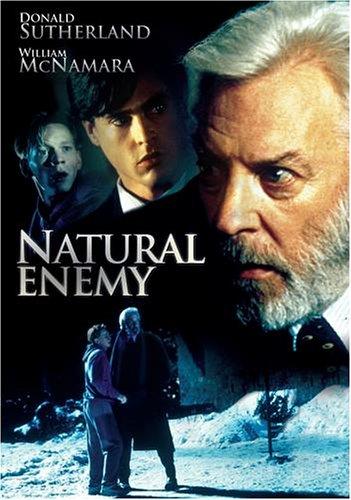
Natural Enemy (1996, directed by Douglas Jackson)


This one’s pretty dumb.

William McNamara plays Jeremy, who was given up for adoption 24 years ago and has never gotten over it.  After killing his adoptive parents, his birth father, someone’s mistress, and a private investigator played by Tia Carrere, Jeremy wants to celebrate his 25th birthday by killing his birth mother, Sandy (Lesley Anne Warren).  However, Jeremy wants to draw out Sandy’s suffering so he comes up with a plot so complex that it’s hard to believe that anyone could actually pull it off.

After Jeremy finds out that Sandy’s new husband, Ted (Donald Sutherland, massively slumming), is the head of a small brokerage firm, Jeremy reads every book that he can find and somehow become an expert on the stock market.  Even though Jeremy could have a high-paying job with any firm, he wants to work for Ted’s little firm.  Ted hires Jeremy and Jeremy proceeds to worm his way into Ted and Sandy’s life.  Jeremy also frames Ted for securities fraud, which leads to Ted losing his job and being blacklisted by all of Ted’s highly ethical Wall Street colleagues.  (Yes, I managed to write that with a straight face.)  Despite the fact that Jeremy is obviously disturbed and that Ted and Sandy’s life starts to fall apart from the exact moment that Jeremy becomes a part of it, only Ted and Sandy’s son, Chris (Christian Tessier), suspects that there’s something strange about Jeremy.

This is one of those dumb revenge thrillers that is dependent upon everyone in the movie being as dumb as possible.  Even Jeremy turns out to be dumb.  After killing almost everyone that he meets, Jeremy suddenly decides to keep one person alive and, of course, that decision comes back to haunt Jeremy in the end.  Jeremy is smart enough that he can trick people into believing that he’s a brilliant stock broker but he’s dumb enough to make an obvious mistake.  Of course, everyone else is dumb enough to to not catch on to the fact that Jeremy is a sociopath so the mass dumbness evens out in the end.

Probably the most interesting thing about this movie is that, somehow, Donald Sutherland ended up starring in it.  Even great actors have to put food on the table and hopefully, Sutherland ate well as a result of starring in Natural Enemy.
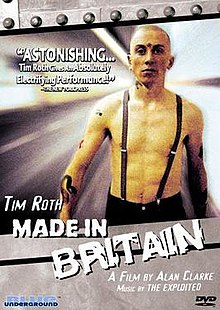
Made in Britain (1982, directed by Alan Clarke)


If you want to see a truly great performance, watch Tim Roth in Alan Clarke’s Made In Britain.

Roth, who was 21 years old at the time, plays Trevor, a working class British teenager who is also a racist skinhead, one who has a swastika on his forehead.  Trevor is sometimes clever, occasionally quick-witted, always angry, and often remarkably ignorant.  He’s smart enough to know that he doesn’t have much of a future but he’s still too immature to accept that he’s largely to blame.  Instead, Trevor blames the immigrants who he claims have invaded Britain and taken away all of the opportunities that should otherwise go to him.

After Trevor gets arrested for both shoplifting and for throwing a rock at a Pakistani, Trevor is taken to an assessment centre, where he’ll be expected to regularly check-in until his punishment is handed down.  Despite facing the prospect of being sent to a borstal (which, for our American readers, is essentially a reformer school), Trevor continues to defiantly commit crimes.  He steals a car.  He vandalizes a job centre.  He huffs inhalants and even pays another taunting visit to the Pakastani man.  Accompanying Trevor on some of his journeys is Errol (Terry Richards), his roommate at the assessment centre.  (It may seem strange, especially to viewers in the States, that the white supremacist Trevor would befriend the black Errol but, like many British skinheads in the 80s, Trevor focuses the majority of his hate on immigrants.)

It’s easy to dislike Trevor and Trevor often seems to go out of his way to alienate everyone who he meets.  Trevor is angry about the lot that he’s been given in life.  His parents are nowhere to be seen.  He has no prospects.  He has no future.  He spends all day surrounded by poverty and he resents the immigrants who have somehow found success in Britain while he’s struggling to get by.  Trevor has nothing to look forward to in the future and he’s pissed off about it, which has left him vulnerable to the poisonous philosophy of racism.  Trevor is always angry and he’s always looking for way to act on that anger.  He’s also intelligent enough to secretly realize, even if he won’t fully admit to himself, that he’s full of shit but he’s trapped himself in his role.  One gets the feeling that Trevor had the potential to make something out of himself but his rage and his impulsive manner have, at only the age of 16, left him with no futre.  Even if he eventually rejects racism, the swastika on his forehead is going to leave him branded for life.  It’s only towards the end of the film, after a police officer explains — in painstaking details — just hopeless Trevor’s situation is, that Trevor allows his mask to slip a little.  But Trevor only allows himself to appear defeated for a few minutes before his defiant smirk returns.

Tim Roth was only 21 years old when he made his acting debut in the role of Trevor and he gives a brilliant performance.  If you didn’t know who Tim Roth was, you would be excused for thinking that director Alan Clarke had gone out and cast an actual skinhead in the role.  Roth tears into the role with a frightening intensity.  Also of note is the gritty cinematography of Chris Menges, who uses a Steadicam to follow Trevor as he walks through his daily routine and to capture why someone like Trevor feels as if there’s no future to being made in Britain.

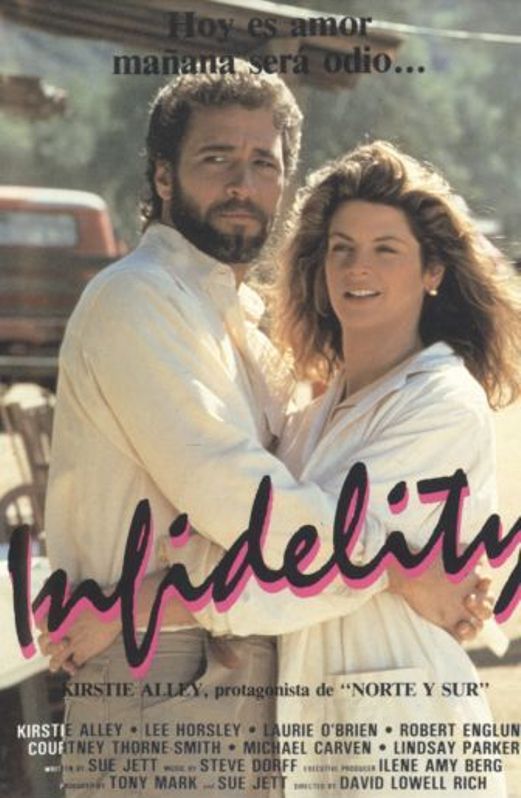
Infidelity (1987, directed by David Lowell Rich)


Nick Denato (Lee Horsley) is a world-famous photographer.  His wife, Ellie (Kirstie Alley!), is a renowned doctor.  They have homes in San Francisco and Africa and they regularly fly from one continent to another.  The Denatos used to be called “jet-setters,” back when flying back and forth was seen as a positive instead of as a crime against the environment.

Despite the fact that Ellie is pregnant, Nick leaves his wife behind in San Francisco so that he can explore Nepal with his buddy Scott (Robert Englund!!) and Scott’s young and leggy assistant, Robin (Courtney Thorne-Smith!!!!).  While Nick is away, Ellie has a miscarriage.  Nick flies home but it’s too late.  His wife already resents him for not being there when she needed him.  It doesn’t help that, a week later, Scott and Robin come to visit and Scott tells a story about how he nearly fell off a cliff.  “And where were you, buddy!?”  Scott says to Nick with a laugh, forgetting that Nick was back home with his hospitalized wife.  An awkward silence follows.

Ellie can tell that there is an obvious attraction between Nick and Robin.  Nick denies it and then, to prove Ellie wrong, he cheats on her but not with Robin.  Instead, Nick cheats with Ellie’s best friend, Eileen (Laura O’Brien).  Ellie divorces Nick, stops talking to Eileen, and gets involved with Etienne (Michael Carven).  Nick returns to Africa, where he spends his nights listening to opera in a tent and thinking about how much he loves his his ex-wife.

Infidelity was made for television and it used to come on late night television frequently in the 90s, mostly because of its cast.  Not only did the cast features Rebecca Howe but also Freddy Krueger and whoever it was that Courtney Thorne-Smith played on Melrose Place.  The main problem with the film is that Kirstie Alley and Lee Horsley have zero chemistry so you don’t really care if they get divorced or if they get back together.  The other problem is that Lee Horsley is a convincing cowboy but he’s not as convincing as a sophisticated Italian-American photographer who spends his spare time listening to opera.  The movie also cops out by having Nick cheat with a fairly minor character rather than with Robin.  On the plus side, the movie’s got Robert Englund playing the type of role that he almost always played in his pre-Nightmare on Elm Street days, the loyal friend.  What’s interesting about Englund’s performance here is that he had already played Freddy Krueger three times before playing Scott in Infidelity.  In fact, Infidelity aired at the same time that Nightmare on Elm Street 3: Dream Warriors was still playing in theaters.  Englund is likable as Scott and the film shows what type of career Englund probably would have had if David Warner hadn’t turned the role of Freddy down in the first Nightmare on Elm Street.


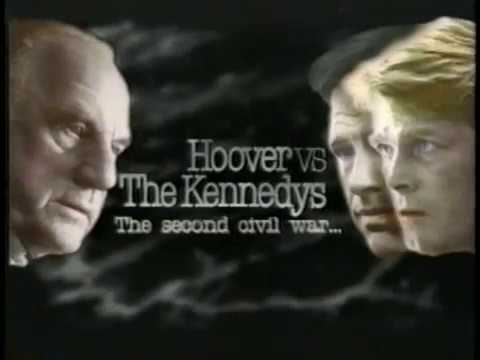
Hoover vs. The Kennedys: The Second Civil War (1987, directed by Michael O’Herlihy)


The year is 1961 and the young and dynamic John F. Kennedy (Robert Pine) has been elected president.  While the rest of the nation waits to see how Kennedy will lead, FBI director J. Edgar Hoover (Jack Warden) is convinced that he will continue to do what he’s always done.  As he explains it to his aide and only friend, Clyde Tolson, Hoover is a longtime friend of President Kennedy’s father, Joseph (Barry Morse).  Hoover knows how the Kennedys made their money and he also knows that the Kennedys probably stole the election.

Hoover quickly discovers that John F. Kennedy isn’t going to be like the other presidents under which he has served.  Kennedy appoints his self-righteous brother, Robert (Nicholas Campbell), as attorney general and Robert immediately sets out to make Hoover’s life unbearable.  When Hoover brings the brothers evidence that civil rights leader Martin Luther King (Leland Gantt) is not only associating with known radicals but that he also cheats on his wife, John and Bobby just laugh at him.  While John pursues an affair with Marilyn Monroe (Heather Thomas) and Bobby tries to reign in the FBI’s excesses, Hoover continues to collect information for his files and schemes to outlast both Kennedys.

Hoover vs. The Kennedys was a made-for-TV movie, one of the many films that have been made about the conflicts between the Kennedys and J. Edgar Hoover.  Since a good deal of the film is made up of Hoover and the Kennedy Brothers snapping at each other on the phone and then telling their closest aides about how much they dislike each other, it seems hyperbolic to call their relationship the “second civil war.”  Though the film does go as far as to suggest that Hoover didn’t make much of an effort to investigate the background of Lee Harvey Oswald, it doesn’t go any further when it comes to the theories surrounding John Kennedy’s assassination.  As well, the film is one of the rare ones to not speculate that Hoover and Clyde Tolson were more than just friends.  Instead, Hoover vs. The Kennedys concentrates more on all of the scandalous stories surrounding the Kennedy brothers.  The mob connections.  The womanizing.  The arrogance.  It’s all recreated here.  Perhaps because this was a Canadian production, Hoover vs The Kennedys doesn’t portray anyone positively.

The acting is a mixed bag.  Nicholas Campbell is believably abrasive as Bobby while Robert Pine was several years too old to be a convincing JFK.  Heather Thomas is an adequate Marilyn Monroe while Leland Gantt comes across as too emotional to be a believable Martin Luther King.  (In Gantt’s defense, the movie does not seem to know what to do with the character of King, treating the civil rights icon like a prop to be trotted out whenever some Hoover/Kennedy conflict is needed.)  The film’s best performance comes from Jack Warden, who plays Hoover as being a puritanical hypocrite who knows that, no matter who tries to push him out, he’s not going anywhere unless he wants to.  Hoover outlasted several presidents and Warden portrays him as being the ultimate political survivor.

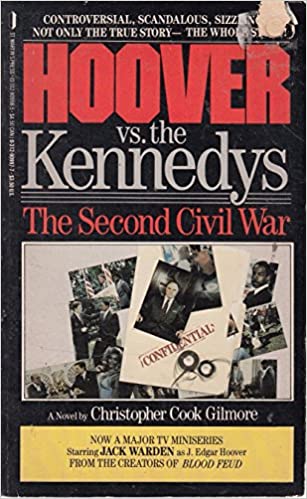
As far as Kennedy films are concerned, Hoover vs. The Kennedys is okay but it doesn’t offer up anything new.  Some of the most important roles are miscast and the movie never goes into much depth, beyond repeating all of the usual rumors.  Jack Warden’s a good J. Edgar Hoover, though.  The movie is not easy to find but it has been uploaded on to YouTube.  And, if you can’t find the movie, you can always order the novelization off of Amazon.


Cinemax Friday: Electra (1996, directed by Julian Grant)


No, this is not the terrible Electra film starring Jennifer Garner.  Instead, this the Electra where Shannon Tweed shoots lighting from her finger tips.

In this offering, Shannon Tweed plays Lorna, who is the stepmother of Billy (Joe Tabb).  Billy has a job cutting down trees.  He uses an axe instead of a chainsaw because no one does anything that makes sense in Electra.  Billy has a girlfriend named Mary Anne (Katie Griffin).  Lorna hates Mary Anne because Lorna wants Billy and, even if he won’t admit it, Billy wants Lorna too.

Billy is also the sole survivor of an experimental test group that was used to develop a super drug that can provide the people who take it with super strength.  Billy still takes the drug on a regular basis, though he doesn’t seem to really understand how it works.  He’s just in it for the super strength.

Marcus Roache (Sten Eirik) is an evil billionaire who is confined to a wheelchair.  He knows that, if he can get Billy’s super strength, he’ll be able to walk again and then he can use the powers to take over the world.  However, other than through taking the pills, the only way that Billy can pass on his powers is through sexual intercourse so Marcus sends two of his employees — Gina (Dyanne DiMarco) and Karen (Lara Daans) — to abduct Billy and seduce him.  Since Gina and Karen both wear leather dominatrix costumes, discretion is apparently not important.  Marcus hopes that Billy will impregnate one or both of them and they will give birth to a superbaby who will go on to father a super race that will work for Marcus.  When Billy manages to resist the best efforts of Gina and Karen, Marcus brings in his secret weapon, Lorna!  Lorna now dresses like Gina and Karen and, eventually, she reveals that she can now fire electricity with her fingers, which is which she is now known as Electra!

(Of course, it could also have something to do with her wanting to get it on with her stepson.)

Of the many films that Shannon Tweed appeared in during the 1990s, Electra might be the most ludicrous.  It’s pretty bad but it was probably never meant to be good and it’s doubtful anyone watched this film for the plot.  They watched the film for Shannon Tweed in black latex and shooting lightning bolts from her fingers.  Electra does not disappoint where that’s concerned.  As usual, Tweed is better than her material but the film itself is too slapdash and amateurishly done to really be as much fun as it should be.  A film featuring both super serums and Shannon Tweed should never have slow spots but Electra has a few.  Deliberate camp can be difficult for even the most skilled directors to pull off and Electra often seems like it’s trying too hard to appeal to the “so bad it’s good” demographic.  If this has been directed by someone like Fred Olen Ray, it would be probably be a cult classic but, as it is, this is really only for the most dedicated fans of Shannon Tweed.

Land of Doom (1986, directed by Peter Maris)


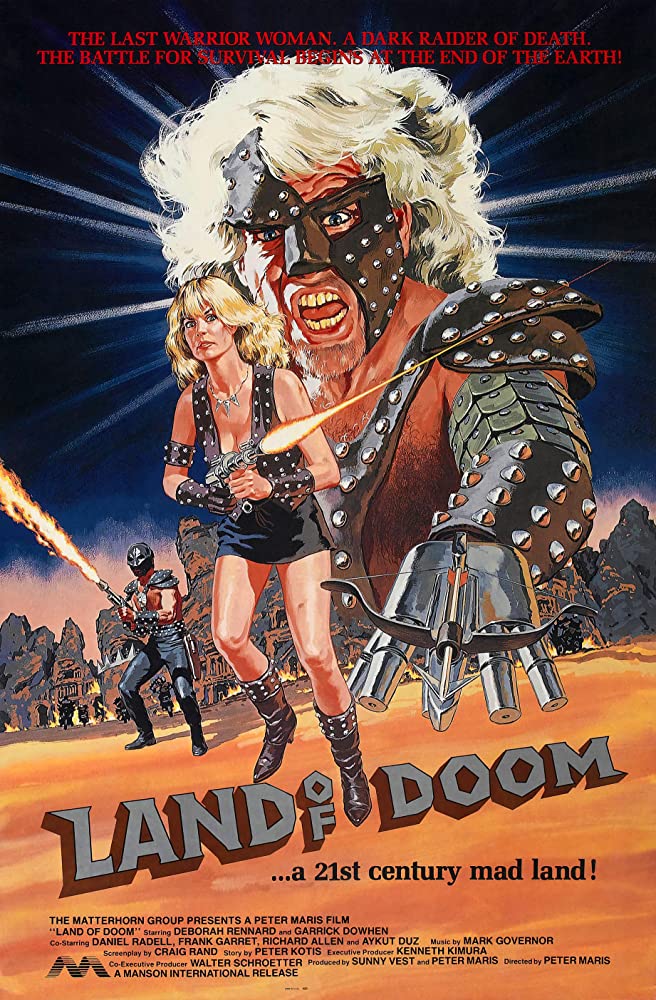
Land of Doom takes place after the “final war.”  If you’ve ever seen an 80s Road Warrior rip-off, you know all about the final war.  It was the war that destroyed society and everyone always says that there’s nothing left to say about it.  Regardless of which film you’re watching, the final war always leads to people getting mohawks, wearing leather, and riding motorcycles.  Phantom of the Opera-style half masks also become popular after the final war.  The world becomes a rough place after it ends.

Land of Doom follows all of the typical post-apocalyptic rules, except that the main warrior is a disillusioned woman instead of a cynical man.  Call it Mad Maxine.  Harmony (Deborah Rennard) is a warrior who is making her way through the desert, searching for a possibly nonexistent paradise.  When Harmony first meets Anderson (Garrick Dowhen), she doesn’t want anything to do with him but then Anderson saves her from a rattlesnake so she is now obligated to let him tag along with her.  It turns out that Anderson has been exiled from another community and the new head of that community, Slater (Daniel Radell), is determined to kill him.  Anderson believes in a world of equality while Slater doesn’t.  It never makes sense for Slater to waste time and resources trying to kill Anderson since Anderson is already voluntarily leaving but I guess the final war destroyed logic along with everything else.

It’s a typical post-apocalyptic romp.  Harmony and Slater run through the desert while being pursued by a bunch of bikers who look like they should be in a Damned cover band.  There’s a lot of stunts and a lot of violence but there’s not a lot of plot or consistency.  It you’re into low-budget Road Warrior rip-offs, it’s a good enough way to pass the time.  Deborah Rennard is a credible heroine as Harmony and everyone else in the cast overacts to such an extent that it’s more fun to watch than it should be.  You may be tempted to compare the film, with its female warrior to Mad Max: Thunder Road but don’t do it.  Land of Doom never puts as much thought into its storyline or its themes as any of the Mad Max films did.  Land of Doom is brainless fun.

It may not be the greatest film ever made about the end of society but it’s sometimes entertaining and it’s probably the best we can hope for after the final war.

Scenes That I Love: The Ending of High Noon


119 years ago today, Gary Cooper was born in Helena, Montana.

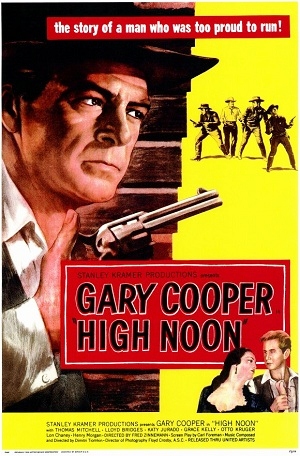
Cooper was an actor who, for many viewers, represented the American ideal.  He played characters who were strong and modest and who refused to compromise their principles.  Though Gary Cooper appeared in many films over the course of his career, he is probably destined to be forever associated with High Noon.  In this classic western, Cooper plays Will Kane, the marshal who finds himself abandoned by almost everyone when a group of killers come to town looking to kill him.  The film is often seen as being a commentary on the 1950s Red Scare.  Cooper, who was a committed anti-Communist and about as conservative as anyone in Hollywood, stood up for the film’s screenwriter, the blacklisted Carl Foreman and threatened to walk off the picture when it appeared that Foreman’s writing credit might be removed.  That was what a huge part of Cooper’s appeal.  He did the right thing, even if it meant standing up for someone with whom he didn’t agree.  There aren’t many Gary Coopers left today, are there?

Below, we have the final scene of High Noon, in which the cowardly townspeople finally come to support Marshal Kane.  Kane, disgusted by their actions, can only throw away his star and leave town.  Even without dialogue, Cooper lets you know exactly what is going through Kane’s mind.  It’s a great scene from a great film featuring a great actor.

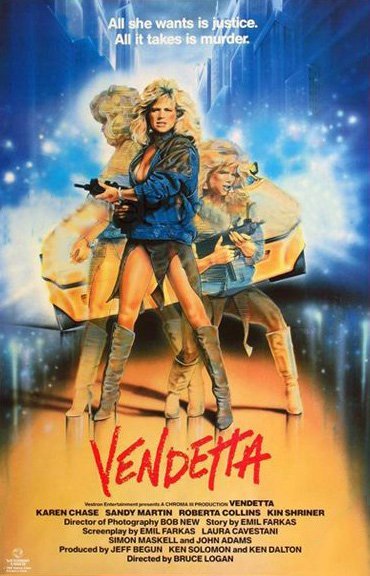
Vendetta (1986, directed by Bruce Logan)


After killing her rapist in self-defense, young and pretty Bonnie (Michelle Newkirk) is sentenced to two years in prison.  It’s one of those tough women’s prisons where all of the inmates dress like they’ve just come back from shooting an 80s music video and where the prisoners only have arcade games, a Olympic-size swimming pool, and a fully stocked gym to help them pass the time.  It’s so tough that, when it comes to conjugal visits, the prisoners have to settle for being driven to a nearby motel.  It’s the toughest prison since Leavenworth.

Because she’s blonde and innocent-looking, Bonnie is targeted by the predatory Kay Butler (Sandy Martin).  After Bonnie rejects Kay’s advances in the public shower room (while all of the other prisoners watch), Kay get her revenge by giving Bonnie a hot dose and then shoving her over a railing.  Even though all the evidence indicates that Bonnie was murdered, the official cause of death is ruled to be suicide.

What no one considered was that Bonnie’s older sister, a Hollywood stuntwoman named Laurie (played by real-life stuntwoman Karen Chase), would want revenge.  Determined to investigate the prison on her own, Laurie steals a judge’s car.  When that same judge attempts to suspend Laurie’s sentence, Laurie attacks him in the courtroom.  (Why would a judge be allowed to oversee a trial that directly involved him as a witness?)  Laurie finally gets her wish and is sentenced to prison.  Having now compiled the type of criminal record that will probably make her unemployable for the rest of her life, Laurie sets out to discover who is responsible for the death of her sister.  Soon, Laurie is tracking down and murdering every member of Kay’s gang, all the while trying to avoid getting caught by the head guard, Miss Dice (Roberta Collins).

In many ways, Vendetta is a typical 80s women-in-prison movie.  It has everything that you would expect to find in one of these movies: predatory lesbians, a victimized innocent, corrupt guards, and a gratuitous shower scene.  What sets Vendetta apart from similar films is that the prison is more of a health club than a prison and, while she’s hardly the world’s greatest actress, Karen Chase looks very credible when she’s beating the other inmates to death.  As a result, the fight scenes are more exciting than they usually are in a film like this and Karen Chase’s Laurie is a stronger heroine.  She can hold her own against anyone who comes at her.  Sandy Martin is also an effective villain and there’s actually some unexpected depth to her character.  She actually gets upset when her gang start to get killed, not just because she’s losing people who are willing to do her bidding but also because she’s losing the only people that she feels close to.  Thanks to Karen Chase’s fight skills and Sandy Martin’s unexpected performance, Vendetta is better the than the average 80s prison flick.

SXSW 2020 Review: The Shock of the Future (dir by Marc Collin)


The Shock of the Future follows one day in the life of a composer named Ana (Alma Jodorowsky).

The year is 1978 and Ana is living in a studio in Paris.  It’s not her studio.  The owner is currently in India and no one knows when he’ll be returning.  He’s lent it to Ana and she’s moved in.  She shares the space with a truly impressive collection of synthesizer equipment.  She swears, to everyone who stops by over the course of the day, that she can use the equipment to make wonderful music that will replace all of the dinosaur rockers who have outlived their usefulness.  Some believe her.  Some are skeptical.

Ana has been paid a good deal of money to write a commercial jingle but she has no interest in jingles, no matter how many times the sleazy ad guy (Phillippe Rebbot) drops by the studio and tries to intimidate her with his tough guy act.  She doesn’t care about “50s rock” nor does she care about the “soft voices” of acoustic folk.  Drummers, she says, are not necessary when she has a machine that can do the job.  In fact, she doesn’t need a band at all!  Rebbot is not particularly impressed and orders her to either write him a jingle or pay him back the money.

Throughout the day, more people drop by the apartment.  Geoffrey Carey plays a friend who brings her the latest records from the UK.  Teddy Melis shows up to deliver a piece of equipment and to smoke a joint.  A singer (played by Clara Luciani) unexpectedly shows up and she and Ana bond over their mutual dislike of the sleazy men in the business and then proceed to work on a song together.  It all leads to a party, in which Ana plays her new song for a dismissive producer who tells her that that “there’s something there” but it will never catch on.  The producer is especially dismissive because the song’s lyrics are in English.  “We are French!” he all but announces.

However, not all hope is lost.  By the end of the film, we’ve been reminded that there actually is a world outside of Ana’s studio and that the future cannot be stopped….

The Shock of the Future is a deceptively simple film.  Nearly the entire film takes place in one location and the majority of the action consists of people entering the studio, talking to Ana, and then eventually leaving.  This is one of those films that I’m sure some people will watch and claim that there wasn’t enough of a story for the film to hold their interest.  Of course, those people are wrong.  The Shock of the Future is a film about the act of creation and anyone who creates for a living — whether they’re a composer like Ana or a writer like me or a photographer like my sister — will automatically be able to understand and relate to Ana’s story.  If you’ve ever had someone dismiss your work by saying that it’s “too strange” or that it didn’t conform to whatever society’s current standards may be, you’ll relate to Ana.  You will understand what she is going through and why she refuses to surrender to the condescending naysayers around her.  All visionaries are initially dismissed by a world that’s not ready for them, by a world that’s not ready for the shock of the future.  Alma Jodorowsky does a wonderful job in the role of Ana.  There’s not a moment when she’s not onscreen and she’s compelling even when she’s just staring at her machines and waiting for inspiration to come.

The Shock of the Future is a tribute to the female pioneers of electronic music, the women who changed the direction of music and saved us from the tyranny of acoustic folk bullshit and who were often overlooked by future historians.  The film ends with a dedication to the “women who pioneered in electronic music: Clara Rockmore, Wendy Carlos, Daphne Oram, Delia Derbyshire, Elaine Rodrigues, Laurie Spiegel, Susan Ciani, Johanna Beyer, Bebe Baran, Pauline Oliveiras, Else Marie Pade, Beatriz Ferrerya, et al.”  Ana serves as a stand-in for all of them and also as a stand-in for every artist who had the courage to follow their own vision.  In the end, Ana is one of us and we are all Ana.

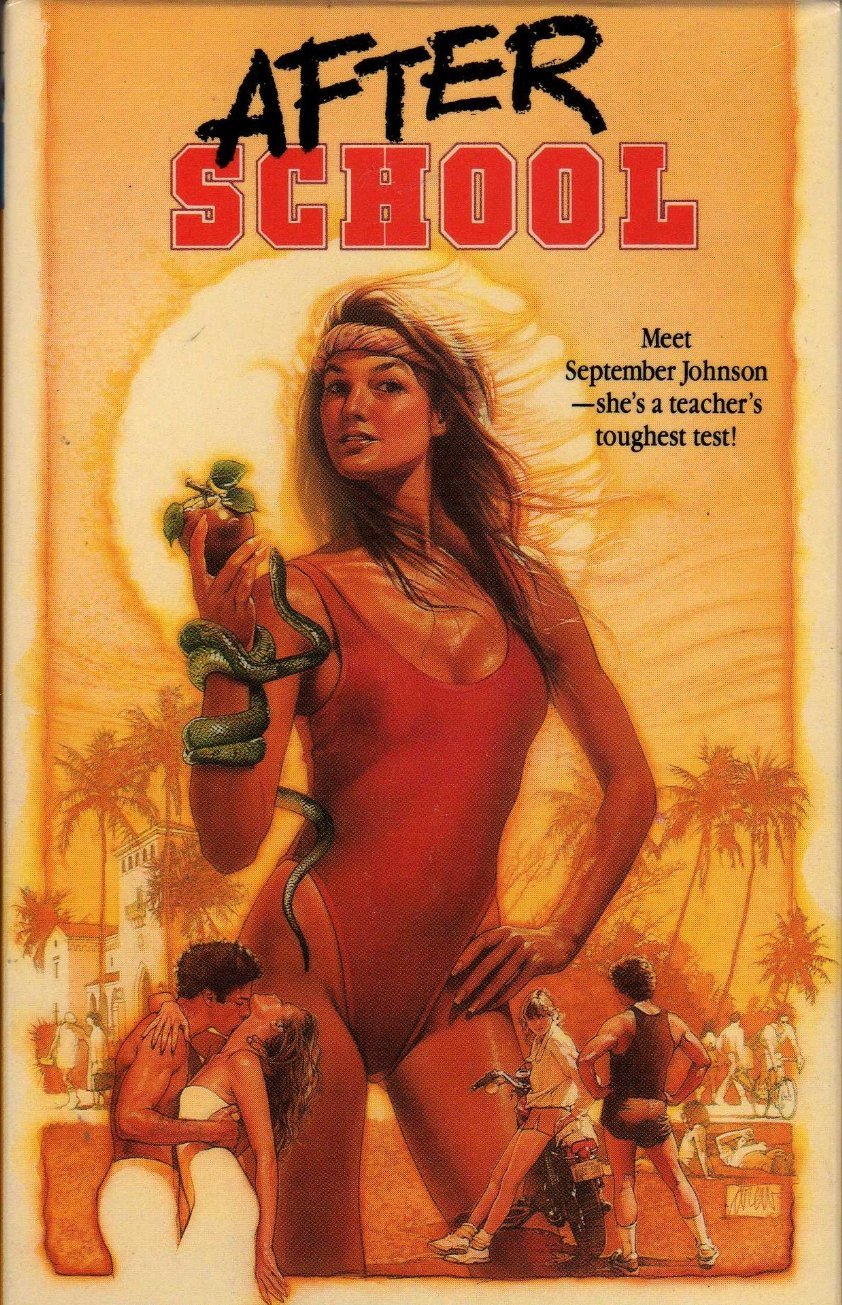
After School (1988, directed by William Olsen)


After School is a strange “what were they thinking?” type of movie.  It’s also probably the only movie to end with a religious debate that’s moderated by Dick Cavett.

Cavett plays himself.  In this film, he still has a talk show and one of his guests is going to be C.A. Thomas (Robert Lansing), a former priest who has written a novel claiming that man created God and not the the other way around.  Cavett has reached out to the Catholic Church to ask them to send someone to represent their views on the show.

For reasons that are never clear, the Church selects Father Michael McClaren (Sam Bottoms), who teaches at a college in Florida.  Father McClaren is youngish and he rides a motorcycle, which the monsignor thinks will appeal to younger viewers of Cavett’s show.  (Did The Dick Cavett Show have younger viewers?)  Because Dick Cavett is legendary for investigating the pasts of all of his guests (that’s what they say in the movie, anyway), another priest is sent down to Florida to make sure that Father McClaren does not have any skeletons in his closet.

At first, Father McClaren seems to be perfect but it turns out that he’s having a crisis of faith.  It’s not just that the local bikers don’t have much respect for a priest, even when who does ride a bike.  It’s also that he’s become attracted to one of his students, the improbably-named September Lane (Renee Coleman).  It doesn’t take the movie long to settle into a familiar pattern of September coming on Father McClaren and then Father McClaren having to run off so that he can pray for strength.

So far After School might sound like a typical movie about a priest being tempted to break his vows.  However, what sets After School apart from other films of its type is that there are frequent scenes featuring a group of cavemen living in prehistoric times.  It’s never really made clear why the cavemen are in the film.  The main caveman yells a lot and there’s a scene with a snake that suggests that he might live in the Garden of Eden.  (The movie was originally released under the title Return to Eden.)  There’s also several naked cavewomen who are in the film so that they can be ogled by the cavemen.  Oddly, the cavepeople scenes are full of broad comedy while the rest of the movie takes itself fairly seriously.

Why are the caveman there and what does it have to do with Dick Cavett?  Who knows?  That’s one of the many unanswered questions to be found in After School.  When C.A. Thomas and Father McClaren do finally meet on the Dick Cavett Show, they debate the origins of mankind.  Neither one has nothing new to say on the subject.  Even though everything that C.A. Thomas says sounds like New Age gobbledygook, Father McClaren proves himself to be incapable of countering him.

I don’t know what the point of After School was.  There were so any scenes, like one in which Father McClaren attends an aerobics class, that didn’t seem to have any purpose.  September’s lust for Father McClaren never makes any sense and his sudden declaration of love makes even less.  Even if you can make sense of all that, there’s still the cavemen and Dick Cavett to deal with.

After School thinks that it is about something but who knows what?