I don’t care what Stephen King says. Stanley Kubrick’s adaptation of The Shining is great.
One of King’s big complaints about the film is that Jack is obviously unhinged from the start. King is right that Jack Nicholson plays Jack Torrance as being someone who has a few screws loose even before he starts to work as the caretaker. But it works for the film, as can be seen in this scene in which Stuart Ullman tells Jack about what happened to previous caretaker.
Incidentally, Barry Nelson’s performance as Ullman is seriously underrated. Ullman is a far more interesting character in the movie than he was in King’s book. For that matter, the same can be said of just about every character in the movie as opposed to the way King envisioned them in his novel. Maybe that’s the main reason King doesn’t like this movie. Kubrick understood King’s story better than King himself did.
There are reasons for this. A big one is for the exercise. I’ve always liked my legs. Why wouldn’t I want to take care of them? (As my mom used to say whenever I complained about inheriting her nose, “Yes, but you also inherited my legs so stop crying!”)
As a lover of films, I appreciate the fact that stairwells are very cinematic. When I’m taking the stairs, I’m thinking about Vertigo. Sometimes, if I’m in the right mood, I’m thinking about Barefoot In The Park. I’m thinking about Breakfast at Tiffany’s. I’m thinking about all of the Bond movies that have featured twisty staircases. I’m thinking about all of the romantic comedies that have featured people kissing in the middle of stairwells. I thinking about climbing a fire escape in the rain. I’m thinking about all of the famous shots of people moving up and down staircases.
Another reason why I avoid elevators is that I like the symbolism of going up the stairs. I like the idea of ascending, step-by-step.
Of course, the main reason for taking the stairs is that I find elevators to be incredibly creepy. When I was seven or eight, I heard a story on the news about a woman who got her necklace caught in the doors of an elevator and, as a result, she was decapitated when the elevator started to move. AGCK! I’ve never quite gotten that image out of my head.
The minute those elevator doors close, you’re pretty much trapped until the elevator reaches the next floor. And even then, there’s no guarantee that the doors are actually going to open. There’s always the possibility that the elevator could get stuck between floors and you could be trapped in that little room for hours or even days. Even worse, someone else could be stuck in there with you and that person could be a stranger. That person could be carrying a straight razor or they could just have bad breath but either way, I wouldn’t necessarily want to be trapped in an elevator with them. And don’t even get me started on the possibility of an elevator cable snapping and the elevator plunging down 30 flights at breakneck speed.
Seriously, elevators are scary!
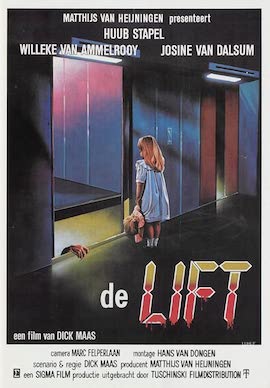
The 1983 Dutch film, The Lift, is all about one very scary elevator. For, instance, the elevator stops moving after a lightning storm takes out all the power in Amsterdam and four people end up trapped inside of it. When the power is finally restored, the elevator doors still refuse to open. Eventually, the doors have to be forced open. Fortunately, the four trapped people are saved before they suffocate but a few others aren’t so lucky. One elderly man falls down an empty elevator shaft. A security guard is decapitated when his head gets stuck in the elevator doors. A janitor vanishes.
Felix (Huub Stabler) is assigned to figure out why the elevator is malfunctioning. What he discovers suggests that the elevator has a mind of its own. Of course, no one believes that and Felix becomes obsessed with proving his theory. He becomes so obsessed with the building and the elevator that his wife leaves him. Felix’s only ally is a reporter named Mieke (Willeke van Ammelrooy), Mieke is investigating Rising Sun, a computer company who was responsible for designing the system that runs the elevator. Are the deaths the result of a corporate incompetence or is Felix correct? Is the elevator alive?
The Lift works precisely because it understands that elevators are creepy. More than being about a haunted elevator, The Lift is actually about the absurd amount of trust that people put into technology. (This is a theme that’s even more relevant today than it probably was in 1983.) People get on the elevator because they’ve been told that it’s safe and that there are safeguards in place to prevent any problems. Even when the elevator starts to malfunction and otherwise behave in a threatening manner, people still assume that it’s a problem that can be easily fixed because they’ve been told that it was designed with the most advanced technology available. More than just being a horror film about a haunted elevator, The Lift is a film about society that has put such blind trust in technology that it doesn’t know how to handle things when the system develops of mind of its own. People may have been conditioned to trust the system but, when the elevator comes to life, everyone’s going down.
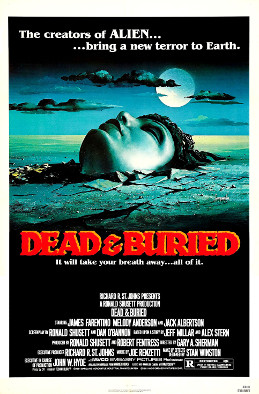
The 1981 horror film, Dead & Buried, takes place in the small town of Potters Bluff. It seems like it should be a nice place to live. The people are friendly. The scenery is lovely. The town is right on the coast of the ocean so the view is great. It’s a bit of an artist’s colony, the type of place where you would expect to find Elizabeth Taylor painting the sunset while Richard Burton battles a hangover in the beach house. It’s the type of small town that used to by very popular on television. It’s just one Gilmore girl away from being an old CW show.
It’s such a nice town. So, why are so many people dying?
That’s the mystery that Sheriff Dan Gillis (James Farentino) has to solve. Actually, it’s one of the many mysteries that Dan has to solve. There’s also the mystery of why his wife, Janet (Melody Anderson), has been acting so strangely. And then there’s the mystery of what happened to the person who, one night, Dan ran into with his car. The person ran away but he left behind his arm. When Dan gets some skin from the arm analyzed, he’s told that the arm belongs to someone who has been dead for at least four months!
Who can explain all of this? How about William G. Dobbs (Jack Albertson), the folksy coroner who seems to enjoy his work just a little bit too much. In fact, Dr. Dobbs seems to be a bit more than just a tad eccentric. One would necessarily expect a coroner to have a somewhat macabre view of life but Dr. Dobbs seems to take things to extreme. Is it possible that Dr. Dobbs knows more than he’s letting on?
Dead & Buried has a reputation for being something of a sleeper, a deliberately-paced and often darky humorous horror film that had the misfortune to be released at a time when most horror audiences were more interested in watching a masked man with a machete kill half-naked teenagers. Because the studio wasn’t sure how exactly to market Dead & Buried, it failed at the box office and it was only years later, after it was released on home video, that people watched the film and realized that it was actually pretty good. And make no mistake about it, Dead & Buried is a fairly clever horror film, one that is full of effective moments and which does a good job of creating a creepy atmosphere. If I’m not quite as enthused about this film as others, that’s because I do think that it’s occasionally a bit too slow and the film’s twist ending, while well-executed, didn’t particularly take me by surprise. This is one of those films that you enjoy despite the fact that you can see the surprise conclusion coming from a mile away.
In the end, Dead & Buried fills like a particularly twisted, extra-long episode of one of those old horror anthology shows, like Night Gallery, Twilight Zone, or maybe even Ghost Story. It’s a nicely done slice of small town horror, featuring a study lead performance from James Farentino and an enjoyably weird one from Jack Albertson. Though the film is not heavy on gore, Stan Winston’s special effects are appropriate macabre. Even if it’s not quite up there with Gary Sherman’s other films (like Vice Squad and Death Line, to name two), Dead & Buried is an entertainingly eccentric offering for Halloween.
Watching The Creeping Terror is an October tradition here at the Shattered Lens. How could anyone resist a film about a killer carpet, especially one that features a random dance party? This film was directed by an enigmatic figure named Vic Savage. No one is really sure who he actually was. No one is sure what happened to him after The Creeping Terror was finally released. But what we do know is that he made a film unlike any other.
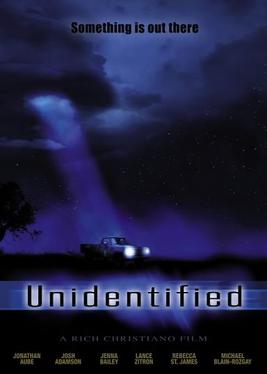
All across America (but mainly in Texas and California) people are seeing bright lights in the sky and reporting that they’ve been abducted by aliens. Most of the abductees stop telling their stories after they are visited by mysterious men in black but enough are willing to talk about their experiences that eventually, Both Sides Magazine decides to do a story on it.
Keith and Brad are assigned to the story. Keith is a nice but mild guy who is skeptical about aliens but he’s determined to give everyone a fair hearing, The film suggests that this is perhaps because Keith’s a Christian, even though he doesn’t read his Bible every night and sometimes entertains doubts as to whether he’s truly going to Heaven. Brad, meanwhile, is a hardcore Atheist who is rude to everyone and believes in absolutely nothing. Brad hates the idea of having to do any stories that involve small town America. Go to Texas to talk to UFO abductees? That’s not Brad’s thing. (Brad is supposed to be very unlikable but the actor playing him looks a bit like Owen Wilson so it’s hard to hold anything against him.)
Still, Brad and Keith do talk to an auto mechanic who says that he was abducted. And then they talk to two Louisiana fishermen who were also abducted. Keith thinks that their experiences are worthy of a feature article. Brad vehemently disagrees. Fortunately, it turns out that the magazine’s religion editor, Darren, supports Keith.
Why is the Religion Editor so interested in UFOs? It’s not because he believes in aliens. (“The Bible doesn’t say anything about life on other planets,” he explains.) Instead, it’s because Darren thinks that the UFOs are actually being used by Satan to draw people away from God. He points out that most of the people who have been abducted are either not religious or heavily into the paranormal. Brad thinks that Darren’s full of it but, fortunately, a government informant shows up and reveals that not only is Darren correct but that the UFOs are going to be used as a way to explain away the Rapture!
As you probably guessed, this is a Rich Christiano film. First released in 2006, Unidentified was Christiano’s second feature length film and …. well, it’s not very good. On the one hand, you have to appreciate Christiano’s ambition and his attempt to make a sci-fi film on a low budget. On the other hand, Unidentified is painfully slow, poorly acted, and it’s hard not to notice that, for a major magazine, it appears that only six people work at Both Sides. Let’s just say that this film is no Spotlight when it comes to realistically portraying the life of a journalist. Darren makes it a point to try to convert everyone that he meets while investigating the story. Honestly, this seems like the type of thing that would get most journalists fired from a secular magazine. For whatever it’s worth, I do think the story itself had potential but the execution is definitely lacking. That said, the film does work in a reference to Orson Welles’s War of the Worlds broadcast. I’m not sure how Orson would have felt about that.
For the record (and since this review is running a little short), I personally don’t believe in UFOs but I have read several books about them. It amuses me that aliens are apparently always coming to our planet to tell us to stop being so war-like or to take better care of the environment. Hey, Mr. Martian — WORRY ABOUT YOUR OWN PLANET!
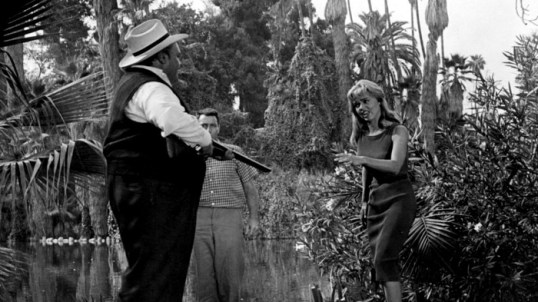
Shopkeeper Dave Walker (Bruno VeSota) knows that his wife, Liz (Yvette Vickers), is cheating on him with his best friend, Cal (Michael Emmett)! Dave is determined to catch them in the act and force them to walk out into the middle of the swamp at the end of his shotgun. That would be bad enough but what makes the swamp even more dangerous is the fact that there are two giant leeches living in the water, grabbing whoever they can get and dragging them back to their underground cave! Agck! While Dave plots to get revenge on his cheating wife, game warden Steve Benton (Ken Clark) tries to convince everyone that something really needs to be done about those giant leeches.
Filmed and released in 1959 and produced by Roger Corman, Attack of the Giant Leeches is not a particularly complicated film. The leeches live in the swamp. For various reasons, people keep wandering into the swamp. The leeches keep feeding until eventually, the authorities decide to do something about it. The simplicity of it all is why the film works. Why are there giant leeches in the swamp? How did the leeches become giants in the first place? Who cares? What’s important is that they’re there and they’re hungry for blood. At this point, why doesn’t matter. What matter is what is going to be done about them.
Clocking in at barely an hour and filmed by TV director Bernard L. Kowalski, Attack of the Giant Leeches is an enjoyably overhearted slice of Southern melodrama, full of humid atmosphere and sultry dialogue. The film does a wonderful job of capturing the overheated feeling of being stuck in the country and not having anything better to do than cause some trouble. I mean, it’s very easy for people to say what other should or shouldn’t do in their spare time. But, when you’re actually living in a swamp, you do what you have to do in order to pass the time. At its best, Attack of the Giant Leeches is like Roger Corman meets Tennessee Williams. It’s Southern Gothic, with even bigger leeches than usual. Flannery O’Connor would have been proud.
Yvette Vickers plays the role of Liz with a wonderfully defiant attitude. She’s going to do what she wants when she wants to and if that means running the risk of being forced to walk into the swamp, so be it. If she’s stuck in the bayous, she might as well have a good time. Liz may be frustrated but can you blame her? Meanwhile, VeSota turns Dave into a rather tragic buffoon. Even when he finally thinks that he’s about get his revenge, it turns out that the universe has other plans in store for him. In the end, Dave is fortune’s fool. No wonder stiff but earnest Ken Clark really can’t compete with either of them when it comes to capturing the audience’s attention.
Attack of the Giant Leeches is short but enjoyable and, because the copyright wasn’t renewed, it’s in the public domain and it’s very easy to watch for free. Watch it this Halloween and definitely stay out of the swamp!
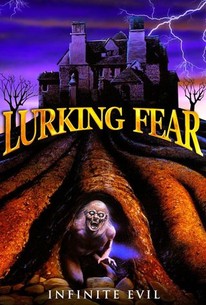
For years, the town of Leffert’s Corners has lived in fear of the criminal Martense family. The family’s youngest son, John (Blake Bailey), has just been released from prison and now he’s returning home. He knows that, before he died, his father arranged for a thousand dollars to be buried in the cemetery. After the town mortician (Vincent Schiavelli, in a too brief cameo) tells him where it is, John heads to the cemetery. Unfortunately, he’s followed by crime boss Bennett (Jon Finch) and his thugs.
Cathryn (Ashley Laurence) and Dr. Haggis (Jeffrey Combs) are already at the cemetery, though not for the money. It turns out that subterranean monsters (all of whom are descended from one John’s relatives) are living underneath the cemetery grounds and terrorizing the town. Cathryn and Haggis are planning on blowing up the graveyard but that plan is put on hold when John and Bennett arrive. Underground monsters or not, Bennett is planning on getting that money and if that means holding everyone hostage in a church while the monsters prepare to attack, that is exactly what he is going to do.
As is evident by the welcome presence of Jeffrey Combs, The Lurking Fear is another Full Moon production that was loosely adapted from a H.P. Lovecraft short story. The premise has promise and the cast is full of talent but the film’s direction is flat, the script is shallow, and the monsters themselves look good but there’s nothing that set them apart from a dozen other monsters that have appeared in Full Moon productions. (The monsters resemble the dungeon dweller from Castle Freak but they are never as scary.) It’s too bad because The Lurking Fear is one of Lovecraft’s best short stories and it seems like one that would make a great movie. But, as a movie, The Lurking Fear, like so many other Full Moon productions, doesn’t seem to know what to do with itself whenever the monsters aren’t around. Hopefully, someday, Lovecraft’s The Lurking Fear will get the film adaptation that it deserves.
Everyone has one movie or two that hit them so hard it caused them to develop habits. It could be shaking your shoes to confirm no spiders are in them, counting the seconds after a lightning strike for the thunder, or checking the back seat of your car before you get into it, just in case. Some movies kind of imprint themselves on you in different ways.
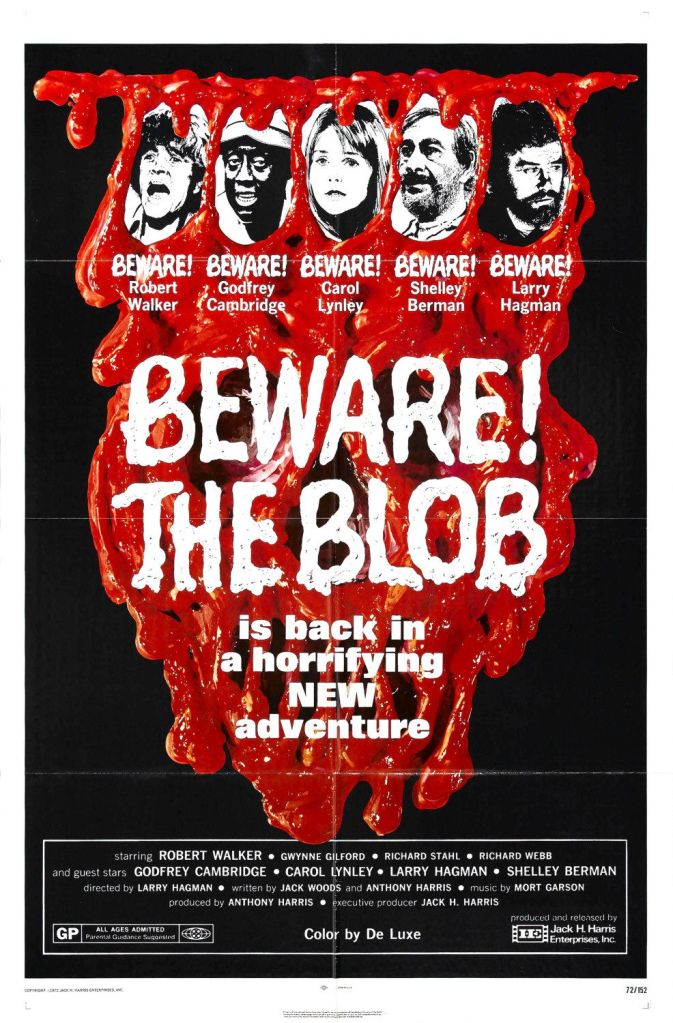
Beware! The Blob (or Son of The Blob in some circles) was the most terrifying film I saw as a kid. I watched it in front of my grandmother’s living room tv that had a little alarm clock on the floor beneath it. Unlike Friday the 13th and Halloween, where I could rationalize my fears, Beware! The Blob had me fearing the summer and any open crevice we had. On any visits to our local video store (in the Pre-Blockbuster days), I’d pick out video games to rent and could see the box for the film in the horror section. I’d never walk over there, even in my early teenage years.
Most consider the 1958 original a Classic, and Chuck Russell’s 1988 update often goes toe to toe with John Carpenter’s The Thing on the Best Remakes list. Beware! The Blob will probably never make that list, but it’s not a total loss, given a recent rewatch. The film’s greatest strengths are in the casting and the special effects. From a cinema history/trivia standpoint, the film marks one of the earliest credits for Cinematographer Dean Cundey. Cundey worked as a 2nd Unit Cinematographer for the film, particularly with the animal shots in the opening and later on. That might not sound like much, but Cundey would go on to be picked by Debra Hill to help out on Halloween in 1978. From there, he had The Fog, Halloween II, The Thing, Romancing the Stone, Back to the Future, Big Trouble in Little China, Who Framed Roger Rabbit?, and Jurassic Park, to name a few.
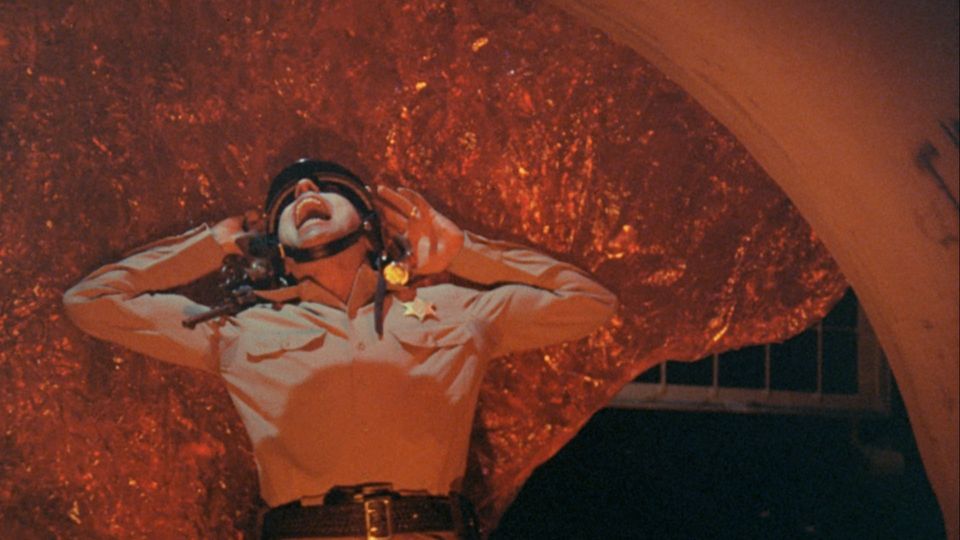
With 14 years since the first film, there were some tech upgrades to how the blob was made. A large plastic balloon was used for some scenes (particularly the bowling alley sequences). Additionally, silicone was added to a drum to allow for the “blob pov” during the bowling alley sequences. In most sequences, a red dyed powder mixed with water was used. To make sure the audience was aware the Blob was close, a high whistle would sound, giving anyone with even the slightest bit of tinnitus some cause to look over their shoulder. Academy Award Winner Tim Baar (The Time Machine) and Conrad Rothmann worked on the effects, along with Cundey.
In his film directing debut, Larry Hagman (TV’s I Dream of Jeannie, Dallas) weaves a tale of horror lurking through a town peppered with parties, hobos, a boy scout team, an angry bowling alley owner, some dune buggy aficionados and a sheriff (Richard Webb, The Phantom Stagecoach) who’s a little confused about some of the events happening in town. To his credit, it’s amazing to see who Hagman assembled here, as he called in some friends to join in on the fun. Comedian Godfrey Cambridge. Cindy Williams, just a few years shy ofAmerican Graffiti. Gerrit Graham, about two years before Phantom of the Paradise. Sid Haig (The Devil’s Rejects) is here as well. You can even spot Hagman in the film as one of three hobos squaring off with the Blob. It should be noted that the other two hobos with him are Burgess Meredith (Clash of the Titans) and Del Close (Chuck Russell’s The Blob).
The film flows like it’s namesake, with some chapters having little do to with anything – Dick Van Patten’s boy scouts, while funny, could have had one of their scenes cut for speed. It’s not incredibly terrible, but it’s exactly great, either. Most of the script, written by Anthony Harris, was tossed with ad-libbing done on set. Despite all this, it does looks like the cast enjoyed themselves making the film. It has that going for it, at least.
Sid Haig was caught unaware in Larry Hagman’s Beware! The Blob
Chester, A construction worker from the Arctic (Cambridge) is getting his camping gear stowed away when his wife, Marlene (Marlene Clark, The Beast Must Die) discovers a thermos in their freezer. He explains he performed some work and brought home a piece of what the found in the Arctic. Setting it on a countertop, the couple forget about the thermos, which pops open. The newly released blob absorbs a fly and a kitten before moving on to larger prey. Before we know it, Chester is having problems with his TV – which happens to be playing the original 1958 movie – as it slithers into his favorite recliner. It’s a sequence that’s burned into my mind. I always check a chair before sitting in it. Some check for thumbtacks, I check for alien goo.
When Lisa (Gwynne Gilford, Masters of the Universe & actor Chris Pine’s Mom) discovers Chester with his new friend, she dashes out and heads to her boyfriend, Bobby (Robert Walker, Easy Rider). By the time the couple return to Chester’s place, they find the house empty. Can the couple convince the cops and the town of the danger ahead before it’s too late? Most of Beware! The Blob‘s scenes are set up in a way where people are completely oblivious of it until it’s touched them, causing said individual to slip and fall into the camera. The climax of the film takes place in a bowling alley, which is actually impressive for the techniques used, but even with the casting, you might spend more time laughing than anything else. Perhaps that’s my way of rationalizing the film years later.
At the time of this writing, Beware! The Blob is currently available to watch on the Plex streaming service. We’re also labeling this an Incident – out of respect to the kitten – and returning the timer to Zero.
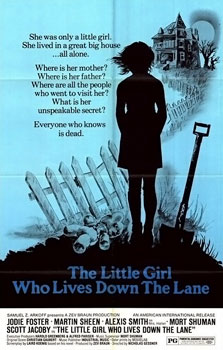
First released in 1976, The Little Girl Who Lives Down The Lane tells the story of Ryann Jacobs (played by Jodie Foster, who was thirteen years old when she made this film).
Rynn lives in a small New England town, in a house that her father has leased for three years. It’s been a while since anyone has seen Rynn’s father. Rynn always tells everyone that he’s either out of town or that he’s busy in his study and can’t be disturbed. When the friendly local policeman (Mort Schuman) expresses some doubt about Rynn’s claim that her father is working, Rynn says that her father is a drug addict, like all of the great poets.
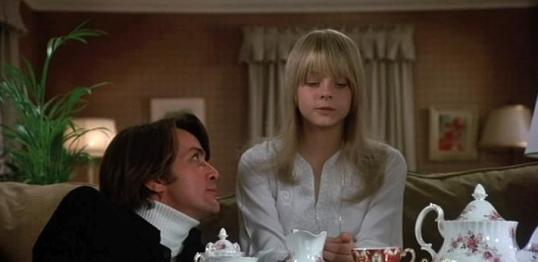
Rynn’s main problem is with the Halletts. Cora Hallett (Alexis Smith) owns the house in which Rynn is living. Cora drops by regularly, haughtily demanding to see Rynn’s father. Her creepy son, Frank (Martin Sheen), also makes a habit of visiting. He’s not interested in Cora’s father. Instead, he’s interested in Cora. Everyone in the town knows that Frank is a perv but no one is willing to do anything about it. He’s protected by his mother’s money.
One day, when Cora drops by, she insists on going into the basement. She says she has something down there that she needs to retrieve. Rynn tells her not to go down there but Cora refuses to listen, which turns out to be a huge mistake. Cora screams at what she sees down there and then falls to her death. With the help of her only friend, Mario (Scott Jacoby) an aspiring magician who walks with a limp, Rynn covers up the murder.
Mario turns out to be a very good friend, indeed. Not only does he tell people that he’s seen Rynn’s father but he even stands up to Frank when he shows up at the house, searching for his mother. However, as it soon becomes clear, Frank isn’t one to give up so easily….
The Little Girl Who Lives Down The Lane is an interesting hybrid of a film. It definitely does have elements of horror. The running theme throughout the film is that Rynn might kill people but it’s all the adults in her life who are truly monstrous. Frank is truly a monster and Martin Sheen gives a remarkably intense and creepy performance in the role. Frank is the type who will say that worst things imaginable and then smirk afterward, confident that he’ll never have to face any sort of justice for his crimes.
At the same time, the film is also a coming-of-age-story and a teen romance. Rynn and Mario are two outsiders who find each other. You like both of them and you want things to work out for them, even though you spend almost the entire film worried that Rynn might end up poisoning Mario. Foster and Jacoby share some genuinely sweet scenes. Things would be just fine, the film seems to be saying, if all of these stupid adults would just mind their own business.
The Little Girl Who Lives Down The Lane is an effectively creepy and sometimes even sweet little film about a girl who occasionally has to kill people. Keep an eye out for it!
In the 1951 film, Bride of the Gorilla, Raymond Burr plays a plantation manager who commits a murder. Unfortunately, for him, the murder is observed by a witch who promptly puts a curse of Burr. Now, every time the sun goes down, Burr transforms into a gorilla and goes wild in the jungle.
Basically, it’s kind of like The Wolf Man, just with a less sympathetic protagonist and a gorilla instead of a werewolf. Just in case we missed the similarities, Lon Chaney, Jr. plays the film’s nominal hero, a police commissioner who suspects that something weird might be happening with Burr. Apparently, the plan was originally for Chaney to play the gorilla and for Burr to play the policeman but, because Chaney was dealing with a serious alcohol problem at the time, the roles were reversed.
Also in the cast, playing the role of Dina, is Barbara Payton, the tragic actress who is best known for being at the center of a love triangle involving actors Tom Neal and Franchot Tone. In 195000, Neal attacked Tone and beat him so severely that Tone spent 18 hours in a coma. Tone was notably shaky onscreen for the rest of his film career while Neal spent a few years in prison. After the incident between Tone and Neal, Payton could only get roles in B-movies like this one. Tragically, she would pass away, in 1967, of heart and live failure. She was only 39 years old.


 Through the Shattered Lens