The 2019 film, A Christmas Wish, takes place in a small Louisiana town where people leave their Christmas wishes in a wooden box. Faith (Hilarie Burton) is encouraged by her sister, Maddy (Megan Park), to wish for true love. Myself, I wished for a Christmas movie featuring not only several actors from One Tree Hill but also Pam Grier! And, with this film, my wish came true.
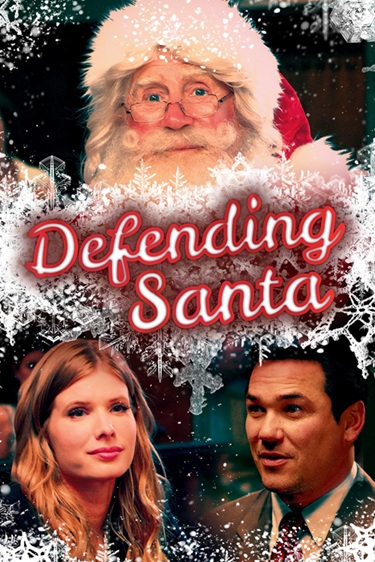
After finding a portly man with a big white beard passed out in a snowbank, small town Sheriff Scott Hanson (Dean Cain) brings him to the hospital. When the man wakes up, he says that his name is Kris Kringle (Bill Lewis) but you can call him Santa Claus. Kris uses his powers to give the children in the hospital what they want. (He creates a miniature pony for one girl.) District Attorney Robert Nielson (Gary Hudson) thinks that Kris is a public danger and wants to have him put in the mental ward. Public defender Sarah Walker (Jud Taylor) defends Kris and falls back in love with her ex-boyfriend, Scott. Santa Claus spreads his magic across town. He detoxifies the town drunk but not even Santa can save the life of a dying child. That scene was very sad.
Have you ever wanted to see Santa Claus play football with Dean Cain and Full House‘s Jodie Sweetin? This is the movie for you! Santa Claus plays in the park and even does a front flip. Go Santa Claus Go! But then old St. Nick also uses his powers to cause another player’s pants to fall down during a key play, which allows Dean Cain’s team to win the game. That’s cheating, which I was always told put you on the naughty list.
Speaking of being on the naughty list, it doesn’t ever make sense that the district attorney is so obsessed with putting Kris Kringle. Santa Claus never hurt anyone. Trying to put Santa Claus in jail before Christmas is definitely worth a lump of coal in your stocking! Defending Santa is an okay Hallmark Christmas movie but don’t spend too much time trying to make it make sense.
Amy (Denise Richards) grew up in the small town of Chestnut, where her Aunt Linda (Catherine Hicks) owned the local bakery and hosted the annual Christmas cookie contest. (Yum!) When Amy grew up, she moved away from Chestnut and got a job in New York at an advertising firm run by Don Dupree (Parker Stevenson). When Aunt Linda dies, she leaves half of the bakery to Amy. Aunt Linda’s last request was that Amy restart the annual cookie contest. The only problem is that the other half of the bakery has been left to Amy’s ex-boyfriend, Jack (Patrick Muldoon).
Sometimes, I wish that I lived in Hallmark Christmas movie because I would love to be able to just take off from my job and open a bakery in a small town. That would be a dream come true for me. I baked my first batch of Christmas cookie when I was six! (Mom helped.) Everyone said they were the best they had ever tasted! I think I could have won that cookie contest! Now, I wish I lived in Chestnut but I know that Chestnut is not a real place. It’s just somewhere that we all wish could be real.
I enjoyed A Christmas Reunion. It appealed to the romantic baker in me. Not only did Denise Richards and Patrick Muldoon spend a lot of time in the kitchen but they also outsmarted the crooked lawyer (Jake Busey) who wanted to sell the bakery to a Starbucks. I laughed when Busey gave them a contract to sign and said, “Just sign where the red flags are,” because his whole character was a red flag. A Christmas Reunion may not take place in the real world but it would be nice if it did.
2018’s A Christmas In Tennessee tells a story that’s as old as time.
In a snowy Tennessee town, Allison (Rachel Boston) and her mother (Patricia Richardson) run a bakery. When a developer named Matthew (Andrew W. Walker) shows up in town, he seems charming enough. Except … oh no! He’s planning on buying the town and turning it into a ski resort!
Can love save Christmas? Only in Tennessee!
Oh, stop being cynical! It’s a cute movie that takes place in a nice small town and everything works out for the best in the end. It’s simple and it’s cozy and it’s just right for the holidays.
Well, if you’ve ever seen the original 1947 Miracle on 34th Street than you already know the answer. There is a Santa Claus and he looks exactly like Edmund Gwenn!
In this scene, Kris Kringle is on trial. He swears that he is Santa Claus. The prosecution claims that not only isn’t he Santa Claus but Santa doesn’t exist at all. Fortunately, it’s the U.S. Post Service to the rescue!
The original Miracle on 34th Street is true Christmas classic and I hope you enjoy this holiday scene that I love.
When Georgia Hunt (Rachel Boston) was in high school, she was the queen of the school. She was a cheerleader, a member of the Glee Club, and a member of the Speech and Debate team. She was voted Most Likely To Succeed. Ten years later, Georgia is the unappreciated assistant to a haughty fashion designer and she feels like a failure. While visiting her mother (Marilu Henner), Georgia discovers that her class reunion is coming up. Georgia decides to go because she wants to win back her high school boyfriend, Craig (Jon Prescott).
I could tell that this movie was made back when Glee was still a big thing because there’s a whole subplot about the former members of the Glee Club getting back together and performing three numbers at the reunion. When Georgia wasn’t performing on stage, she was in the old practice hall and singing a song with her best friend from high school, Ben (Johnathan Bennett). The Glee Club stuff felt really tacked on but I was happy they went with the Glee stuff instead of having Georgia try to do something stupid and put on her old cheerleader uniform and lead everyone in a cheer. But then Georgia went ahead and did that anyways.
I had some issues with this movie. A major one was what school holds a class reunion a week before Christmas? What type of high school would still have ten year-old graffiti in its bathroom? Georgia somehow opens up her old locker and finds the key to the principal’s office that she hid in there during her senior year and we’re just supposed to accept that no one else has noticed that key in ten years time. (If I went to my former high school tonight and spent hours studying all the lockers, I would still never be able to remember which one used to be mine.) Also, there were a lot of flashback scenes to when everyone was supposed to be a teenager but there wasn’t much effort made to make anyone look younger. My biggest problem was that Craig treated Georgia like crap in high school and at the reunion but she still kept chasing after him even though Ben was obviously in love with her. I didn’t have much sympathy for Georgia. She just seemed pretty dumb about the whole thing.
Christmas Crush shows that you can’t go back to high school, no matter how much you might want to. It’s always better to live in the present.
It seems kind of strange in today’s world of non-stop streaming, but there was a time when you would purchase a blu-ray of a movie, and they’d give you a free “digital” copy of the movie. In 2009, I purchased the blu-ray for THE HANGOVER and added the digital copy of the movie to my laptop that I kept at my tax and accounting office. Every night during the 2010 tax season, I would go home around 5:00 for dinner, and then I’d go back to the office at 7:00 to continue my work. When I’d get back to the office, I would always play two copies of digital movies on my laptop… first, I’d play THE HANGOVER and next, I’d play ZOMBIELAND. When those two movies would end, usually by around 11:00, I’d head home. Needless to say, I got to know each of these movies very well and love them both.
In director Todd Phillips’ THE HANGOVER, the night before his wedding, groom-to-be Doug (Justin Bartha), his two best friends, Phil and Stu (Bradley Cooper and Ed Helms), and his soon-to-be brother-in-law Alan (Zach Galifianakis), head to Las Vegas for a wild and exciting bachelor party. After taking some Jagermeister shots on the roof of Caesar’s Palace, the movie screen goes black, and soon we see Phil, Stu and Alan wake up in their hotel room with absolutely no memory of what happened the previous night. The room is trashed, there’s a tiger in the bathroom, a baby in the closet, Alan doesn’t have on any pants, Stu is missing his lateral incisor, and Doug is nowhere to be found! With the wedding just hours away, the three friends follow any clues they can find in a frantic search for Doug. The search leads to the surprise discovery of a new stripper wife for Stu, the naked and dangerous Asian gangster Chow (Ken Jeong), who jumps out of the trunk of their car and attacks Phil with a crowbar, and Alan being tasered in the face by a kid visiting the Vegas police station. Hell, at one point Alan even gets punched out by Mike Tyson! More importantly, though, will they find Doug alive and have time to get him back to Los Angeles for his wedding?!!
A massive box office hit in the summer of 2009, THE HANGOVER became the highest grossing R-rated comedy up to that time, with a worldwide gross of $469 million against a budget of $35 million. One of the keys to the film’s success is its clever and unique premise, comprised of a mystery-driven plot line where we follow the detective-like adventures of Phil, Stu, and Alan and discover what the hell happened the night before at the same times that they do. This allows for a series of outrageous, raunchy, surprising, and hilarious comedic moments that escalate in absurdity over the course of the film’s 100-minute running time, culminating with an almost unbelievable roll of pictures on Stu’s camera that fill in the crazy events from their wild night in Vegas. Most movies, even comedies, don’t result in me laughing out loud. I laughed out loud frequently that first time I watched THE HANGOVER back in 2009, and I still do. It’s also a movie that, since that 2010 tax season, I have quoted endlessly in my personal life, whether it be “Classic,” to “Thanks a lot, Bin Laden,” and even “It’s not a purse, it’s called a satchel. Indiana Jones wears one.” I never know exactly when something will happen in my personal life that reminds me of THE HANGOVER, but if the time is right for an “in the face,” I’m always ready!
Of course, the comedy in THE HANGOVER would not work without the great direction from Todd Phillips, as well as the exceptional performances and chemistry between Bradley Cooper, Ed Helms, and Zach Galifianakis. Phillips moves things along at a perfect pace, allowing for tons of laughs, while propelling the story forward to its conclusion. He also seems to capture the chaos and “what happens in” feeling of an out-of-control night in Vegas. And when I watched the film, I was reminded of people in my own life who share certain traits with some of the characters, especially those played by Cooper and Helms. As such, the interactions between the characters seems natural and familiar to me, which makes it even funnier. Luckily, I can’t think of any friends like Galifianakis’ eccentric character, but that’s probably a good thing for my real life. In the context of the movie, however, he steals the film with his deadpan delivery.
Ultimately, THE HANGOVER became a cultural phenomenon that launched a series of three films that grossed over $1.4 billion worldwide. It’s blend of clever writing, great casting and performances, and most importantly, great comedic moments, makes it one of my favorite comedies of the 21st century.
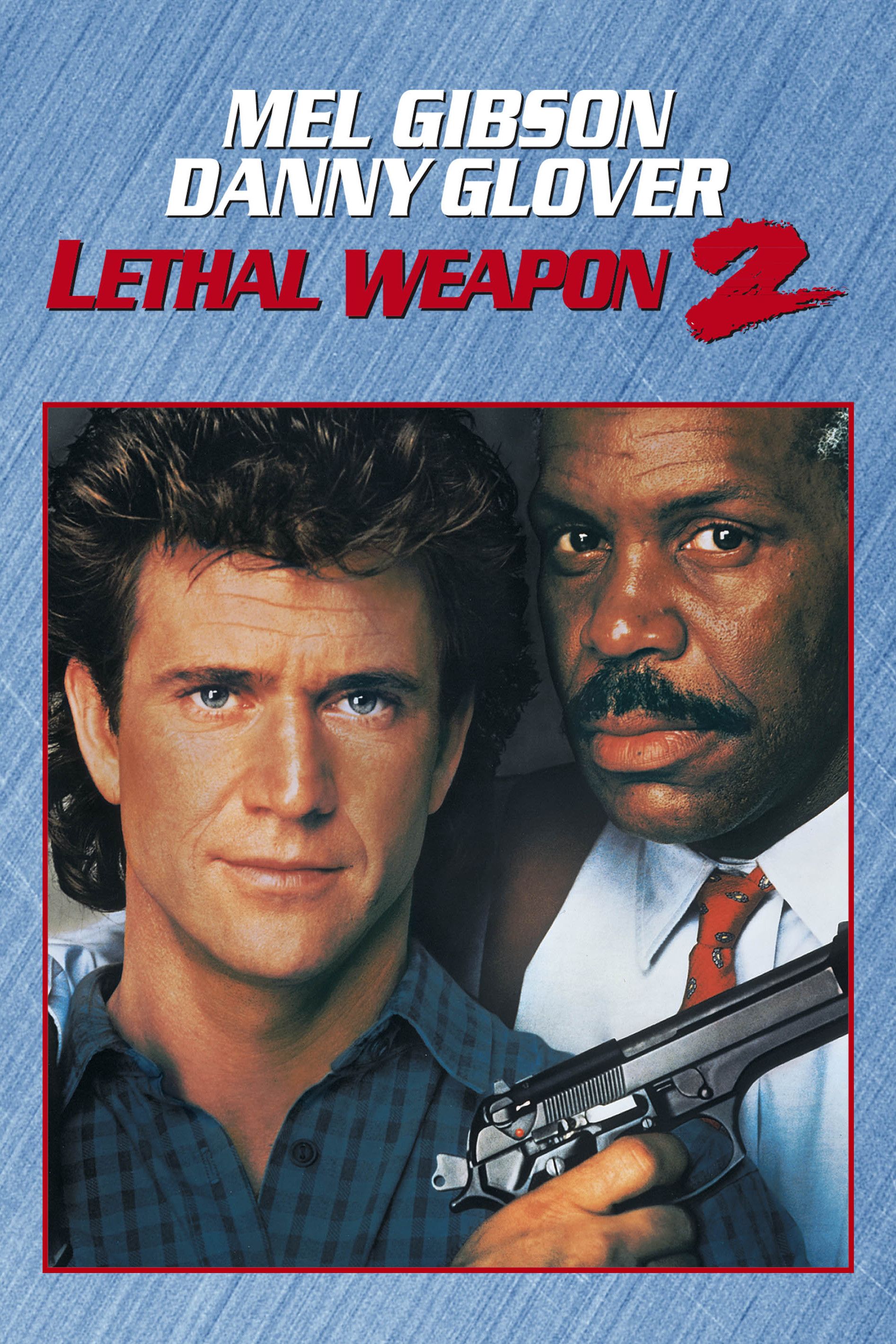
Lethal Weapon 2 is the kind of sequel that doesn’t really try to reinvent what worked the first time so much as crank the volume on everything: the action is bigger, the jokes come faster, and the chaos feels almost constant. Depending on what you loved about Lethal Weapon, that approach delivers more of the high-energy partnership in a flashier package. It’s a confident, very entertaining 80s action movie that knows it’s a sequel and leans into the spectacle that status allows.
Plot-wise, Lethal Weapon 2 wastes no time reminding you what this world feels like. It drops Riggs and Murtaugh into a wild car chase almost immediately, and from there the story locks onto a case involving South African diplomats hiding behind apartheid-era “diplomatic immunity” while running a massive drug and money-laundering operation. It’s a cleaner, more high-concept hook than the original’s murkier web of Vietnam vets and heroin smuggling, and the script makes the villains broad on purpose, almost cartoonishly arrogant, to give the audience someone very easy to hate. The trade-off is that the plot feels a bit more mechanical this time; you always know who the bad guys are and what the destination is, so the film’s real energy comes from the detours, jokes, and set-pieces rather than any mystery.
One of the big shifts from Lethal Weapon to Lethal Weapon 2 is tone. The first film balanced brutal violence and dark humor with a surprisingly heavy focus on Riggs’ suicidal grief and Murtaugh’s fear of getting too old for the job. The sequel keeps those elements in the background but leans harder into banter, slapstick timing, and outrageous gags like the now-famous exploding toilet sequence, with Richard Donner’s direction pushing the script toward action comedy. It’s still R-rated and not shy about blood or cruelty, but the emotional intensity is dialed down compared to the original’s raw edges.
Mel Gibson and Danny Glover remain the anchor, and their chemistry is as sharp as ever. Gibson’s Riggs is still reckless and unhinged, but there’s a looser, more playful side to him this time; he’s less haunted and more of a live-wire prankster until the story gives him something personal to latch onto. Glover’s Murtaugh continues to be the grounded center, constantly exasperated and always half a step away from just walking off the job, and the film has a lot of fun putting his straight-man persona through increasingly humiliating situations while still letting him be competent when it counts. Compared to the first film, where their partnership slowly thawed from suspicion to genuine trust, Lethal Weapon 2 starts from “these guys are already a team” and builds its best moments from how comfortably they now bounce off each other.
The biggest new ingredient is Joe Pesci as Leo Getz, a federal witness turned tagalong who basically functions as the franchise’s third stooge. Pesci leans into the motor-mouthed, paranoid, endlessly complaining energy that would become his signature, and his presence tips some scenes from gritty cop story into broad comedy. He undercuts tension at times, but he also gives the movie a different rhythm, especially in the quieter in-between beats where the first film might have lingered more on Riggs’ inner damage.
In terms of action, Donner clearly has more money and confidence to play with, and it shows. The chases are bigger, the shootouts are staged with a slicker sense of geography, and there’s a steady escalation in scale that makes the film feel like a genuine summer sequel rather than just another mid-budget cop movie. The original had a grimy, street-level intensity, with brutal fistfights and sudden bursts of violence; Lethal Weapon 2 is more interested in creative set-pieces, crowd-pleasing payoffs, and moments designed to make an audience cheer. It’s less intimate, but it is rarely dull.
Where the film lands in a more complicated space is its attempt to keep some emotional stakes alive while also going bigger and funnier. Riggs’ grief over the loss of his wife is still part of his character, and the story finds ways to poke at that wound again, including a new relationship that lets him imagine some kind of future beyond the constant death wish. Those beats are there to echo what worked so well in the first movie, but they have less room to breathe, often getting squeezed between an action scene and a joke instead of shaping the entire film’s tone. You can feel the push and pull between wanting to keep the darker emotional spine and delivering the kind of lighter, more easily marketable sequel a studio would understandably chase.
The villains themselves are effective in that pulpy 80s way: not nuanced, but very punchable. Arjen Rudd, with his smug talk of “diplomatic immunity,” is a villain designed to make audiences grind their teeth, and his main henchman adds a physically intimidating, quietly sadistic presence to the mix. Compared to the original’s more grounded ex-military antagonists, these guys feel one step closer to Bond territory, and that shift mirrors the film’s overall move toward heightened, almost comic-book stakes. What the sequel loses in plausibility, it gains in revenge-fantasy satisfaction.
When stacked directly against Lethal Weapon, the second film feels like a classic case of “if you liked hanging out with these characters once, here’s more time with them.” The original is tighter, more emotionally focused, and arguably more distinctive, with a stronger sense of danger and genuine unpredictability around Riggs’ mental state. Lethal Weapon 2 smooths some of those jagged edges and replaces them with quips, bigger set-pieces, and a more overtly crowd-pleasing structure, which makes it an easier, more consistently fun watch but also a slightly less resonant one. It is still a good film, but in many ways it is also the moment where the franchise shifts from a character-driven cop thriller with action to a full-on action-comedy machine.
As a fair, middle-of-the-road assessment, Lethal Weapon 2 works very well on its own terms and delivers exactly what most people want out of a late-80s buddy-cop sequel. The chemistry is intact, the action is energetic, and the film moves with the kind of confident pace that never really lets you get bored. At the same time, the tonal tilt toward broader humor and more cartoonish villains means it doesn’t quite have the same staying power or emotional punch as Lethal Weapon, especially if what hooked you the first time was how wounded and volatile it all felt. For fans of the original, it’s an enjoyable continuation—a louder, flashier second round that may not hit as hard, but still knows how to entertain.
Tis the season that hardworking New York reporters find themselves stranded in snowy middle America and end up falling in love while saving historic inns! In 2017’s Snowed Inn Christmas, the two reporters are played by Bethany Joy Lenz and Andrew W. Walker and the inn is located in Santa Claus, Indiana.
Yes, it’s predictable. Most of these films are. That’s actually a huge part of their appeal. They take place in a much more innocent world and they celebrate the holiday season without shame or snarkiness. The important thing is that Bethany Joy Lenz and Andrew W. Walker eventually make for a cute couple and the snowy scenery is really nice to look at.
In 2019’s A Karate Christmas Miracle, young Jesse Genesis (Mario Del Vecchio) believes that if he can become a black belt in four days, his father — who has been missing for a year — will return home. Jesse’s mother, Abby (Mila Milosevic) tries to get Jesse to understand that his father was abducted and probably murdered by a killer clown. Eventually, trying to understand what happened to her husband, Abby teams up with Elizabeth (Julie McCullough), a quirky law professor who is also psychic.
This is a strange film. Eric Roberts and Martin Kove are listed as co-starring in the film but actually, all of their footage appears to have been lifted from 2015’s Joker’s Poltergeist, a film that stylistically and thematically has next to nothing in common with A Karate Christmas Miracle. Scenes of Jesse practicing karate and trying to work his way up to black belt in just six days are mixed with scenes of Eric Roberts threatening to kill people and Martin Kove rambling about he wants to leave a movie theater to his daughter. The scenes just don’t mix but they do show that if Eric Roberts and Martin Kove aren’t available to do your bad movie, you can just lift scenes of them from an even worse movie.
Sitting through A Karate Christmas Miracle is a bit of a struggle. It’s only 81 minutes long but every scene still goes on for too long and the dialogue is full of overly quirky moments that probably sounded great in the writer’s head but which play out very awkwardly on film. This movie really made me appreciate films that are actually edited in a professional manner. We tend to take good editing for granted. This movie reminds us not to.
Now, to be honest, the story did have some potential. A child is so desperate for his father to return that he sets an impossible goal for himself. Seriously, in the right hands, this could have been a real tearjerker. But everything about A Karate Christmas Miracle just feels off. The film works itself towards an heartfelt ending that it really hasn’t earned.
Perhaps the best thing that can be said about this film is that it’s still better than Joker’s Poltergeist.
Previous Eric Roberts Films That We Have Reviewed:




 Through the Shattered Lens